

.svg)
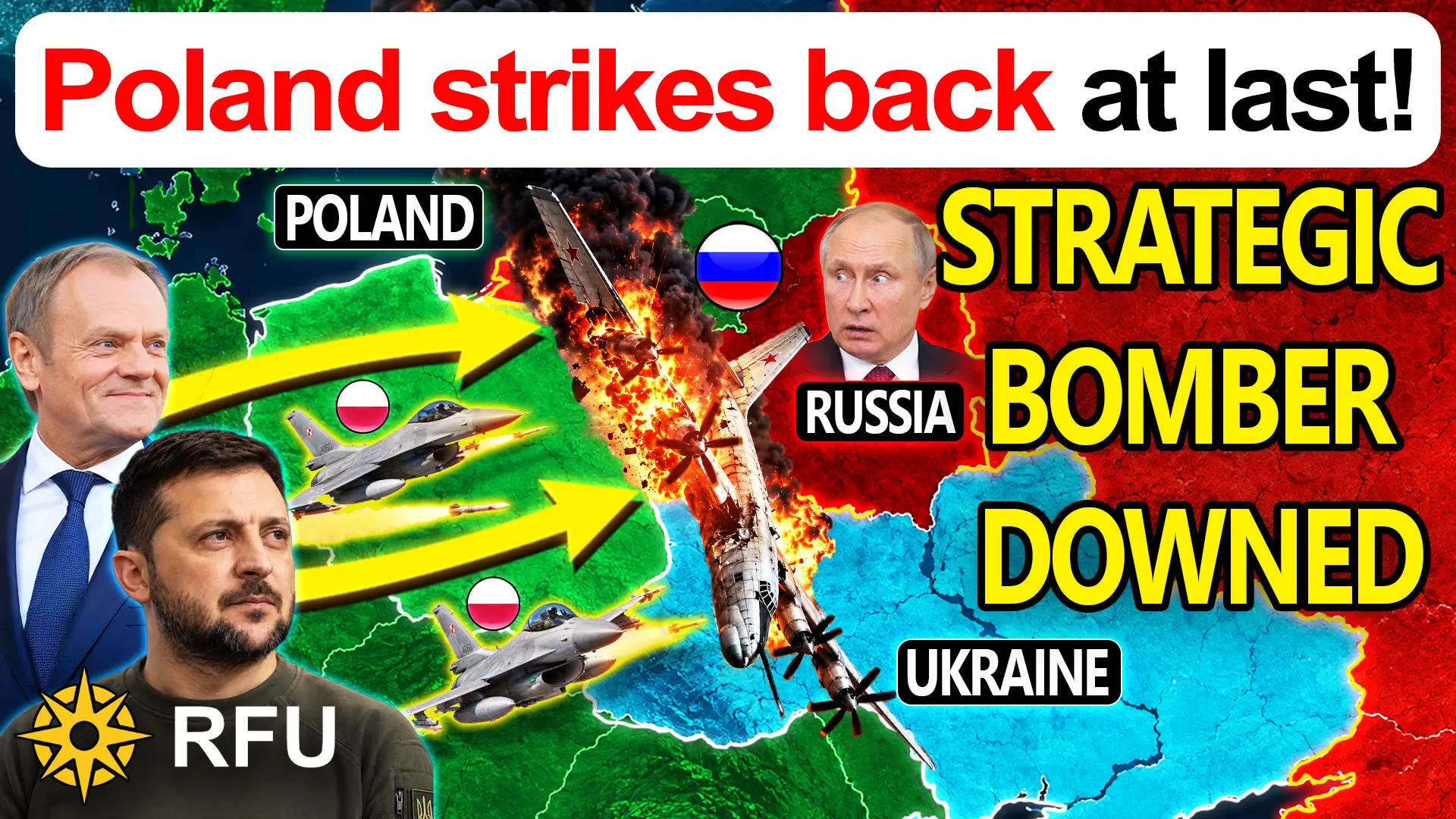
Poland retaliates: Russian bomber that fired missiles into Poland is downed
The progressive expansion of Russian hybrid operations, border-adjacent cruise missile vectors, and deliberate airspace probes has driven Warsaw to systematically overhaul its air-defense doctrine. Under the revised engagement rules taking effect in October, the elimination of mandatory visual identification in favor of integrated sensor telemetry—such as radar tracks, velocity, and trajectory—drastically compresses Poland’s operational decision-to-fire cycle. Concurrently, public military signaling that attributes the destruction of an irreplaceable Russian Tu-95MS strategic bomber to sabotage tied to prior Polish airspace incursions marks an intentional departure from passive containment toward proactive deterrence. By signaling potential asymmetric vulnerability for standoff launch platforms and removing ambiguity over intercepting inbound aerial threats, Poland is directly raising the operational cost of Russian strikes targeting western Ukraine. Consequently, Moscow can no longer exploit border-adjacent flight paths or infrastructure sabotage without risking immediate kinetic escalation and cross-border attribution. Ultimately, this structural shift solidifies NATO’s eastern theater into a zero-tolerance defense perimeter, fundamentally restricting Russian operational leeway along the alliance’s frontier.




0 Comments