

.svg)
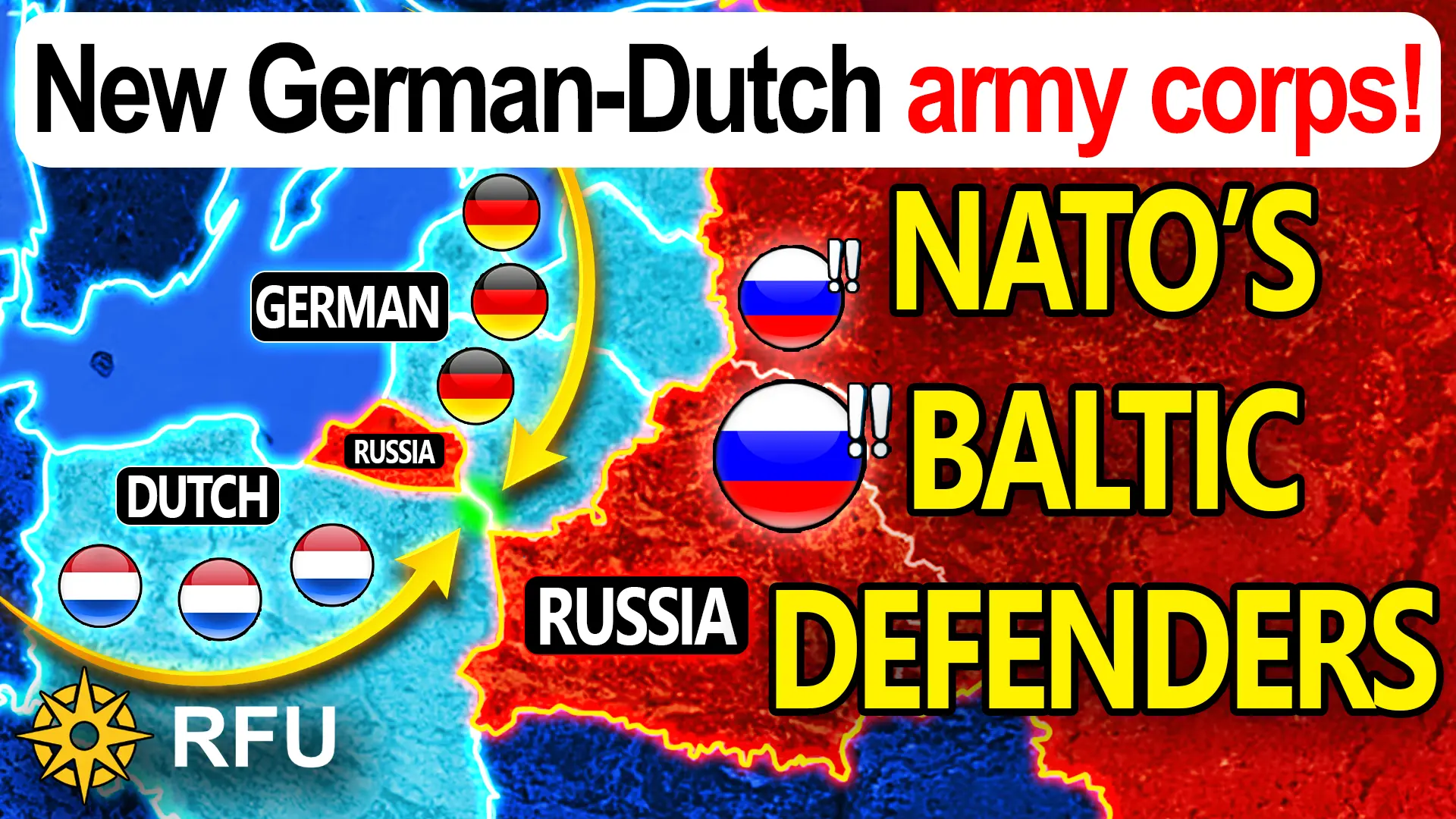
NATO’s best prepared forces for war with Russia are now guarding the Sulwalki gap!
The operational bifurcation of NATO’s northeastern land command—delegating the Estonian and Latvian sectors to the 1st German-Netherlands Corps while concentrating Multinational Corps Northeast on the Suwałki Corridor—fundamentally compresses allied reaction latency against potential Russian fait accompli incursions. By pre-assigning a dedicated multinational headquarters capable of scaling national and allied echelons from the immediate onset of hostilities, the Alliance eliminates critical command friction and hardens frontline deterrence against hybrid or rapid multi-axis penetration. Simultaneously, the organic institutionalization of tactical uncrewed aerial systems, layered counter-UAS defenses, and electronic warfare capabilities across Dutch and German heavy formations directly incorporates high-intensity operational lessons from the Ukrainian battlespace. This tactical synthesis pairs mechanized firepower and armored survivability with decentralized drone reconnaissance and kinetic interdiction, significantly raising the cost of adversary armored maneuver in dense and exposed littoral terrain. Consequently, the transition from reactive reinforcement to integrated, high-readiness forward command structures structurally shifts the regional balance of power, severely undermining Russia’s ability to isolate the Baltic states or achieve localized operational surprise.


0 Comments