

.svg)
Aujourd'hui, les informations opérationnelles majeures proviennent de l'Extrême-Orient russe.
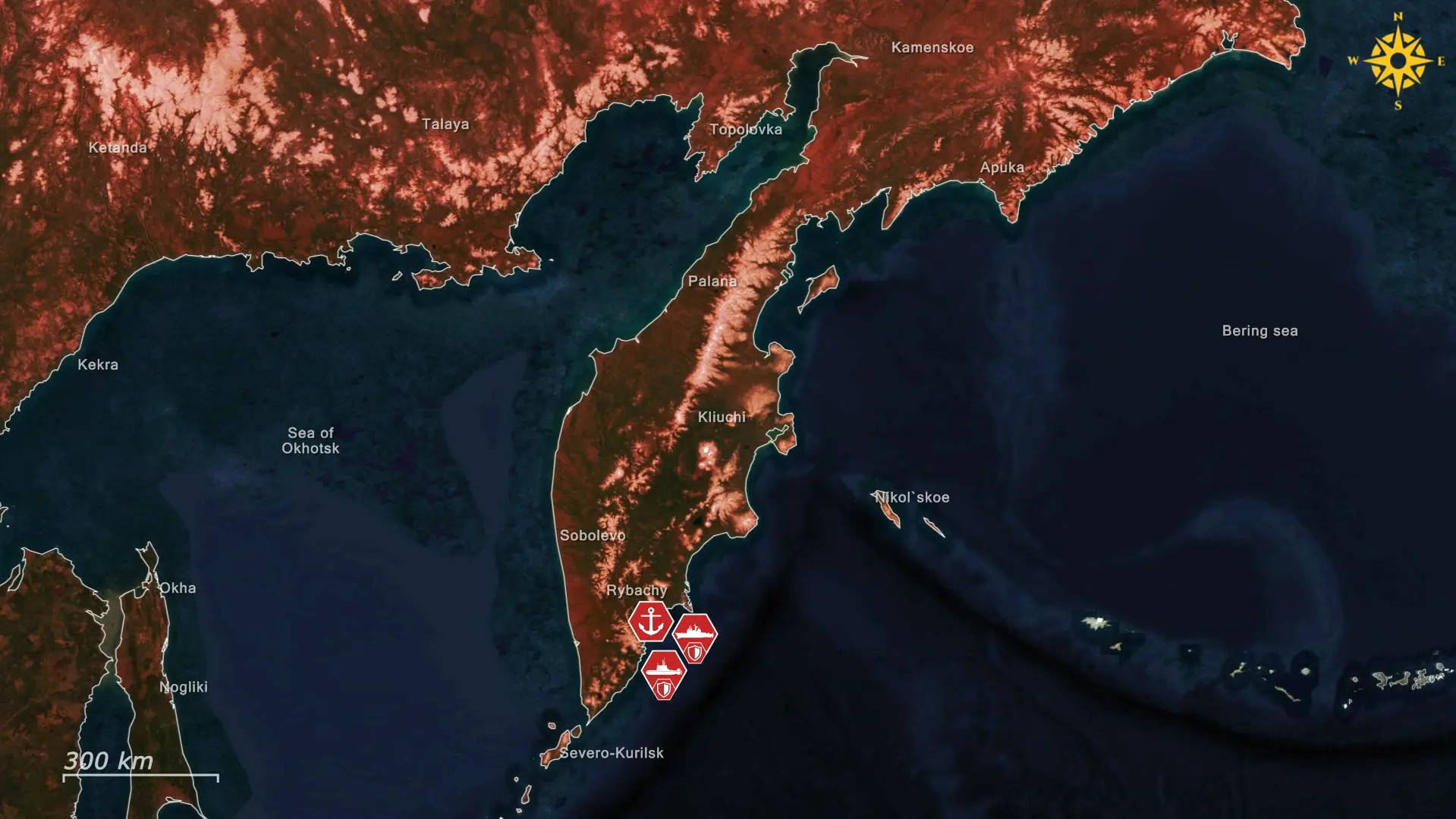
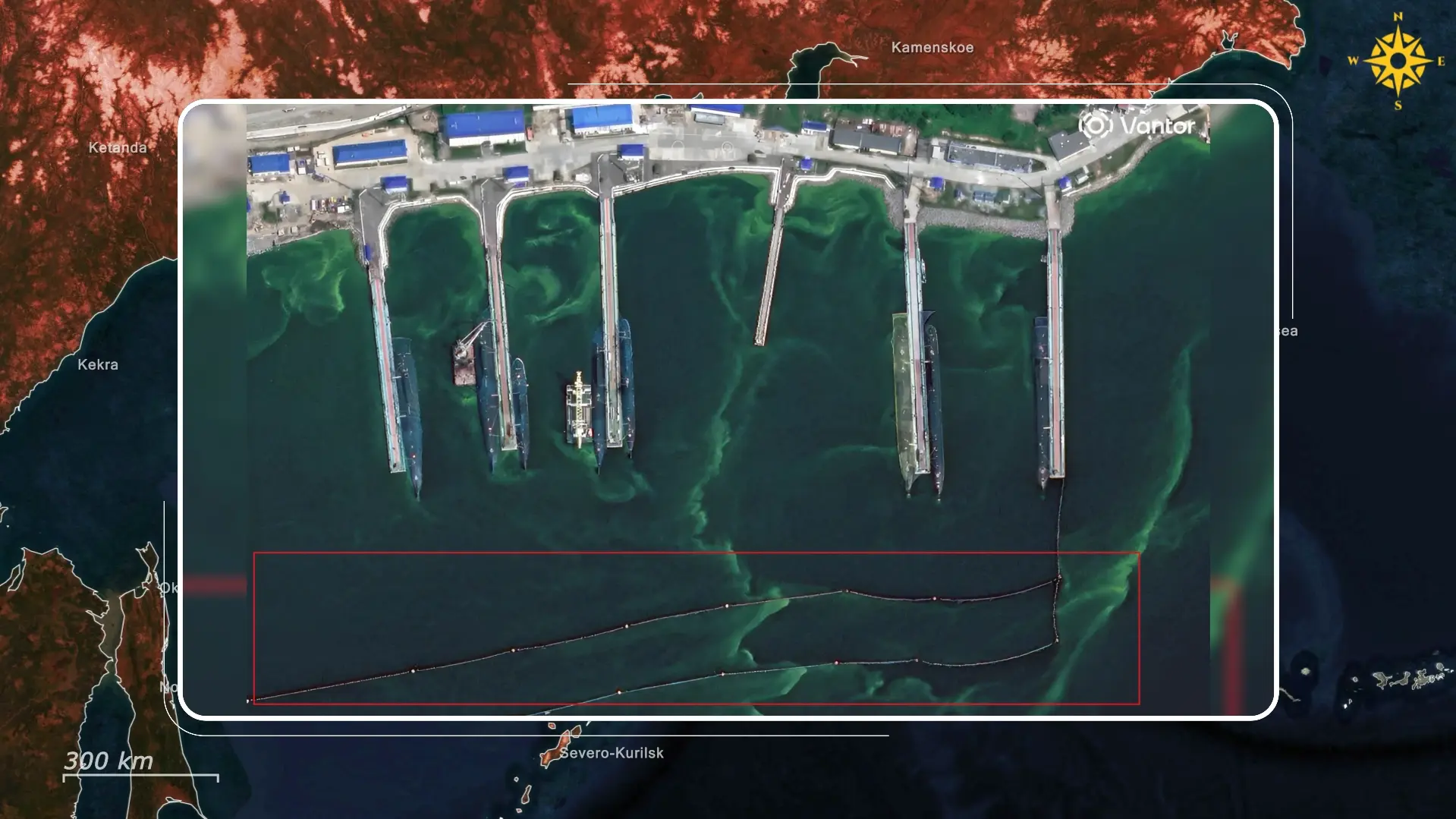
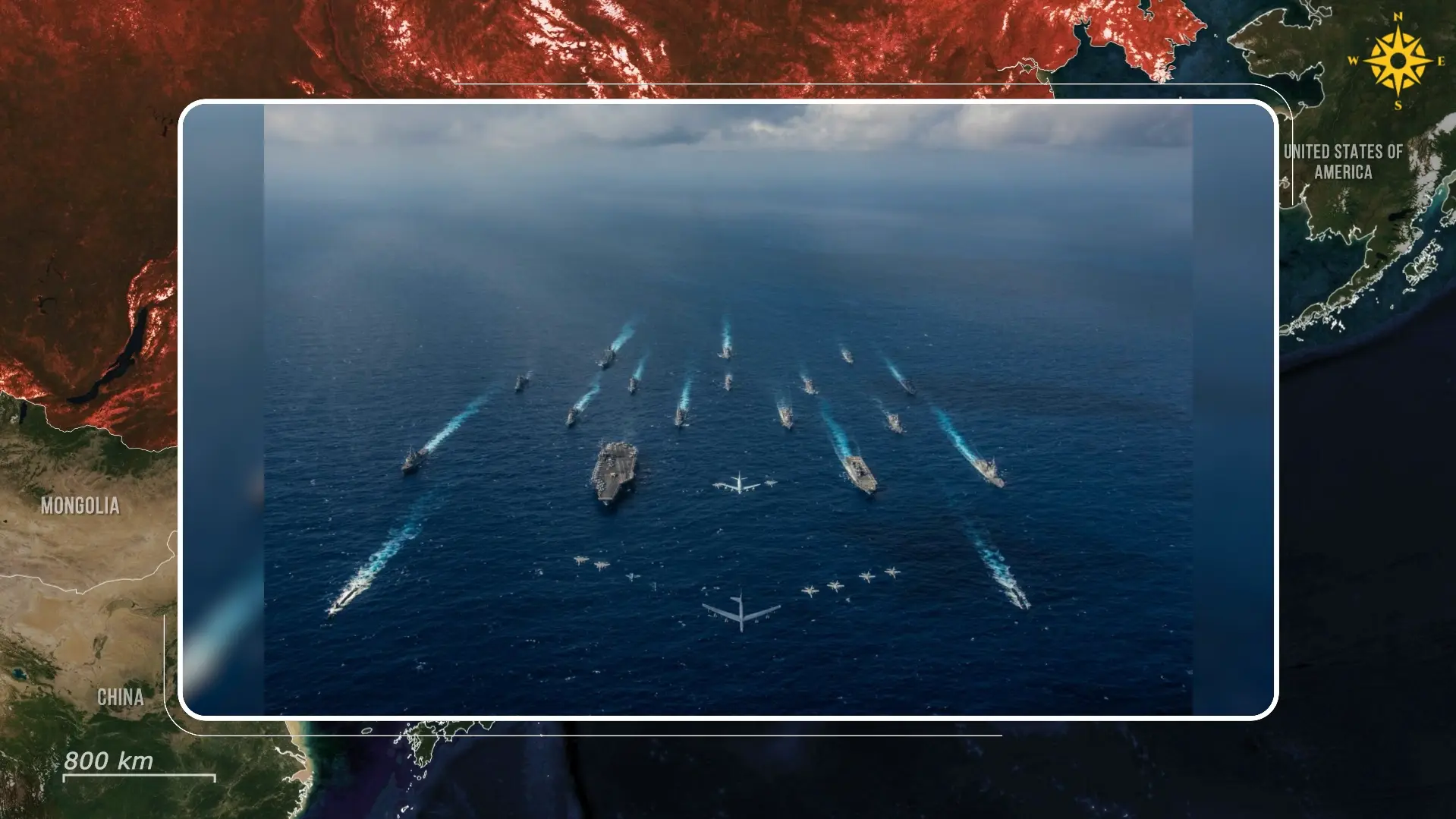
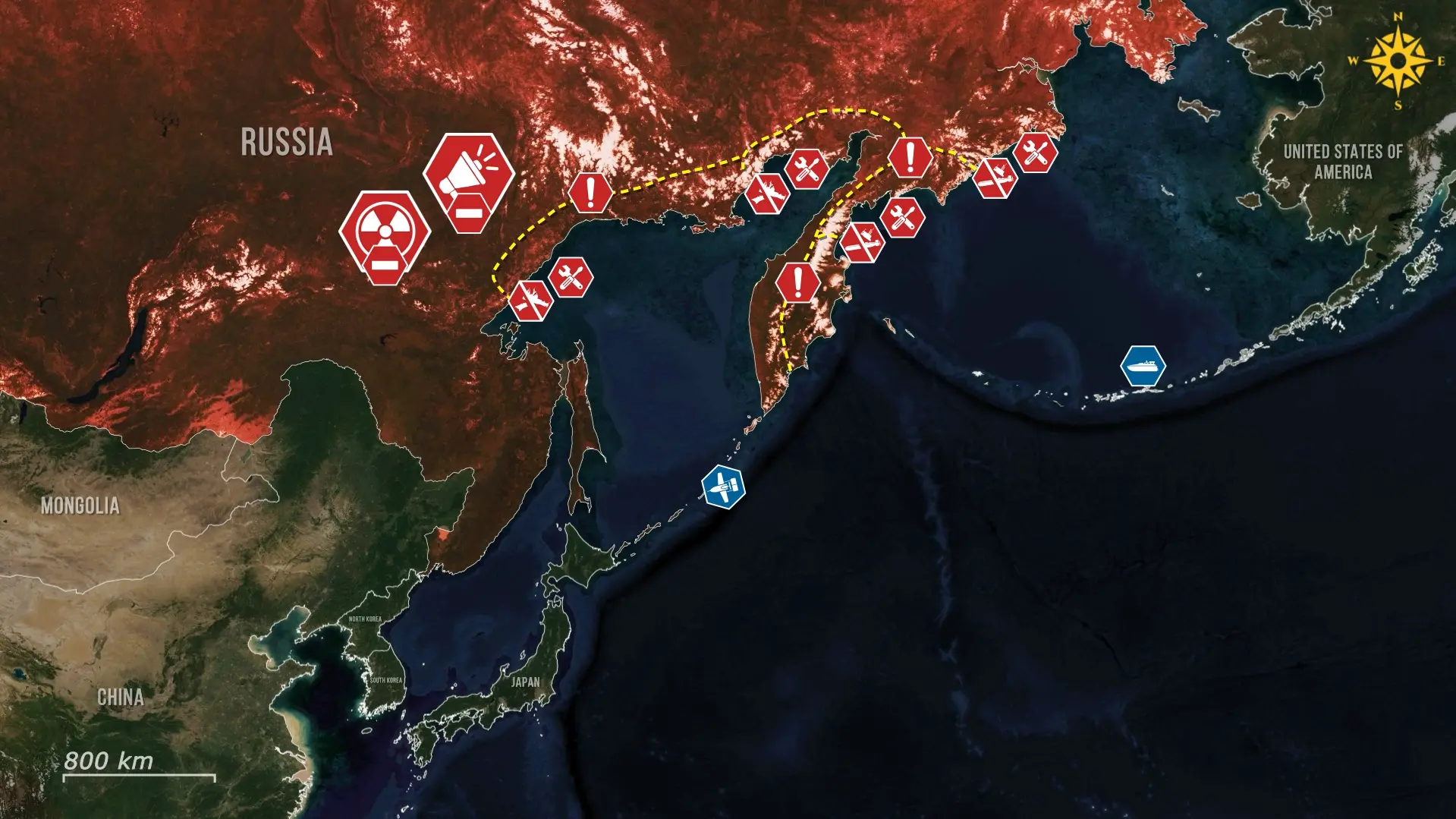
La Russie se prépare désormais à la possibilité d'une frappe de précision dans le bassin Pacifique, procédant au repli d'urgence des bâtiments de sa flotte du Pacifique vers des points d'ancrage hautement protégés, tout en renforçant à un rythme soutenu le dispositif défensif autour de ses sous-marins nucléaires à haute valeur stratégique. Des imageries satellitaires récentes révèlent l'installation de vastes structures de filet anti-drones recouvrant plus d'une demi-douzaine de sous-marins au sein de la base de sous-marins nucléaires de Rybatchy, située dans la péninsule du Kamtchatka, à plus de sept mille kilomètres du théâtre d'opérations ukrainien.
Il y a encore quelques mois, seuls deux bâtiments disposaient de telles protections, ce qui témoigne de la rapidité avec laquelle les forces russes ont renforcé la défense périmétrique de l'installation. Rybatchy constitue le port d'attache de la majorité des sous-marins nucléaires lanceurs d'engins (SNLE) russes des classes Boreï et Boreï-A, plaçant directement sous cette nouvelle couverture défensive des éléments centraux de la dissuasion nucléaire océanique de Moscou. Les sous-marins de la classe Boreï et de la variante modernisée Boreï-A emportent des missiles balistiques intercontinentaux et forment la composante océanique des forces nucléaires stratégiques de la Fédération de Russie, garantissant à Moscou une capacité de seconde frappe dans l'hypothèse où ses lanceurs terrestres et sa composante aérienne stratégique seraient neutralisés. La protection ne se limite pas aux filets anti-drones aériens : des barrages flottants et des obstructions physiques ont été positionnés le long des appontements pour interdire les approches aux drones navals de surface (USV) lorsque les sous-marins demeurent à l'amarrage.
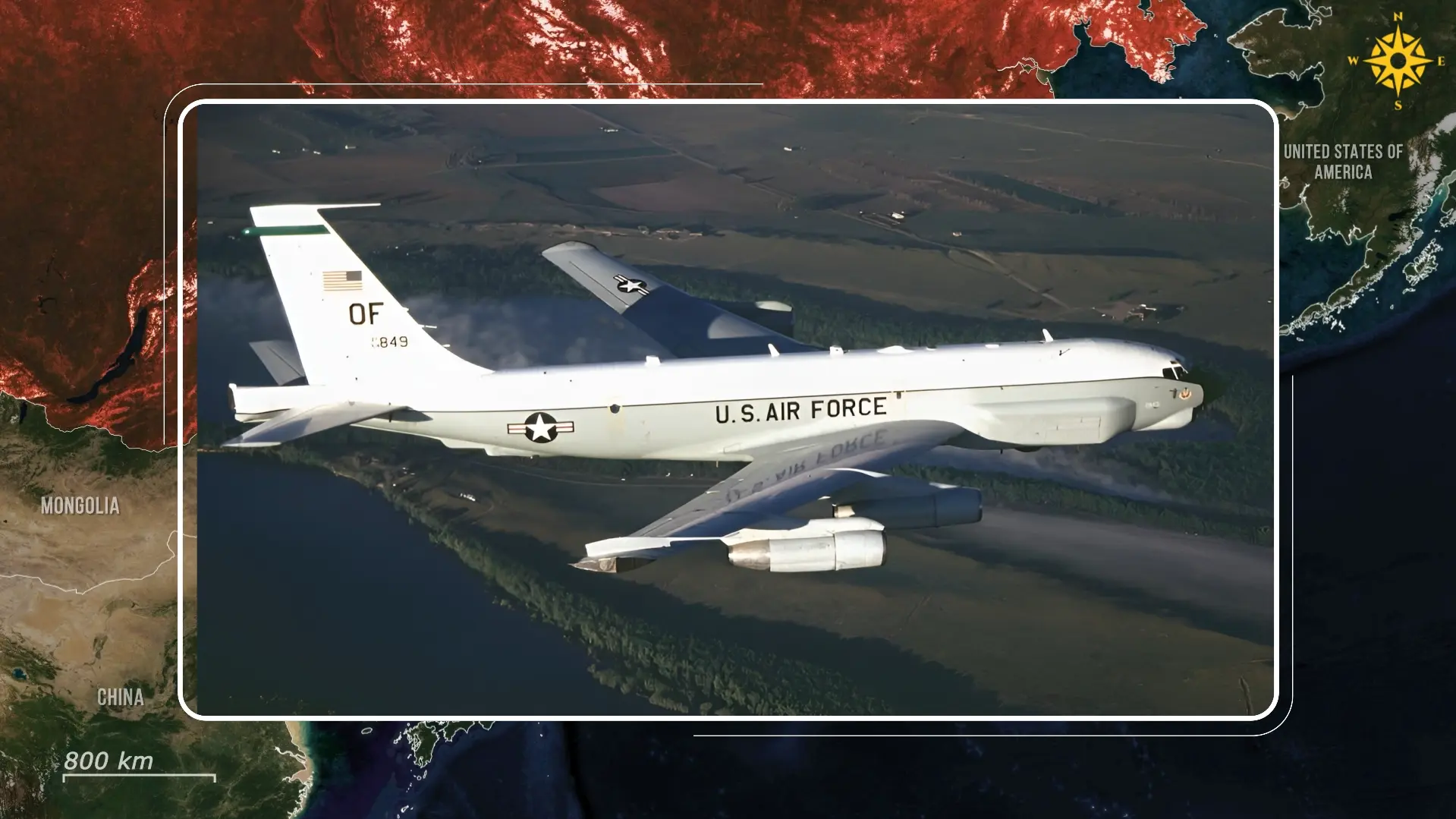
Ces mesures conservatoires découlent de la crainte de l'état-major russe qu'une opération de frappe ukrainienne ne finisse par atteindre le Pacifique, plaçant son dispositif naval oriental sous une pression asymétrique croissante. Des experts et commentateurs militaires russes expriment de vives inquiétudes face à l'intensification des activités de renseignement et de surveillance occidentales dans l'Extrême-Orient, particulièrement autour du Kamtchatka, où la base de Rybatchy jouxte les installations navales de Petropavlovsk-Kamtchatski et le centre d'essais de missiles de Koura. Ces mêmes sources soulignent des opérations de surveillance ciblées sur les infrastructures de la flotte du Pacifique près de Vladivostok et sur les installations du ministère de la Défense autour de Khabarovsk, tout en mettant en évidence le survol régulier de la zone par des aéronefs de reconnaissance stratégique américains RC-135.
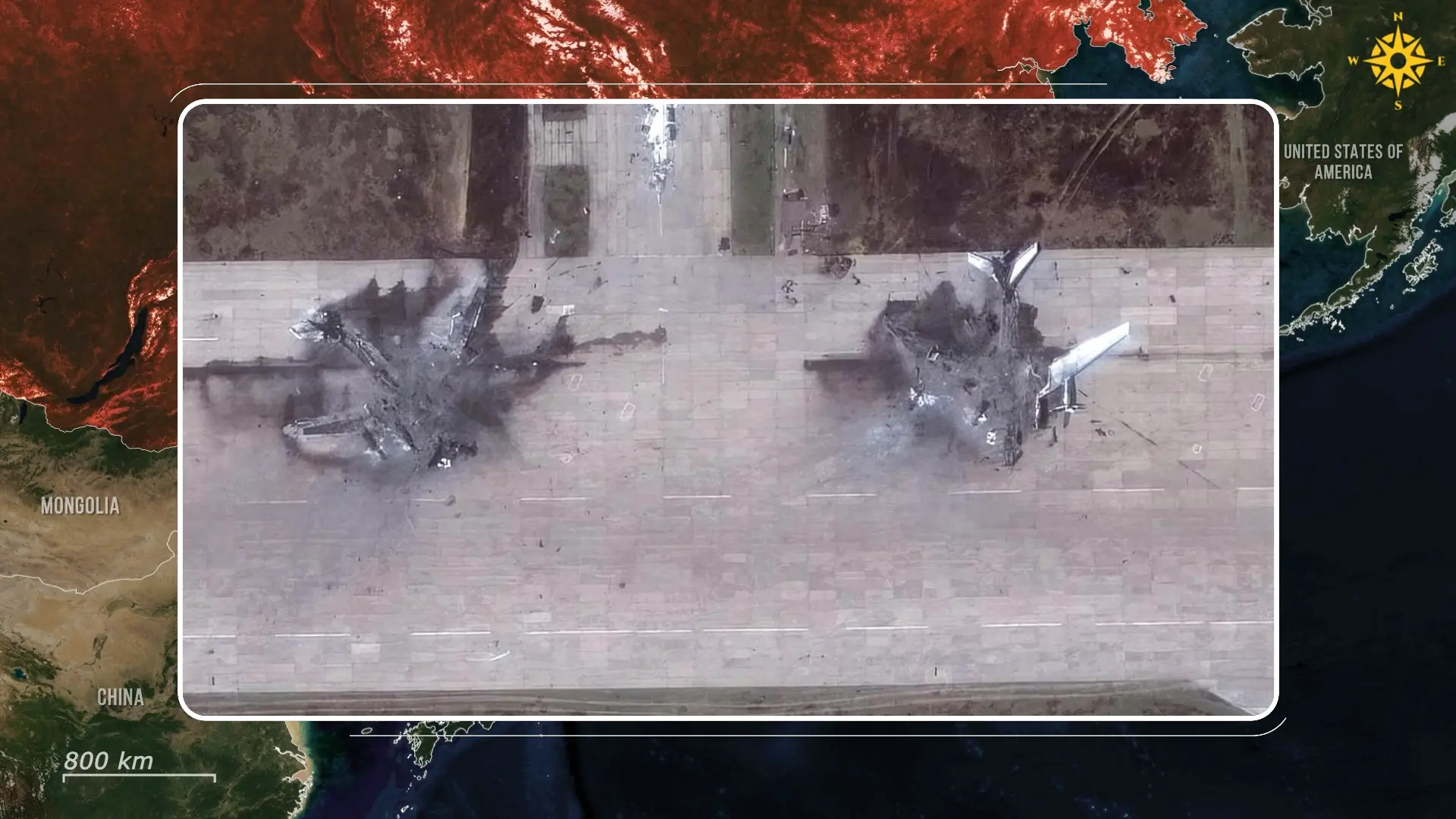
Les observateurs militaires russes analysent avec une attention particulière ce schéma opérationnel, dans la mesure où l'accroissement préalable des activités de renseignement occidentales autour de la Crimée a systématiquement précédé des frappes ukrainiennes d'ampleur. L'opération « Spiderweb » a ensuite fourni au commandement russe des éléments probants pour intégrer pleinement cette hypothèse opérationnelle, l'Ukraine ayant employé des vecteurs non habités pour frapper des bombardiers à capacité nucléaire au cœur du territoire russe, neutralisant en une seule attaque 34 % des vecteurs de missiles de croisière stratégiques stationnés sur les bases aériennes ciblées. Alors que l'opération « Spiderweb » a frappé la composante aérienne des forces nucléaires stratégiques russes, le renforcement des structures défensives au Kamtchatka montre que Moscou anticipe désormais la possibilité d'une opération asymétrique similaire dirigée contre sa composante océanique sous-marine. Une frappe réussie contre plusieurs de ces sous-marins dégraderait sévèrement la capacité de la Russie à lancer des missiles nucléaires depuis le Pacifique, tout en contraignant l'état-major à repenser la doctrine de protection et de déploiement de sa flotte stratégique dans la zone.
Cette posture défensive génère des contraintes stratégiques plus larges, la flotte du Pacifique constituant l'un des principaux leviers de projection de puissance de Moscou dans l'espace indo-pacifique. Les bâtiments de surface russes conduisent des patrouilles, des manœuvres navales et des opérations conjointes avec la Marine chinoise, permettant à la Russie de maintenir une présence militaire visible dans le bassin Pacifique. Le maintien de bâtiments majeurs à proximité immédiate de bases sécurisées réduit le rayon d'action et l'empreinte opérationnelle de la Russie dans la région, ces navires passant davantage de temps sous protection statique au détriment des missions de présence maritimes destinées à démontrer l'allonge militaire de Moscou. Cet impact est particulièrement pénalisant pour les SNLE de la classe Boreï, dont la valeur opérationnelle repose sur la capacité à patrouiller de manière autonome et indétectable en haute mer afin d'assurer la permanence de la dissuasion. Tant que ces sous-marins restent immobiles à quai, la Russie est contrainte de sature de moyens des sites fixes au moyen de barrages portuaires, de systèmes anti-drones, de capteurs de surveillance et de contingents de protection renforcés. Plus les ressources logistiques et financières sont immobilisées pour sanctuariser la flotte dans ses bases d'attache, moins la puissance navale projetable dans le Pacifique est élevée, ce qui affaiblit la position géopolitique de la Russie face aux États-Unis et au Japon, tout en compromettant sa capacité à se poser auprès de Pékin comme un partenaire militaire de premier plan.
En somme, la décision de la Russie di replier les bâtiments de la flotte du Pacifique vers des zones portuaires abritées et di renforcer le périmètre défensif autour de ses sous-marins stratégiques démontre que le commandement russe prend désormais au sérieux la menace d'une frappe ukrainienne en Extrême-Orient. Si cette perception du danger venait à s'accroître, l'adaptation tactique consisterait à augmenter la fréquence des déploiements à la mer et à disperser les sous-marins stratégiques sur un réseau plus étendu de points d'appui, évitant ainsi leur concentration prolongée sur des bases fixes. Une telle dispersion compliquerait toutefois le soutien operational de la flotte, la maintenance, le maintien en condition opérationnelle et le ravitaillement devenant plus ardue dès lors que les bâtiments opèrent hors di leurs bases navales principales. Dès lors, une frappe ukrainienne réussie qui détruirait plusieurs sous-marins stratégiques ou paralyserait des infrastructures portuaires clés affaiblirait durablement les forces navales orientales de la Russie, réduirait sa capacité de frappe nucléaire depuis le Pacifique et amoindrirait la pression militaire globale que Moscou est en mesure di maintenir dans toute la région.
.jpg)

Commentaires