


Today, there is important news from the Zaporizhia direction.
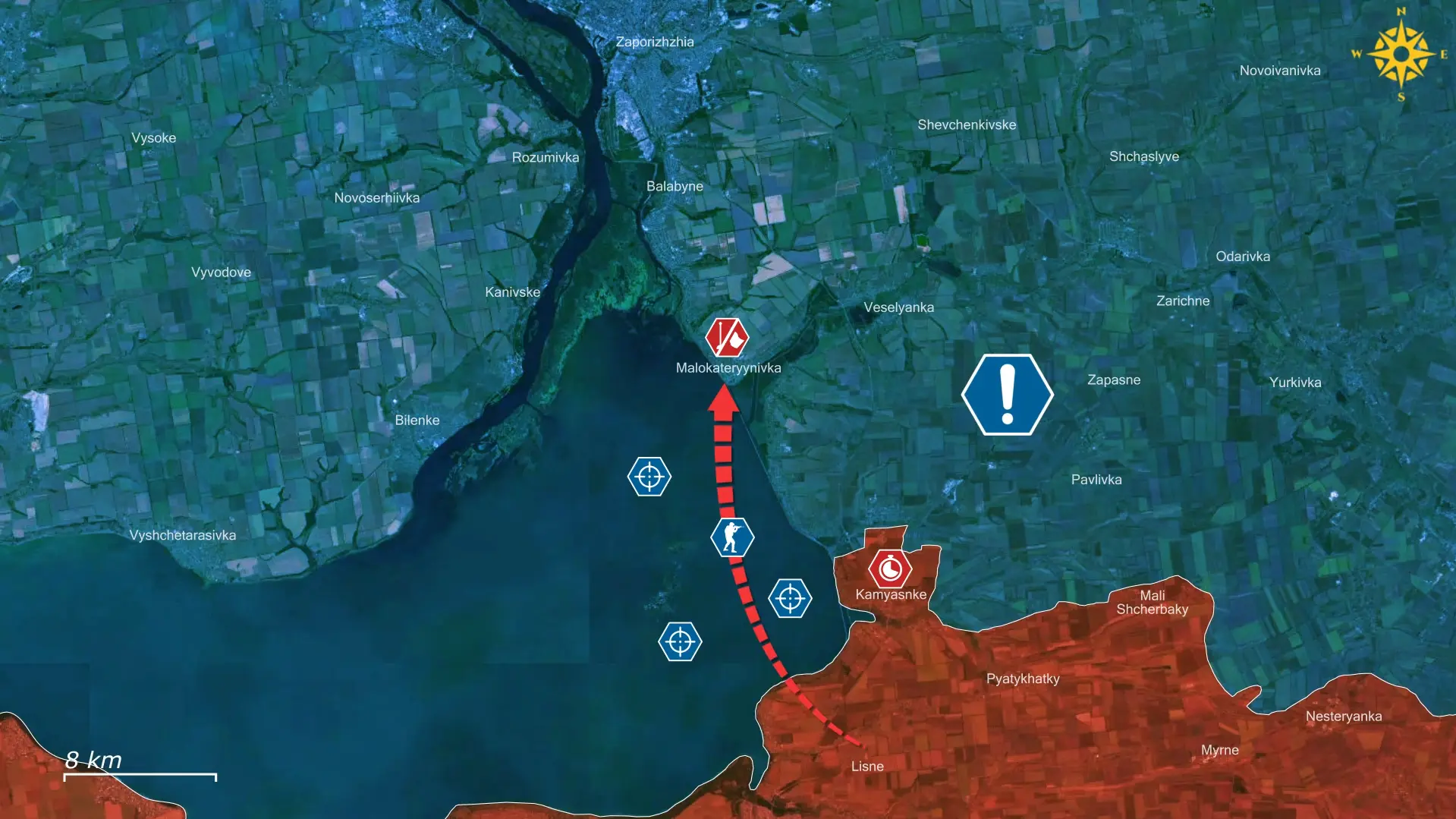
Here, Russian forces attempted to exploit the marshlands of the former Kakhovka Reservoir to stage a surprise advance toward Zaporizhzhia. However, the Ukrainian special forces turned the Russian infiltration operation into a Vietnam-style ambush that the Russians wouldn’t forget soon.
Despite the reality on the ground, the Russian Chief of the General Staff, Valery Gerasimov, announced that Russian troops had captured Malokaterynivka and were only five kilometers from Zaporizhzhia, while Vladimir Putin publicly repeated the claim, presenting it as another major Russian success.
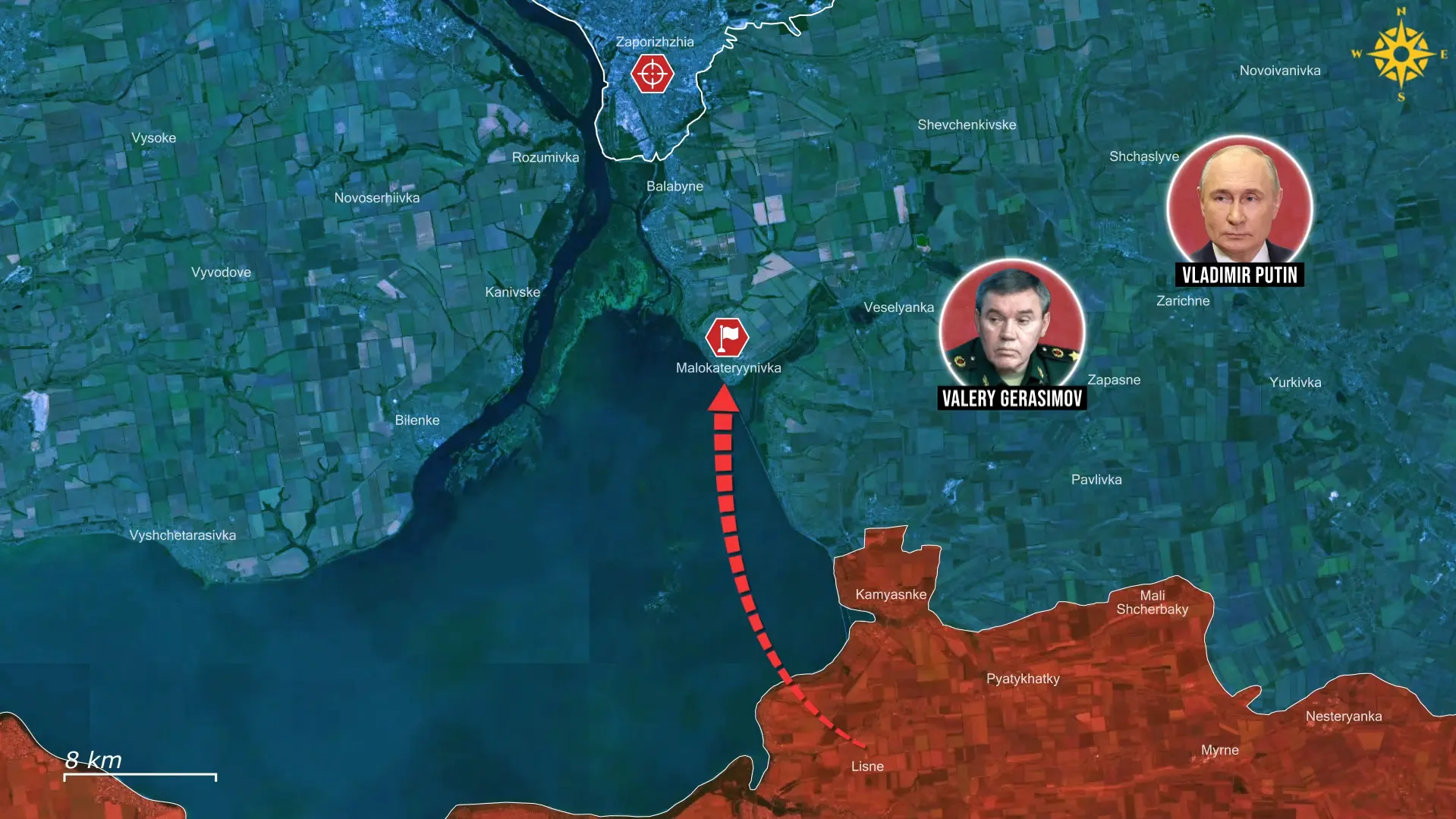
The Russian operation unfolded across the former bed of the Kakhovka Reservoir, emptied after the destruction of the dam in two-thousand-twenty-three by the Russian army. Since then, dense vegetation has spread across the exposed terrain, creating an extraordinary landscape of young forests, marshes, and narrow waterways as the Dnipro River returns toward its original course, with the freed-up land giving fruitful ground for new plants to grow.
The environment, resembling a tropical jungle more than the conventional Ukrainian battlefield, offered Russian infiltration groups an opportunity. Dense foliage obstructs aerial reconnaissance, limits drone visibility, and allows small groups to move beneath the trees without immediately revealing their positions. Russian commanders hoped to exploit these conditions to reach Ukrainian-held territory, record another symbolic flag-planting video so their higher command could claim advancing toward Zaporizhzhia.
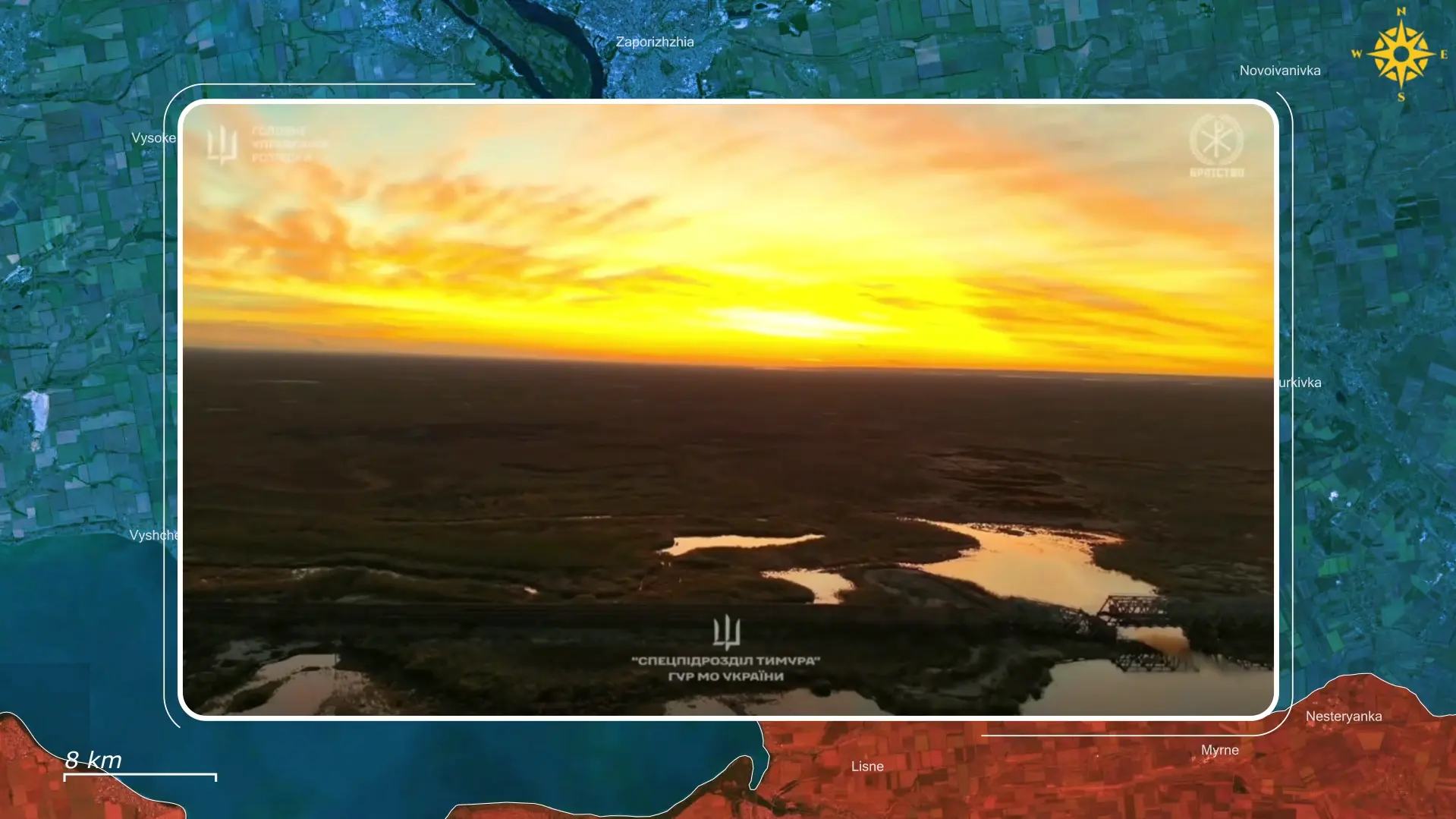
However, the Ukrainian military intelligence anticipated the danger and released footage showing soldiers from its Timur Special Forces Unit conducting counter-sabotage operations inside the vegetation. The Ukrainian soldiers wore specialized ghillie suits, allowing them to blend into the surrounding trees and undergrowth. The denseness of the vegetation proved as negative to the Russians as the positive they hoped to exploit, because it made it extremely difficult to traverse, making their infiltration routes extremely limited. And that is where Ukrainians set up their ambushes, establishing concealed positions and waiting for Russian infiltrators to fall into the trap.
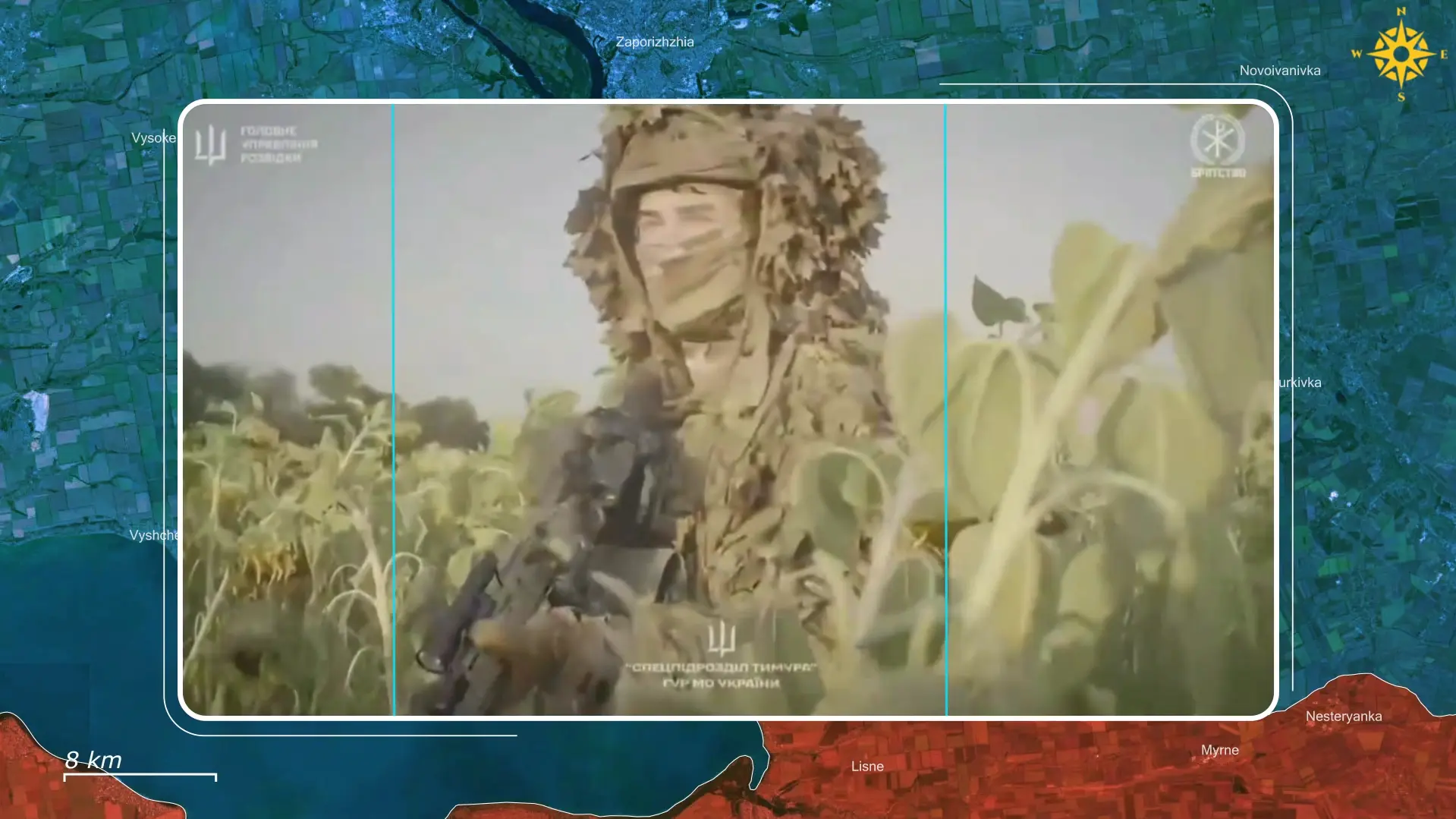
The first Russian soldier encountered refused an opportunity to surrender and was killed. Another immediately dropped his weapon and lay on the ground, becoming a prisoner. When additional Russians ignored Ukrainian calls to surrender, the Ukrainian group requested thermal-imaging drone support. The drone helped identify concealed soldiers beneath the vegetation, while aerial explosives forced them from their hiding places.
Ukrainian troops subsequently discovered the eliminated infiltrators and continued clearing the area. Soon, another Russian group appeared, triggering a close-range firefight among the dense trees. One Russian soldier was killed, while another was captured.
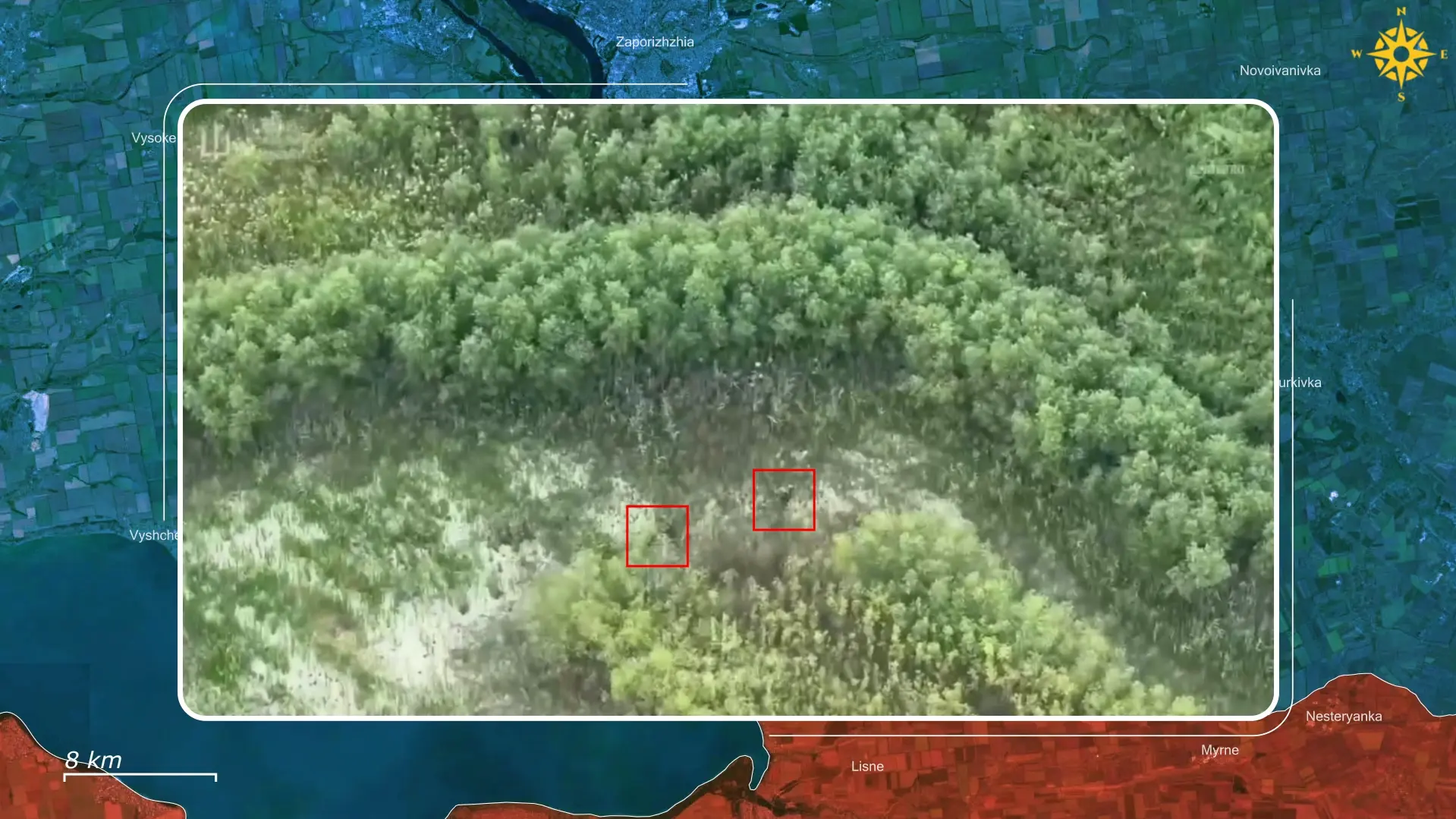
The Russians themselves wore camouflage clothing intended to conceal their movements, but their equipment proved insufficient against the coordinated Ukrainian reconnaissance and ambush. A Ukrainian heavy octocopter was then brought in against another infiltration group. Its attacks killed two Russian soldiers, while the remaining fighter surrendered; Ukrainian troops provided him first aid, bandaged his wounds, and took him prisoner.
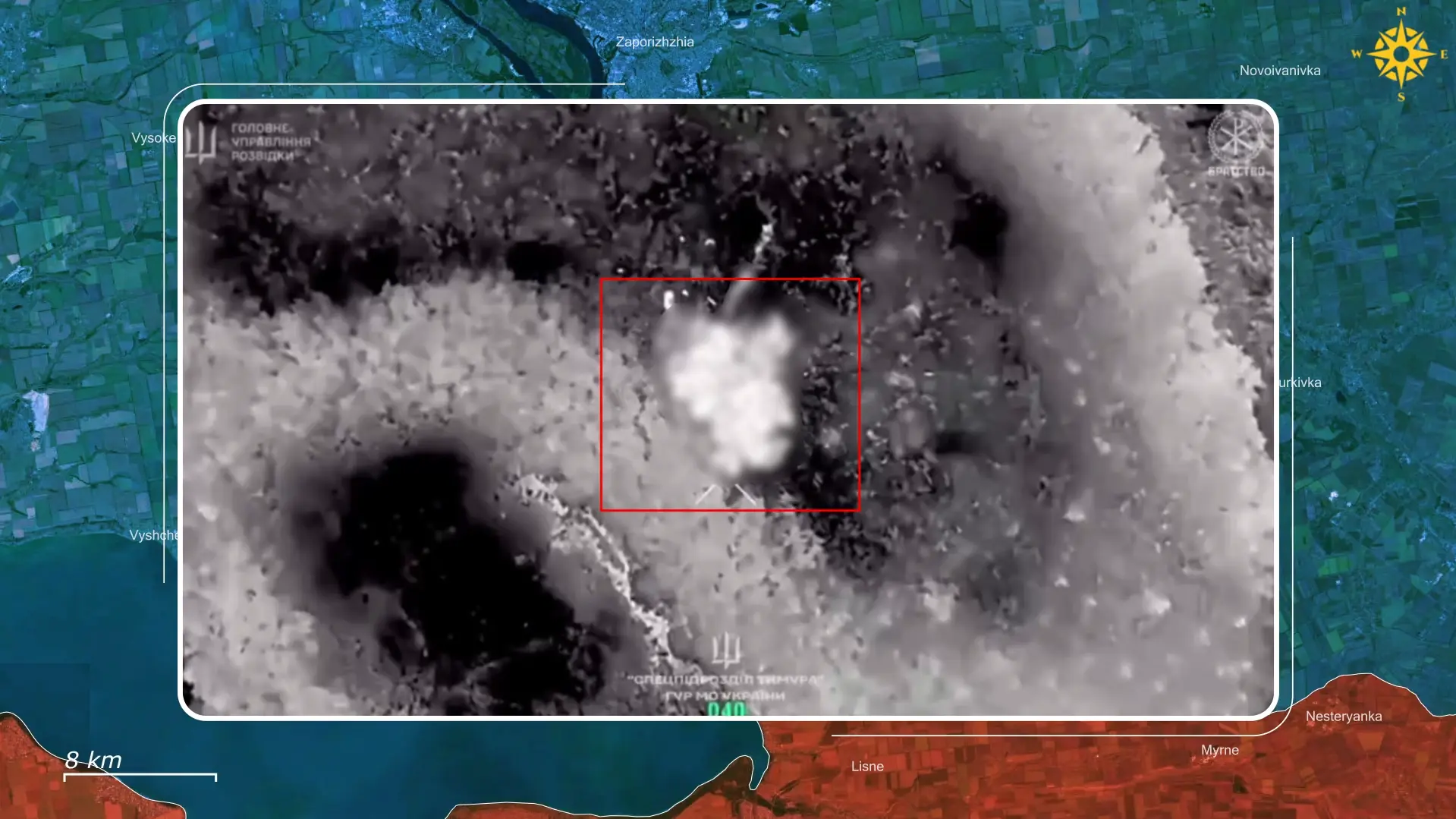
The entire engagement demonstrated how difficult fighting inside these marshlands has become, as visibility is restricted, engagements occur at extremely short distances, and conventional aerial surveillance must be combined with concealed infantry and thermal reconnaissance. Yet despite these unsuccessful infiltration attempts, Gerasimov publicly declared that Russia was on the outskirts of Zaporhizhia city.
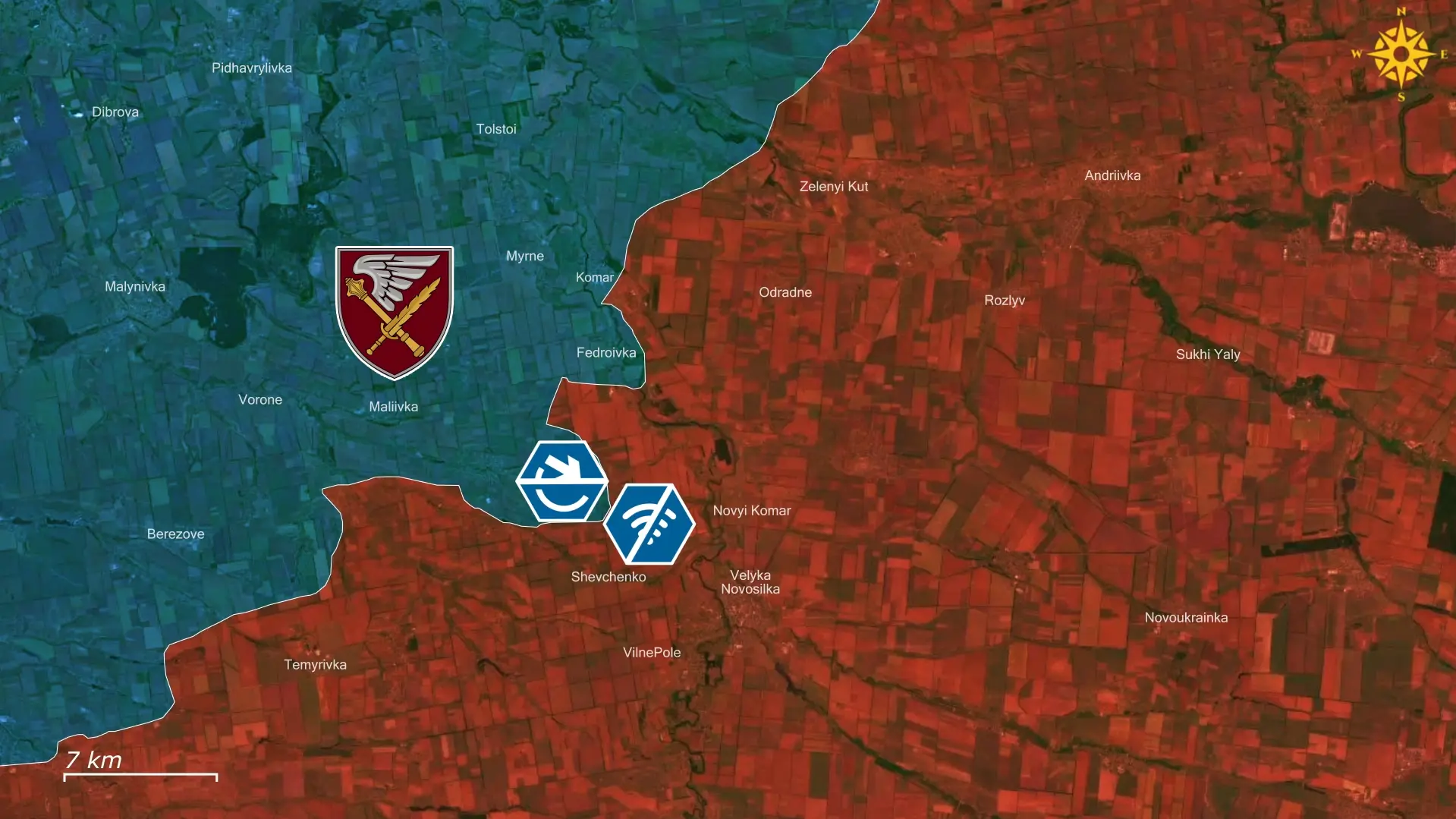
Ukraine responded by exposing the contradiction, as Maksym Kravchuk, spokesperson for Ukraine’s Southern Group of Forces, rejected Gerasimov’s announcement and confirmed that Malokaterynivka remained under Ukrainian control. Soldiers from Ukraine’s one-hundred-twenty-eight Heavy Mechanized Brigade then recorded footage directly inside the settlement, publicly demonstrating their continued presence. Kravchuk also explained that Russian positions were approximately twenty-five kilometers from Zaporizhzhia’s southern outskirts, not five, and ridiculed the Russian command’s claims as another collection of fairy tales presented to Putin rather than an accurate description of the battlefield.
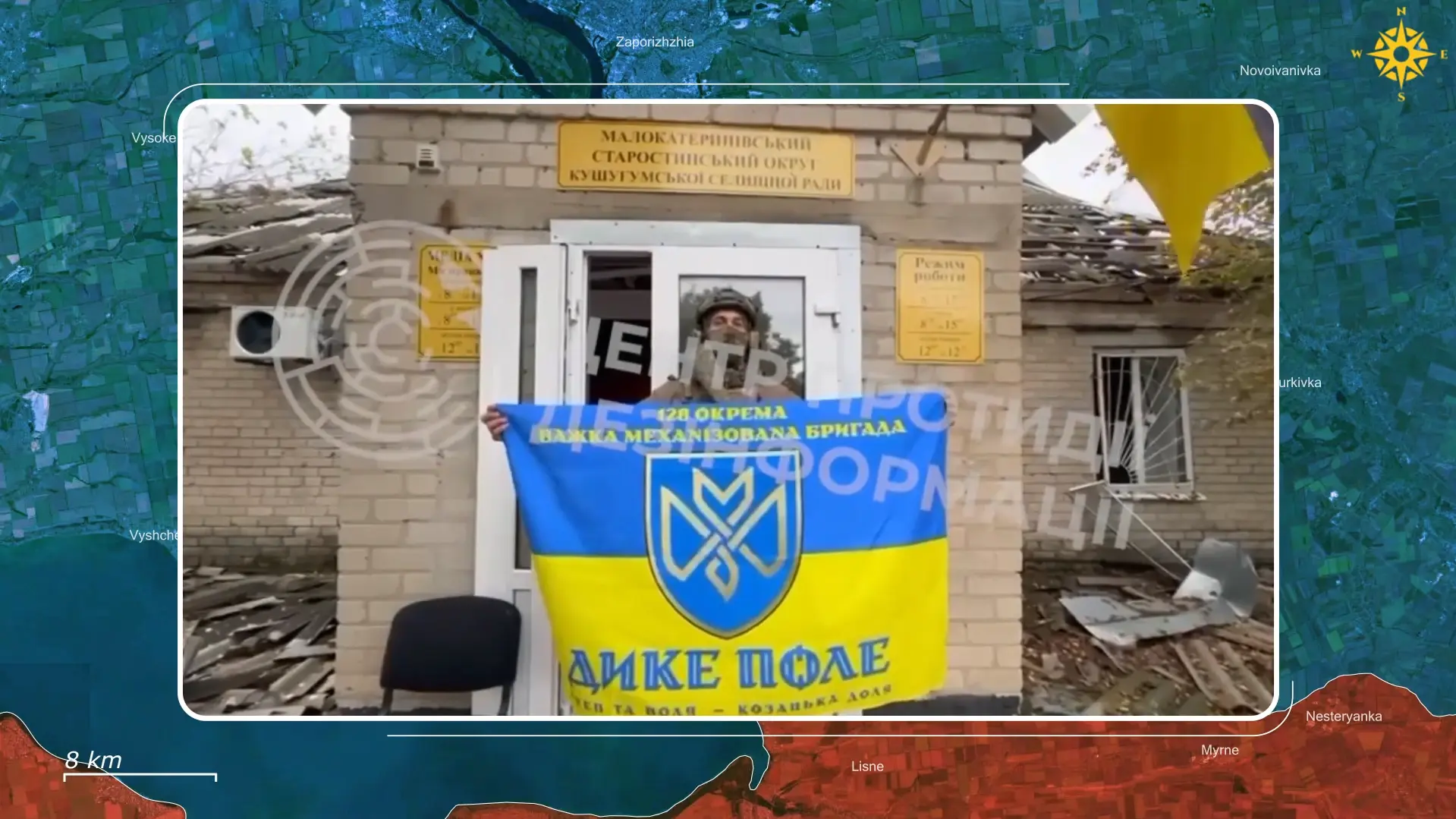
Overall, the result was particularly embarrassing because Russian forces had attempted to exploit one of the region’s most unusual environments, where thick vegetation offered opportunities for concealed movement. Instead, Ukrainian special forces intercepted the infiltrators, eliminated several groups and captured prisoners. With winter approaching, the Russians face another problem, as disappearing foliage will progressively expose movement through the former reservoir bed. Gerasimov may continue announcing spectacular advances, but Ukrainian footage demonstrates that Russia remains far from achieving the breakthrough toward Zaporizhzhia that Putin was promised.



Comments