RFU News

Ukrainians penetrate deep as Russians cannot plug the gaps anymore and reinforcements are wiped out

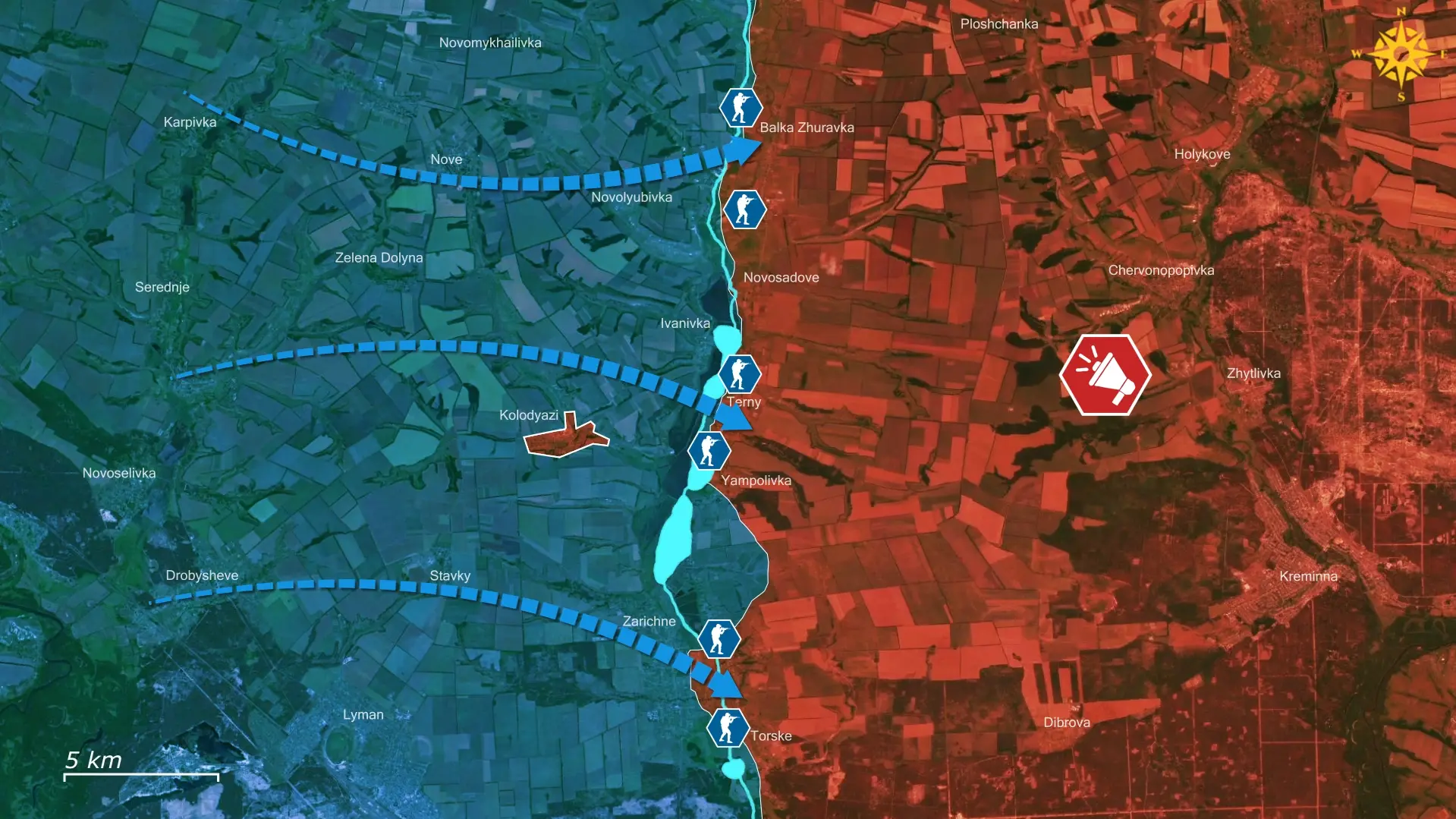
The successful execution of asymmetric pincer maneuvers north of Liman demonstrates a critical shift toward localized, high-velocity counter-offensives designed to exploit overextended enemy salients. By establishing absolute FPV drone fire control over the Zherebets River crossings, Ukrainian forces have structurally isolated forward Russian positions, preventing tactical reinforcement and transforming logistical supply lines into lethal chokepoints. Rather than relying on traditional, high-risk infantry breakthroughs, the operational logic here shifts to a deep containment strategy where localized pockets—such as Ridkodub and Shandriholove—are subjected to continuous precision attrition before ground forces move in. Central to this tactical evolution is the deployment of multi-role Unmanned Ground Vehicles (UGVs), which decouple frontline combat tasks from human casualty rates by undertaking high-risk bunker neutralizations and heavy machine-gun suppression. Consequently, this integration of aerial overwatch and ground robotics allows Ukrainian commanders to sustain offensive momentum within heavily contested zones without depleting critical manpower reserves. Ultimately, the Liman counter-offensive establishes a replicable model for modern attrition warfare, where technological adaptability and precise interdiction dynamically convert active defense into definitive territorial reclamation.

By
RFU News
Jun 17, 2026

Ukraine executes its most intense four‑day missile campaign against Russia

The structural expansion of Ukraine's domestic long-range strike ecosystem—anchored by the mass production of decentralized, ground-launched cruise missiles—marks a critical pivot from localized tactical asymmetry to a systemic, theater-wide attrition campaign against Russia's deep rear. By compressing multi-vector salvos into tight, multi-day windows, Ukrainian forces generate operational density that systematically oversaturates and depletes localized Russian air defense networks, allowing subsequent precision munitions to exploit newly formed radar and interceptor gaps. This high-tempo operational framework shifts the targeting calculus away from temporary disruption toward permanent industrial denial, specifically degrading fixed, bottlenecked nodes within the Russian military-industrial base such as component factories and explosives manufacturing plants. Simultaneously, concurrent strikes on critical fuel-processing infrastructure and strategic logistics hubs compress the theater's logistical depth, severing the forward supply lines essential for sustaining heavy Russian mechanization and aviation. Ultimately, this operational shift degrades Moscow’s capacity to absorb structural damage at the rate it is inflicted, establishing a cumulative deficit in irreplaceable industrial components and specialized infrastructure that permanently threatens the sustainability of long-term Russian combat operations.

By
RFU News
Jun 16, 2026