


Today, there is interesting news from the Russian Federation.
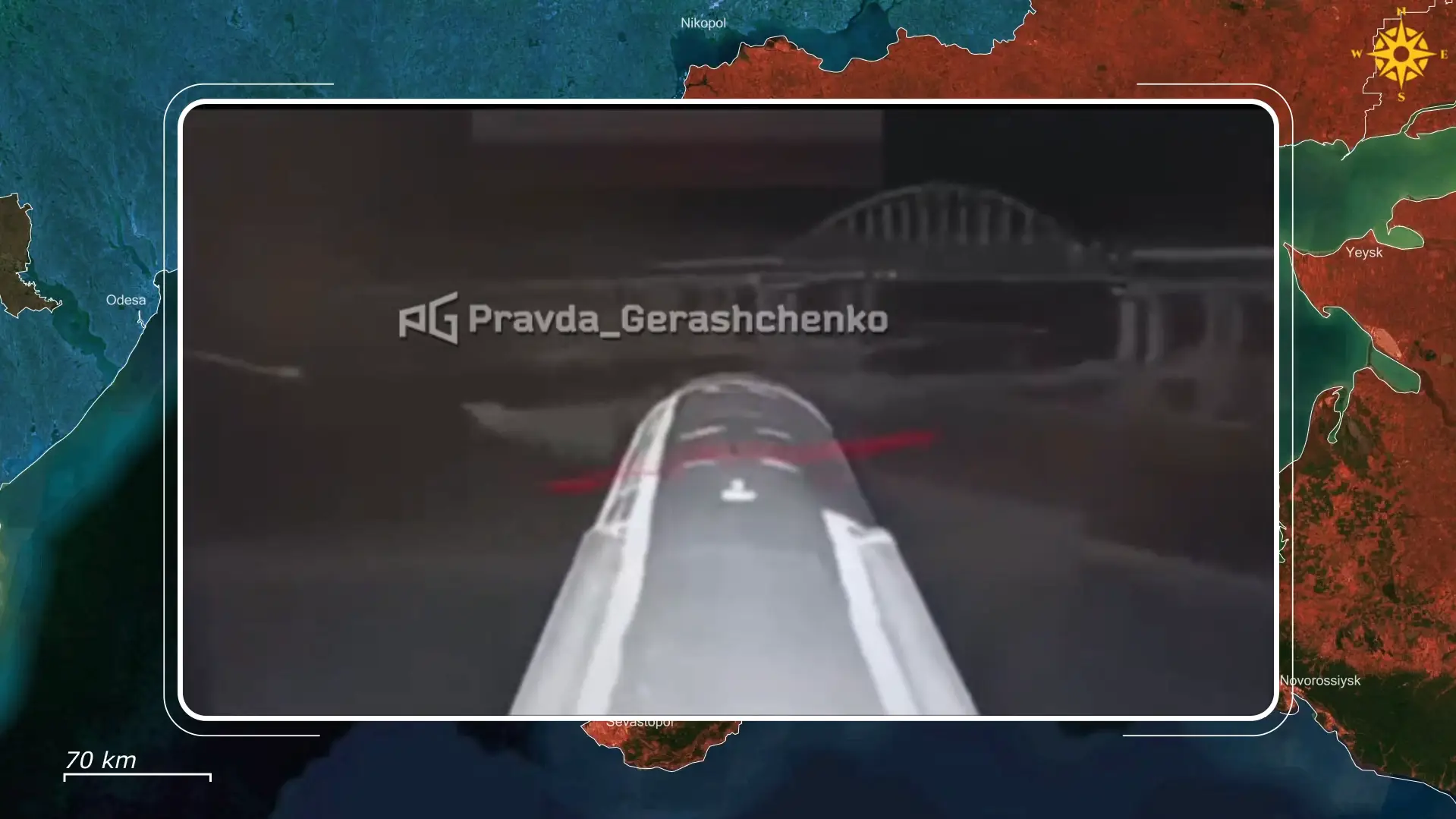
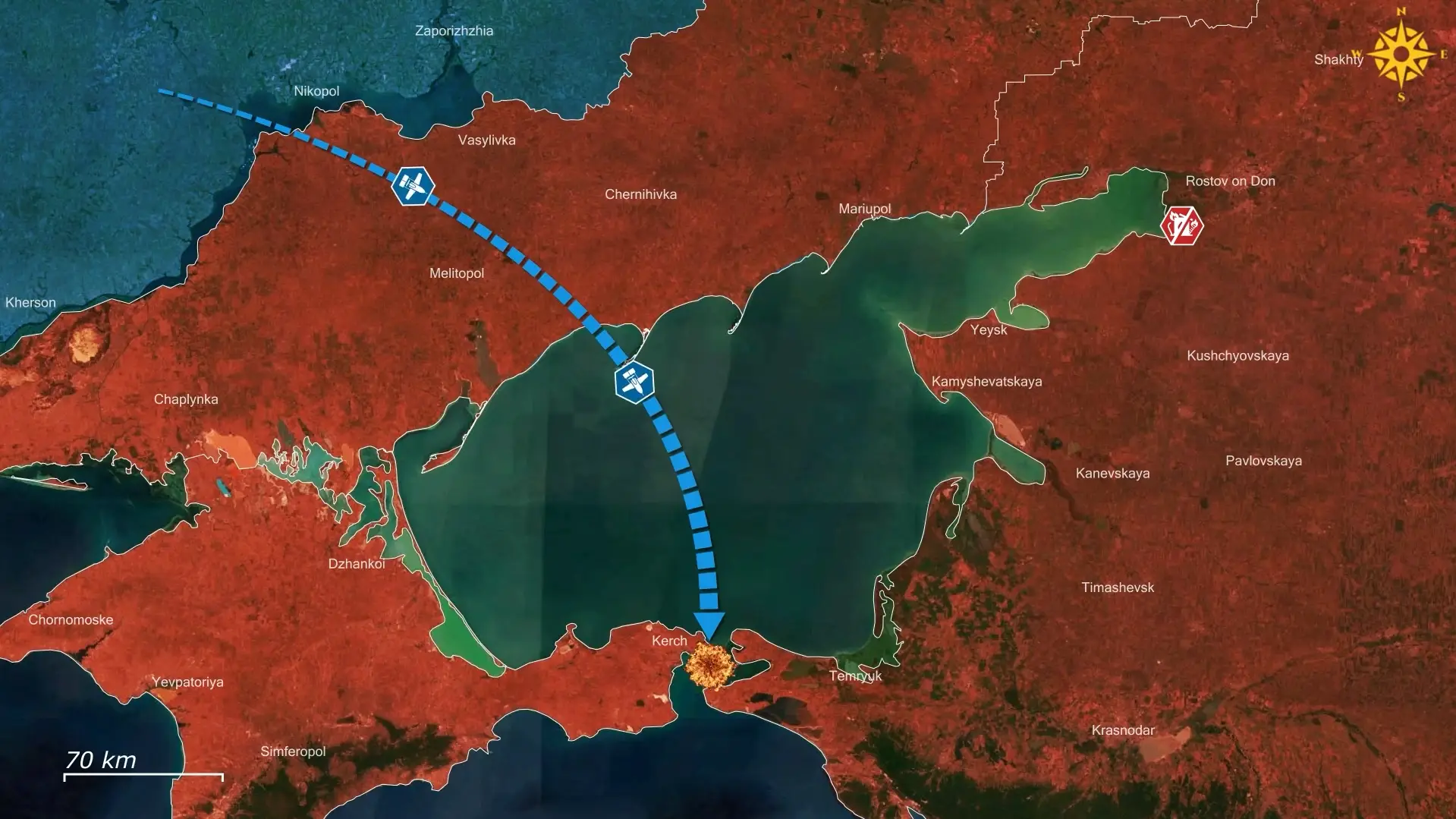
Here, following the destruction of the Kerch Bridge, Ukrainian defense minister Yevhenii Khmara arrived at the Nato headquarters in Brussels, receiving congratulations from allied representatives. Asked about the operation before the meeting, his response was unmistakable: Ukraine is only getting started, suggesting the campaign against Russian transportation infrastructure will develop, turning Moscow’s own strategy against it.
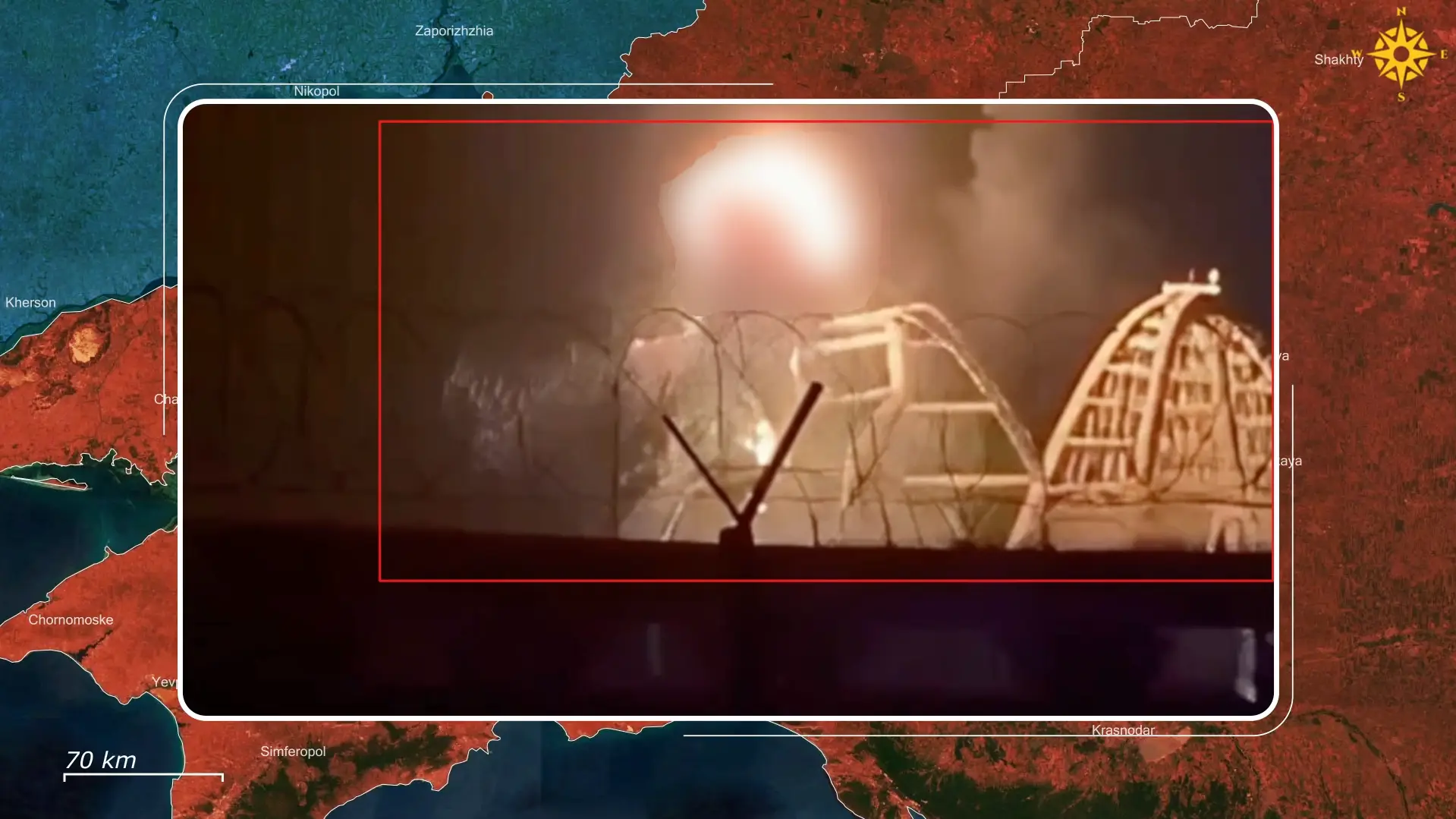
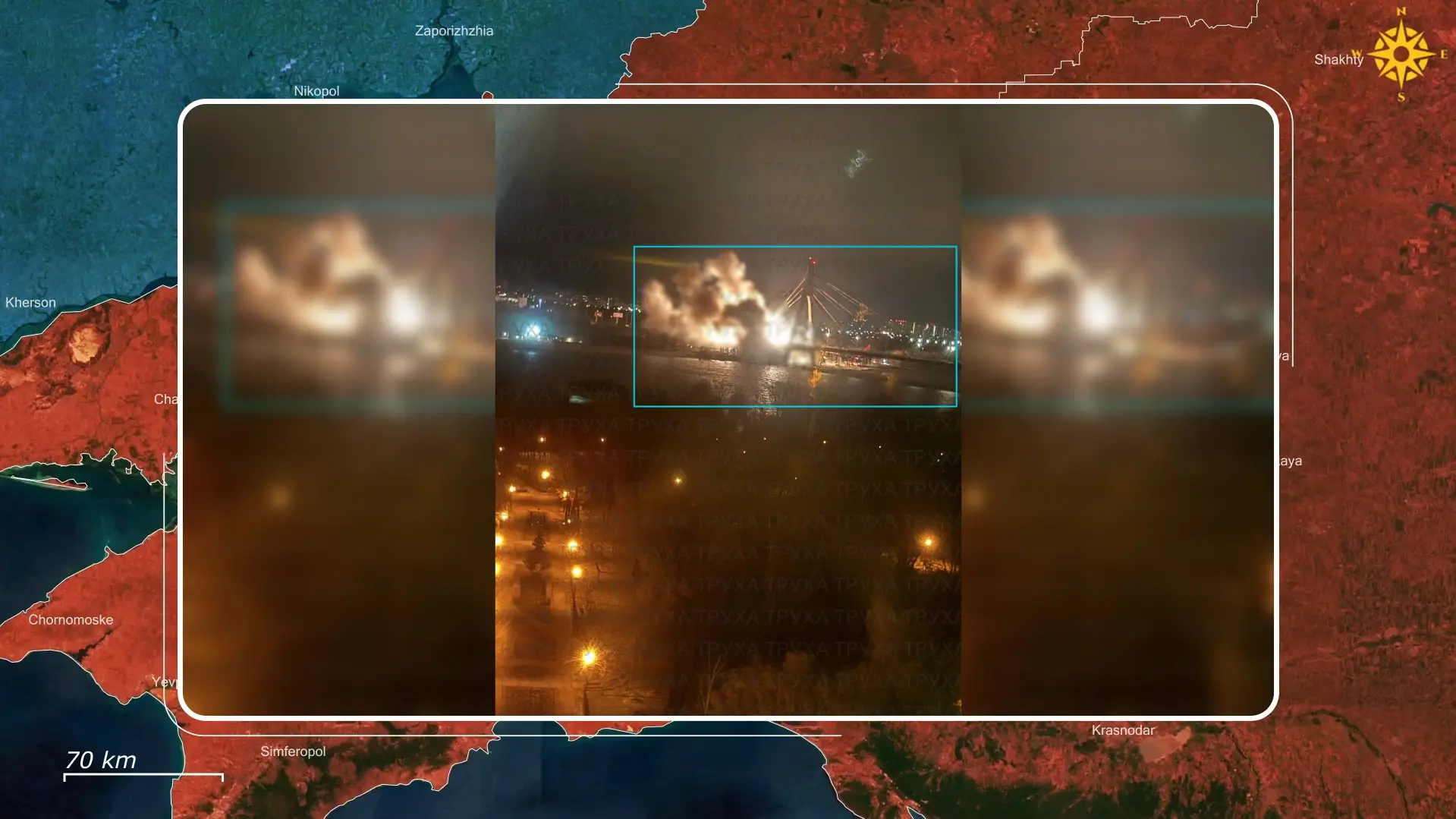
This follows months of Russian attacks on Ukrainian bridges and attempts to disrupt transportation across Ukraine’s Dnipro River. Kyiv’s Southern Bridge suffered five drone strikes in the first two days of October, while the Northern Bridge was attacked twice in the following two days. Russia employed increasingly sophisticated jet-powered drones, including variants carrying specialized warheads intended to penetrate structural targets, with Zelensky announcing four ballistic missile strikes against Kyiv’s Southern Bridge and three against the Northern Bridge in a single night just days ago.
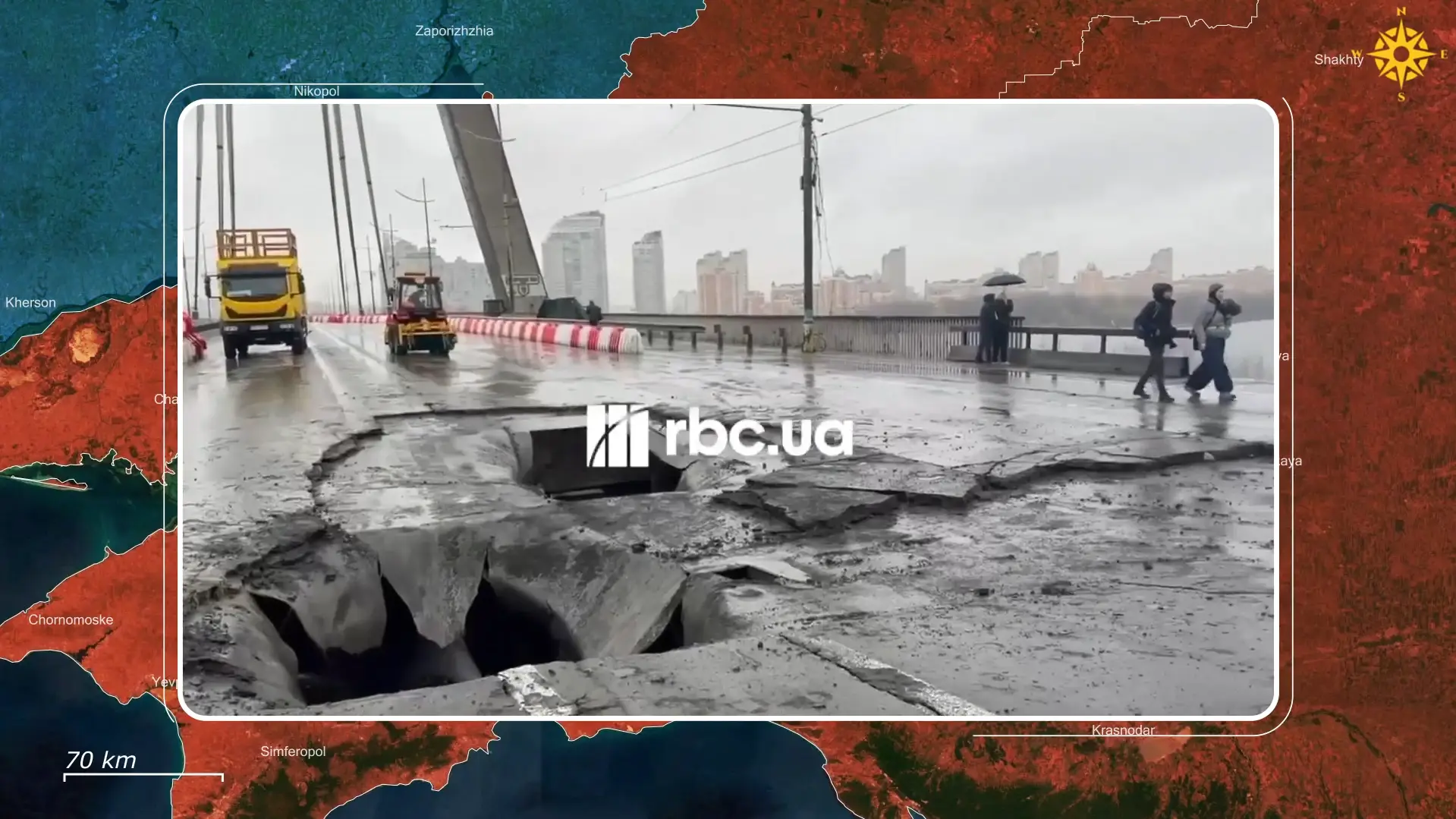
Both crossings sustained serious damage, forcing authorities to suspend traffic while engineers assessed their safety. These attacks affect bridges that connect residential districts, workplaces, hospitals, and commercial centers, while their closure creates enormous traffic disruptions, delays emergency services during further Russian bombardments, and complicates civilian deliveries. Zelensky consequently characterized the Kerch operation as retaliation: Russia cannot systematically target Ukrainian bridges while expecting its own strategic infrastructure to remain untouched.
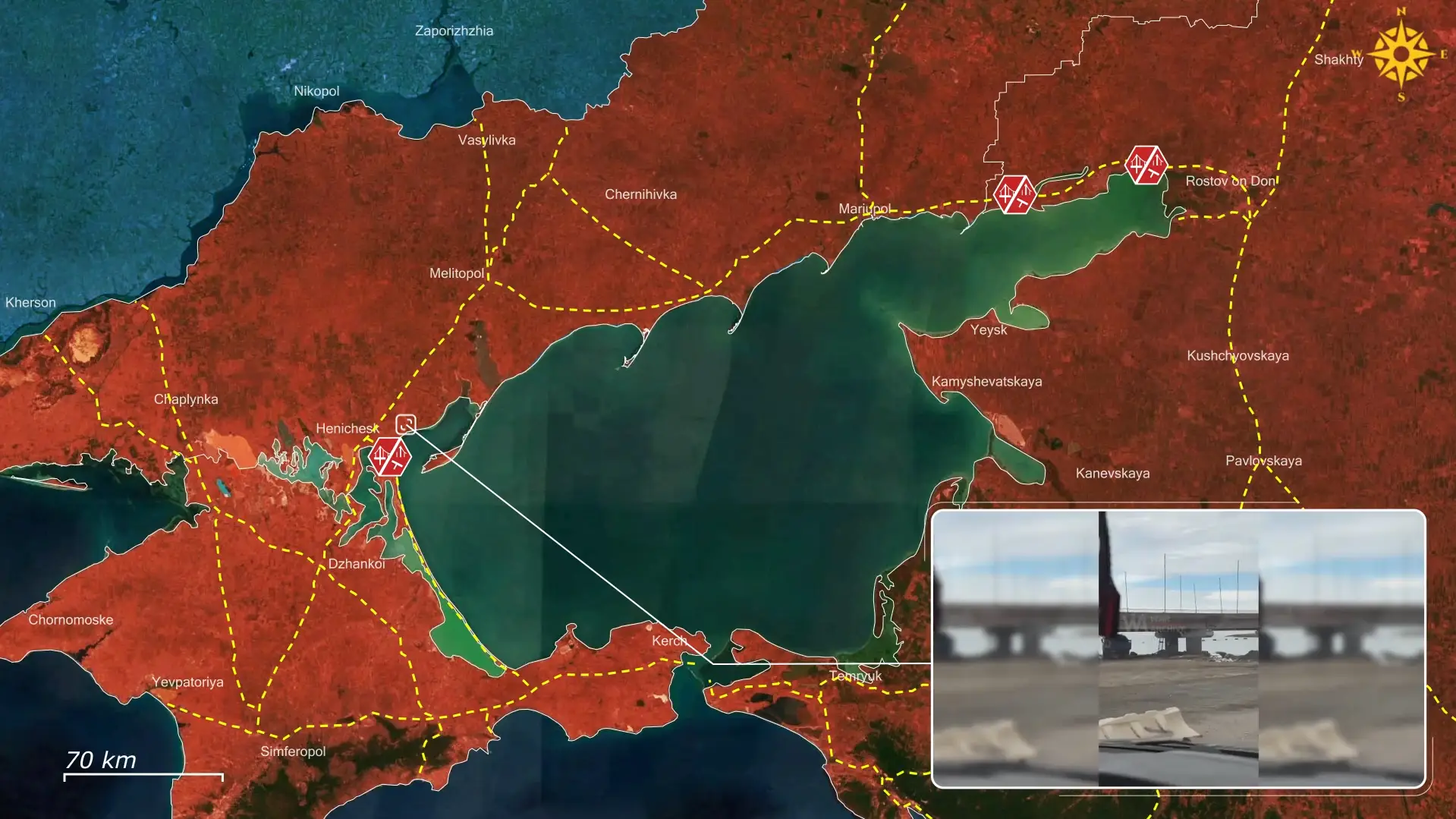
But the Kerch Bridge is only the most spectacular target in a wider Ukrainian campaign, because in Russia’s Rostov region, Ukrainian drones struck the bridge crossing the Mius River along the R-Two-Hundred-and-eighty highway, part of the transportation corridor connecting Russia with Russian-controlled southern Ukraine. Footage from and after the attack confirms that the crossing had become unusable, and now Russian vehicles would face an approximately fifty-eight-kilometer detour, which matters because the route supports Russian military transportation toward Mariupol and Crimea. Rostov authorities also acknowledged damage to a railway bridge during another drone attack, with every diversion increasing journey times, fuel consumption, and pressure on alternative roads.
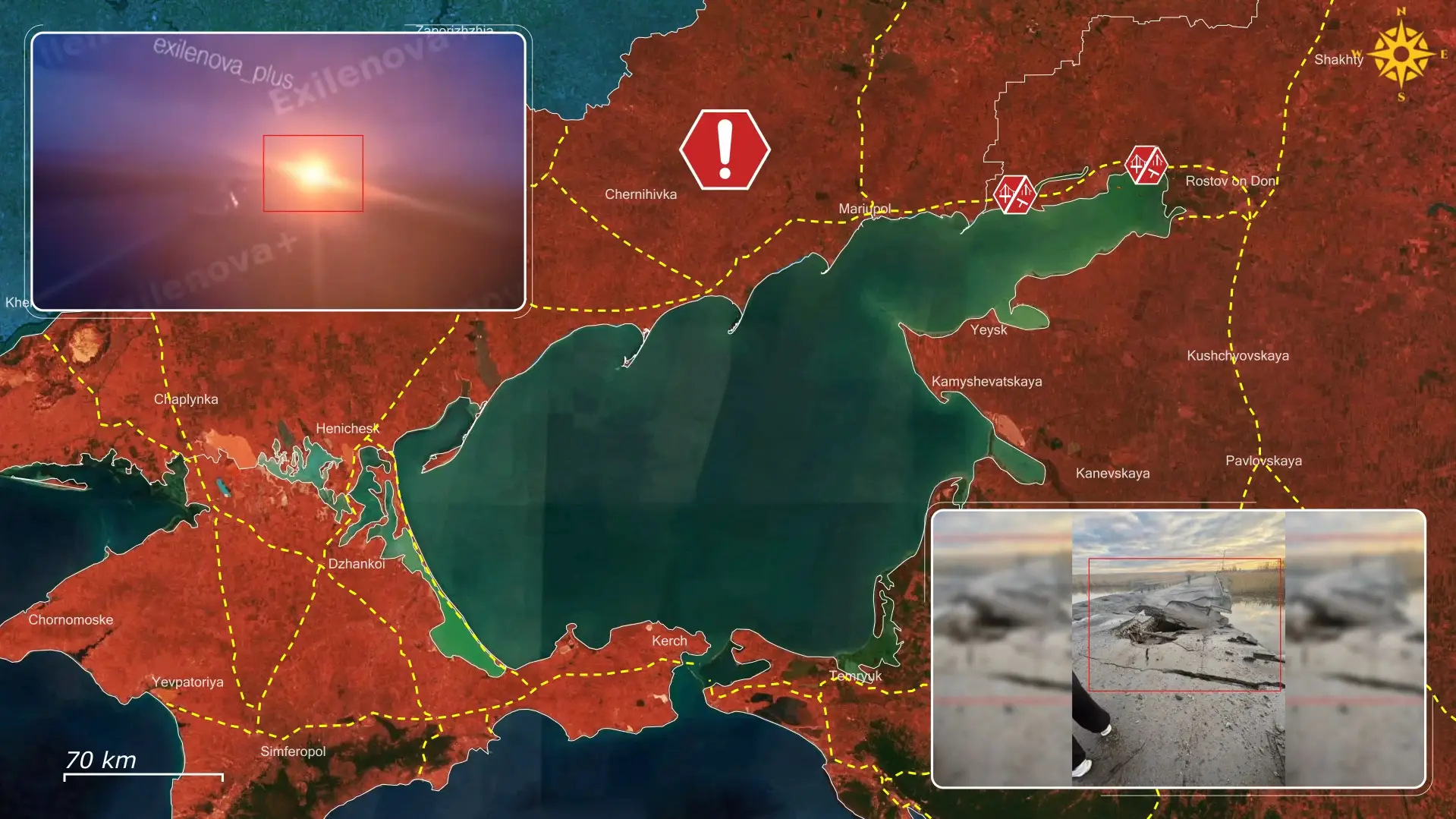
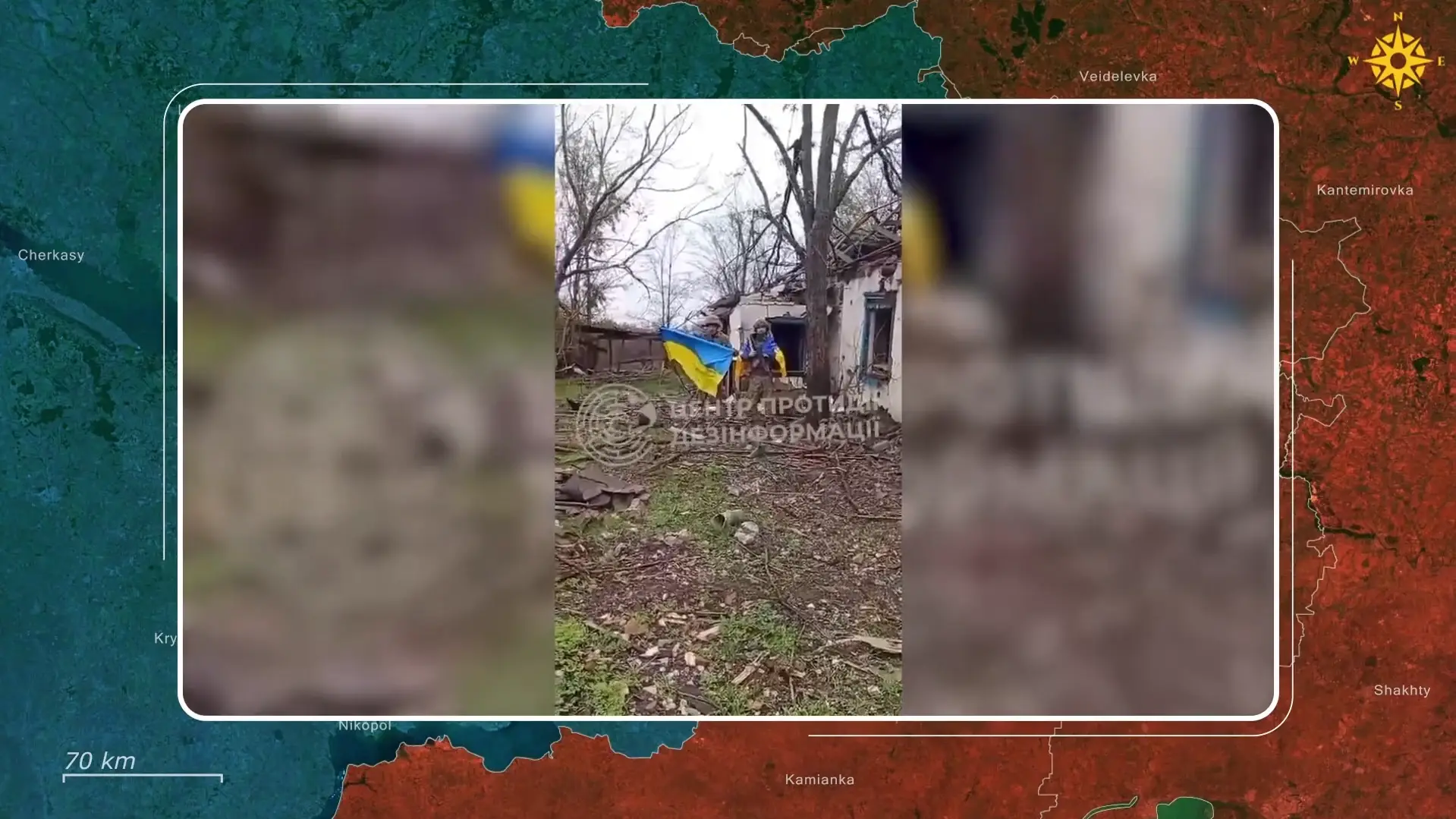
Ukraine has been attacking Crimea’s northern approaches since the summer, and near Henichesk, repeated strikes have destroyed the principal bridge, forcing Russian forces to establish two pontoon crossings, with footage showing vehicles using these temporary alternatives beside the damaged structure. However, pontoons offer limited capacity and remain vulnerable to further strikes, as Ukrainian forces have continued targeting both the original crossing and its replacements. Consequently, Russia faces disruption at multiple points along the land corridor, precisely when the Kerch crossing has become unavailable.
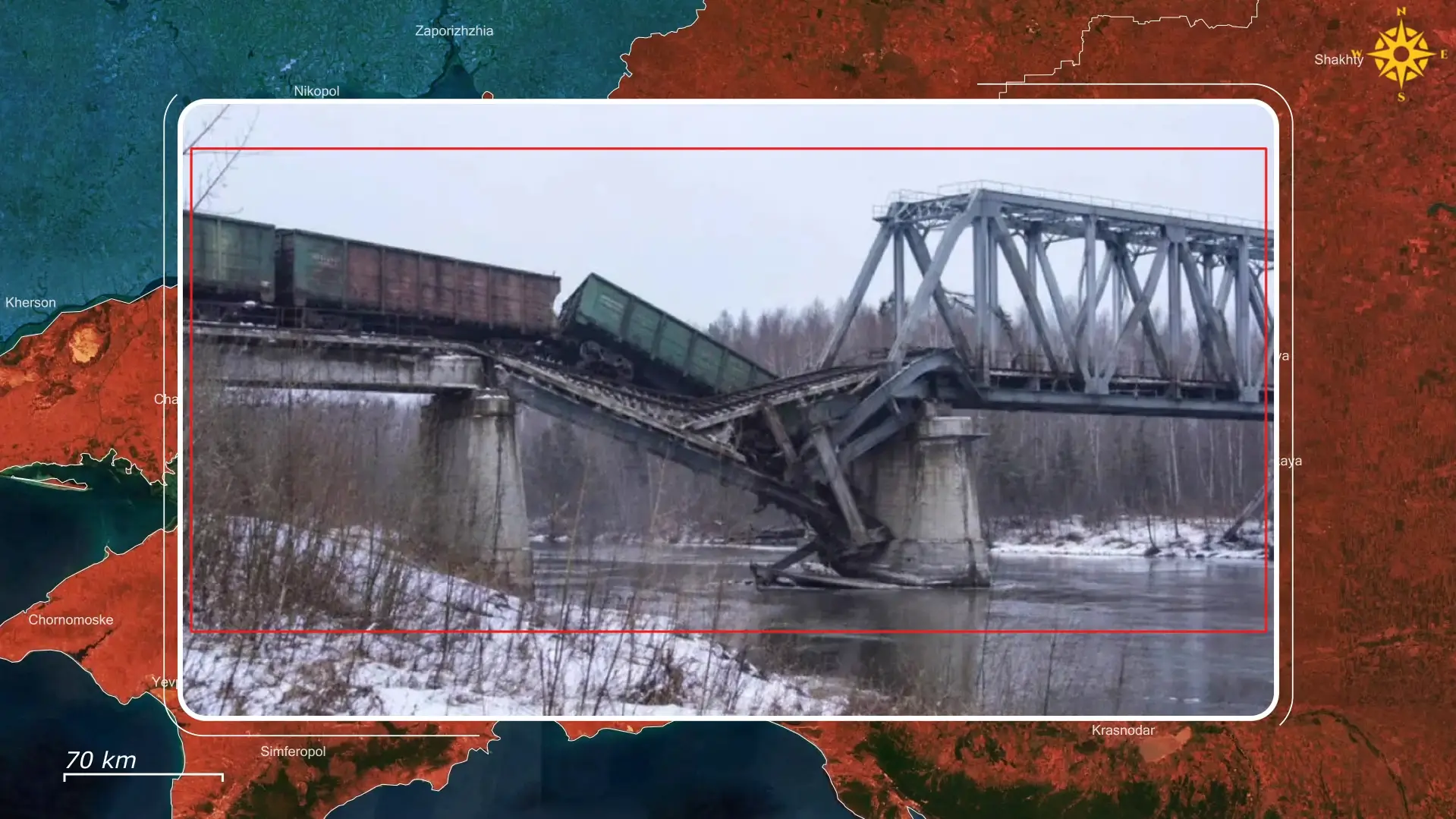
In Arkhangelsk Oblast, a bridge collapsed beneath a freight train, derailing wagons and interrupting an important railway, with Russian authorities stating a possible Ukrainian sabotage act. In Bryansk Oblast, another railway bridge was damaged following a separate incident. Meanwhile, Ukraine’s General Staff reported striking a road bridge near Stanytsia Luhanska, threatening another connection supporting Russian operations in Russian-controlled Ukrainian territory, with these incidents collectively highlighting the vulnerability of Russia’s extensive transportation network.
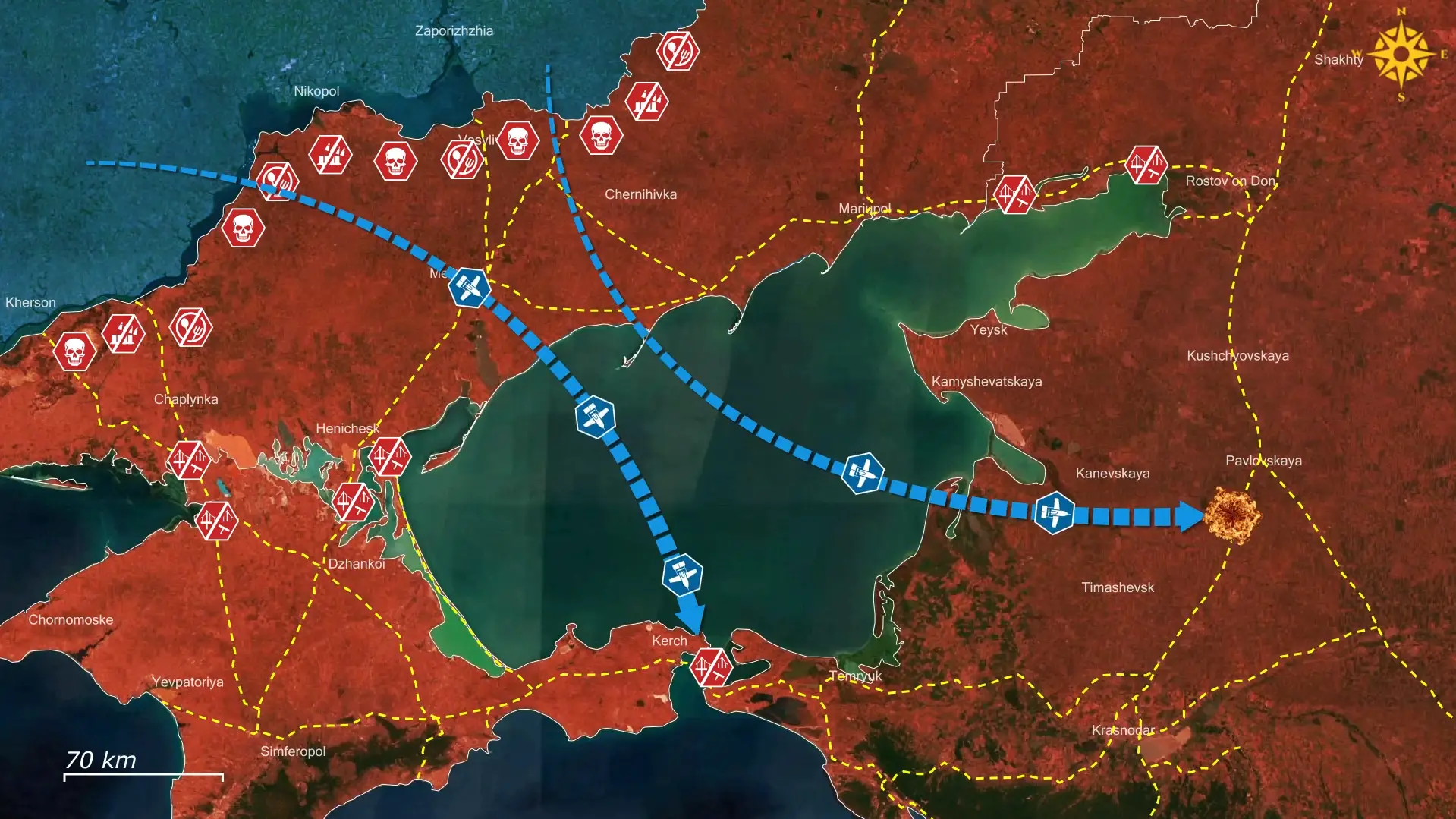
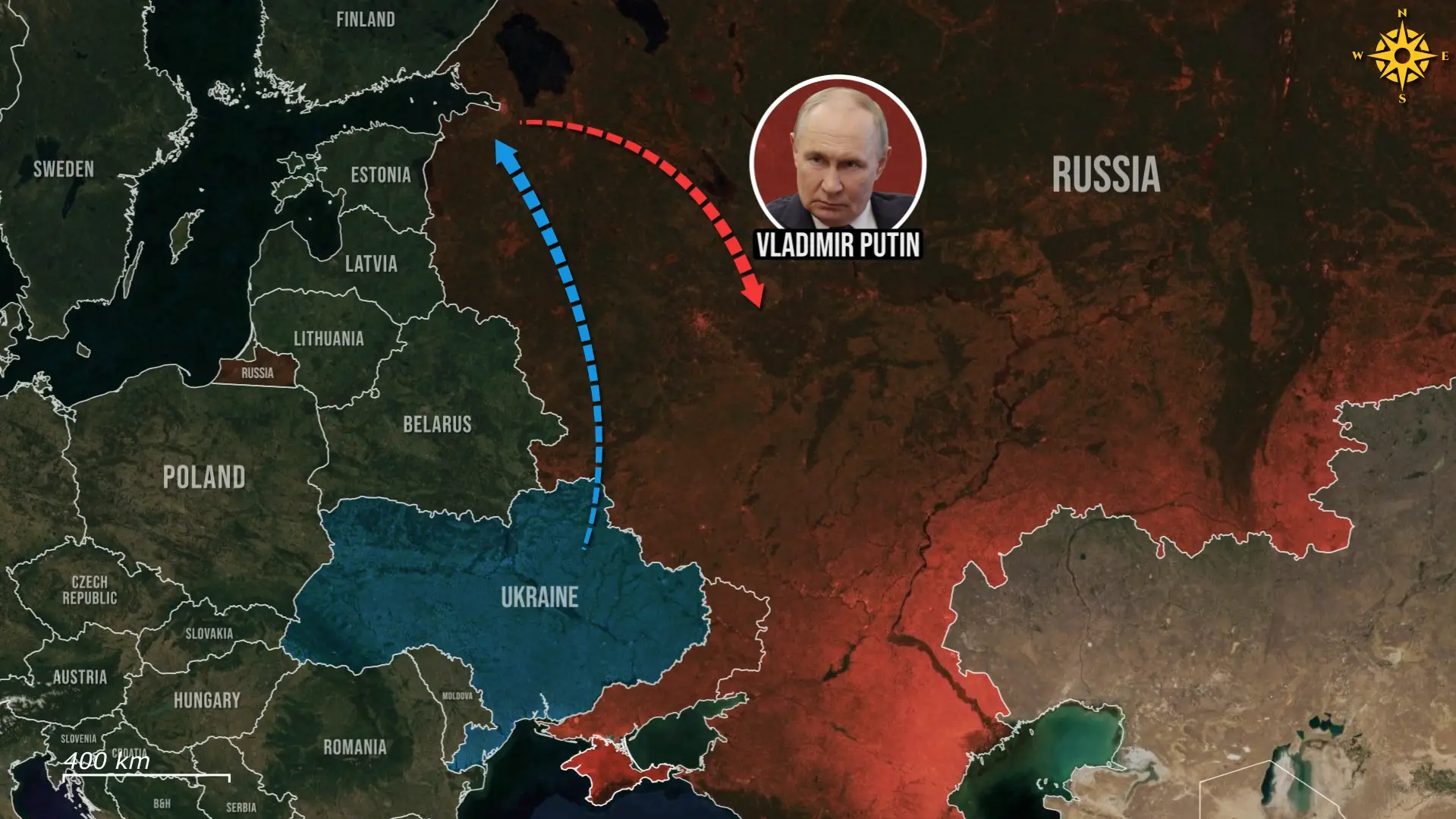
Overall, the strategic objective of the Ukrainian campaign is retaliation, but it also extends beyond that, as Ukraine is attempting to make Russian control of Crimea increasingly expensive, difficult, and militarily unsustainable with strikes that threaten the very connections supporting it. Every damaged crossing forces Russian logistics onto fewer, more predictable routes, which complicates reinforcement, delays ammunition and fuel deliveries, and increases pressure on already strained supply networks. Putin triggered this by escalating attacks against Ukrainian transportation infrastructure, but Ukraine’s response is demonstrating that the consequences can extend deep into Russia, and the Kerch Bridge will prove not to be the conclusion, but the beginning of a much broader struggle over Russia’s ability to sustain its operations on Ukrainian land.



Comments