

.svg)
In this video, we will analyze how Russia is forced to retreat in the Kherson region.
Here, Ukrainian forces intensified their middle-range strikes on Russia’s supply lines, making Russian positions impossible to sustain. As a result, the Russian command started planning for a withdrawal tens of kilometers deep and without a fight.
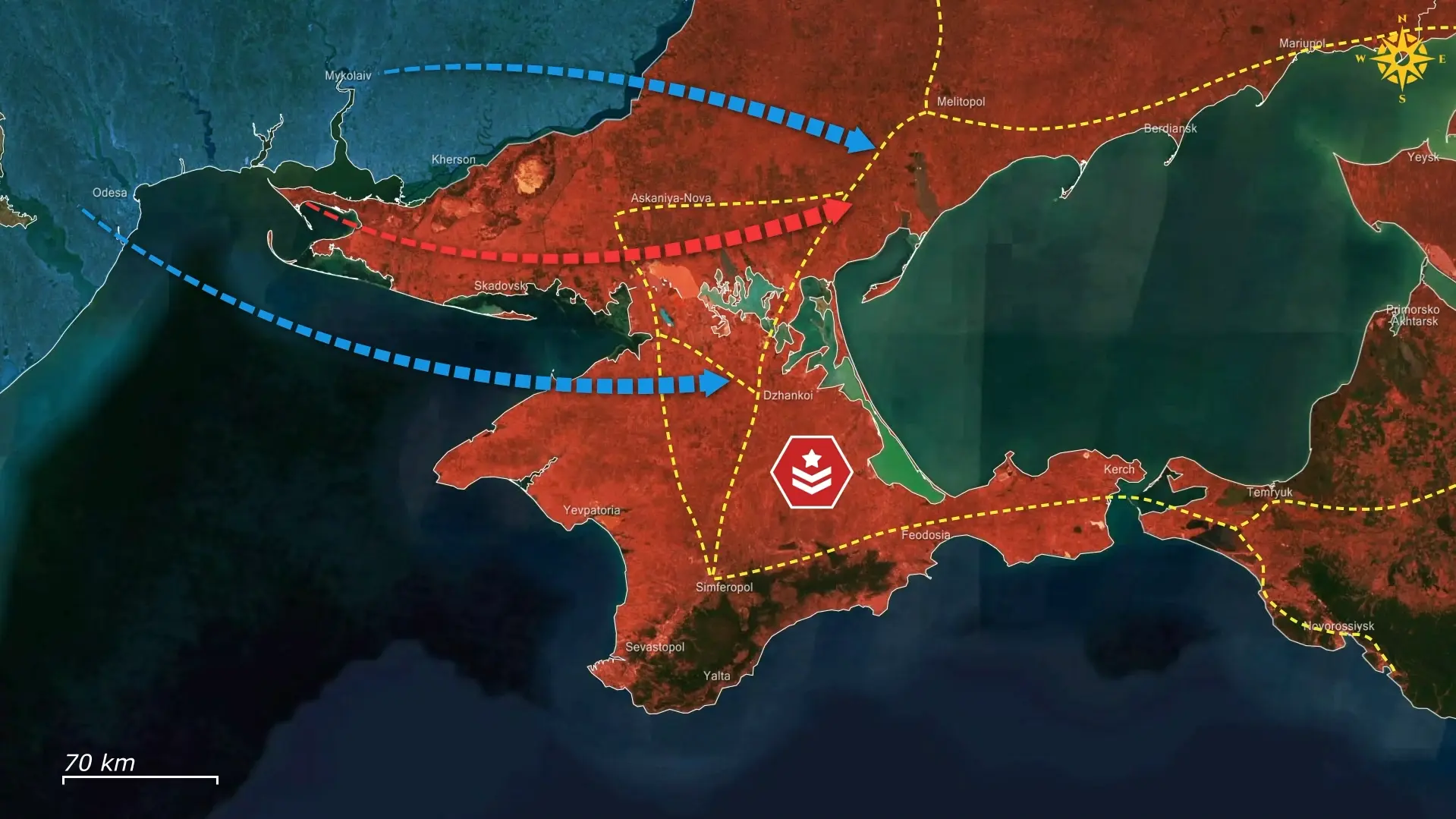
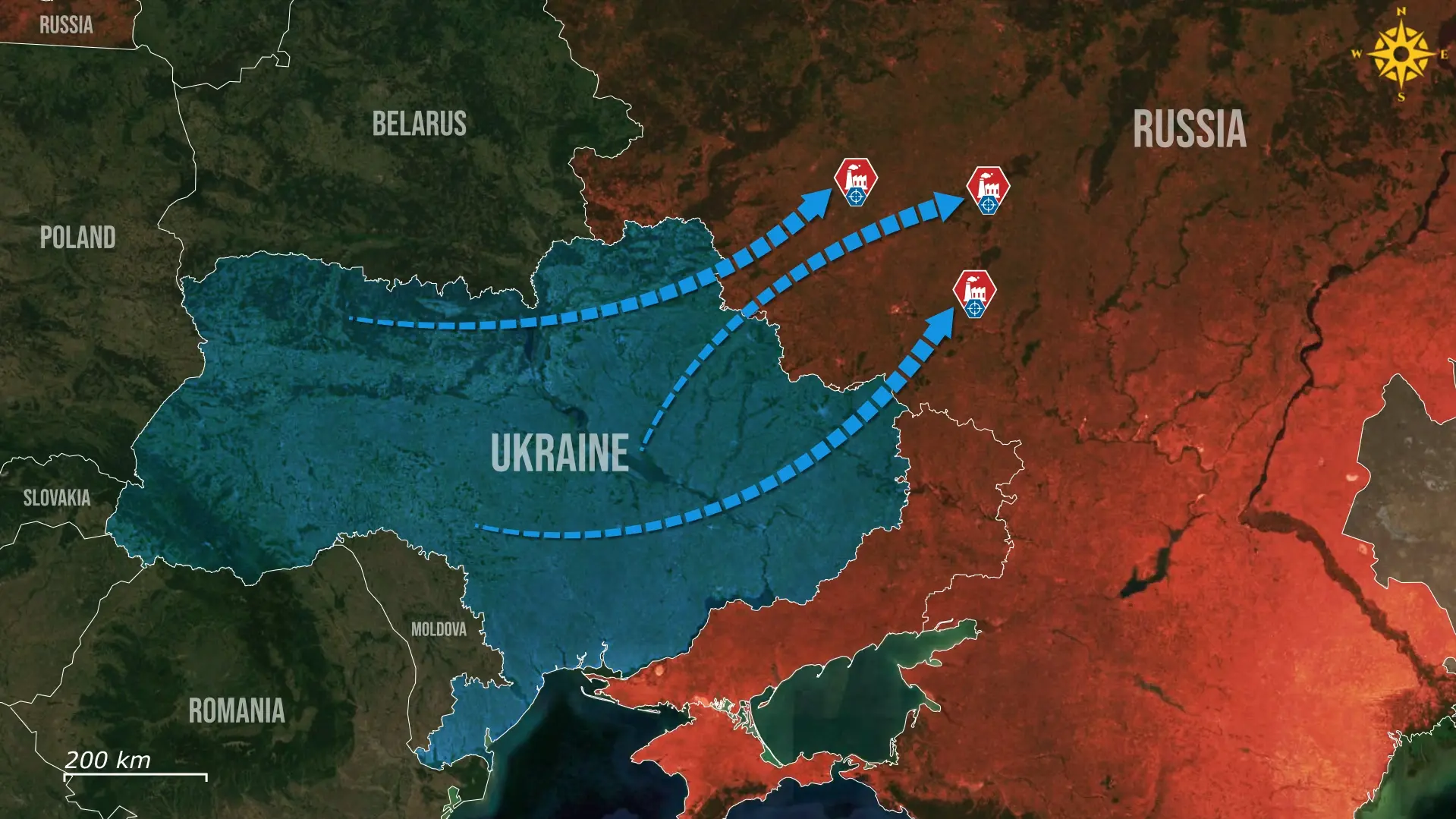
Recently, Kherson became the first sector where the Ukrainian strike campaign produced results. Ukrainian units equipped with medium-range strike capabilities have been instructed to focus their efforts on disrupting logistics lines between twenty and one hundred fifty kilometers behind the frontline. This aims to supplement the standard FPV drones, which strike up to twenty kilometers deep, and the ongoing deep strike campaign, which extends up to two thousand kilometers deep.
Ukrainian brigades have intensified their strikes and expanded their reach deeper into Russian logistical networks, effectively establishing a one hundred fifty-kilometer-deep kill zone.
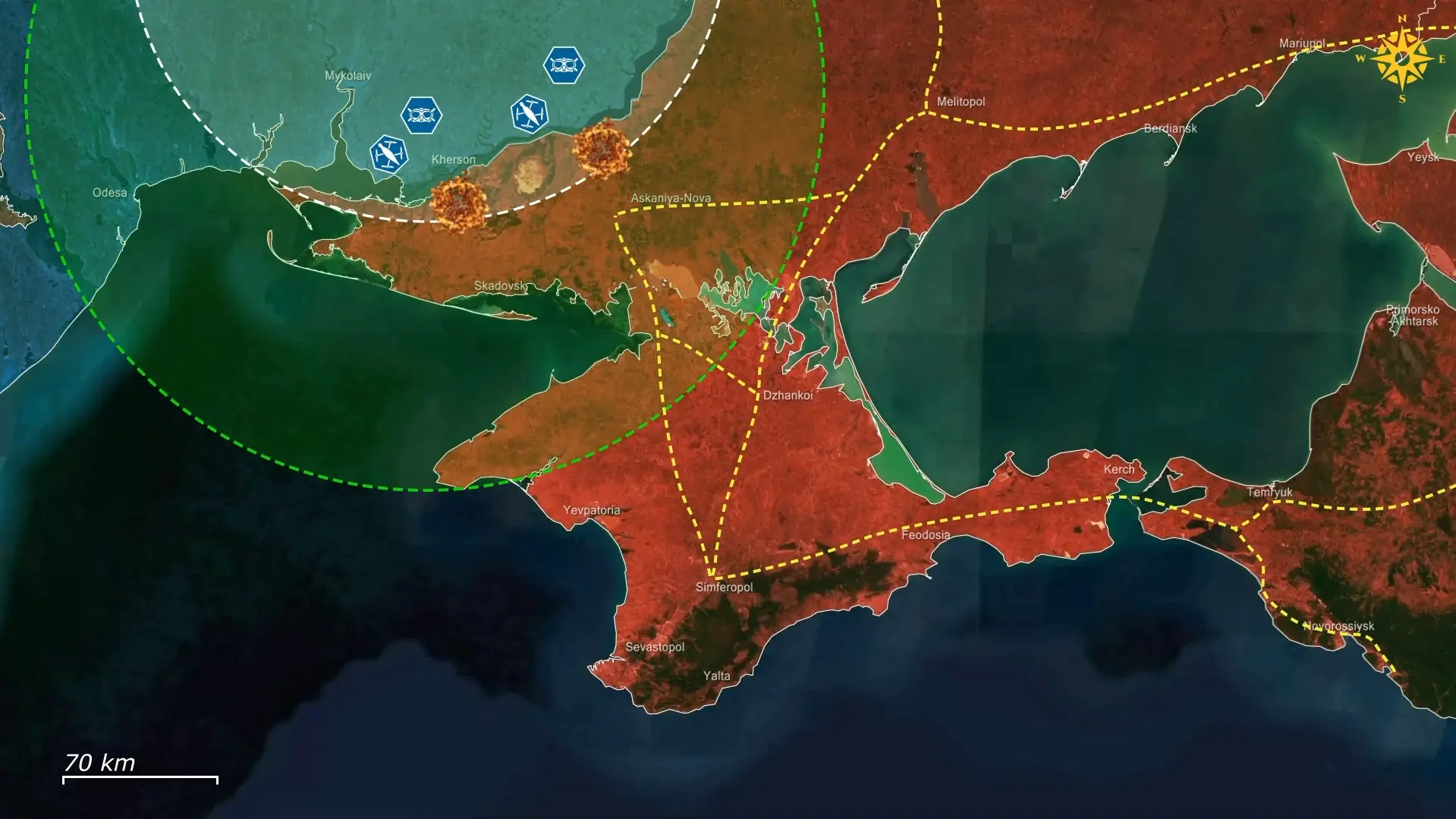
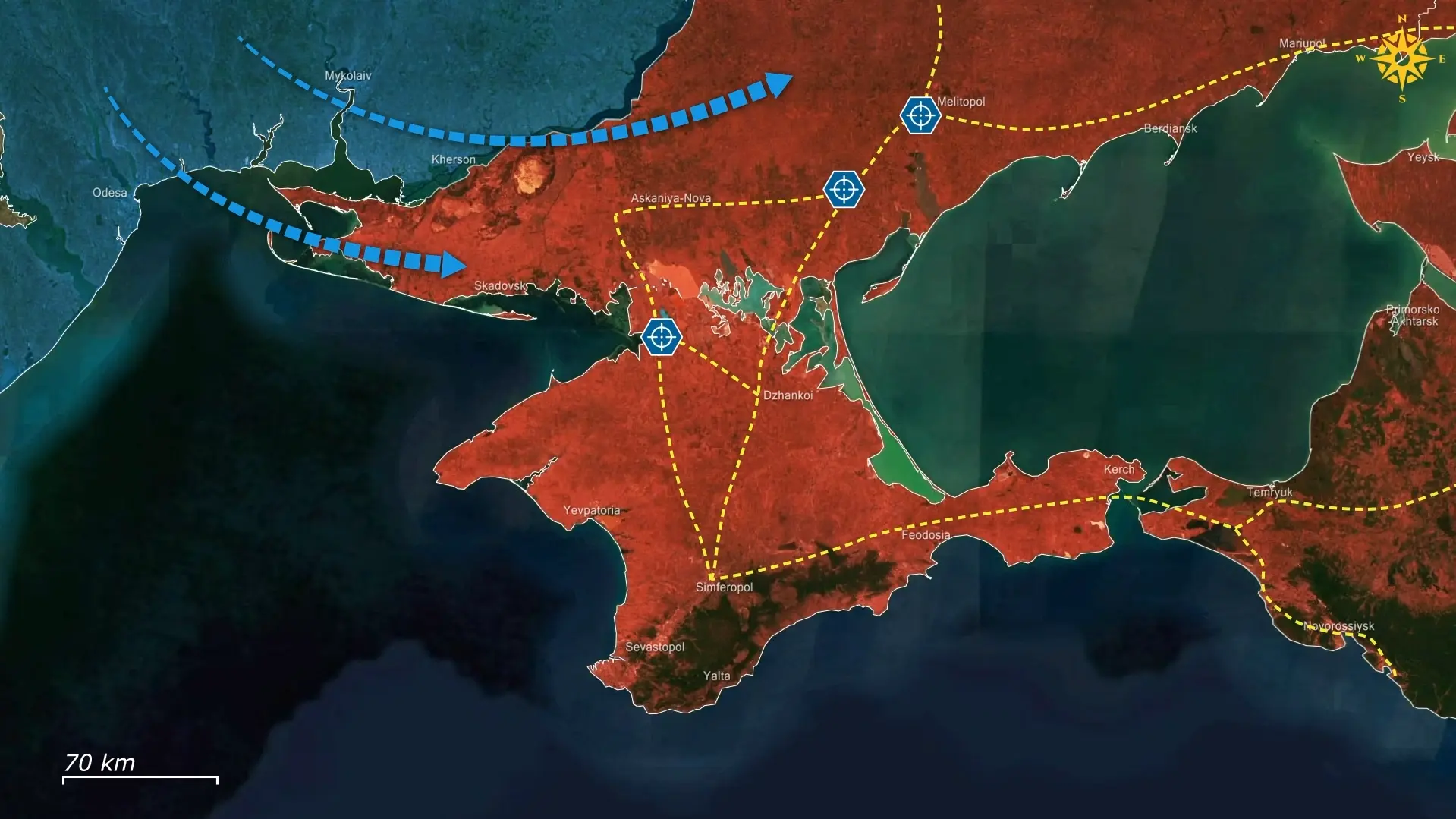
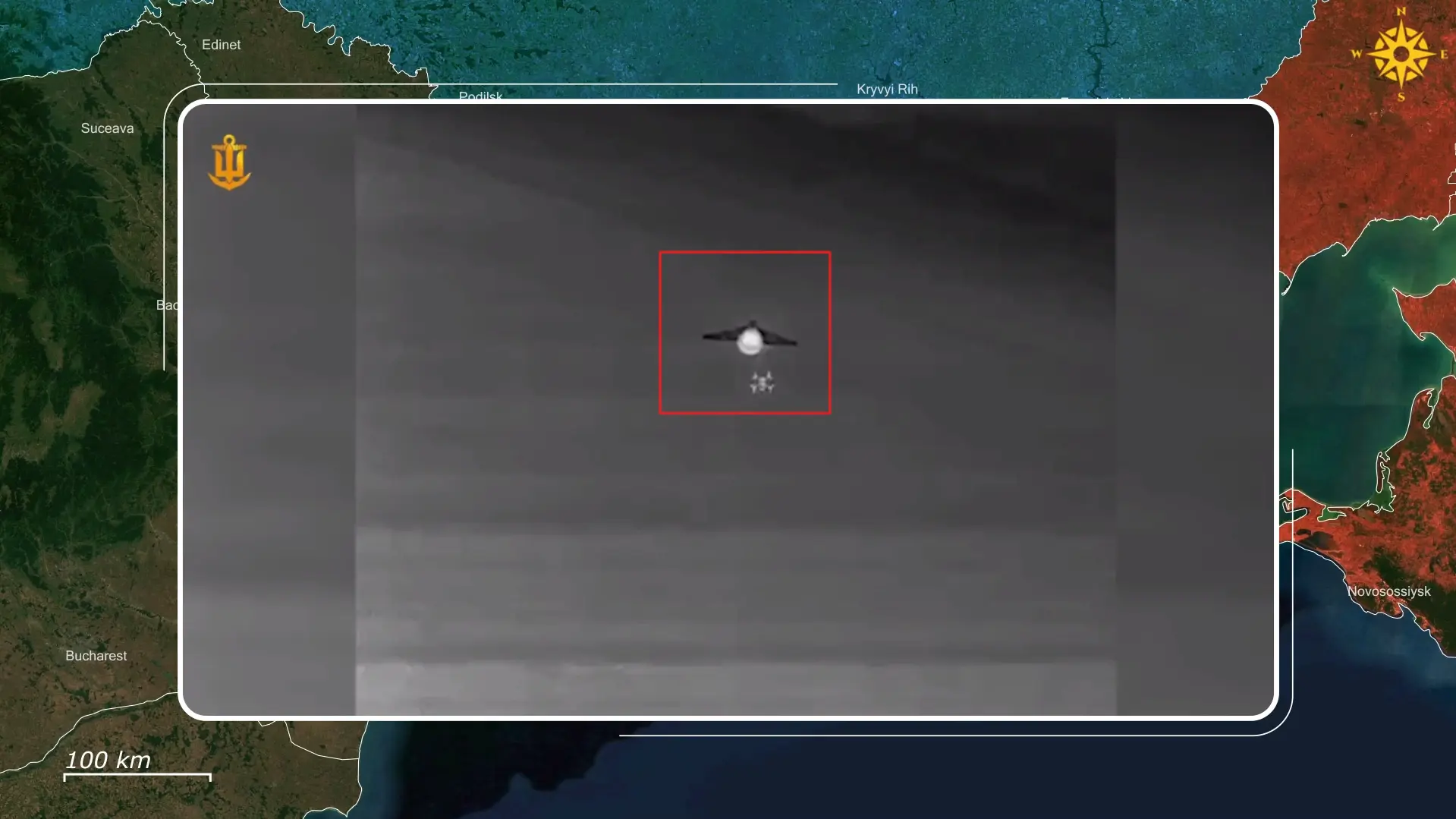
Ukrainian operators have reported a significant increase in their fire-control range across the Kherson region. Specialized FPV drones can now reach settlements located up to thirty kilometers from the right bank of the Dnipro River, while some drones are capable of flying distances of up to fifty kilometers and are highly resistant to Russian electronic warfare. Additionally, Ukrainian units use heavy drones to remotely mine Russia’s main logistical routes. At the same time, the Thirtieth Marine Corps has been conducting strikes against Russian logistics vehicles in the Skadovsk area, approximately sixty kilometers behind the frontline, using large mother drones to carry FPV drones. These efforts are all part of a coordinated campaign designed to systematically degrade Russian logistics and motorized activity throughout the region.
As Ukrainian strikes expanded deeper into the Russian rear, Russian logistics became increasingly restricted. Trucks, fuel tankers, and supply vehicles faced growing losses not only on major highways but also on secondary roads.
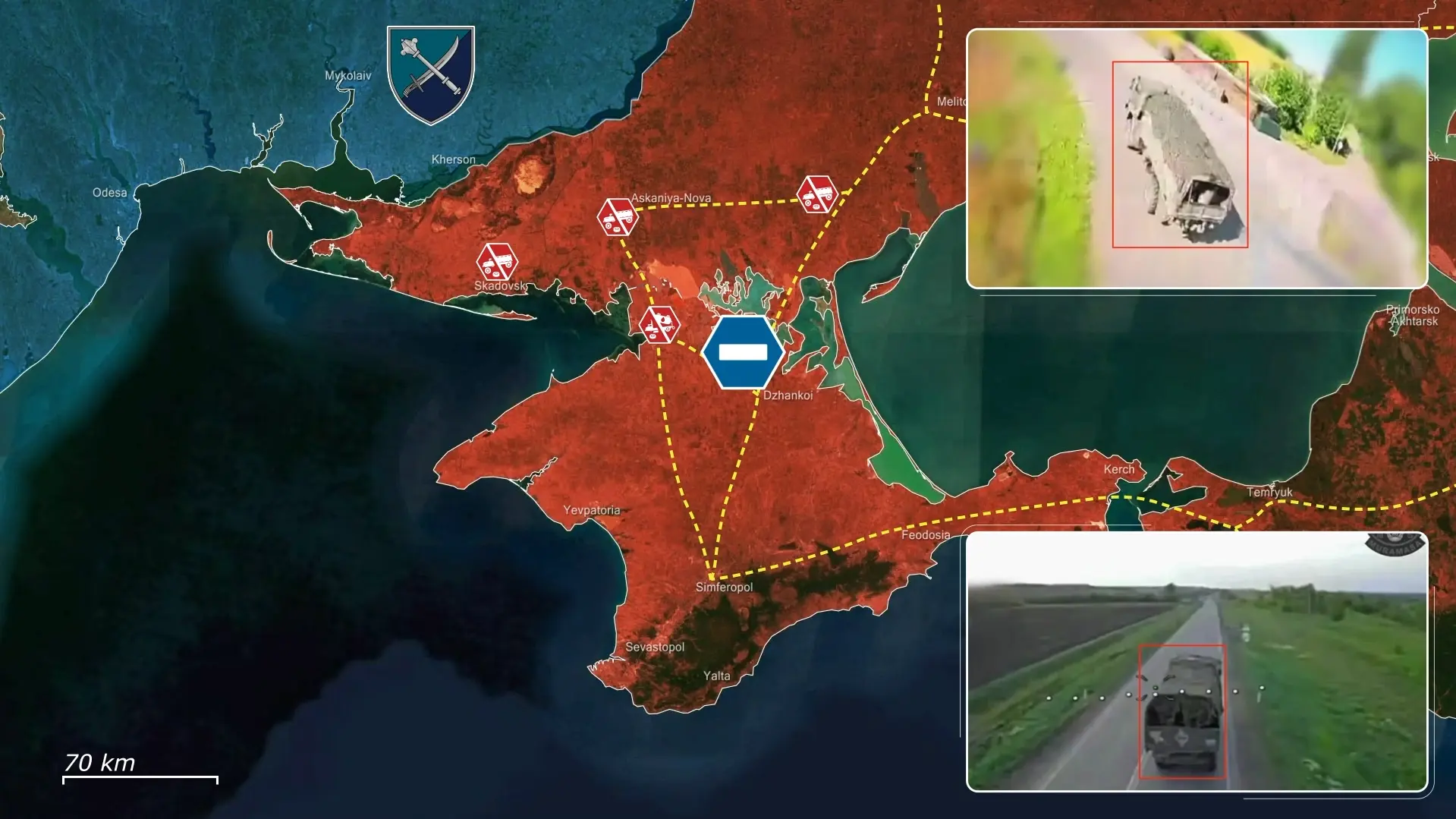
This progressively reduced Russia’s ability to sustain frontline forces. Supply deliveries became increasingly unreliable, while fuel shortages worsened as Ukrainian forces expanded their targeting from fuel tankers to refueling infrastructure itself. In one notable strike, Ukrainian forces hit a gas station in Skadovsk. As a result, even when fuel managed to reach the area, Russian vehicles often lacked functioning facilities where it could be distributed and used. Combined with continuing losses of transport vehicles, this left many frontline units with increasingly unstable access to ammunition, fuel, reinforcements, and other essential supplies.
Over time, these disruptions created a cascading effect in which some Russian positions became operationally unsustainable. Because of the strikes and the growing personnel losses, Russia's ability to move, reinforce, and supply forces steadily deteriorated.
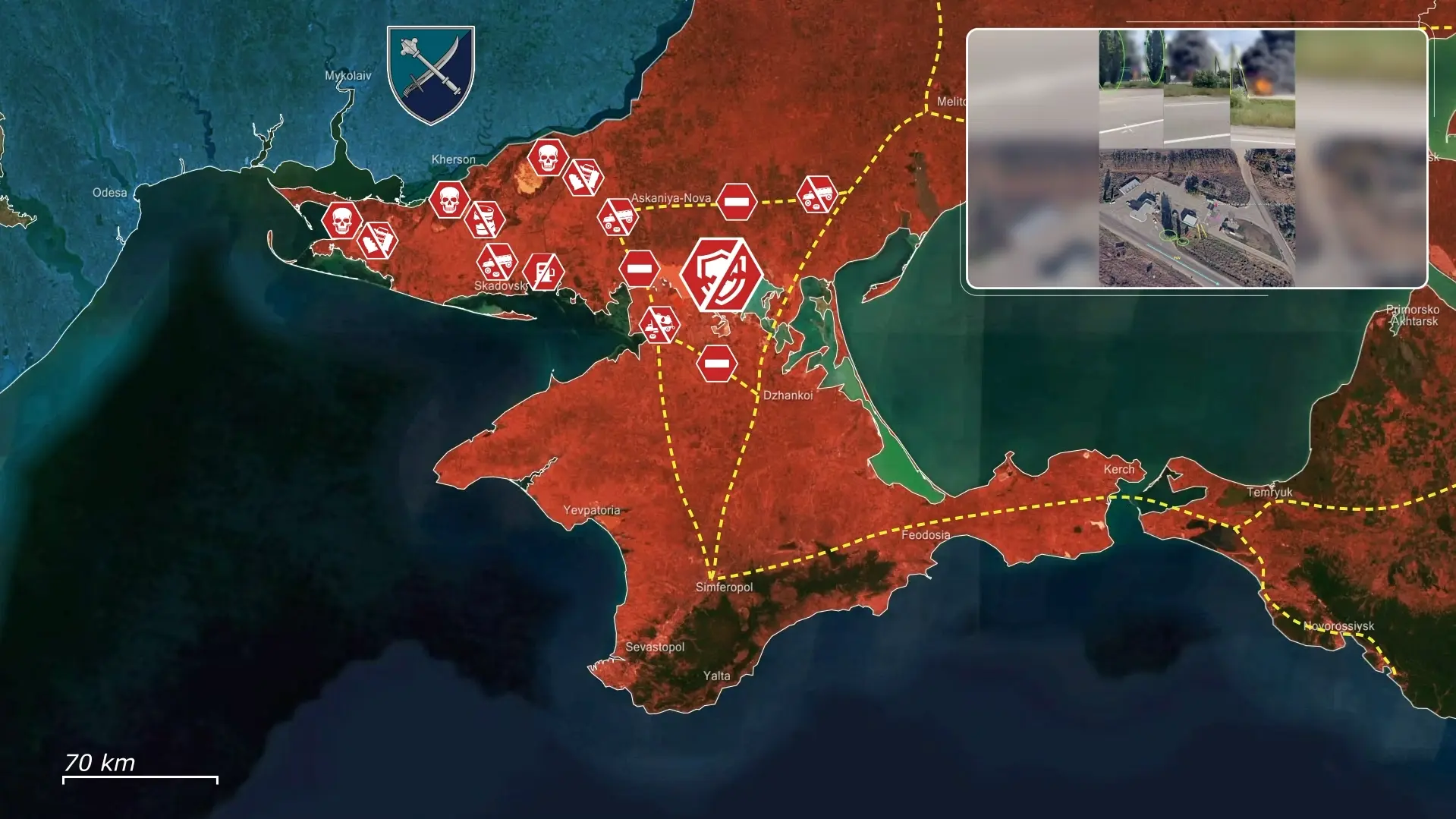
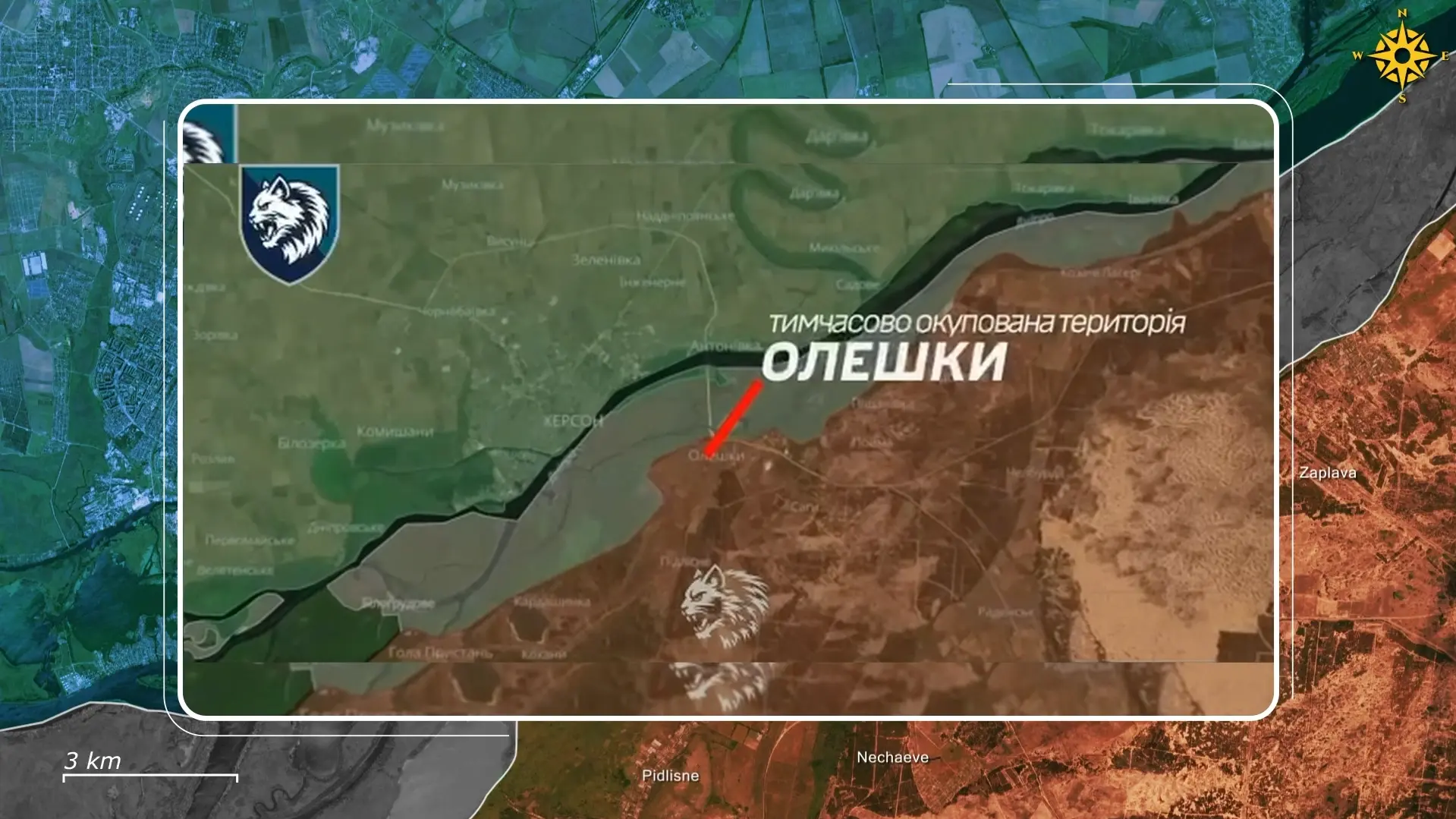
One of the clearest examples emerged on the Kinburn Spit, where a Russian regiment was ultimately forced to withdraw from the northern and western coastal sections of the peninsula. These positions were already among the most difficult to supply because of their remote location. After some troops were redeployed to the Zaporizhia sector, the remaining forces were left with insufficient manpower, while reinforcements never arrived. This withdrawal is particularly significant because it was not caused by a direct Ukrainian ground assault. Instead, it resulted from the gradual breakdown of Russian logistics under sustained Ukrainian strike pressure. The Kinburn Spit demonstrates how expanding strikes can restrict logistics, make resupply unreliable, render positions unsustainable, and ultimately force units to abandon them without being attacked on the ground. Although the spit's exposed geography makes it more vulnerable than most sectors of the front, it provides an early example of the outcome Ukraine is trying to achieve elsewhere, which is to force Russian troops to withdraw because their positions can no longer be sustained.
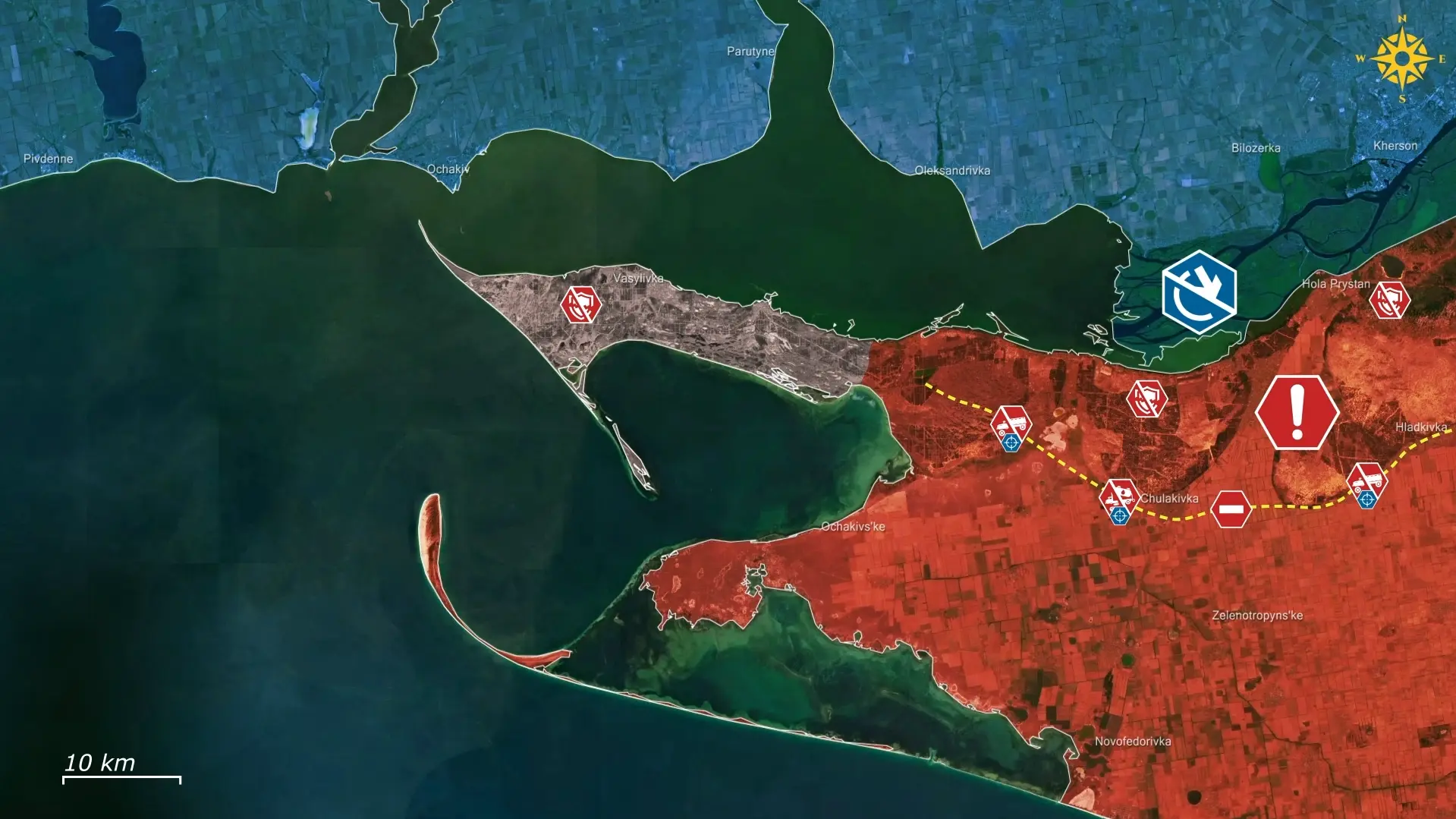
Overall, Ukraine’s approach is aimed at making Russian positions increasingly unsustainable without any major ground engagement, effectively forcing operational breakdowns through a coordinated strike campaign. The Russian withdrawal from the Kinburn Spit demonstrates that this method can work in practice because once supply lines are sufficiently degraded, positions become impossible to hold. This is what Ukraine needs to replicate on a bigger scale and isolate different sectors of the frontline to create opportunities for counterattacks.

.jpg)

Comments