Thank you! Your submission has been received!
Oops! Something went wrong while submitting the form.

Latest News

Putin learns Russia lost 20 km as battlefield setbacks overshadow negotiations

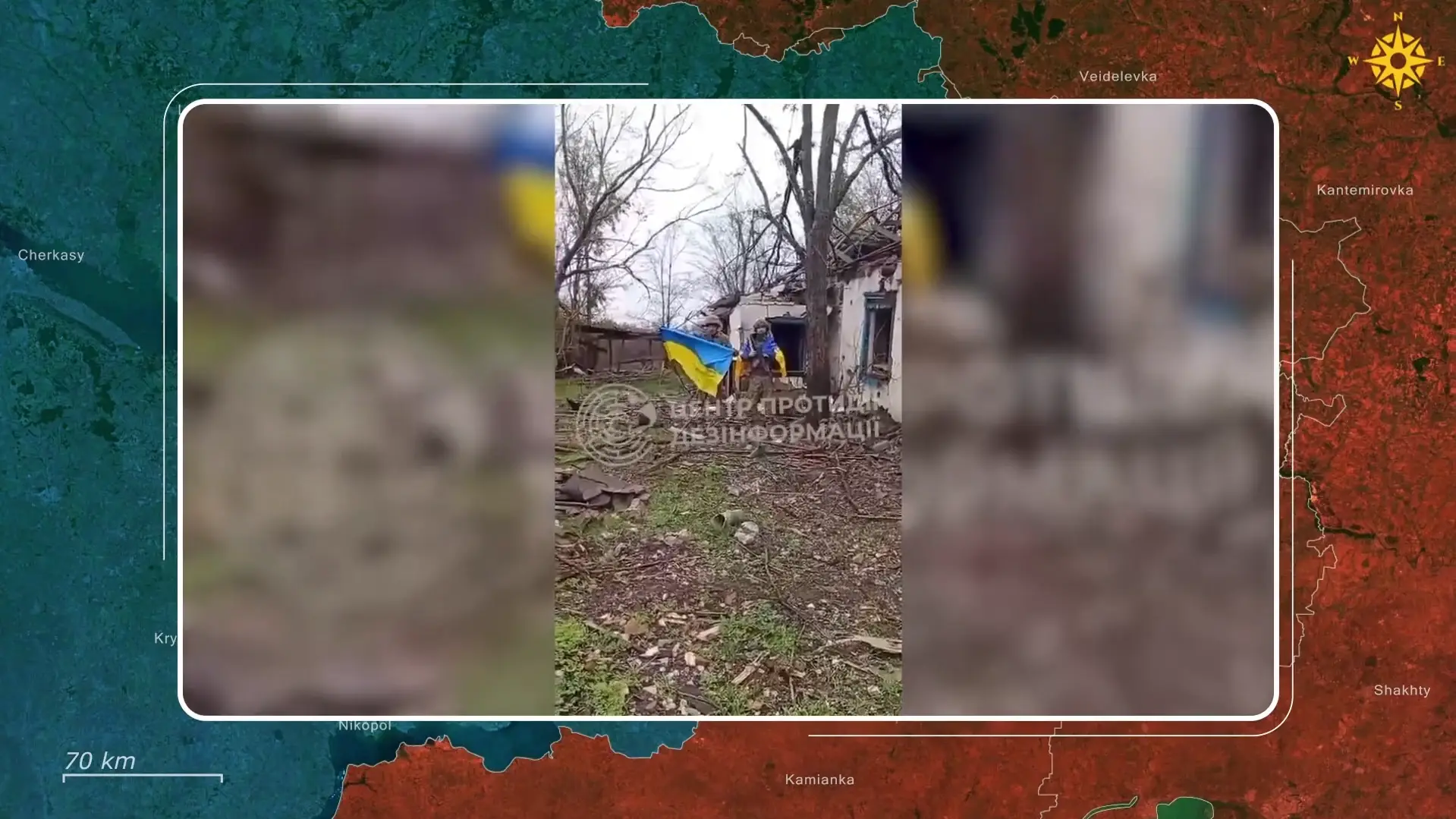
Systemic falsification of battlefield reporting within the Russian military hierarchy has generated an estimated 5,000-square-kilometer discrepancy between actual tactical control and official operational maps across the Zaporizhzhia, Lyman, Vovchansk, and Donetsk axes. Driven by career-preservation incentives, tactical commanders fabricate advances—such as the false capture of Voskresenka and inflated claims around Kostiantynivka and Dobropillia—using staged flag-planting operations and synthetic media that cascade upward into senior command assessments. Consequently, Russian headquarters routinely commit infantry to high-attrition, operationally unsound assaults behind Ukrainian lines solely to reconcile ground realities with falsified situational mapping. Ukrainian forces exploit this command friction and overextension by targeting isolated infiltration units to recapture contested positions, while Moscow's reliance on distorted maps inflates its territorial demands in Donetsk Oblast to an untenable ninety percent. This institutional self-deception creates severe structural vulnerabilities for ceasefire negotiations, as any truce predicated on unverified Russian map claims would require Ukrainian withdrawals from controlled territory and provide Moscow with constant pretexts for alleged violations. Ultimately, embedding fabricated tactical data into strategic decision-making degrades Russian combat power while shifting the operational and diplomatic initiative toward forces operating with accurate battlefield awareness.

Exclusive

Available to Insider Annual tier and higher.
Upgrade here to access.

By
RFU News
Nov 17, 2026

Kerch bridge down: Russia’s most vulnerable artery was severed

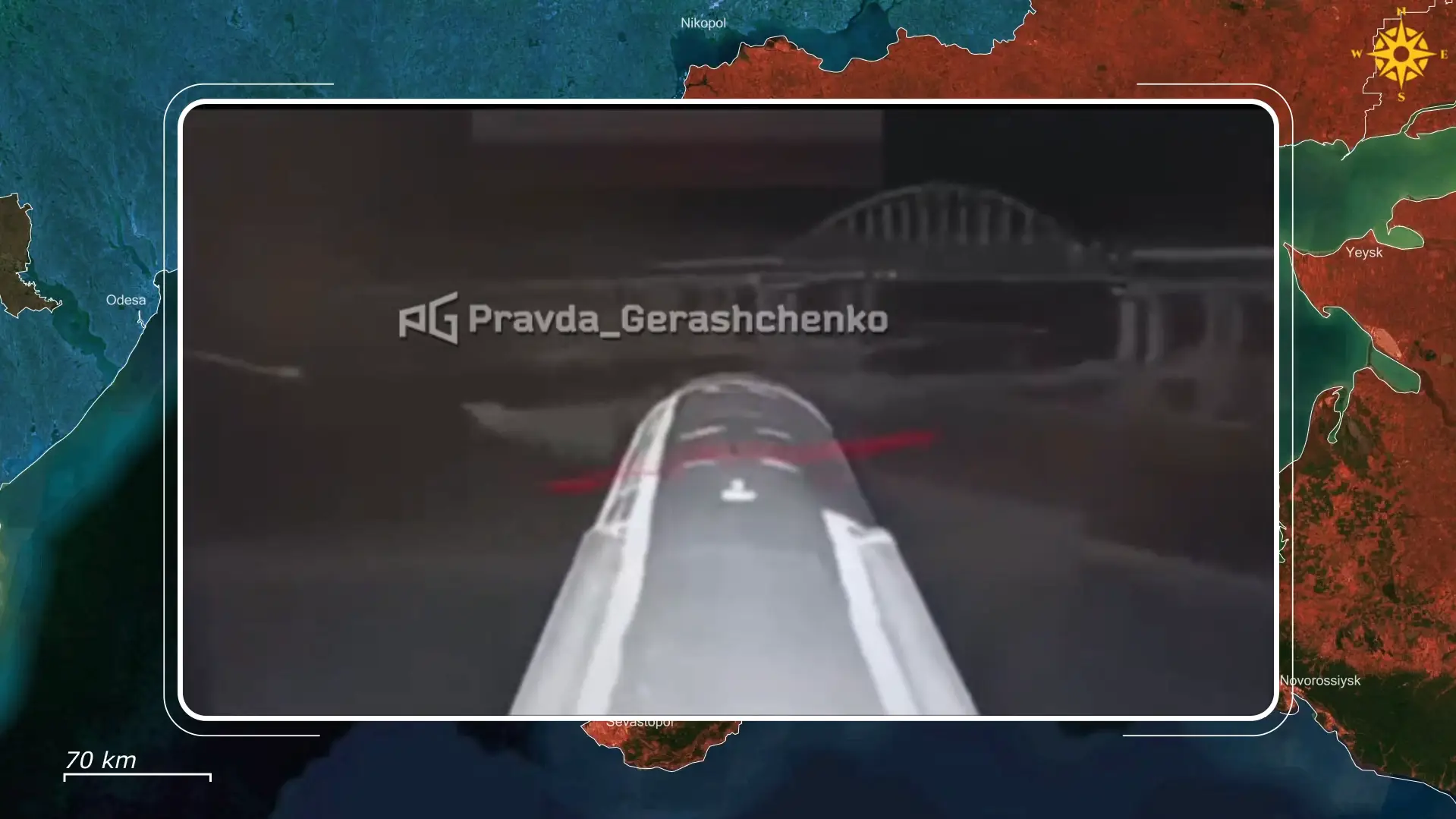
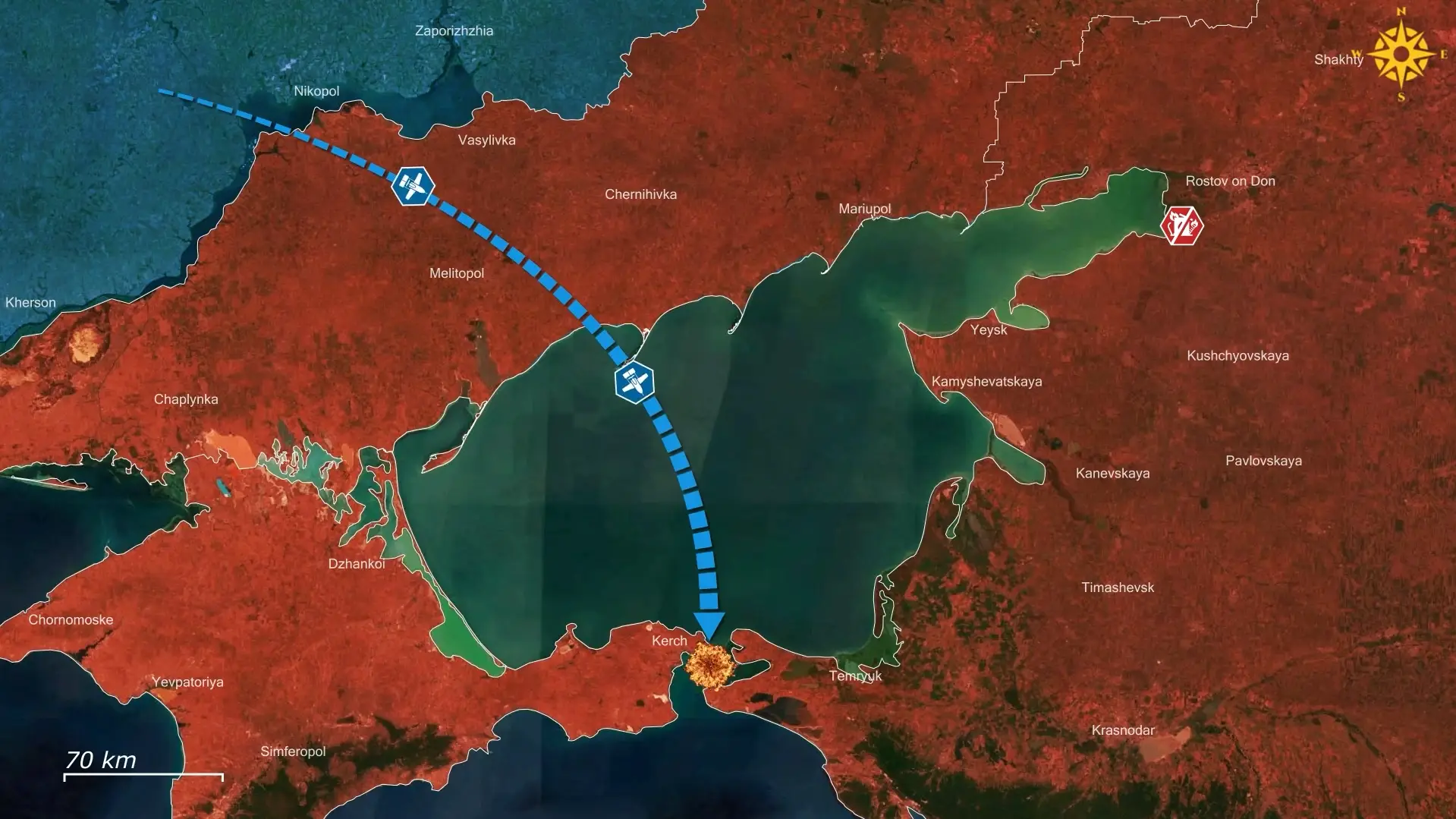
Coordinated long-range drone saturation tactics, paired with simultaneous diversionary strikes on rear-echelon fuel infrastructure such as the Azov oil depot, have overwhelmed Russian point defenses protecting the Kerch Bridge. By simultaneously targeting deep domestic facilities around Moscow and Leningrad alongside occupied transit arteries, Ukrainian operational design forces Russia into an unsustainable spatial dispersion of finite air-defense assets. The resulting structural failure—marked by a fifteen-degree shift in a primary load-bearing arch of the $3.7 billion, 19-kilometer crossing—halted transit for thousands of vehicles and requires at least six months of specialized engineering repairs. Militarily, this acute logistical bottleneck severs a vital rail and road corridor used to supply fuel, ammunition, and equipment to Russian forces in Crimea and southern Ukraine. Economically, prolonged restrictions compound supply-chain friction, elevate transport costs, and accelerate the collapse of Crimea’s commercial and tourism sectors. Executed immediately after stalled peace negotiations in Abu Dhabi where Moscow demanded unoccupied Ukrainian territory, the strike signals that Russia’s territorial demands carry direct material consequences for its own critical infrastructure. Ultimately, rendering Putin’s flagship 2018 bridge insecure undermines the Kremlin’s image of control and demonstrates that even Moscow’s most heavily fortified strategic links remain vulnerable to sustained asymmetric interdiction.

Exclusive

Available to Insider Annual tier and higher.
Upgrade here to access.

By
RFU News
Nov 16, 2026

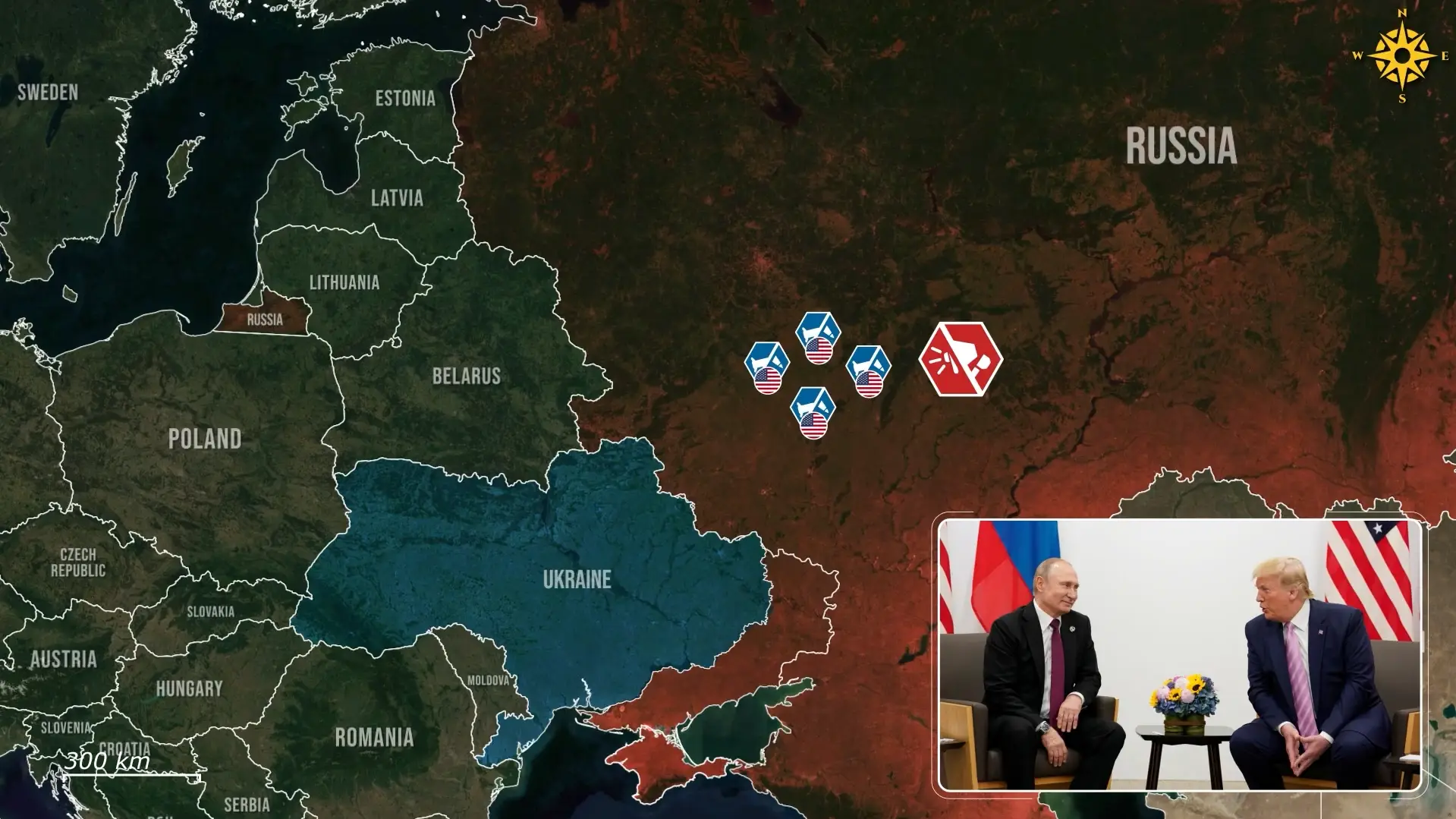
Knife in the back! Putin calls Trump as Ukraine unleashes new US missiles

The integration of the US-developed Rusty Dagger cruise missile under the Extended Range Attack Munitions program fundamentally alters deep-strike economics by providing Ukraine with a mass-producible precision weapon costing approximately $250,000 per unit. Combining a 926-kilometer air-launched range, a 700 km/h speed, and warheads up to 112 kilograms, the system bridges the lethality gap between long-range drones and scarce Western cruise missiles. Multi-domain adaptability across F-16, Su-24, and booster-assisted ground platforms further expands launch capacity and operational survivability. Backed by a European-financed acquisition ceiling of 3,350 units, this scalable supply enables sustained salvo saturation alongside domestic Ukrainian munitions. Consequently, Russian air-defense networks face an acute cost-exchange dilemma between expending finite, high-value interceptors and leaving hardened military, industrial, and oil infrastructure exposed. Simultaneously, continuous redeployment of air-defense batteries across Russia’s vast territory generates recurring coverage gaps that coordinated strikes can systematically exploit. Ultimately, affordable mass-precision strike capability erodes Russia’s strategic depth and renders its current defensive posture economically and logistically unsustainable.

Exclusive

Available to Insider Annual tier and higher.
Upgrade here to access.

By
RFU News
Nov 15, 2026

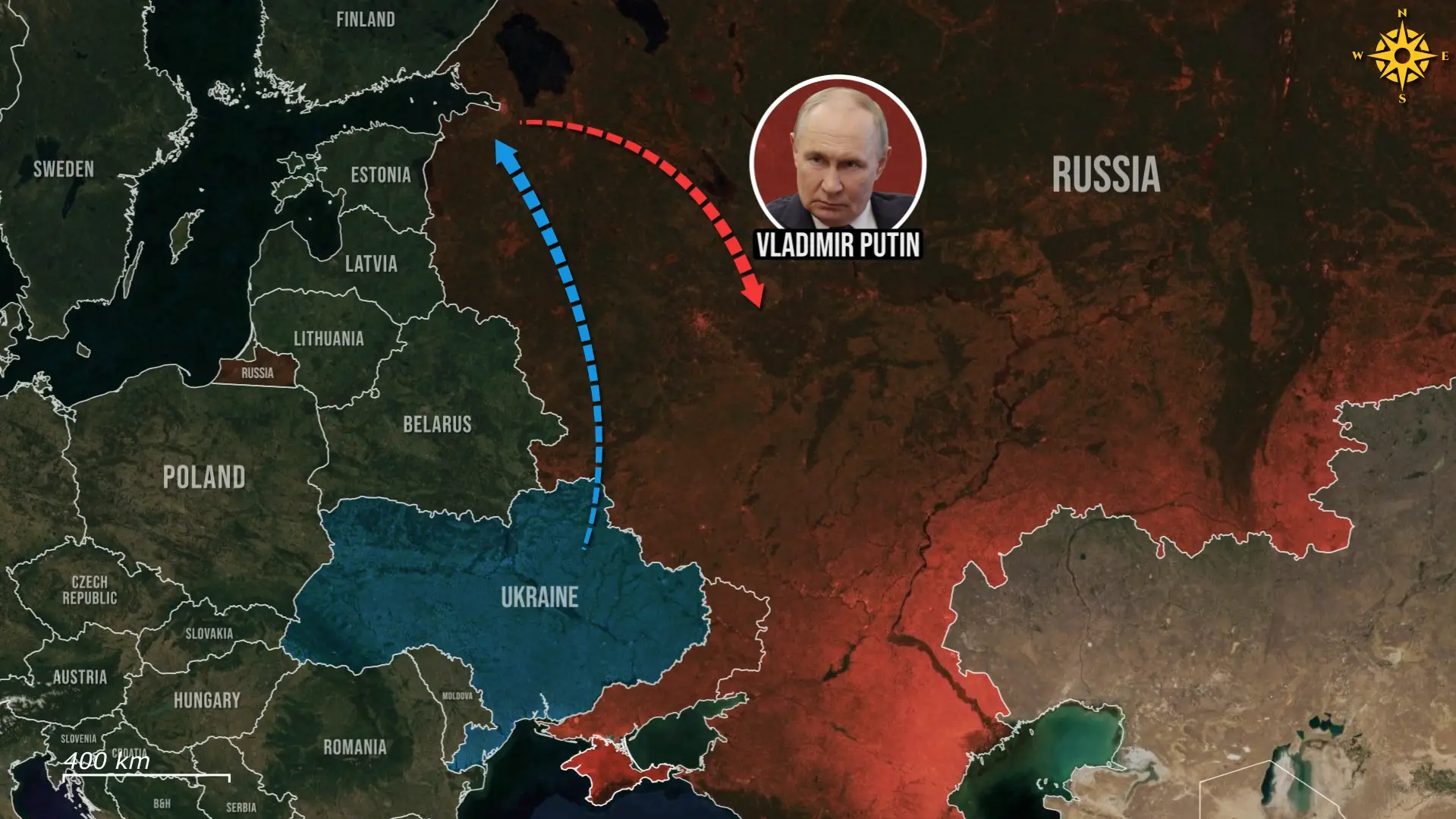
Ukraine finds a 30-km hole in Russian defenses... strikes St Petersburg

By exploiting cross-border Starlink connectivity extending over thirty kilometers inland from Finland, Estonia, and the Baltic Sea, Ukrainian forces have transitioned deep-strike drones from pre-programmed flight paths to real-time, live-video operator guidance at ranges exceeding one thousand kilometers. The operational viability of this man-in-the-loop terminal control was demonstrated against Saint Petersburg and the Ust-Luga coastal energy hub, where precision strikes neutralized three major radar complexes, damaged a missile ship and oil terminals, and induced Russian friendly-fire losses of a MiG-31 and two helicopters. This capability fundamentally alters deep-strike operational logic by replacing resource-intensive mass saturation with the surgical destruction of air defense sensors, thereby opening corridors for follow-on munitions. Compounding over 1,700 cumulative Russian air defense losses—including 86 confirmed destructions in September alone—this commercial satellite spillover exposes a structural vulnerability along Russia’s entire coastline and border regions, including Voronezh, Belgorod, Kursk, Rostov, and Krasnodar Krai. Consequently, Russian military planners face an acute force-posture dilemma: either leave high-value radar and interceptor assets exposed to precision attrition along peripheral frontiers or withdraw air defenses deeper into the interior, substantially degrading the protection of critical airbases and economic export infrastructure.

Exclusive

Available to Insider Annual tier and higher.
Upgrade here to access.

By
RFU News
Nov 14, 2026

No Results found

Please try different keywords