Search

Thank you! Your submission has been received!
Oops! Something went wrong while submitting the form.
Video

Full breakdown of the most daring naval operation of 2026

By pairing mothership deployment and potential staging hubs in western Libya with multi-drone saturation salvos—exemplified by the SBU’s employment of seven domestic unmanned surface vessels, including the Sargan-3000, in Benghazi—Ukraine has decoupled tactical strike range from transit endurance. The resulting destruction of the $300 million corvette Merkury, despite its Redut air-defense system and embarked Ka-27 helicopter, demonstrates that layered port defenses and modern escort combatants remain acutely vulnerable to coordinated asymmetric swarms. Simultaneously targeting military cargo vessels such as Angara and the state-linked Alvan directly threatens the Kaliningrad-to-Libya maritime corridor sustaining Khalifa Haftar’s forces and Russia’s Afrika Korps. Compounded by the earlier loss of a sister-class corvette at Kronstadt, this attrition exposes a severe structural deficit in the Russian Navy’s inventory of long-range surface escorts required to protect distant supply lines without weakening core fleets. Consequently, Russian naval auxiliaries, sanctioned transports, and shadow-fleet tankers can no longer rely on geographic distance from the Black Sea as an operational sanctuary. Over the long term, Kyiv’s transition to expeditionary sea-denial forces Moscow into costly defensive dispersion, turning its global military logistics network into an active domain of strategic attrition.

By
RFU News
Nov 23, 2026
Video

Turmoil in Crimea: Thousands fill the streets after bridge strike leaves them trapped

Destroying the Kerch Bridge’s road span and striking three rail sections with Neptune missiles has severed Russia’s primary artery into Crimea, eliminating logistical redundancy. Rebuilding before a ceasefire or peace deal remains unviable, as clearing thousands of tons of submerged debris and installing a 270-meter steel arch would expose offshore cranes to continuous Ukrainian strikes. Moscow must now funnel supplies onto the exposed R-280 Novorossiya highway and northern Crimean bridges, both already under active Ukrainian interdiction. Maritime resupply cannot close this gap at scale due to higher costs, slower turnarounds, and the summer attrition of nearly 300 vessels in the Sea of Azov. Simultaneously, halting private fuel transport of 100 to 200 liters per vehicle has triggered Sevastopol gasoline shortages alongside widespread power, water, and heating outages. Generating over 3,500 complaints in one week and forcing reprimands from occupation head Sergey Aksyonov, these failures convert supply constraints into domestic political instability. Operationally, Russian commanders must divert scarce air-defense and engineering assets from frontline offensives to protect fragile rear-area corridors. Long-term, this compounding attrition transforms Crimea from a secure staging bastion into a resource-draining liability that limits Russian offensive capacity in southern Ukraine.

By
RFU News
Nov 23, 2026
Video

Global disaster: Bab-el-Mandeb falls to Houthis as Yemeni forces fall back!

The withdrawal of Yemeni government and Southern Armed Forces units from Dhubab airport and the Bab-el-Mandeb coastline has decisively shifted the strategic initiative to the Houthis, who now dominate the shore overlooking a vital chokepoint between the Red Sea and the Gulf of Aden. Rather than contesting the coast in isolation, Houthi forces neutralized the Saudi-backed offensive by advancing inland south of Taiz and through the mountainous approaches toward Lahj, severing reinforcement corridors and forcing a coastal retreat under threat of encirclement. Control over an expanded stretch of the Bab-el-Mandeb shore enables the Houthis to position missiles, drones, and fast boats closer to commercial vessels transiting the Asia–Europe corridor via the Suez Canal, increasing maritime security costs and enhancing Houthi geopolitical leverage over Saudi Arabia and Western partners. Militarily, the loss of western coastal positions exposes remaining southern supply lines and opens a viable axis for Houthi forces to push eastward along the Gulf of Aden toward Aden itself, further stretching already depleted government defenses. Although residual government elements regrouped south of Dhubab retain the potential to establish a new defensive line, containing further Houthi expansion will depend on restoring coordination among Presidential Leadership Council factions and securing sustained Saudi air support, weapons, and reinforcements. Absent a unified defensive response, the collapse of the Bab-el-Mandeb front risks catalyzing a broader systemic erosion of government control across southern Yemen.

By
RFU News
Nov 22, 2026
Video

Russians in shock… Ukraine just secured the flank of the most important offensive

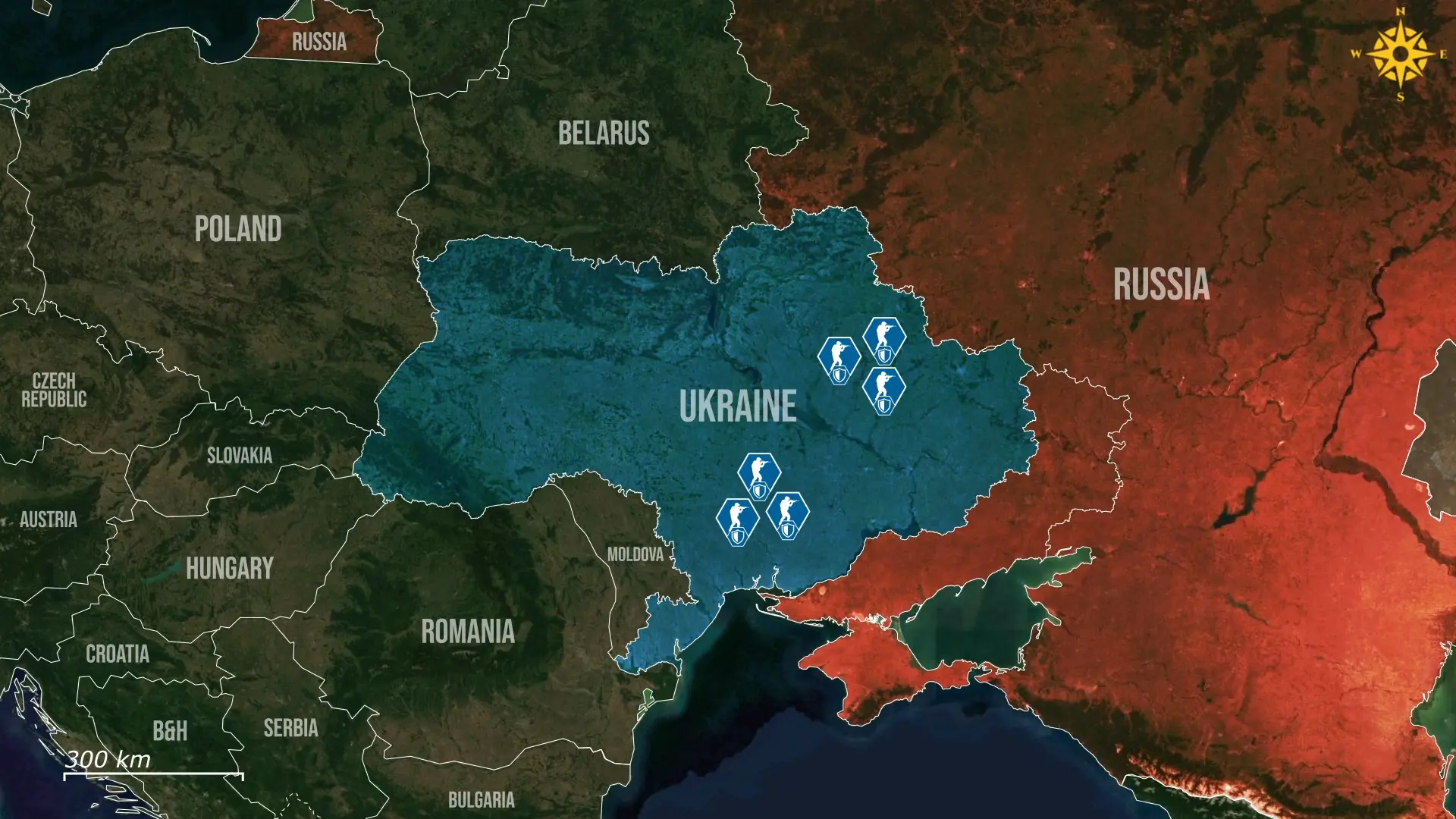
Ukrainian offensive operations in the Novopavlivka direction have liberated over 45 square kilometers and pushed Russian forces back 10 kilometers to the Donetsk Oblast border, contracting Moscow’s footprint in Dnipropetrovsk Oblast from nearly 450 square kilometers at the start of 2026 to roughly 39 square kilometers and a single village. This breakthrough demonstrates an effective tactical synthesis by the Skelya Assault Regiment, which pairs two-man infiltration teams with FPV strikes, heavy bomber drones, and anti-tank mines employed as high-yield demolition charges to collapse fortified trench systems without massed-infantry attrition. Simultaneously, the mid-flight interception of Russian fixed-wing Molniya strike drones—capable of delivering anti-tank mine payloads—by Ukrainian FPV interceptors exposes a growing vulnerability in Russia’s reliance on heavy unmanned munitions to halt ground advances and compensate for infantry shortages. By clearing Russian positions around Filiya and Dachne while expanding control along both banks of the Vovcha River east of Yalta, Ukrainian forces have eliminated a persistent northern flanking threat and established a widened offensive salient. This secured northern anchor provides Ukrainian command with greater operational flexibility to pivot southward toward elevated terrain at Odradne, where subsequent advances toward Komar would directly threaten the defensive network protecting Velyka Novosilka. Consequently, the localized balance in this sector is shifting from attritional positional containment to maneuver-driven corridor expansion, forcing Russian command to defend a widening breach while losing forward staging ground in Dnipropetrovsk Oblast.

By
RFU News
Nov 21, 2026
Video

Putin is furious… French soldiers just moved into Ukraine

The covert deployment of non-combat French technical teams under Mission Volia, alongside British and allied special operations detachments, accelerates the combat integration of complex systems—specifically Caesar artillery, Mirage 2000 fighters, and Scalp cruise missiles—by providing in-theater maintenance and specialist training. Routing these rotations through official training hubs in Poland as logistical cover enables Western capitals to bypass domestic parliamentary disclosure and deny Moscow propaganda pretexts of direct NATO combat intervention, distinguishing state personnel from foreign volunteers serving within the Ukrainian military. Operationally, embedding allied advisors for intelligence analysis, artillery targeting, and on-site repair prevents donated hardware from sitting idle during lengthy external refurbishment cycles, converting materiel transfers into immediate battlefield lethality. Simultaneously, this forward footprint establishes a critical feedback loop in which NATO operators acquire firsthand near-peer combat insights from Ukrainian veterans, particularly regarding mass drone employment, low-signature movement, and survival in sensor-saturated environments. Strategically, establishing persistent Western advisory and sustainment infrastructure inside Ukraine lays the institutional foundation for deploying a larger post-ceasefire peacekeeping contingent, creating an acute deterrence dilemma that complicates any future Russian plans for renewed aggression.

By
RFU News
Nov 19, 2026
Video

Putin learns Russia lost 20 km as battlefield setbacks overshadow negotiations

Systemic falsification of battlefield reporting within the Russian military hierarchy has generated an estimated 5,000-square-kilometer discrepancy between actual tactical control and official operational maps across the Zaporizhzhia, Lyman, Vovchansk, and Donetsk axes. Driven by career-preservation incentives, tactical commanders fabricate advances—such as the false capture of Voskresenka and inflated claims around Kostiantynivka and Dobropillia—using staged flag-planting operations and synthetic media that cascade upward into senior command assessments. Consequently, Russian headquarters routinely commit infantry to high-attrition, operationally unsound assaults behind Ukrainian lines solely to reconcile ground realities with falsified situational mapping. Ukrainian forces exploit this command friction and overextension by targeting isolated infiltration units to recapture contested positions, while Moscow's reliance on distorted maps inflates its territorial demands in Donetsk Oblast to an untenable ninety percent. This institutional self-deception creates severe structural vulnerabilities for ceasefire negotiations, as any truce predicated on unverified Russian map claims would require Ukrainian withdrawals from controlled territory and provide Moscow with constant pretexts for alleged violations. Ultimately, embedding fabricated tactical data into strategic decision-making degrades Russian combat power while shifting the operational and diplomatic initiative toward forces operating with accurate battlefield awareness.

By
RFU News
Nov 18, 2026
Video

Kerch bridge down: Russia’s most vulnerable artery was severed

Coordinated long-range drone saturation tactics, paired with simultaneous diversionary strikes on rear-echelon fuel infrastructure such as the Azov oil depot, have overwhelmed Russian point defenses protecting the Kerch Bridge. By simultaneously targeting deep domestic facilities around Moscow and Leningrad alongside occupied transit arteries, Ukrainian operational design forces Russia into an unsustainable spatial dispersion of finite air-defense assets. The resulting structural failure—marked by a fifteen-degree shift in a primary load-bearing arch of the $3.7 billion, 19-kilometer crossing—halted transit for thousands of vehicles and requires at least six months of specialized engineering repairs. Militarily, this acute logistical bottleneck severs a vital rail and road corridor used to supply fuel, ammunition, and equipment to Russian forces in Crimea and southern Ukraine. Economically, prolonged restrictions compound supply-chain friction, elevate transport costs, and accelerate the collapse of Crimea’s commercial and tourism sectors. Executed immediately after stalled peace negotiations in Abu Dhabi where Moscow demanded unoccupied Ukrainian territory, the strike signals that Russia’s territorial demands carry direct material consequences for its own critical infrastructure. Ultimately, rendering Putin’s flagship 2018 bridge insecure undermines the Kremlin’s image of control and demonstrates that even Moscow’s most heavily fortified strategic links remain vulnerable to sustained asymmetric interdiction.

By
RFU News
Nov 17, 2026
Video

Ukraine finds a 30-km hole in Russian defenses... strikes St Petersburg

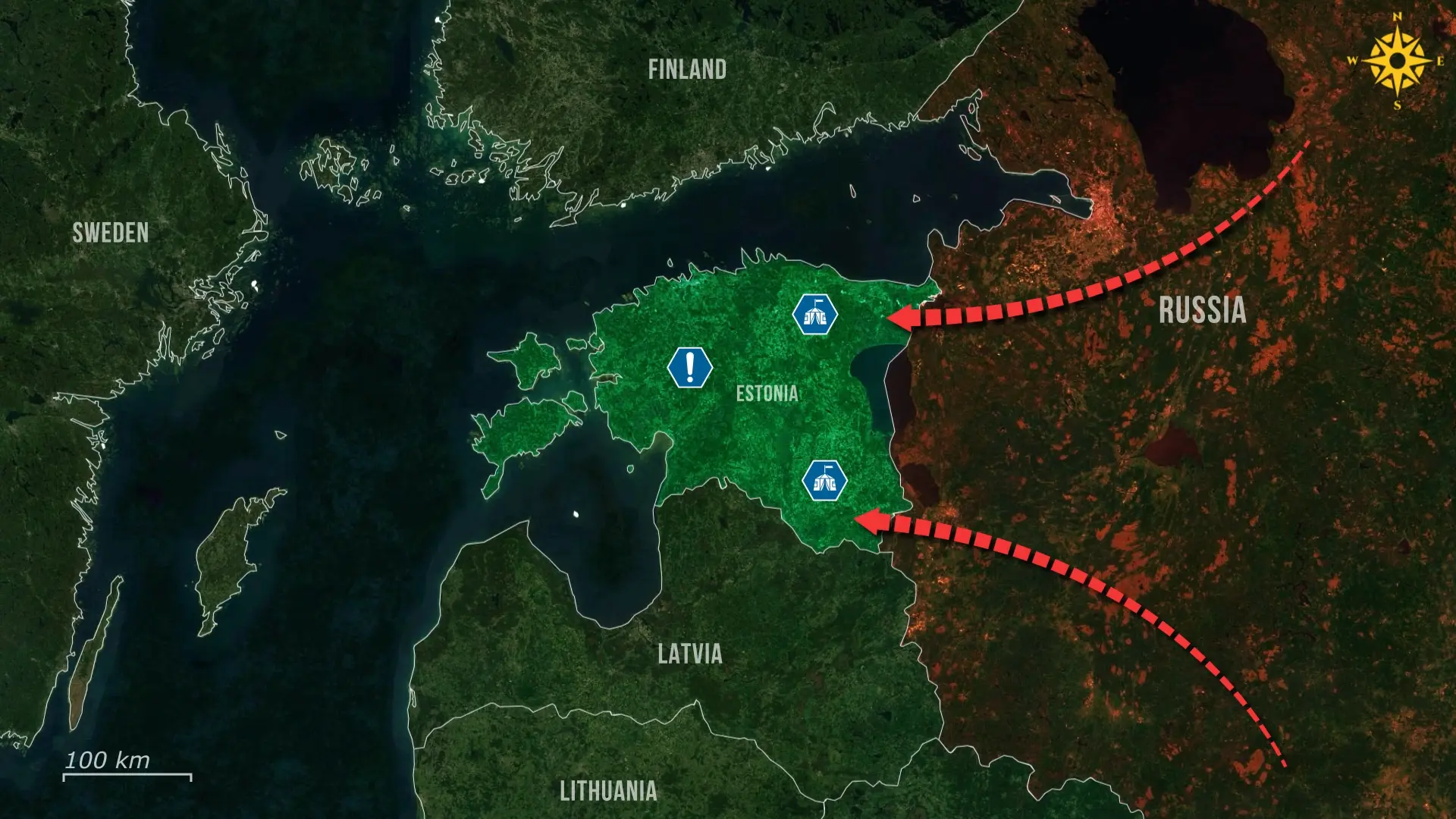
By exploiting cross-border Starlink connectivity extending over thirty kilometers inland from Finland, Estonia, and the Baltic Sea, Ukrainian forces have transitioned deep-strike drones from pre-programmed flight paths to real-time, live-video operator guidance at ranges exceeding one thousand kilometers. The operational viability of this man-in-the-loop terminal control was demonstrated against Saint Petersburg and the Ust-Luga coastal energy hub, where precision strikes neutralized three major radar complexes, damaged a missile ship and oil terminals, and induced Russian friendly-fire losses of a MiG-31 and two helicopters. This capability fundamentally alters deep-strike operational logic by replacing resource-intensive mass saturation with the surgical destruction of air defense sensors, thereby opening corridors for follow-on munitions. Compounding over 1,700 cumulative Russian air defense losses—including 86 confirmed destructions in September alone—this commercial satellite spillover exposes a structural vulnerability along Russia’s entire coastline and border regions, including Voronezh, Belgorod, Kursk, Rostov, and Krasnodar Krai. Consequently, Russian military planners face an acute force-posture dilemma: either leave high-value radar and interceptor assets exposed to precision attrition along peripheral frontiers or withdraw air defenses deeper into the interior, substantially degrading the protection of critical airbases and economic export infrastructure.

By
RFU News
Nov 17, 2026
Video

None are safe! Ukrainians kill Putin’s top commanders one by one

Ukraine’s targeted campaign to eliminate senior Russian officers—combining HIMARS and drone strikes in occupied territories with covert agents and improvised explosive devices inside Russia—is systematically degrading Moscow’s operational command capacity. The elimination of specialized aerospace leadership, exemplified by the sixth Air Army’s chief navigator and Aerospace Forces commander Colonel General Alexander Chayko, directly disrupts strike-corridor design, flight-routing calculations, weapons-targeting precision, and regional air defense integration against massed Ukrainian drone strikes. Spanning approximately nineteen confirmed high-ranking commanders and over five thousand mid-ranking officers, this attrition induces cumulative institutional friction rather than an abrupt front-line collapse. Although Russia can formally replace fallen personnel, incoming deputies face prolonged adaptation periods to rebuild situational awareness, subordinate relationships, and synchronized staff workflows. Simultaneously, lethal operations in Saint Petersburg and Moscow—including the shooting of General Staff intelligence deputy head Lieutenant General Vladimir Alekseyev and operatives exfiltrating via Pulkovo Airport—expose acute domestic counterintelligence vulnerabilities. Over the long term, the sustained depletion of experienced operational planners compels Moscow to divert security apparatus bandwidth toward internal protection while progressively weakening its multi-unit combat coordination.

By
RFU News
Nov 17, 2026
Video

Finally! Ukraine switches to Starlink alternative as Musk loses his leverage

Unannounced Starshield speed limits of 161 kilometers per hour and geographic blackouts over Russian territory have exposed a critical single-vendor vulnerability in Ukrainian unmanned operations, severing links for interceptor drones pursuing faster Russian jet-powered platforms and depriving mid-range strike systems of mid-flight guidance. To eliminate reliance on SpaceX’s proprietary constellation, Kyiv is integrating Israeli Hi-Sky terminals that route communications across multiple existing commercial satellite networks rather than operating dedicated orbital infrastructure. Although Hi-Sky provides lower bandwidth than Starlink, its unrestricted coverage inside Russia sustains essential telemetry, navigation updates, and route adjustments against refineries, military installations, and logistics hubs while complicating Russian electronic jamming through multi-satellite switching. Addressing this communications bottleneck is urgent for air defense resilience, as Russian forces retain substantial drone reserves capable of launching massed strikes while Ukrainian interceptor connectivity remains degraded. Ultimately, scaling the import, integration, and testing of thousands of multi-network terminals will replace fragile single-provider dependence with structural redundancy, insulating both Ukrainian air defenses and deep-strike capabilities from abrupt external service restrictions.

By
RFU News
Nov 17, 2026
Video

Great news! Russian missile factories suffer a hard hit!

Ukraine’s targeted deep-strike campaign against Russia’s industrial interior marks an operational transition from reactive air defense to upstream interdiction, systematically attacking the specialized supply chains that sustain Russian missile and drone manufacturing. By striking high-value nodes across chemical synthesis plants—specifically producers of synthetic rubber, nitric acid precursors, and Decilin-M fuel—these strikes degrade the foundational production capacity required for solid rocket propellants and long-range cruise missiles. Simultaneous attacks on precision machine-tool manufacturers and optical-mechanical facilities disrupt the domestic fabrication of computer-controlled tooling, thermal-imaging systems, and missile guidance seekers, hitting critical technical choke points that lack immediate domestic redundancy. Because modern munition assembly relies on tightly synchronized component deliveries across geographically dispersed sub-tier suppliers, disrupting multiple interlinked chemical, electronic, and metalworking facilities induces cascading production bottlenecks far more severe than localized physical damage would suggest. This campaign alters the strategic balance by forcing Moscow to divert scarce air-defense assets deep into its vast industrial hinterland—thinning frontline coverage—while structurally capping the replenishment velocity of Russian precision-strike arsenals.

By
RFU News
Oct 29, 2026
Video

Russia moves all its modern tanks out of Ukraine, building up on NATO border instead

Pervasive frontline drone reconnaissance and strike zones have effectively halted mechanized maneuver in Ukraine, compelling Russian forces to substitute modern armor with high-attrition infantry infiltrations and refurbished Soviet-era T-55 and T-62 platforms. Concurrently, Moscow is systematically withholding newly fabricated high-end assets—notably T-90 main battle tanks, BMP-3s, and BTR-82s—from active combat zones to reconstitute deep strategic reserves. Satellite data confirms the accumulation of these advanced vehicles and self-propelled artillery, including Msta-S and Malva systems, across rear hubs such as Buy and forward depots bordering Norway, Finland, and the Baltic states. This operational reallocation is structurally driven by an over-mobilized defense industrial base, where uninterrupted, high-volume armored vehicle manufacturing is economically mandatory to prevent domestic macroeconomic collapse. By shielding state-of-the-art combat platforms from drone-induced attrition, the Russian military is building conventional capabilities designed to exploit static line collapses in Ukraine or execute coercive provocations along NATO’s eastern flank. Consequently, the termination of hostilities in Ukraine will not alleviate European security pressures, as Russia's war-dependent economy necessitates ongoing militarized posturing backed by a fully modernized, forward-deployed armored force.

By
RFU News
Oct 29, 2026

No Results found

Please try different keywords