

.svg)
In this video, we will analyze why Russia is preparing to see the frontlines in Crimea.
Here, the situation became so dire for the Russians that they started to fear a full-scale attack from the Black Sea. Now, they are digging in and preparing for the worst as the peninsula grows more exposed by the day.
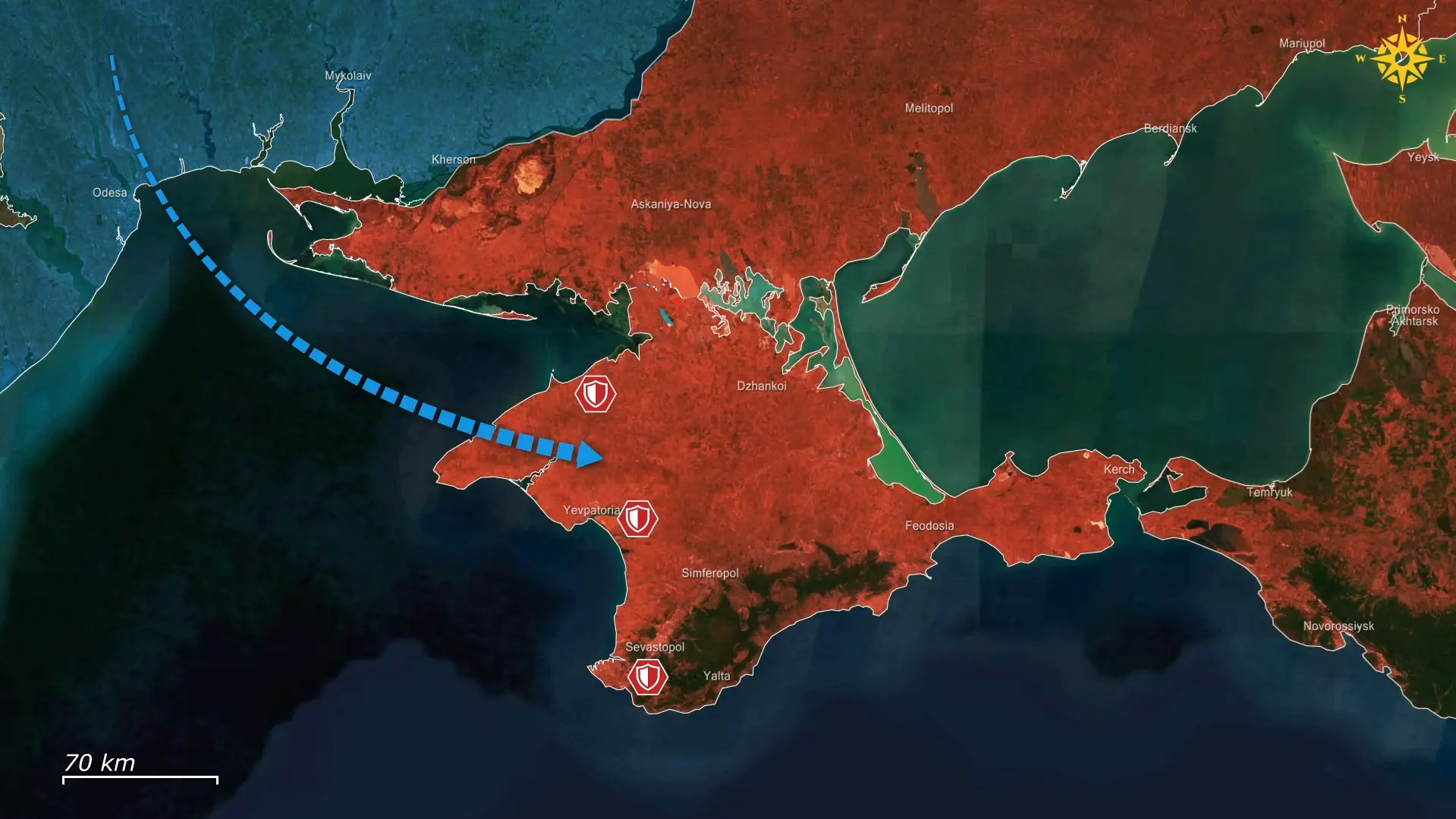
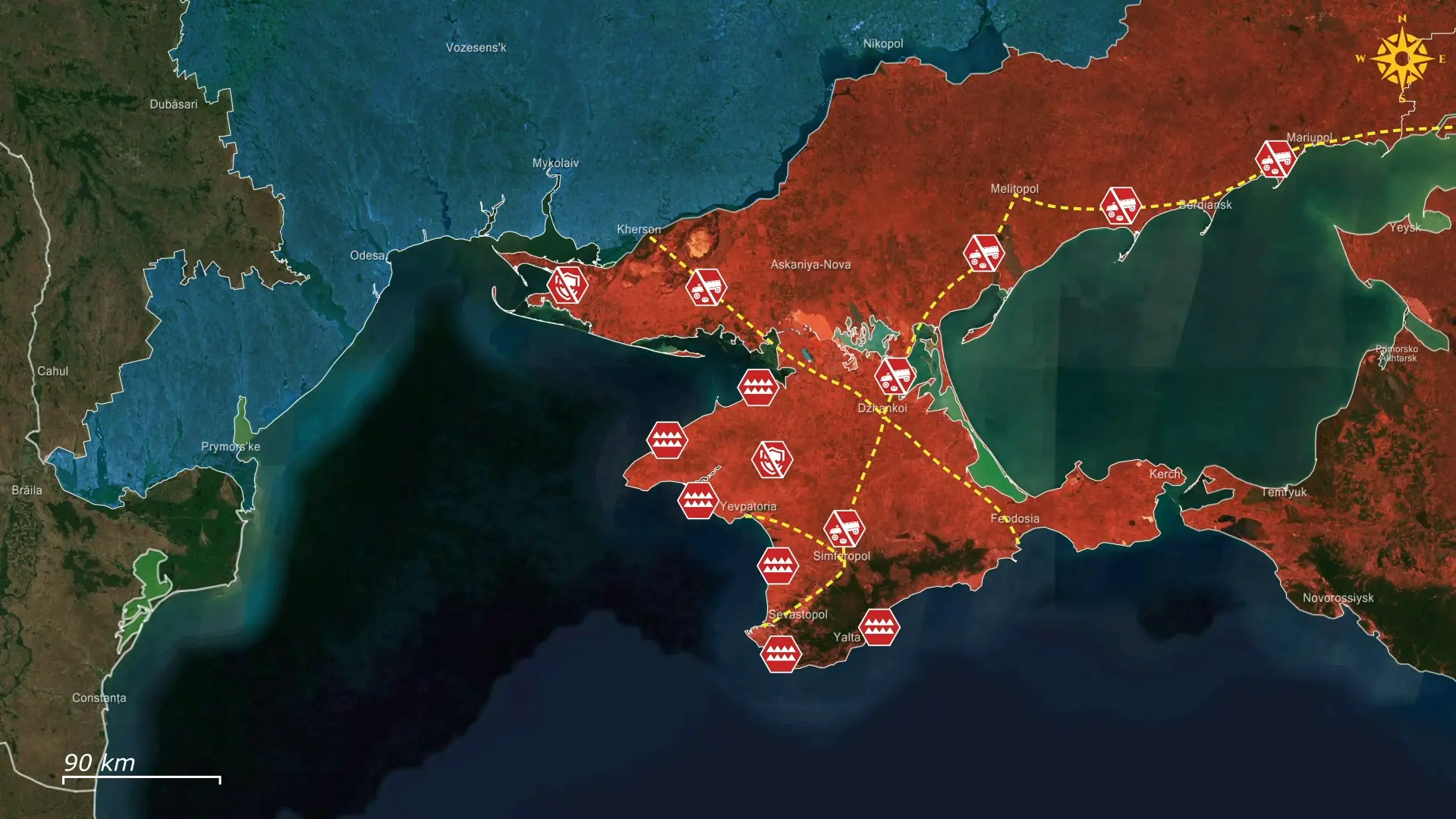
Recently, Russia has become alarmed about Crimea and started the construction of a Black Sea wall to defend the peninsula against a Ukrainian attack from the Black Sea. Notably, Russian forces installed dragon’s teeth on beaches along the coastline, turning coastal areas into fortified zones. The reinforced concrete anti-tank obstacles were placed directly on the beach to impede the movement of tanks and mechanized infantry. The construction proves that Russia feels the urgency to build new fortifications before Ukraine exploits the situation.
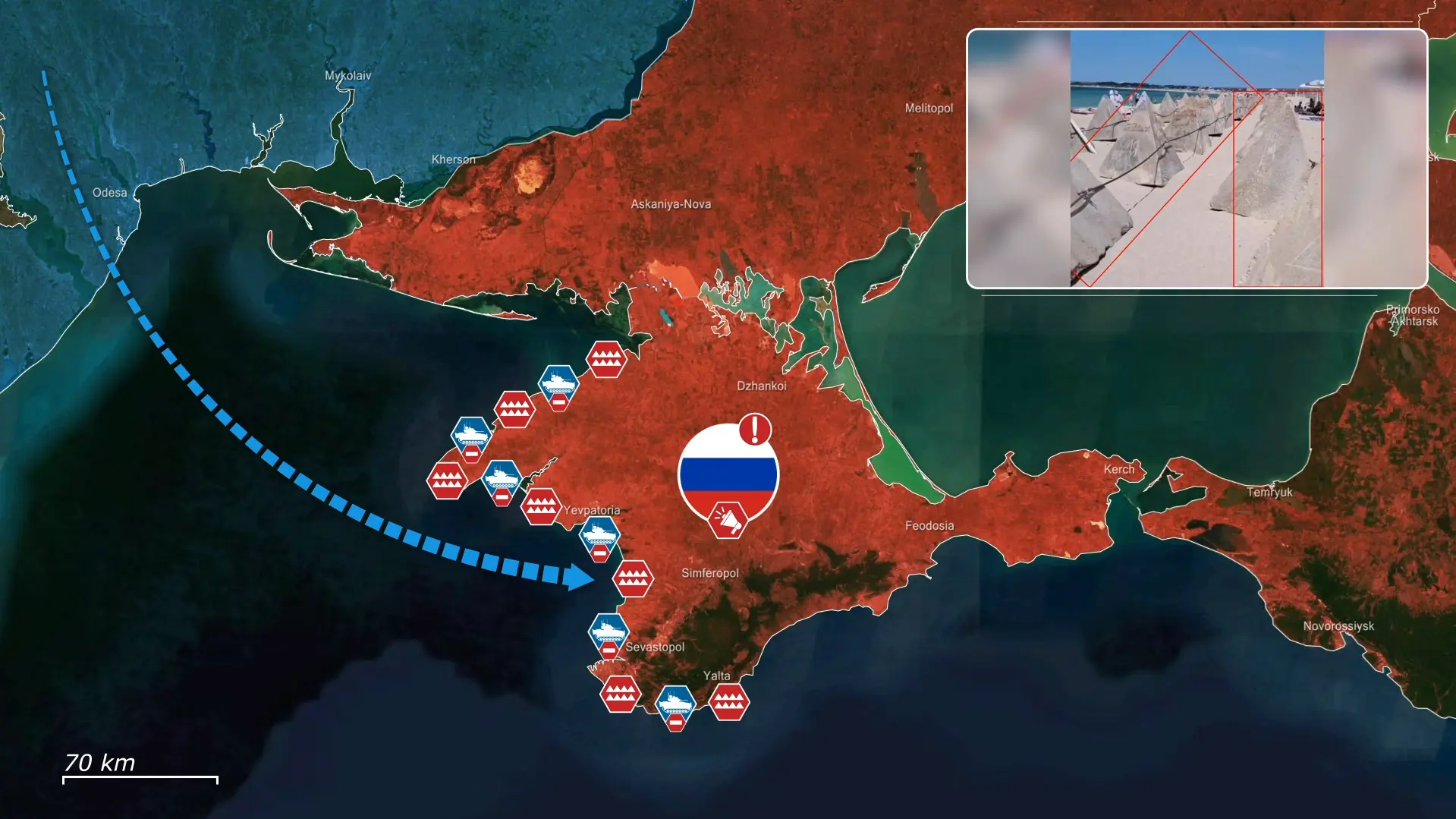
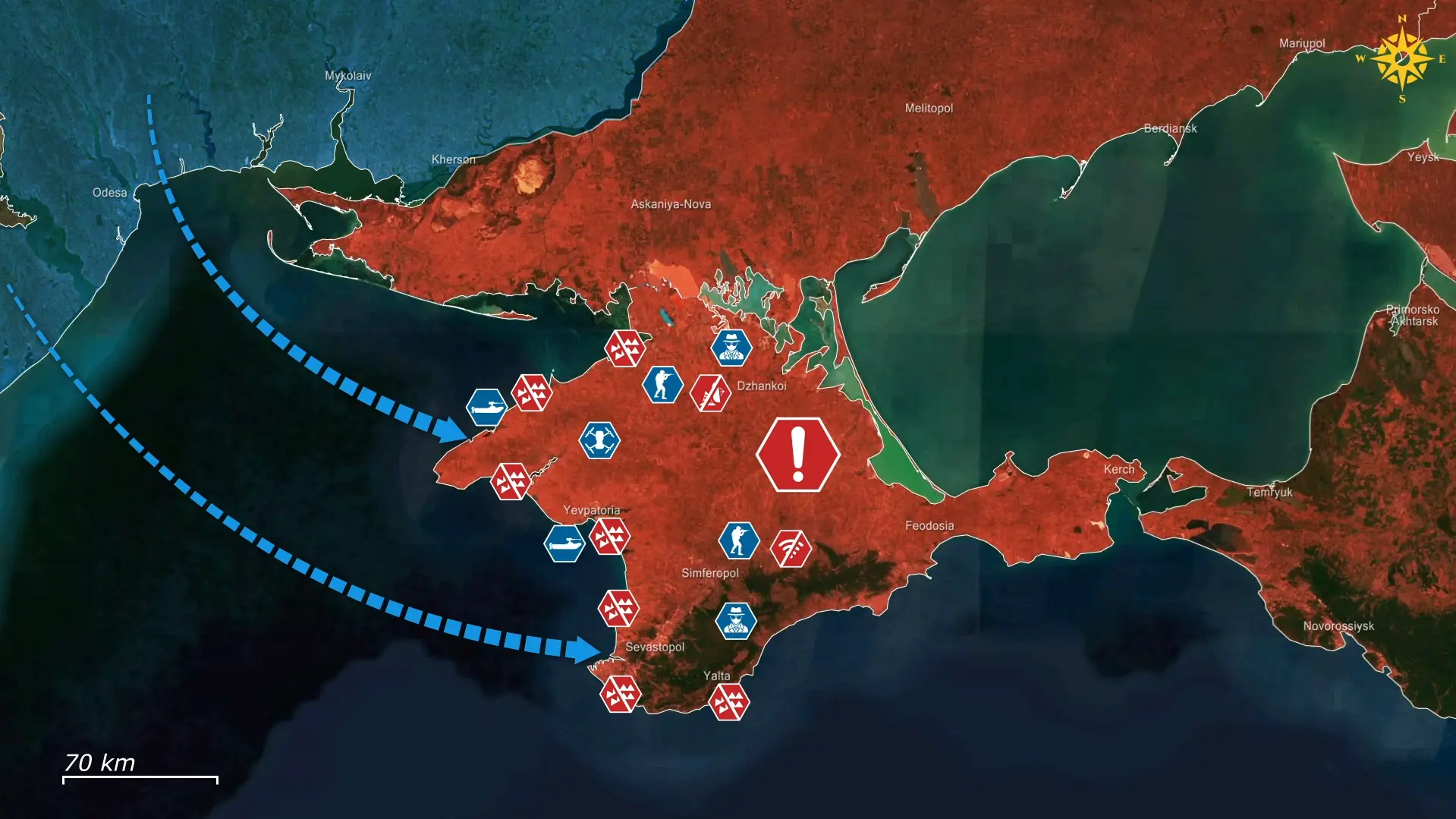
In the short term, these defenses were designed to counter Ukrainian raids and special forces incursions, an understandable concern given that such operations have already occurred repeatedly. However, the newly built dragon’s teeth fortifications are largely ineffective against this type of threat.
Ukrainian special forces raids in Crimea are typically fast, small-scale, and multi-domain, combining maritime insertion, reconnaissance, sabotage, and rapid strike actions. Teams move covertly across the Black Sea, often switching to low-profile craft near the coast, and operate under the cover of darkness or poor weather. They are frequently supported by drones for surveillance and targeting, as well as intelligence from partisan networks. Once ashore, they aim to disable radar and electronic warfare systems, striking isolated assets or gathering intelligence before rapidly withdrawing. Crucially, these operations are defined by speed and dispersal, making static coastal barriers like dragon’s teeth largely irrelevant. Their limitations suggest that the deeper Russian concern driving these fortifications is not small raid prevention, but the possibility of larger maritime or combined-arms scenarios.
In the long term, these defenses are particularly effective against a bigger combined landing operation. These attacks from the sea would only complement the main attack from the north since Ukraine lacks the capabilities to land enough forces on Crimea and keep them supplied. It would require a sufficient number of landing ships, which Ukraine doesn’t have, and total dominance over the western part of the Black Sea, combined with air superiority. Although this scenario seems unlikely at first glance, Russia is actively preparing for it by installing anti-tank obstacles because the conditions around Crimea are worsening every day.
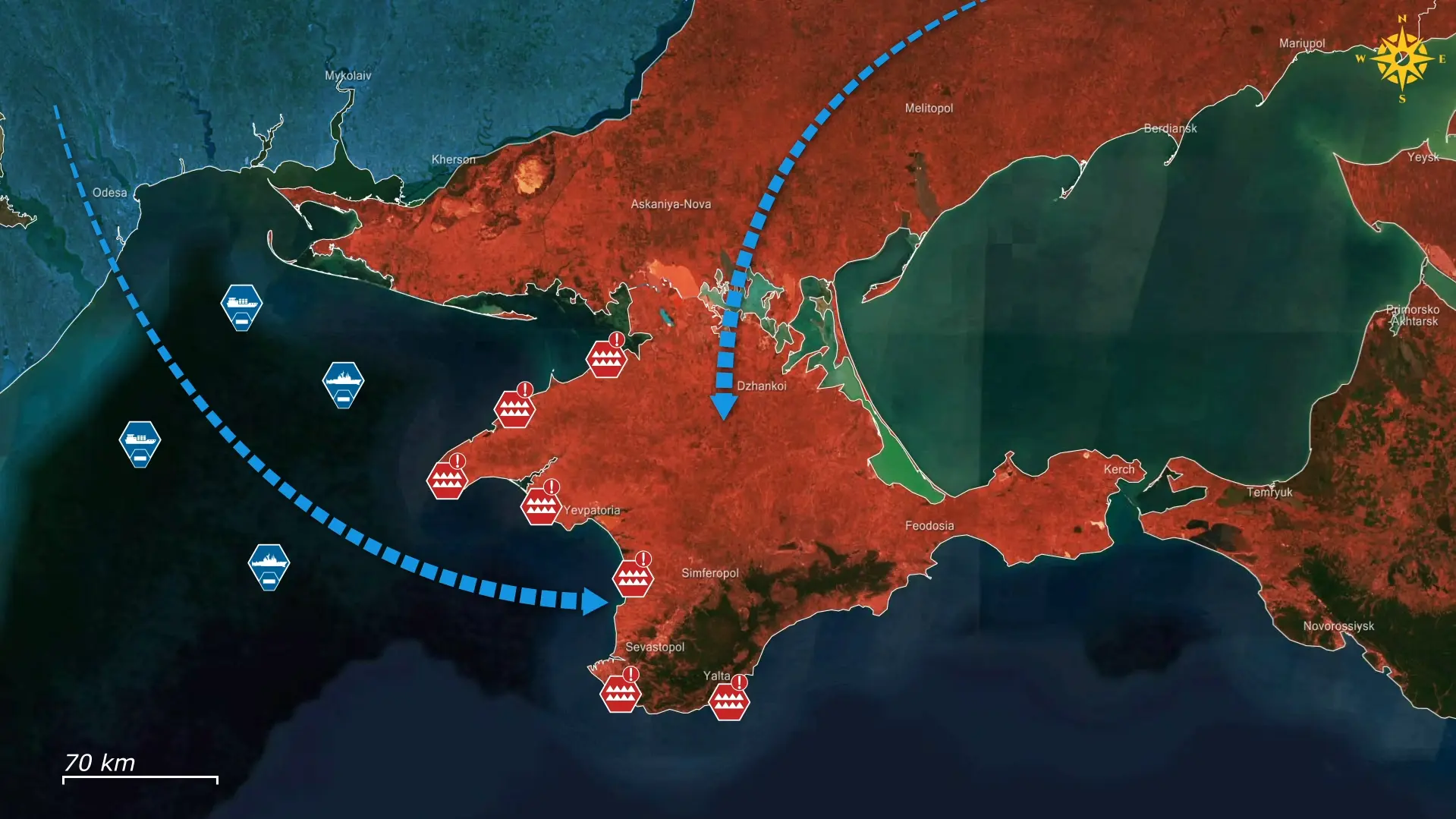
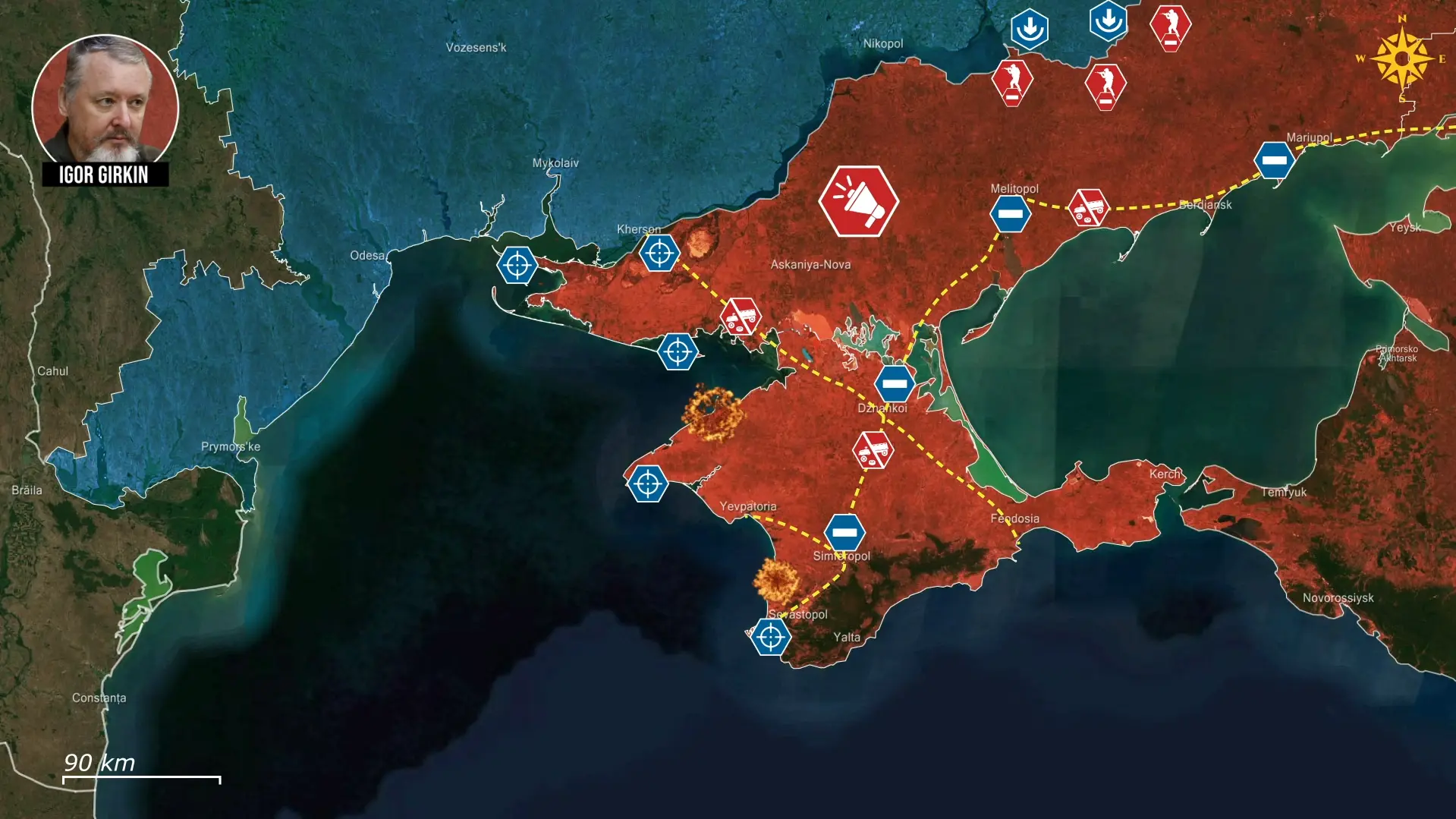
One of the reasons for Russia’s concern is that Russian advances along the front have stalled, while Ukrainian forces have recently begun making territorial gains across a broader section of the battlefield. At the same time, Ukraine's campaign of medium-range strikes against logistics infrastructure is becoming increasingly disruptive, steadily reducing the flow of fuel, ammunition, and other supplies into Crimea. Former Russian FSB officer and separatist commander Igor Girkin argued that Ukrainian drone strikes against transportation routes leading to Crimea resemble a classic battlefield-isolation strategy aimed at severing communications and supply lines deep behind the front. He warned that these attacks threaten logistics supporting Crimea, Russian forces along the lower Dnipro River, the Kinburn Spit, and coastal defense positions, adding that they could be preparing the conditions for a future Ukrainian offensive.
Overall, Russia’s newly built coastal fortifications in Crimea point to Russia’s perception of the peninsula’s strategic positions, which have been significantly weakened by Ukraine. As Russian forces face mounting attrition and supply shortages, the situation is likely to worsen further, forcing them to take defensive measures. The key implication is that Moscow is preparing for scenarios it believes it may not be able to reliably control or repel once they develop, which underlies uncertainty and fear.

.jpg)

Comments