

.svg)
In this video, we will analyze the current situation of Russia’s presence in Mali.
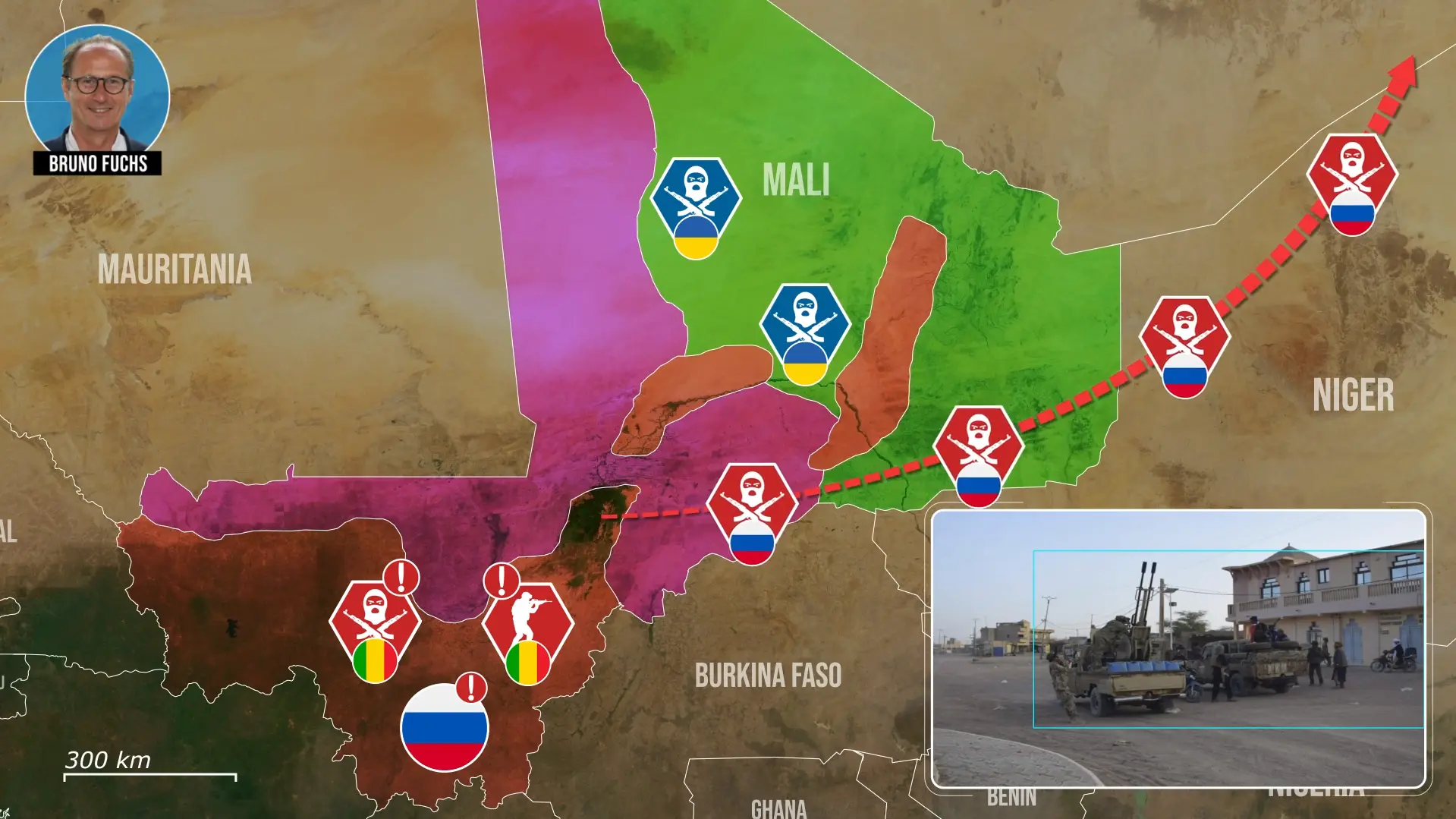
Recently, another Russian military support convoy advancing toward besieged northern Mali has once again been ambushed by Tuareg separatists. According to multiple sources cited by Reuters and AFP, the convoy consisted of more than two hundred Russian Africa Corps fighters and more than one hundred Malian soldiers, who were moving toward the military base in the city of Anefis. However, after reaching the Tabankort area, approximately thirty-seven kilometers from its end-destination, the Russian convoy came under a direct ambush by Tuareg separatists, resulting in heavy casualties among Russian forces. Aftermath reports indicate that all of the up to two hundred Russian troops and one hundred Malian junta soldiers were killed in the attack, or have surrendered and been taken captive. This is the third Russian convoy to be ambushed during the Second Tuareg Offensive, and for the second time, the Tuareg rebel group has succeeded in completely destroying the Russian convoy.

The Tuareg separatist groups repeated military victories in Mali have placed Russia’s Africa Corps under severe pressure. According to the French National Assembly Deputy Bruno Fuchs, Russia has already begun discussions with Mali’s junta government regarding a full Russian withdrawal from the country. This situation clearly indicates that Moscow is now under pressure to make an unprecedented decision regarding its long-term military presence in Mali. Although reducing Russia’s military presence in Mali and a full withdrawal have been under discussion since the first Tuareg offensive, it has gained greater attention as Russian and Malian forces are repeatedly suffering major military defeats against the Ukrainian-supported Tuareg separatists’ advance. As a result, the prospect of Russia abandoning their Malian allies is now being considered at official levels in Moscow.
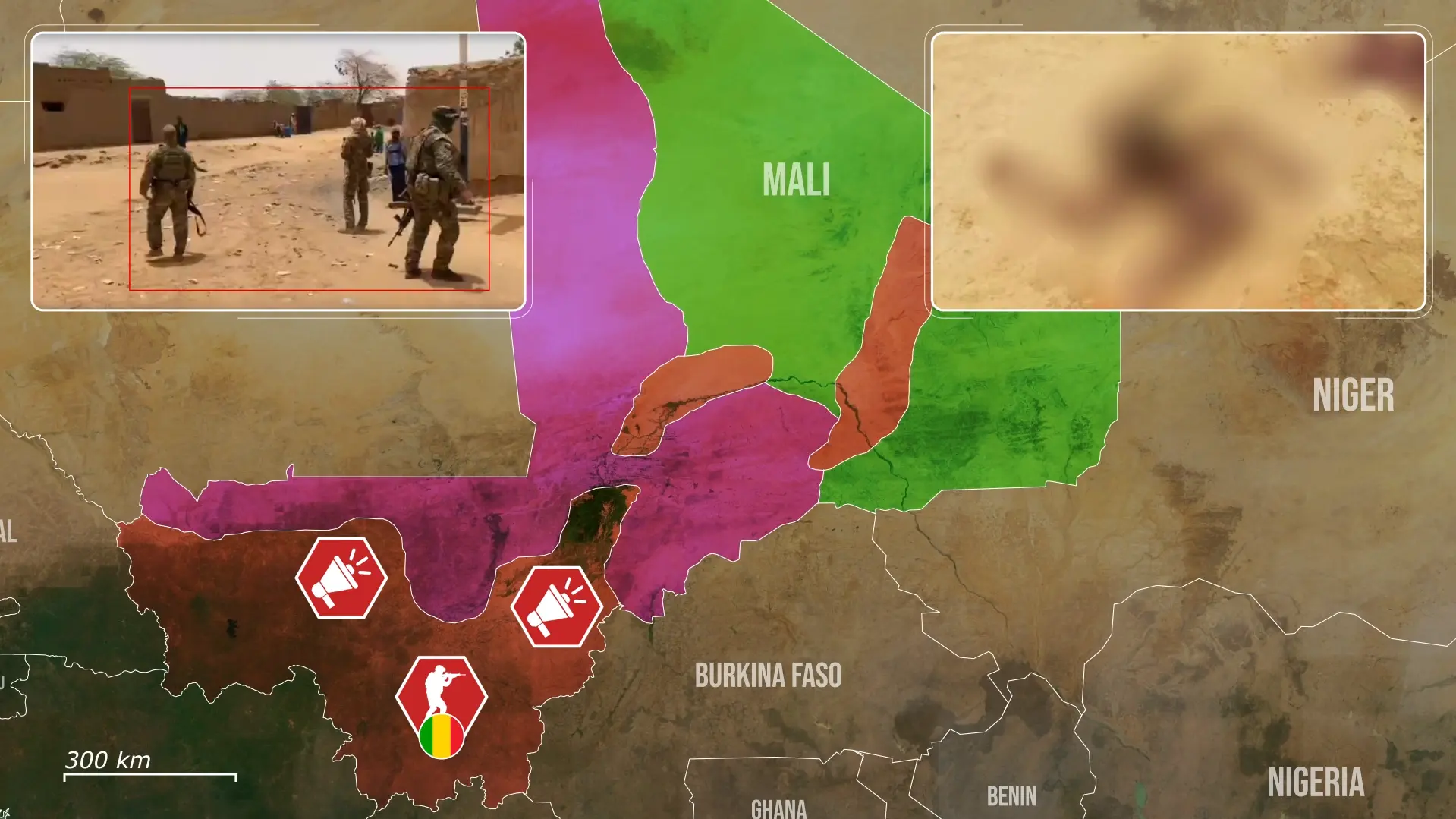
Meanwhile on the ground in Mali, the divide between the Russian Africa Corps and the Malian junta’s armed forces is becoming increasingly apparent, and recent military operations have reflected this trend more clearly. According to complaints from junta soldiers, Russian forces often place greater emphasis on public relations efforts aimed at promoting their presence and activities rather than taking any real military action against the rebels on the ground. In this trend, Russian forces have repeatedly released deceptive videos showcasing their activities in Mali, patrolling the streets of cities that are not currently under direct attack and located far behind the front line, as well as creating hype military music to overshadow atrocities committed and shown off online.
At the same time, the Russian Africa Corps is becoming increasingly reliant on drones and aerial support rather than directly participating in ground combat, as concerns over suffering heavy casualties during ground operations continue to influence their approach. In addition, repeated incidents in which Russian forces have retreated or abandoned their positions in the face of intense Tuareg rebel attacks have further increased dissatisfaction and resentment among junta soldiers. As a result, many soldiers within the junta’s armed forces have begun developing a more hostile attitude toward the Russian Africa Corps, making them less likely to view Russian forces as a reliable battlefield partner.
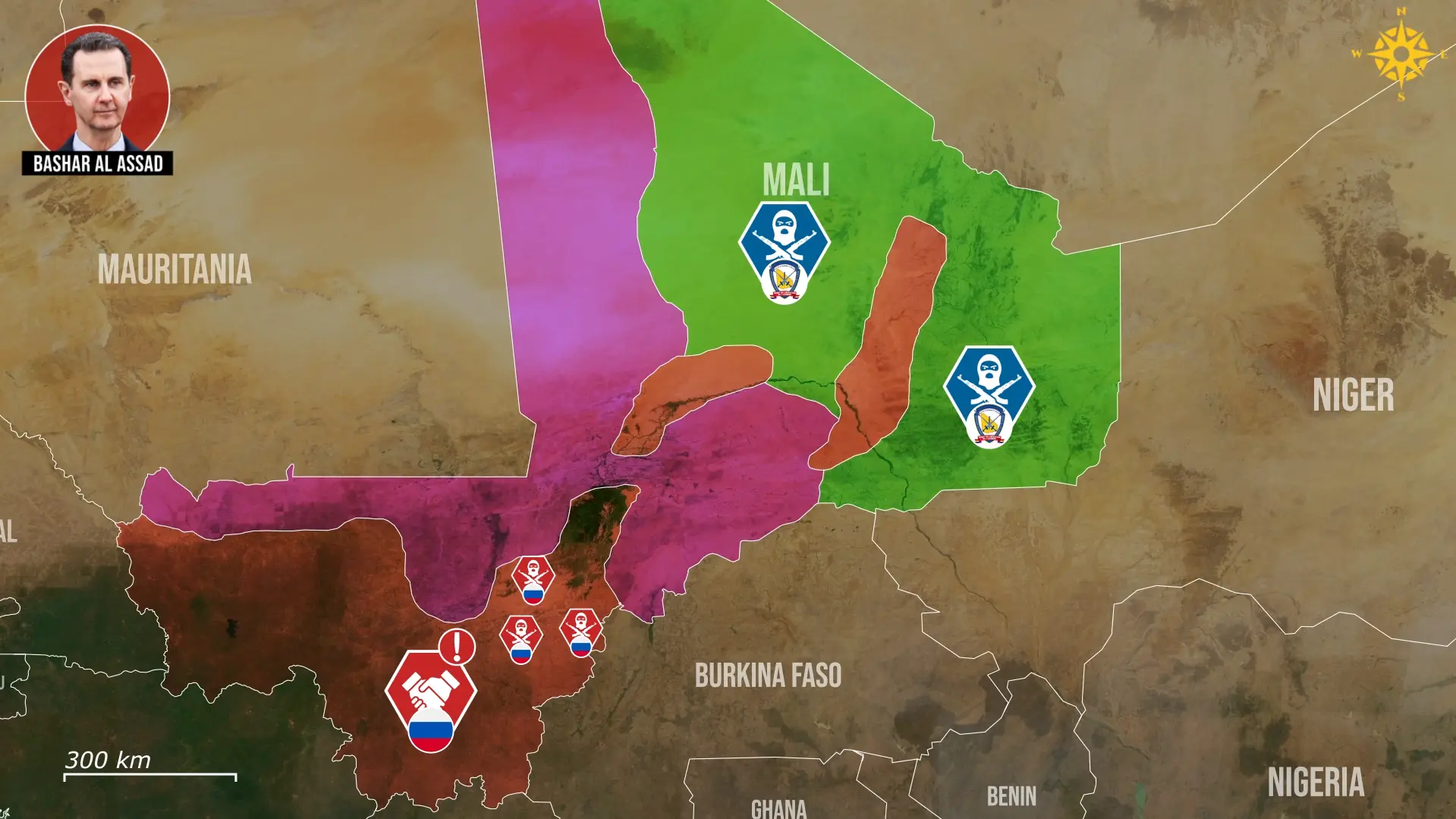
Ever since the Tuareg alliance launched their first offensive, Russia has repeatedly emphasized that the situation in Mali will not replicate what happened in Syria, where Russian forces abandoned Bashar al Assad and withdrew in the face of a major rebel offensive. However, the reality on the ground does not fully correspond with these assurances, as the limitations of Russian military support in Mali are becoming increasingly apparent. While Russian forces have not outright completely abandoned their Malian ally, the Russian Africa Corps is focusing more on finding ways to safely extract its own personnel from this increasingly dangerous situation.
Tuareg separatist groups have repeatedly ambushed and destroyed Russian convoys, downed Russian helicopters, destroyed armored vehicles, and captured key military bases one after another. Meanwhile, instead of effectively countering the Tuareg separatists, military observers note that the Russian Africa Corps has completely failed to halt the separatists advance despite conducting operations in Mali for more than four years. This clearly indicates that, although the Russian Africa Corps has maintained a prolonged military presence in Mali, it has ultimately failed to establish a durable and effective foothold in the country.
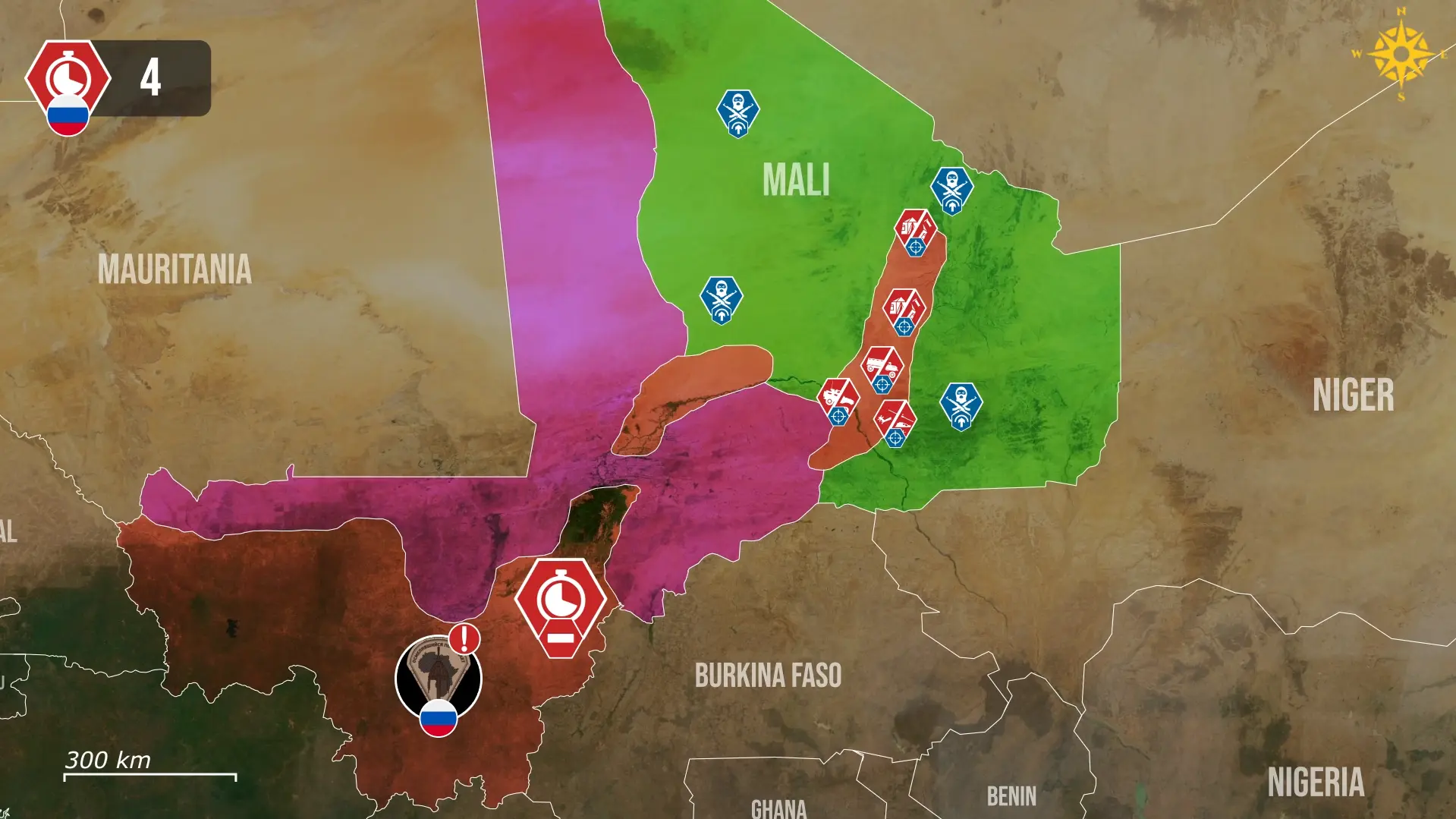
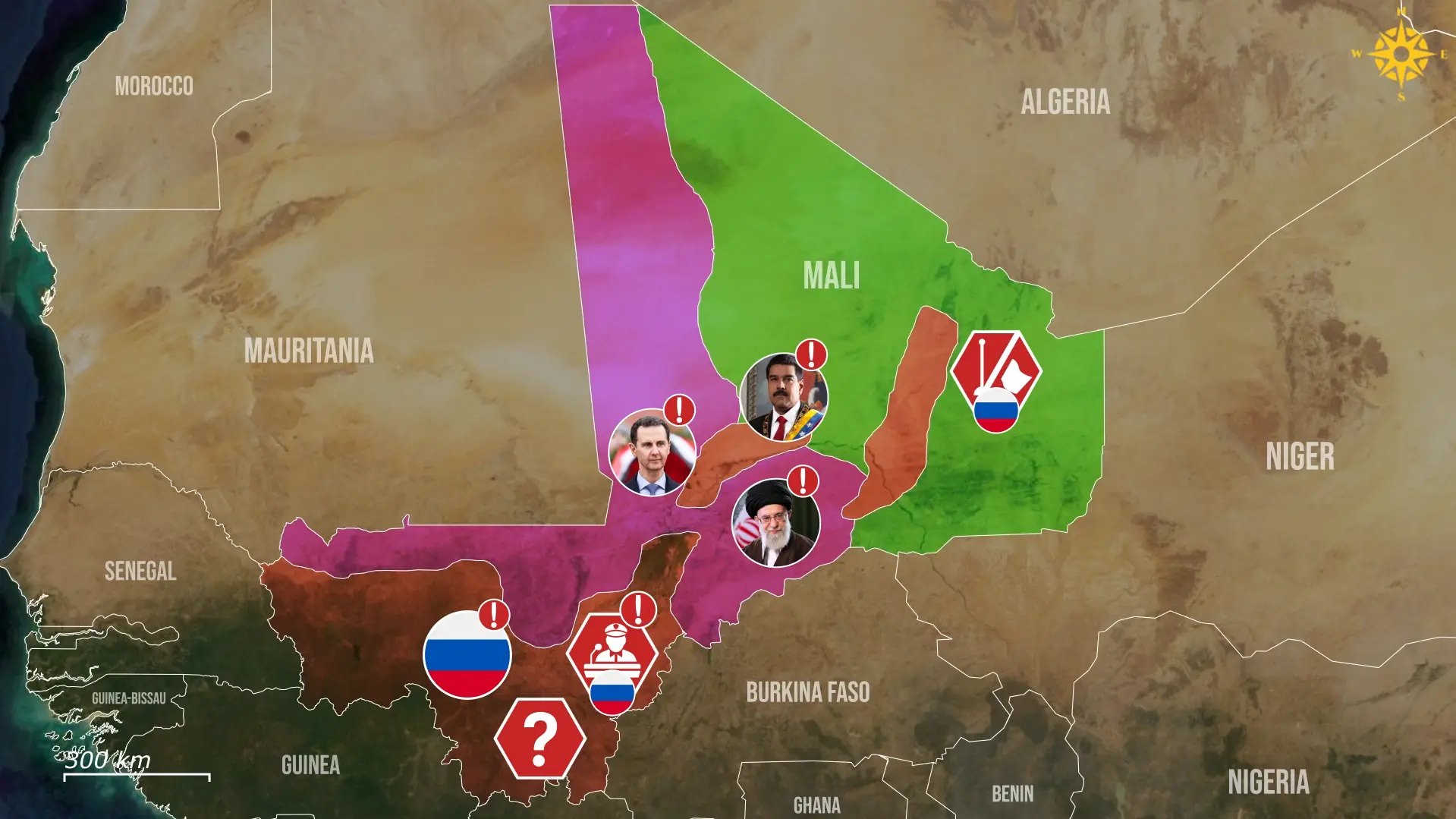
Overall, concerns over Russia’s ability to maintain its presence in Mali, which had already intensified after the loss of Kidal in April, have deepened further following the launch of the second Tuareg offensive in July. The destruction of multiple Russian convoys and reports of discussions with the junta government over a possible withdrawal of the Africa Corps have made Moscow’s future military presence in the country increasingly uncertain. The situation in Mali can be compared with Moscow’s recent limitations in supporting the Assad regime in Syria, the Maduro regime in Venezuela, and Iran’s leadership. These cases have demonstrated the constraints of Russia’s military and diplomatic capabilities in sustaining allied governments in distant regions during periods of severe crisis, raising broader questions about Moscow’s global influence and credibility.
.jpg)

Comments