

.svg)
Today, there is dangerous news for the Russian Federation.
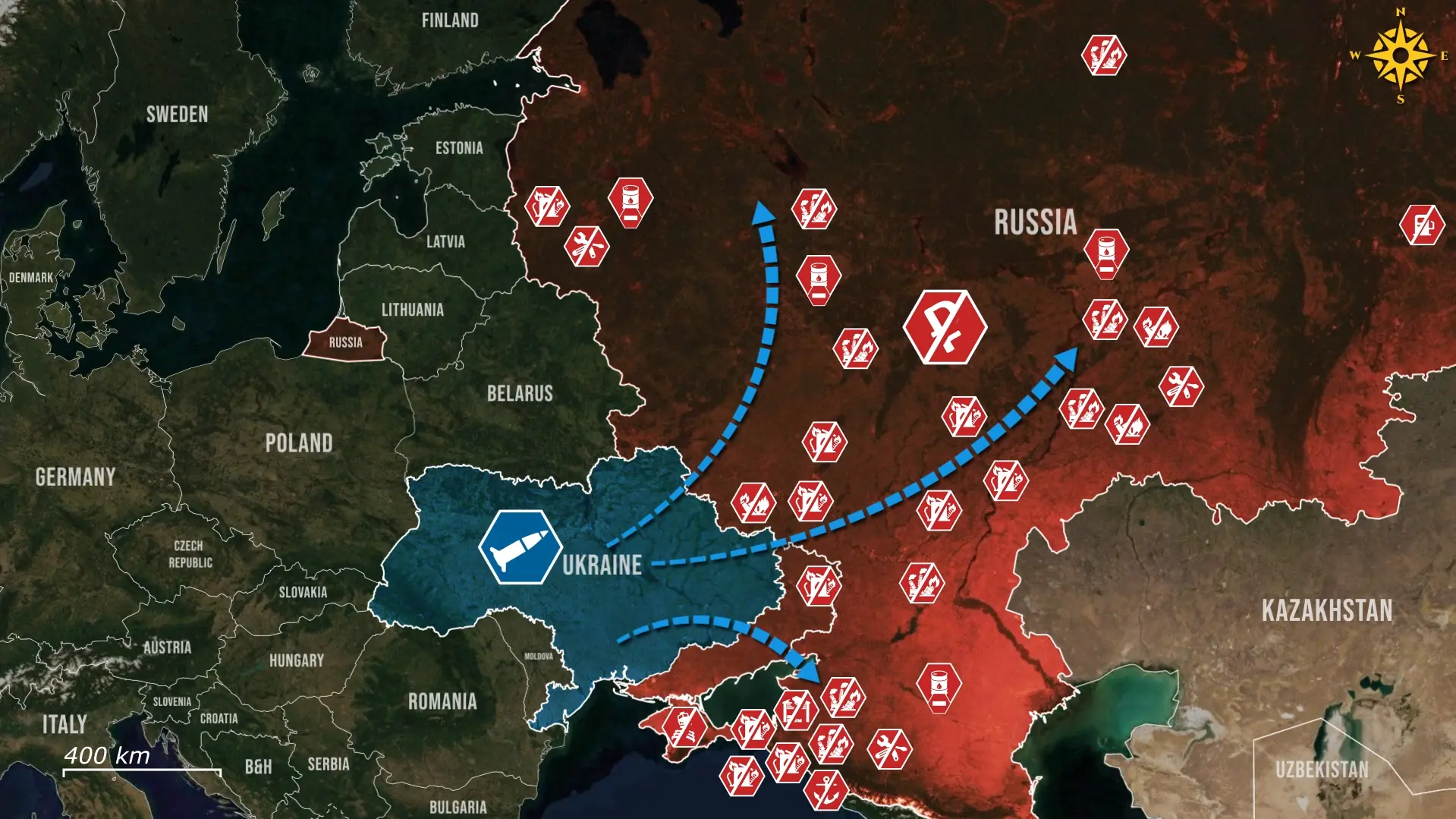
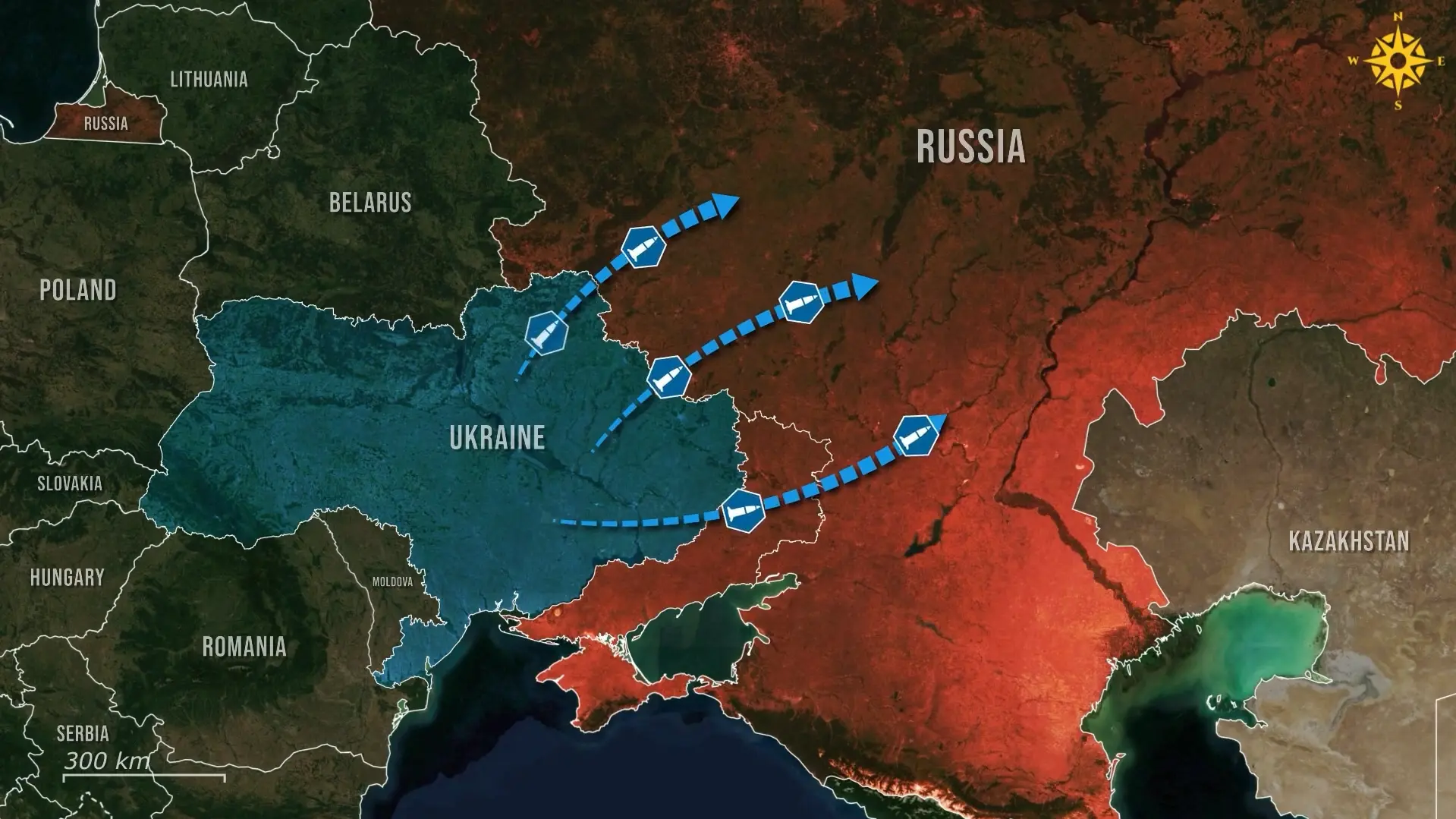
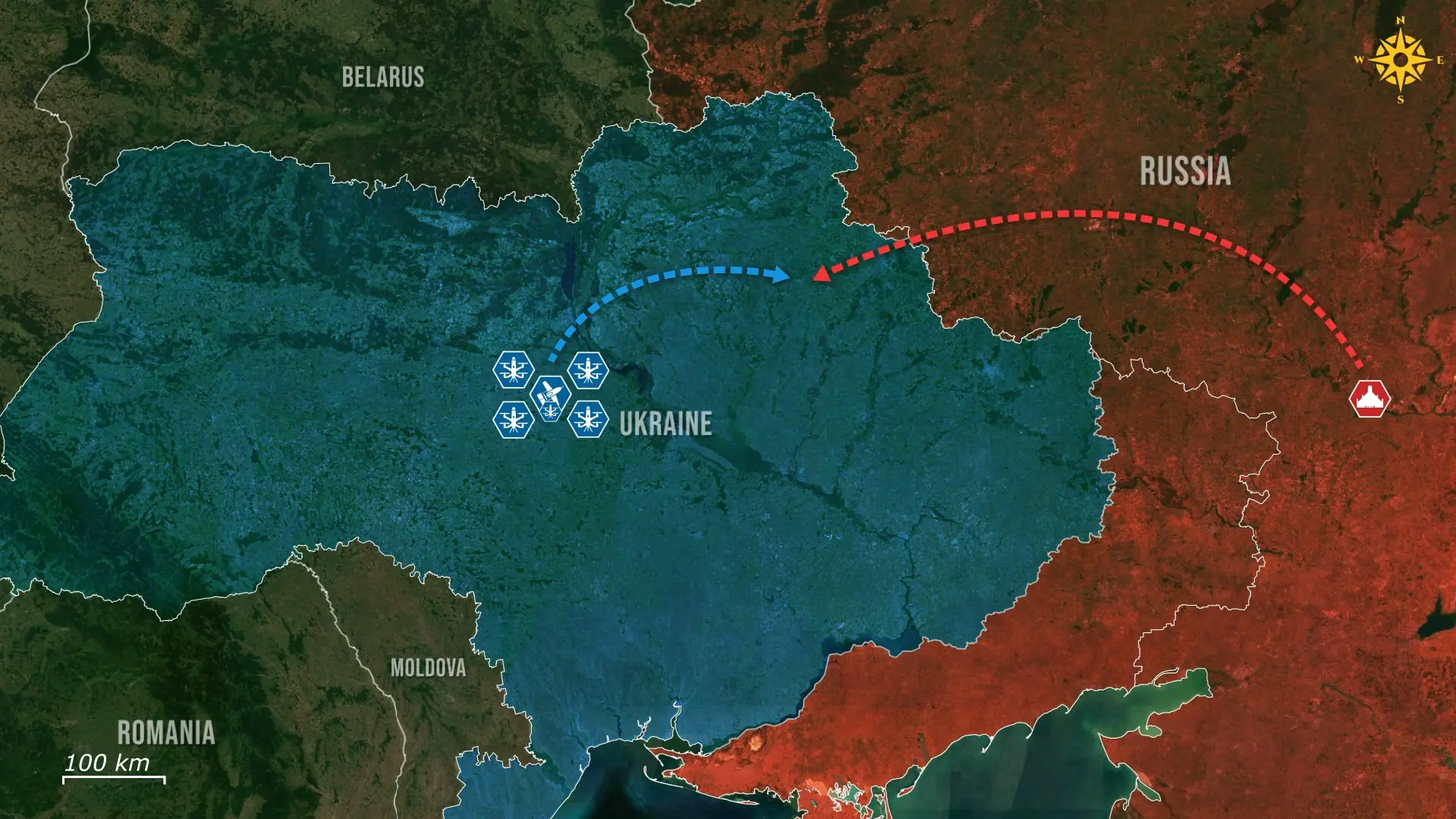
Here, Ukraine unleashed a massive series of strikes on Russia’s oil sector throughout multiple regions. The devastating revenge operation left Russia’s oil infrastructure in ruins, with the authorities scrambling to recover.
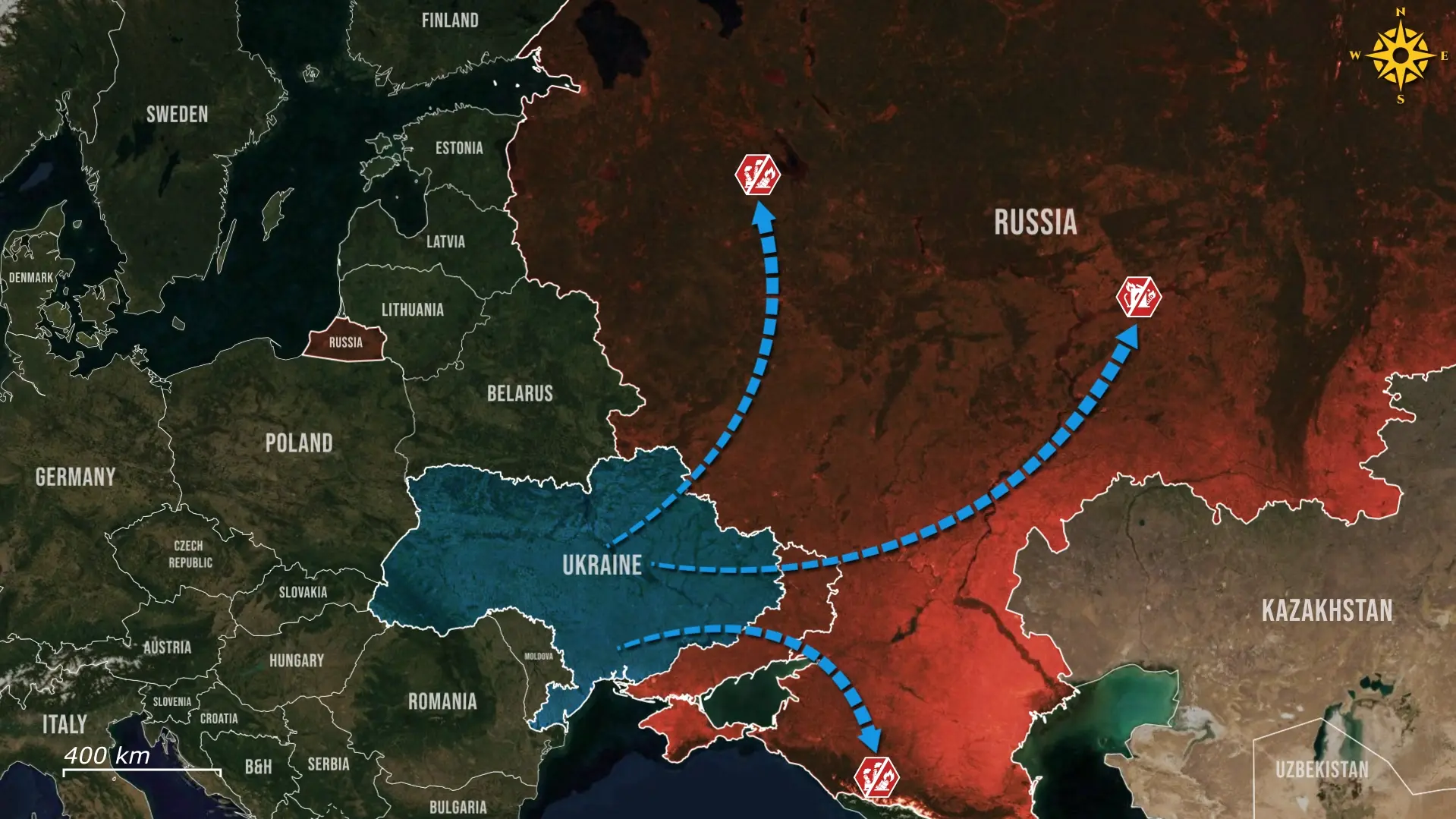
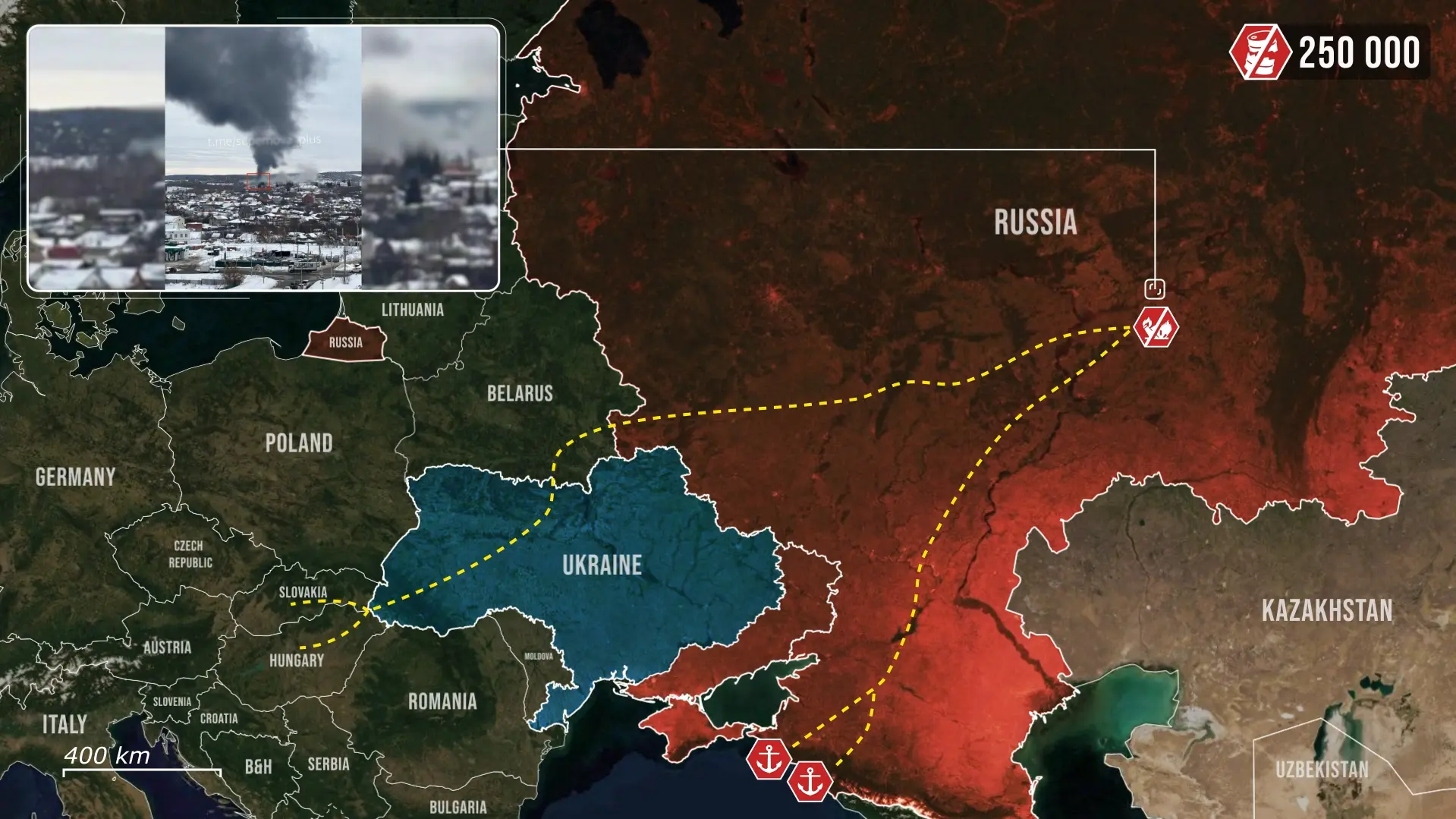
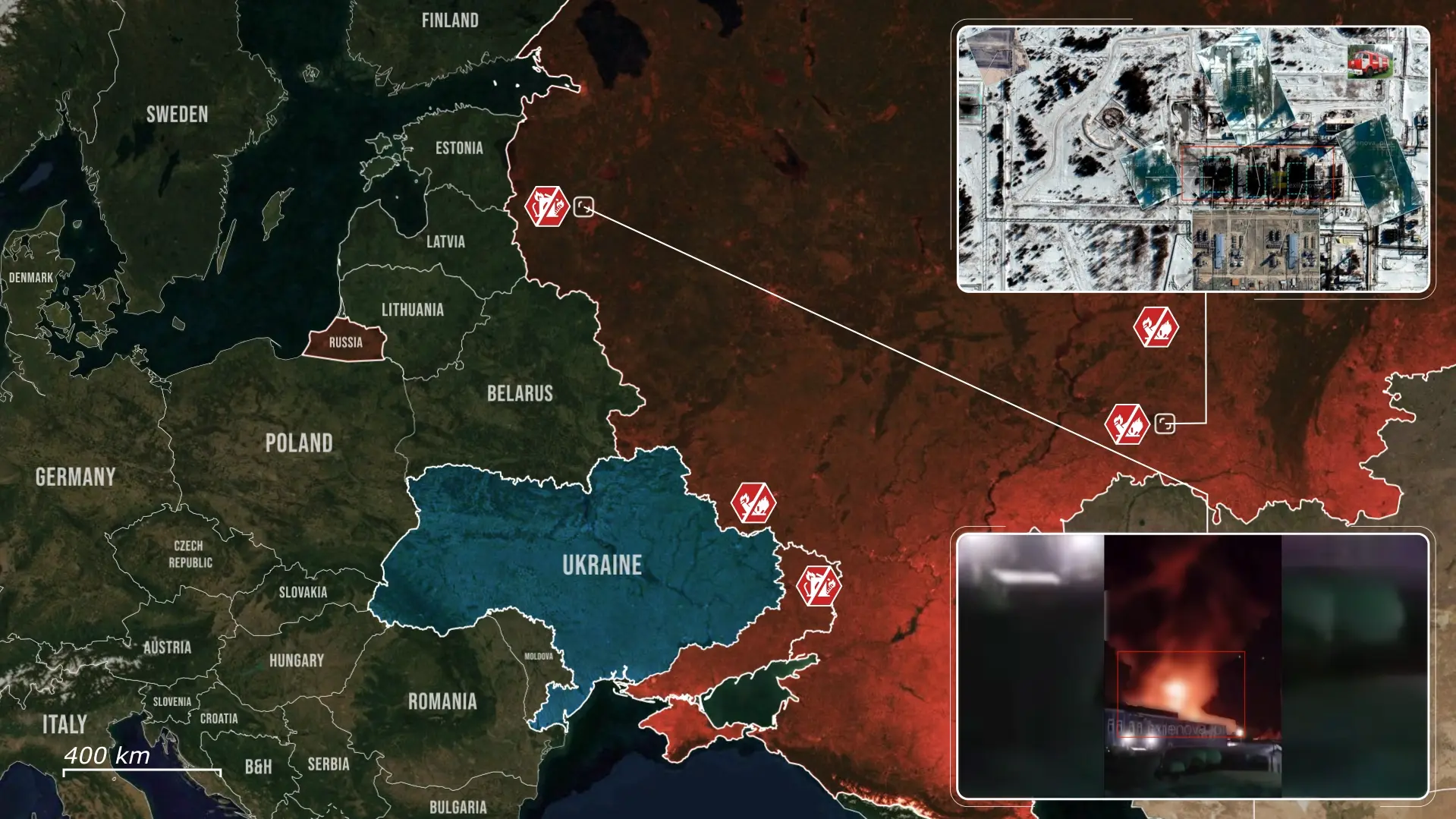
During the most important Ukrainian drone strike, the Kaleykino oil pumping station near Almetyevsk was struck, setting the facility on fire for days. Following the strike, it reduced intake by around 250,000 barrels per day, or 33 percent, with several tanks sustaining damage and out of service. The pumping station is a key node and a critical component in Russia’s crude oil export infrastructure because it supports export to Europe via the Druzhba pipeline, while also being strategically important for Russia’s maritime oil trade, feeding oil into the Black Sea ports of Novorossiysk and Tuapse, handling a total of roughly 24 percent of Russia’s crude exports.
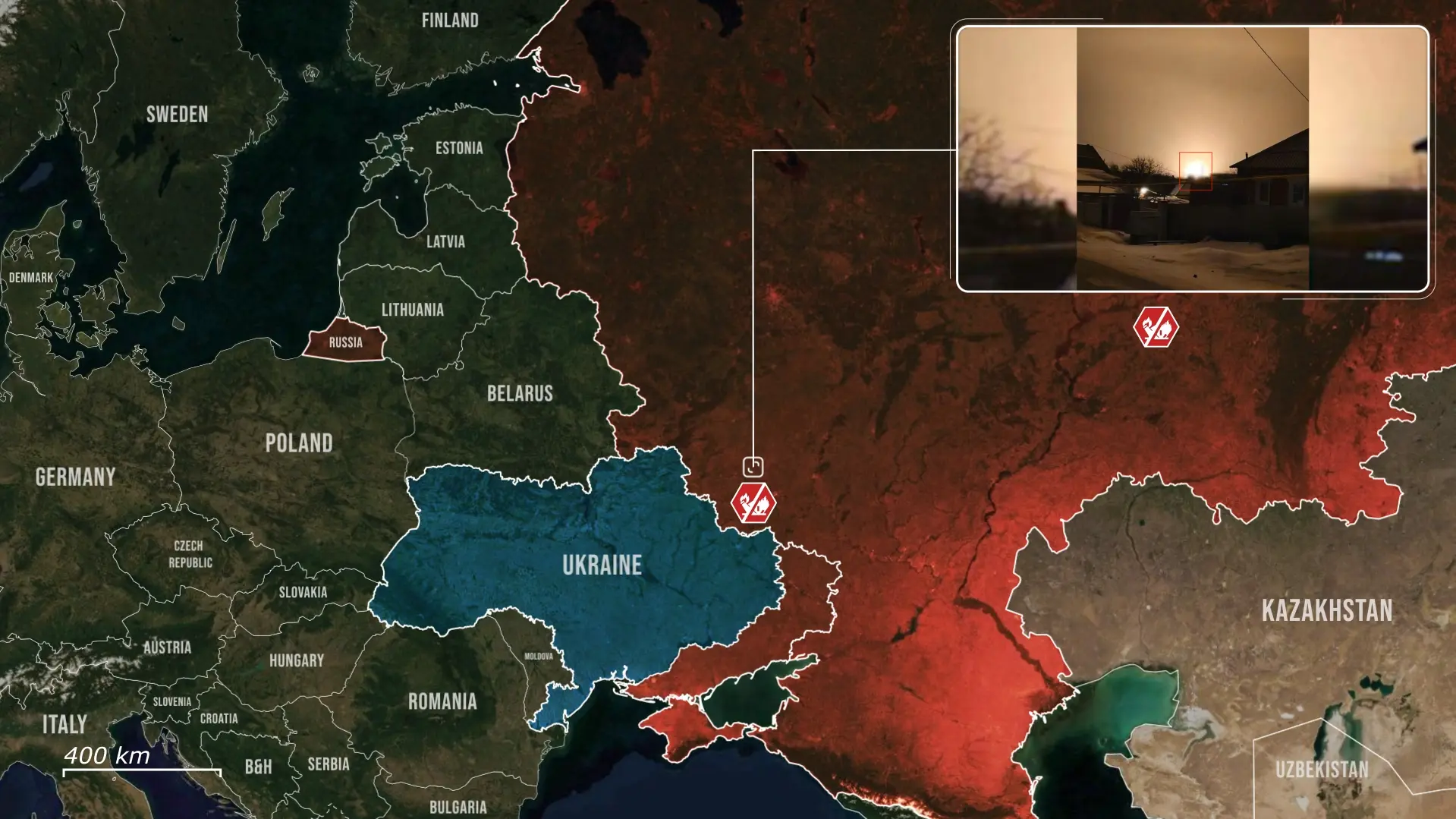
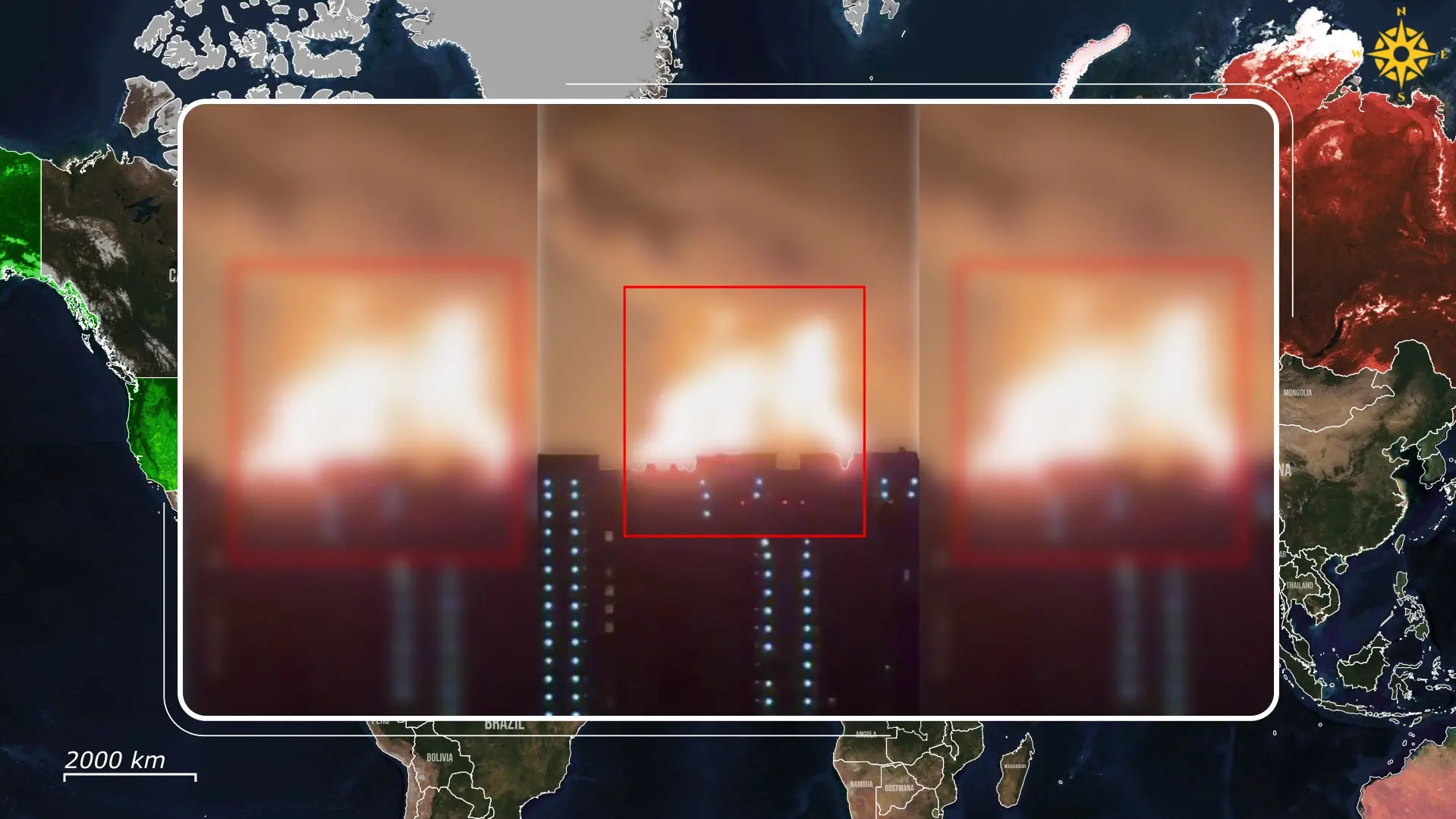
Shortly before, a gas distribution hub in Borisovka caught fire following a Ukrainian drone strike, with geolocated footage showing significant flames and thick smoke rising from the facility. The incident disrupted gas supplies, triggering emergency response measures and efforts to restore service as quickly as possible.
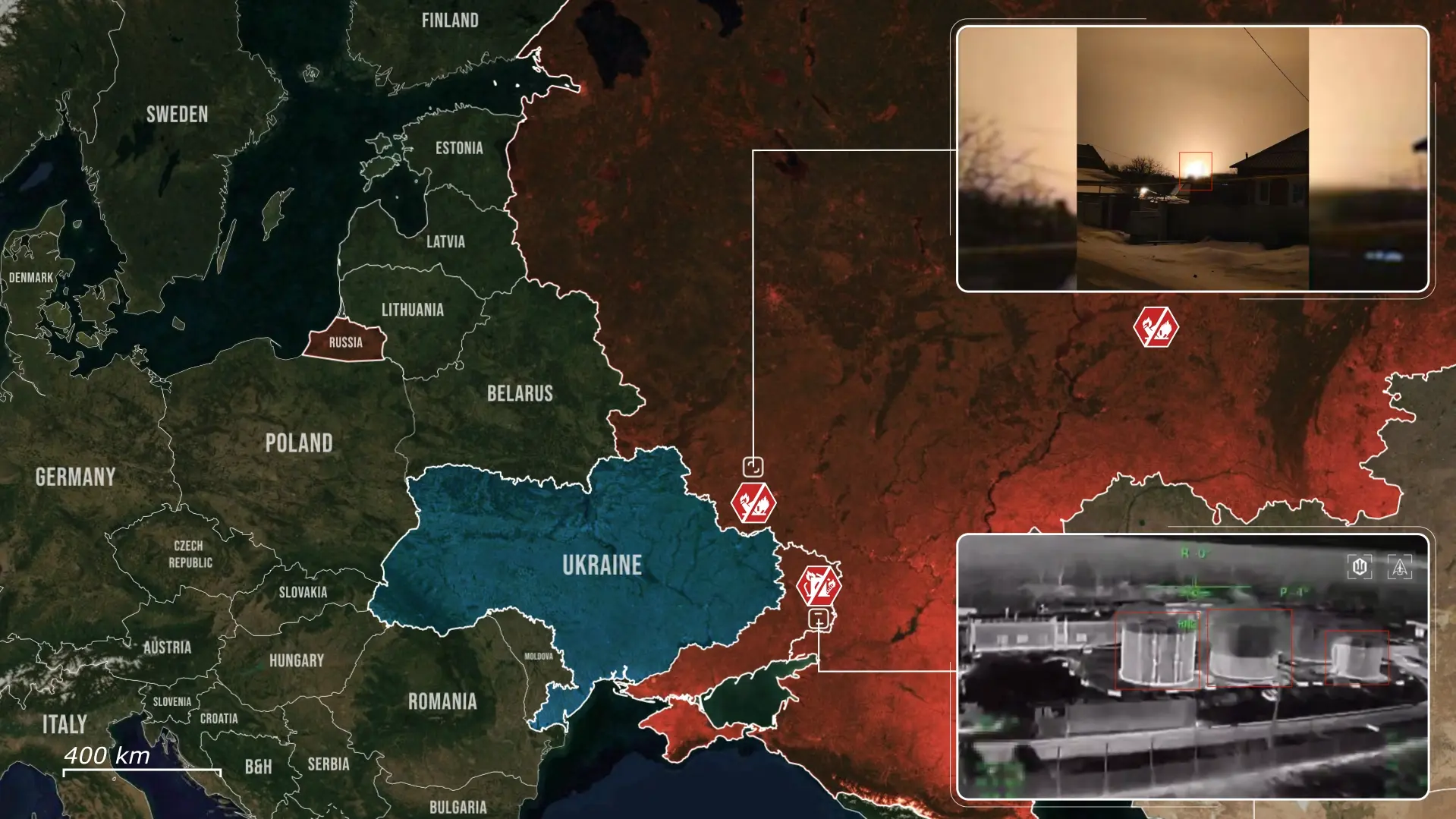
Geolocated footage shows the previous Ukrainian strike with long-range FP-2 drones against a fuel depot in Russian-controlled Luhansk, igniting a large fire at the site. The oil storage facility had been targeted previously and was struck again in a subsequent attack, as part of the broader Ukrainian campaign to disrupt Russian frontline operations.
Ukraine targeted another key Russian energy infrastructure, as the Neftegorsky gas processing plant in the Samara Oblast was also attacked, setting the facility ablaze, with two vertical stabilization columns damaged. Their impairment can stop the production cycle, as they are critical for removing light fractions from crude oil and preparing it for transport. Drones operated by the Ukrainian Alpha unit struck the Velikolukskaya oil depot in Russia’s Pskov Oblast in another attack, broadening the revenge campaign to target storage facilities too. The key regional depot, located nearly 500 kilometers from the border, suffered four direct hits despite being protected by anti-drone netting.
Ukrainian drones also struck the Ilsky oil refinery in the Krasnodar region to disrupt the first stage of the crude oil procession, sparking fires at fuel storage tanks and technical infrastructure and dealing significant damage to its annual processing capacity of approximately 6.6 million tons.
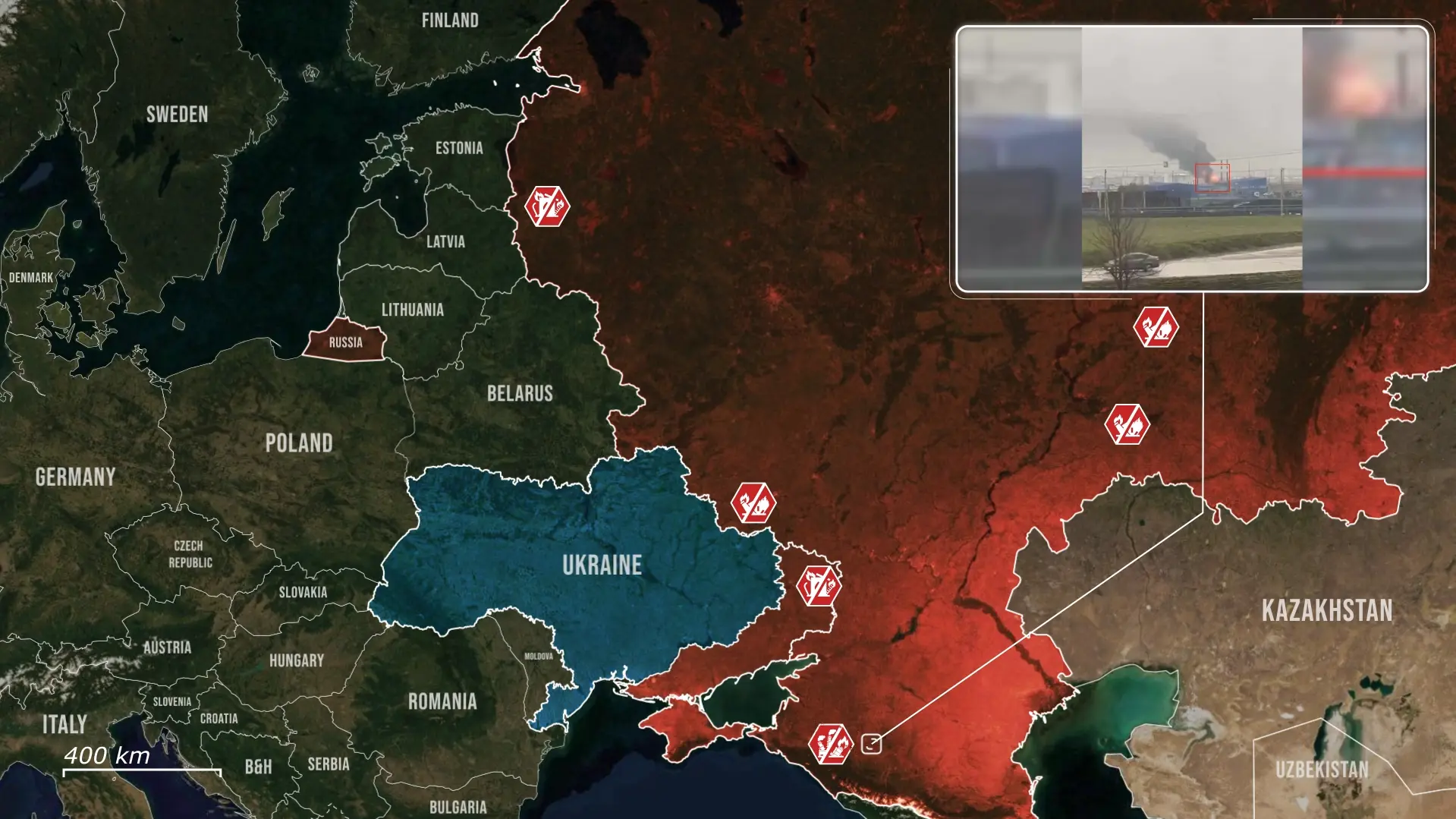
An air raid alert was declared in Sochi amid reports of explosions, as approximately 200 Ukrainian drones were launched toward Russian-controlled Crimea and the Krasnodar Region. Such saturation strikes amplify the impact by overloading Russian air defense and allow repeated strikes to be conducted.
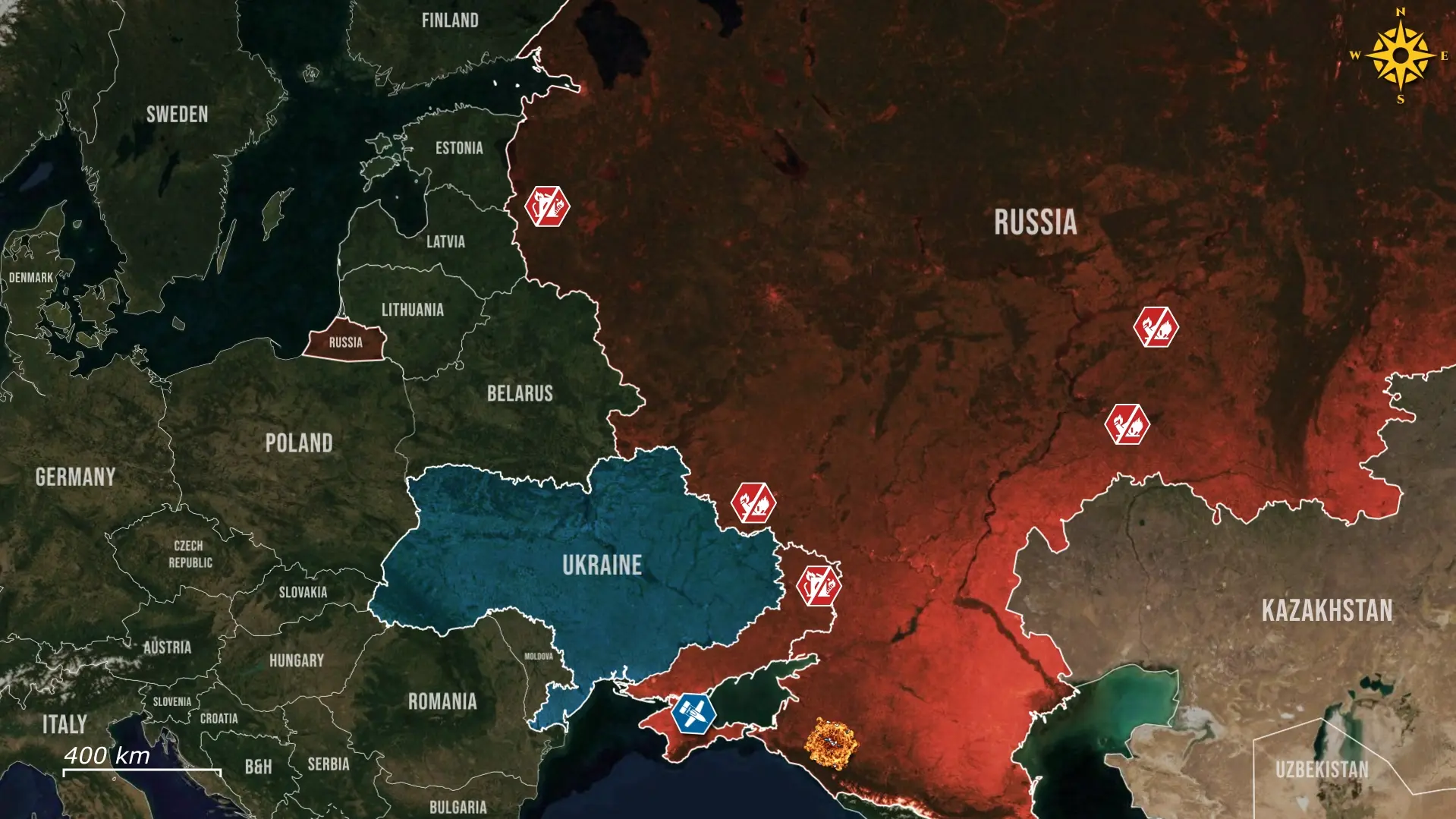
The tactic aims at keeping critical energy infrastructure out of service, with new attacks following Russian repairs, disrupting Russian revenue streams for extended periods.
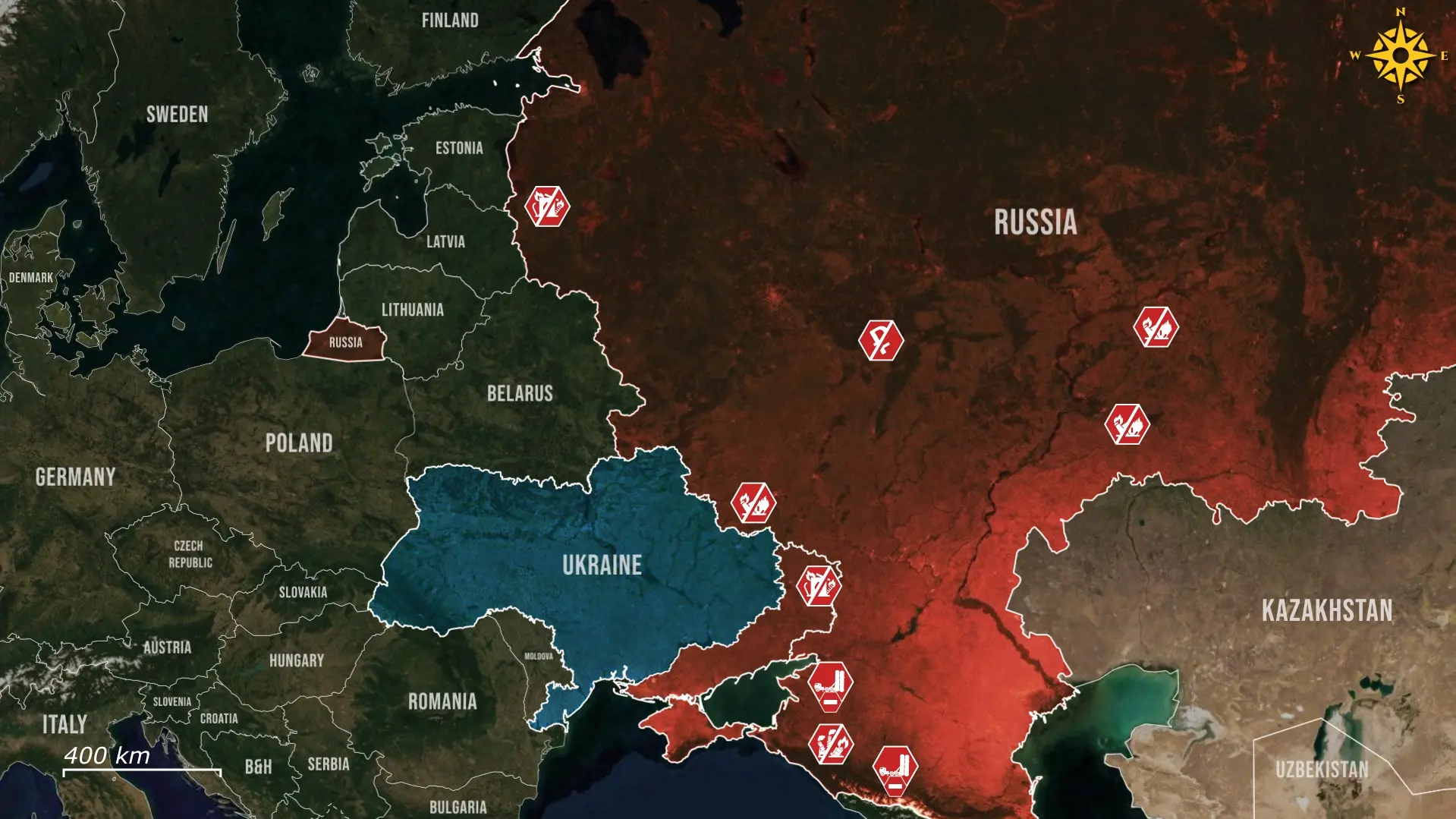
In the village of Volna, a fuel storage tank, warehouse facilities, and terminal infrastructure were damaged. Ukraine’s Unmanned Systems Forces confirmed a strike on the Tamanneftegaz oil export terminal, destroying a workshop used for producing and packaging specialized oils, repurposed for military use.
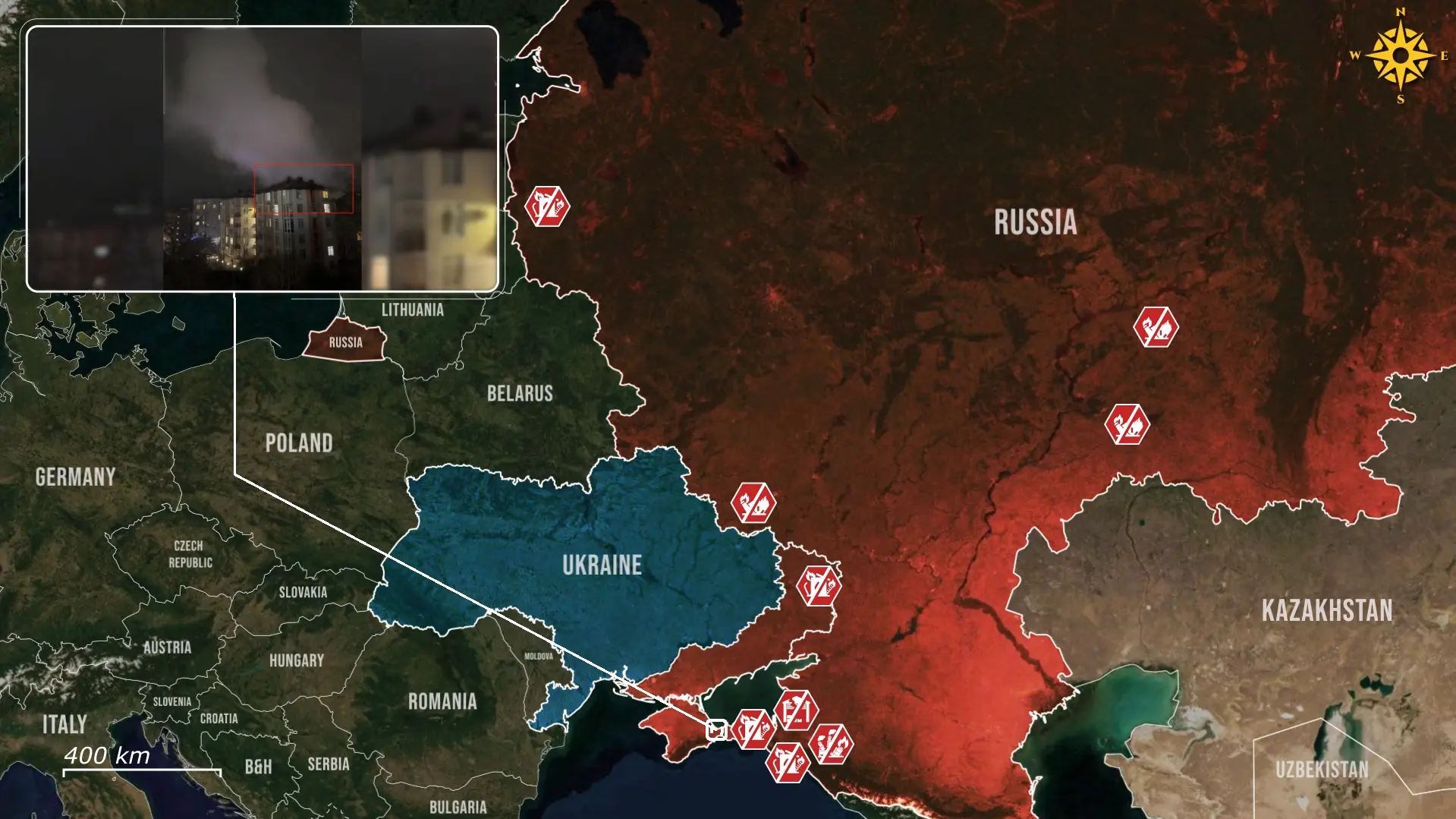
Ukraine struck the Lukoil Ukhta refinery in the Komi Republic using Liutyi drones, followed by successful hits on oil refineries in Volgograd, Sloviansk-on-Kuban, Ryazan, Yaroslav, Kazan, and Samara. Successive strikes hit the port of Novorossiysk, the oil and gas terminal in Volna.
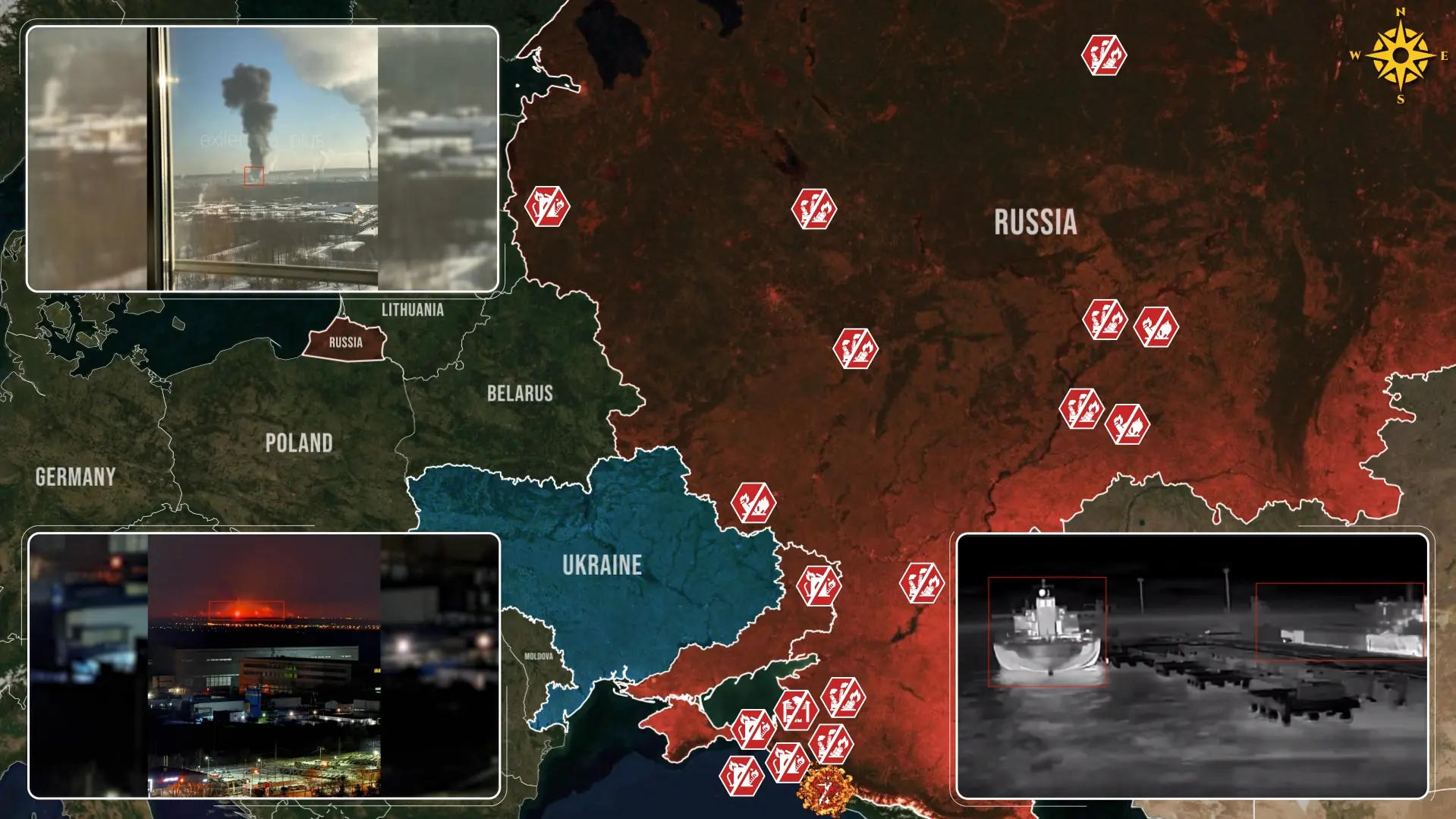
While a gas fueling station exploded in Russia’s Tyumen region. The Oil depot in Saratov, Penza, Volgograd, Stary Oskol, and Usman were targeted, and a fuel train at an oil depot in Crimea was destroyed.
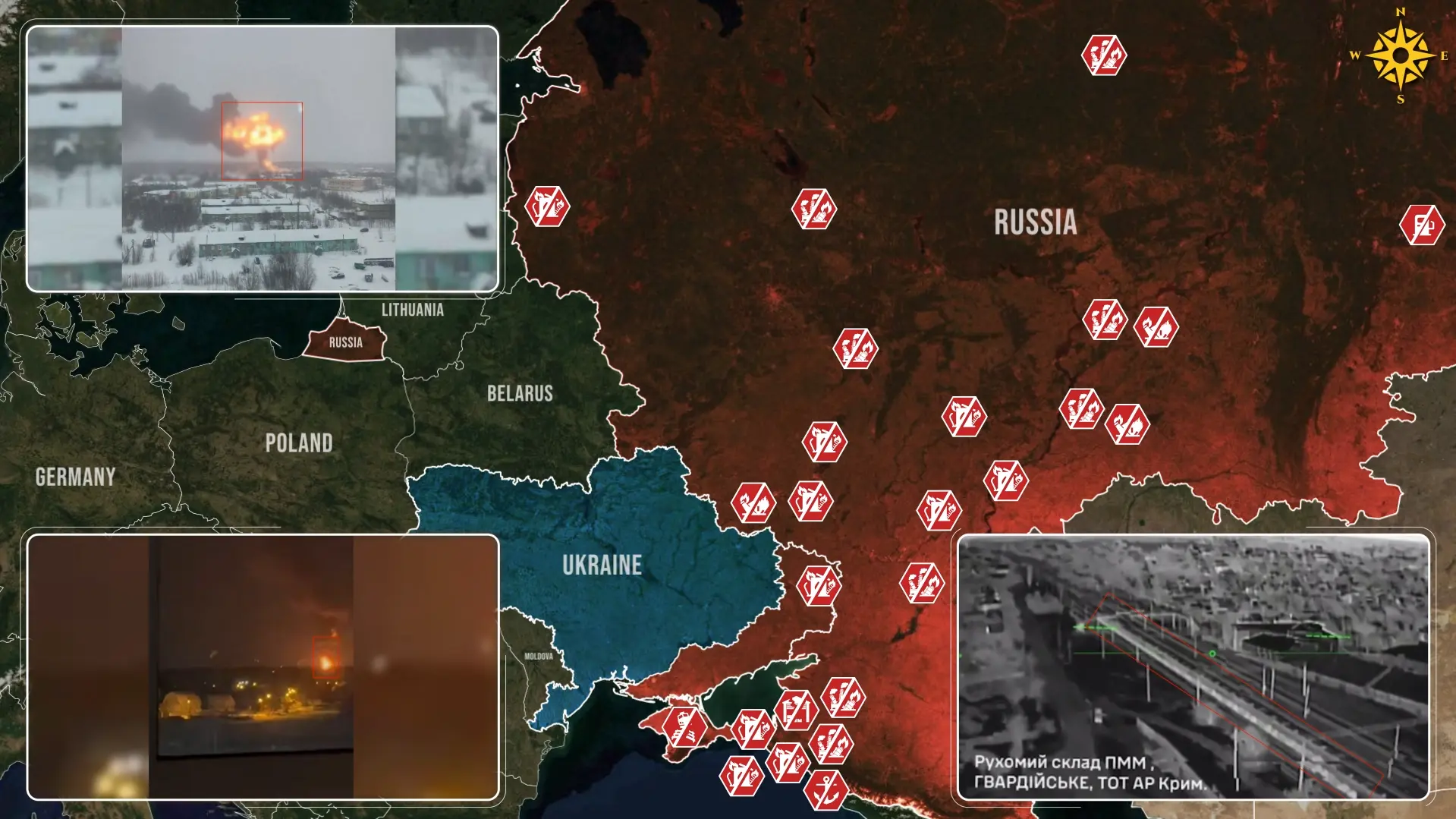
Overall, these massive Ukrainian strikes against oil facilities throughout Russia demonstrate an expanding revenge campaign focused on degrading Russia’s oil capacity. In 2026 alone, dozens of depots were targeted, while 4 refineries were hit, putting 15% of Russia’s total refining capacity out of operation. By disrupting refining, storage, and transit nodes, the attacks are constraining revenues that finance the war while contributing to civilian fuel shortages as military demand takes priority, creating internal problems for the Russian government.
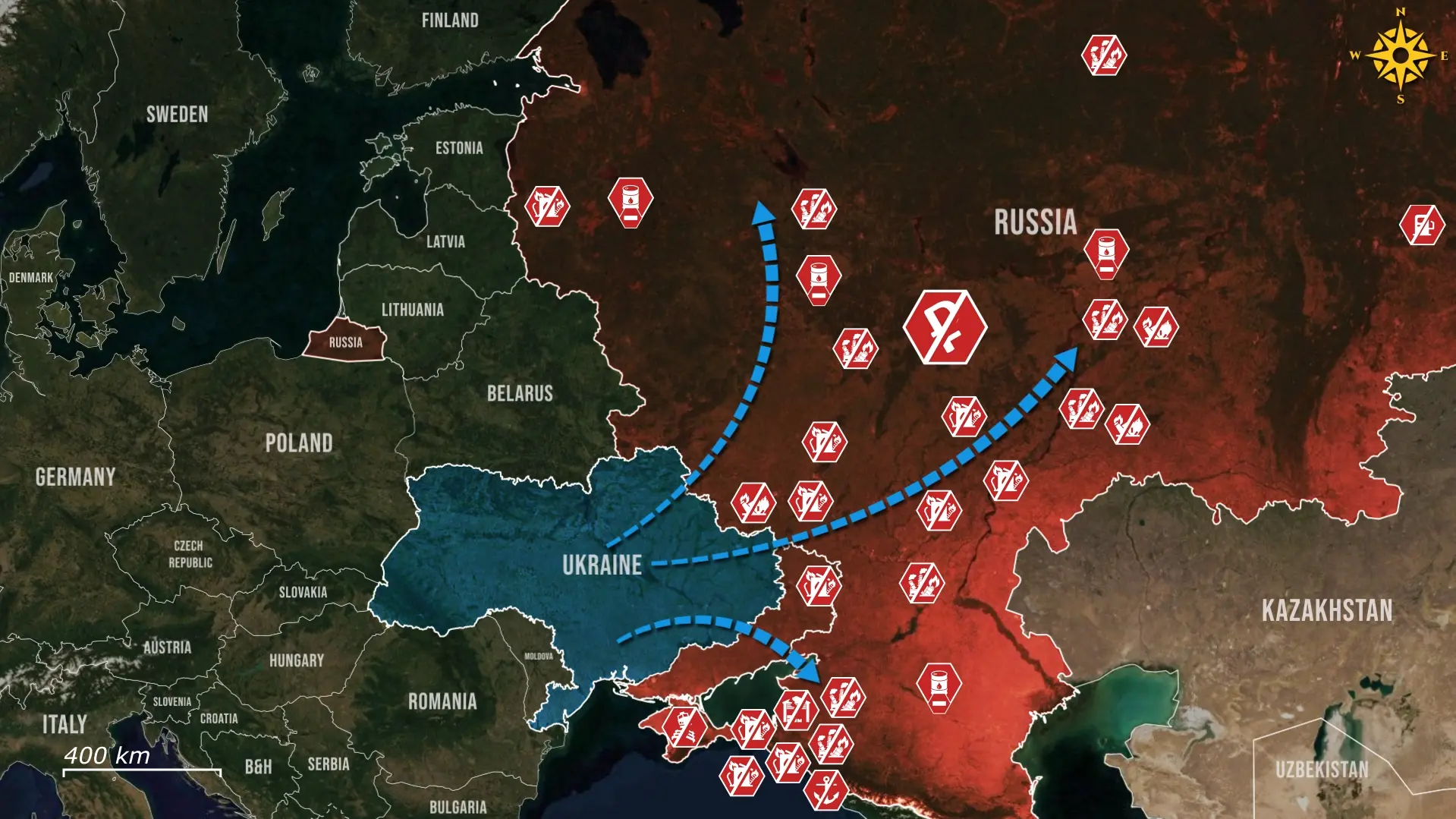
With the increasing deployment of domestically produced long-range weapons, the scale and destructiveness of these strikes will make it harder for the Russians to repair the damage, ultimately costing them more, as each day out of operations means less income.

.jpg)

Comments