


Today, the biggest news comes from the Borova direction.
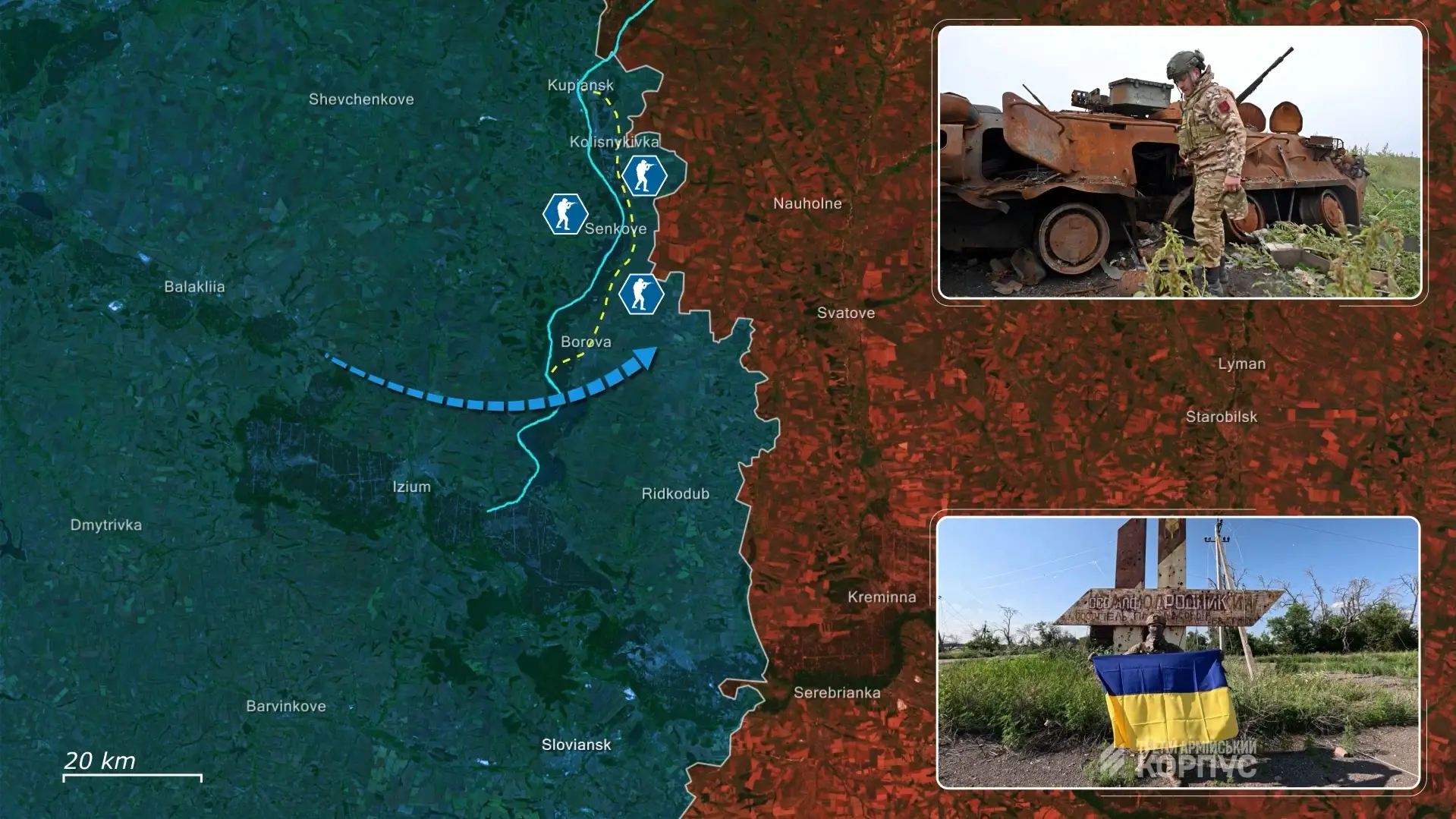
Here, the Russian frontline is experiencing a localized collapse as Ukrainian forces have recaptured more than one hundred square kilometers over the past month. Roughly half of these territorial gains came in the last ten days alone, following a series of deep counterattacks that shattered Russian defensive positions. These advances come alongside Ukrainian territorial gains in neighboring western Luhansk, where Russia is already losing ground despite Putin claiming complete control over the region just last month. The speed of the Ukrainian advance has now left several Russian formations operationally encircled in the village of Kolisnykivka.
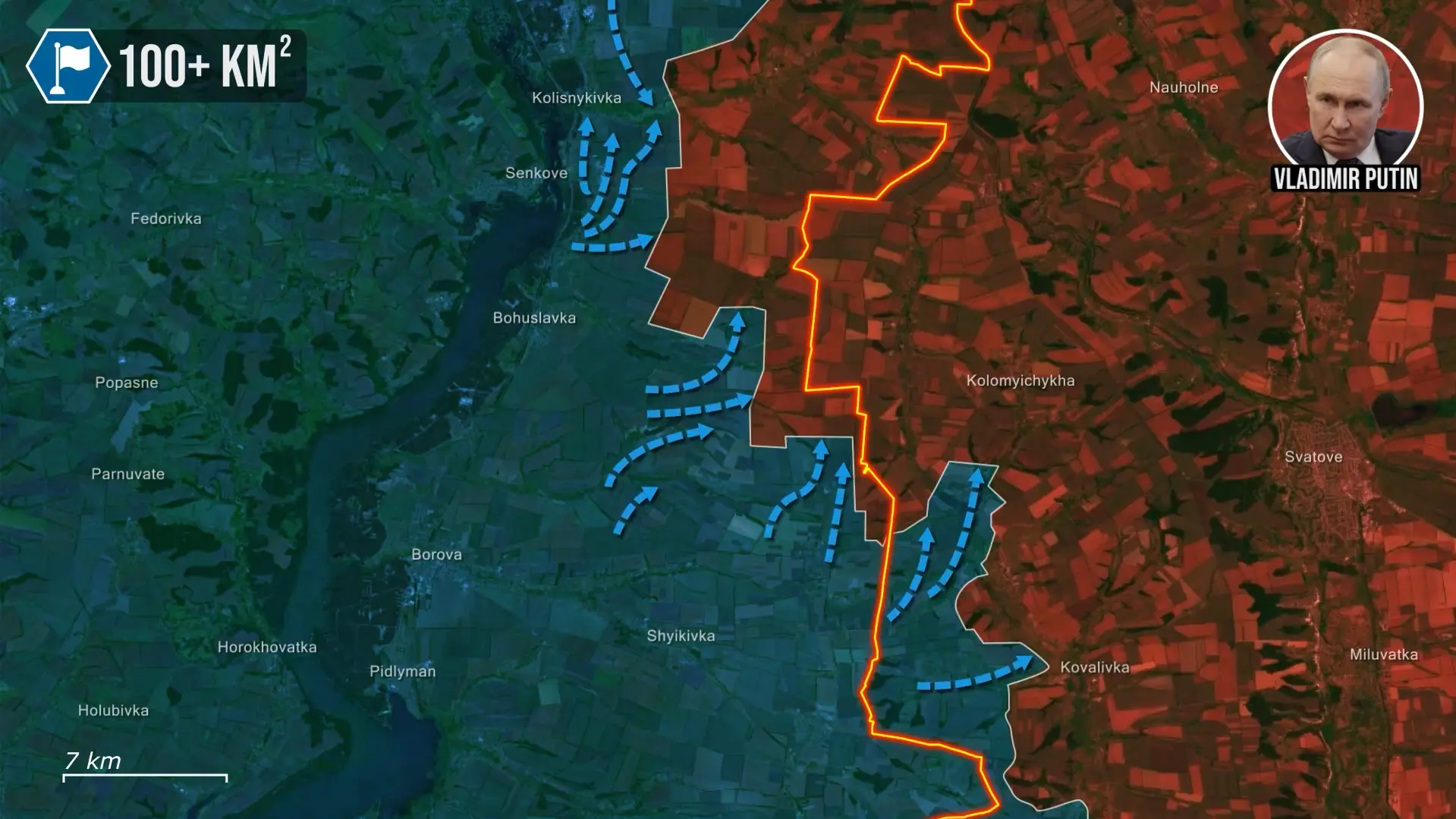
The only routes still connecting them to Russian lines run through a contested grey zone east of the village. They can still receive supplies and pull back through this area, but Ukrainian assault groups are pushing to consolidate control there and close that route completely. This situation developed as positions held by Russia’s Forty Seventh Tank Division gave way across the Borova direction, allowing Ukrainian forces to advance rapidly through gaps in the defense and reach the rear of Russian formations around Kolisnykivka. The division had been responsible for holding a key part of this sector, so its failure to stop these advances has left the troops inside the village increasingly isolated while Ukraine continues tightening control around them.
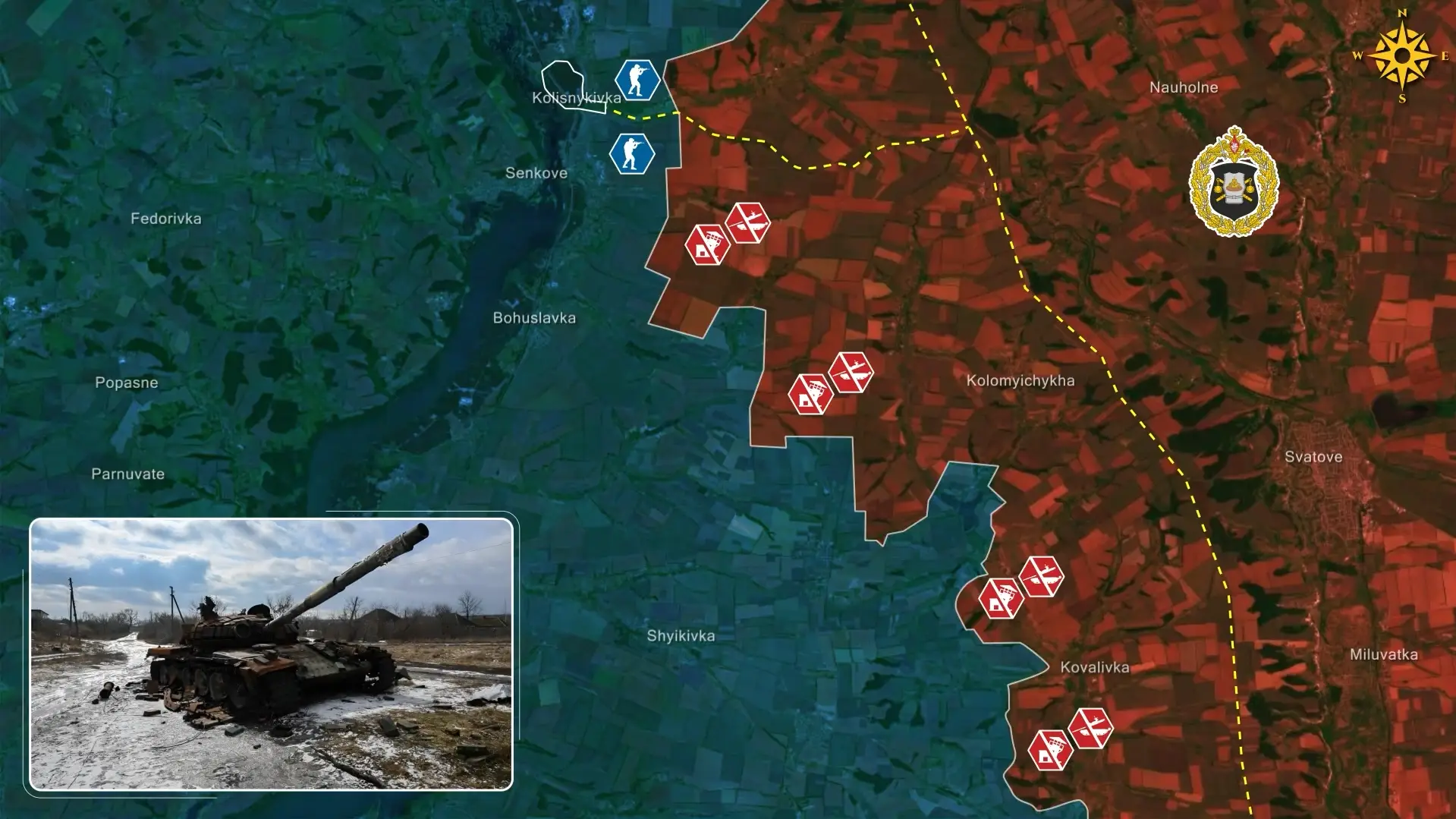
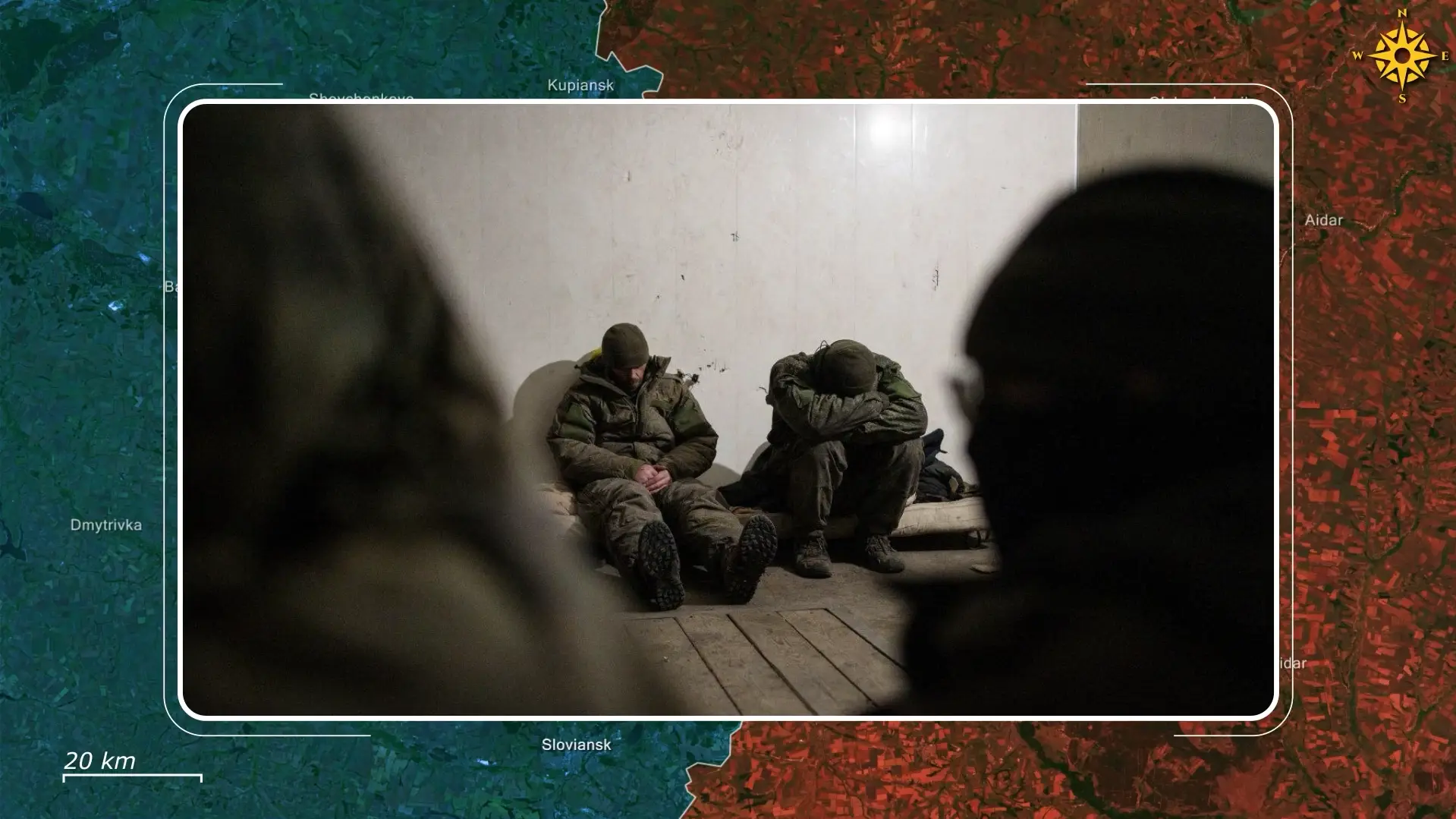
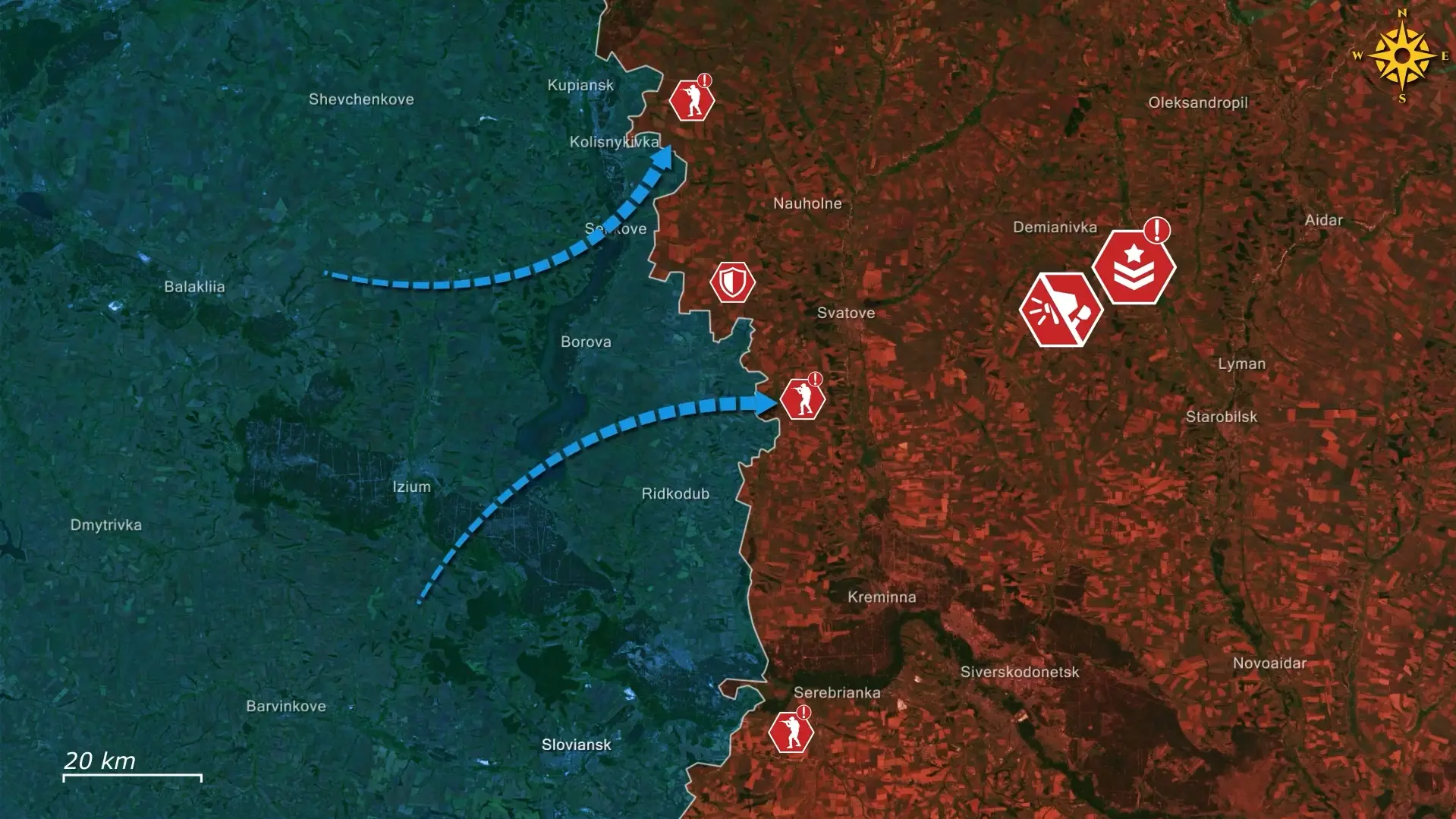
The first objective of the Ukrainian counteroffensive near Borova is to support ongoing operations around Lyman, Slovyansk, and western Luhansk, where the Ukrainian Third Army Corps has already liberated two hundred and seventy seven square kilometers and sixteen settlements during Operation Vivaldi. According to Ukrainian General Andriy Biletsky, this operation expanded Ukrainian territorial control within Luhansk from forty to over one hundred square kilometers.The simultaneous counterattacks further north are forcing exhausted Russian formations to defend multiple sectors between Kupyansk and Lyman, leaving gaps in their defensive lines. Ukrainian forces have exploited these weaknesses, advancing deep into Russian held territory and rapidly consolidating their gains under heavy drone and artillery cover.
The second objective is to push Russian forces away from the strategically important town of Borova and the southern Oskil River crossings, which Ukrainian forces depend on for transporting reinforcements, ammunition, and supplies to their positions east of the river. The Ukrainians have already pushed Russian forces away from critical areas further south near Lyman and Svyatohirsk, and extending these successes northward strengthens Ukrainian positions across both northern Donetsk and eastern Kharkiv.
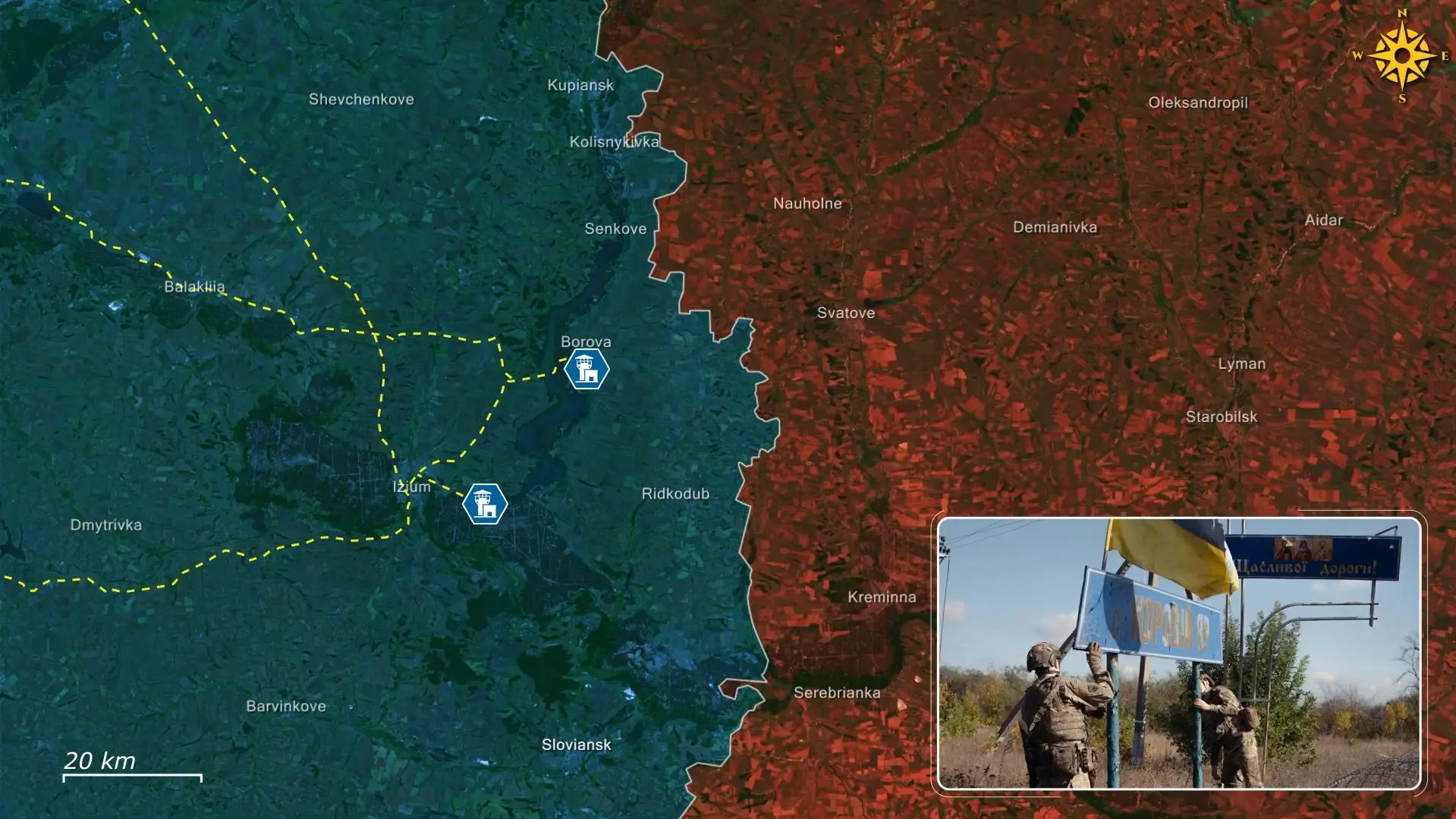
However, the Ukrainian ambitions extend considerably further north, as the third objective is to advance along the eastern bank of the Oskil River and establish a direct connection with the Ukrainian bridgehead near Kupyansk. This bridgehead currently provides Ukraine with a foothold east of the river, separated from Ukrainian controlled territory around Borova by Russian positions. Reconnecting these areas means reopening the road between Borova and Kupyansk, eliminating the Russian presence along this section of the riverbank, and restoring a direct transportation route between Ukrainian formations without relying exclusively on river crossings. Completing this operation effectively pushes the Russian frontline in this sector back to its positions from late two thousand twenty four, undoing approximately two years of Russian offensive operations. Ukrainian forces have already achieved a similar result around Lyman, where the frontline has been pushed back to approximately where it stood at the beginning of two thousand twenty five, placing the territorial achievements of two neighboring Russian offensives at risk.
Overall, Ukraine’s counterattacks are forcing Russia to defend ground it had spent months trying to capture. For Moscow, defending its territorial gains creates an additional demand for manpower at a time when its offensive formations are already depleted. Every additional Russian soldier committed to defensive duties reduces the resources available for the Kremlin’s remaining offensive ambitions in Donetsk. Western Luhansk is now becoming another front where Russia must fight to preserve territorial gains that Putin has prematurely declared permanent.




Comments