

.svg)
Today, the biggest news comes from the Caspian Sea.
Here, Russia had assumed that offshore platforms and internal maritime traffic were insulated from Ukrainian long-range strikes, viewing the region as a secure rear area beyond Ukraine’s effective strike range. However, Ukrainian drones are hitting Russian targets successfully and setting the Caspian Sea ablaze, opening up more problems for the Russian Federation than only direct destruction.
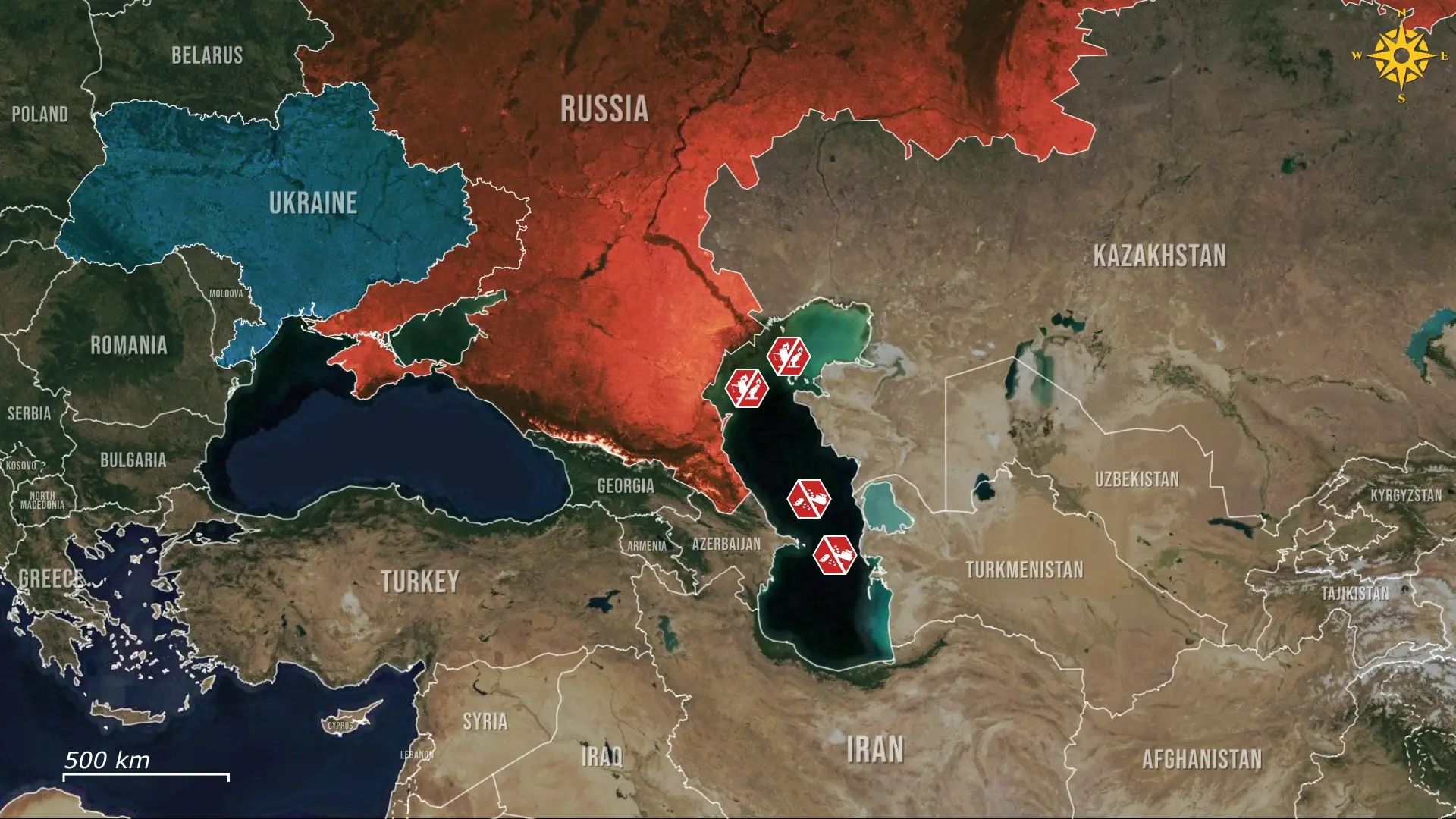
Ukrainian strikes have now reached targets in the Caspian Sea region once again. While Ukraine had conducted attacks here in the past, it is now clear that this was only the first wave. The current second wave of strikes shows a deliberate expansion of Ukraine’s strike campaign, signaling an intent to challenge Russia’s assumed strategic depth.
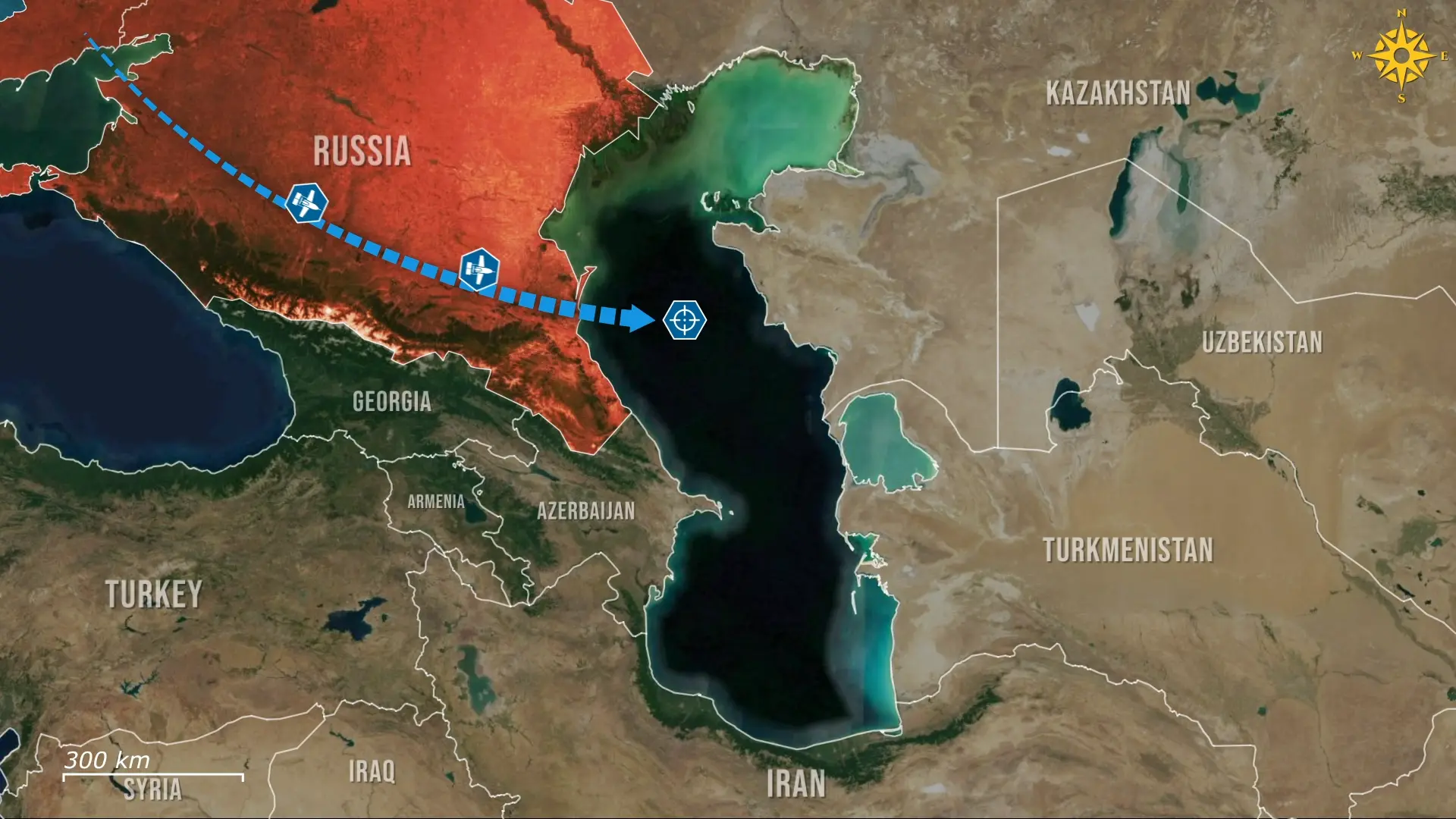
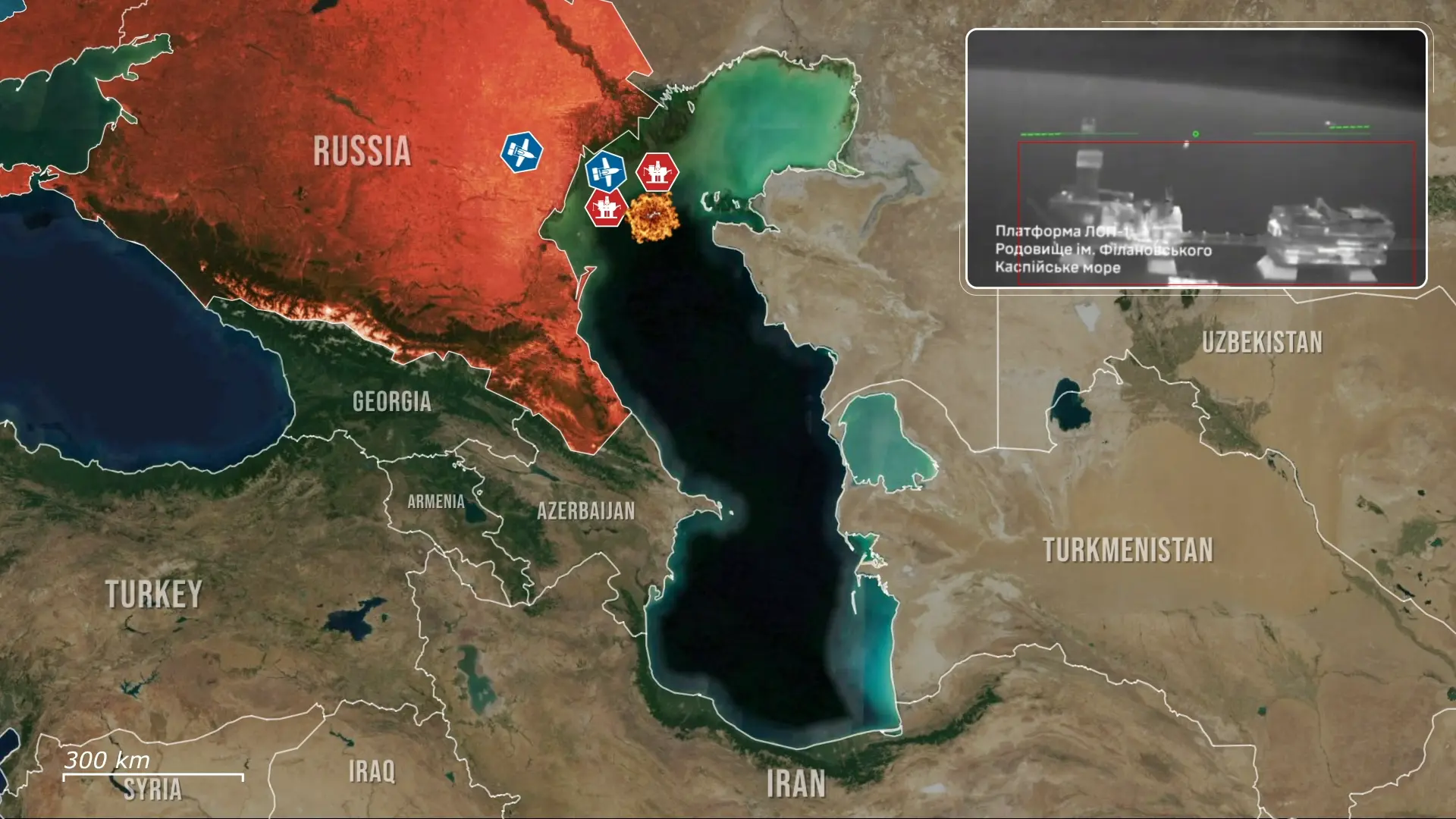
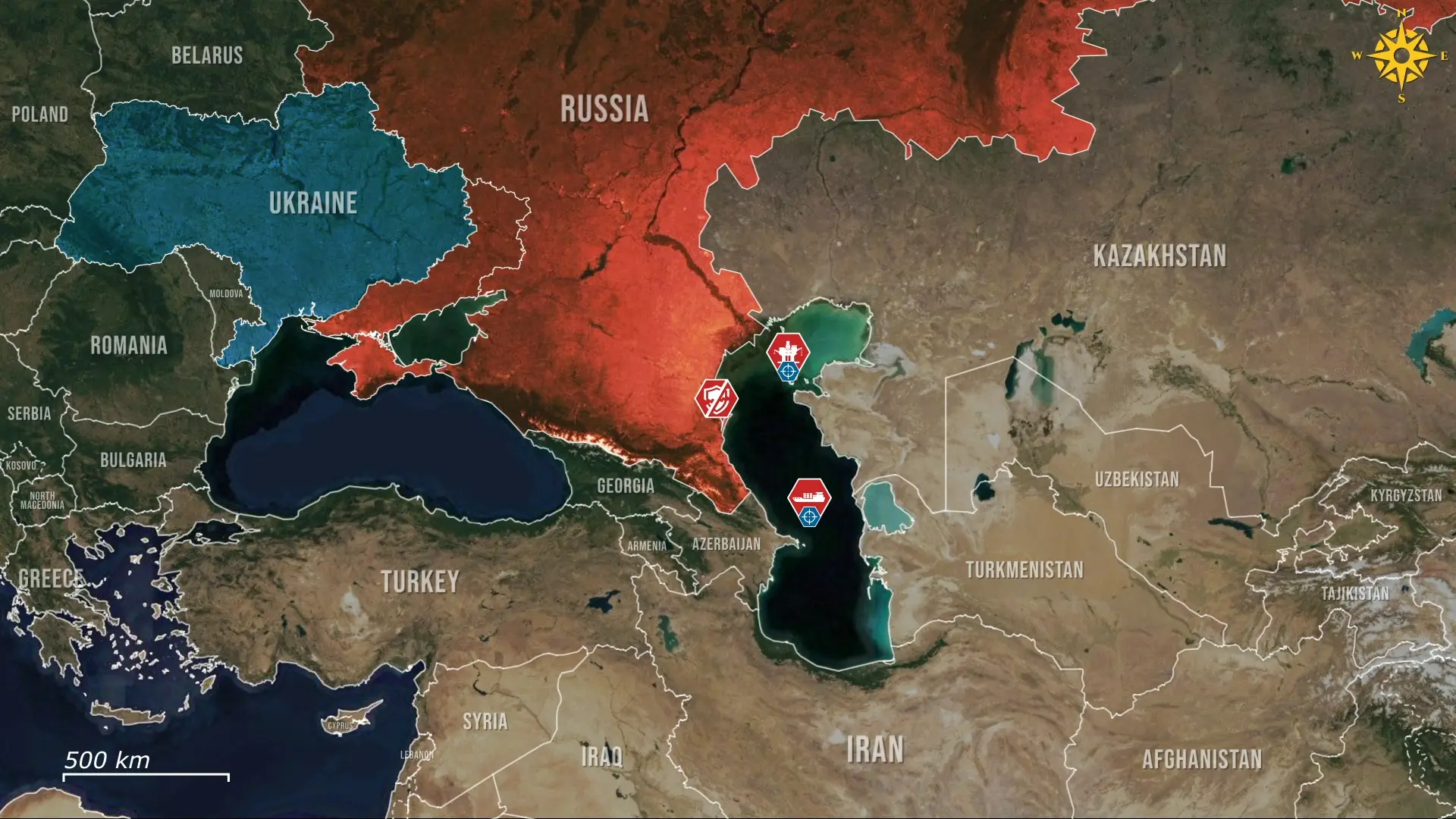
First, Ukrainian Special Operations Forces conducted coordinated strikes against three offshore drilling platforms operated by Lukoil in the Caspian Sea, which were helping with fuel supplies to Russian military forces. At the Filanovsky and Korchagin fields, the attacks damaged turbine ventilation systems, forcing production shutdowns, while the Grayfer platform’s power module was struck, resulting in a complete halt of operations.
Secondly, an Iranian cargo vessel sank in the Caspian Sea after transmitting a distress signal on January 14, an incident confirmed by Turkmenistan’s Foreign Ministry. The ship was linked to weapons shipments and was sailing on the direct route in the Caspian, used for Iranian weapons shipments to Russia. In the context of increased Ukrainian drone activity in the Caspian region, the incident raises the possibility of a drone-related strike.
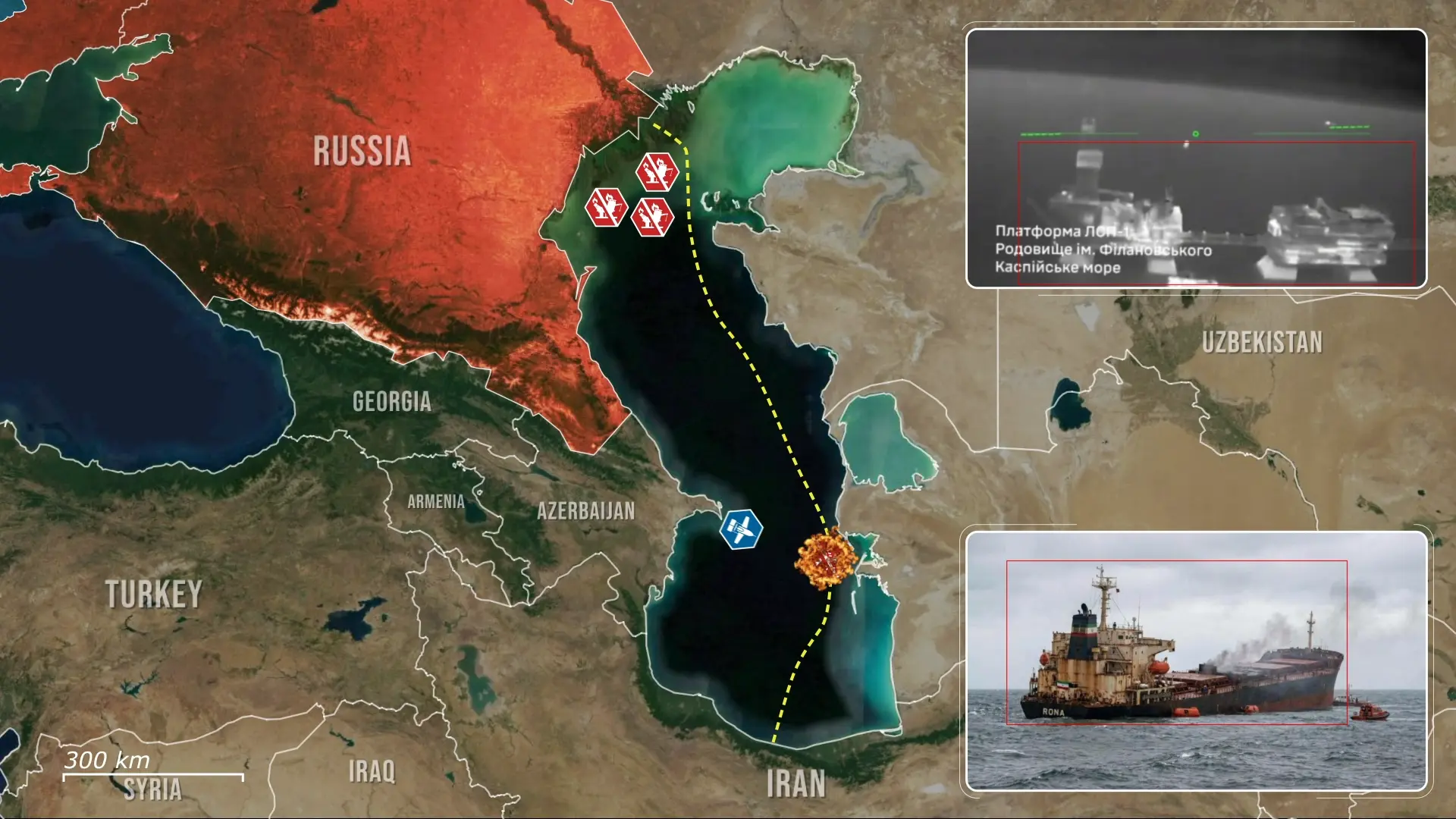
Notably, this was not even the first ship hit by Ukraine, because during the first wave of Ukrainian strikes on the Caspian Sea, 4 other vessels linked to Russian-Iranian weapons and oil trade were hit on the journey or in port. Notably, the Lukoil drilling platforms were struck repeatedly during this first phase as well as in the second, marking Ukraine’s effort to keep them out of service indefinitely. Lastly, A Russian patrol vessel near the Filanovsky platform was also hit by Ukrainian kamikaze drones, as it had been dispatched to repel Ukrainian drone attacks.
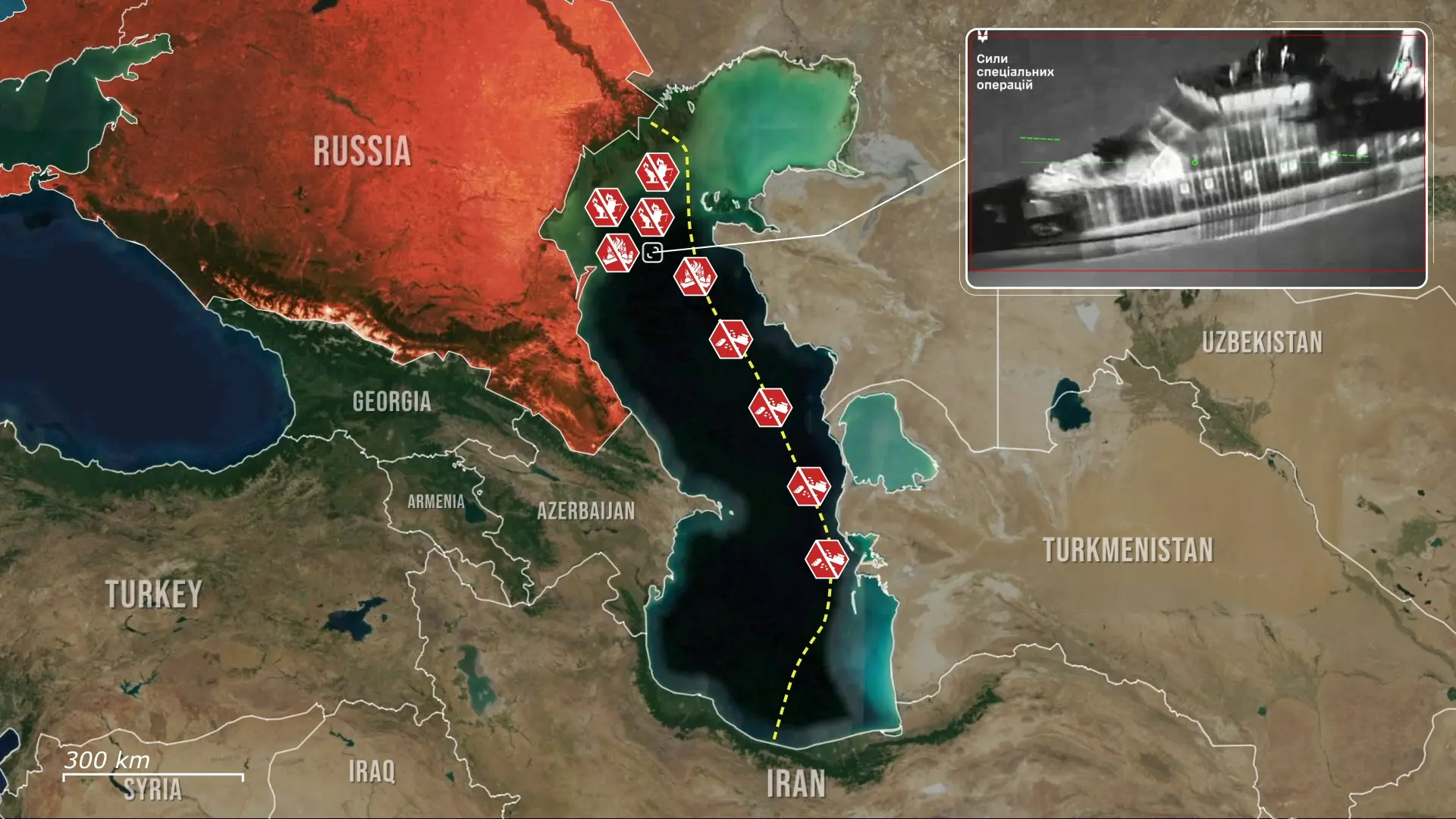
These strikes are part of Ukraine’s broader deep strike campaign by striking oil refineries, oil depots, and now the Lukoil oil rigs in the Caspian Sea as well, Ukraine is attacking Russia’s oil sector at every stage of production. This limits its ability to cover its domestic needs and sustain the war by exporting its fossil fuel products.
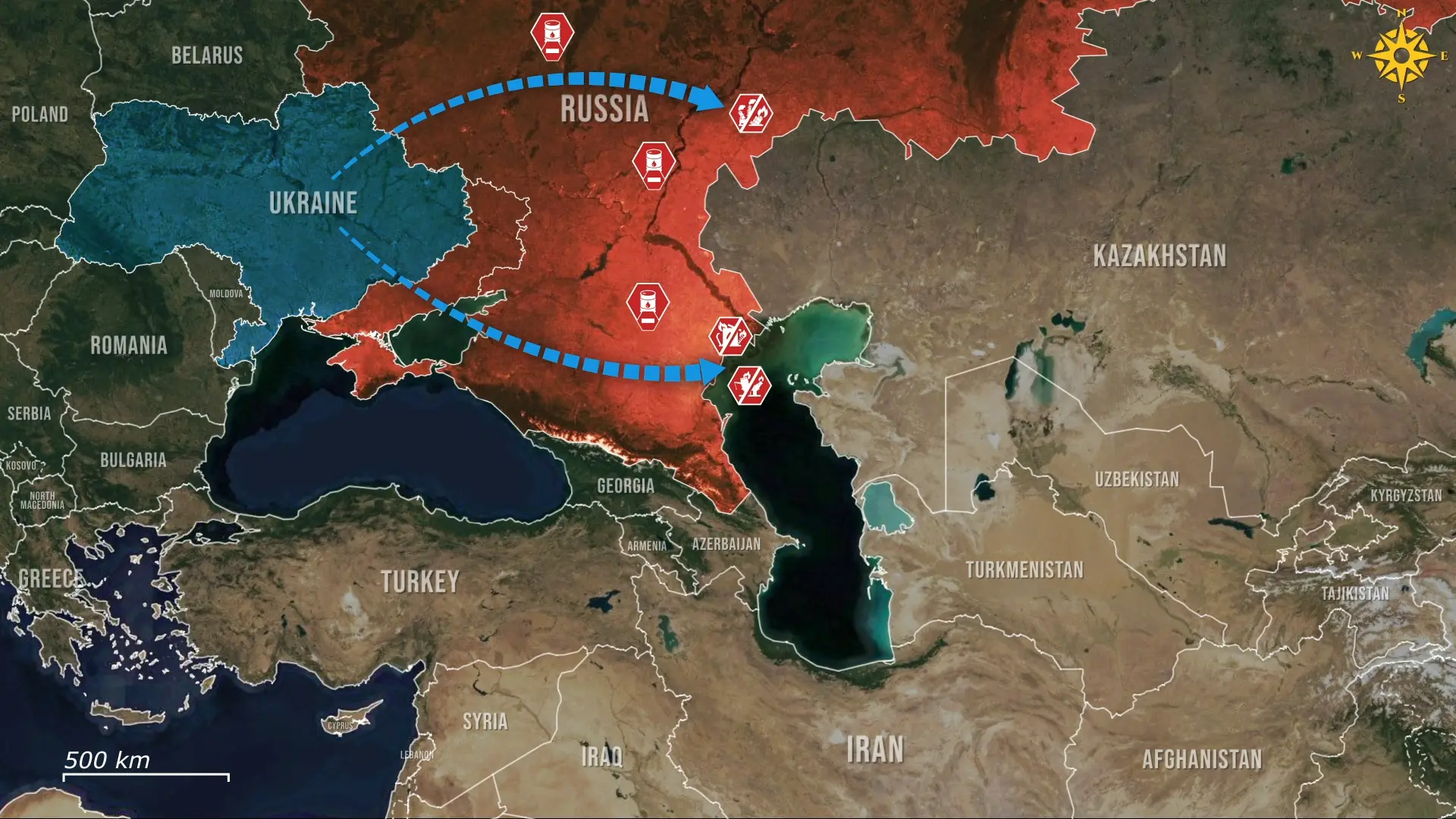
The strikes on vessels carrying weapons from Iran are conducted to curb Russia’s supply of Shahed drones, which form the bulk of Iran’s deliveries, but also artillery and air defense ammunition. Moreover, Iran has sold approximately 3 billion dollars' worth of missiles, the vast majority of which are delivered via cargo vessels transiting the Caspian Sea.
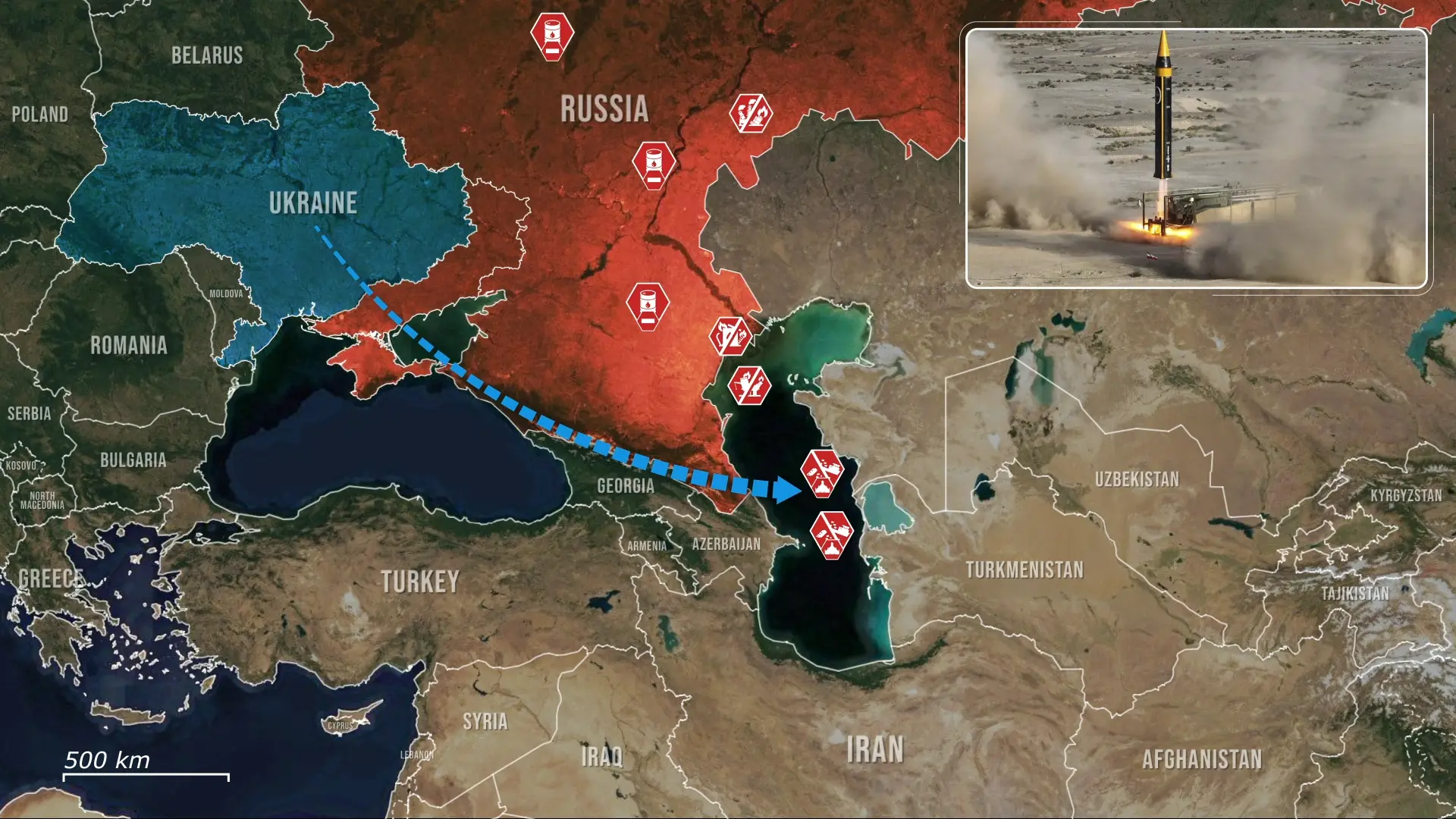
These weapon shipments and oil rigs were perceived to be safe because of their distance from Ukraine. However, this can no longer be assumed, as Russia and Iran are unable to ensure the protection of even their internal maritime spaces. The Iranian regime is barely able to hold its grip on power, while Russia’s air defenses are already overstretched, particularly against Ukraine.
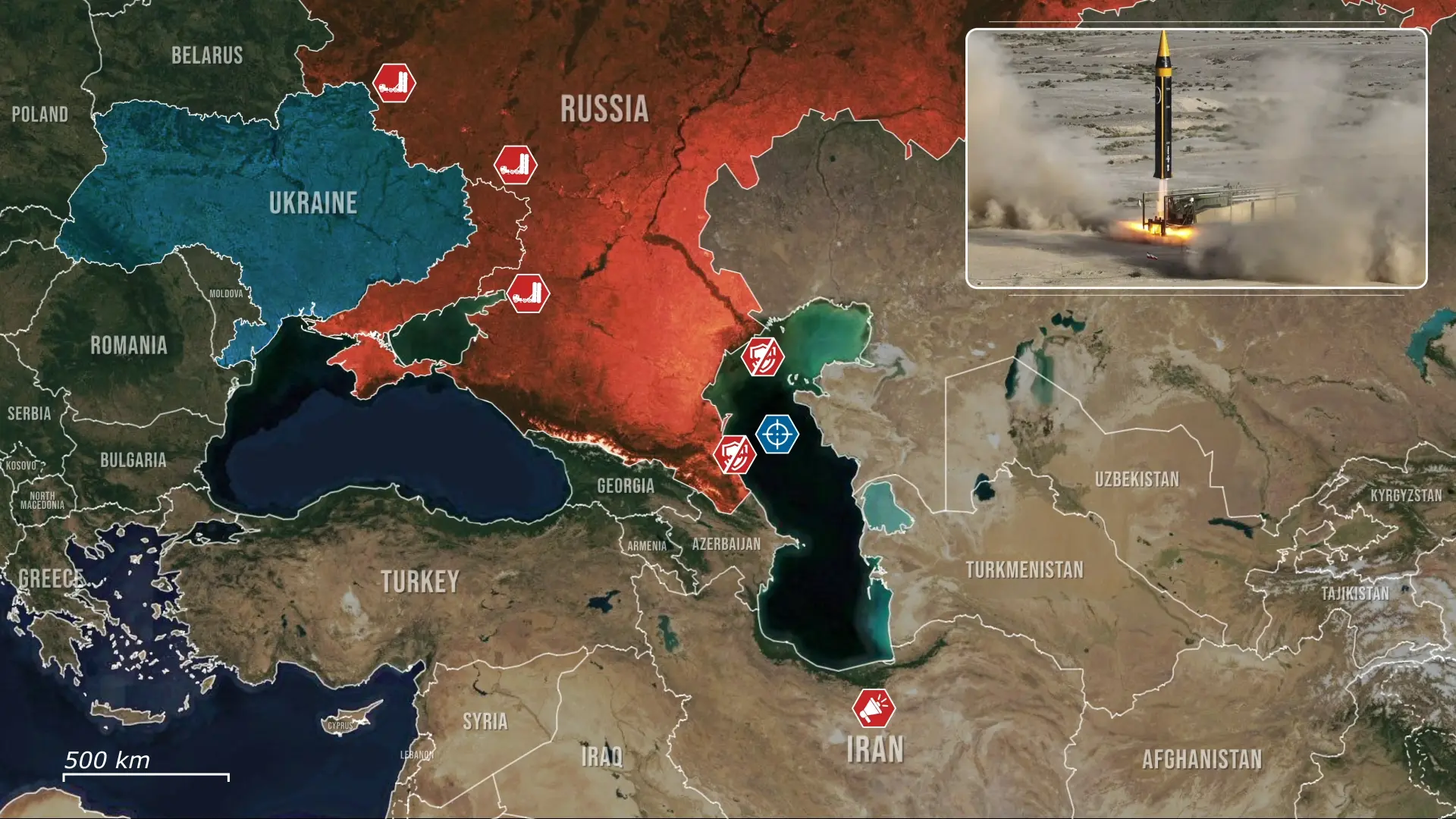
Both Russia’s and Iran’s Caspian Flotillas are designed only for patrol and strike missions. They lack the air defense capabilities necessary to counter waves of Ukraine’s experienced long-range drone forces. A large-scale Russian or Iranian military redeployment to better secure the Caspian Sea is equally unfeasible due to its geography.
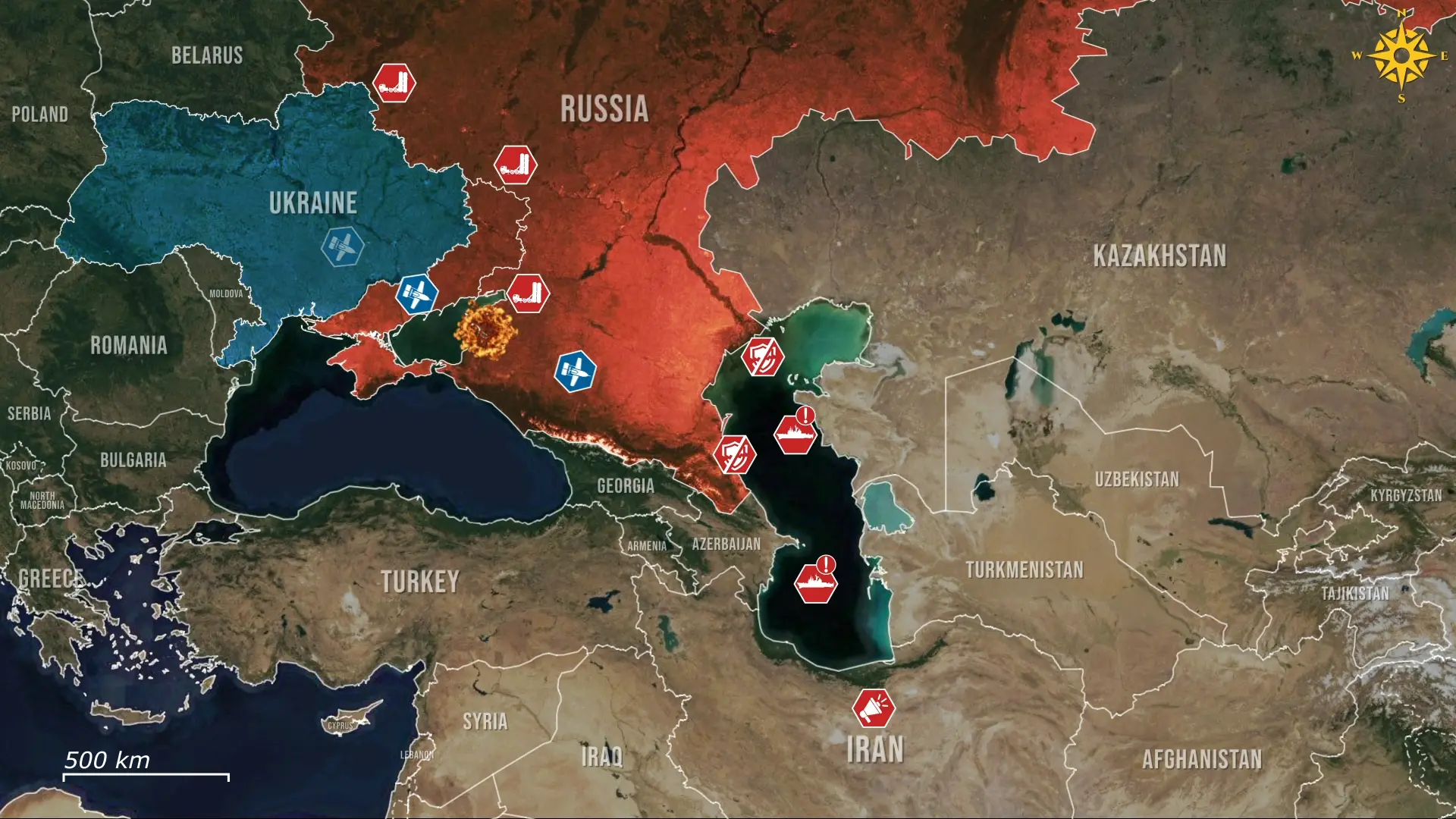
The Caspian is a landlocked theater with limited transport corridors, creating severe logistical bottlenecks and preventing rapid or scalable force projection. Redeploying air-defense systems or fighter aircraft to the Caspian Sea would be challenging due to Russia’s limited inventory and would weaken other critical theaters without delivering proportional benefits. The economic cost of sustaining such a defensive posture in the rear would likely outweigh the operational gains. As a result, Russia cannot meaningfully secure the Caspian without exposing higher-value assets elsewhere, leaving Ukraine with broad freedom to conduct further strikes in the region.
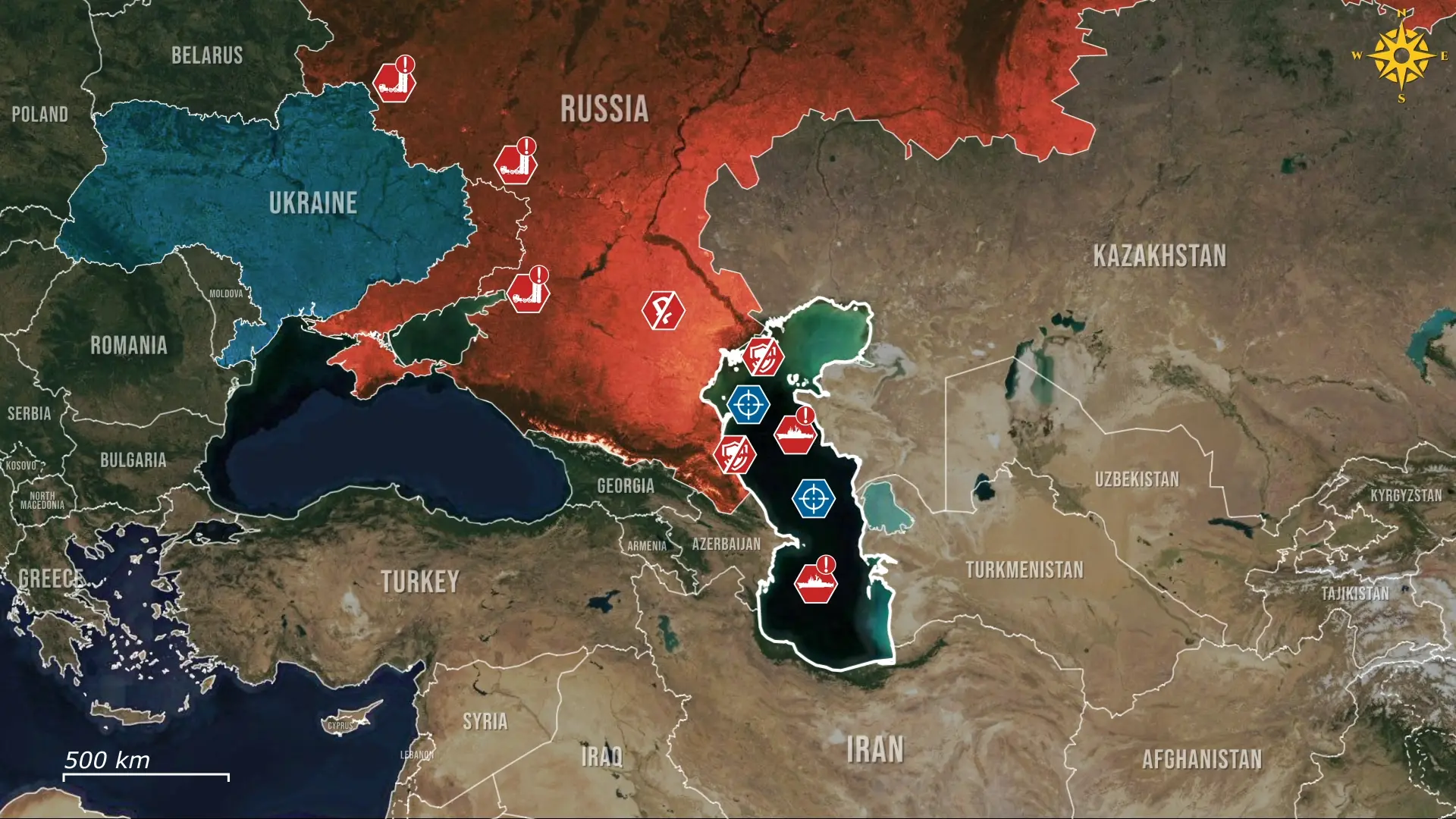
Overall, Russia’s perceived safety in the rear is being actively shattered by Ukraine, which conducts strikes further and further away from the frontline. These developments indicate that Ukraine will be able to strike any targets in this region without any hurdles.
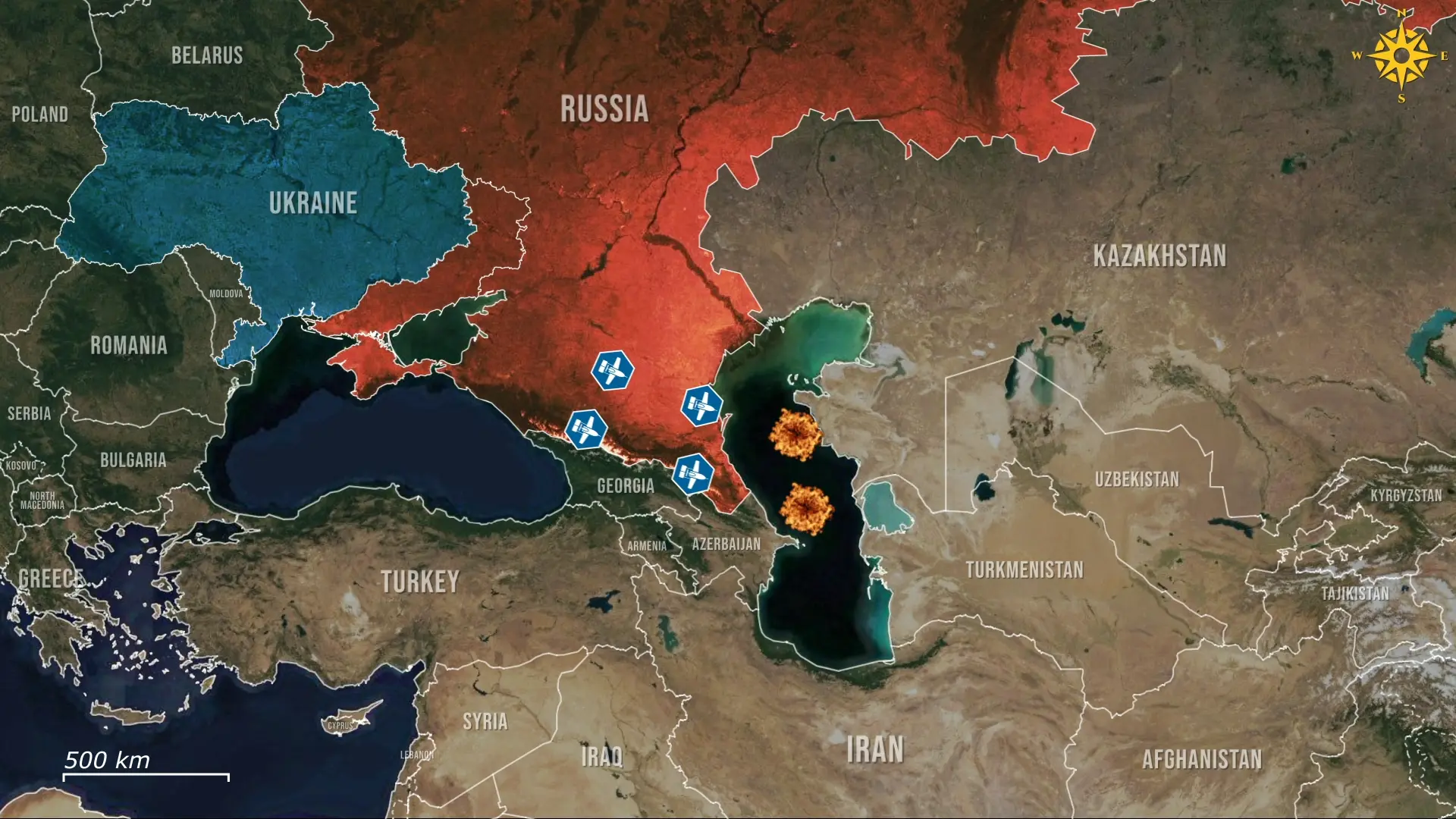
Russia and Iran are unlikely to mount effective resistance sufficient to secure sea-based trade in this area. As a result, follow-on strikes against offshore oil platforms are likely, as disabling these installations remains the most direct means of halting production.

.jpg)

Comments