

.svg)
Today, the biggest updates come from Russia.
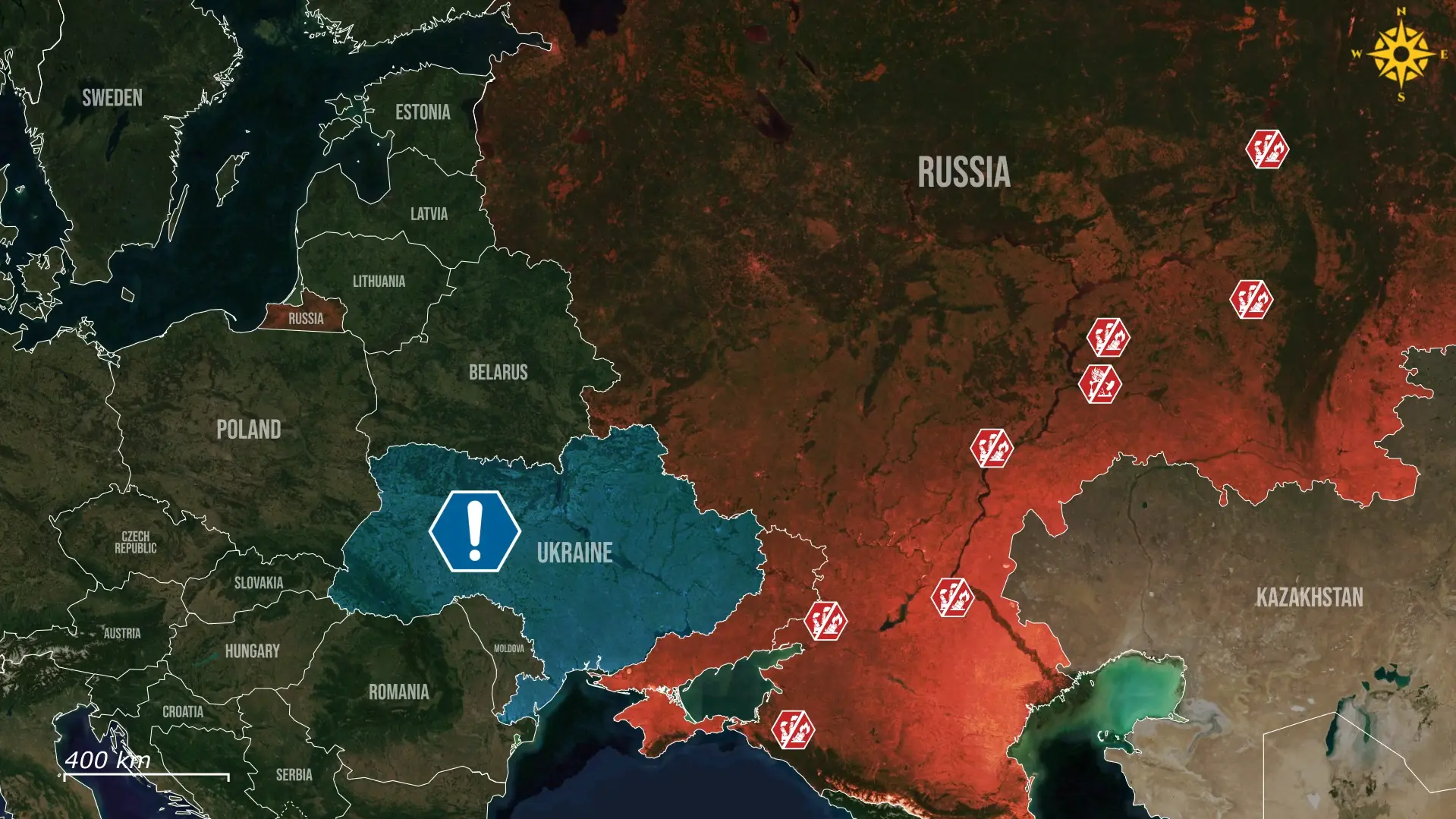
Russia continues to rapidly expand its largest Shahed-style drone factory in Tatarstan, adding hundreds of hectares and new production capacity over the past year. Yet this massive concentration of its entire long-range strike program into one single site now creates the most attractive and vulnerable target Ukraine has ever had inside Russian territory.
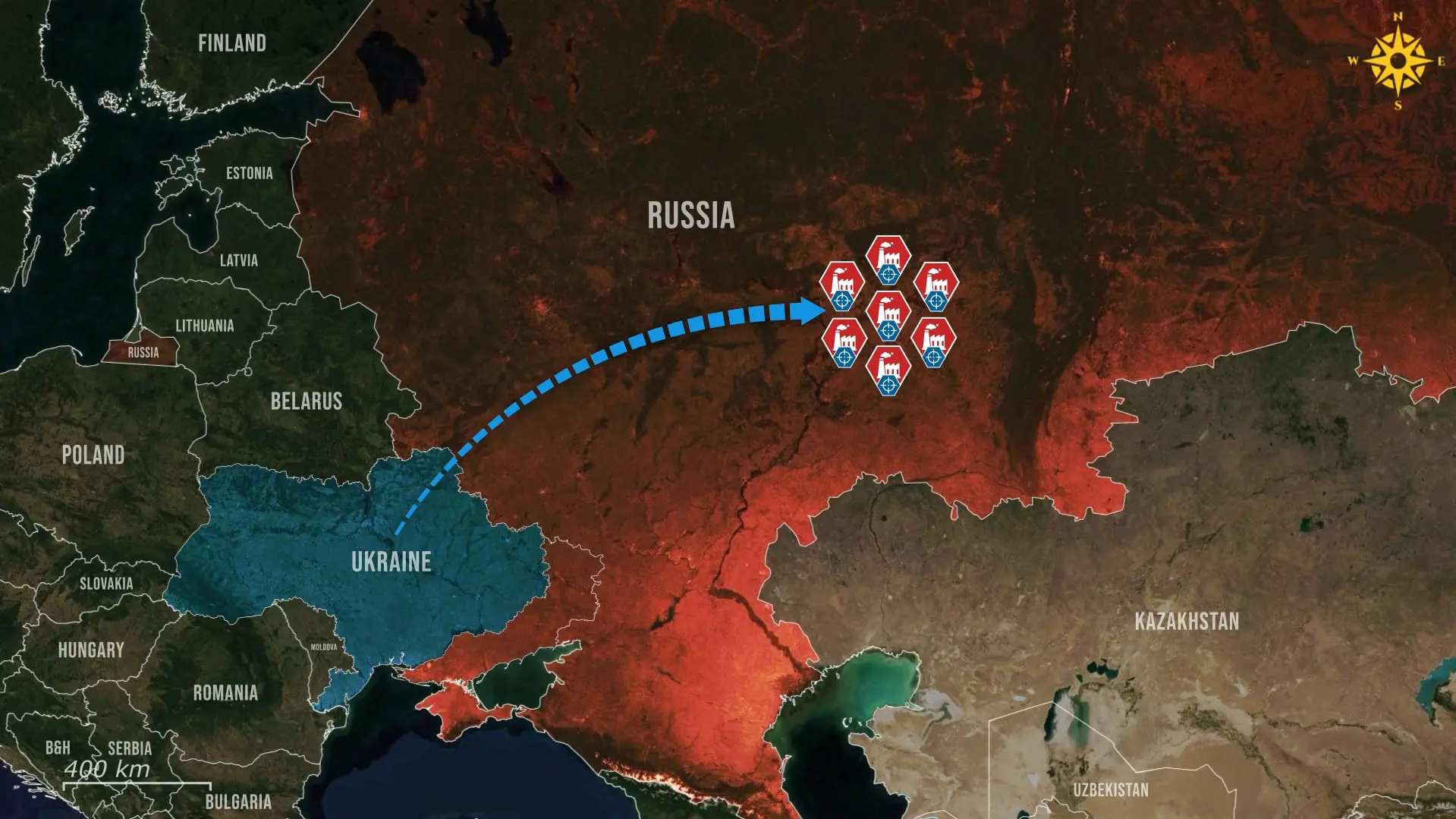
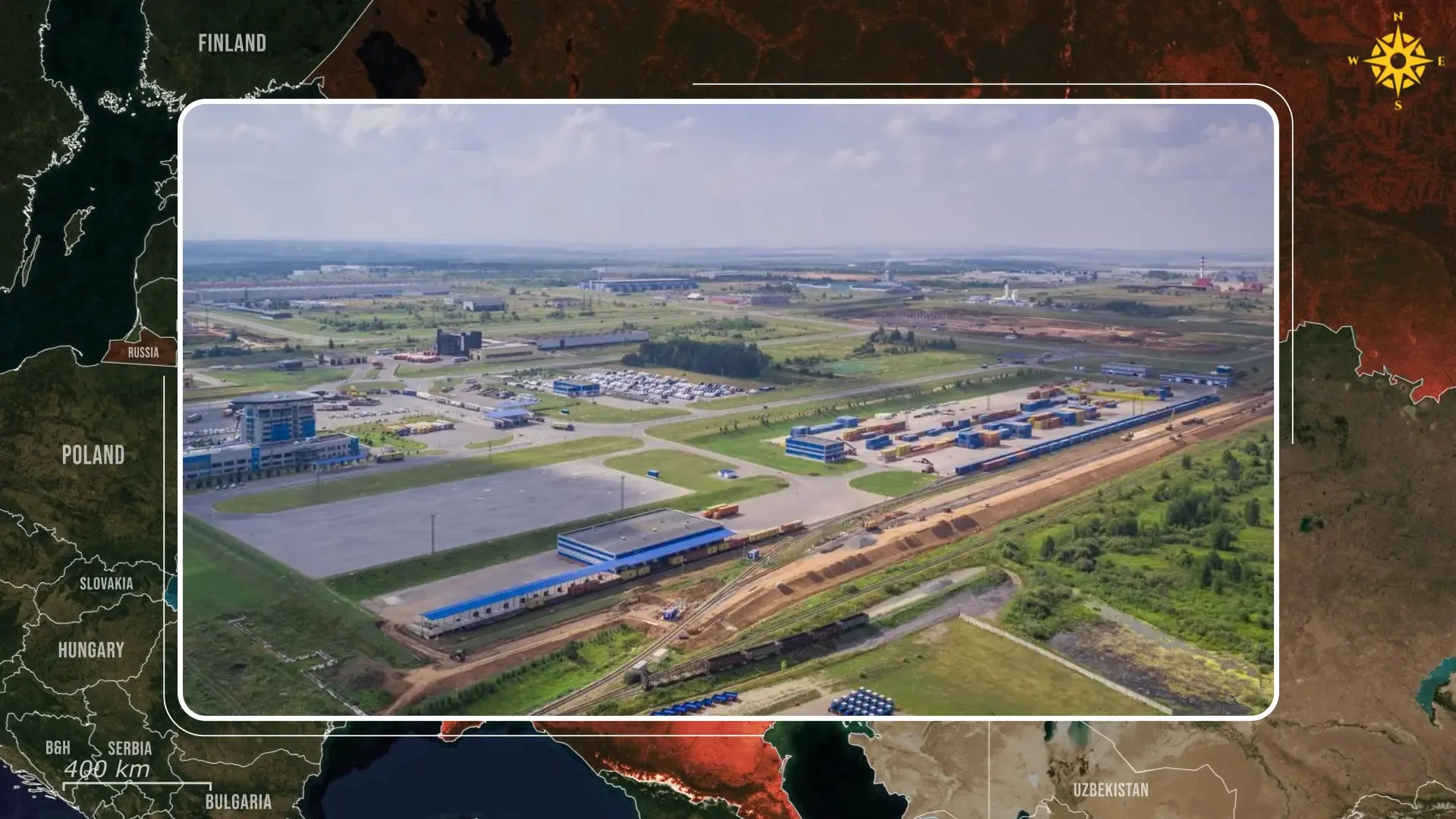
The Yelabuga facility, located within the Alabuga Special Economic Zone in Tatarstan, serves as Russia’s primary and largest production hub for Geran-two drones. Over the past year, the site has undergone dramatic expansion, adding three hundred and forty hectares to its overall footprint. Satellite imagery reveals new hangars rising in the northern sector, alongside completed production buildings and expanded residential quarters in the central area. Fresh construction activity has also begun on an additional four hundred and fifty hectare plot south of the main zone, connected by new roads along the main highway. This growth has transformed the complex from a modest assembly site into a sprawling industrial powerhouse spanning hundreds of structures. Russia now operates what many analysts describe as the world’s largest dedicated drone manufacturing facility at Yelabuga, with the capacity to support high-volume, twenty four hour production lines. The plant produces from five thousand to five thousand five hundred drones per month, which is nine times as much as it was producing last year. The relentless pace of expansion underscores its central role in Moscow’s long-range strike strategy.
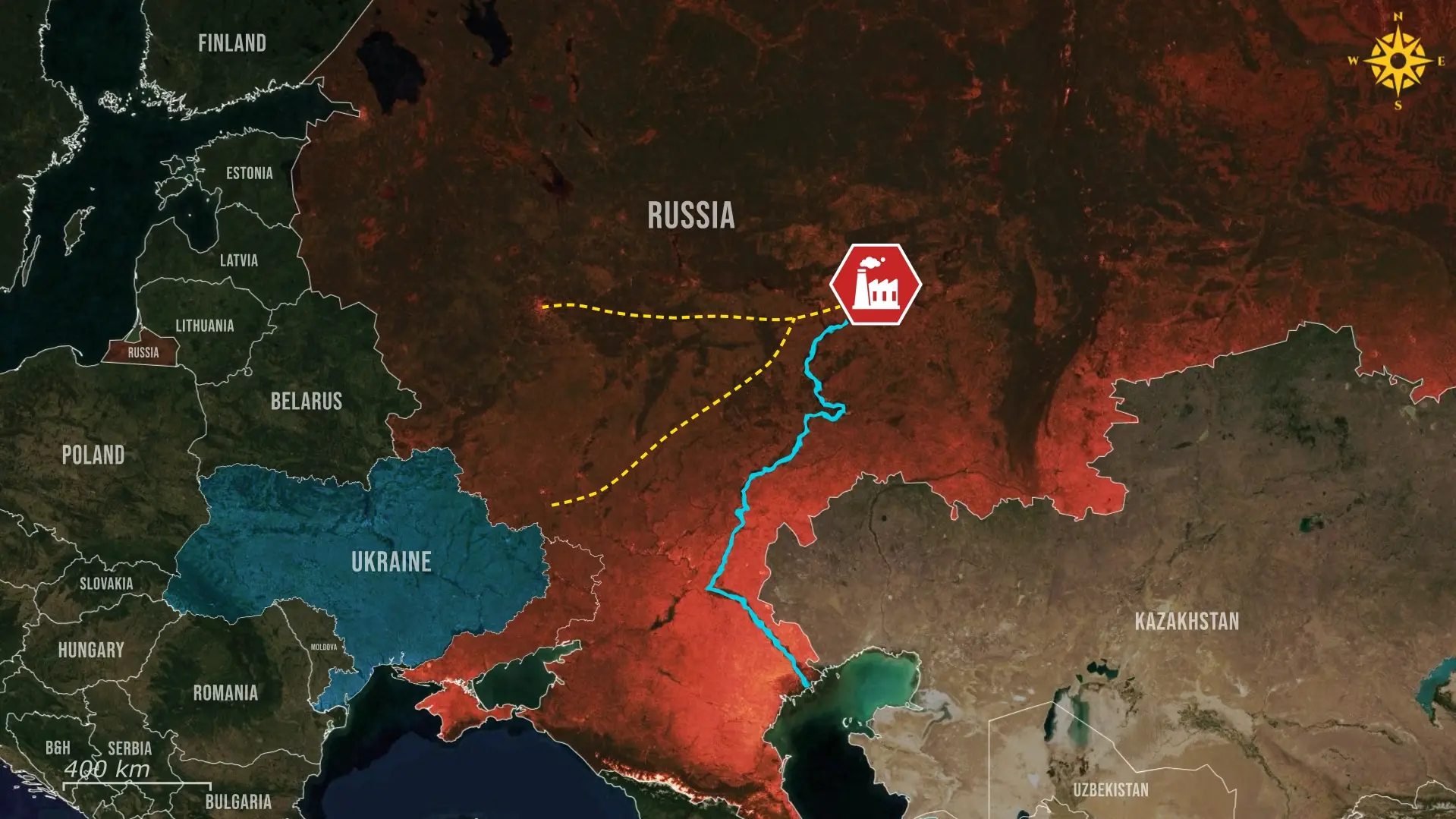
Russia has concentrated its Shahed-style drone production at Yelabuga to achieve rapid industrial scale and full technological sovereignty. The Alabuga Special Economic Zone provides powerful incentives through tax breaks and simplified customs procedures. Its location adds direct access to the Kama River port for efficient component shipments from Iran plus reliable rail connections. A single massive site enables shared high-precision machinery across multiple production lines and centralizes quality control together with workforce training through the local polytechnic college. Keeping every step in one place dramatically accelerates localization of engines, airframes, and electronics. Localization eliminates costly imports and long supply chains, which in turn lowers the cost of each individual drone. The approach also simplifies government oversight and allows faster design improvements based on battlefield results. In the end, it delivers clear gains in production speed, efficiency, and output volume essential for sustaining Russia’s long-range strike campaign.
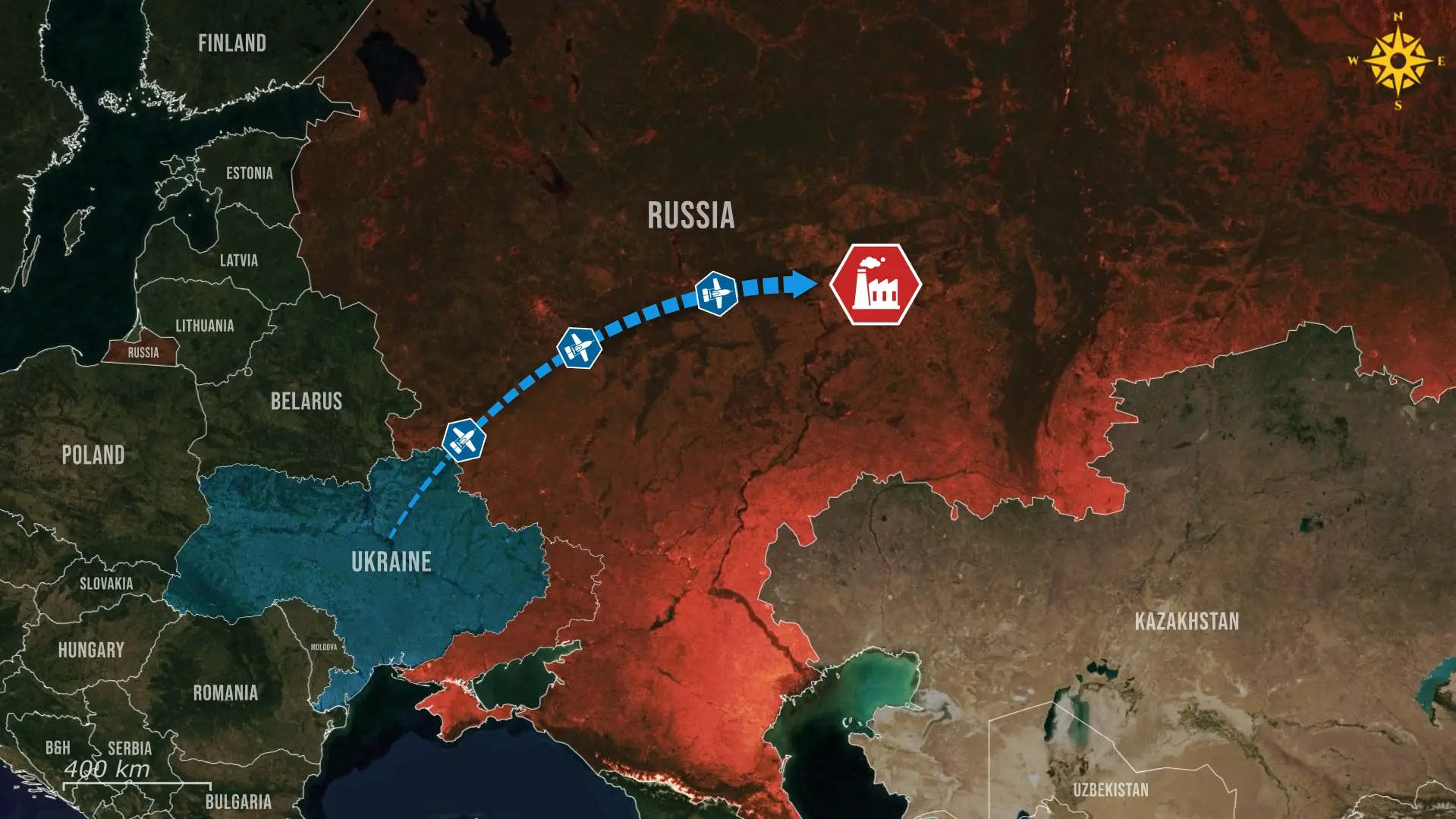
As the Yelabuga complex grows larger, it becomes an increasingly fixed and conspicuous target more than one thousand kilometers from Ukrainian territory, which is now well within Ukrainian strike distance. The expanded footprint, with new hangars and support buildings spread across hundreds of hectares, makes complete protection difficult despite added defenses. A successful strike could halt assembly lines, destroy stored components, and damage critical infrastructure such as power supplies and testing areas. If those supply chains of the factory are hit, that will result in the entire factory’s operations being shut down. With Ukrainian long-range attack drones, like the Lyutyi, have already reached the site itself multiple times, causing fires and disrupting final assembly. Even smaller drone swarms could exploit gaps, igniting secondary explosions in fuel or munition storage. The bigger the plant grows, the greater the potential payoff for Ukraine from a single well-executed operation.
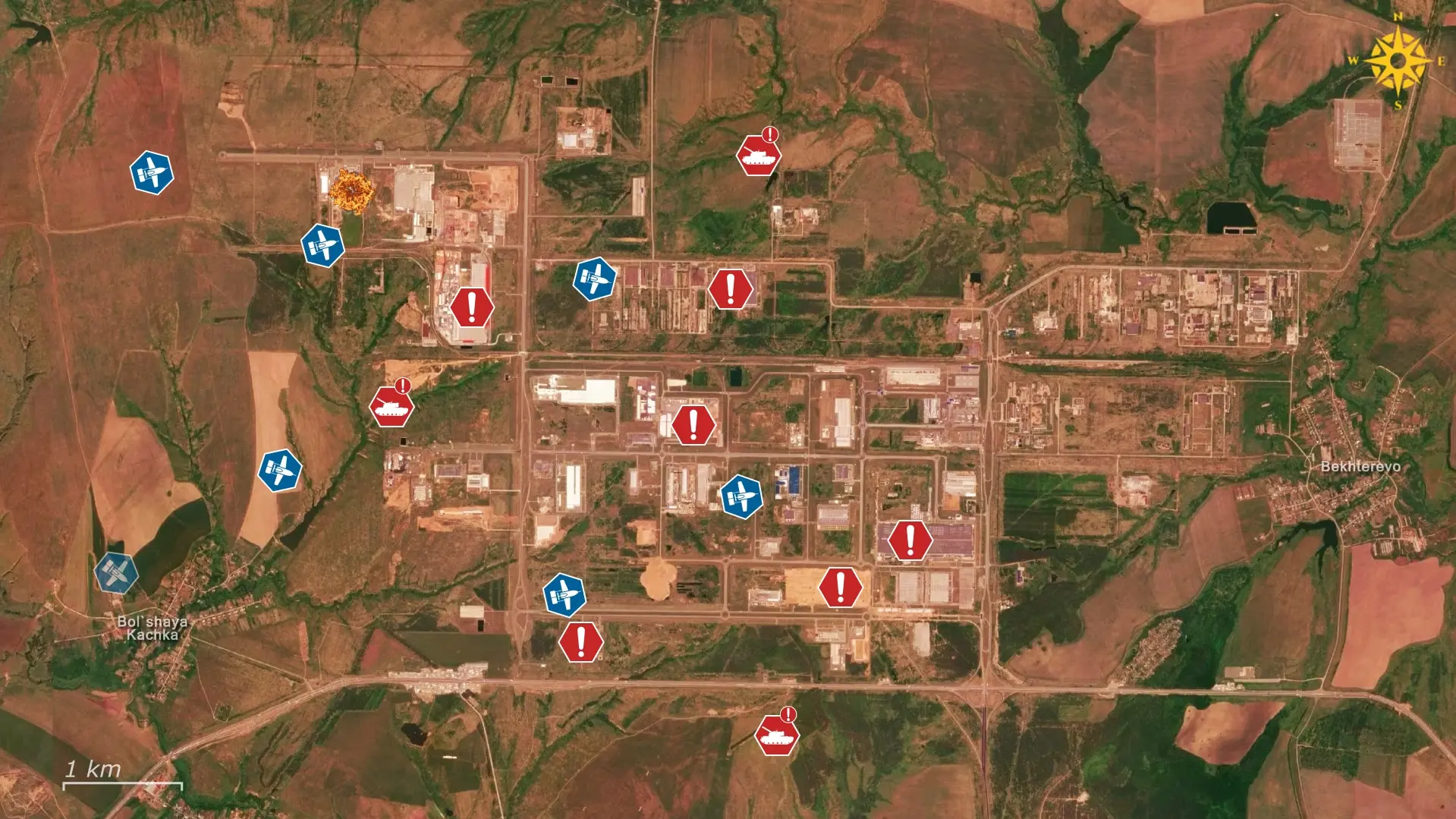
Satellite imagery confirms at least nineteen new air defense towers erected across the expanded Yelabuga complex by early twenty-twenty six. Most appear equipped with large-caliber machine guns for close-range drone defense, while several feature elevated platforms mounting Pantsir systems. This layered setup aims to create overlapping fields of fire, but significant weaknesses remain. Machine guns offer limited range, typically around fifteen hundred meters, compared to the Pantsir’s twenty kilometers missile reach, leaving gaps in coverage across the sprawling three hundred and forty hectare site. Each Pantsir carries only twelve missiles, forcing conservative firing against low, slow, or maneuvering Ukrainian attack drones like the Lyutyi. Russian systems have repeatedly struggled, as Ukrainian long-range drones such as the Lyutyi and converted aircraft-type UAV have repeatedly evaded or overwhelmed Pantsir missiles during prior strikes on the facility through low-altitude flight profiles, decoys, and saturation tactics. The vast footprint and ongoing construction further strain limited interceptor stocks and radar horizons, as the Russians would have to cover a much larger area, further spreading their number of limited Pantsir systems.
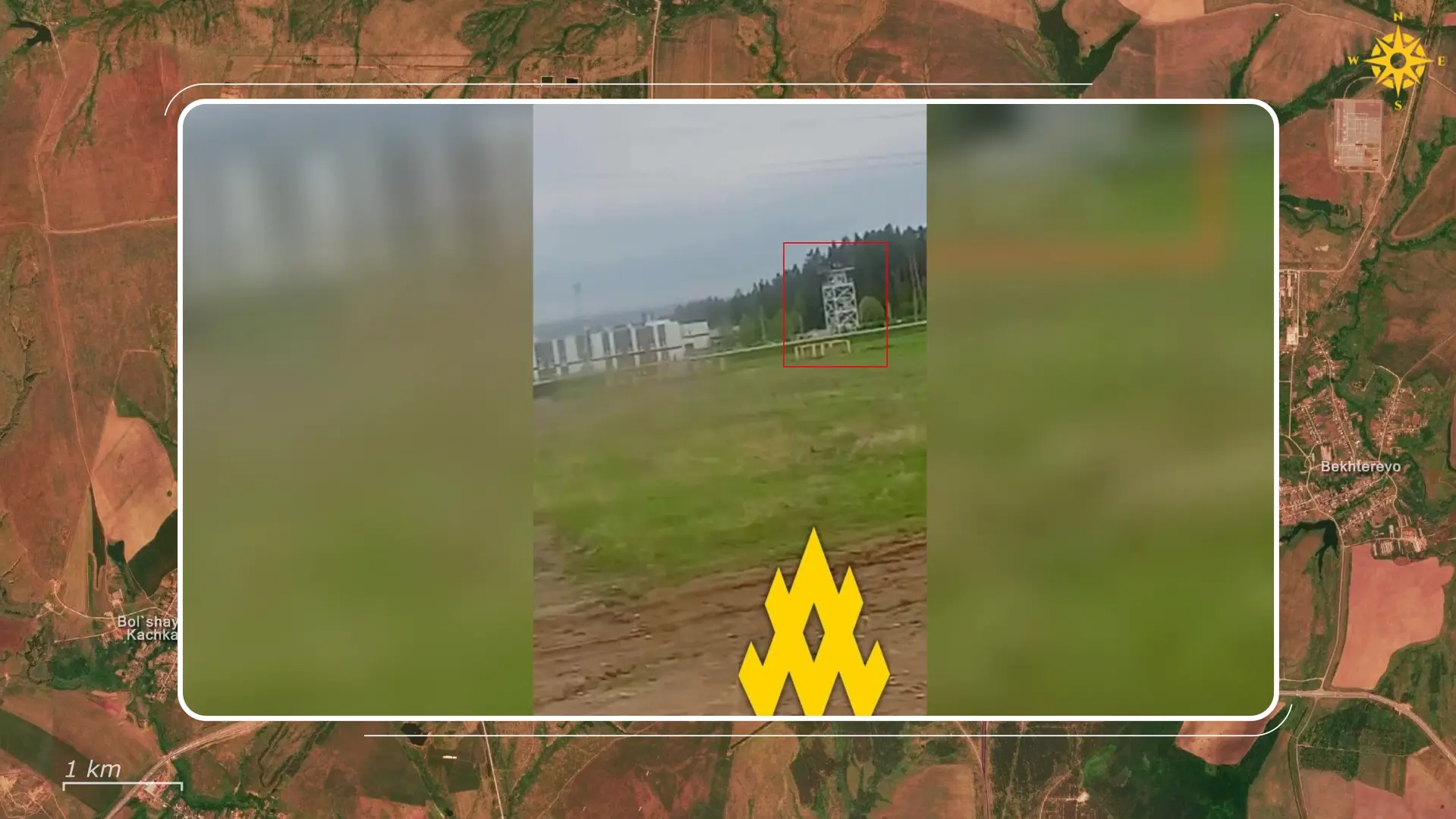
Overall, Russia’s decision to bet its entire Shahed production future on a single, massively expanded site at Yelabuga could become one of the war’s most consequential strategic miscalculations. By creating the world’s largest drone factory in one fixed, highly visible location, Moscow has handed Ukraine a high-payoff target, which Ukraine can repeatedly strike in order to achieve its complete destruction. This vulnerability is compounded by the inherent limitations of static air defenses against evolving Ukrainian tactics and weapons, turning supposed strength into a permanent liability. In the end, the relentless expansion that was meant to guarantee dominance may instead accelerate Russia’s downfall in the drone war by inviting precisely the kind of decisive, economy-of-force strikes that could shift the balance of attrition.

.jpg)

Comments