

.svg)
In this video, we will analyze how Crimea is rapidly becoming a prison.
Here, the logistics crisis became so acute that the authorities were forced to restrict fuel sales, further exacerbating the situation. However, this move turned Crimea into an open prison that no one is allowed to escape, further raising tensions with the already infuriated civilians.
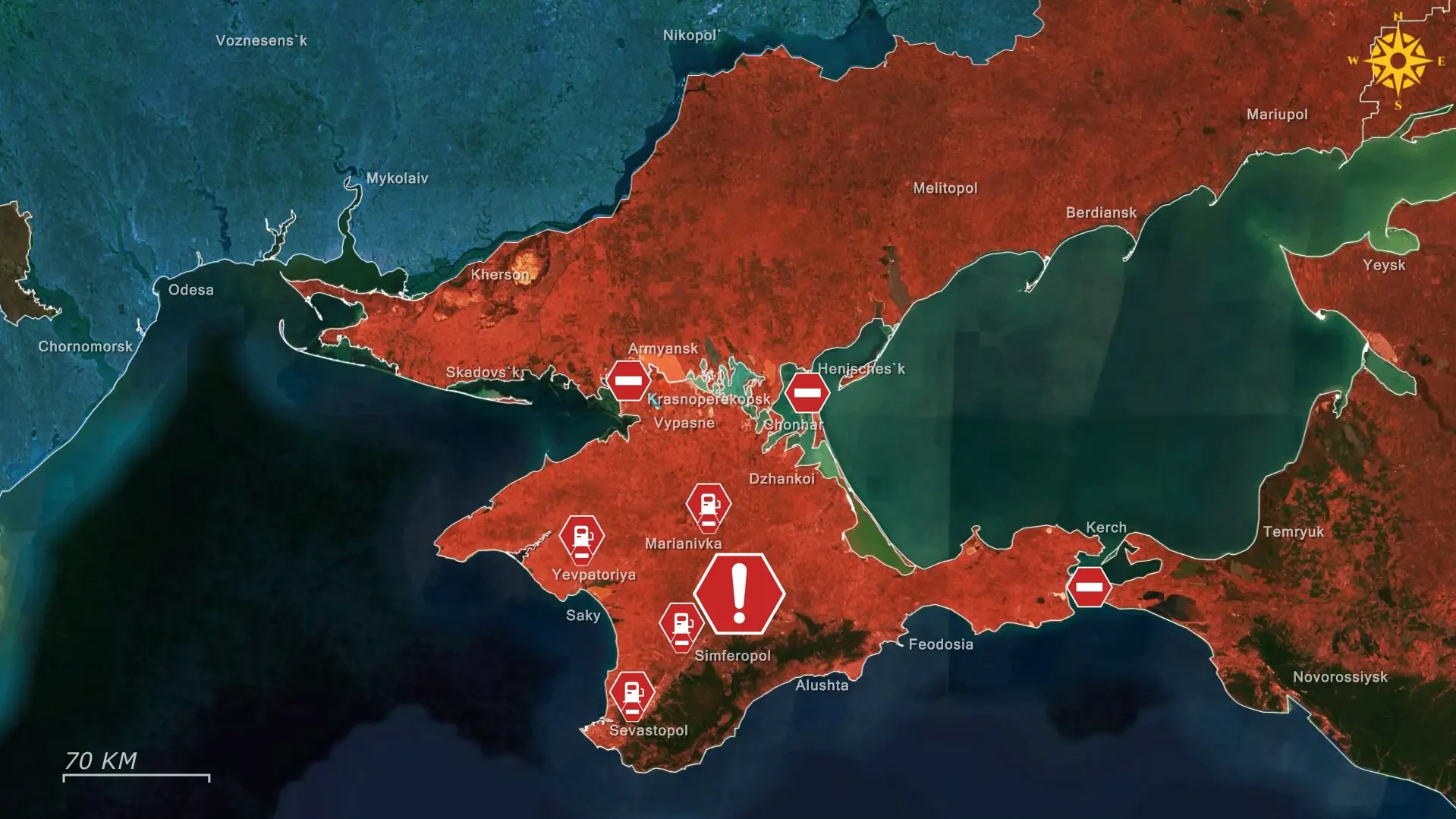
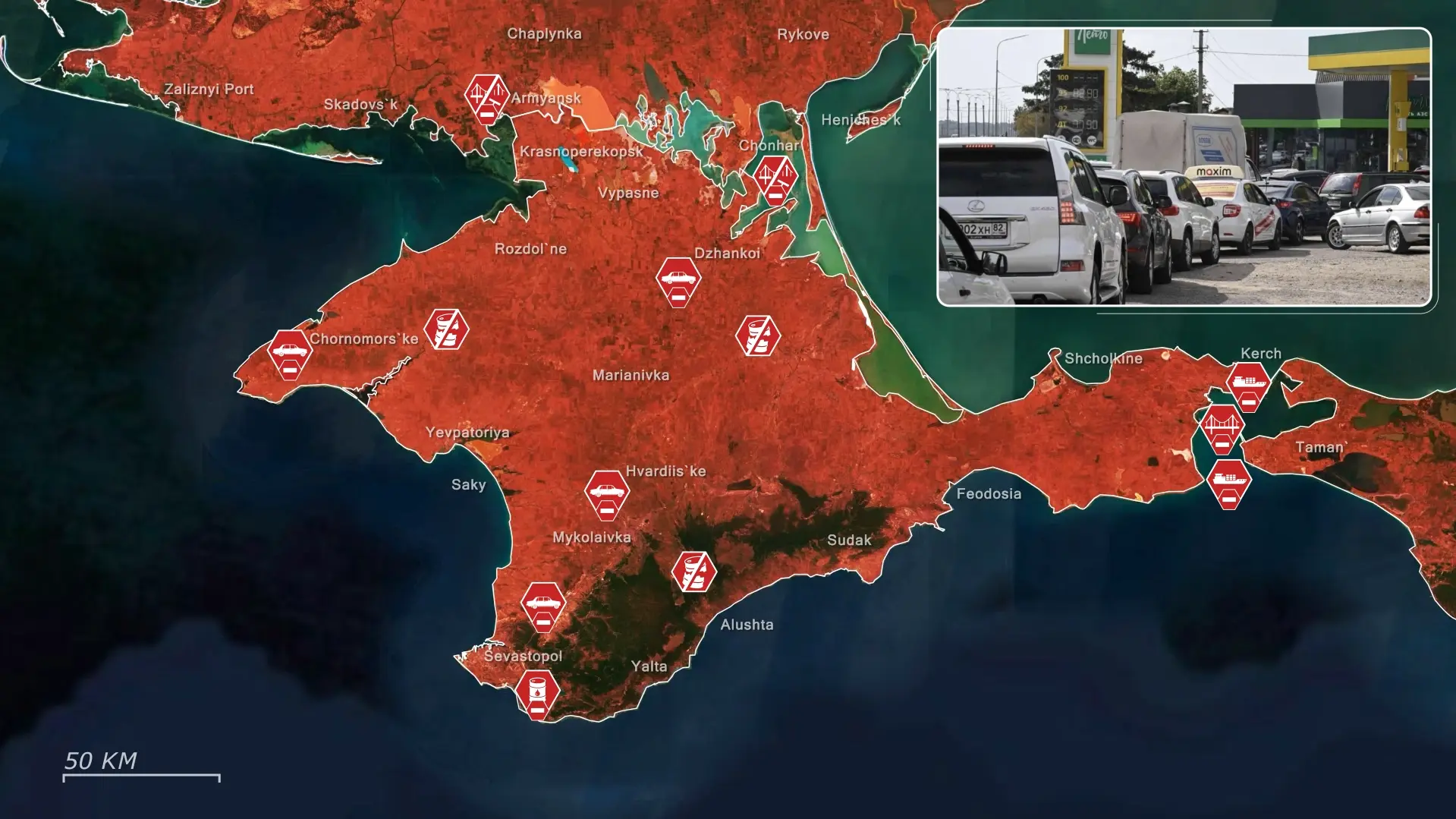
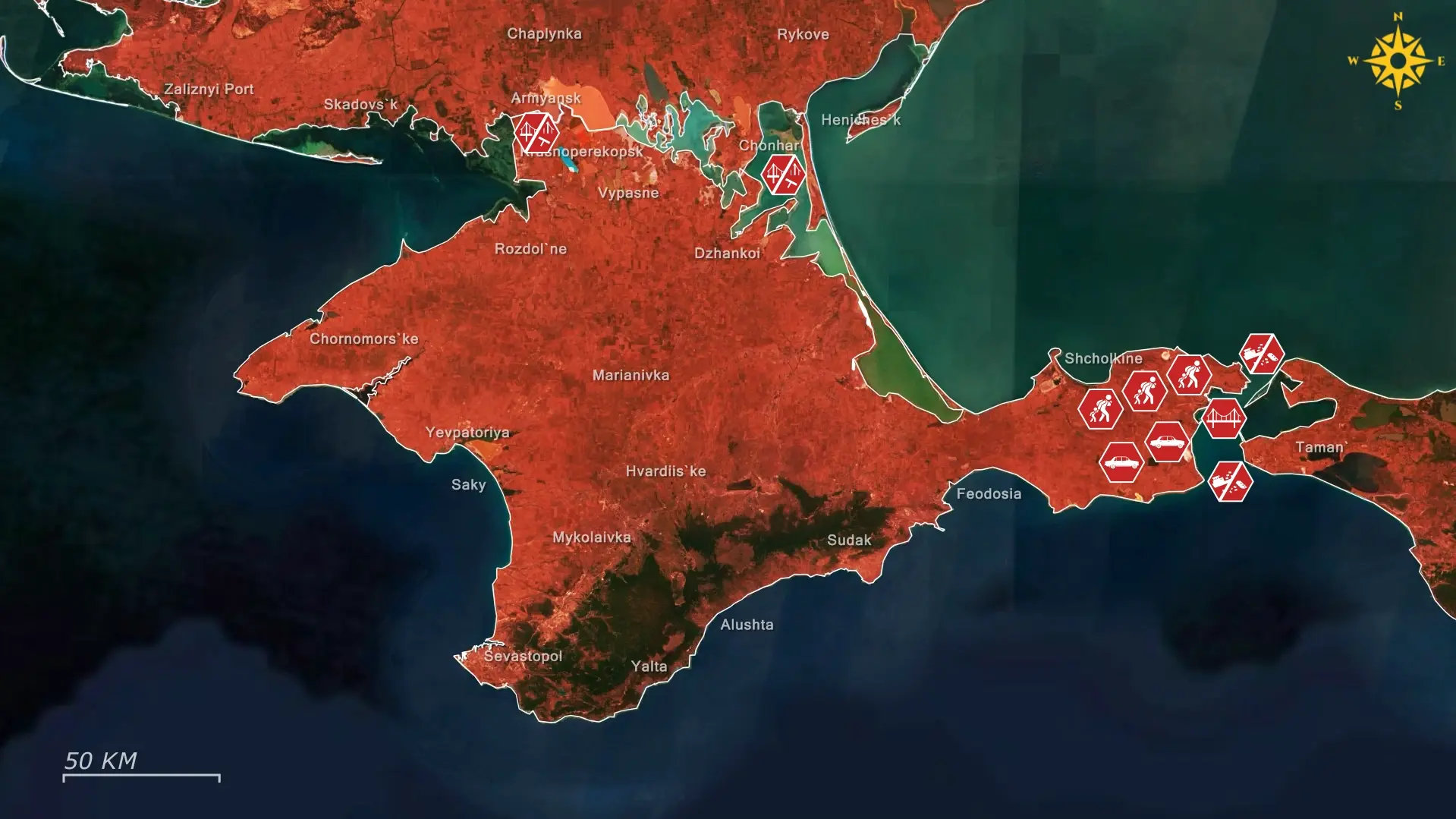
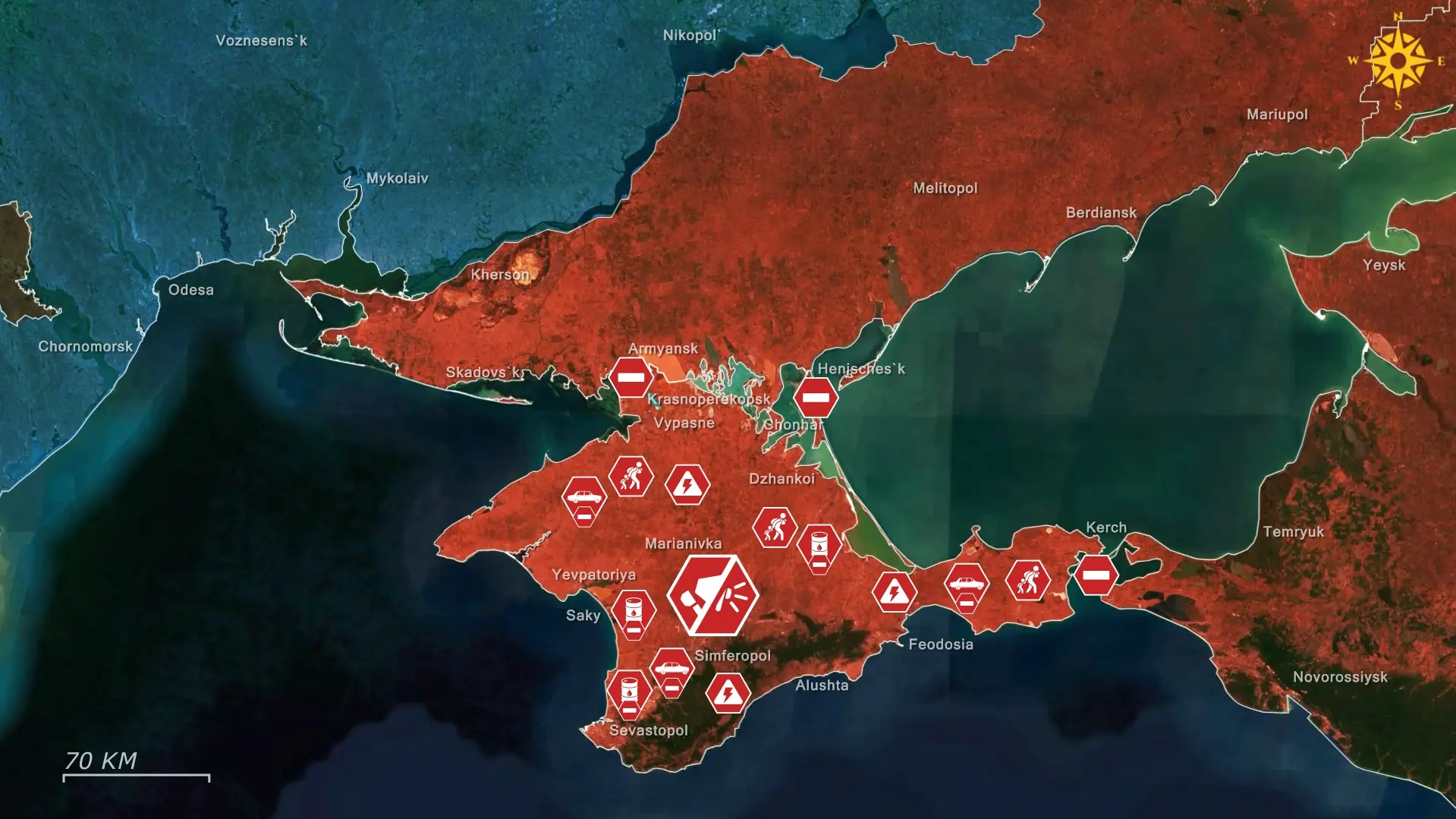
Recently, the authorities in Sevastopol were forced to suspend all civilian fuel sales after Ukrainian strikes severely disrupted Russian fuel logistics supplying Crimea. The remaining fuel is now reserved exclusively for emergency services and state vehicles, leaving ordinary residents unable to refuel their cars. As fuel shortages spread, public transport has been stopped completely, while vehicle ferry services have been suspended because of both the fuel crisis and continued Ukrainian strikes. Together, these measures have effectively locked down Crimea, leaving Russians with almost no practical way to leave the peninsula and turning it into a prison.
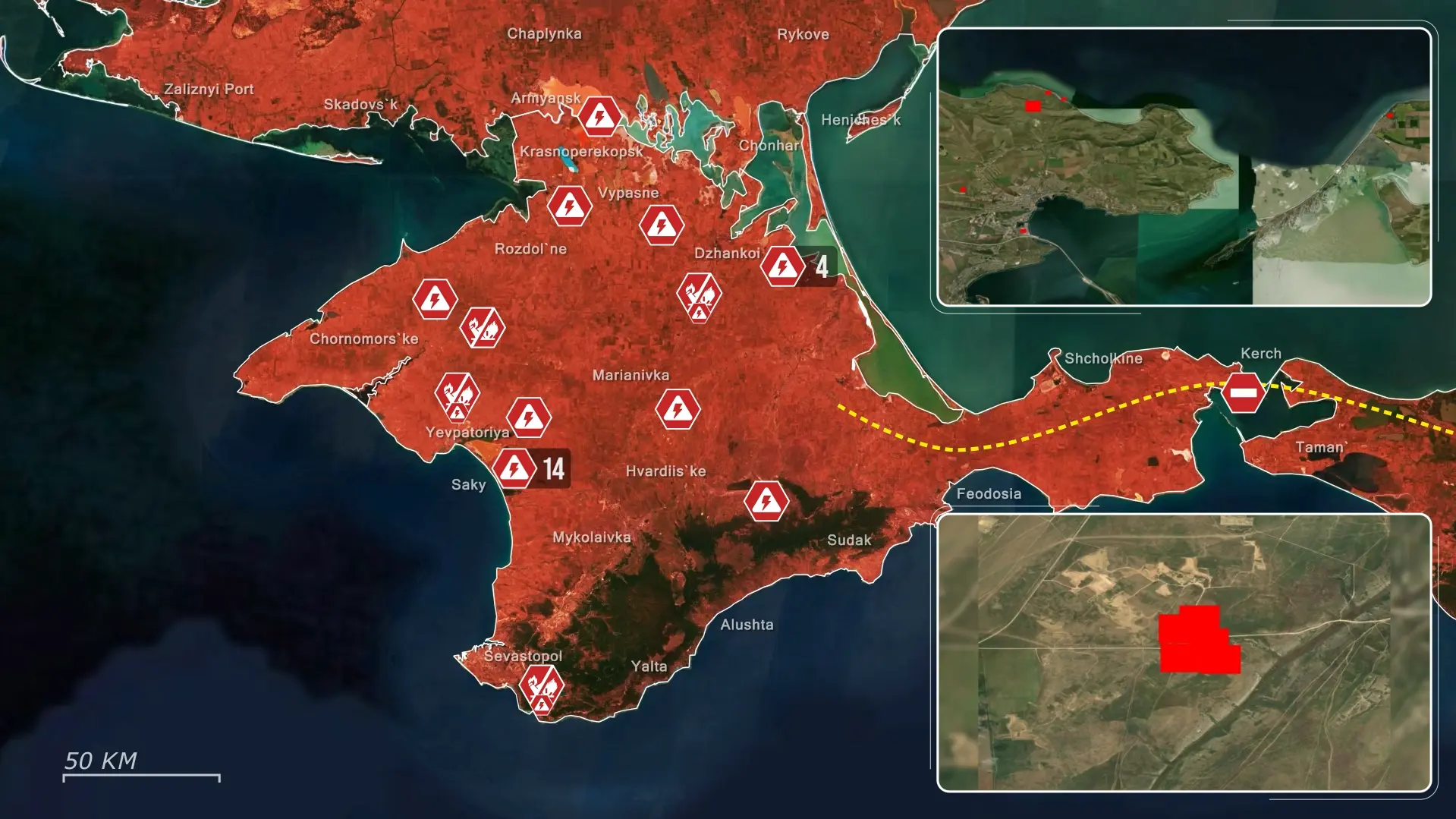
The situation has only worsened after the previous strikes on power plants and substations in Crimea, as Ukraine struck a power cable leading into Crimea, cutting the remaining lifelines that connect it to Russia. Notably, Nasa fire monitoring satellites detected a fire near the Kerch Strait underwater power cable infrastructure linking both shores and serving as a physical connection that feeds the peninsula. In addition to the power cable, to disrupt the redistribution of electricity, Ukraine continued to strike several more substations. Nasa satellites detected fires at the West Crimea substation and a mobile gas turbine power plant after a Ukrainian strike, leading to outages across the peninsula. Ukraine also targeted four more substations in Marianivka, Oleksandrivka, Vypasne, and Dzhankoi, which widened the outages and plunged towns into darkness, as street lighting stopped working. Seven districts across Crimea are now under power restrictions, with Saky facing fourteen-hour outages, Dzhankoi operating on a two-hour-on, four-hour-off schedule, and Evpatoria, Krasnoperekopsk, Armyansk, and other areas enduring rolling blackouts.
As a result of the strikes on power cables and substations, online banking and digital systems have also collapsed due to the subsequent power and internet outage. In Armyansk, recently released videos show Russians complaining that there is no electricity or internet anymore, blaming Putin for it. This is critical because when online banking fails during a cash and fuel crisis, even basic purchases become difficult, adding to the crisis. This also shows a dramatic change, with Russians starting to openly talk about who is responsible for the crisis. Russians also realized that they were unable to leave, just like hostages, prompting the Russian leadership to try to calm the population. Putin tried to quell the unrest by saying that large amounts of fuel will go on sale in Crimea soon. However, the Russian-installed governor in Crimea stated that this is false, directly contradicting the Russian president, and confirming that no matter his claims, fuel will not be sold soon. The governor also confirmed that locals are filing daily complaints about the power outages and the lack of public transport, admitting that the situation is critical, indicating visible public unrest, and that the peninsula has turned into a prison.
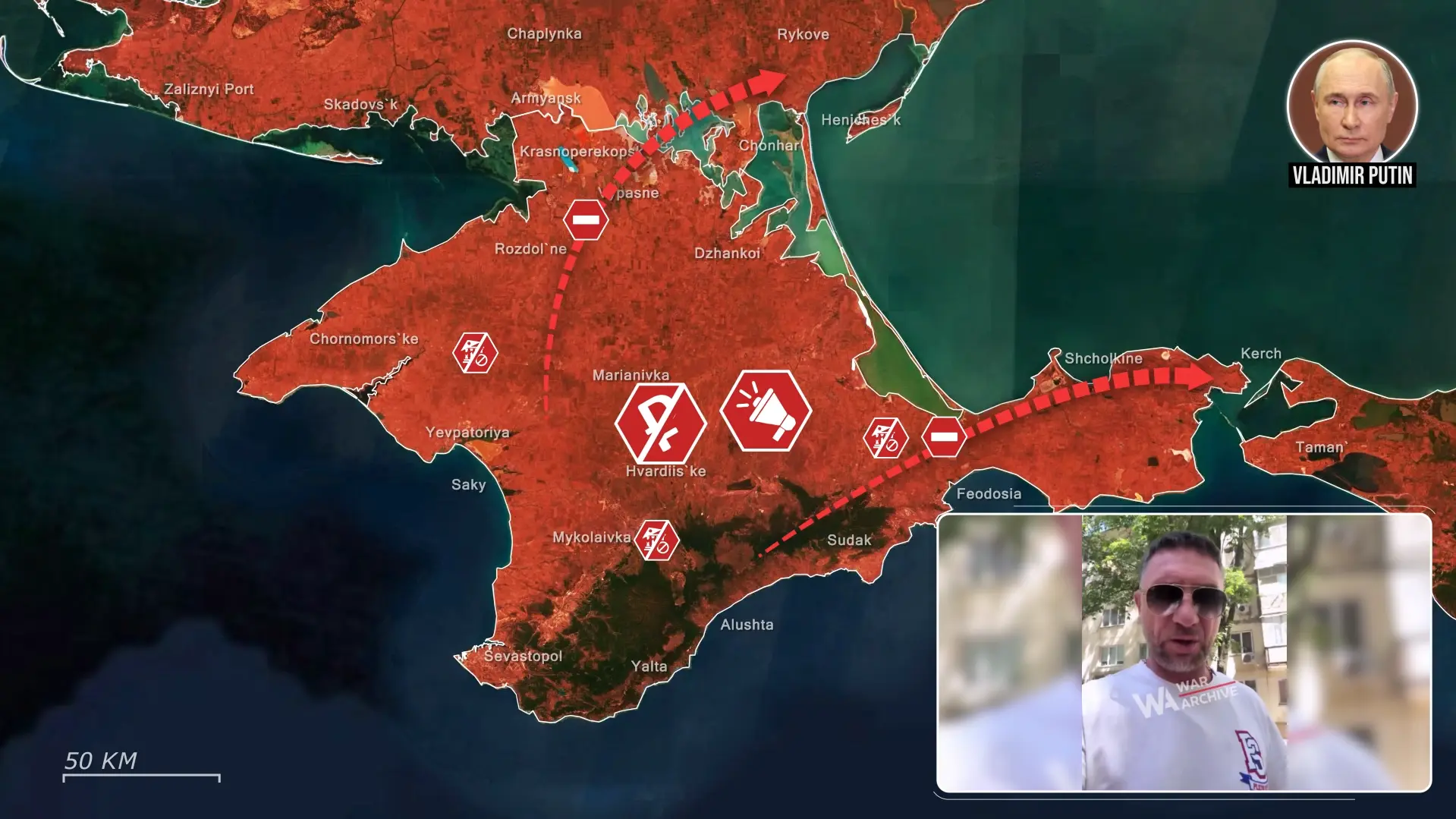
As conditions in Crimea continue to deteriorate, many residents are trying to leave the peninsula. However, repeated Ukrainian strikes have disabled the northern bridge crossings and disrupted ferry services, leaving the Crimean Bridge as the only remaining route out, which is now congested by thousands of cars. This desperation has forced small aviation pilots to try to use the limited available gasoline they have to fill up their planes and leave Crimea, as air remained the last open route out of there. This is a dangerous attempt because Ukraine strikes Crimea every day, and the Russian air defense can easily mistake these planes for Ukrainian drones. The fact that pilots are considering unconventional fuel solutions shows how desperate people have become to leave Crimea, as Putin’s policies have only strengthened the effect of Ukrainian strikes and have turned Crimea into a prison without escape.
Overall, Crimea’s logistics lockdown has evolved into complete isolation, as Russia’s own emergency restrictions have turned the local population into Putin’s hostages. The fuel sales ban that was supposed to help overcome the crisis also serves as a practical movement ban, with no one allowed to leave now. With civilian transport restricted and digital services failing, locals face blocked exits and blackouts while Putin’s promises contradict reality and make people angrier.

.jpg)

Comments