

.svg)
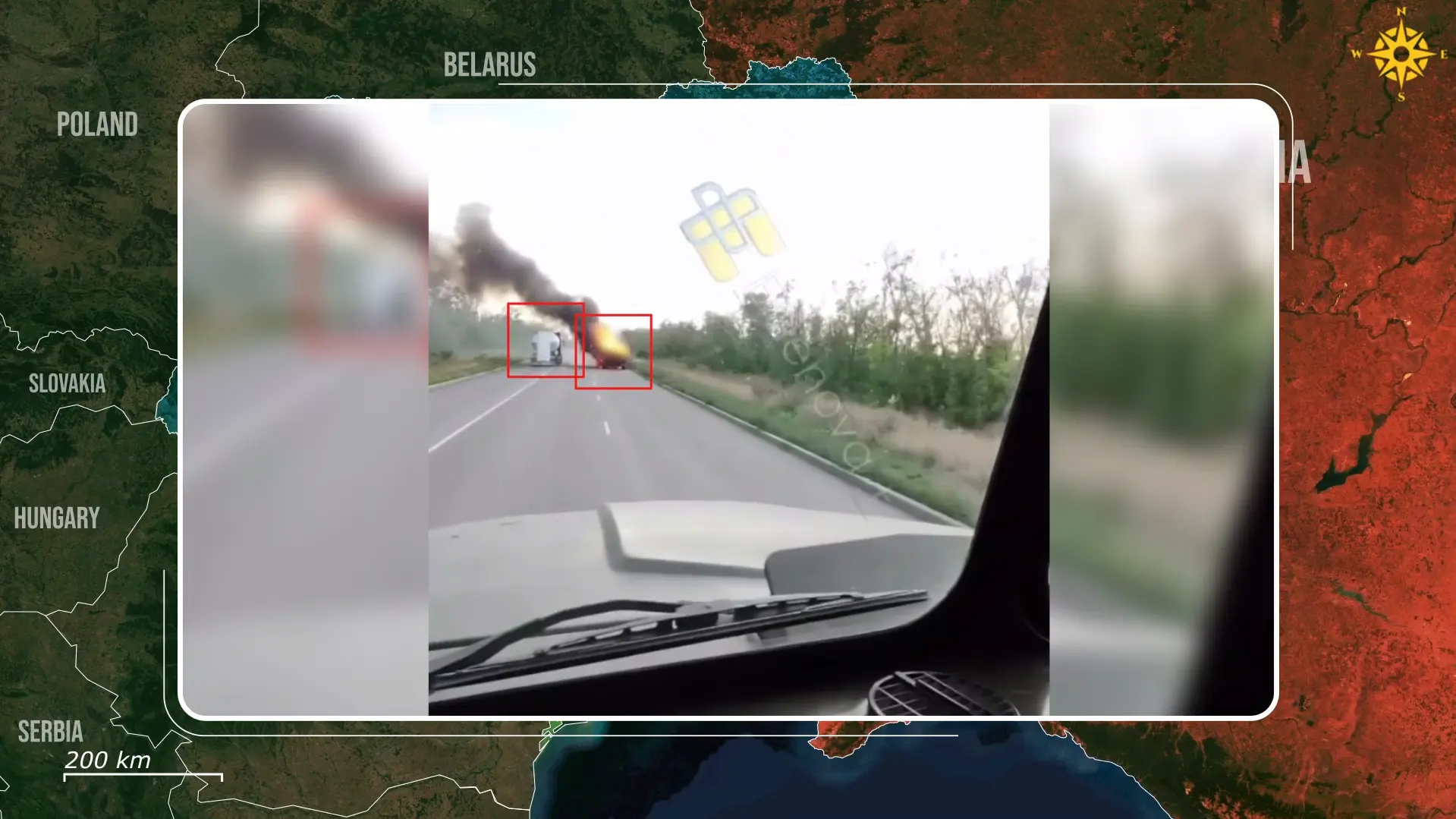
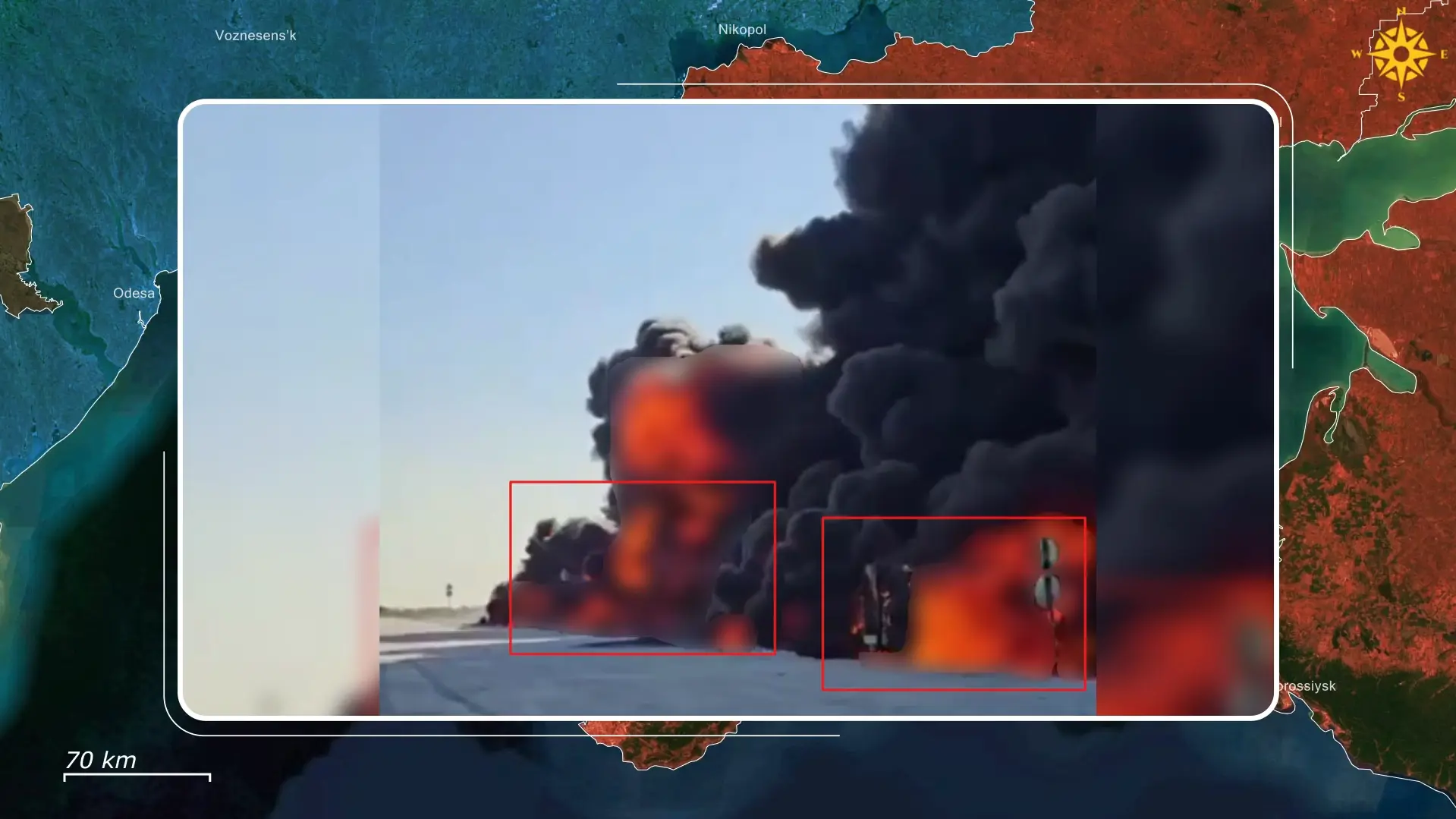
Today, a video released by a Russian truck driver shows how Ukraine's campaign to isolate Crimea entered a significantly more aggressive phase. Russian military columns can no longer move to or from the peninsula without facing constant danger, and the images from the R-Two-hundred-eighty highway show multiple Russian military vehicles burning within only a hundred meters of each other. Thick columns of smoke rise from destroyed trucks scattered along the road, illustrating not an isolated strike but a sustained effort against the peninsula's main supply artery. Stretching from Rostov-on-Don through Russian-controlled southern Ukraine, the highway was supposed to carry fuel, ammunition, equipment, and personnel into Crimea. Without physically controlling the route, Ukrainian forces are imposing persistent fire control over key sections using drones, as every destroyed fuel tanker removes critical supplies, blocks traffic, and delays following convoys.
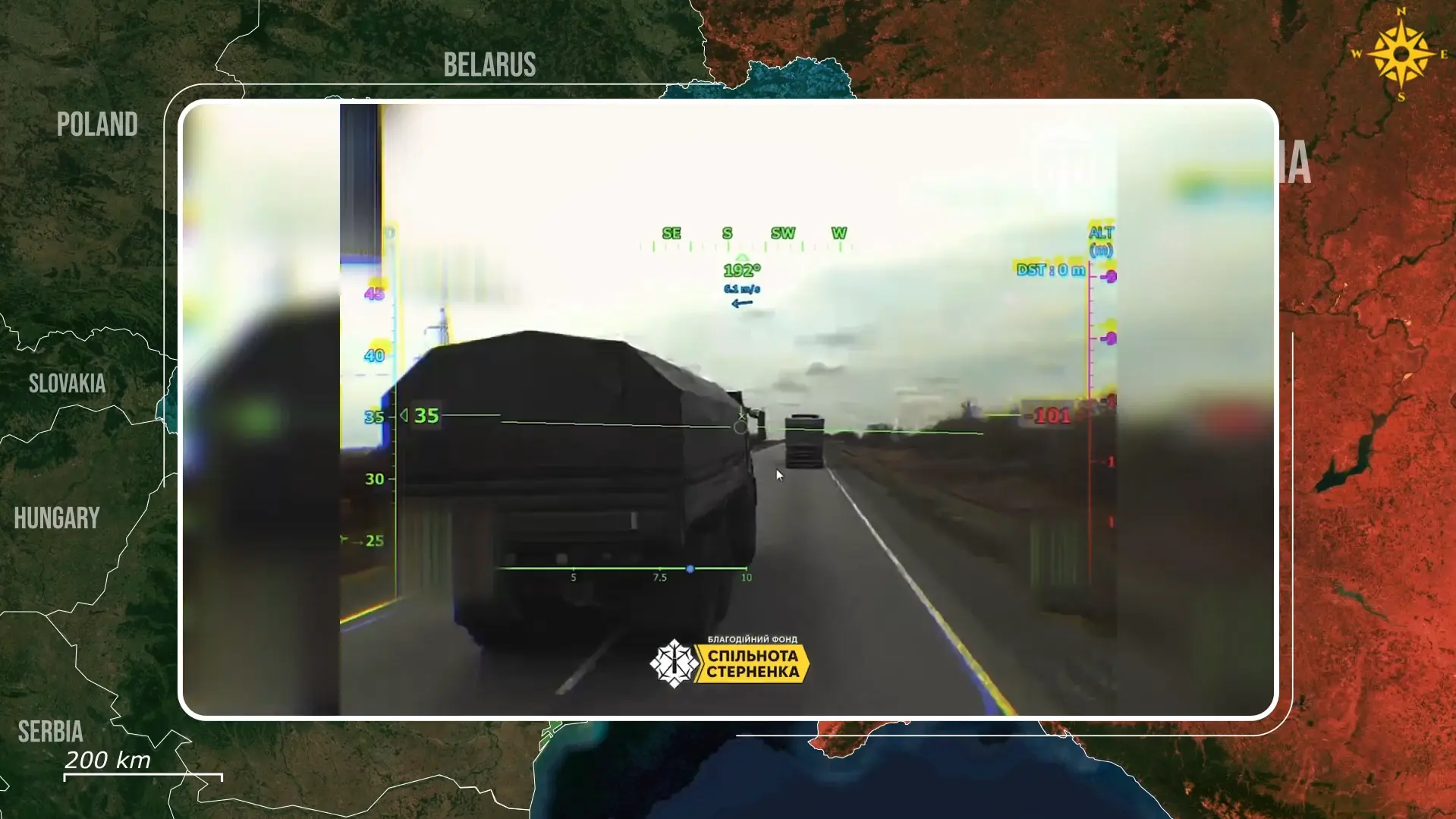
Another video released by Ukraine's Fifty-Ninth Unmanned Systems Brigade further illustrates this approach, showing drones hunting military logistics targets at distances of up to two hundred kilometers while deliberately bypassing civilian traffic. After Russia began disguising military cargo as ordinary freight vehicles, Ukrainian commanders responded by declaring every truck traveling these supply routes a legitimate military target, significantly expanding the pressure on Russian logistics.
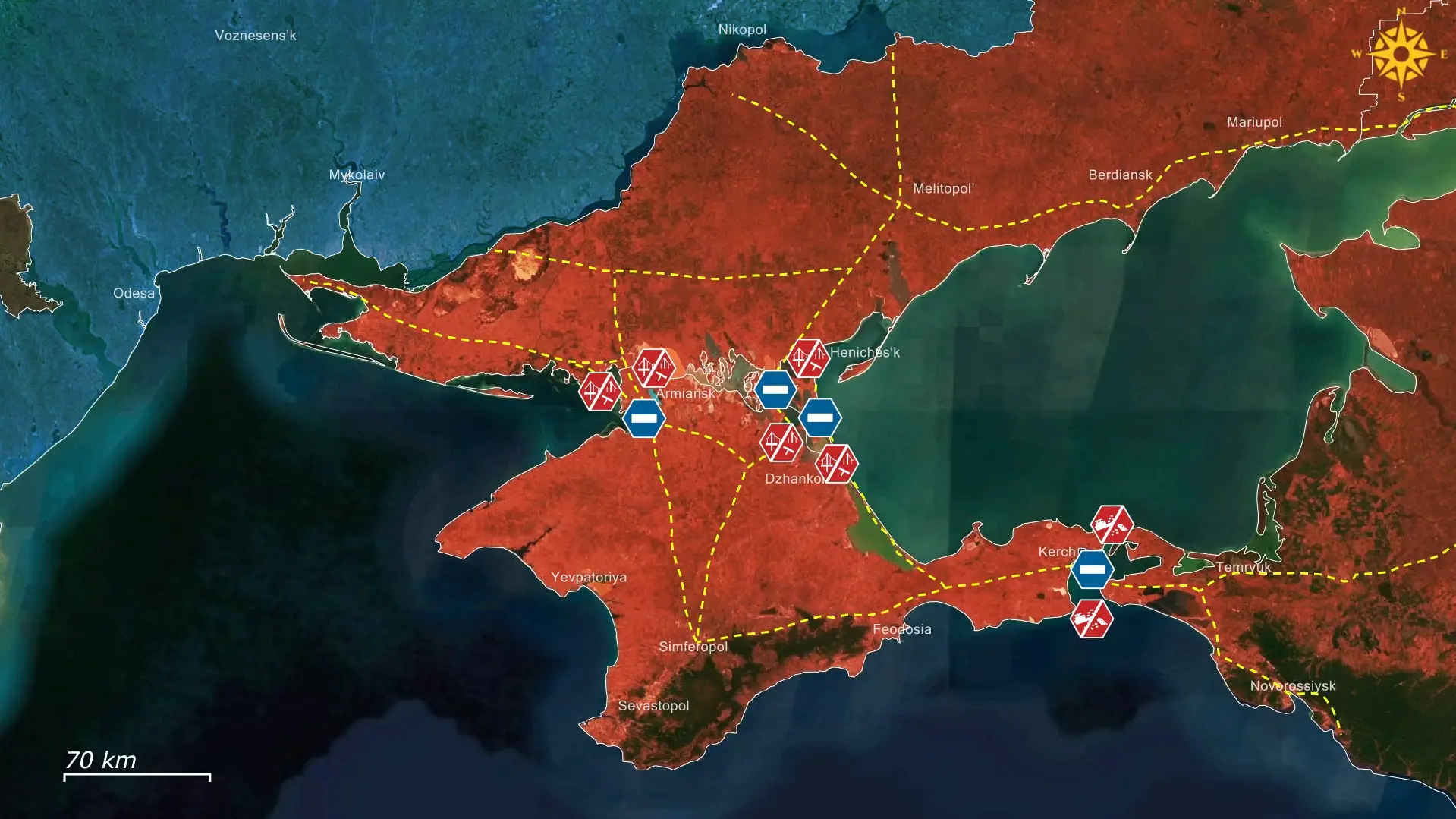
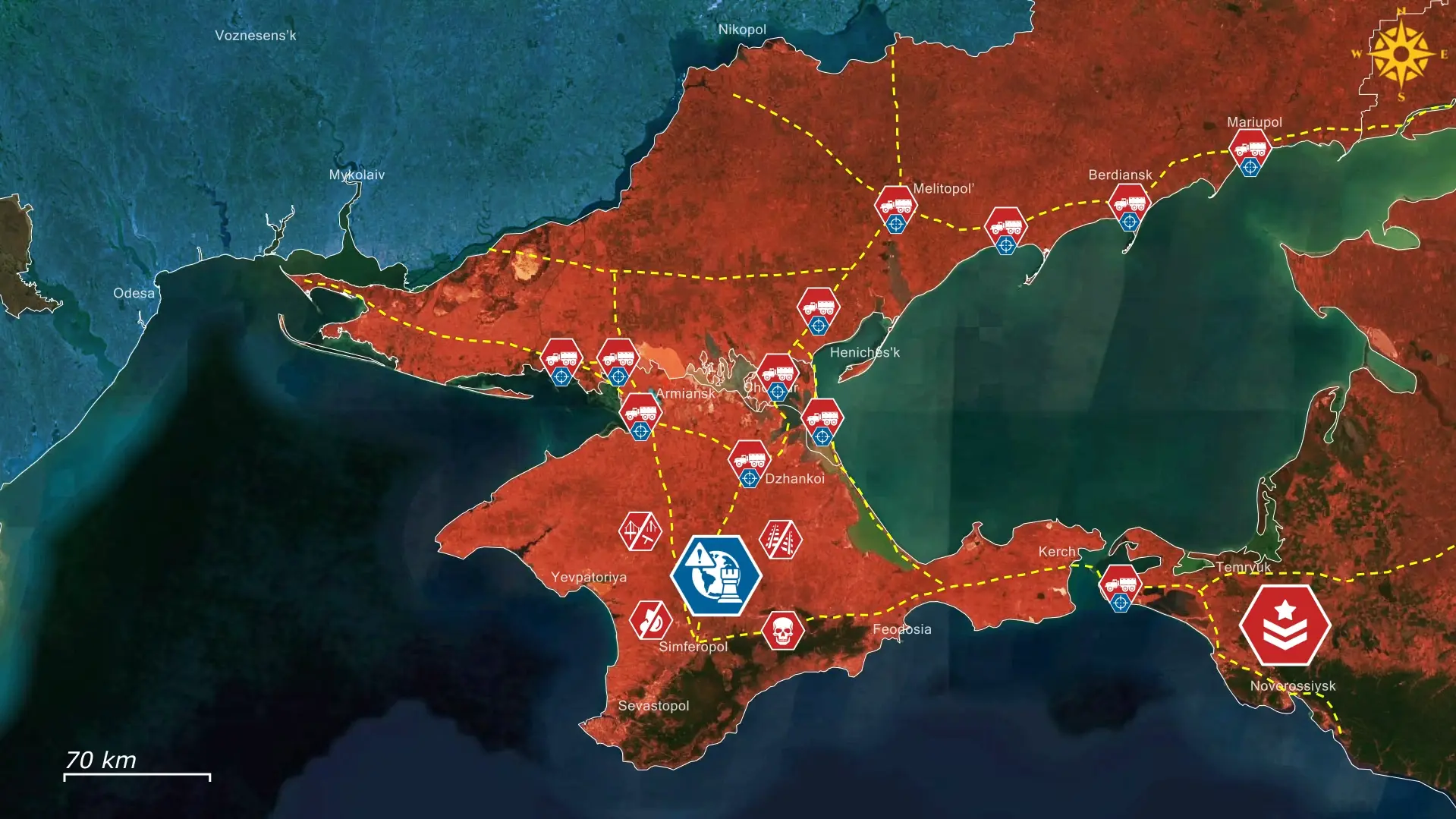
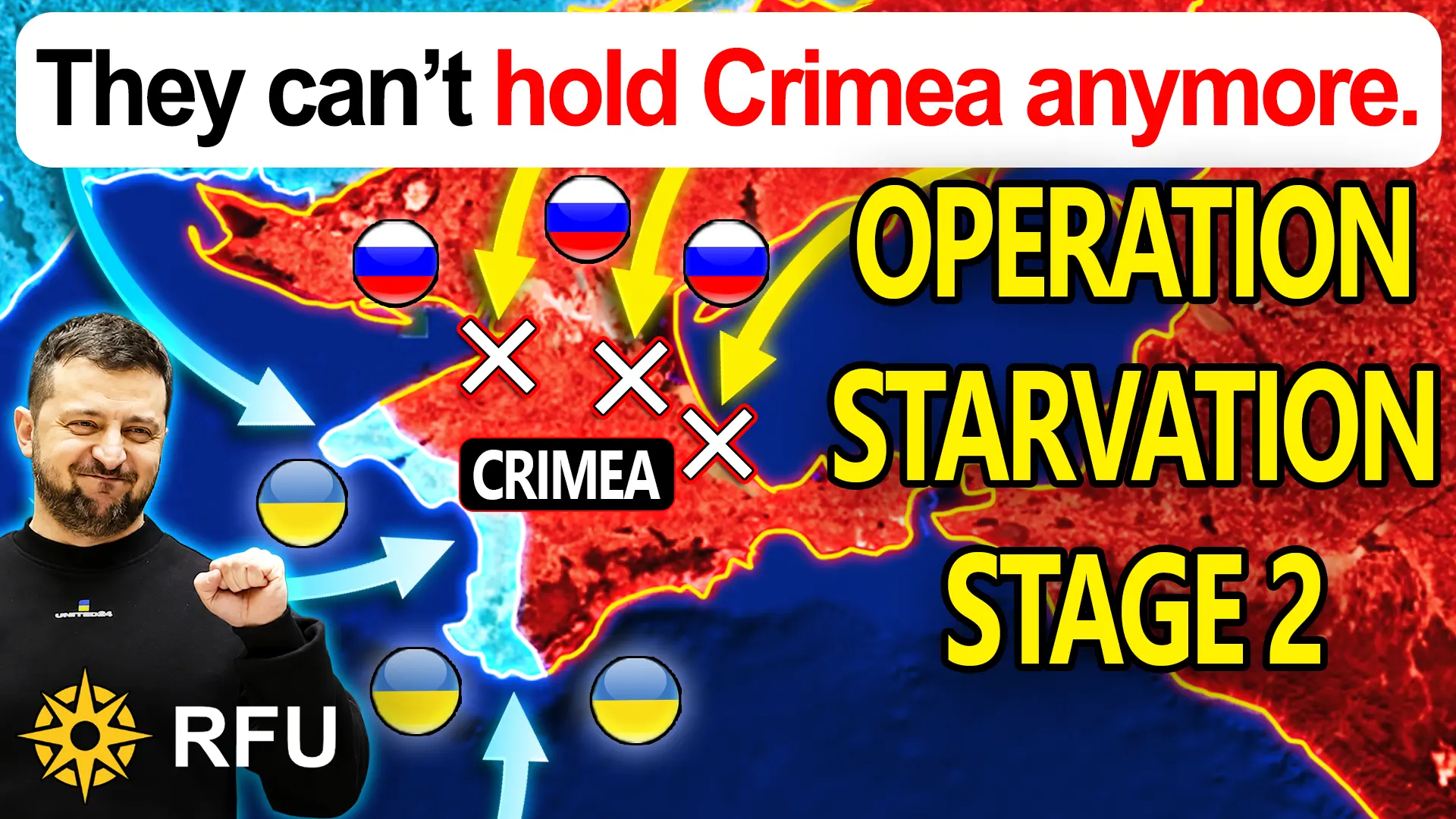
The growing scale of these operations indicates that Ukraine has entered the second stage of its broader effort to isolate Crimea completely, as Ukrainian drones maintain constant surveillance, detecting convoys before directing precision strikes against them. As a result, the main Russian routes through Chonhar, Henichesk, Armyansk, and the Kerch bridge have become increasingly hazardous for Russian military movement. Temporary engineering solutions such as pontoon crossings have likewise become frequent targets, while maritime supply routes remain under simultaneous pressure. This means Russia is finding it progressively harder to rotate troops, transport ammunition, move fuel, or reinforce Crimea on predictable schedules. As a result, Ukraine is making reliable logistics so dangerous that the practical effect is a total blockade.
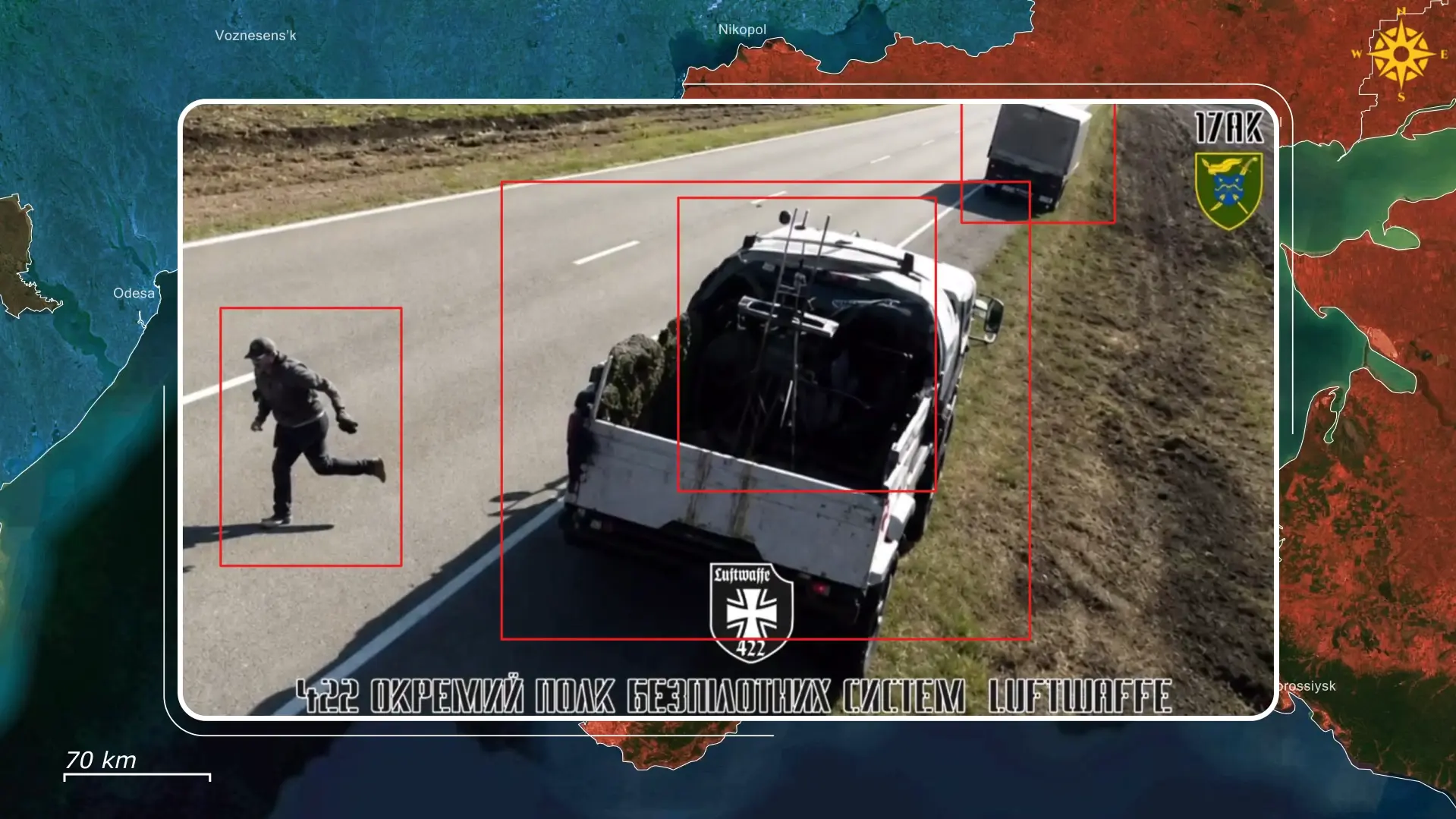
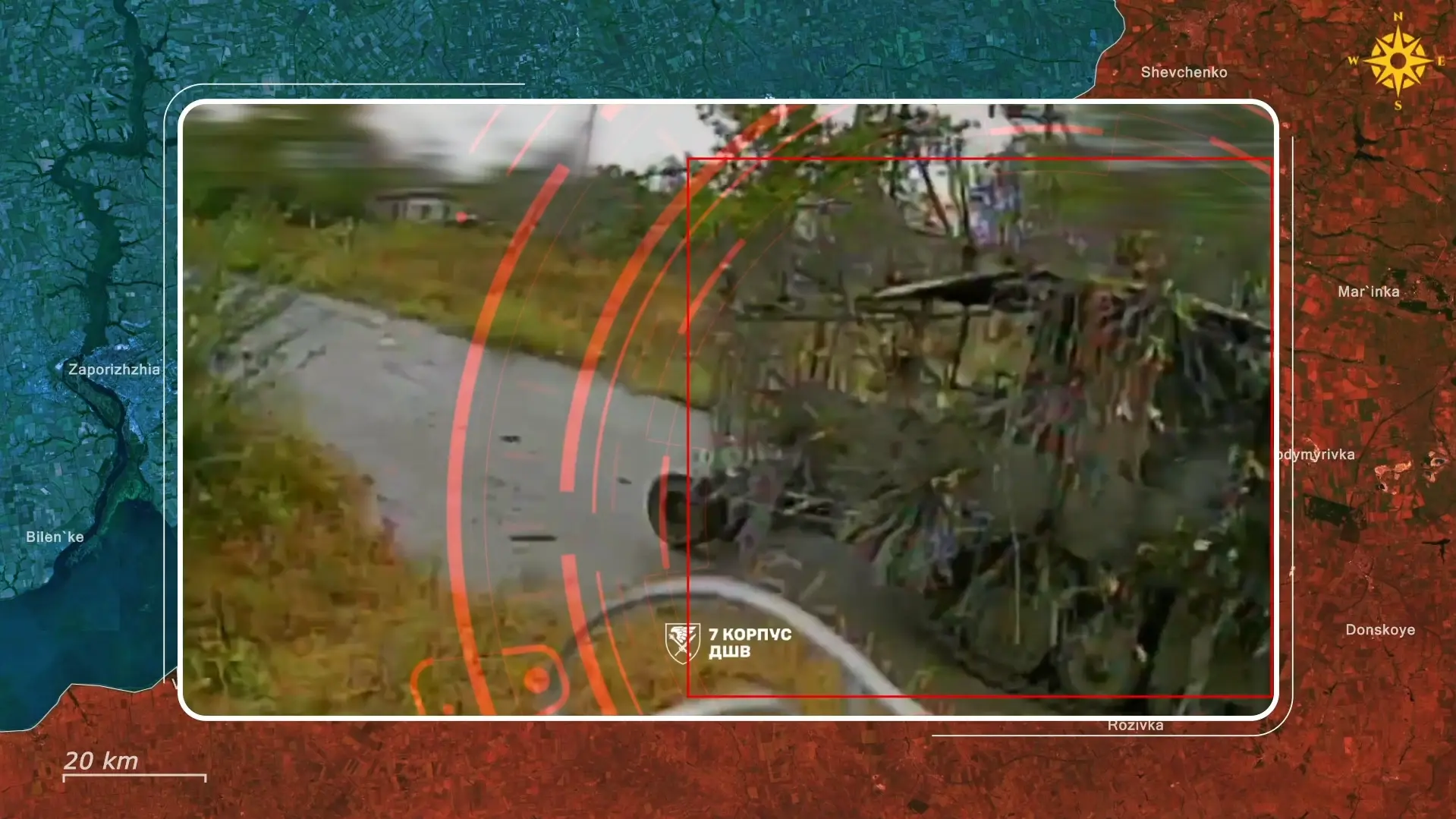
Events from previous days reinforce the steadily tightening logistical isolation of Crimea, with newly released footage from Ukraine's drone regiments demonstrating how carefully these operations are planned. Before striking transport vehicles, operators first identify and eliminate Russian electronic warfare systems positioned on other vehicles to shield convoys from drone attacks. Once they are destroyed, strike drones like Hornet methodically move through the remaining columns, hitting trucks one after another until burning wreckages block the highways entirely. Russian mobile fire groups escorting the convoys are targeted as well, ensuring surviving trucks remain exposed to subsequent attacks.
Russian footage also confirms the effectiveness of these tactics, as a Russian truck driver recorded several cargo vehicles already engulfed in flames along the Mariupol-Berdiansk highway, their burning hulks preventing traffic from moving in either direction. Another Russian video captures an even more dramatic sequence as a driver passes multiple destroyed trucks before spotting a Ukrainian FPV drone rapidly approaching his own vehicle. Seconds later, the drone strikes, forcing him to abandon the crippled truck while complaining that his mission to deliver supplies to Russian bases can no longer continue. These Russian eyewitness recordings demonstrate how Ukrainian operators are not merely destroying individual vehicles but systematically transforming entire logistics routes into continuous kill zones.
Overall, the cumulative effect extends far beyond the immediate destruction visible in each video, as every successful strike removes transport capacity and forces Russian commanders to devote additional vehicles and personnel simply to protect future convoys. Roads blocked for hours by burning trucks generate long traffic jams, creating even larger concentrations of targets for follow-up drone attacks. By steadily severing reliable road, rail, fuel, and reinforcement flow from mainland Russia, Ukrainian forces are gradually transforming the peninsula into an isolated military pocket, choking Russian bases through relentless logistical attrition, and making every journey to or from them more dangerous, more expensive, and ultimately increasingly unsustainable.
.jpg)

Comments