

.svg)
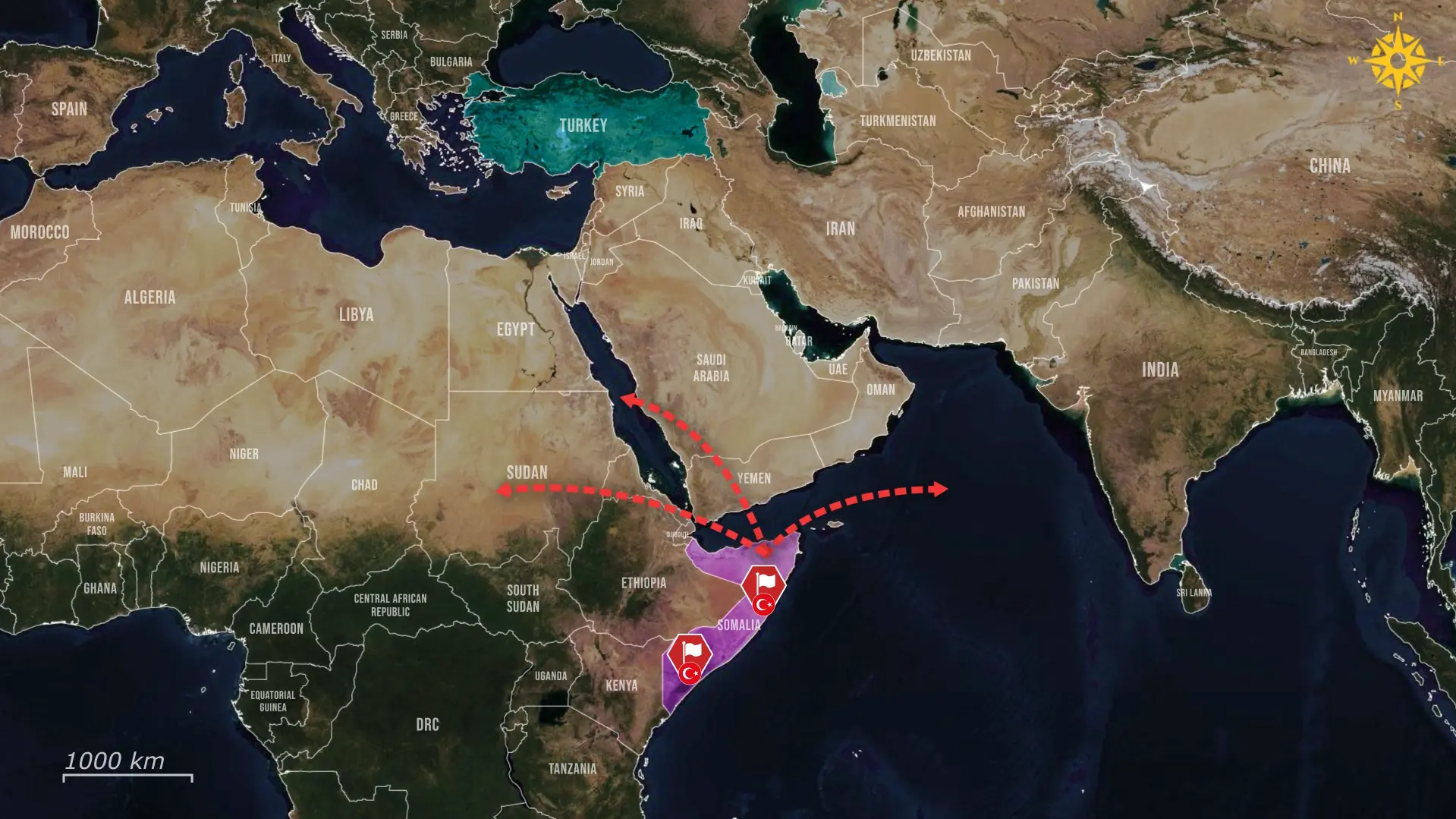
For nearly fifteen years, Turkey has steadily expanded its military, economic and diplomatic presence in Somalia. Against this backdrop, Ankara has capitalized on Somalia’s growing dependence on Turkey to deepen its presence in the country, positioning Somalia as a strategic forward operating base and regional hub for projecting Turkish power across the Horn of Africa and beyond.
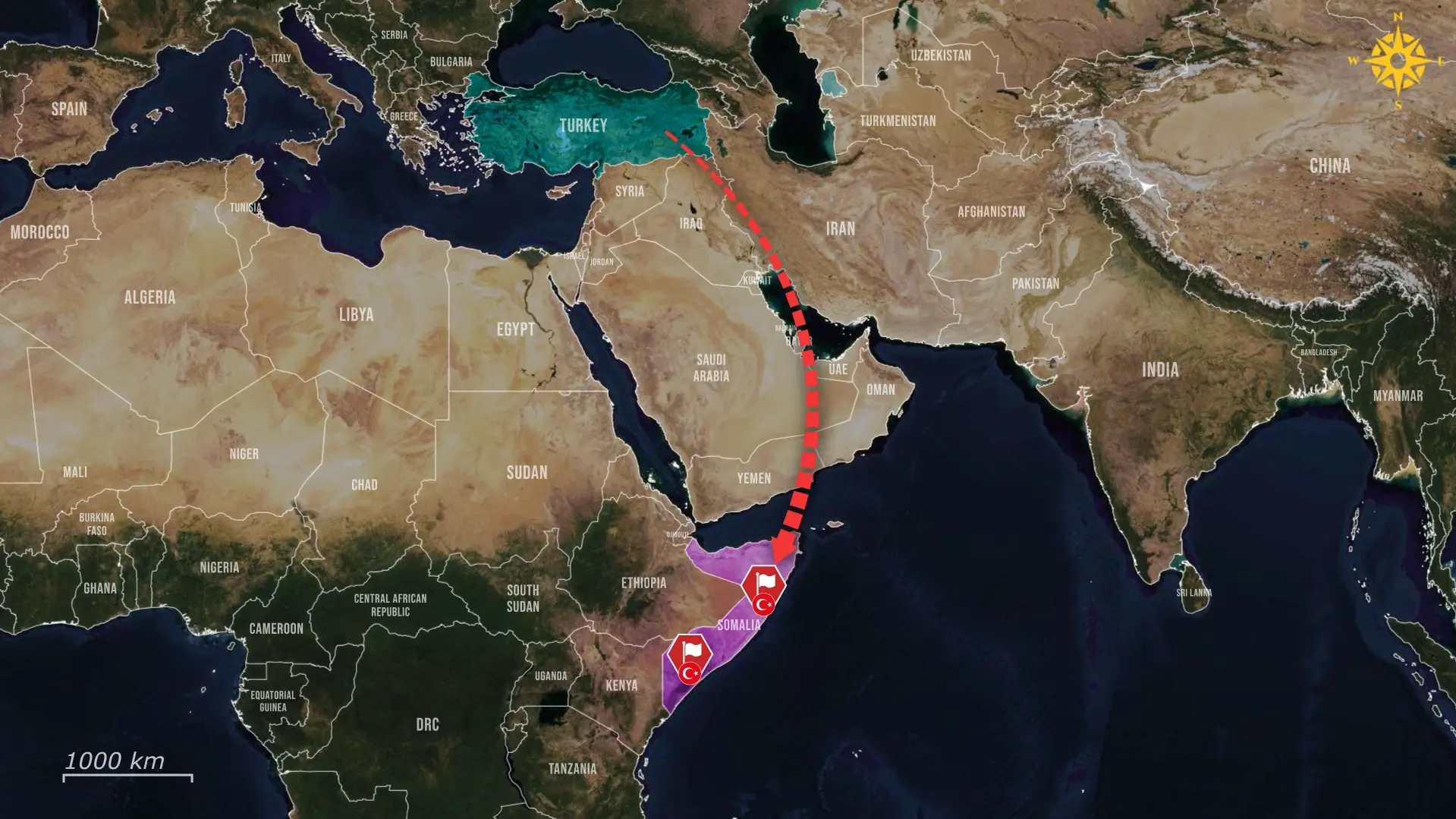
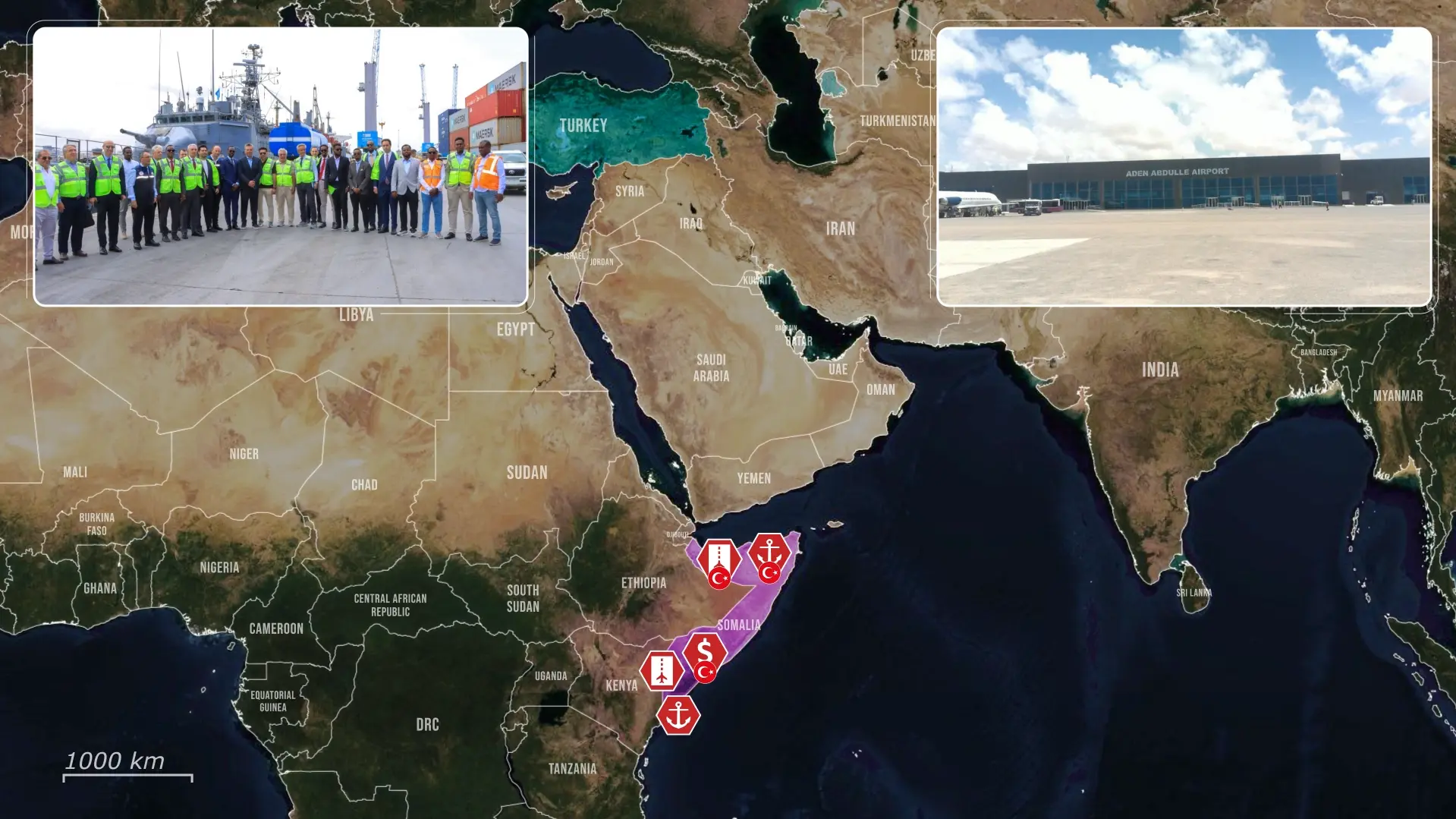
Turkey’s military presence in Somalia became particularly visible in two thousand seventeen, when Ankara opened Camp Turksom in Mogadishu, its largest overseas military facility. More than fifteen thousand Somali soldiers have reportedly received training there to date. At the same time, Turkey has begun supplying Somalia with main battle tanks, including M-forty-eight and M-sixty Patton variants, to enhance the ground capabilities of the Somali military’s Gorgor commando unit. Turkey is now training the Gorgor forces to operate heavy armored vehicles and tanks while simultaneously working to enhance their tactical combat capabilities. However, Turkey’s involvement in Somalia is not limited to military cooperation; Ankara has also established a significant presence in the country’s economy and other key sectors. For example, the Turkish company Albayrak has operated the Port of Mogadishu for years, while another Turkish firm, Favori, manages Aden Adde International Airport. In addition, Turkey and Somalia signed a Defense and Economic Cooperation Framework Agreement in two thousand twenty four, under which Turkey will assist Somalia in protecting its Exclusive Economic Zone and rebuilding its navy. Reported terms also provide Turkey with a significant revenue share from maritime projects it helps develop, potentially reaching thirty percent in some cases.
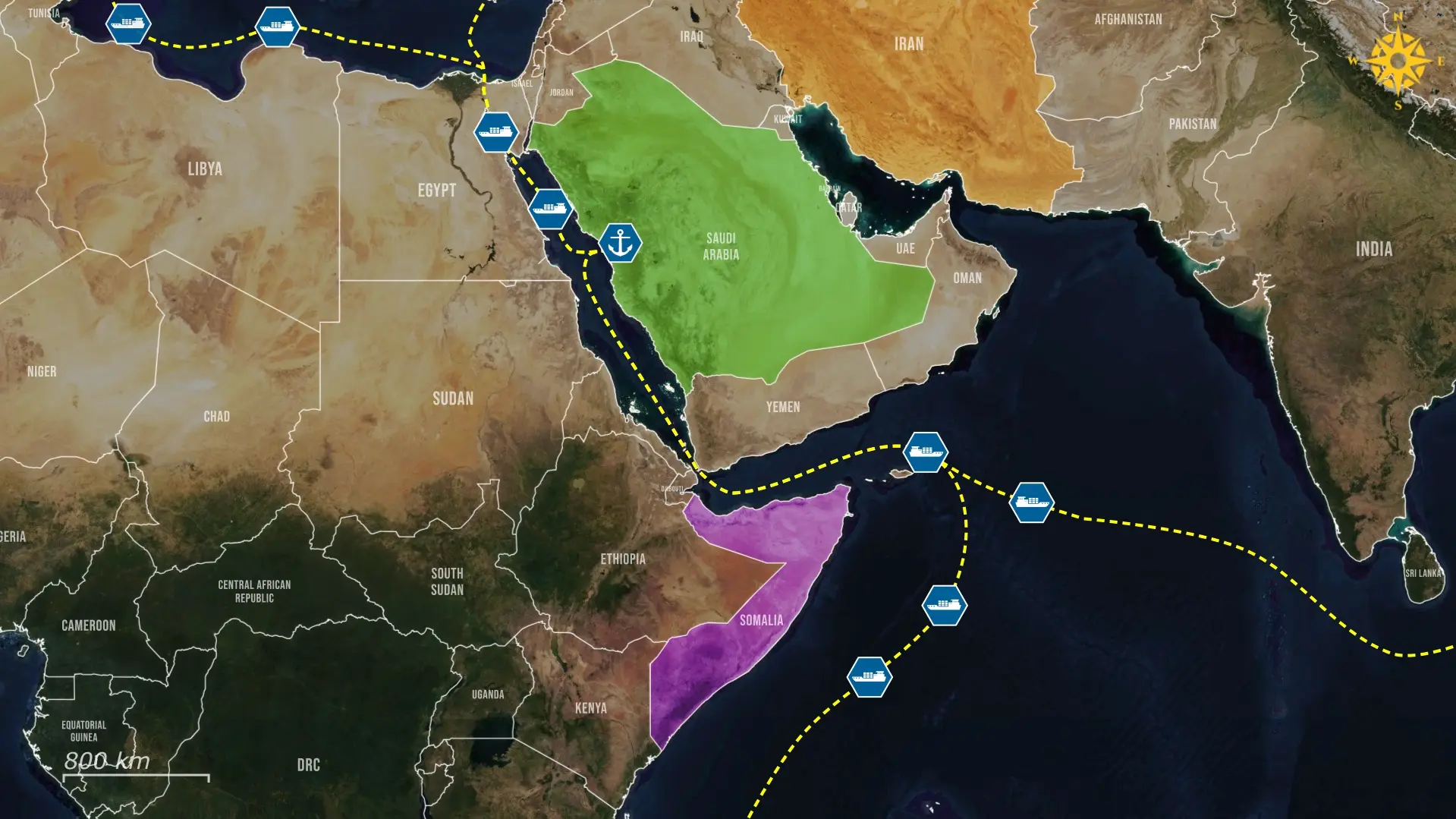
Somalia’s long Gulf of Aden coastline places Turkey close to the approaches to the Bab el-Mandeb Strait, one of the world’s most important maritime chokepoints. At the intersection of the Red Sea and the Gulf of Aden, the strait carries roughly twelve percent of global trade. The recent Iran war demonstrated how quickly control of a maritime chokepoint such as the Strait of Hormuz can become a source of strategic leverage. The war also underscored the strategic importance of the Bab el-Mandeb Strait, a separate chokepoint connecting the Gulf of Aden to the Red Sea and the Suez Canal. For example, Saudi Arabia is currently exporting approximately three to four million barrels of oil per day through the Red Sea, nearly twice the level recorded in two thousand twenty four. The crisis has therefore increased the strategic value of positions that regional and global powers had already been competing to secure around the Red Sea. Somalia therefore gives Ankara a foothold near the southern approaches to Bab el Mandeb from which it can expand its maritime influence.
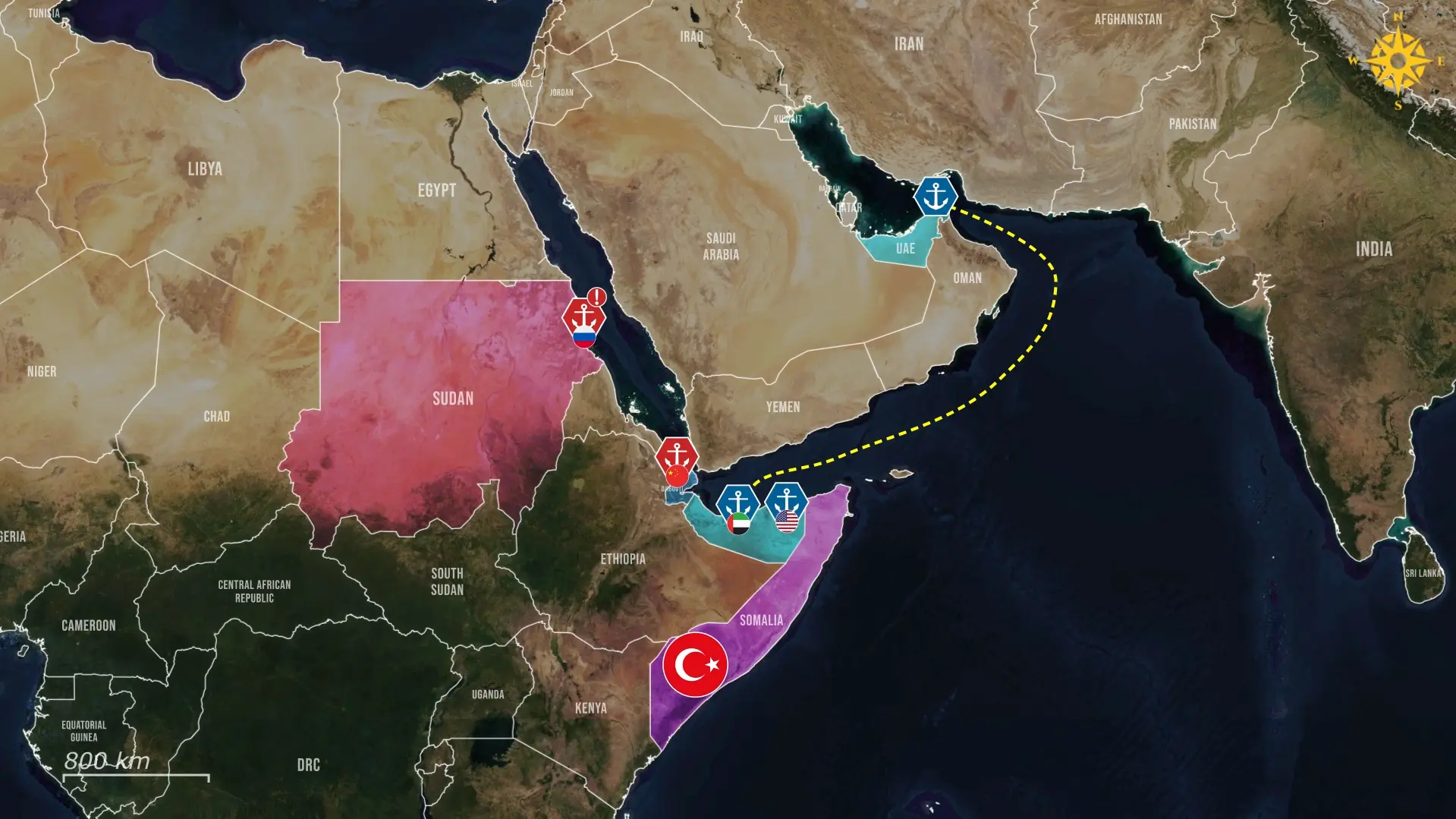
Turkey is entering an already crowded contest for influence around Bab el Mandeb. Among the regional players, the United Arab Emirates has already built a powerful logistics network through major investments in Berbera Port, the Special Economic Zone, and overland corridors in Somaliland. Meanwhile, the United States and China both maintain major military facilities in nearby Djibouti, giving them permanent positions along the same maritime corridor. Russia is also trying, so far unsuccessfully, to establish a permanent naval foothold at Port Sudan.
Amid this growing competition, Turkey has sought to further strengthen its strategic position in Somalia by expanding its activities beyond maritime and land based operations to establish an aerial presence and capabilities as well. In October two thousand twenty five, Turkey began construction of a spaceport in the Warsheikh area, roughly seventy kilometers north of Mogadishu. Although Turkey has publicly described the facility as a satellite launch center, a French report claimed that it could also be used to test Turkey’s own hypersonic and long-range ballistic missiles. At the same time, Turkish authorities have announced plans to conduct the first test of their intercontinental ballistic missile, Yildirimhan, from Somalia. The missile is reportedly capable of striking targets up to six thousand kilometers away with a three thousand kilogram warhead. In addition, Turkey’s state owned Turkish Petroleum has begun oil and gas exploration in Somali waters and is currently drilling an offshore well known as Cirak one, with initial results expected by the end of two thousand twenty six.
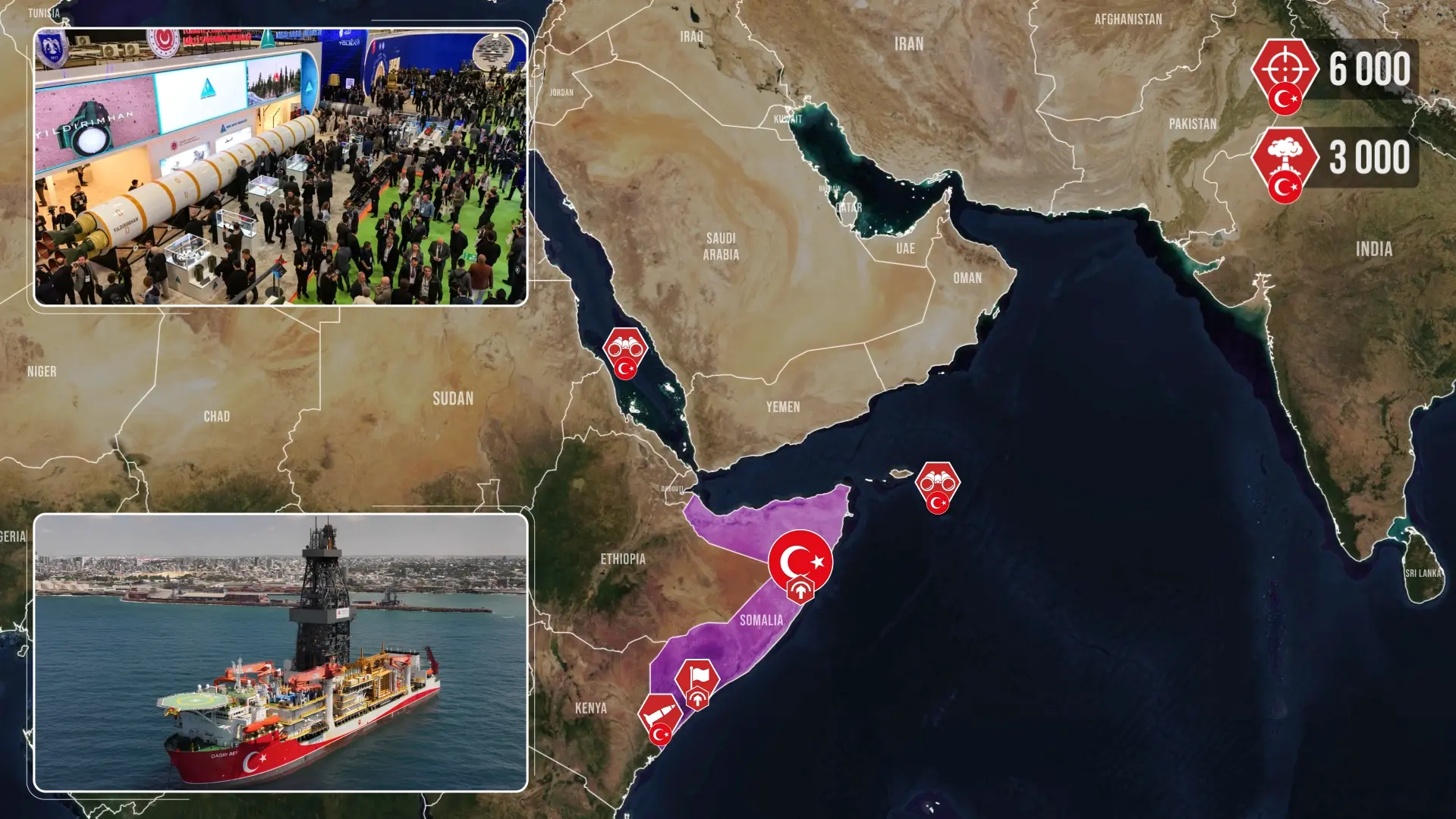
Overall, after more than a decade of steadily expanding its investments in Somalia, Turkey has now reached a position from which it can directly influence the geopolitics of the Horn of Africa and the Bab el-Mandeb Strait. With a major military training base, the deployment of armored vehicles and tanks, oil and gas exploration, and a potential missile testing site, Somalia has become one of the key focal points of Turkey’s regional ambitions. However, Turkey is expanding into a region where several regional and global powers already maintain established positions. Maintaining that influence will increasingly require Ankara to operate alongside and compete with other established powers around the Red Sea. Somalia has therefore become more than an overseas partner for Turkey, it is developing into a platform for military training, maritime access, energy exploration and strategic technologies across the wider region.
.jpg)

Comments