

.svg)
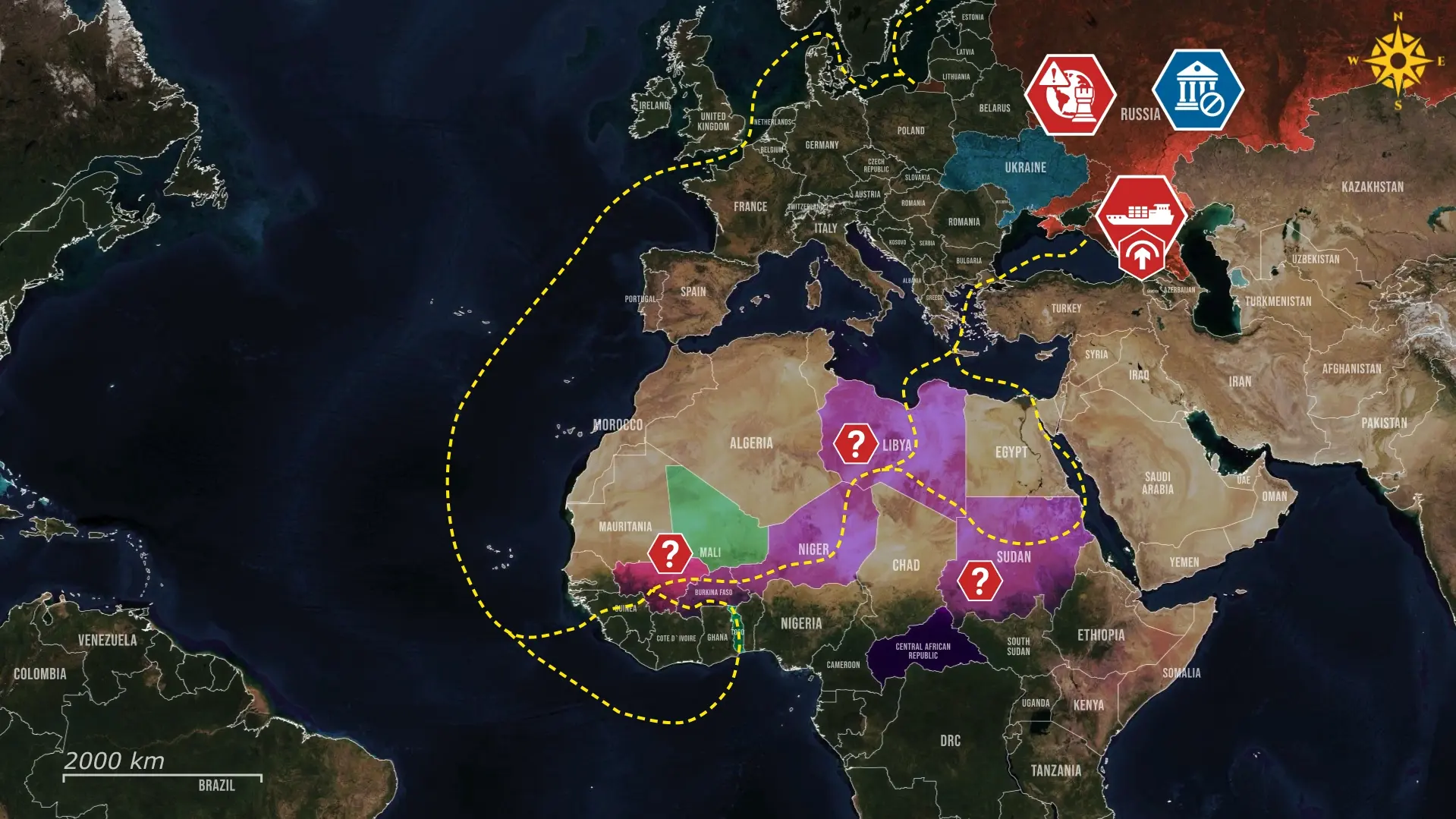
Russia is using its shadow fleet vessels to continuously transport military equipment to West Africa by sea. While Russian shadow fleet vessels have operated along the West African coast for years, their activity has increased noticeably in recent months. In line with this trend, last July, the Russian shadow fleet cargo vessel Mikhail Britnev departed from the Port of Baltiysk, crossed the Atlantic Ocean, and delivered a major shipment of military equipment to the West African coast.
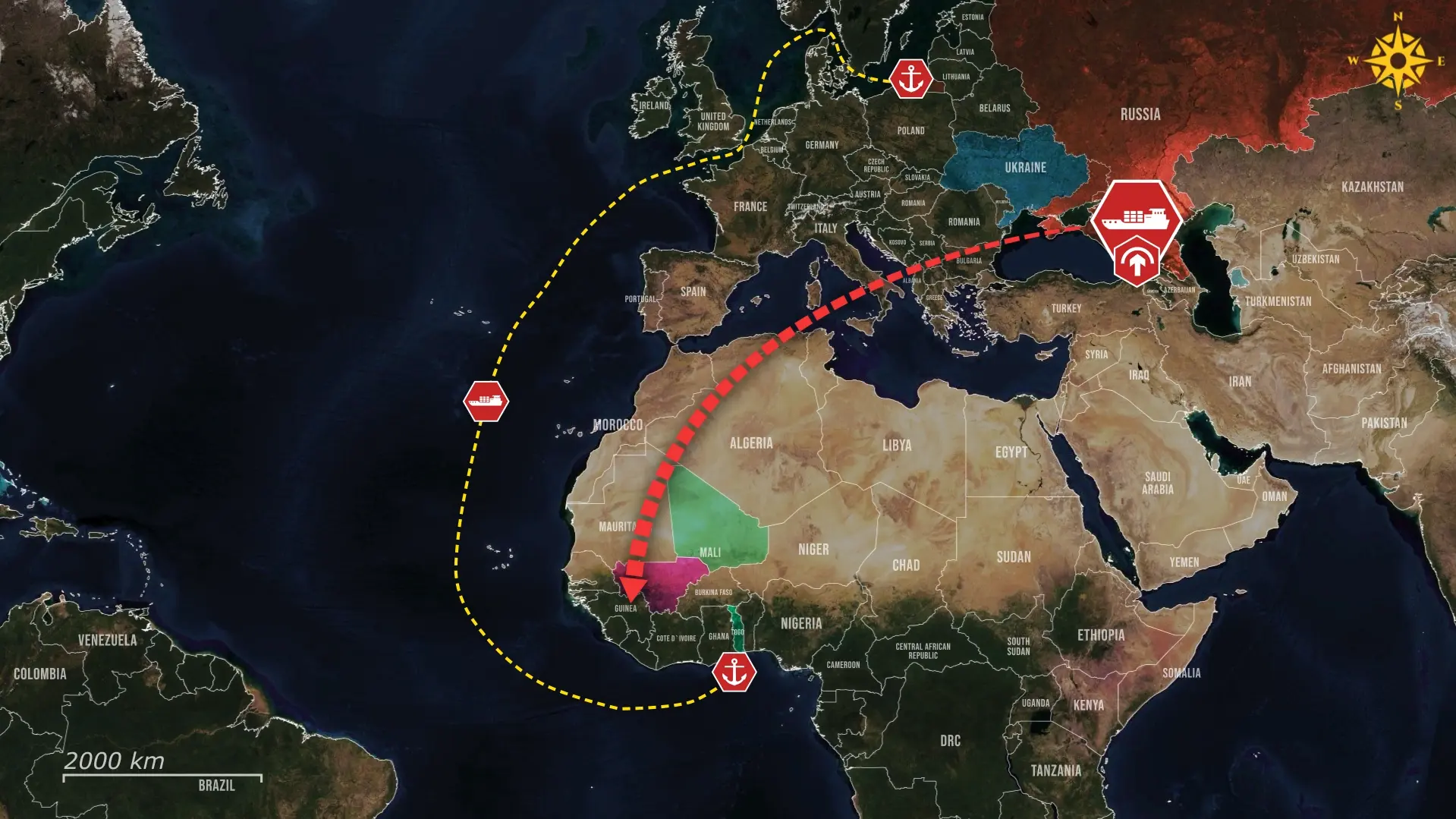
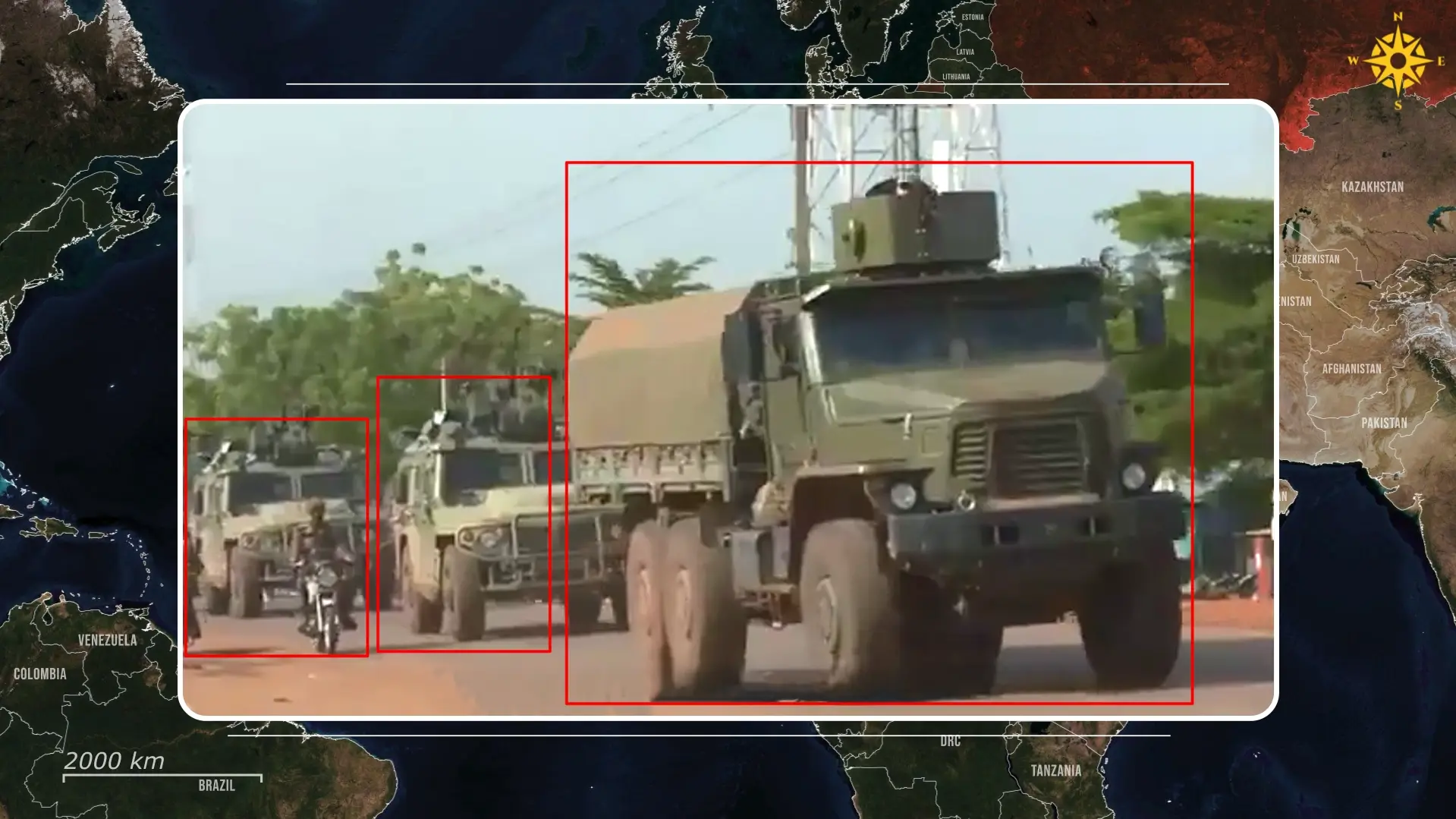
Satellite imagery revealed that the vessel was carrying a large cargo of military hardware, including BTR armored personnel carriers, BMP-three infantry fighting vehicles, Tiger armored cars, and several other types of armored vehicles. The equipment was subsequently transported overland to Russia’s Africa Corps operating in Mali to be used in active Russian military operations. The shipment arrived in Mali at a time when Russian Africa Corps convoys have been suffering significant losses due to repeated attacks and ambushes by Tuareg separatist groups that have launched a renewed offensive. These attacks have cost Russian forces not only personnel but also significant quantities of weapons, armored vehicles, and other valuable military equipment, noticeably weakening their military position in Mali. As a result, both Russia’s Africa Corps and the Malian junta require substantial quantities of military supplies, weapons, and logistical support to maintain their operational readiness against the advancing separatist forces. In this context, the military equipment delivered through Russia’s shadow fleet vessels has become an essential lifeline for both the Africa Corps and the Malian junta government.
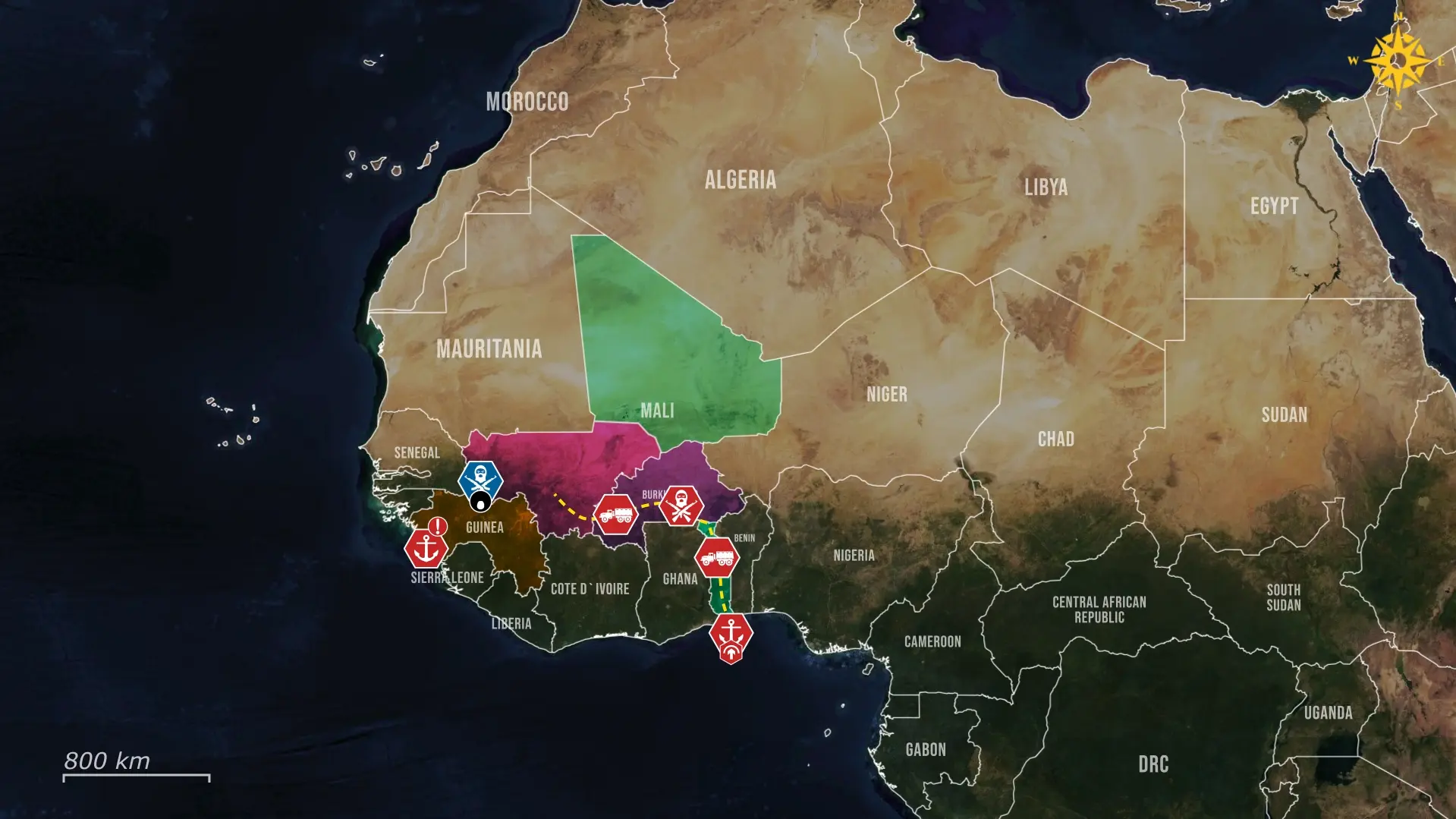
Russia has now intensified efforts to strengthen its supply lines to meet the critical military needs of the Russian Africa Corps and the Malian junta government. Previously, Russian shadow fleet vessels carrying military equipment from Russia would dock at the Port of Conakry in Guinea, from where the supplies were transported overland to Mali. However, the port’s limited infrastructure capacity, along with the risk of attacks on the supply lines by J-nim radicals active in this entire region, has created significant challenges for Russia’s military logistics network. To overcome these limitations, Russia has chosen Togo’s Port of Lome as a key gateway for military supplies destined for Mali. The port is a modern deep-water facility capable of accommodating large Russian transport vessels, enabling Moscow to unload major shipments of military equipment quickly and efficiently. Additionally, the Port of Lome has strategic road connections extending toward the Sahel region, providing a crucial route to Mali through Burkina Faso and reducing the risks associated with Russia’s military supply routes. According to analysts, Russia signed a military cooperation agreement with Togo in October two thousand twenty-five. Building on this agreement, Moscow has been steadily expanding its military presence in the country throughout the year, seeking to secure a safe haven for its shadow fleet vessels in the Horn of Africa.
Due to the sanctions on Moscow and their Shadow Fleet, Russians have experienced significant pressure on their international trade and global military supply networks. To overcome these restrictions, Russia developed an alternative logistics network outside the traditional supply system, with the shadow fleet becoming one of its most important components. Through changes in the ownership, registration, and operational structures of these vessels, their direct links to Russia are concealed, allowing Moscow to continue its logistical activities while avoiding international scrutiny. Today, Russia is using these shadow fleet vessels to deliver military equipment and strategic supplies to Russian Africa Corps personnel deployed across Africa. To keep this supply network operational, Togo’s Port of Lome plays a crucial role.
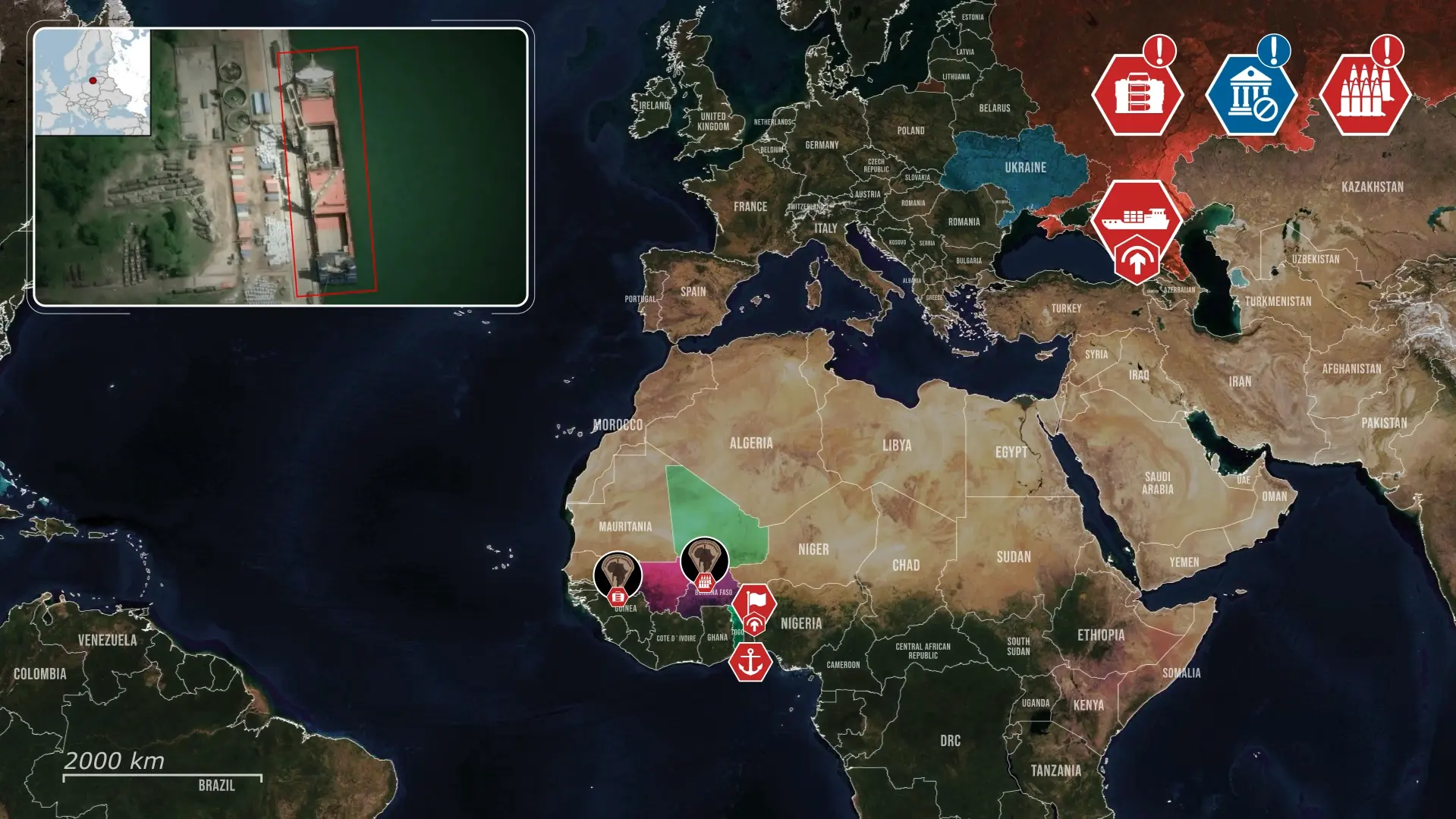
Russia’s presence in Togo and Mali is not an isolated phenomenon but rather part of Moscow’s broader long-term strategy to expand its influence across West and Central Africa. Between two thousand twenty and two thousand twenty-three, the military juntas that came to power through coups in Mali, Burkina Faso, and Niger shifted away from former Western partners, particularly France, and developed closer ties with Russia instead. By taking advantage of the challenging security situations in these countries and their need for international political support, Moscow has been steadily working to strengthen its position through the provision of weapons, military training, and security assistance. According to the Rand Corporation, the Russian Africa Corps now has a clear presence in at least six African countries in the region beyond Mali, including Burkina Faso, Togo, Libya, Niger, and the Central African Republic, with Sudan further to the east. Among them, the Central African Republic is widely regarded as Wagner’s last remaining stronghold, where the Russian Ministry of Defense is gradually replacing the former Wagner structure with the more loyal Africa Corps. At the same time, Libya on the Mediterranean coast, Sudan along the Red Sea, and Togo on the Atlantic coast have emerged as three critical strategic gateways in Russia’s expanding African network. Through these distinct geographic corridors, these countries enable Moscow to project military equipment, personnel, and logistical capabilities deeper into the African continent. According to analysts, Russia views the Sahel as a critical theater for countering Western influence and further strengthening its geopolitical position across Africa.
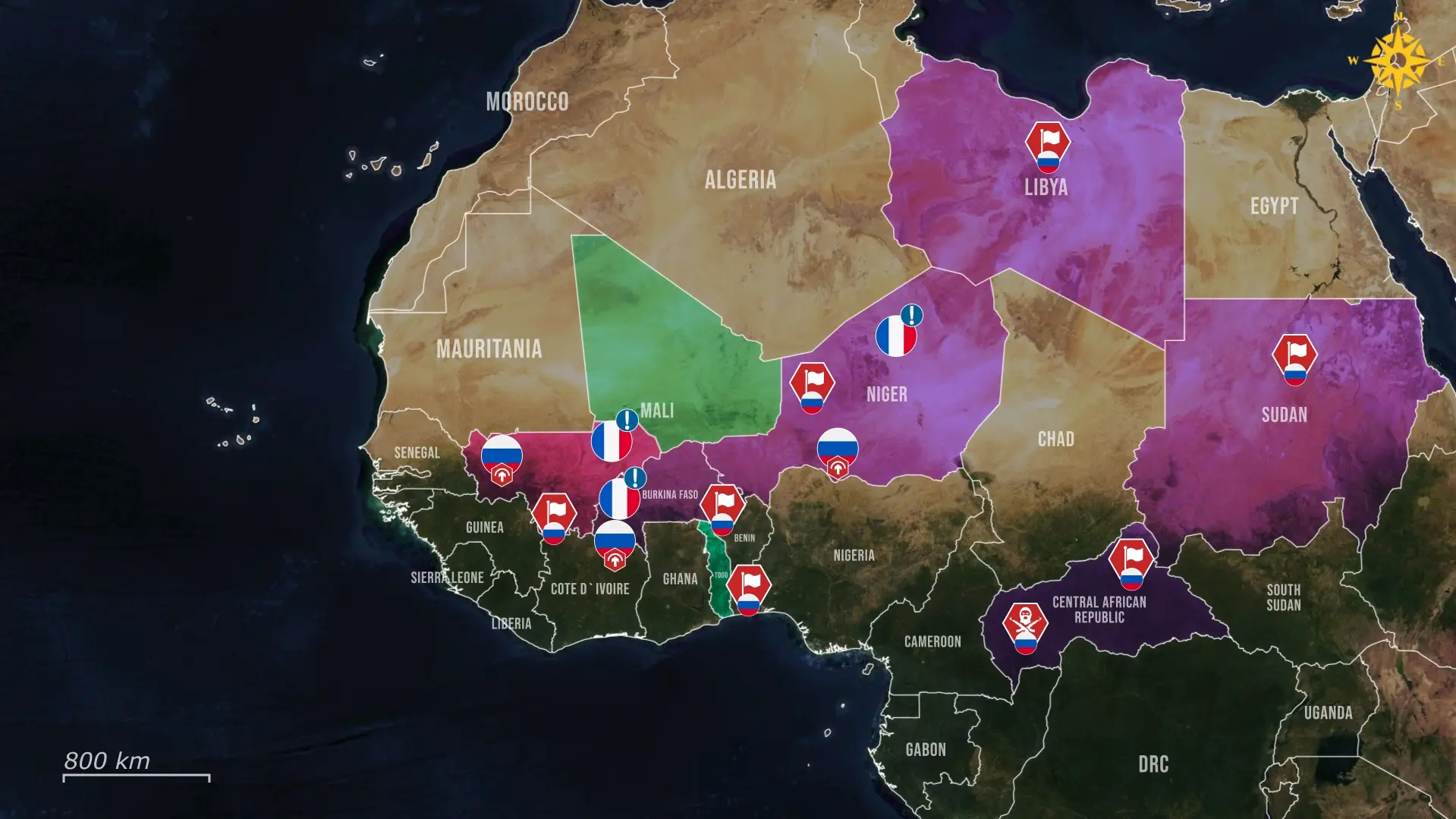
Overall, Russia is seeking to establish an integrated strategic logistics network across Africa by relying on three key pillars, including its shadow fleet, West African ports, and overland routes through the Sahel. However, Moscow’s greatest challenge is not merely establishing new naval facilities or deploying troops, but developing the capacity to sustain its presence over the long term. Achieving that objective depends on maintaining a continuous and efficient supply network. However, Western sanctions have placed considerable pressure on Russia’s logistics network. While Moscow has sought to mitigate that pressure by relying on its shadow fleet, the long-term effectiveness of Moscow’s strategic activities in Africa remains uncertain. Their future will ultimately depend on the security environment across Africa, regional political developments, and Russia’s ability to maintain its own logistical capabilities.
.jpg)

Comments