

.svg)
Today, the biggest news comes from Ukraine.
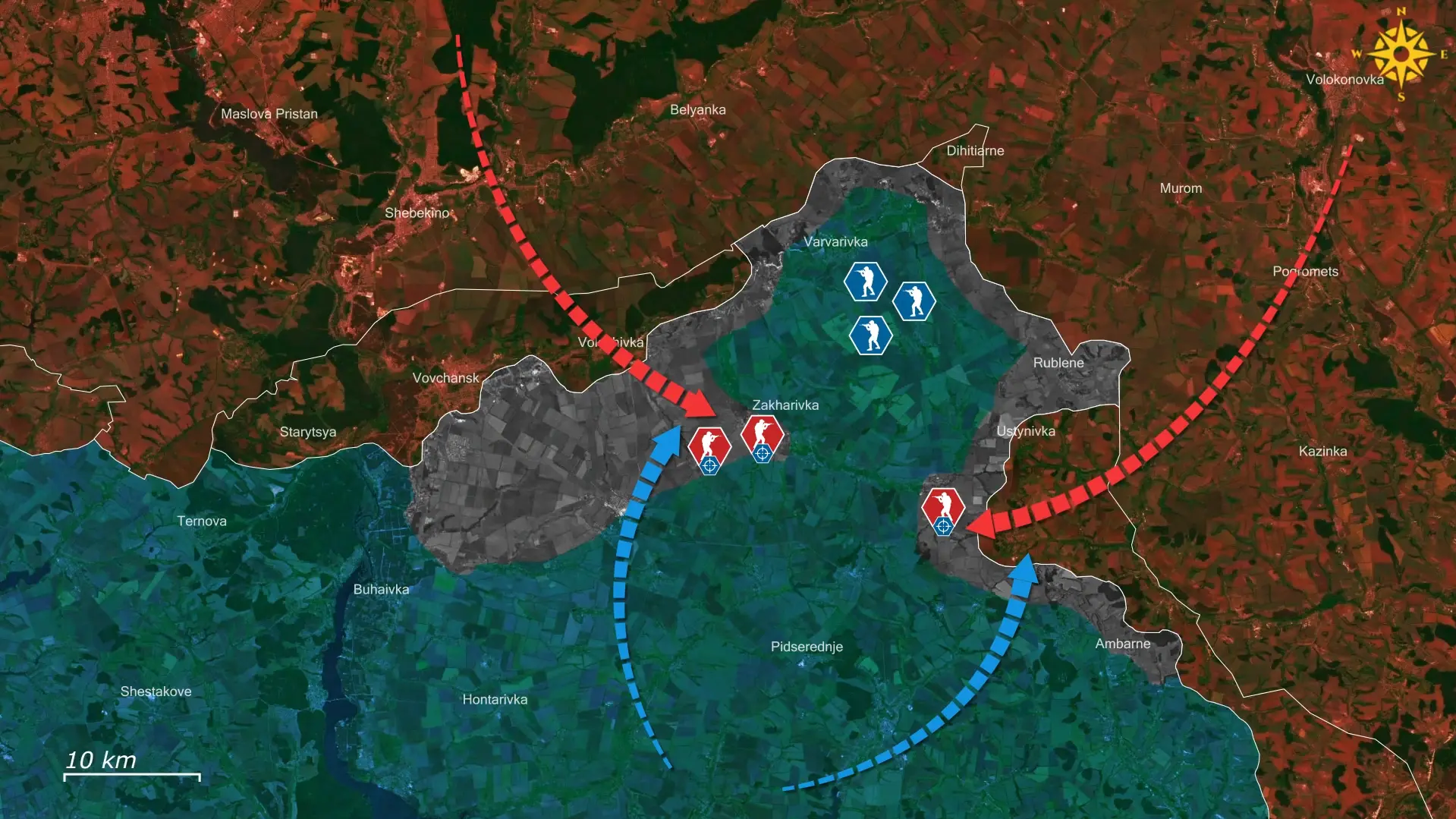
Here, Russian forces are launching attacks from the direction of the border toward Sumy. As the forest begins to reshape how movement and concealment work, a new battlefield is emerging that could open a direct path toward the city.
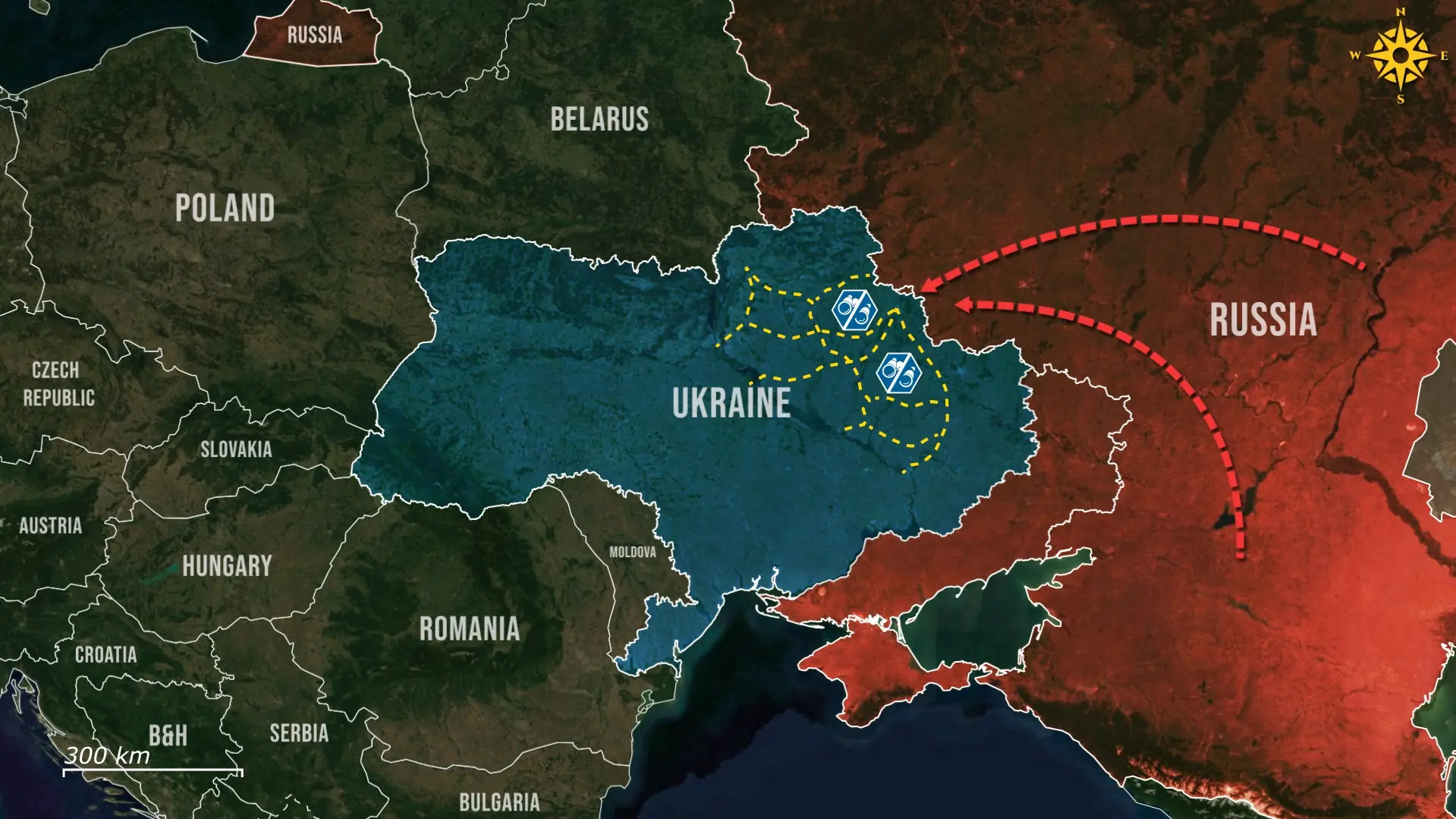
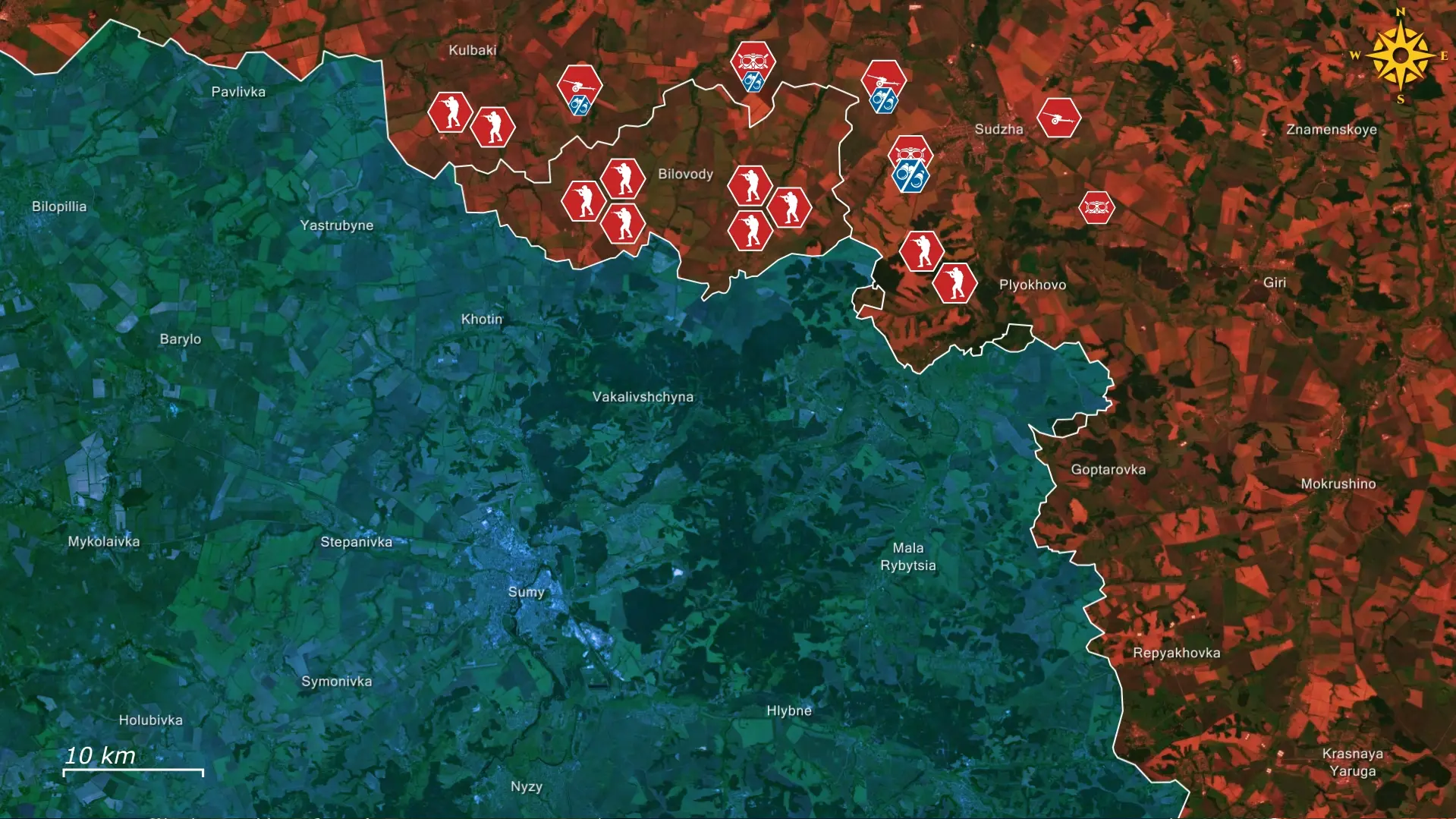
Russian forces are regrouping and concentrating units in selected sectors to maintain offensive pressure through localized advances and probing attacks, rather than attempting immediate large-scale breakthroughs. This gradual approach enables Russian artillery and drone teams to operate from safer forward positions, making it more difficult for Ukraine to observe and strike the routes and staging areas that Russian forces rely on for supply and reinforcement.
Russia’s regrouping in the north is linked to its stalled advance in Donetsk Oblast, where strong Ukrainian defenses have prevented meaningful breakthroughs. Months of intensive effort have yielded only limited gains at a high cost, without achieving operational momentum. As a result, Russian forces are increasing pressure in other sectors, including the north, to stretch Ukrainian defenses and create new opportunities for advance.
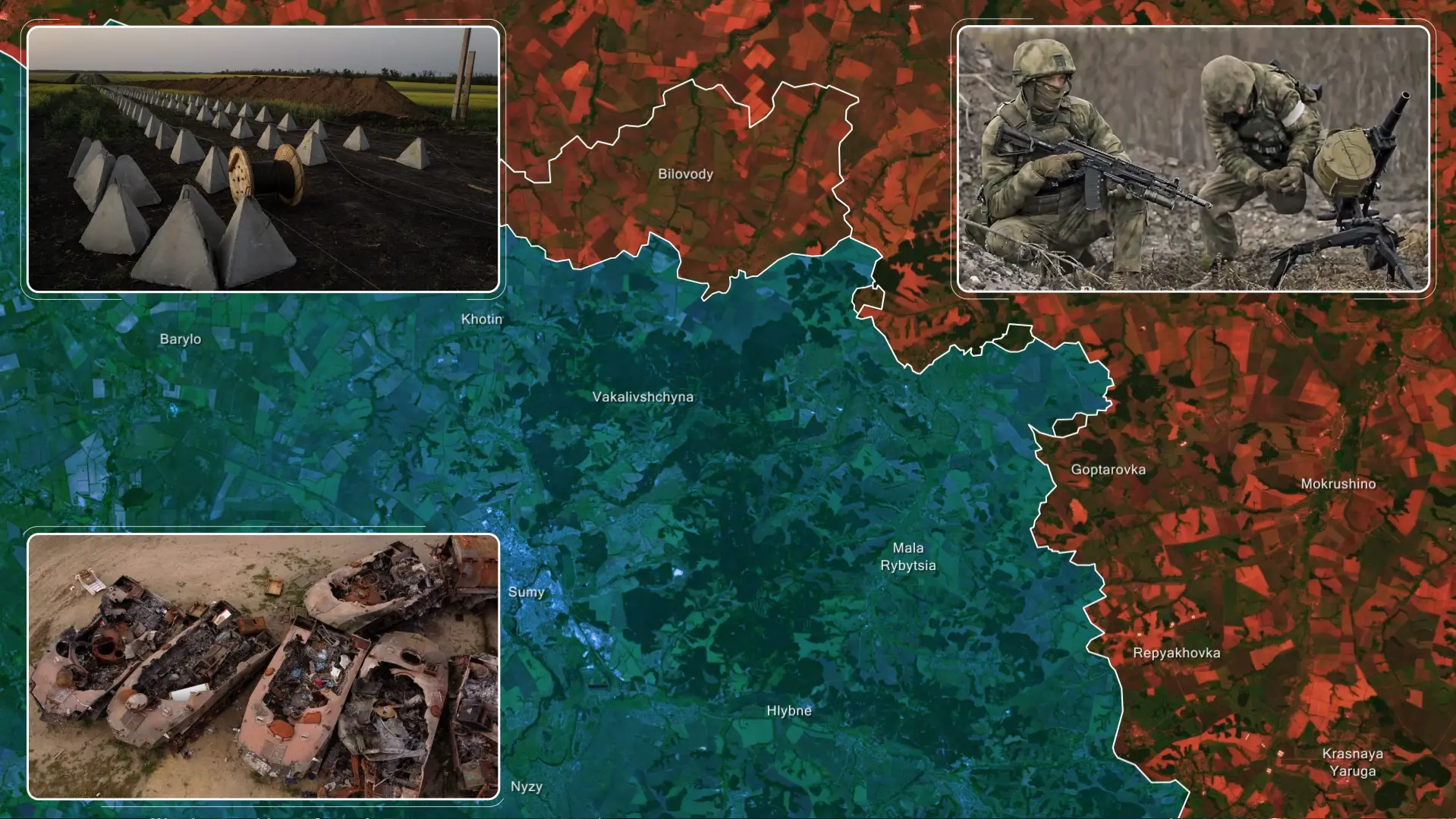
Sumy is being targeted because Russian forces advanced close enough early on to prevent Ukraine from building a fully developed defensive line in front of the forest. Ukrainian forces relied instead on fire control from concealed forest positions to stop Russian probing attacks, rather than holding a hardened line with engineered fortifications. Because Russian units remained nearby, any attempt to build trenches, bunkers, or obstacles in forward areas could be quickly detected and targeted. Earthmoving equipment and disturbed soil create clear signatures that drones can easily spot, making construction extremely vulnerable to strikes.
As a result, large sections of the forest edge remain without a continuous fortified barrier, leaving fewer physical obstacles to slow infiltration.
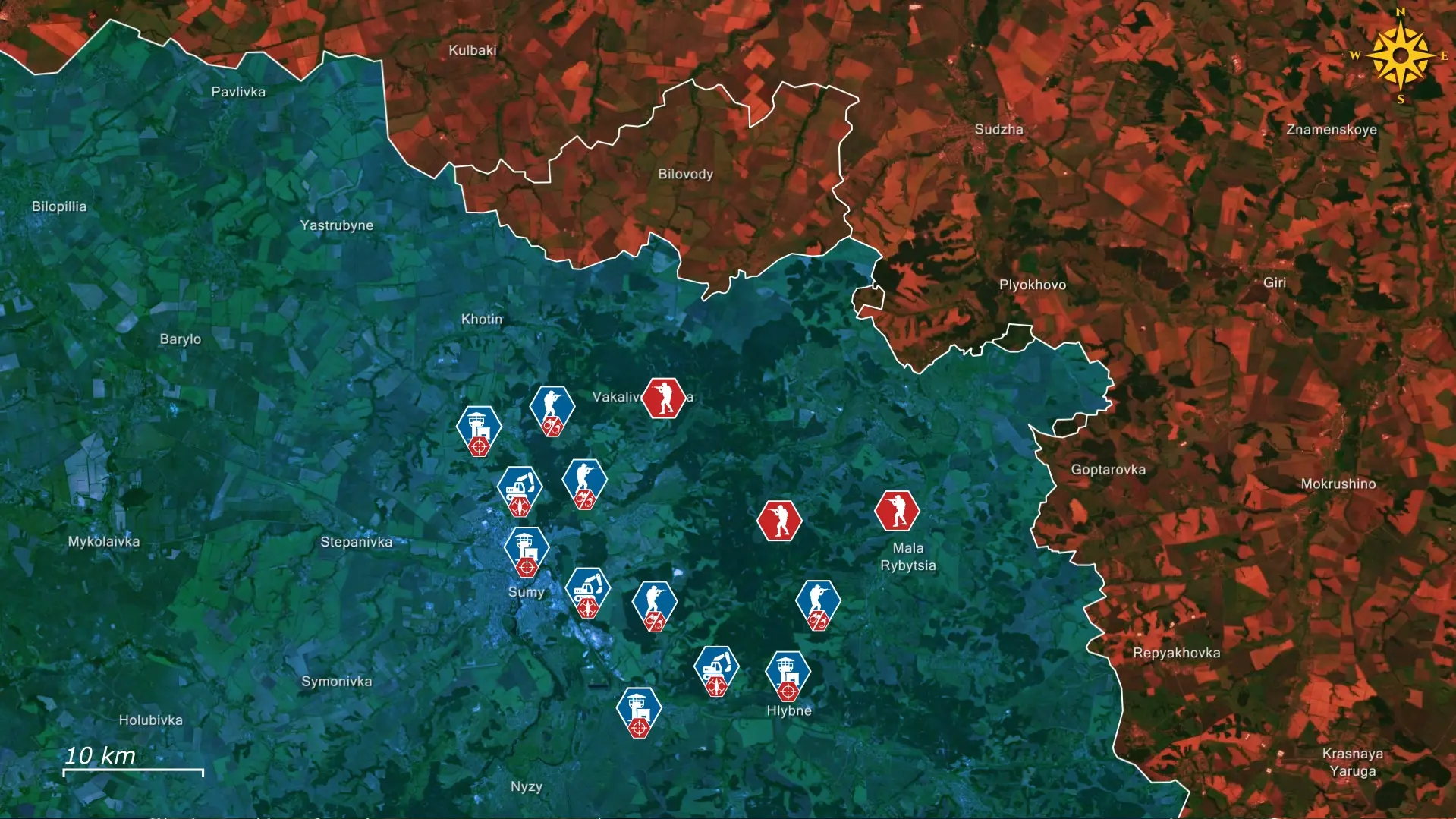
Russian forces are first concentrating infantry and drone units along selected sections of the line, this buildup allows them to apply pressure from multiple directions at the same time. Ukrainian units must then spread out to respond to these threats, which reduces the density of the defense in any single location. This creates gaps and weakly observed areas that Russian forces can exploit.
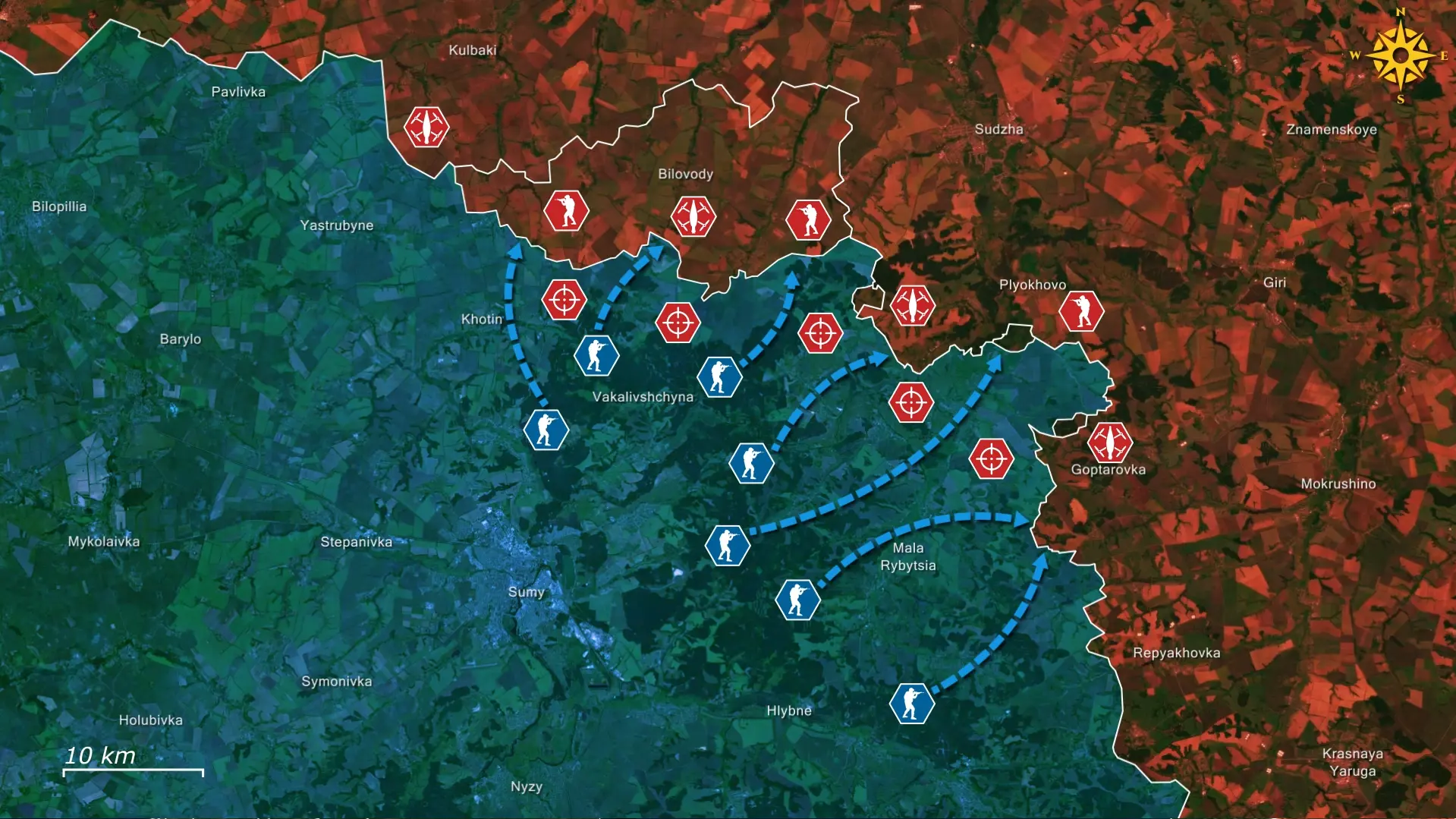
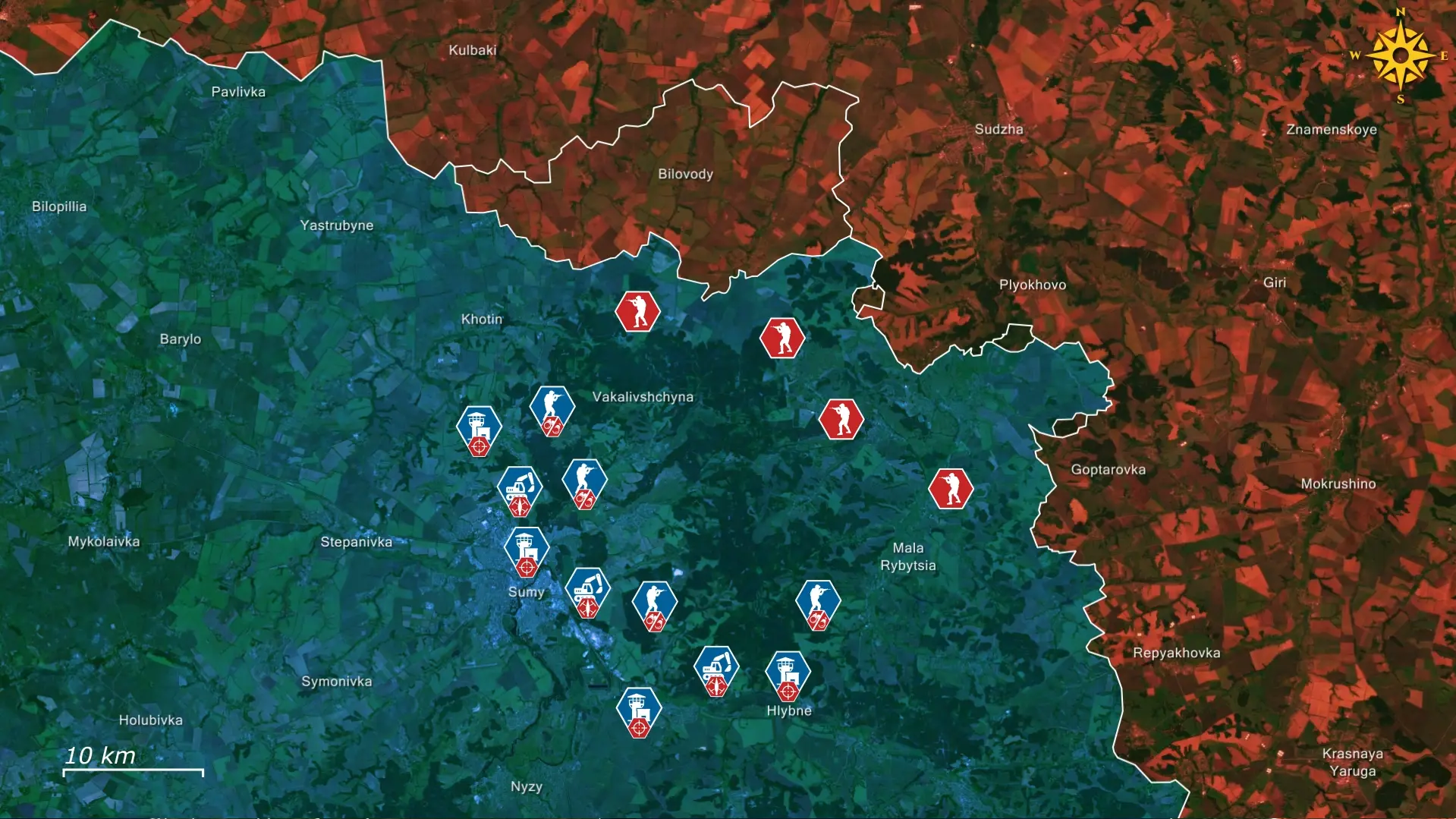
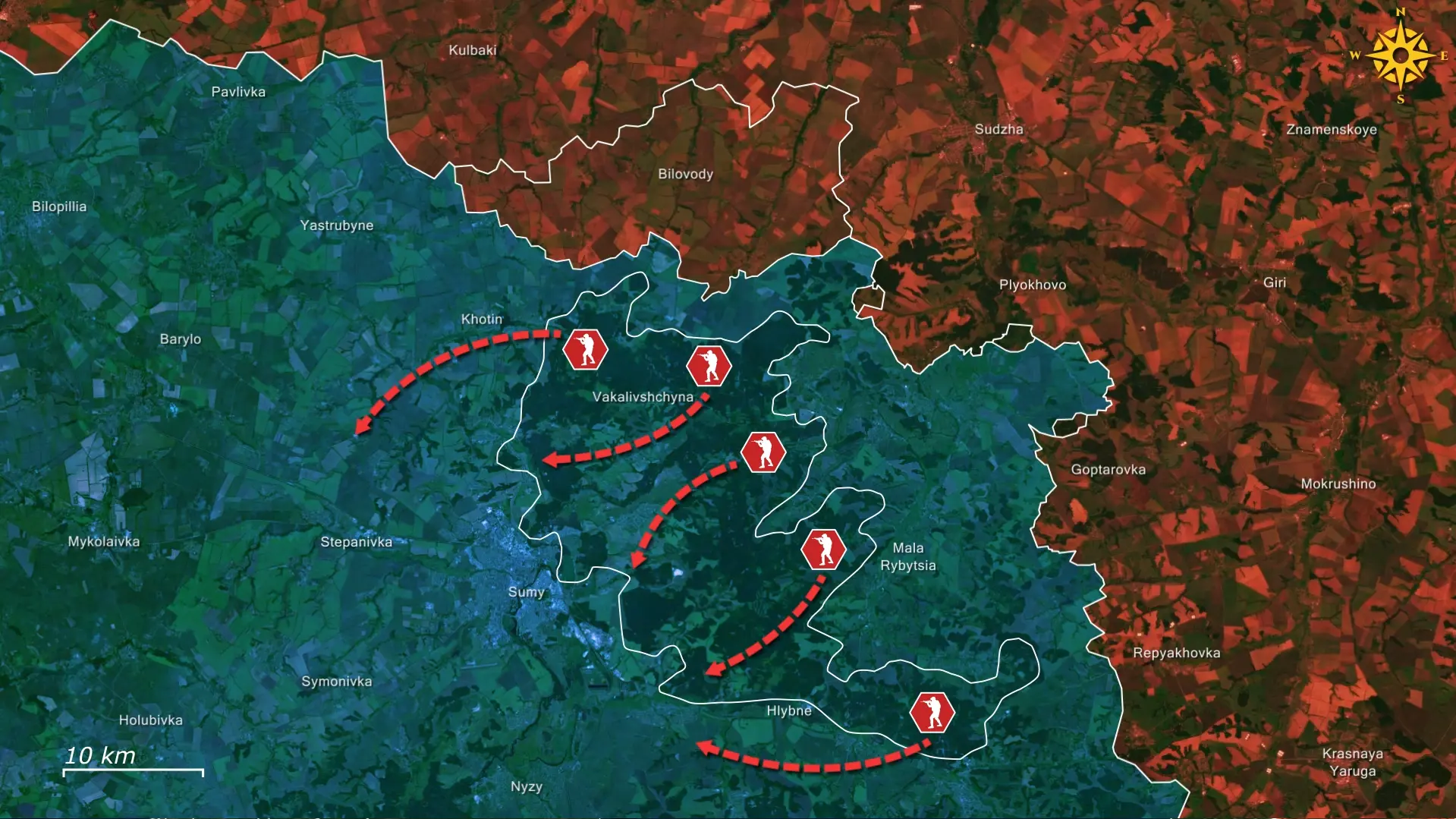
Once these entry points are identified, Russian units can move into the forest through edge villages or uncovered sections and establish concealed footholds. As foliage thickens, tree cover and limited visibility reduce aerial detection, allowing infiltrators to move deeper without being easily seen. Over time, these concealed routes can allow Russian forces to reach logistics lines and gradually extend their presence toward Sumy itself.
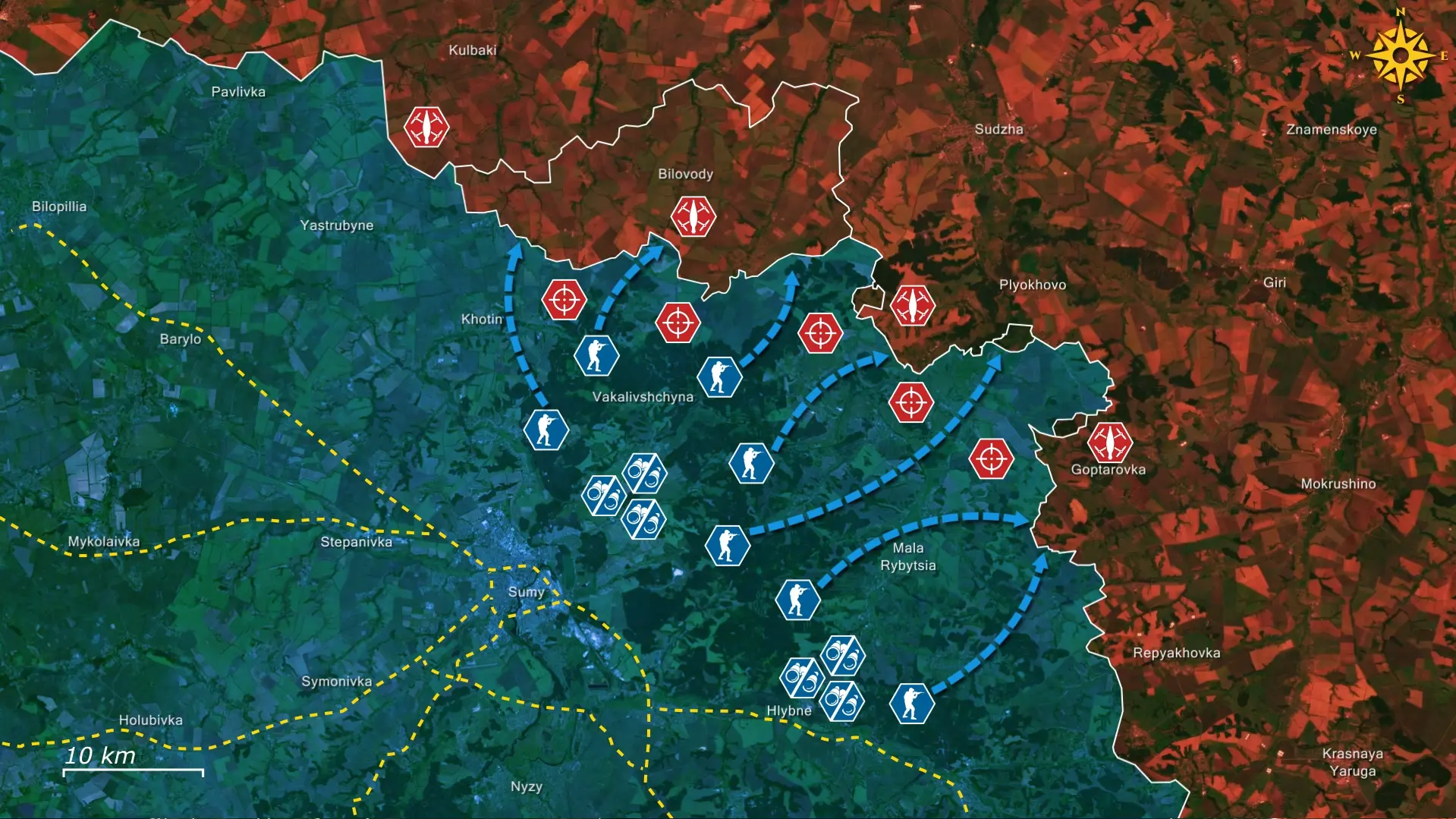
The forest advantage matters because drones are normally Ukraine’s main equalizer, allowing defenders to detect and strike Russian units before they reach their staging positions. In dense woods, spring foliage blocks visibility and shortens detection ranges, which makes Ukrainian drones less effective and allows Russia’s numerical advantage to play a larger role. Forests usually favor defenders, but this balance shifts when the area is too large to monitor fully, and Ukraine lacks enough manpower to cover every approach.
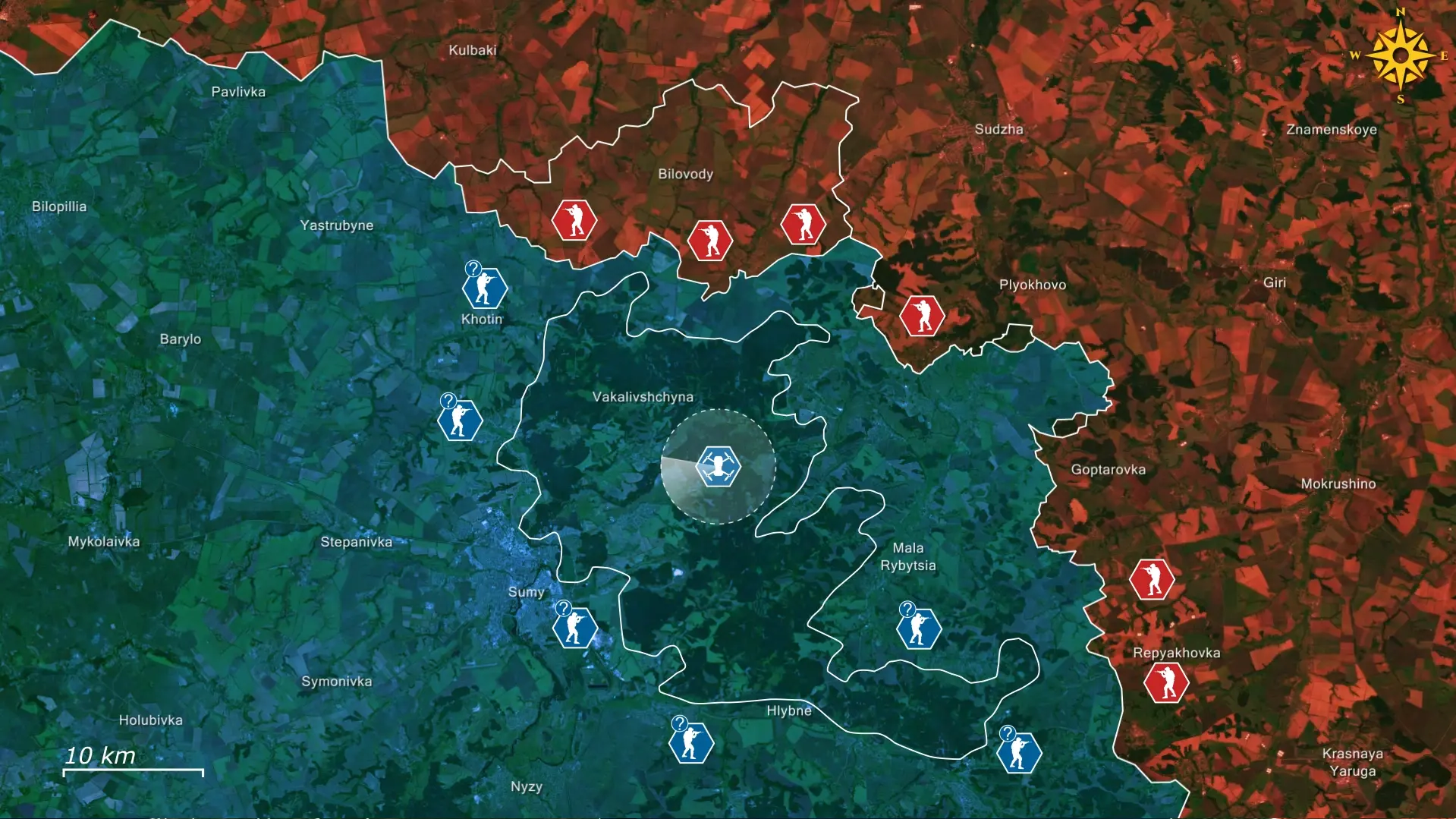
Infiltrators can then bypass frontline positions and threaten the routes Ukraine uses to move ammunition and reinforcements. This puts Ukrainian forward units at risk of isolation, as resupply and withdrawal routes become unsafe. Russian forces can then establish ambush positions in the rear, forcing Ukrainian units to pull back gradually to avoid being cut off and cleared.
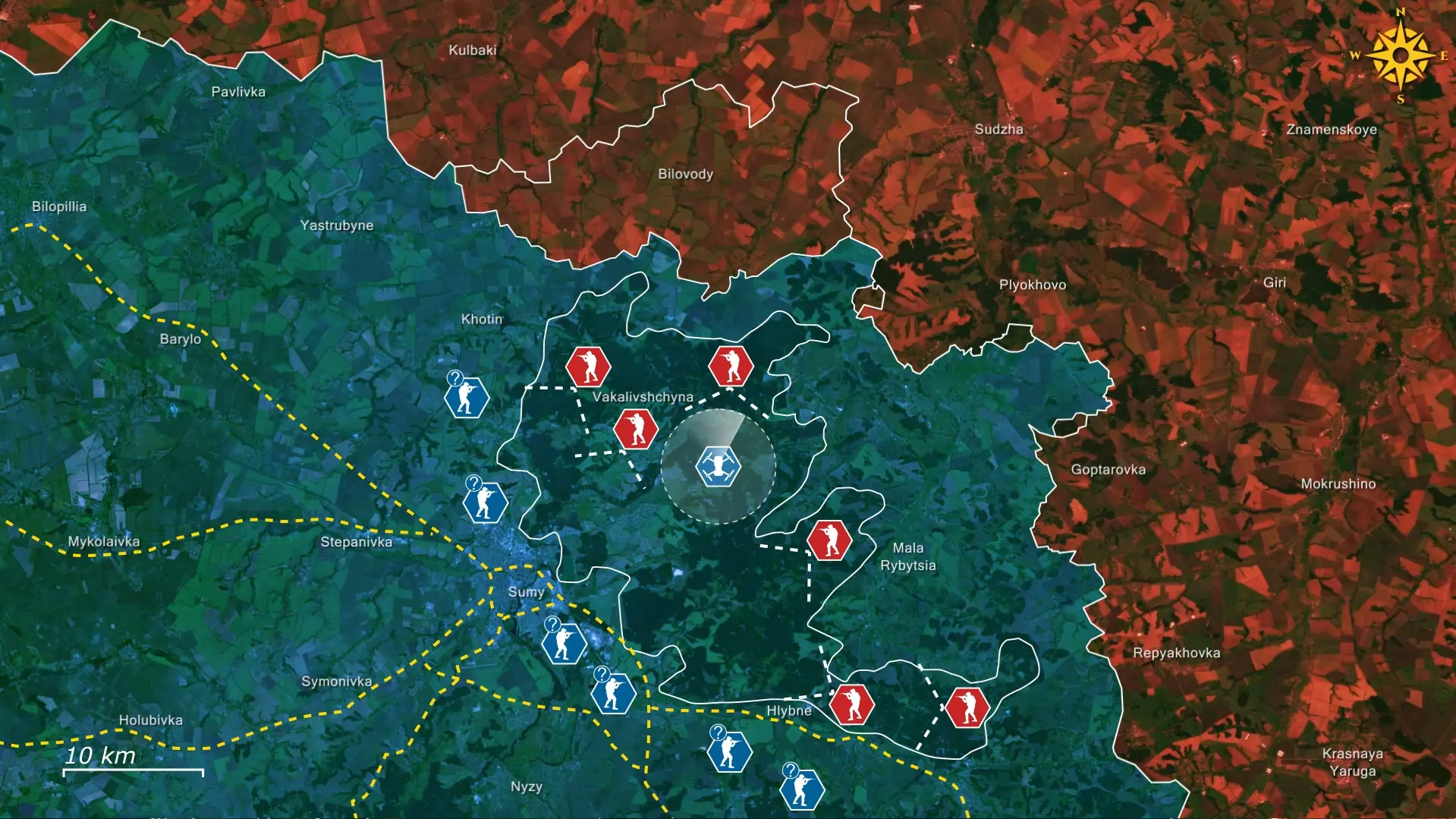
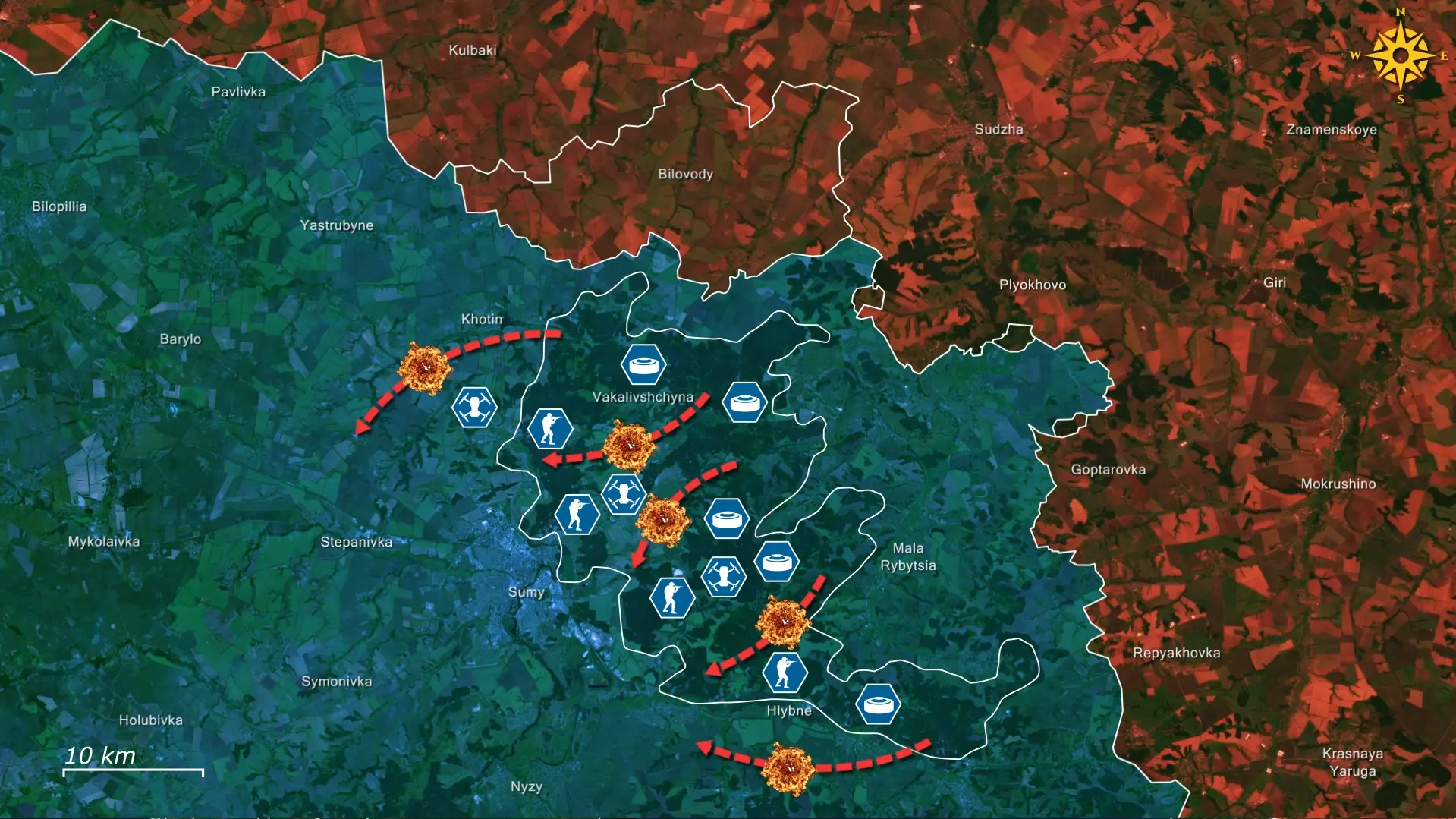
Even so, Ukraine still has advantages that can block access points to Sumy if used effectively. Ravines and narrow crossings create chokepoints, allowing mines and ambush positions to focus on a limited number of routes. Ukrainian forces have also had months to study the terrain, helping them identify likely infiltration paths and set up hidden defensive positions in depth. Defensive preparations, bases, and firing positions are easier to conceal under forest cover, which reduces exposure to Russian drone surveillance. Ukraine can protect these routes by combining aerial reconnaissance with ground patrols and obstacles at chokepoints, preventing Russian forces from turning infiltration into a lasting presence.
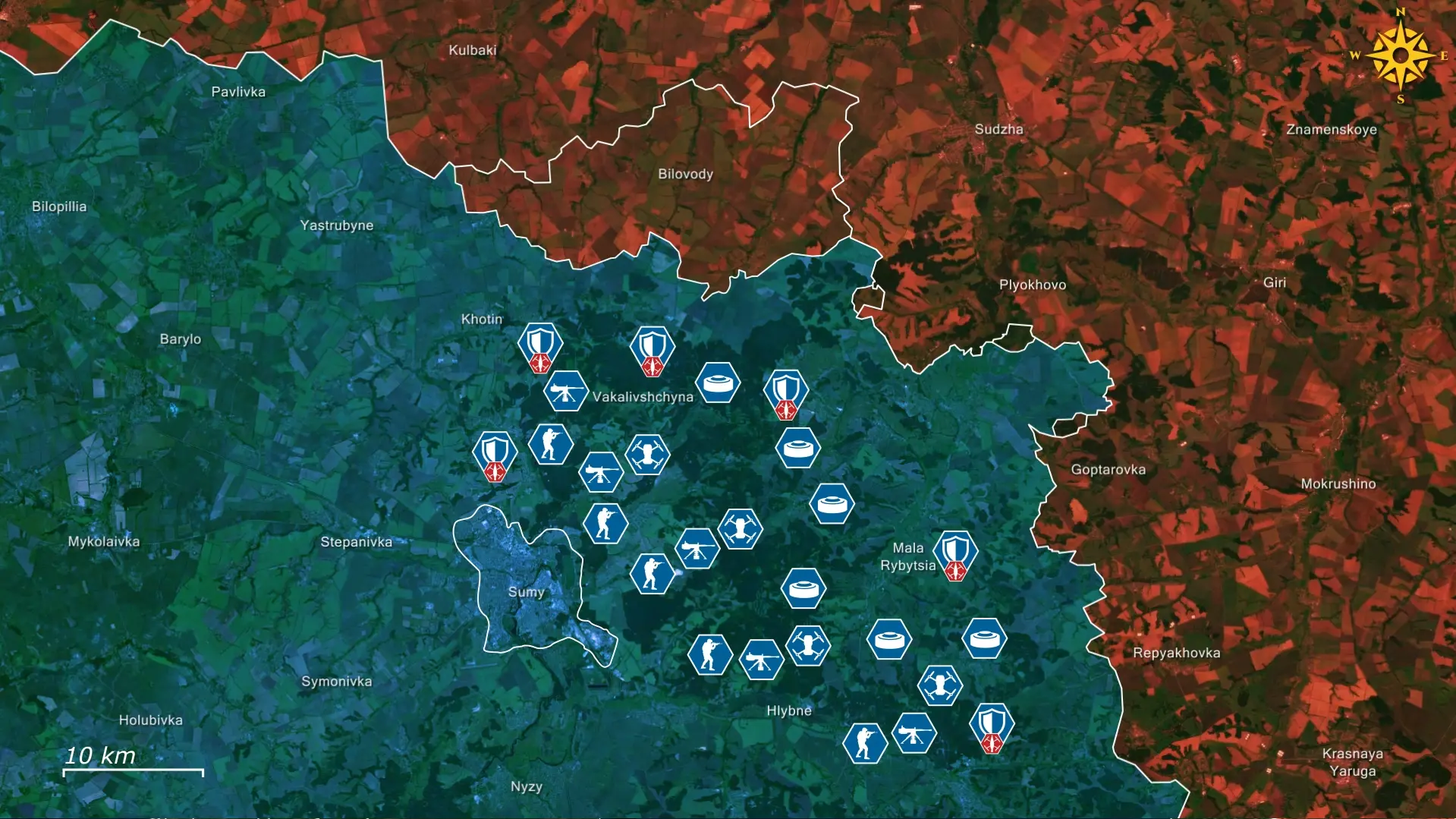
Overall, the main risk north of Sumy is that as the foliage thickens, the forest stops acting as a barrier and instead gives Russian forces the cover they need to move and infiltrate more easily. Russia’s pressure toward the forest suggests an effort to turn small border advances into reliable access through concealed routes.
Ukraine can counter this by focusing on the key crossing points, using patrols, surveillance, and obstacles to detect and stop infiltration groups before they can establish themselves. The outcome will depend on whether Ukraine can detect, isolate, and eliminate infiltration groups faster than Russian forces can establish them inside the forest.

.jpg)

Comments