

.svg)
In this video, we will analyze how a nuclear launch drill in Belarus went wrong.
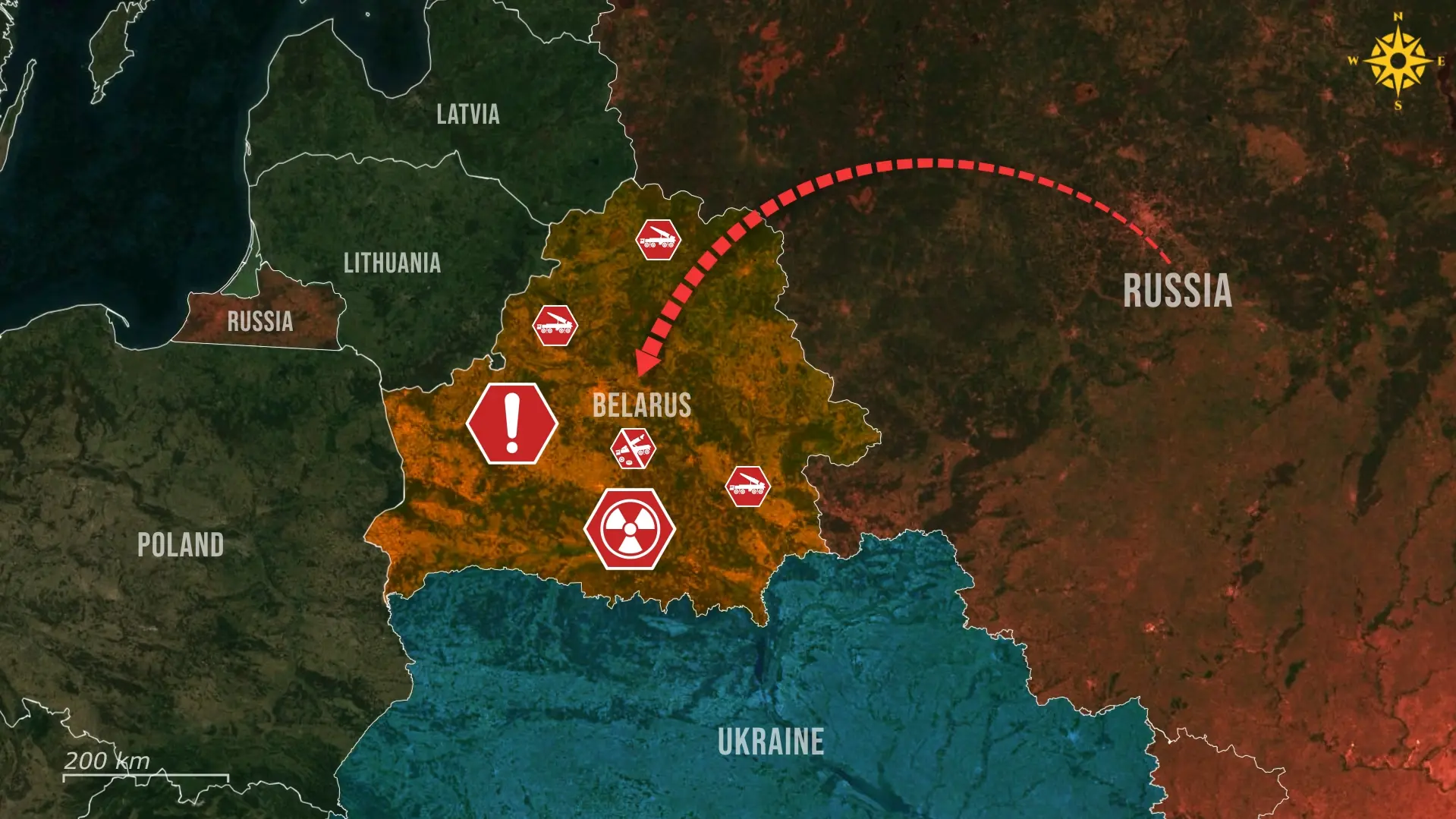
Here, Russia conducted a nuclear exercise in Belarus, which resulted in the explosion of one of the nuclear missile launchers. This catastrophic malfunction risked a major disaster, showing how dangerous and unreliable Russian equipment produced under sanctions has become.
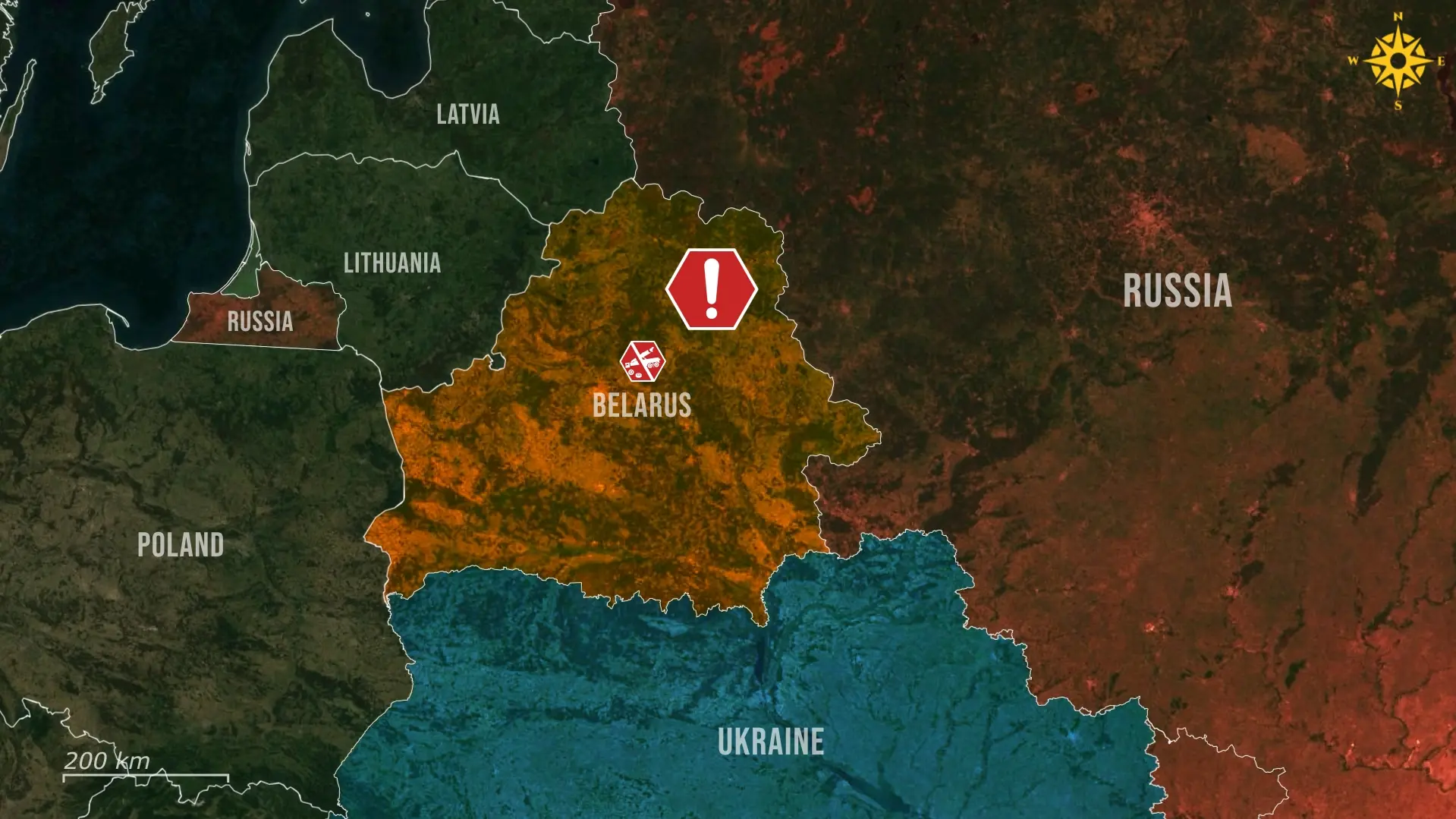
Recently, an Iskander ballistic missile exploded directly on its launch position in Belarus during joint nuclear drills with Russia. Fortunately, nuclear exercises use simulated warheads, preventing what could otherwise have been a far more serious incident. Even so, the malfunction represents a major embarrassment for both Moscow and Minsk. This accident also suggests either the missile's booster failed during launch, or the launcher itself malfunctioned and was unable to properly eject the missile.
The incident is particularly damaging because the exercise was intended to showcase the effectiveness and readiness of Belarus's newly acquired nuclear-capable missile forces. Instead, it highlighted the possibility that the ballistic missiles meant to strengthen Belarus' security could pose a danger to Belarus itself due to the low-quality domestically produced electronics under sanctions. Lukashenko has spent years presenting Russian nuclear deployments as proof of Belarus' growing military power. However, if a missile can explode before even leaving the launcher, it raises questions about the reliability of the systems.
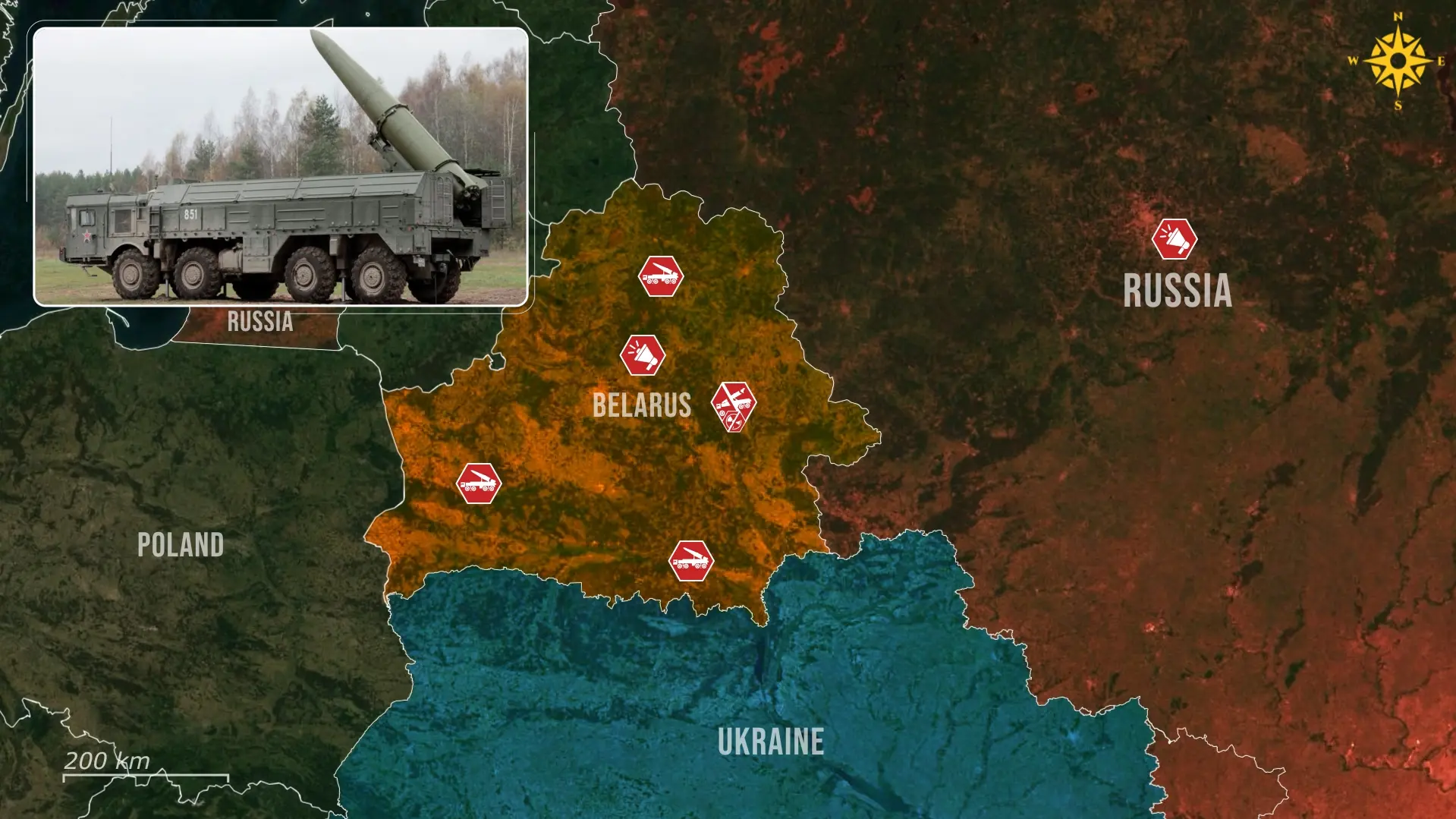
During these exercises, Russia deploys mobile launchers to test combat readiness and command-and-control procedures in a simulated scenario. Russia’s missile forces alongside their Belarusian counterparts rehearse deployment to launch positions and preparation for simulated launches. The most recent Russian joint exercise with Belarus took place in May, involving tens of thousands of troops, hundreds of missile launchers, and simulated missile launches, with the idea to put Nato under pressure.
The failed launch comes as Russia continues to expand its nuclear presence in Belarus. Since two thousand and twenty-three, Moscow has stationed tactical nuclear weapons in the country, marking the first deployment of Russian nuclear warheads outside Russian territory since the collapse of the Soviet Union. Russian officials have also confirmed that nuclear munitions have been transferred to storage facilities supporting Belarusian missile units.
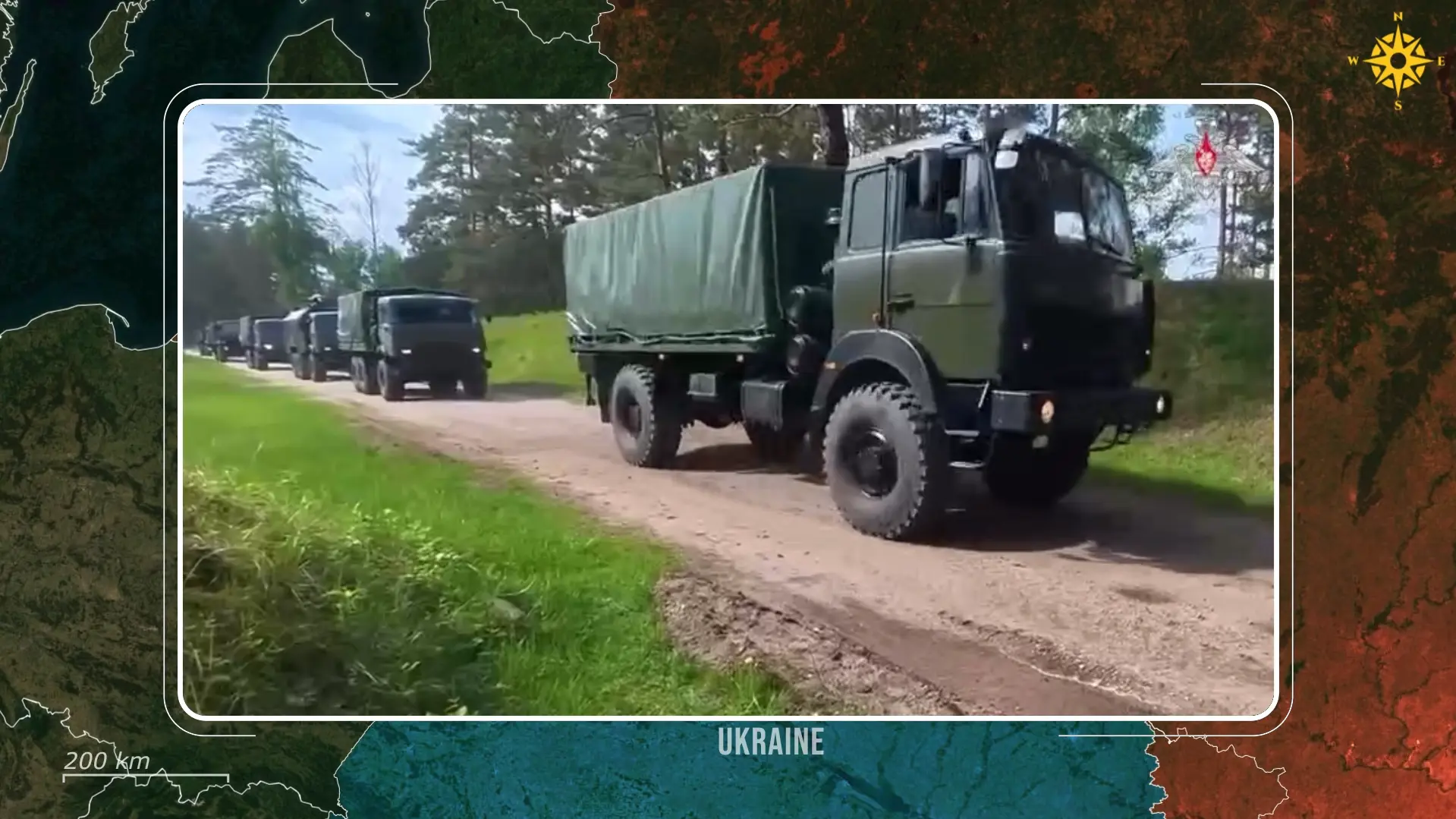
For Russia, Belarus provides an ideal forward operating location, which is closer to Nato compared to Russian territory. Nuclear-capable missiles and aircraft based there can reach targets across Eastern and Central Europe more quickly than forces operating from deeper inside Russia. To reinforce Belarus, Moscow has supplied dual-capable delivery systems while retaining control over the nuclear warheads themselves. Lukashenko has claimed that Belarus now hosts dozens of Russian nuclear warheads, while additional deployments, including nuclear-capable Oreshnik intermediate-range ballistic missile systems, continue to expand the country's role within Russia's nuclear strategy.
Alongside these deployments, Russia has been training Belarusian personnel to operate and support nuclear-capable missiles. Official footage has shown missile launcher crews rehearsing launch procedures, logistics operations, and command-and-control drills. One of the exercises intended to demonstrate operational readiness instead revealed a serious technical failure and resulted in the failed nuclear test.
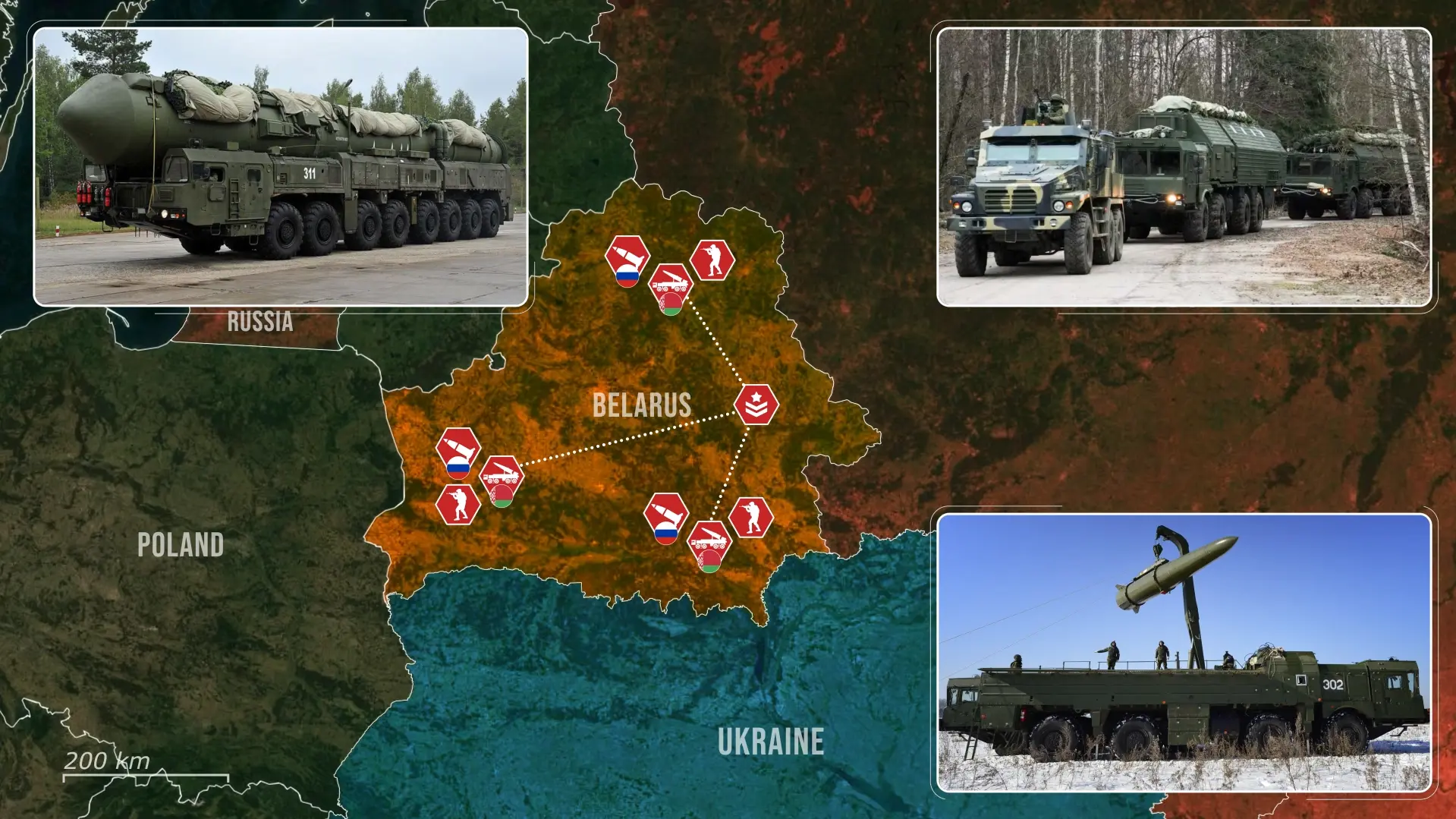
The failed launch is also significant because it occurred during a period of extensive construction activity at Belarusian military facilities. Satellite imagery has revealed the development of new infrastructure linked to nuclear-capable missile forces, including Oreshnik deployment sites near the former Krychev airbase. Camouflaged launch positions and support facilities are being prepared as Belarus becomes increasingly integrated into Russia's nuclear architecture.
Although the reported explosion has not yet been confirmed through publicly available satellite imagery, verification may come soon. Western intelligence assets continuously monitor Russian and Belarusian nuclear activities, and any explosion involving a nuclear-capable missile system would attract immediate attention. If confirmed, the incident would transform what was intended as a demonstration of strength into a highly visible example of the risks and reliability problems facing Russia's expanding nuclear deployments in Belarus.
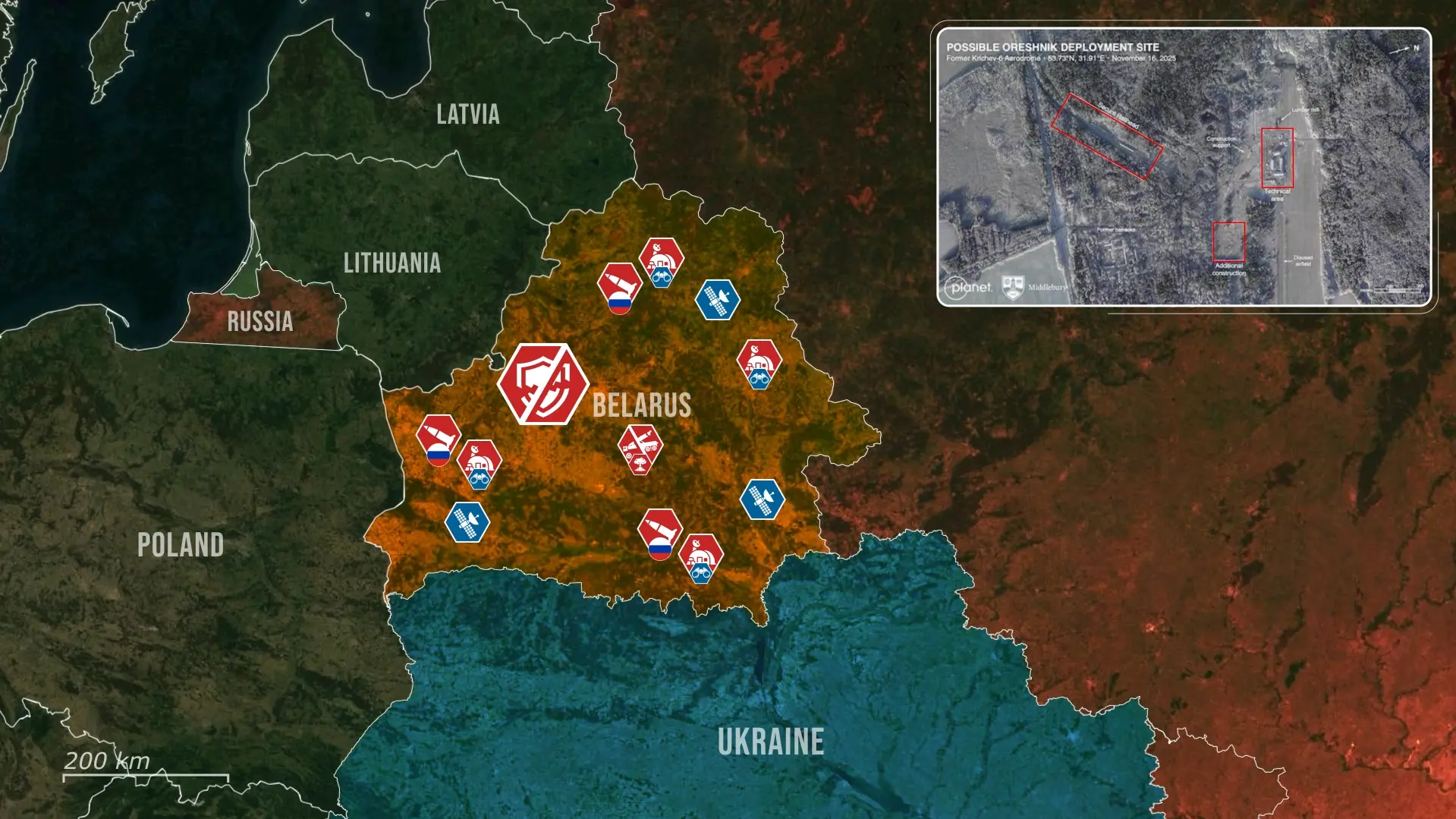
Overall, Russia’s expanding nuclear presence in Belarus is a major escalation, which is intended to deter Nato adversaries. Yet the reported Iskander launch failure highlights the risks behind that image because Russia almost blew up Belarus as bad equipment apparently malfunctioned during a nuclear exercise, turning a show of force into a potential disaster and embarrassment. Now, Russia has demonstrated that it cannot safely launch a nuclear strike without endangering itself or its allies.

.jpg)

Comments