

.svg)
Today, there is news from Iran.
Here, Iran decided to take action and retaliate because of the attack by the US and Israel. However, with an unexpected move, the Iranians made a huge mistake and struck France, prompting them to take revenge and dispatch naval forces.
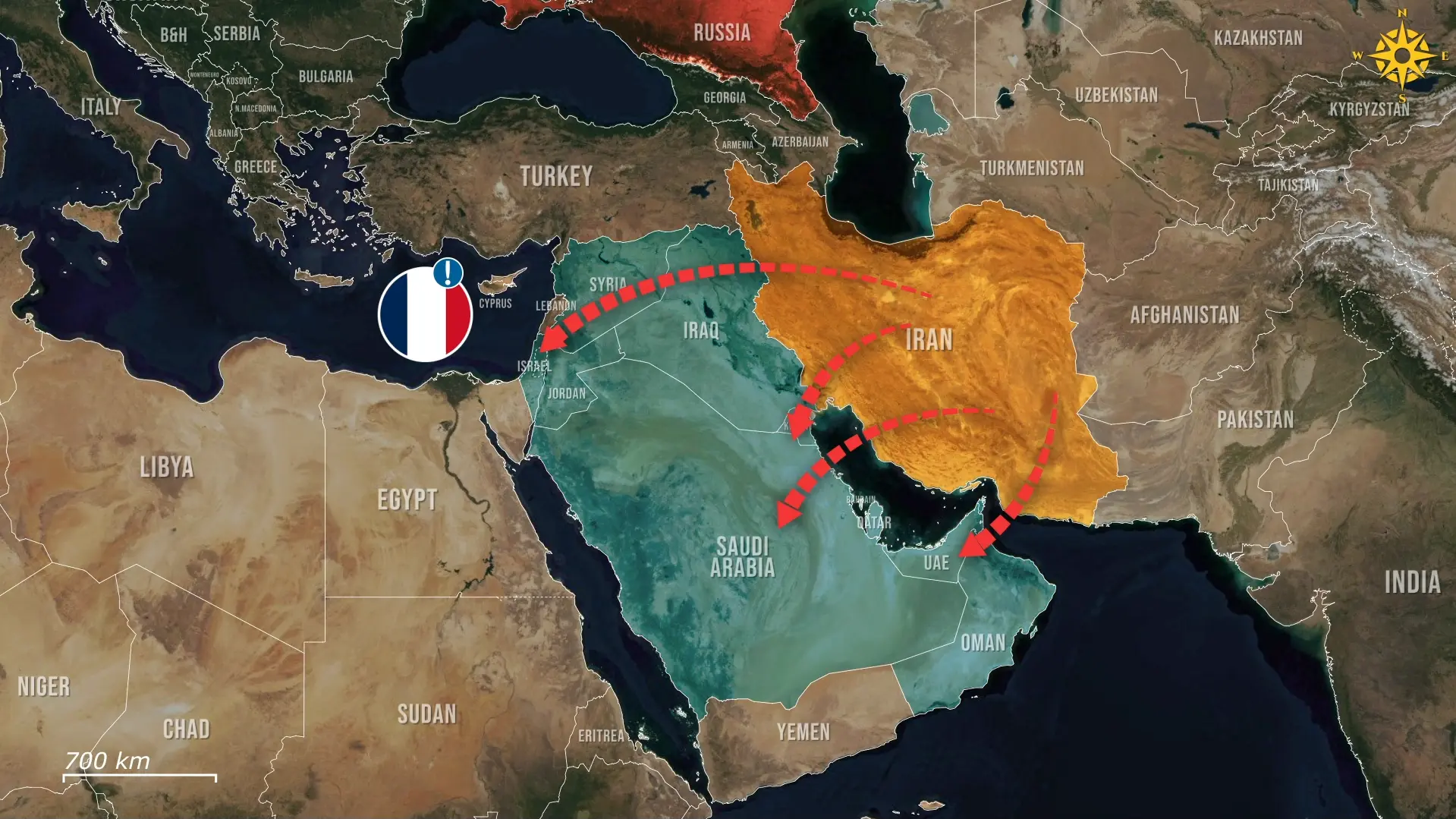
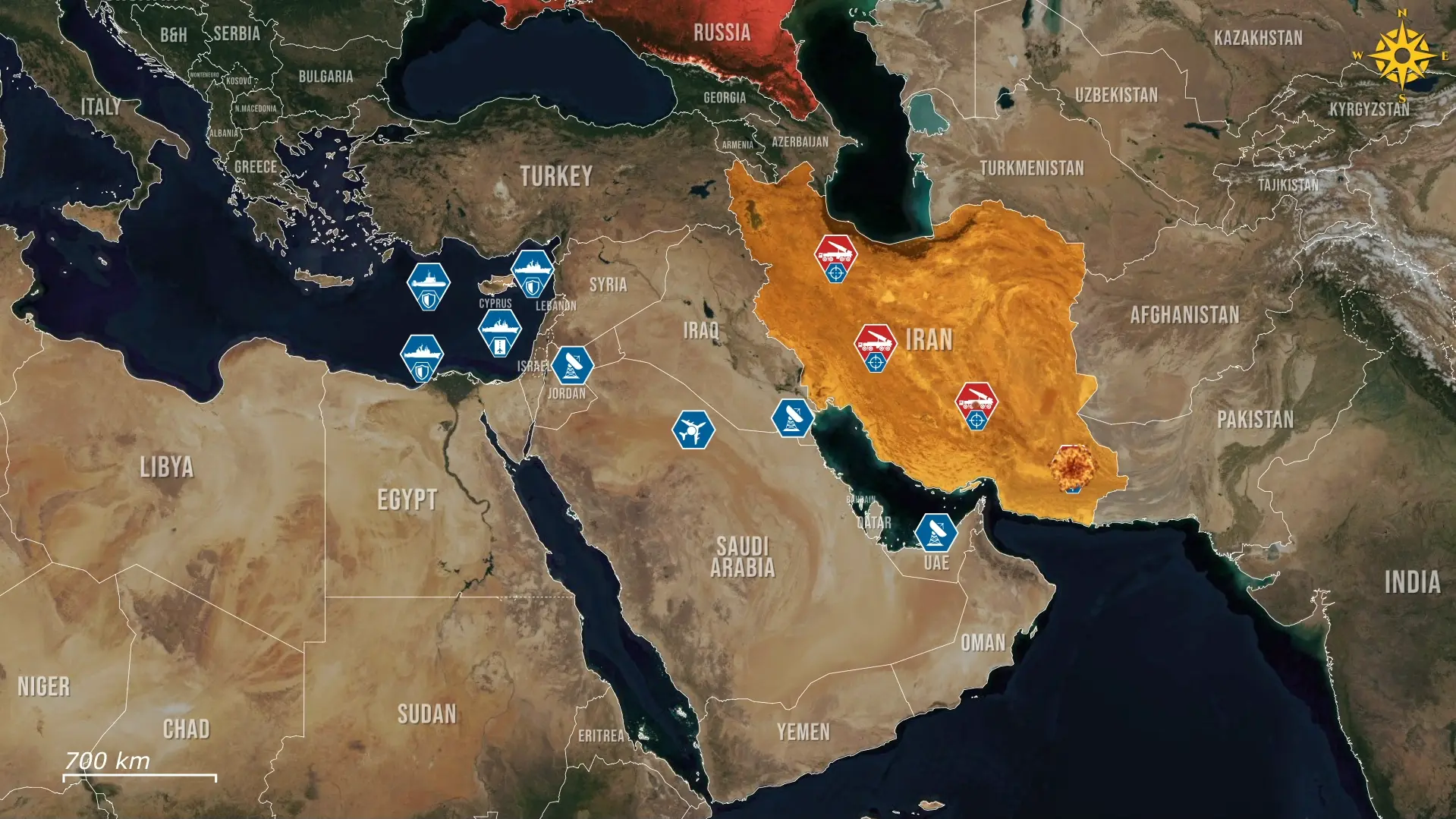
Within the first 24 hours of the conflict, Iran carried out direct or indirect attacks affecting 15 countries, including Middle Eastern states and Western military installations belonging to the United States, United Kingdom, Italy, and France.
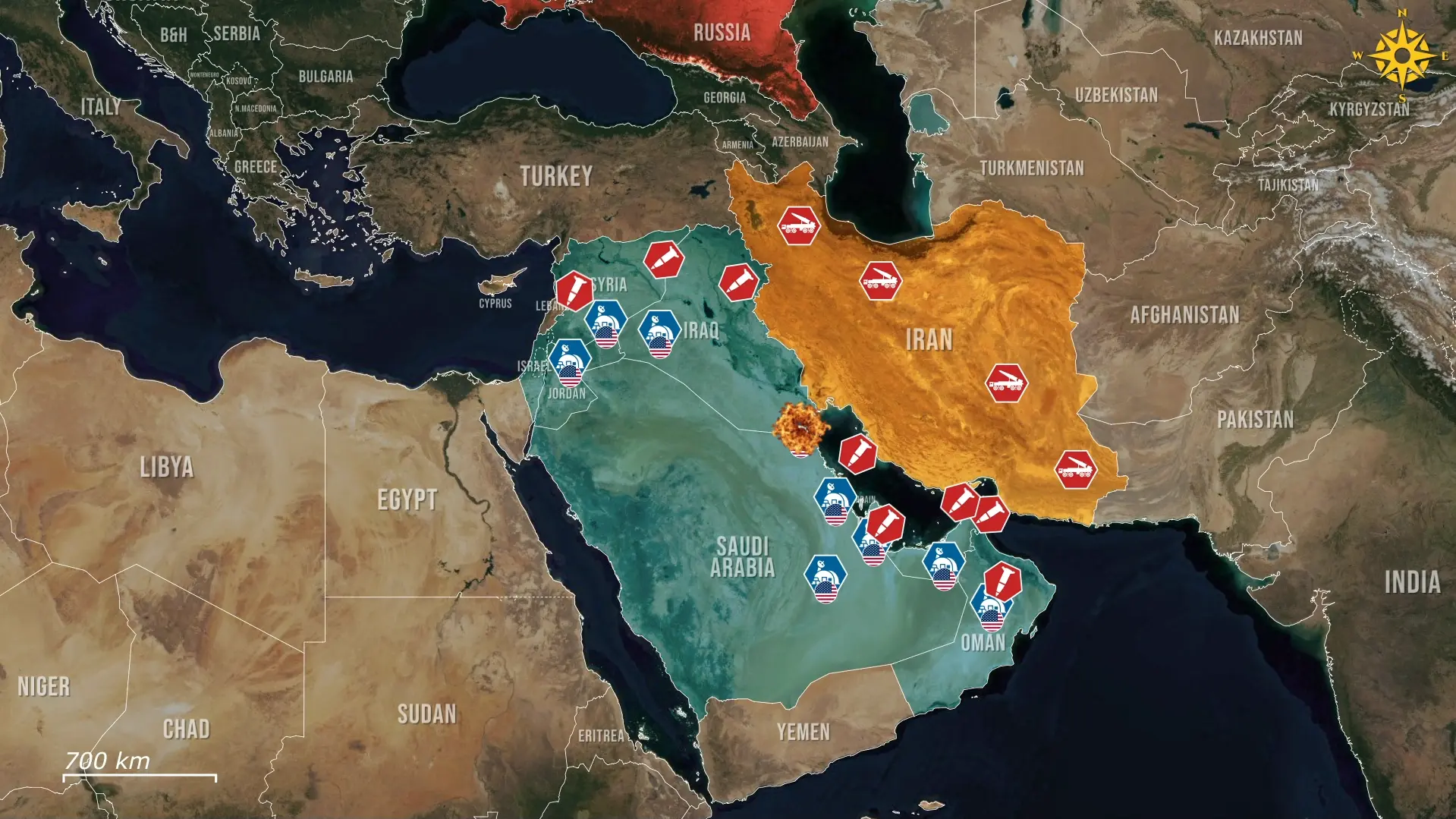
Notably, the French military facility known as Camp de la Paix in the United Arab Emirates was targeted by missiles, which were intercepted. However, a Shahed-136 drone struck the site, with thick smoke observed afterward, though no casualties were reported.
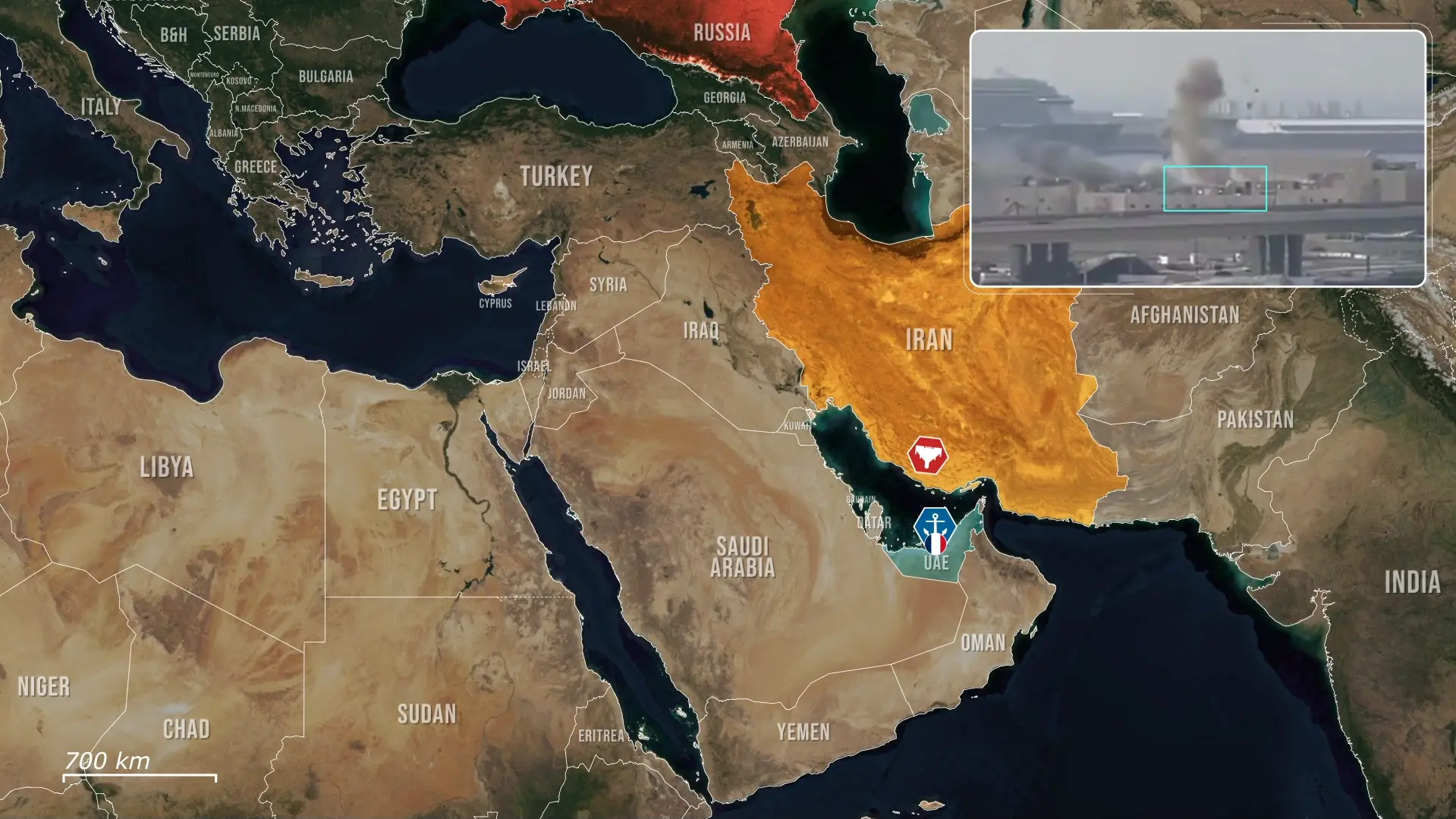
With this strike, Iran brought another major military power directly into the war. The base represents a symbolic choice, because Paris has imposed sanctions on Tehran, supplying weapons to the UAE, and the facility sits near the strategically vital Strait of Hormuz. The installation serves as France’s permanent military presence in the UAE, which supports French naval operations in the Persian Gulf, the Gulf of Oman, and the northern Indian Ocean, functioning primarily as a logistics and resupply hub. In response, France, Germany, and the United Kingdom jointly announced their readiness to take defensive action against Iran.
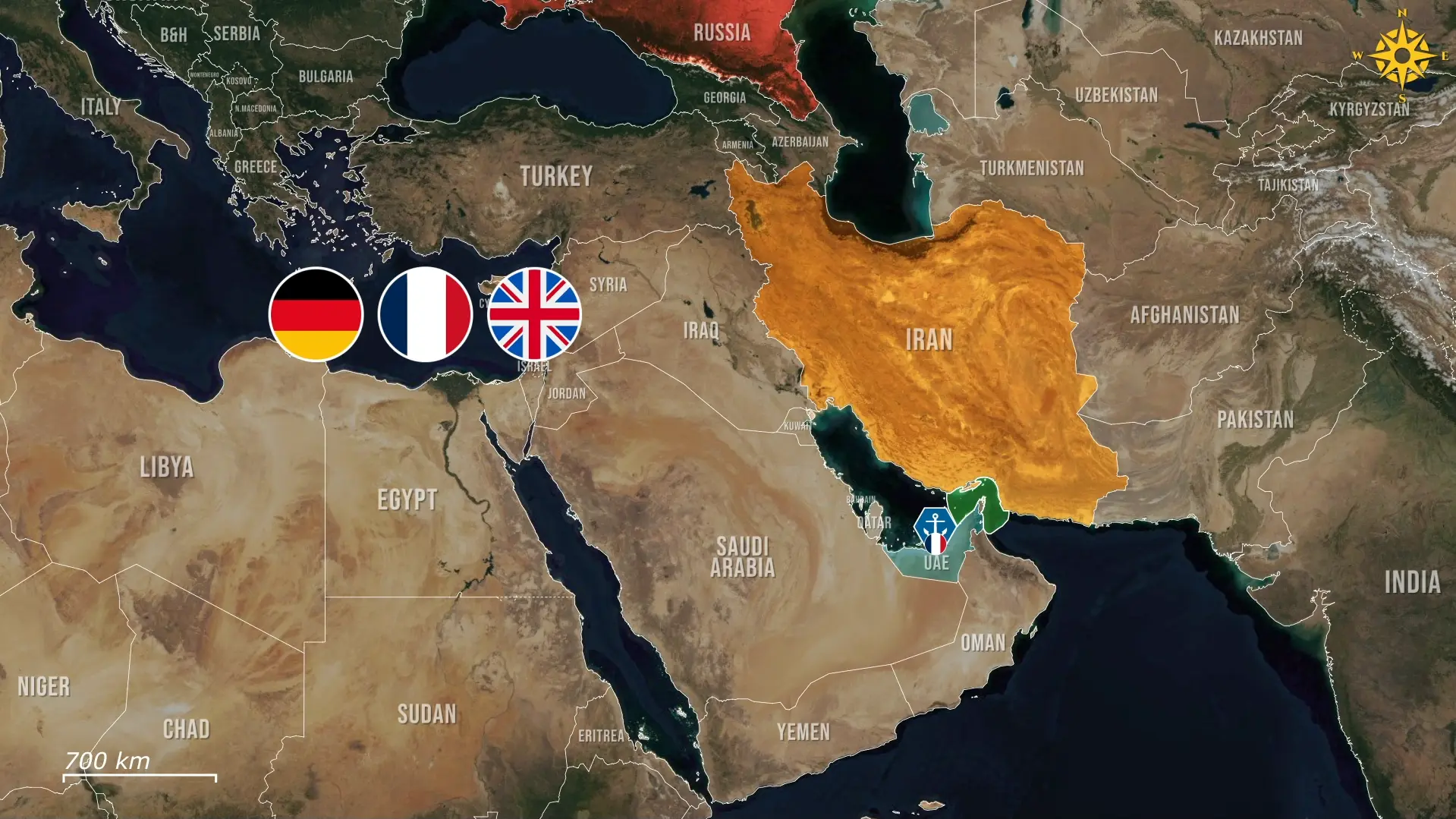
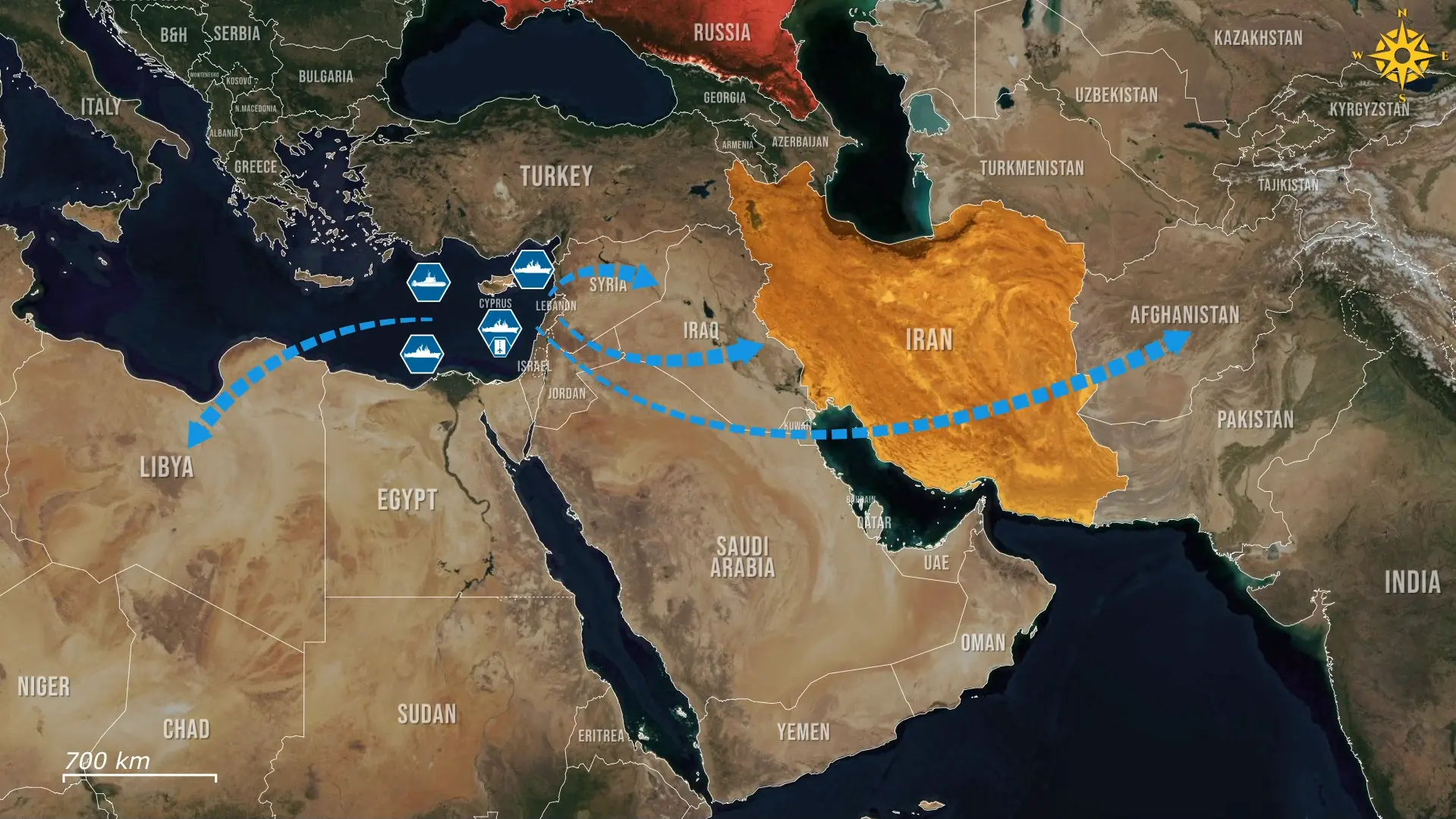
French President Emmanuel Macron announced that France has taken all necessary steps to safeguard its public and private assets across the Middle East. Following reported Iranian strikes on French maritime facilities at Port Zayed in Abu Dhabi, Paris decided to reposition its naval forces. The nuclear-powered aircraft carrier Charles de Gaulle and its accompanying battlegroup are being redeployed from the North Atlantic to the Eastern Mediterranean. The Charles de Gaulle serves as the flagship of the French Navy and is the only nuclear-powered aircraft carrier in France’s fleet.
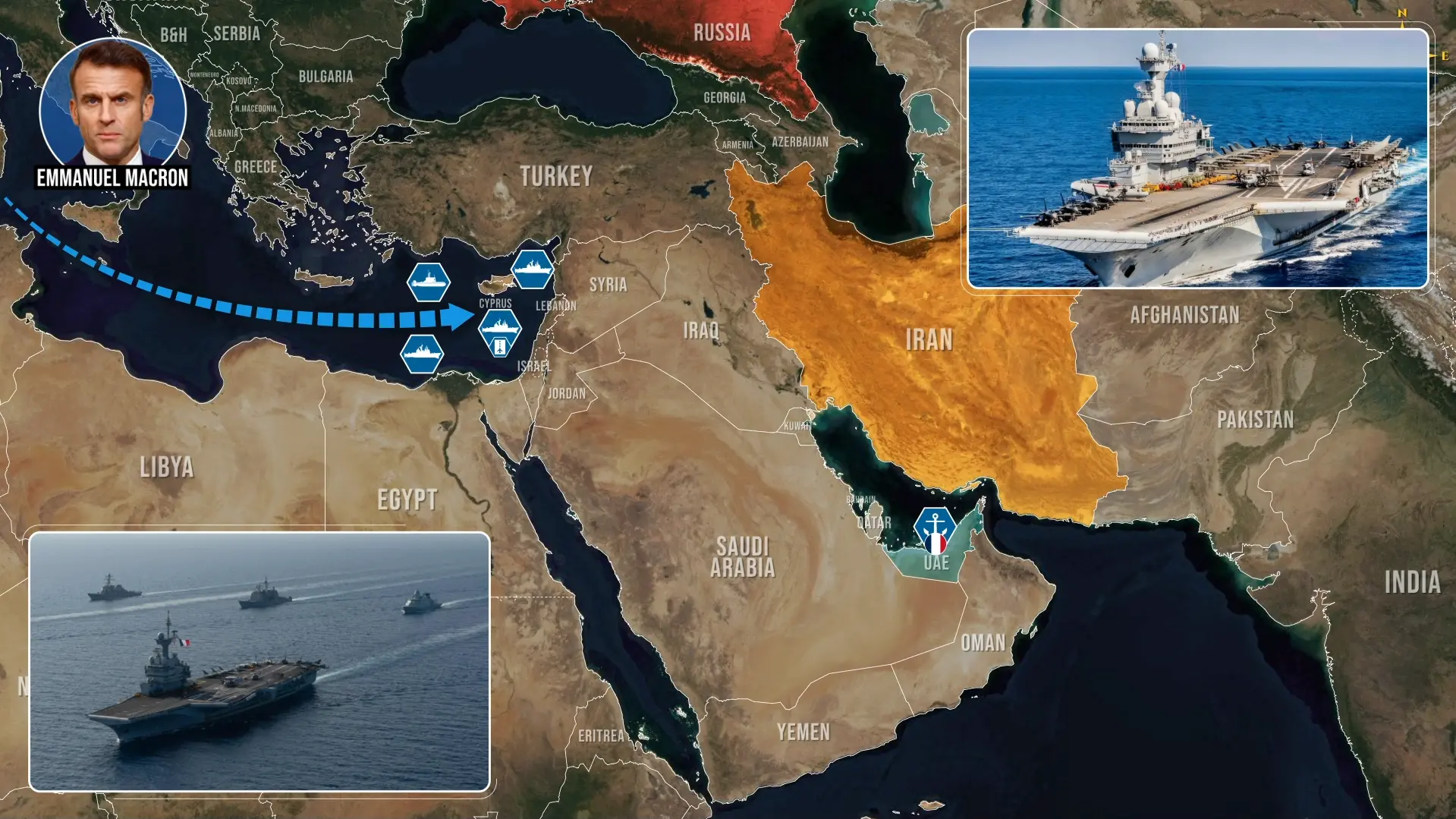
It has previously taken part in operations in Afghanistan, Libya, and in campaigns against Isis in Iraq and Syria, giving its crew substantial experience in the region.
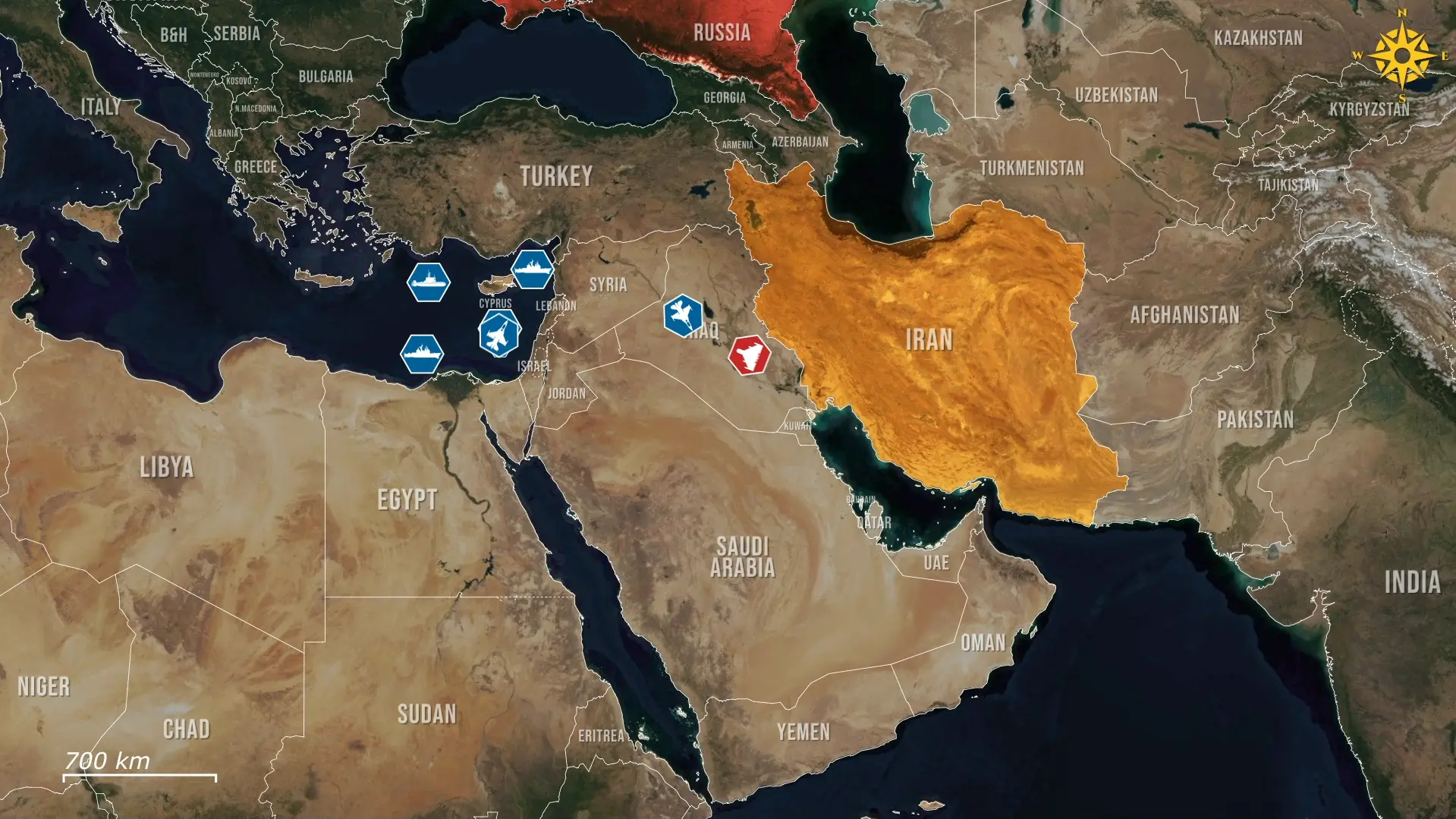
As it is a nuclear-powered ship, it can sustain prolonged operations while embarking Rafale M multirole fighters capable of air superiority and deep-strike. These can also be used as in air defence roles with radar-guided air-to-air missiles against Shahed drones.
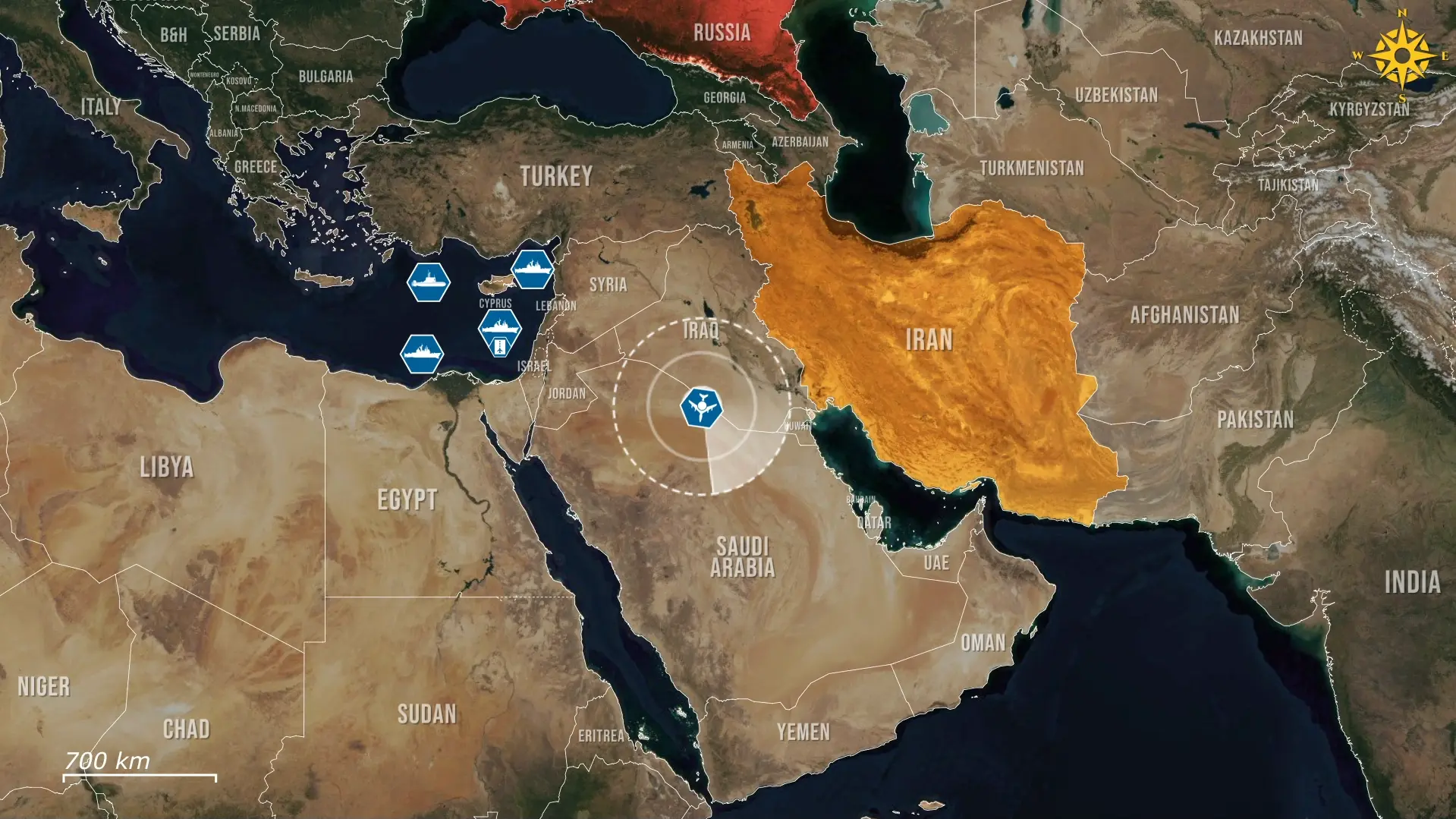
Hawkeye AWACS aircraft can also be deployed from an aircraft carrier, which strengthens situational awareness, command-and-control, and provides early warning against incoming threats.
The carrier battlegroup’s layered air defenses and escort vessels, such as destroyers, extend protective coverage, while carrier-launched precision munitions provide deep strike reach. Beyond the carrier, France can scale force by redeploying land-based combat aircraft, aerial refueling assets, and ground-launched systems to reinforce its naval assets.
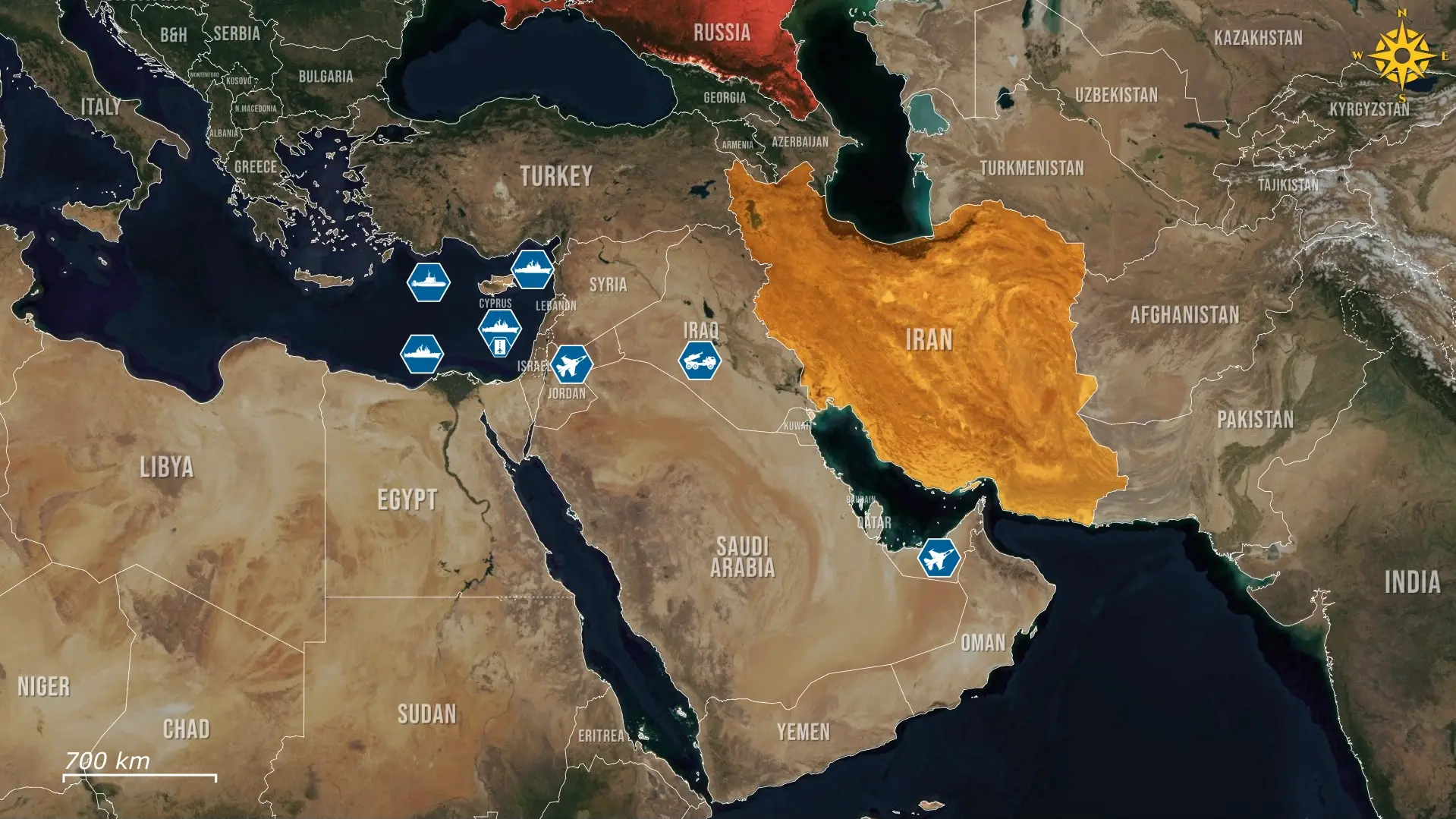
Striking the French facility at Camp de la Paix delivered limited tactical returns for Iran, as the site is primarily a logistics hub with a small footprint, and the attack caused no reported casualties or major operational setbacks for the attacking site. By targeting the base, Iran tried to take out the Western military base on the Hormuz Strait, which could undermine their attempts at blockading the strait.
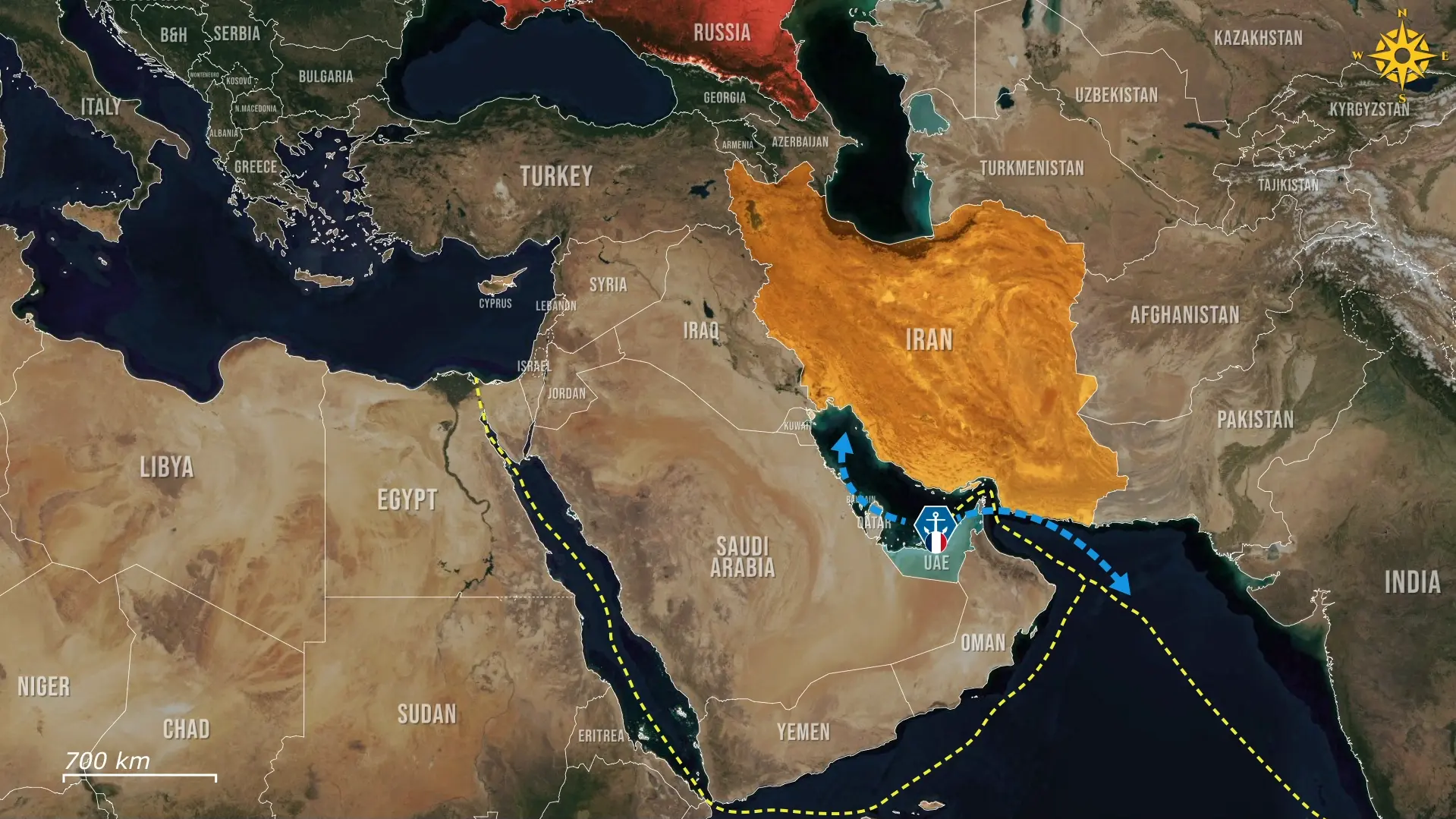
It is also highly likely that France would partake in breaking Iran’s blockade of this vital trade route, where 20 percent of the world's oil passes through. However, the strategic cost is far greater for Iran, because by provoking France and prompting the deployment of their aircraft carrier, Iran triggered a naval-air response that significantly increases Western strike capacity in the region.
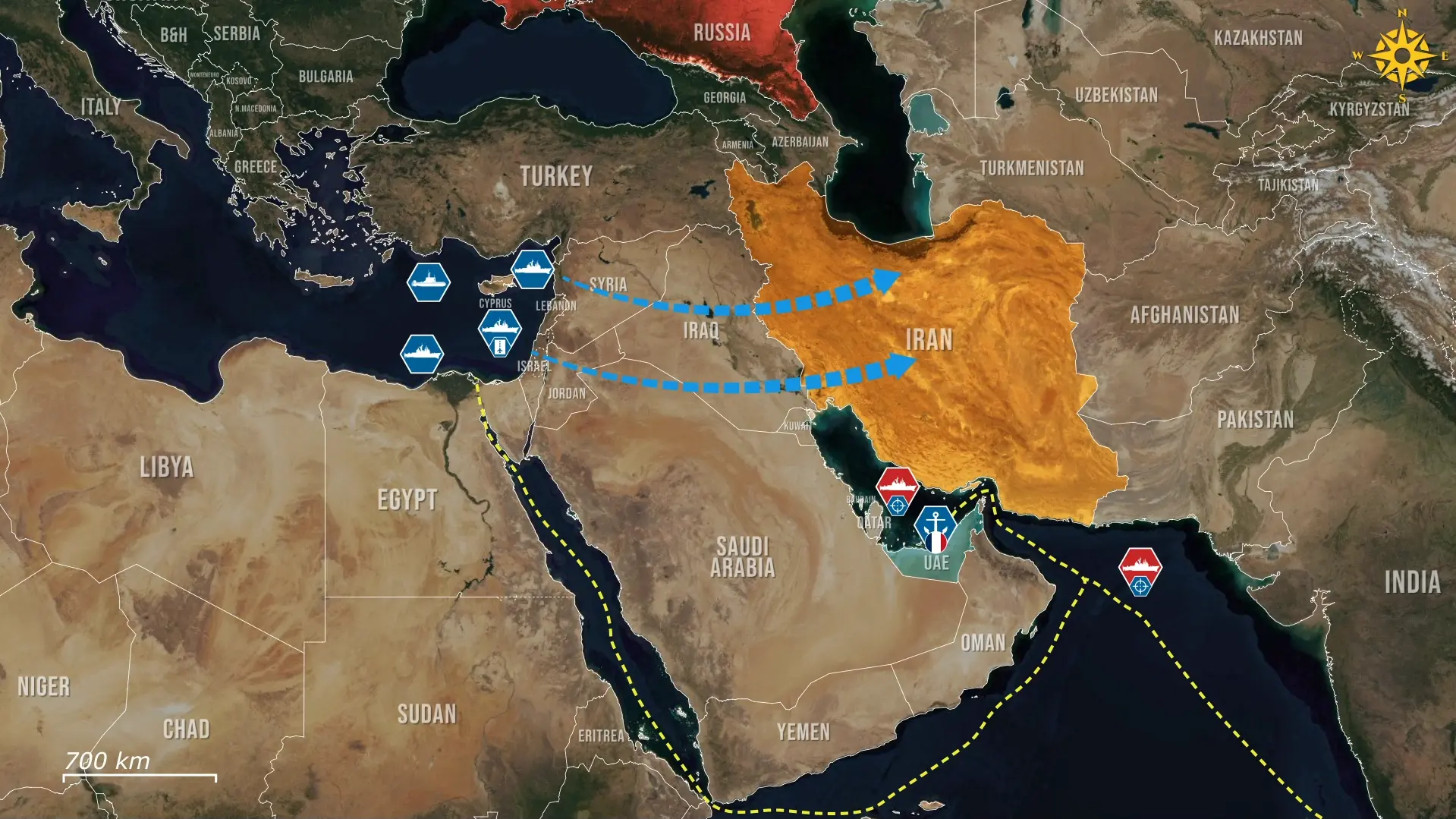
Overall, even if the French aircraft carrier is officially assigned a defensive mission, the option to employ it offensively always exists. This shift marks a serious and risky escalation for Iran, because it has already struggled to counter strikes from the United States and Israel, and with France joining the coalition, the escalation is growing.
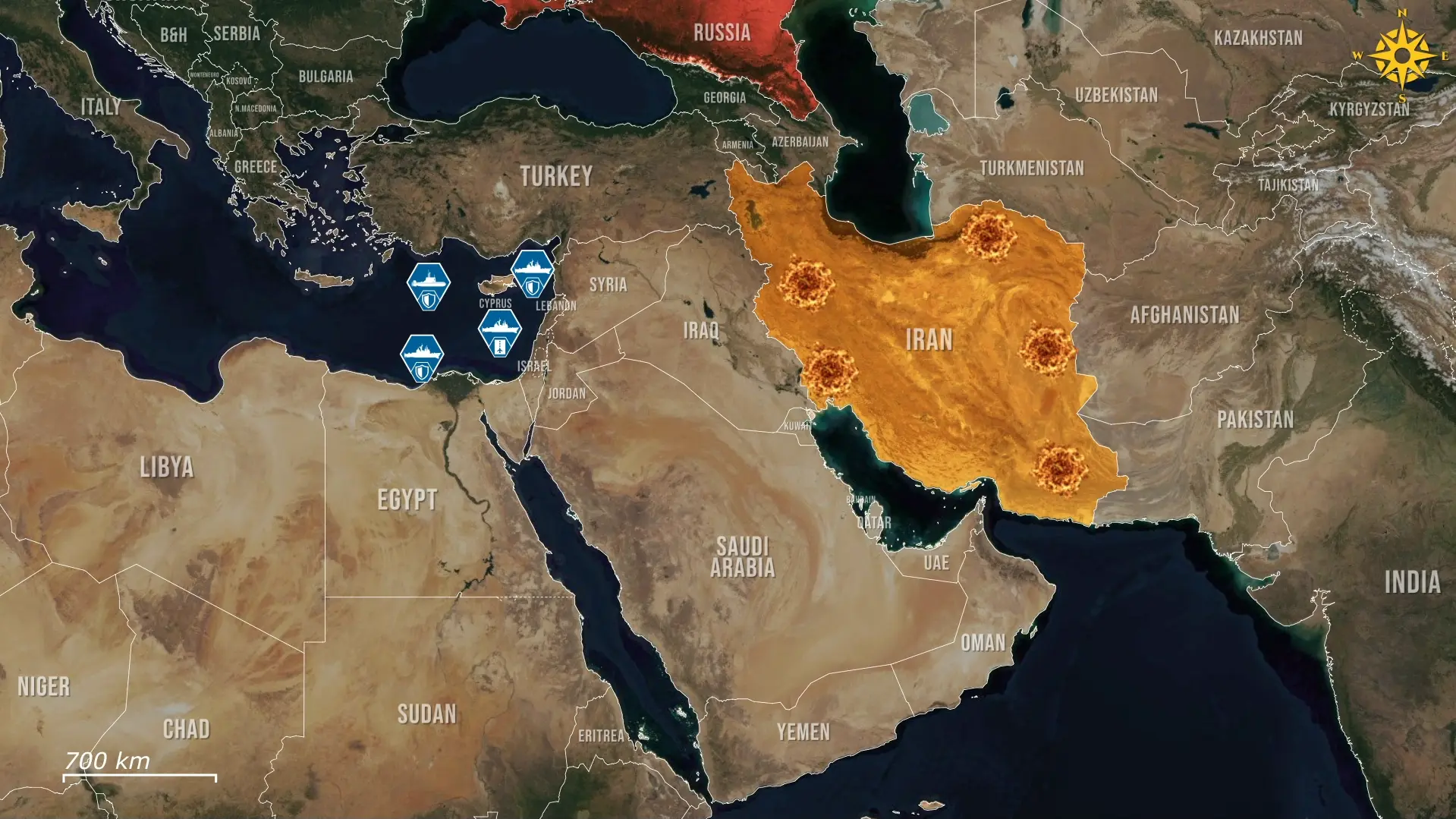
As the fighting continues, Iran’s missile forces are likely to erode, since repeated launches expose mobile launchers to U.S. and Israeli early-warning aircraft, radar networks, and follow-on strikes, steadily reducing Iran’s ability to sustain long-range attacks.

.jpg)

Comments