

.svg)
Today, the biggest news comes from Iran.
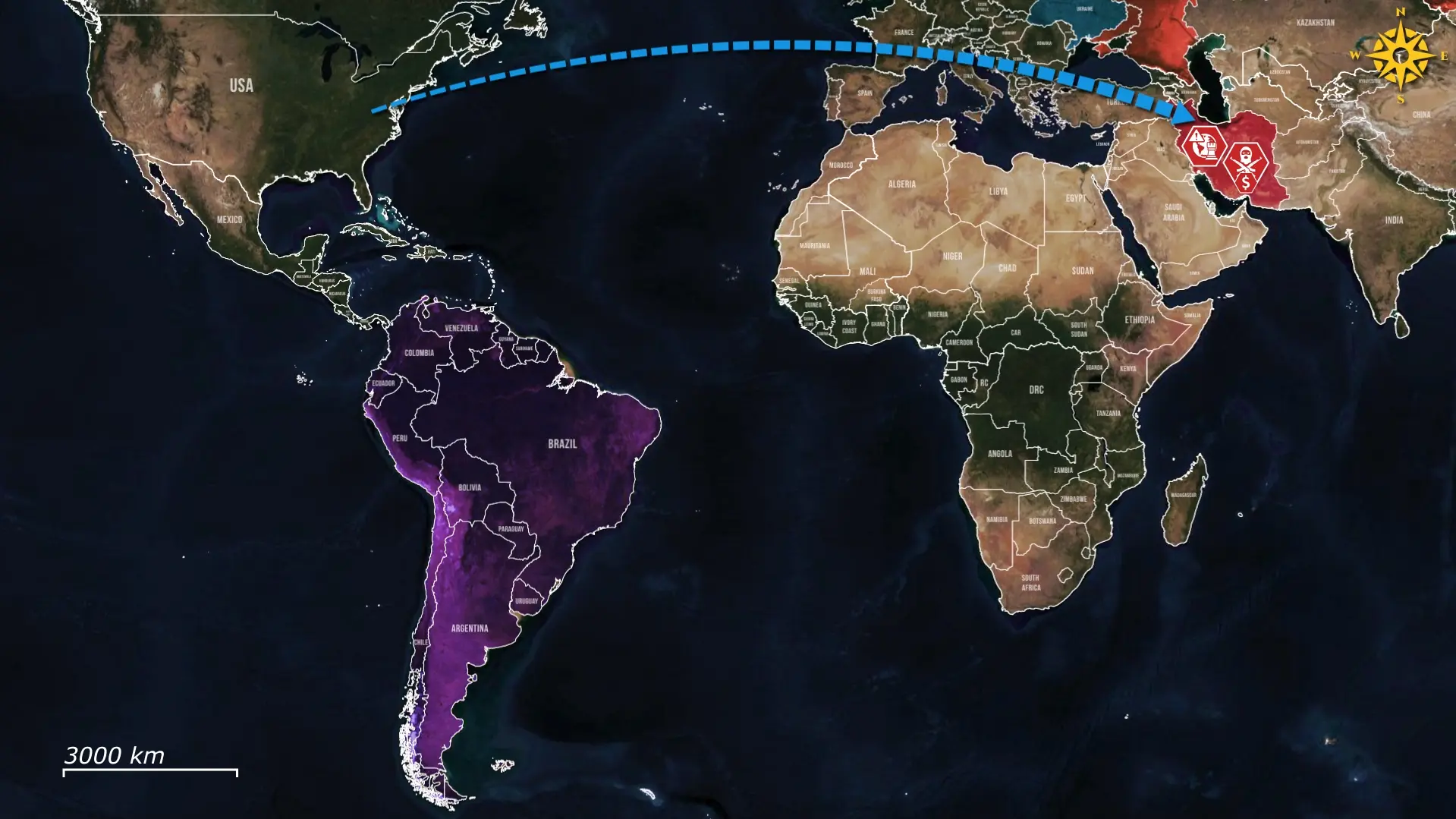
Here, among the countries of the Middle East, Iran is an extremely strict state against drug use and related crimes, where the maximum punishment for such offenses is death. Surprisingly, the same state that publicly follows a strict anti-drug policy has established an extensive drug empire in Latin America, the influence of which is spreading worldwide.
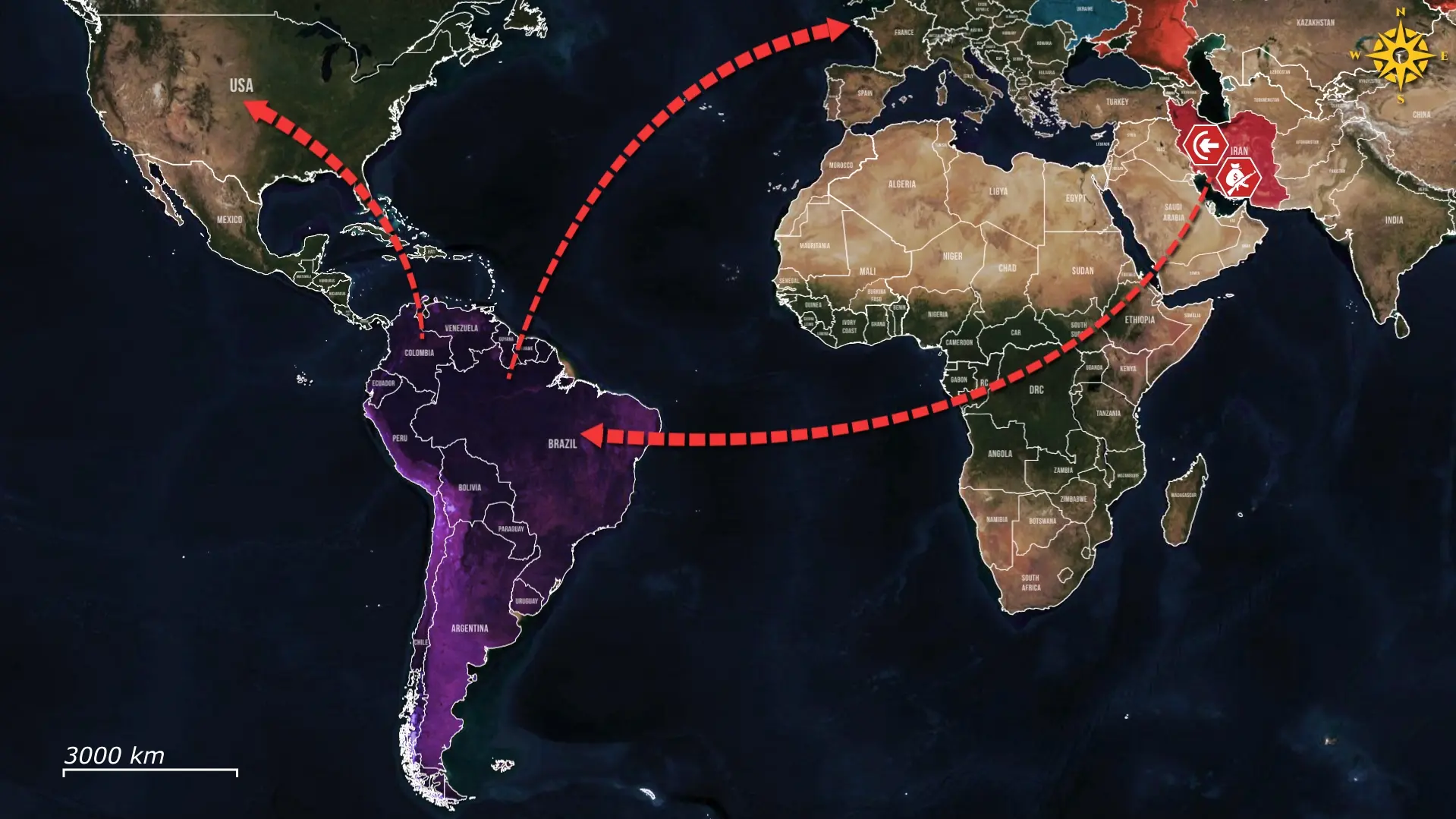
Behind the establishment of this drug empire in Latin America lies Iran’s intense ambition to achieve its strategic objectives. Due to long standing international sanctions, Iran’s financial capacity has been severely limited, making it increasingly difficult to directly fund its allied proxy networks abroad. In this situation, Iran has developed a structure in which its allied groups can survive in a relatively self-sustaining manner, reducing dependence on central funding while ensuring the maintenance of long-term influence. Iran directly uses the funds generated from this drug trade to finance activities such as procuring weapons for its regional proxy groups, paying salaries, and expanding its influence across various conflict-ridden regions.
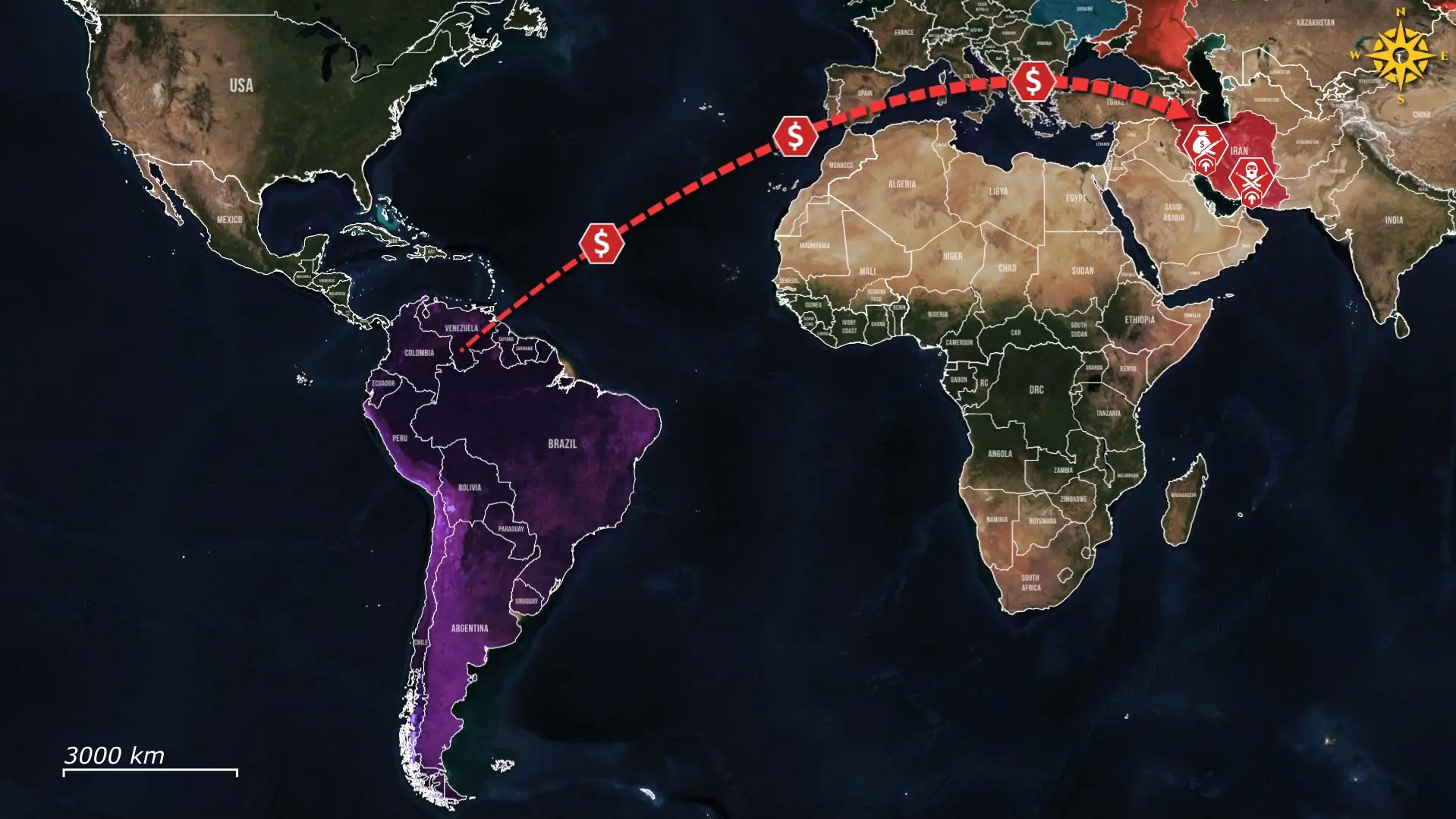
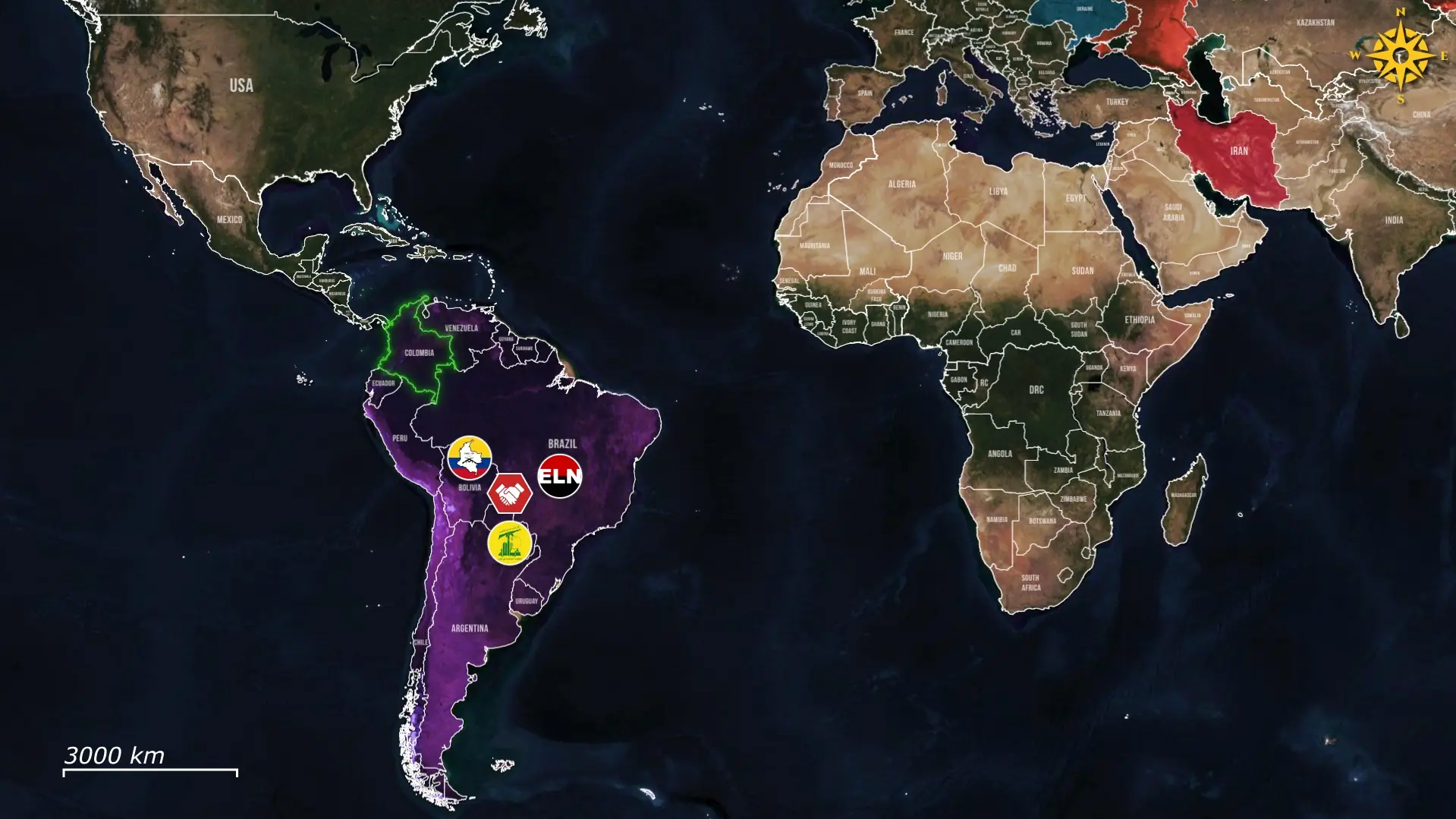
In Latin America, Hezbollah linked networks tied to Iran cooperate with groups like Colombia’s FARC and ELN to help move and launder cocaine shipments across multiple regions. Colombia remains the world’s largest cocaine producer, making it a key source for these trafficking routes.
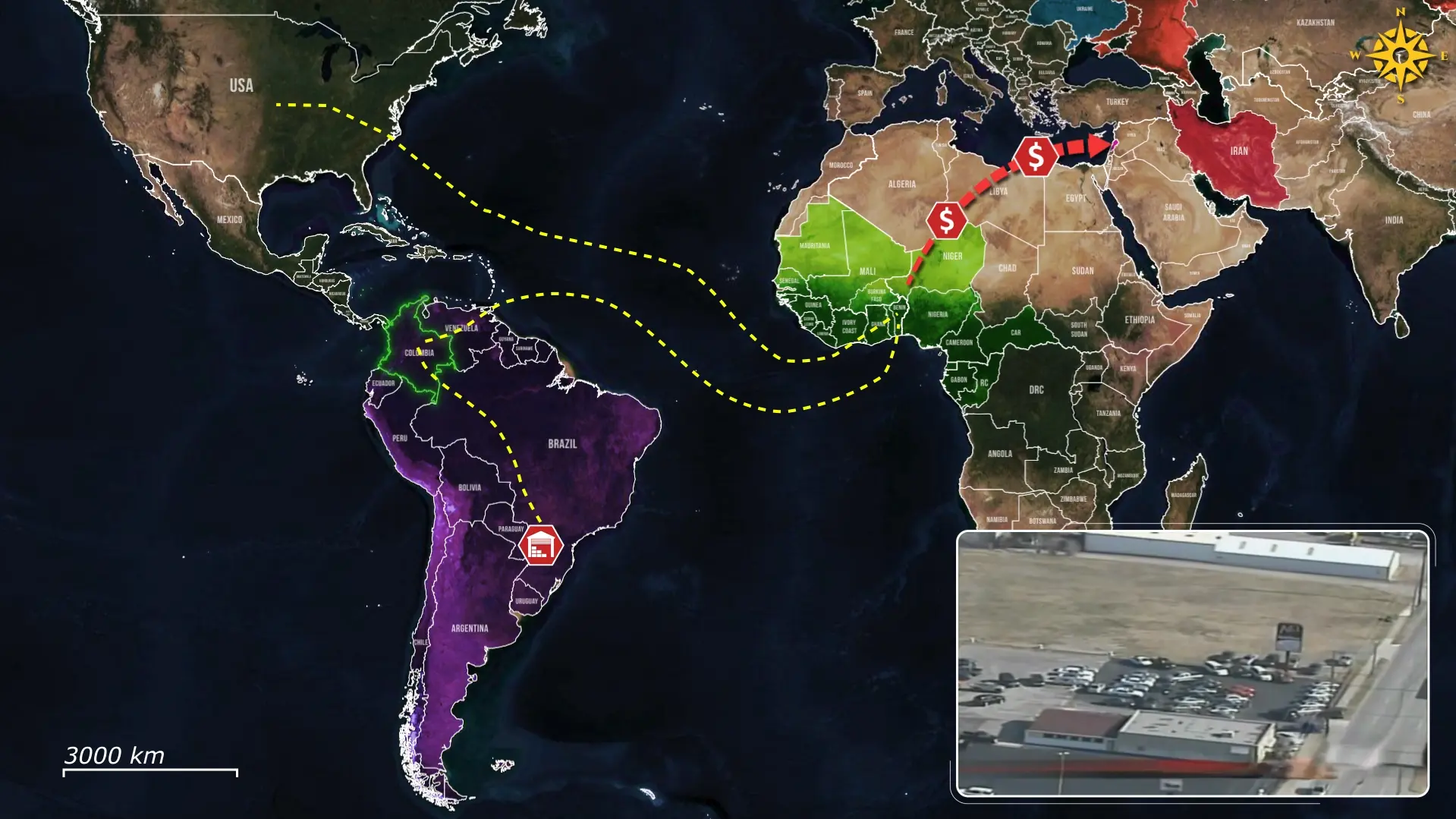
Cocaine is often moved from Colombia into Venezuela, where weak enforcement and political connections allow it to be collected and shipped onward toward West Africa and Europe. Hezbollah linked networks also use the Tri-Border Area between Argentina, Brazil, and Paraguay as a hub for smuggling and money laundering operations. One of the more sophisticated laundering methods involves using drug profits to purchase used cars in the United States, which are then shipped to West Africa for resale. Lebanese-linked networks there move the proceeds through informal financial channels and money houses connected to Hezbollah in Lebanon, allowing illicit revenue to re-enter the system as apparently legitimate business income.
For the past three decades, Iran has been supporting the covert drug logistics network established by Hezbollah in Latin America. This infrastructure is primarily operated under the supervision of Iran’s Ministry of Intelligence and the Islamic Revolutionary Guard Corps, with activities carried out through Hezbollah’s organizational structure. Iran has long used these proxy forces to operate behind the scenes, carrying out various types of criminal activities. However, over time, as Western sanctions became increasingly stringent, Iran’s domestic economy gradually weakened. In this context, instead of sending direct funding, Iran began encouraging its allied groups to develop self-sustaining sources of income. In this process, drug trafficking emerged as an important revenue stream.

Against this backdrop, Iran has been establishing one embassy after another across Latin American countries, and under the cover of these diplomatic presences, it has created opportunities for the expansion of activities by Hezbollah and its affiliated networks.

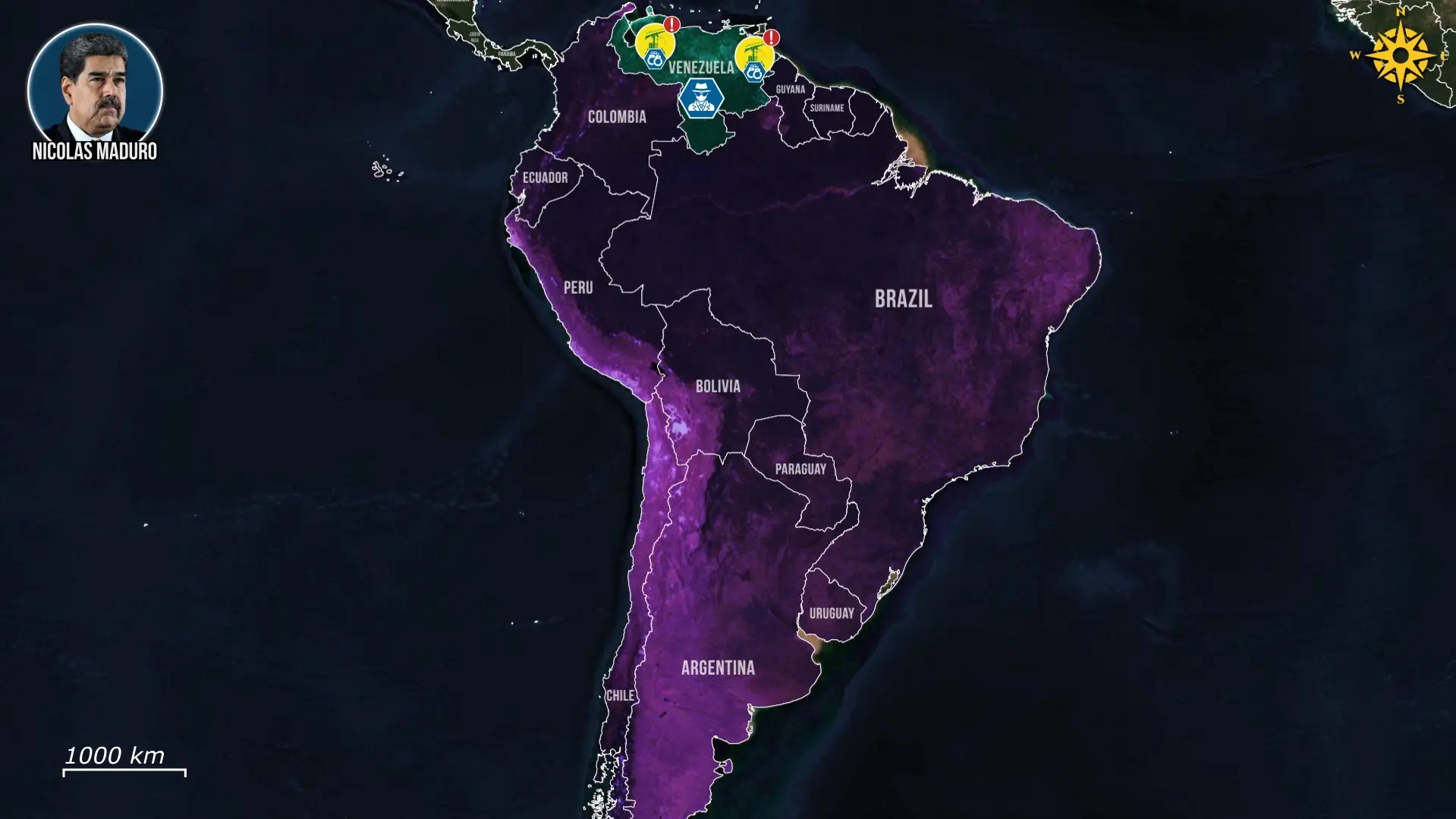
Iran’s narco empire is now facing its biggest structural shock. Among Iran’s allies in Latin America, Venezuela was considered the most important, as it served as the main logistics hub for Hezbollah’s drug trafficking operations. Hezbollah operated within the security and intelligence apparatus of the Maduro administration, using state infrastructure such as ports, airbases, and military convoys to independently conduct money laundering and drug transportation. However, on January two, the United States arrested Venezuelan President Nicolas Maduro on charges of drug trafficking and illegally seize power, and transferred authority to Delcy Rodriguez.

Immediately thereafter, Washington began exerting intense pressure on the new administration, which has thrust Hezbollah’s future operations in Venezuela into uncertainty. At the same time, United States intelligence agencies are now conducting operations more closely in Venezuela, significantly increasing the risk of Hezbollah members being arrested, pushing their long-established drug trafficking network to the brink of destruction.
Overall, the increasing pressure of international sanctions is forcing Iran to rely more heavily on covert and transnational criminal financial systems in order to sustain its geopolitical objectives and proxy networks. This situation indicates that Tehran is gradually becoming dependent on the illicit economy, particularly drug trafficking and shadow logistics networks, to partially offset its economic pressure. Therefore, if the sanctions imposed on Iran are not relaxed in the future, Iran may incline even more towards criminal and shadow economic activities, which will make the global situation even more complex and unstable.

.jpg)

Comments