

.svg)
Today, the biggest news comes from Russia.
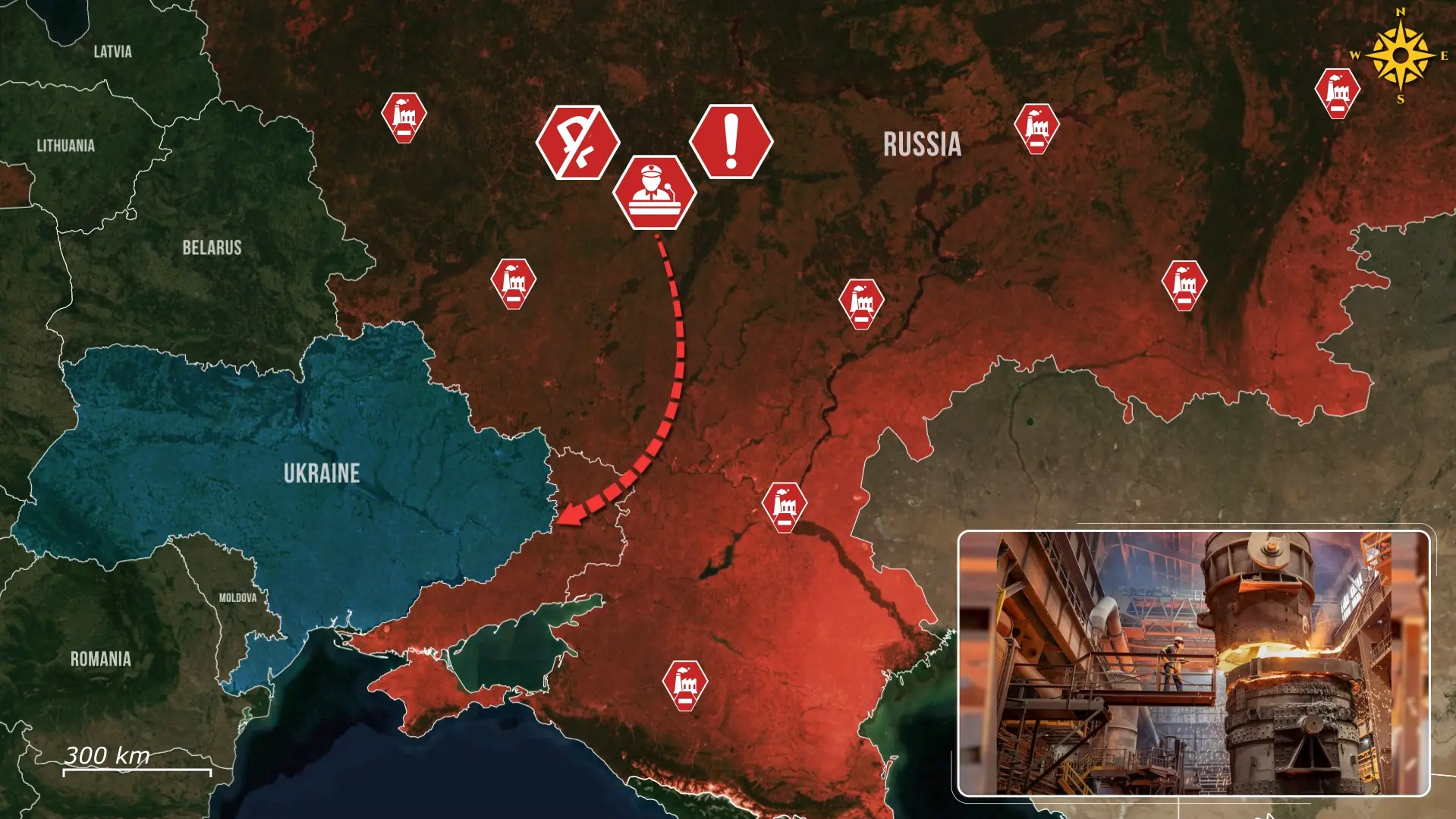
Here, the Russian narrative has insisted for years that the imposed sanctions were not working, while using the flawed argument that the GDP was growing regardless. However, for the first time, the Russian leadership is now unable to even use this argument, as even artificial Russian growth is dropping into the negative.

In a recent announcement, Vladimir Putin publicly acknowledged that Russia’s GDP in January was two point one percent lower than a year earlier. This represents a rare admission for the Russian leadership that typically frames economic performance in optimistic terms to internal and external audiences. While the Russian leadership had long relied on inflated statistics to maintain the narrative of resilience, the scale of the drop in GDP made the reality impossible to hide.

Although GDP alone is not a reliable indicator of a country’s real economic health, leaders often use it to signal growth and strengthen their image, as GDP is only an indicator of market activity and not added value. In wartime, the number becomes even less meaningful because government spending rises sharply, adding to market activity and artificially boosting GDP. This is what happened in Russia, as the leadership poured money into the war, and that spending boosted GDP even as the economy weakened.

This is why Putin’s recent admission matters. If even an inflated wartime GDP is now falling, it means the real economy is in much worse shape.

Russia’s earlier growth came almost entirely from military spending, which does not reflect a healthy economy and cannot continue once the money runs out. Furthermore, as military spending has been announced to drop by fourteen and a half billion dollars, or one point one trillion rubles, the GDP decline will only get worse.

The crisis in the Russian steel sector offers the clearest evidence of how deeply the war is damaging the country’s industrial base. Severstal, one of Russia’s largest producers, reported a three hundred seventy fold collapse in profit, with revenue down eighteen percent. These figures reflect more than a single company’s misfortune, but a trend of rising operating costs and a sharp decline in sales and quality, hampered by the stagnant economy.


This is a growing issue for Russia’s war machine, as steel is a core element for armored vehicles, artillery systems, rail transport, and the heavy machinery that keeps war production running. When steel production collapses, it means factories cannot secure enough material, and the entire supply chain behind Russia’s military industry weakens. The decline also shows that sanctions are cutting off access to equipment and external buyers, leaving steel plants unable to modernize or operate at full capacity.

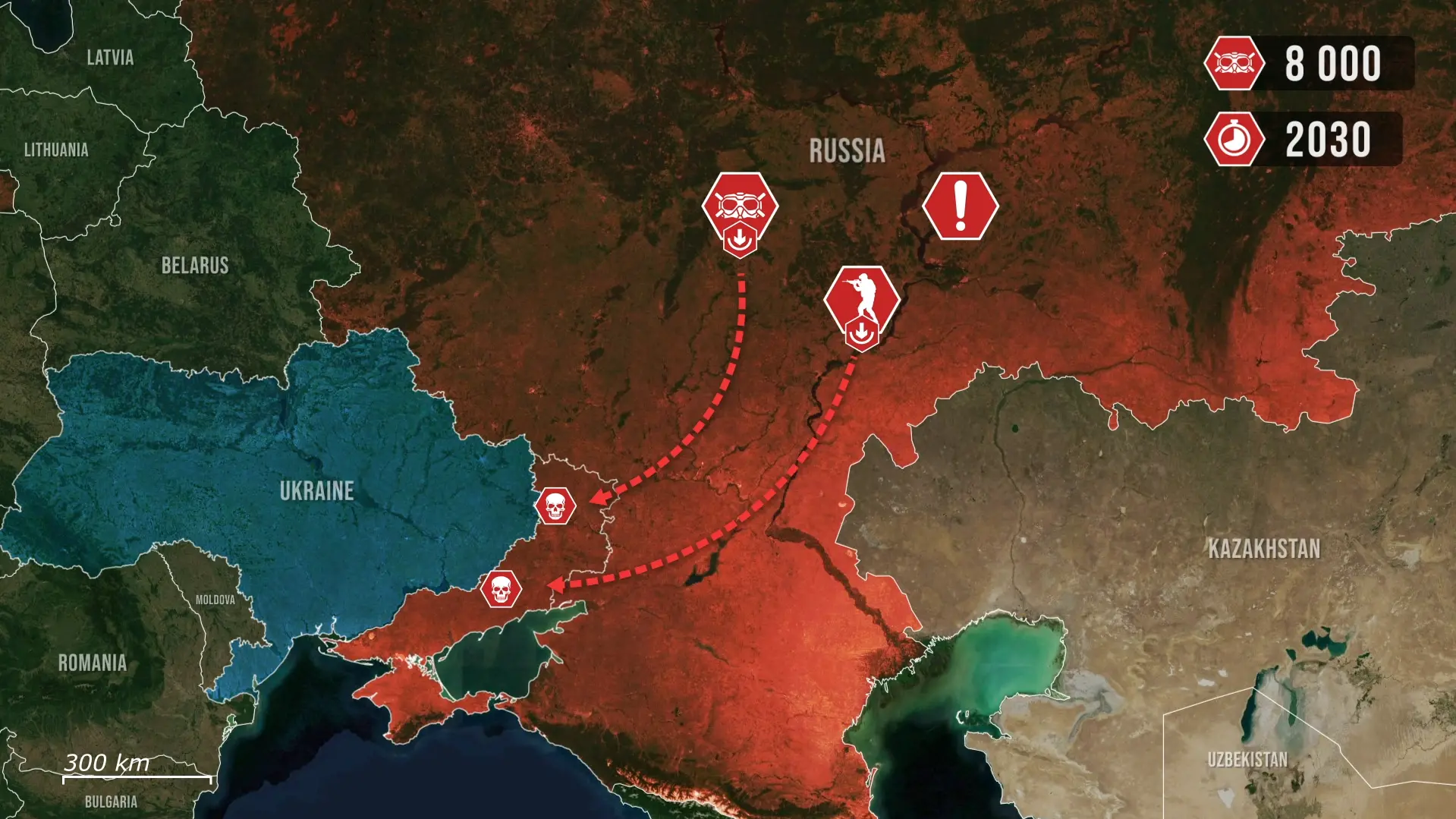
Even the industries that should be the most protected in wartime are now showing signs of strain. Russia faces a severe labor shortage because of massive emigration, mobilization, and wartime losses, leaving many war related factories unable to expand even when demand rises.

This directly caps output, since factories that should be running around the clock simply cannot find the workers to staff additional shifts or open new production lines. At the same time, many factories are running older, hard to replace equipment at full intensity, which leads to more breakdowns and limits how much they can produce.

The pressure is visible across sectors that feed directly into the war effort, such as or drone assembly lines struggling to secure enough electronics and foreign components. Artillery ammunition plants are also reporting delays due to the lack of skilled machinists to operate precision equipment. A similar pattern appears in armored vehicle repair facilities, which struggle to keep up with battlefield losses because they cannot recruit enough mechanics to restore damaged vehicles. These struggles in key Russian defense sectors are highlighted by the historic tank producing company Uralvagonzavod, which is currently nearing bankruptcy.

Overall, Russia’s admission of a GDP decline during the fifth year of war is a sign that the government can no longer hide the scale of the economic slowdown. The collapse in the heavy industrial sectors and the strain on war-related factories show that the industrial base supporting the war is eroding. The steel sector in particular shows that it is not just the companies and factories manufacturing the weapons that are collapsing, but the entire Russian supply chain holding it all together.

The cost of keeping the war going is rising faster than Russia’s capacity to bear it, and this pressure will continue to inflict even greater damage on its own economy.

.jpg)

Comments