

.svg)
Today, the biggest news comes from the Black Sea.
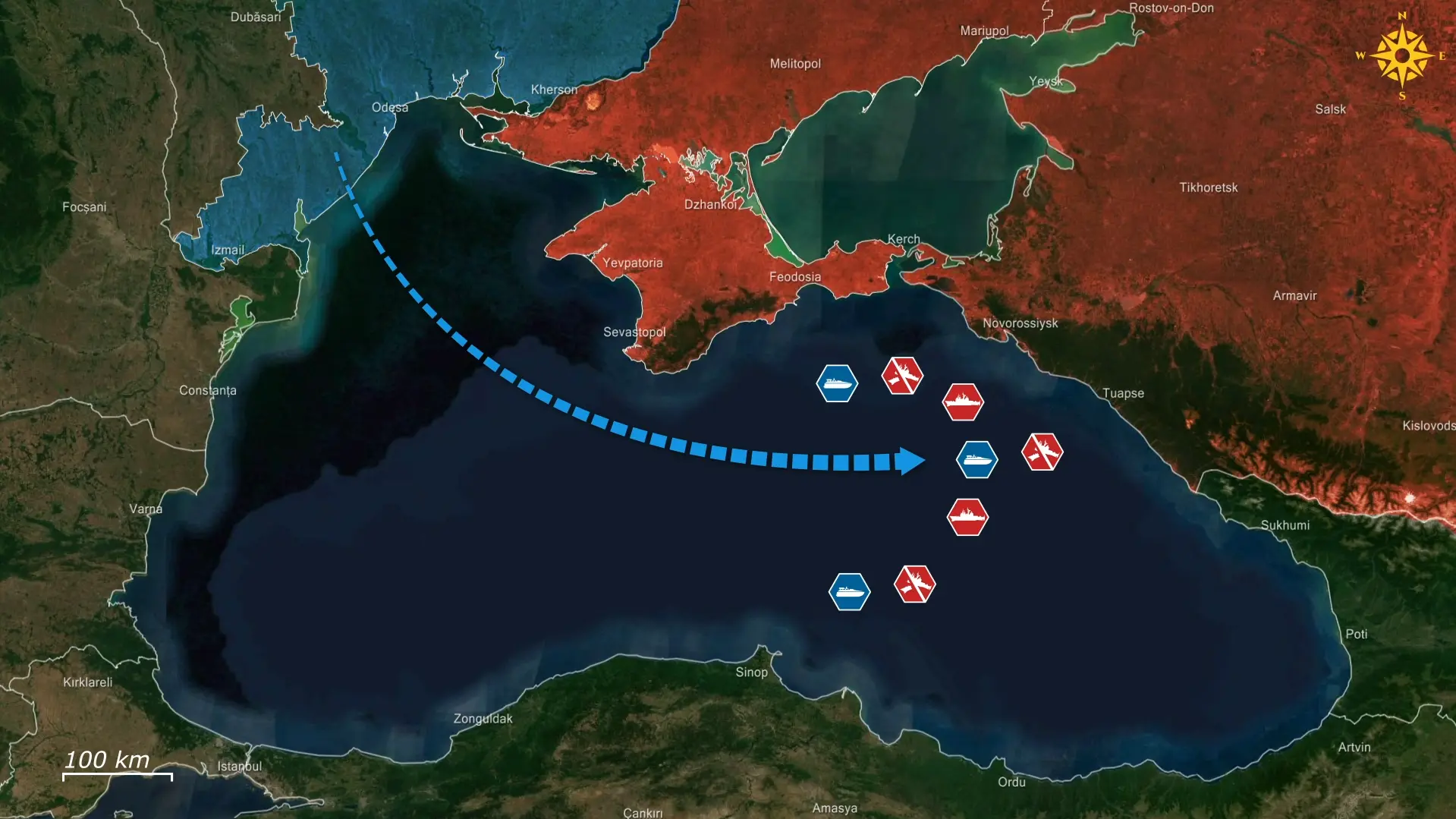
Here, Ukrainian drones are now conducting amphibious fights against the Russian navy, engaging them in intense sea clashes. After the Russian warships are suppressed, Ukrainians continue with follow-on strikes on other vessels, clearing the Black Sea of the renewed Russian presence.
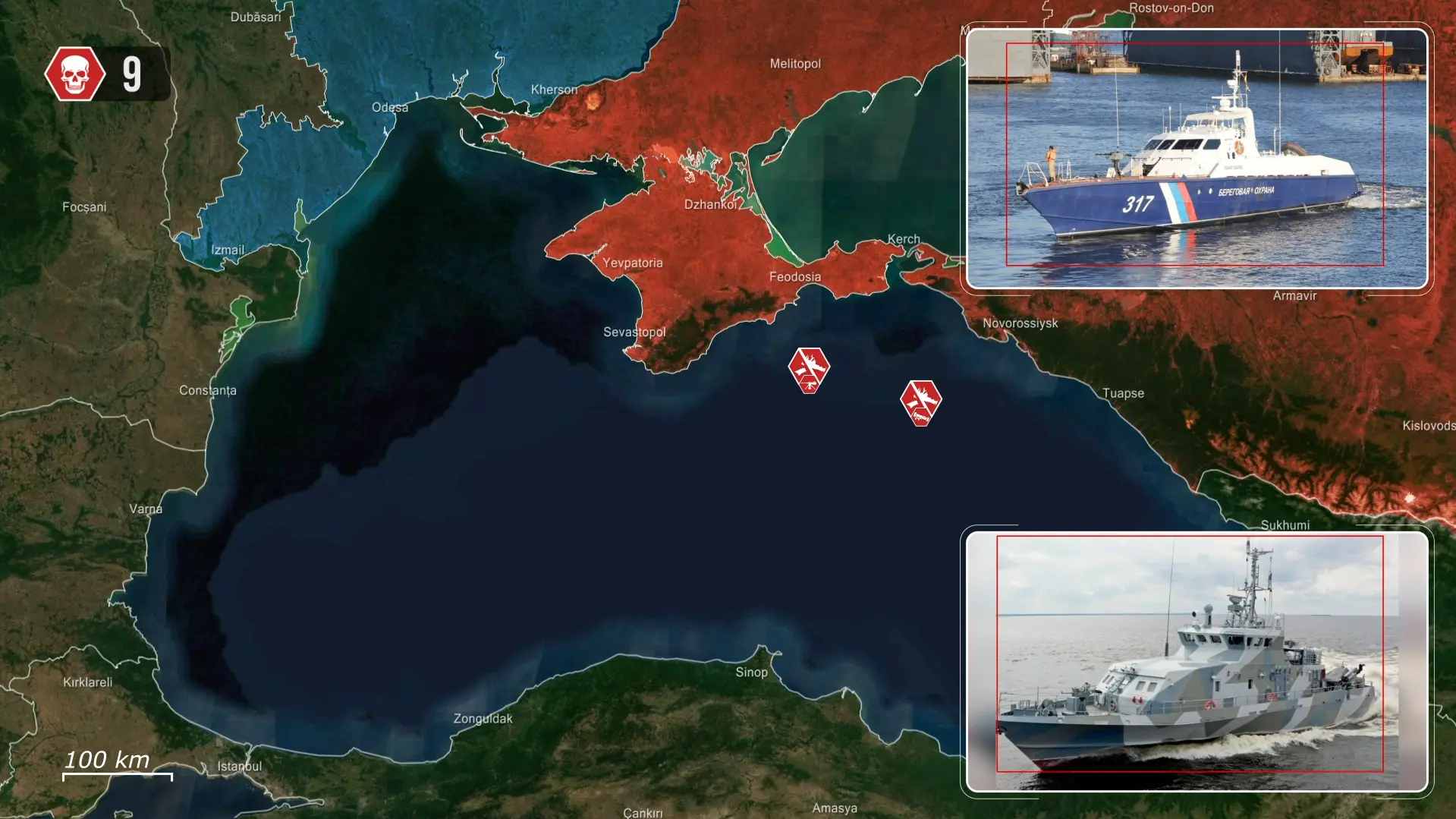
Footage shows Ukrainian sea drones closing in on Russian patrol boats in the Kerch Strait, as the vessels open fire in an attempt to stop them. Using darkness for cover, the drones maneuver sharply, evading sustained bursts of gunfire while continuing their approach. Within moments, they reach their targets and strike, resulting in direct hits on both boats.


The vessels, later identified as the FSB operated Sobol and Grachonok, were assigned to protect the Kerch Bridge. Each had a specialized defensive role, one focused on countering surface drones, while the other was equipped to detect and neutralize underwater threats. Both carried machine guns, and the Grachonok-class boat also featured sonar and grenade launcher systems.

Despite being specifically designed to counter Ukrainian drone tactics, they failed to detect the attack in time and were unable to intercept the incoming drones. The strike killed nine crew members and injured two others, marking another setback for Russian naval operations in the Black Sea.
The operation unfolded over multiple stages and continued once Russian patrol ships had been cleared from the Kerch Strait. Ukrainian unmanned surface vessels then struck two tankers from Russia’s shadow fleet near the port of Novorossiysk, approximately seven hundred kilometers from Ukraine, demonstrating that distance alone did not provide safety.

Footage indicates how Ukrainian drones used darkness for cover to close in on the target undetected. The drones started maneuvering around the tanker before lining up an approach from the rear. The drones surged forward and targeted the tanker’s propulsion system, which crippled the vessel, leaving it immobilized and forcing the Russians to attempt to tow it and move it to a secure location.


In a separate operation, a group of Ukrainian unmanned surface vessels was detected near Crimea. Their routes suggest that most of them originated from the Odesa oblast, moving towards Crimea. Russian forces concentrated on intercepting this group near Sevastopol, deploying both drones and patrol vessels. At the same time, Ukraine launched long-range aerial drones against Crimea, further stretching Russian defenses and dividing their attention.

However, these attacks have only served as a diversion, because amid the intense fighting, two Ukrainian sea drones evaded detection around Crimea and managed to slip through Russian defenses and disappear. They later resurfaced south of Novorossiysk, where they carried out a surprise attack on an undefended Russian tanker. According to Ukraine’s General Staff, the targeted vessel was a sanctioned oil tanker, which had been drifting with its transponder turned off while waiting offshore to receive Russian oil from another ship.

Ukraine’s ability to strike Russian ships relies on several configurations of unmanned maritime systems, each tailored to a specific role. Some are kamikaze drones, both surface and semi-submersible, designed to directly strike enemy vessels and detonate, either sinking them or rendering them inoperable. Others are armed with mounted machine guns, allowing them to return accurate fire against Russian naval vessels. In the firefight against the Russian navy vessels, Ukrainian sea drones don’t just evade incoming projectiles; they can shoot back as well. This forces crews to take cover, disrupts targeting, and reduces the accuracy of incoming fire. At the same time, the drones can engage low-flying threats, improving their chances of survival.

Overall, these developments point to a clear shift in naval warfare in the Black Sea from strikes to direct, close range combat involving unmanned systems. Ukrainian sea drones are no longer used only for one-way attacks but are increasingly engaging Russian vessels in sustained encounters, including active firefights with machine guns. This reflects a broader transition toward drone-centric operations, where smaller, agile platforms challenge traditional naval assets and reshape control of contested maritime spaces.


.jpg)


Comments