

.svg)
Today, the biggest news comes from Africa.
Africa’s gold sector has become a geopolitical battleground where corporations and foreign powers compete for influence, a process that accelerated after the war in Ukraine. However, behind the higher demand for gold lies a deeper and violent struggle over who controls Africa’s most strategic resource.
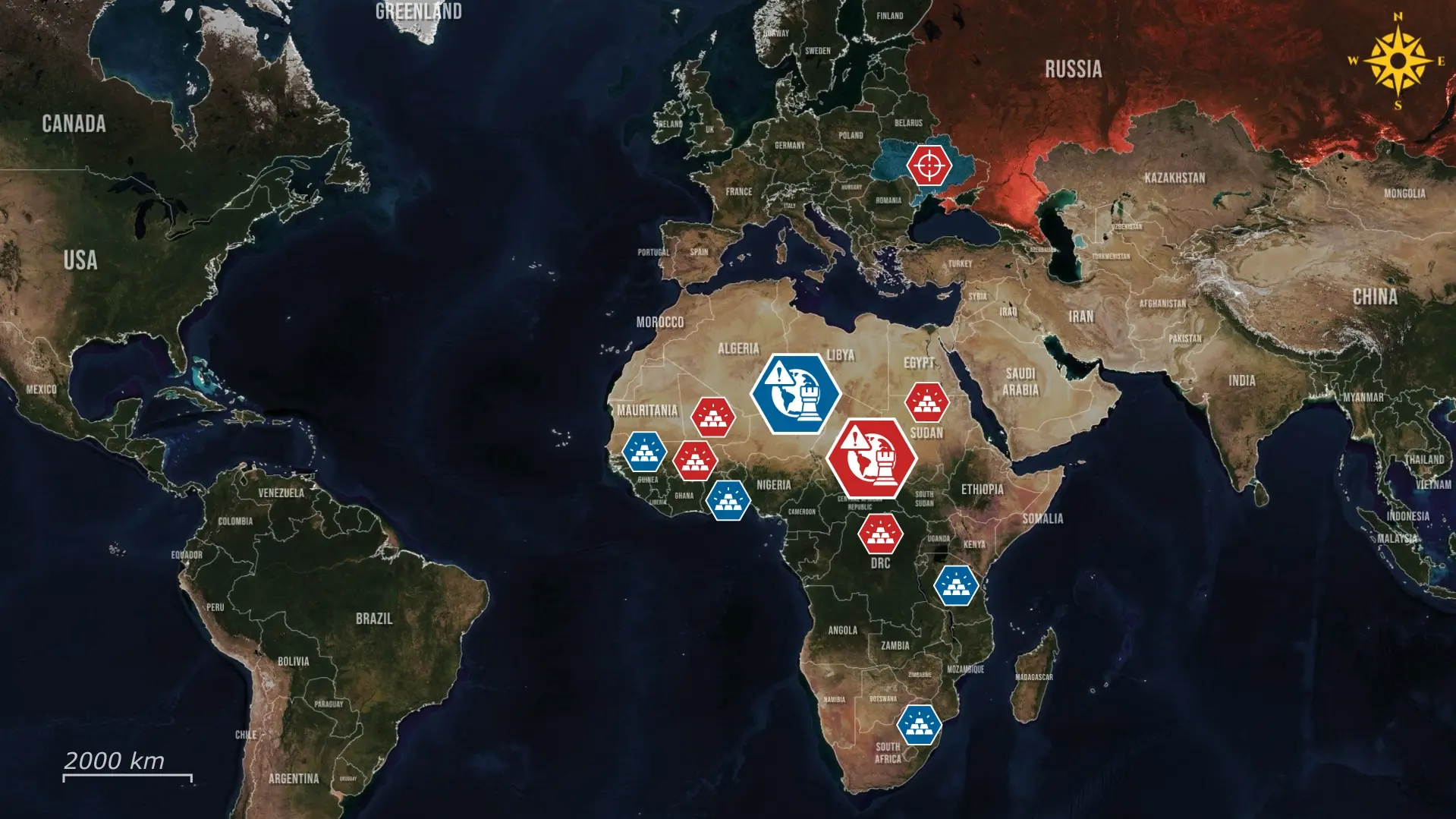
Gold remains a universal store of value, especially during periods of inflation, sanctions, or geopolitical instability. Africa contributes close to a third of the world's gold production, and its deposits stretch across nearly the entire continent, with Ghana, South Africa, Congo, Mali, Burkina Faso, Sudan and Tanzania forming the backbone of this output. Their economies depend heavily on gold exports, which often represent the largest share of national revenue. However, this dependence creates a structural vulnerability that favors the company, armed group, or state actor controlling the mining.

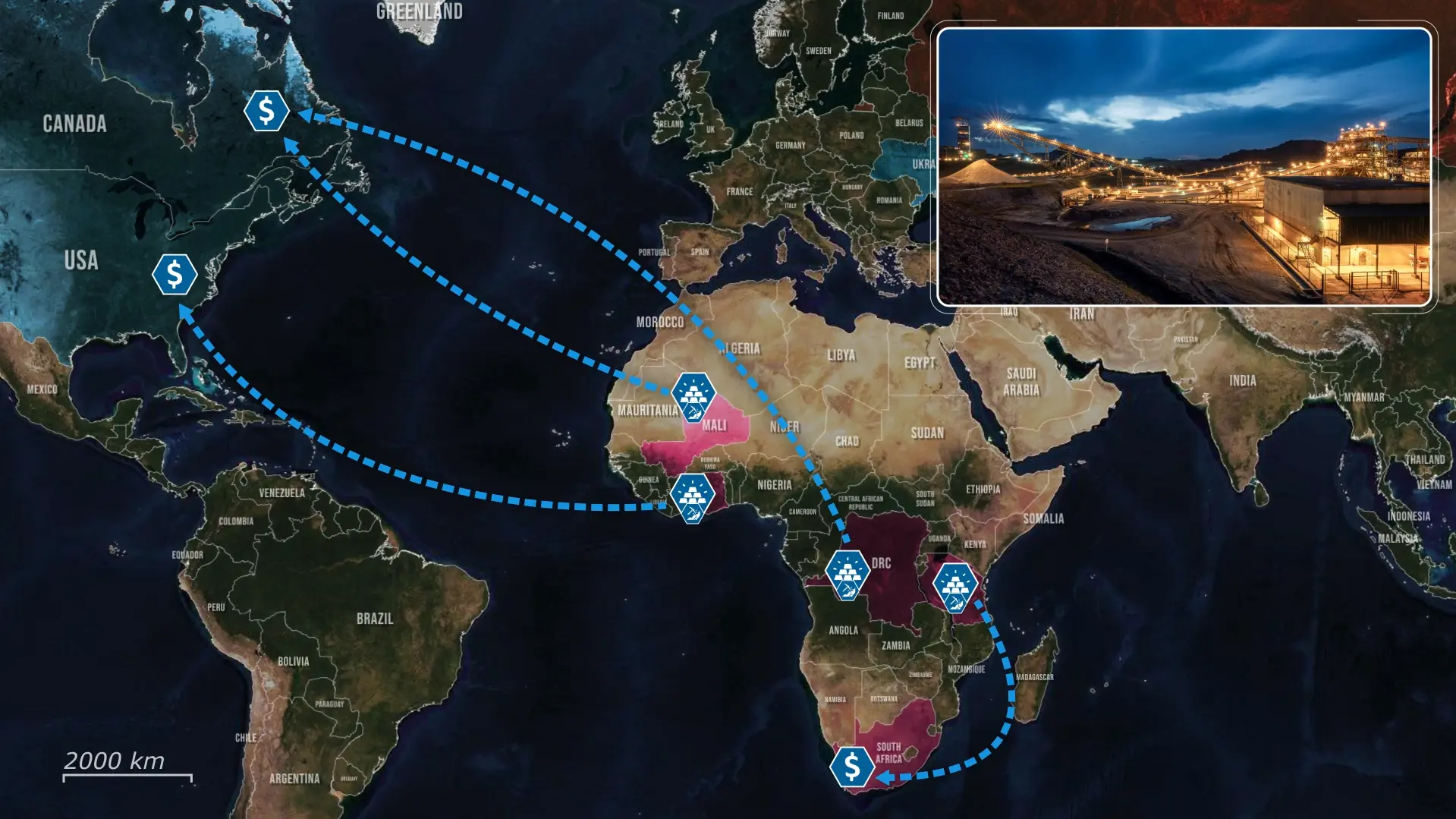
Western firms remain the dominant actors, with companies such as Newmont, Barrick Gold, and AngloGold Ashanti entrenched across Ghana, Mali, Congo, and Tanzania through long-term agreements secured during earlier liberalization. Their model relies on private capital and advanced extraction technology, allowing them to control production and channel most of the profits back to shareholders in the United States, Canada, and South Africa.
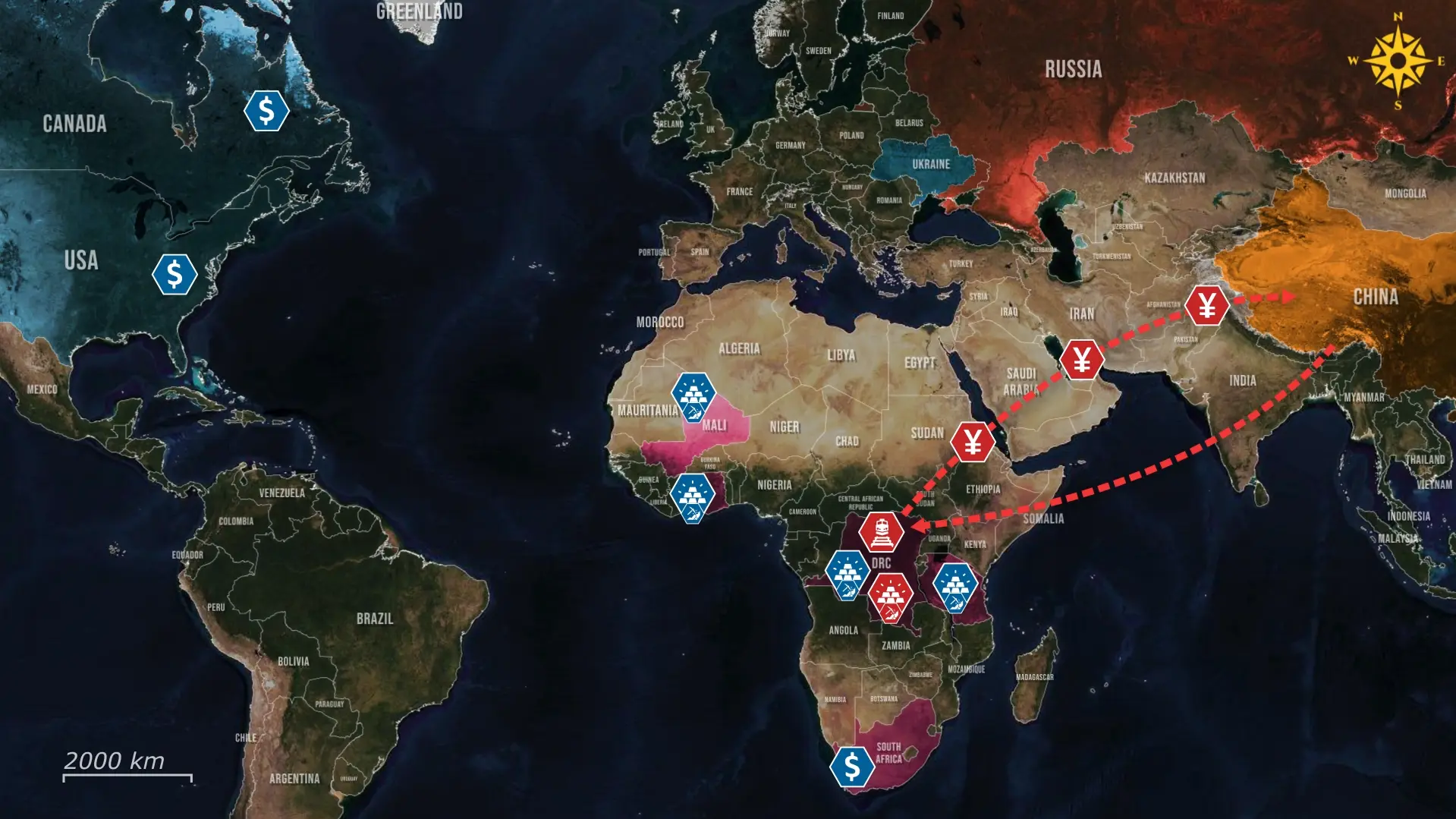
Chinese companies have expanded across West Africa, entering a region long dominated by Western investment. Unlike Western firms, they operate through a state-capital model that links mining projects to infrastructure development and government financing.

As a result, value flows to China not only through mining profits, but also through debt repayment and construction contracts carried out by Chinese firms.
Meanwhile, Russia has also become a central player, securing access to gold in the Central African Republic, Sudan, and, more recently, Mali through a network of companies linked to the former mercenary Wagner Group. Its African operations were absorbed into the Africa Corps, a Russian state controlled formation that continues the same form of military assistance to ruling elites in exchange for mining rights. The Russian paramilitary model is the most destabilizing, as the ruling elites become dependent on Russia’s military support for their own survival rather than on domestic institutions or public accountability. In return, Russia gains a steady flow of gold revenues and significant leverage over political decision-making in the countries where it operates.

Regardless of the model, the outcome of the gold extraction is similar, with the African states remaining dependent on external actors who retain the most profitable portion. In response, several African governments have launched nationalization or renegotiation campaigns. The challenge is that nationalization only works when the state can enforce its own rules, and in many countries, corruption and weak institutions allow political elites or military factions to redirect wealth for their own benefit rather than secure national interests. In practice, officials responsible for enforcing the rules often negotiate private arrangements with companies, while oversight bodies struggle to challenge politically connected actors.
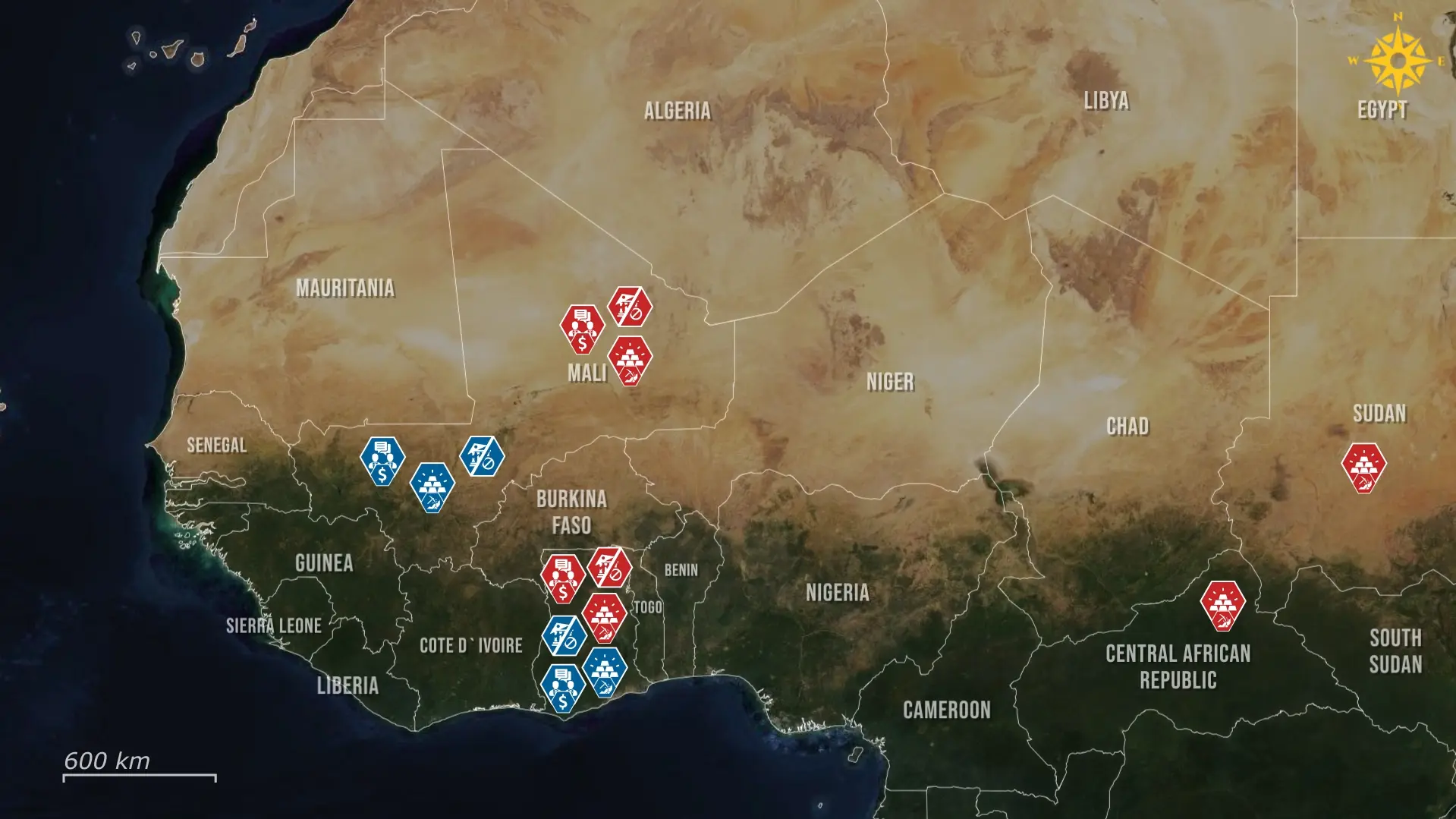
For instance, Mali’s two-thousand-twenty-three mining code increased the state’s share in mining projects and created a central mining authority to enhance oversight. However, the reliance on Russian security cooperation increases the likelihood that new concessions will favor Russian companies and their interests rather than strengthen national control.

Gold’s high value and the weakness of state oversight also create an ideal breeding ground for armed groups and violent conflict, as every actor with the means to extract or move the metal competes for advantage. Congo is one of the notorious examples, where armed groups impose taxes on miners and move gold through regional smuggling networks, turning the metal into a steady revenue that sustains their operations and power.


In the meantime, foreign companies compete and operate with the state's permission, but their presence does not disrupt the conflict-gold economy as they pursue their own commercial interests rather than stabilizing the wider environment.

The increased presence of the Russian Africa Corps adds a new layer as they seek to protect Russia’s interests and secure mining access through military support. This means supporting governments or other entities that are often engaged in internal power struggles, whose survival depends on Russia’s continued assistance.


Overall, Africa’s gold rush is the frontline of a multipolar struggle where economic pressure, armed groups, and corruption collide. The continent’s reserves give it strategic weight, yet foreign control and internal governance challenges prevent that weight from translating into power. Nationalization efforts show that African governments understand the stakes, but structural weaknesses and geopolitical competition limit their room to maneuver. Until that changes, Africa’s gold will continue to shape global power, but not its own.


.jpg)

Comments