

.svg)
Today, the biggest news comes from Crimea.
Here, a Russian soldier screwed up by posting a selfie on social media, showing himself in secret place designated for the Russian military. What followed sent shockwaves through the Russian rear and obliterated on the most important Russian secret services base.
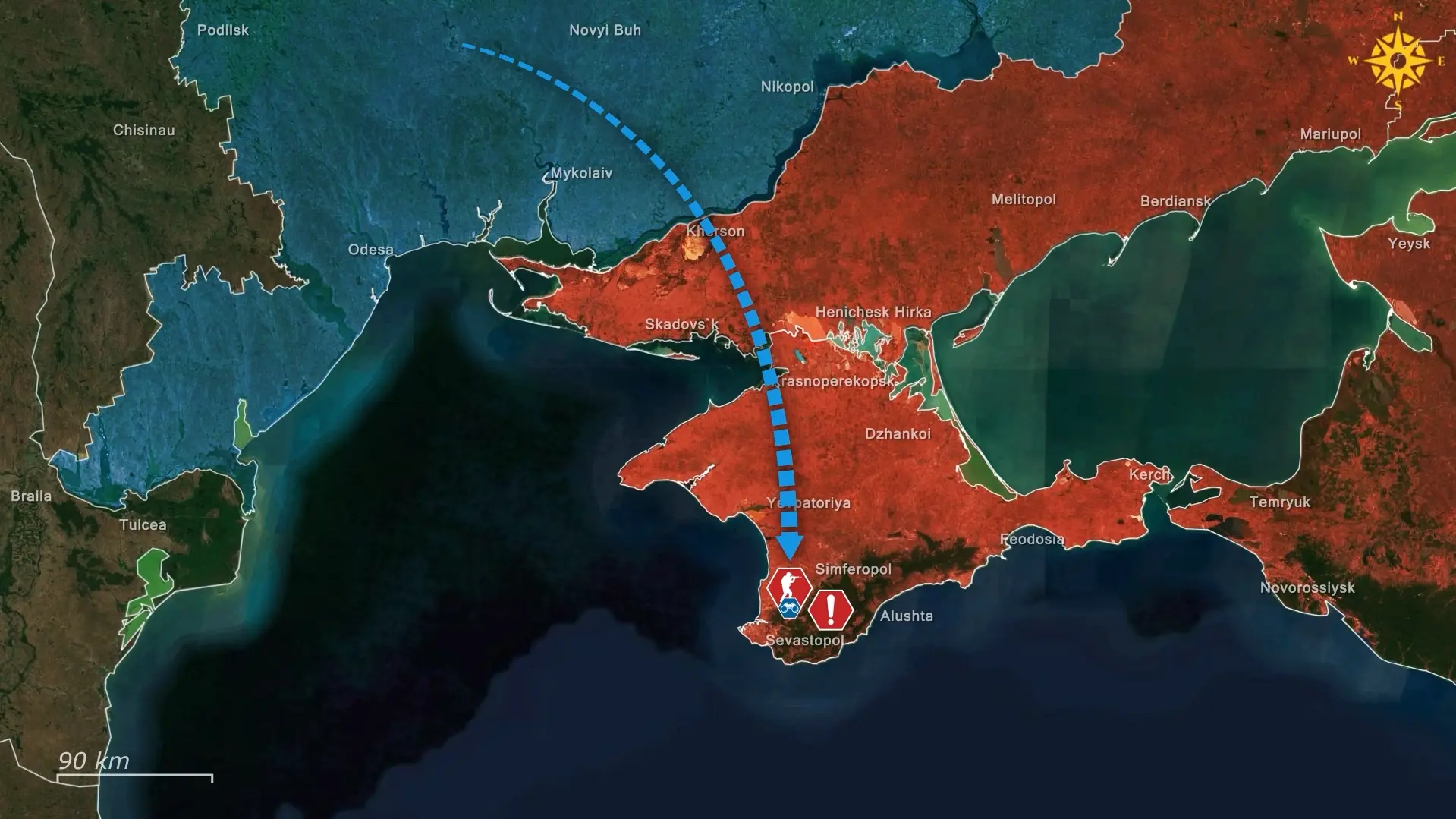
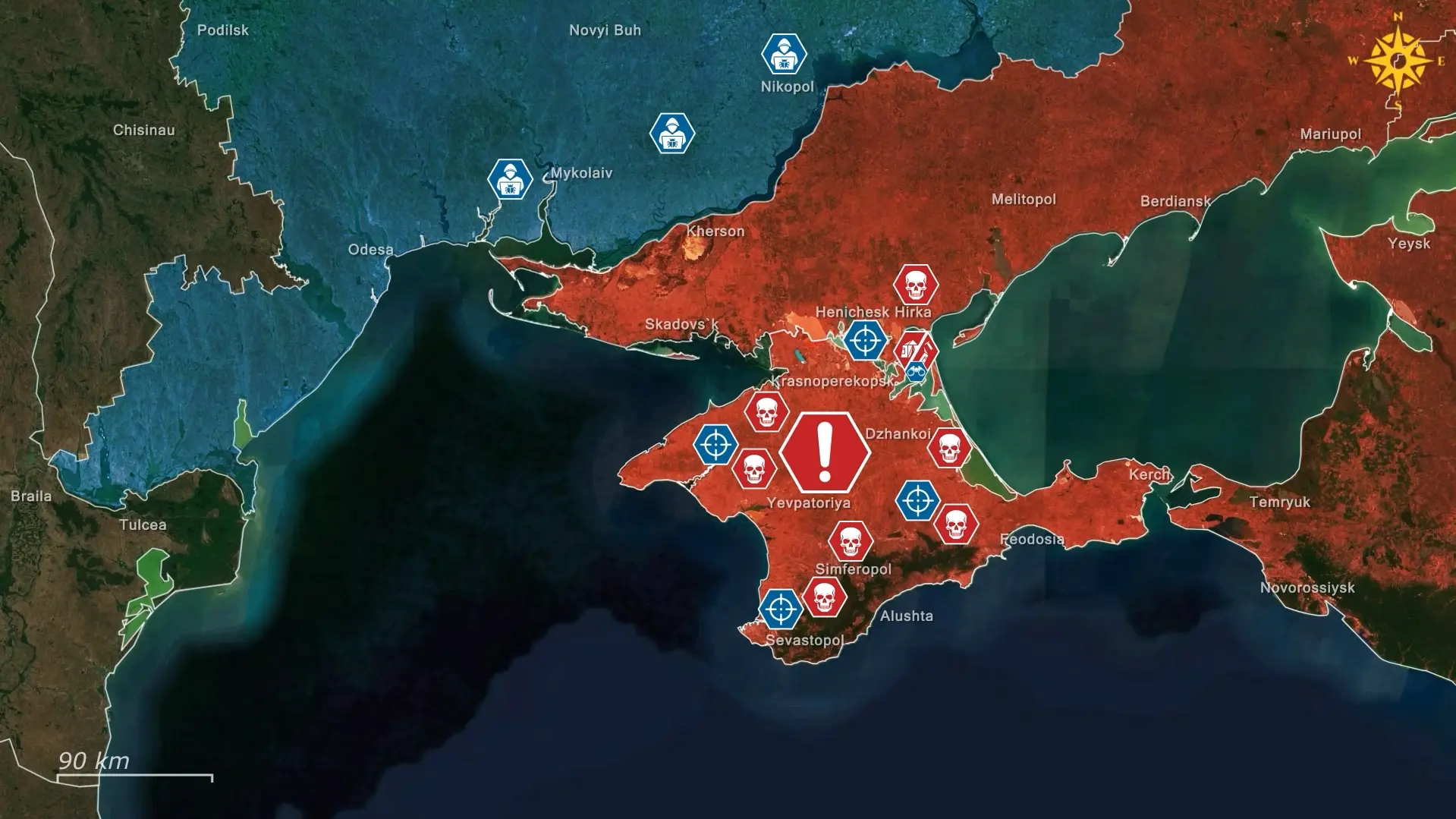
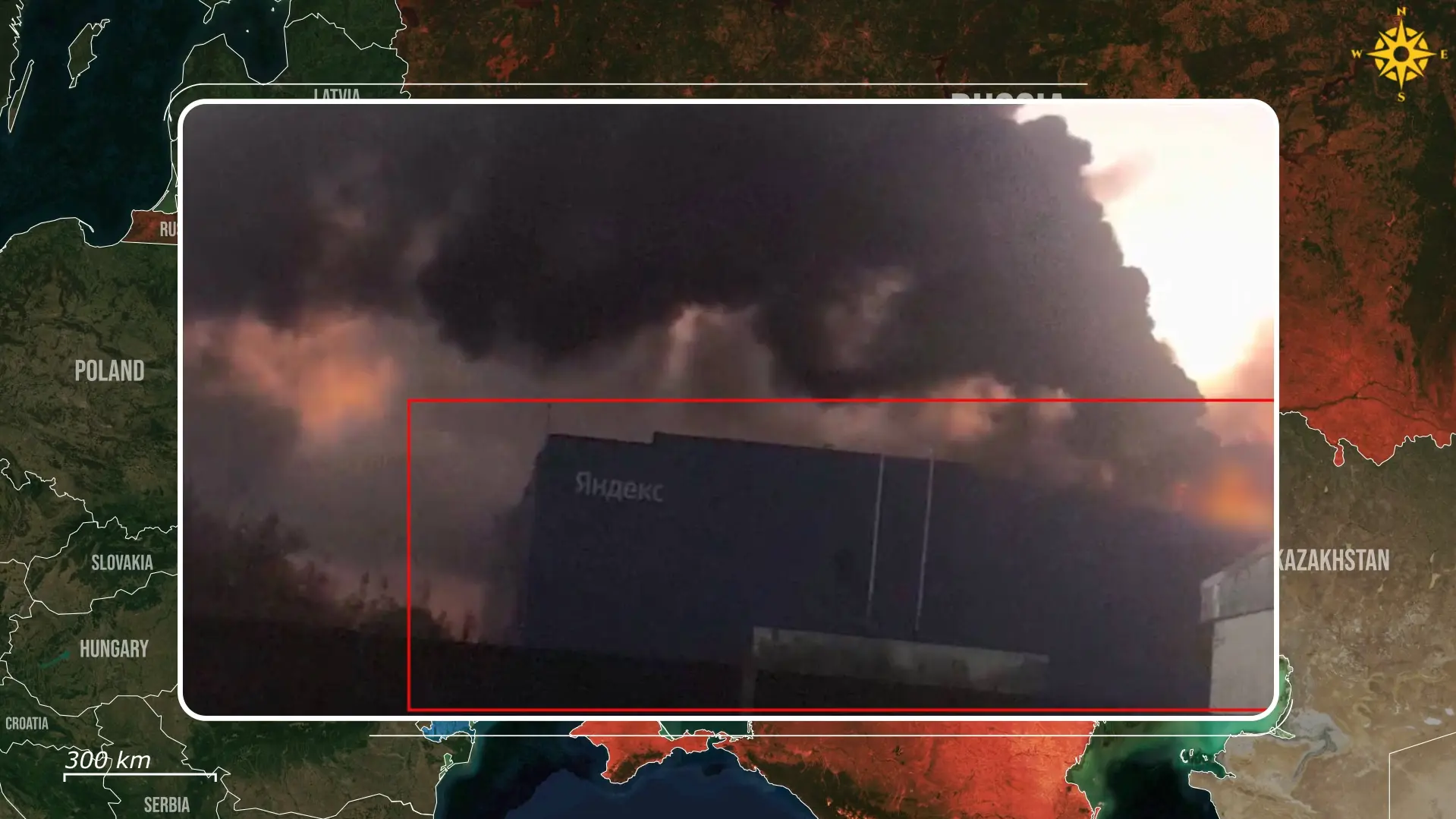
Recently, Ukrainian kamikaze drones struck a headquarters of the Russian Federal Security Service and an arms depot in Henichesk Hirka, triggering massive fires at both places. However, before striking, the Ukrainians had to go through an elaborate process to even make it to the targets.
To do so, Ukrainian military analysts are using open-source intelligence methods, which involve collecting, analyzing, and verifying publicly available information to investigate events and build situational awareness. Common sources include Russian social media posts, satellite imagery, videos, and photographs. Ukrainian planners use this material to geolocate Russian targets far behind enemy lines by matching visible clues in them with real-world geography. This process typically combines terrain analysis, architecture, infrastructure, and environmental features to determine a precise location and then plan a suitable operation to exploit these findings.
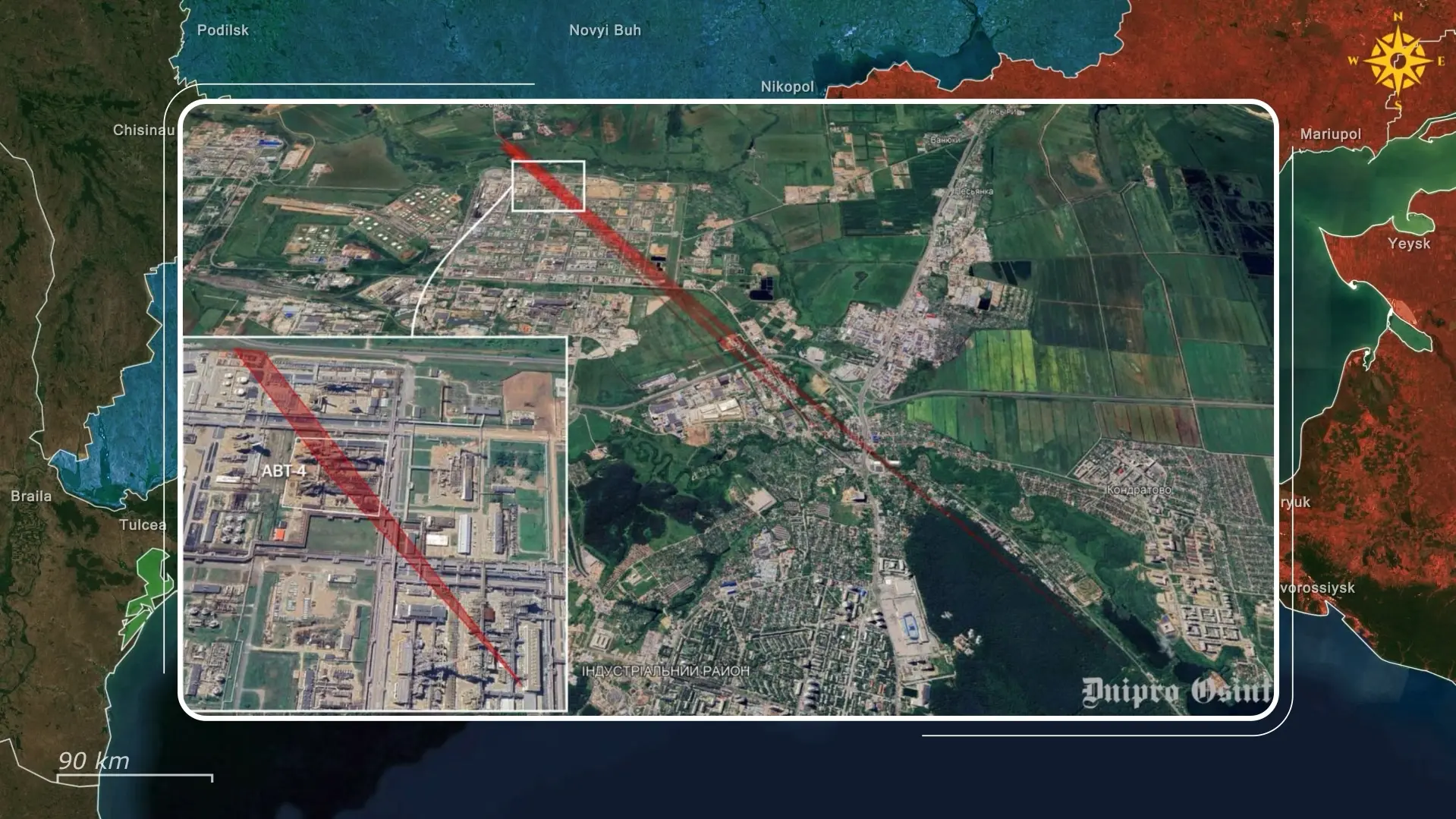
Using these methods, Ukrainian analysts constantly monitor social media, where Russian soldiers often expose their own positions by posting selfies and videos online while boasting about life at their bases. Even a single visible landmark or building is enough in many cases, as Russian intelligence units often choose to operate from luxury resorts, hotels, and seaside complexes, believing these locations offer not only comfort but also concealment. However, using civilian resort infrastructure as a military headquarters also makes it easier to detect and target. The facility in that case was a key Russian deployment and command post, used for storing and preparing missiles and strike drones. The Federal Security Service coordinated the strikes and distributed the weapons to their designated launch points.
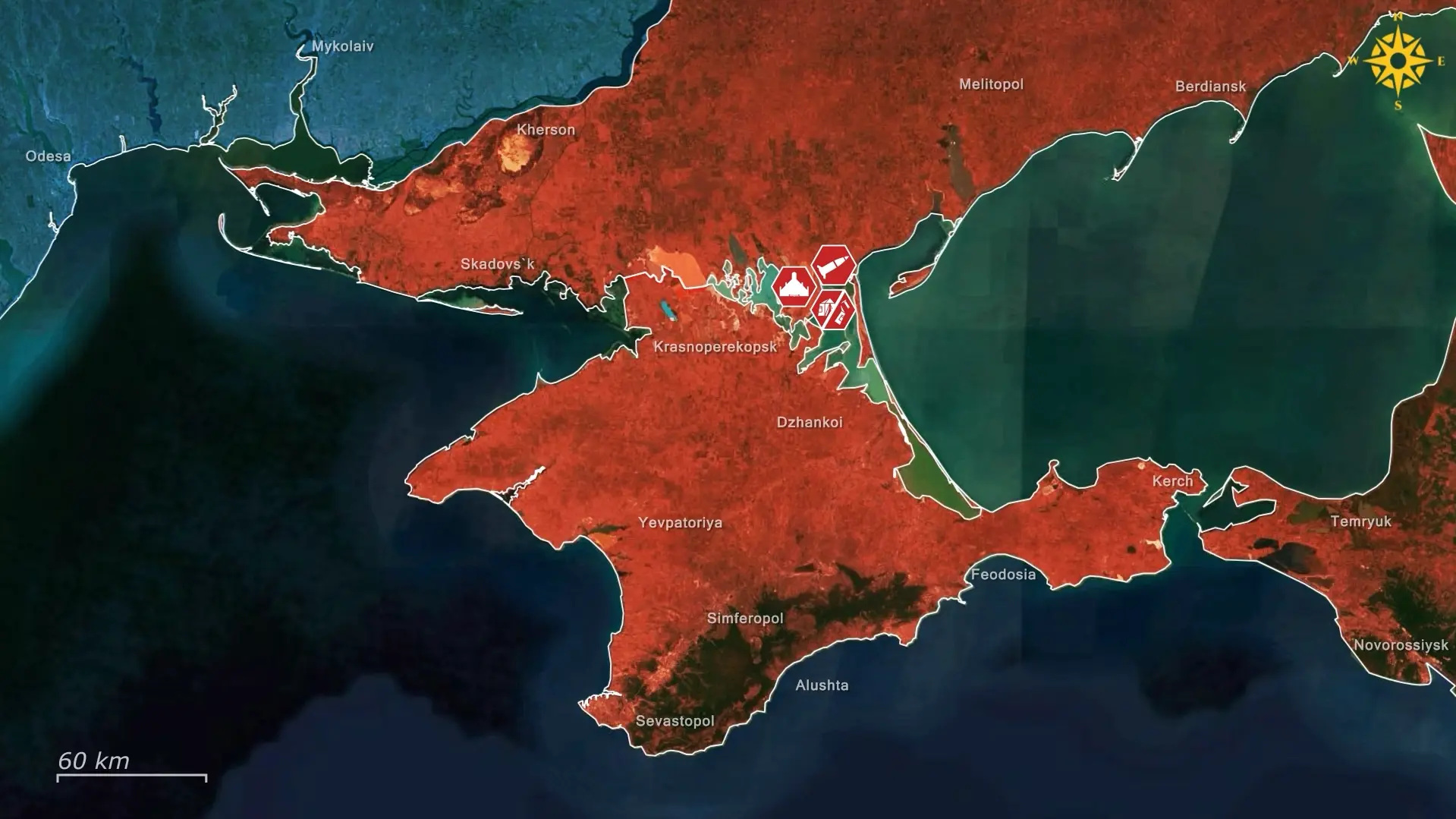
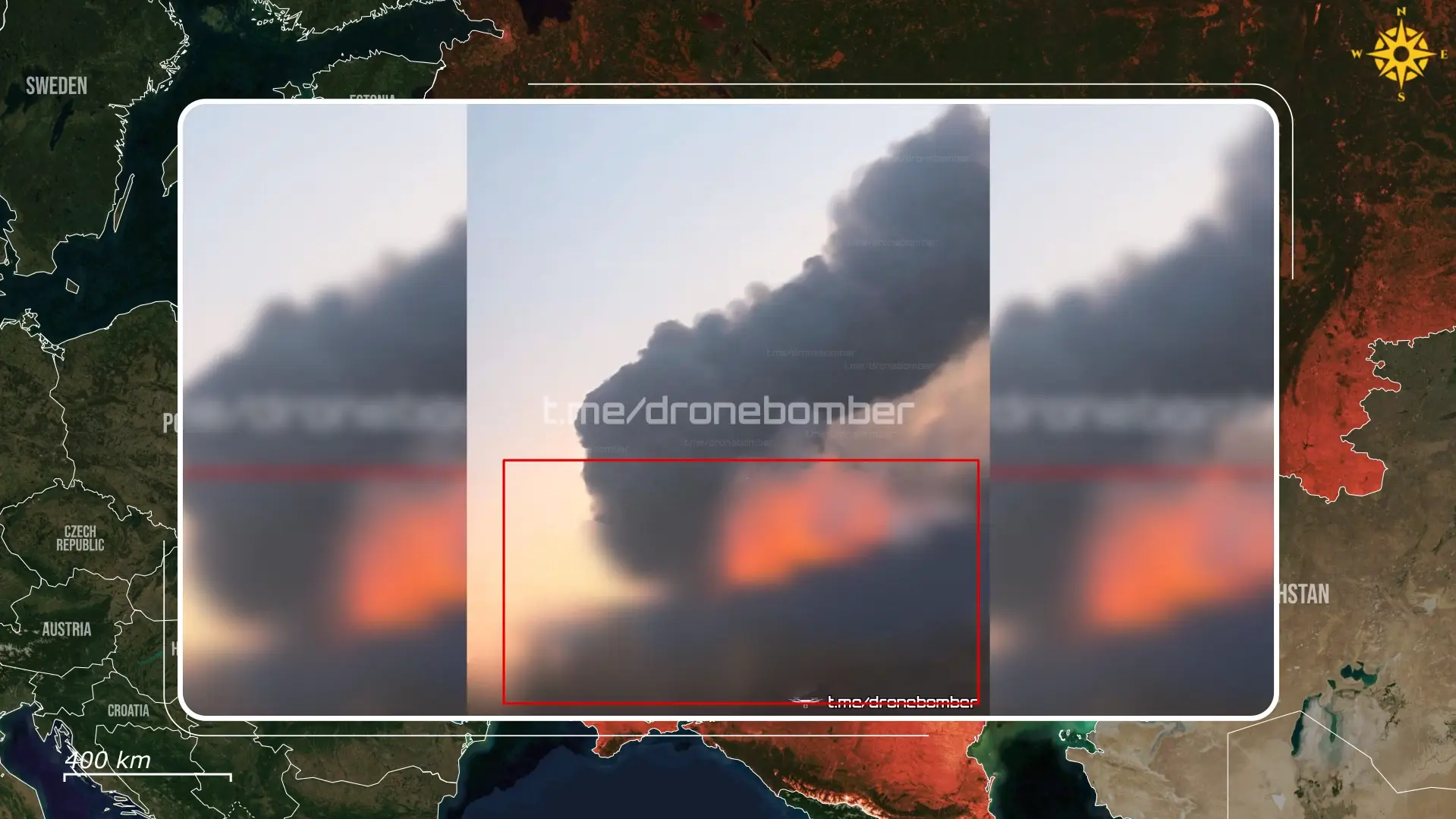
After locating the enemy, Ukrainian forces started preparation for the main attack by destroying a Russian Pantsir air defense system, increasing the likelihood of mission success. After that, six Ukrainian long-range drones, operated in real time by remote pilots, attacked the complex on the Arabat Spit in a coordinated sequence. The first strikes focused on the main building, serving as the headquarters of the Russian intelligence unit. The following strikes targeted nearby structures where Russian forces were storing drones, ammunition, and missiles, triggering powerful secondary explosions across the area. To complete the operation, more Ukrainian drones struck the main building again, collapsing large sections of the structure and setting it completely ablaze. Following the series of impacts, a massive column of fire rose above the complex, while ammunition stored inside continued detonating for an extended period afterward.

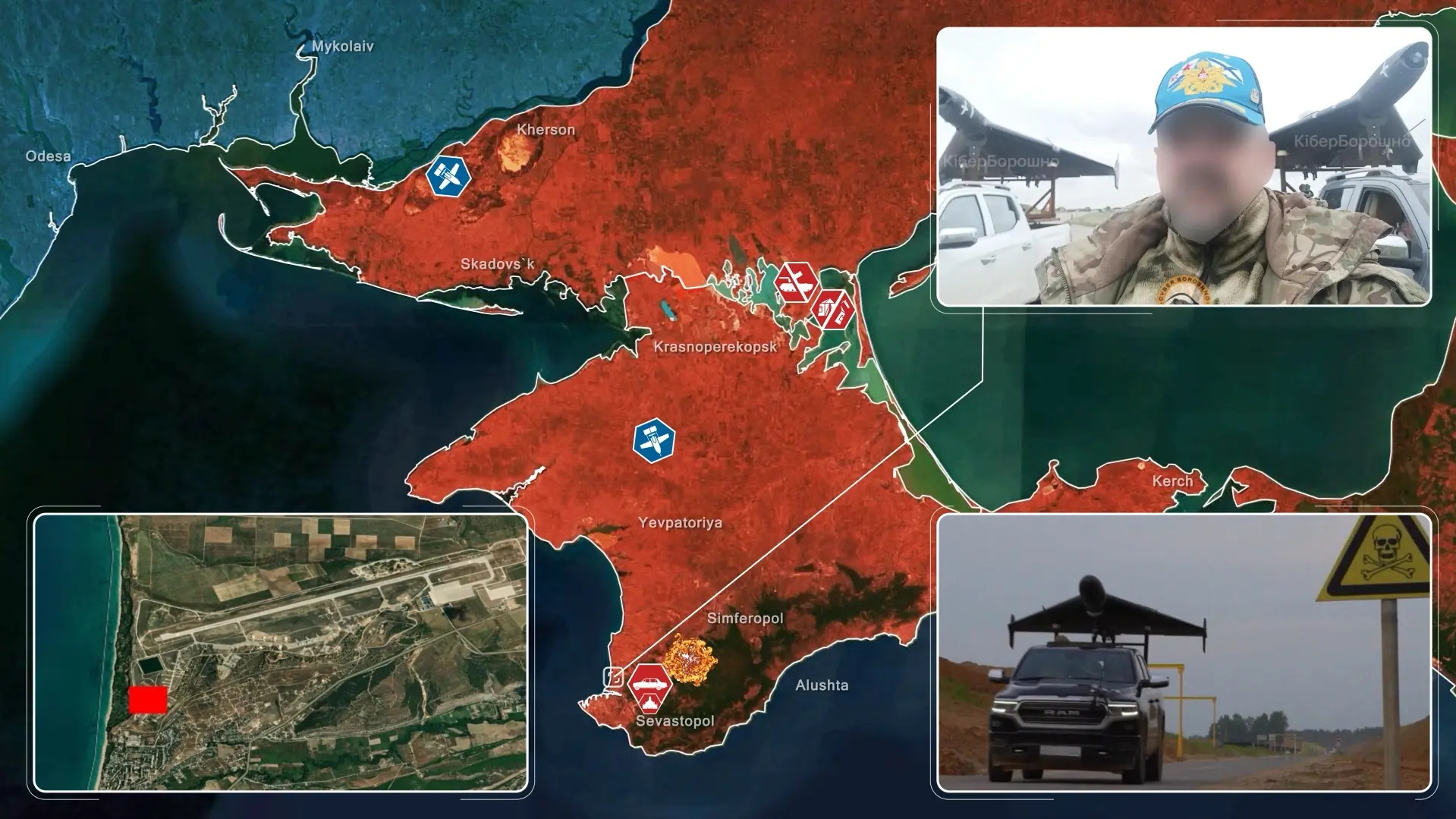
In another recent example, a Russian soldier unintentionally exposed a military launch site by posting a photo of himself standing in front of pickup trucks carrying Shahed drones, one of the primary systems Russia uses to conduct long-range drone attacks against Ukraine. The image showed a drone mounted on a vehicle, which serves as a mobile launcher, that can quickly deploy and relocate after launching a drone.
Ukrainian analysts examined the image and were able to geolocate it to a specific section of an air base in Russian-controlled Crimea. Shortly after the image appeared on social media, Ukrainian operators subsequently targeted the installation with drones, resulting in multiple fires spreading across the airfield and surrounding infrastructure, as proved by Nasa fire-monitoring satellites. Belbek Air Base, located near Sevastopol, is a key hub for Russian military aviation in the region. It supports a range of operations, including fighter patrols and air defense missions, and is equipped with aircraft such as the Su twenty seven and Mig thirty one. In addition to its established aviation role, the incident also suggested that the airfield has been adapted for use as a launch site for Shahed-type drones.
Overall, one careless social media post was enough to expose a critical Russian military position in Crimea. Ukrainian analysts are always looking out for these mistakes to identify important Russian bases and drone launch sites, to target them before they can strike Ukraine. The incident highlights that information, digital mistakes, and open-source intelligence analysis are playing a key role in Ukraine’s defense. The lack of discipline among the Russian soldiers is now causing major blows to their operations as they expose their expensive military assets and erode their chance of success.

.jpg)

Comments