

.svg)
In this video, we will analyze how Russians unintentionally made their logistics more exposed.
Here, Russia made a huge mistake by clearing and standardizing roads for military traffic, effectively marking its convoys and making them easier to identify and strike. What was meant to optimize the land corridor to Crimea has instead turned it into a predictable kill zone.
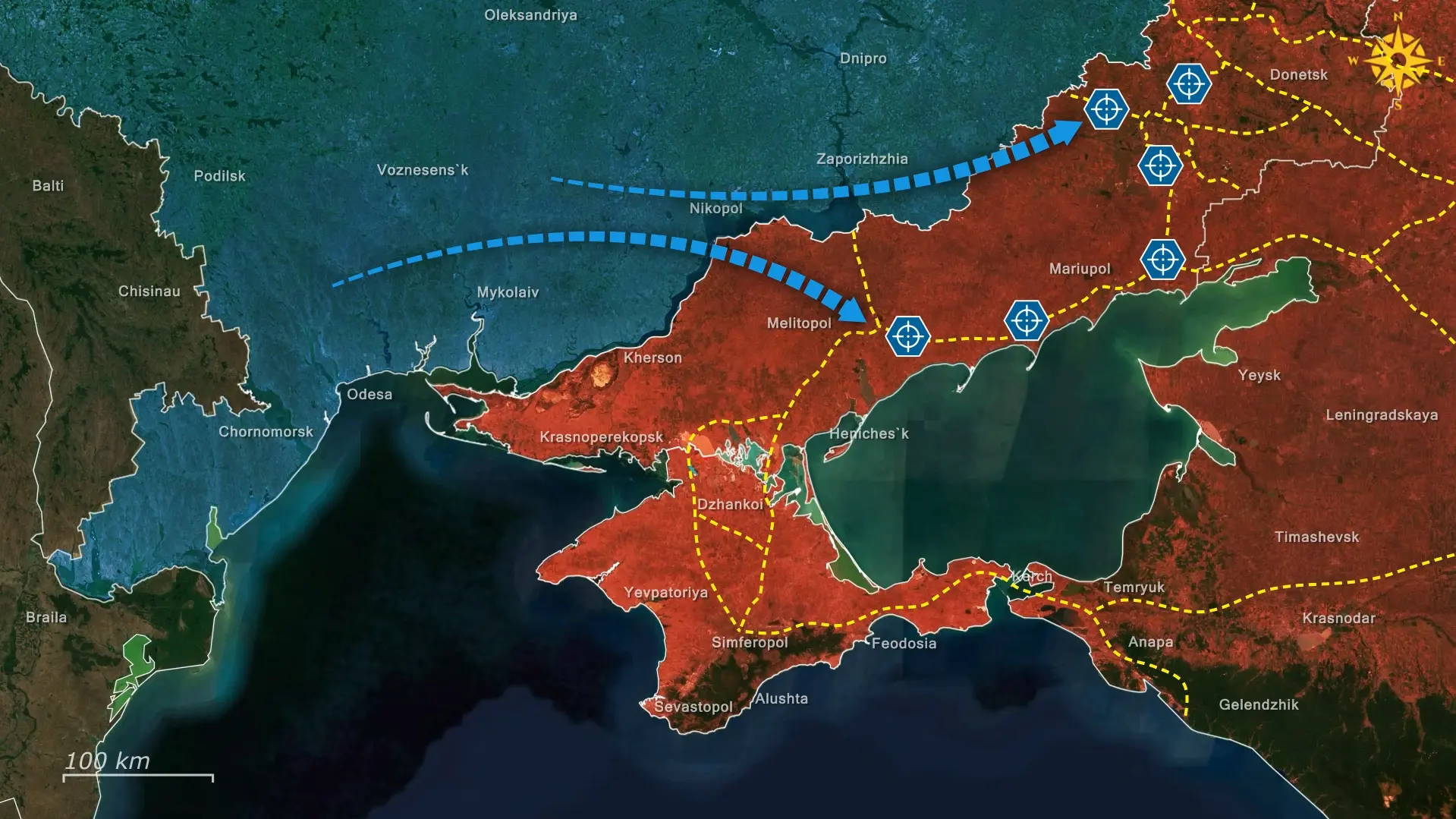
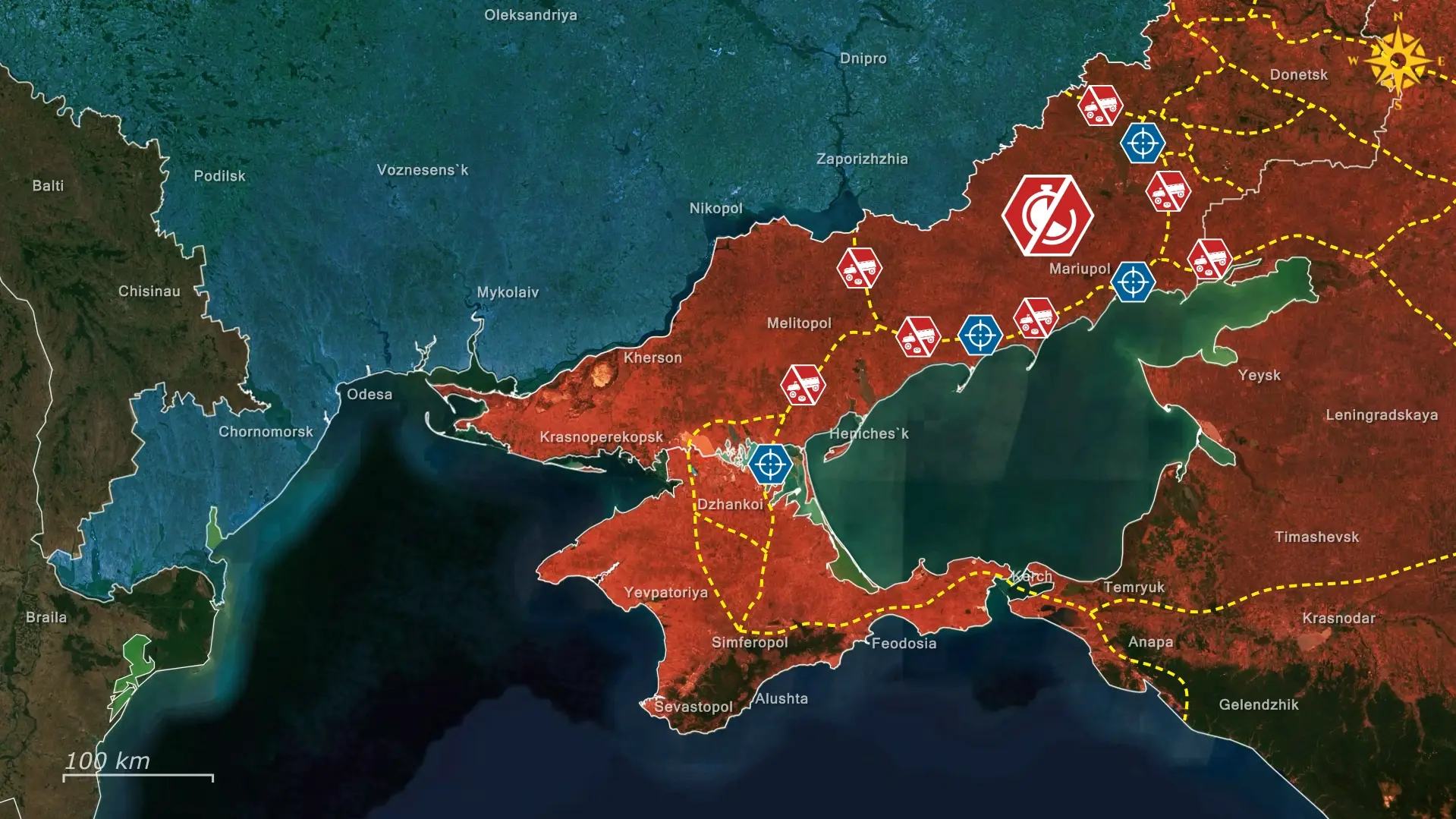
The first clear sign appears in a video showing Ukrainian strikes across the Russian-controlled south over recent months. The April map shows how the attacks spread across rear areas, hitting infrastructure and logistics sites, including agricultural facilities that are often used to hide fuel, vehicles, and supplies behind the front line. By late May, that pattern tightens sharply onto the highways linking Mariupol, Berdiansk, and Melitopol, concentrating Ukrainian strikes along the most frequently used Russian supply routes toward Crimea.
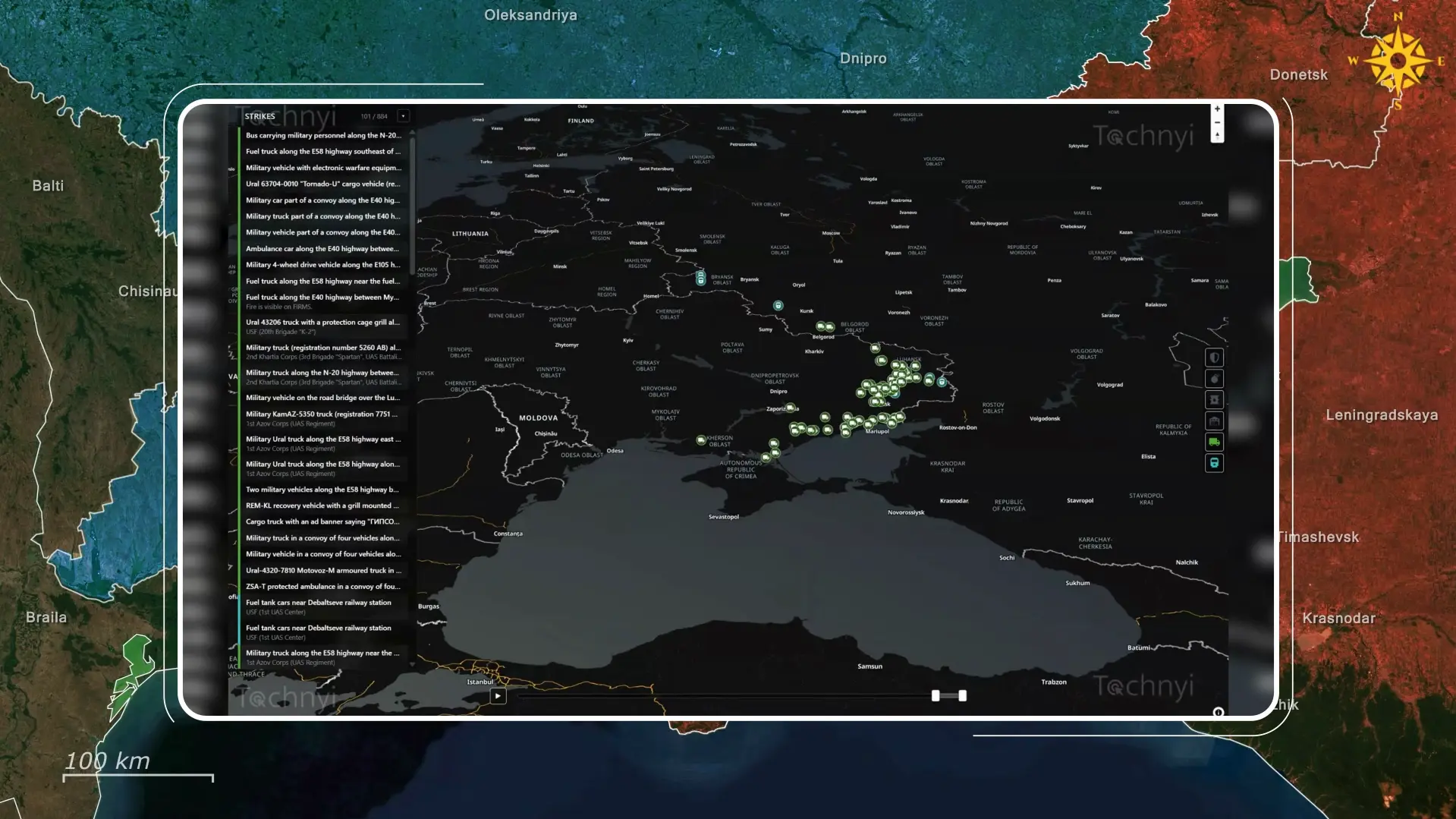
As Ukrainian fire control tightened around these routes, Russian-controlled authorities responded by clearing them for military logistics only, prioritizing fuel trucks, ammunition transport, and armored resupply vehicles moving toward the front. The goal was to keep the corridor working despite constant drone attacks that targeted moving convoys, mining threats that slowed or rerouted traffic, and growing disruption that forced Russian logistics to become more concentrated and predictable. By pushing civilians off these routes, Russia turned them into dedicated military corridors to reduce the general traffic and avoid congestion due to the rising number of destroyed vehicles on them.
However, Russia created a new vulnerability, as this move effectively marked its own convoys by making any movement a visible indicator of military logistics. In effect, the measure designed to protect movement also made that movement easier for Ukraine to identify and strike, removing much of the guesswork and leading to repeated attacks and even more disruption along these highways.
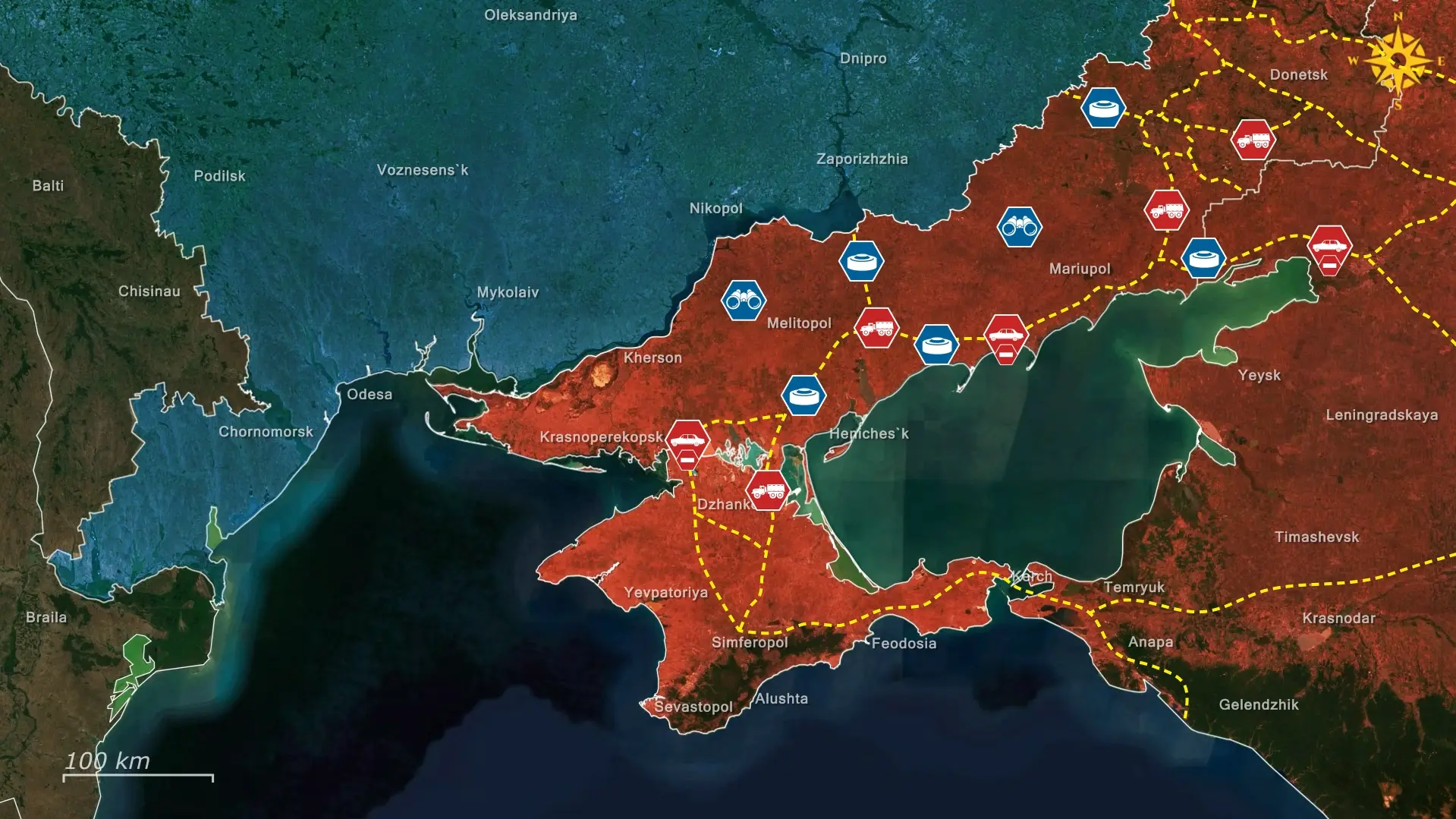
Released footage from the strikes shows repeated attacks landing on the same key logistics routes Russia is trying to protect. On the Mariupol to Taganrog highway, Ukrainian drones repeatedly hit trucks and armored vehicles moving along one of the main supply routes in the Russian-controlled south. In the Berdiansk sector, repeated strikes targeted vehicles moving along the same stretch of road, with convoys being tracked and struck in motion along the corridor. Near Melitopol, a Ukrainian drone destroyed a Russian ammunition truck, and the chain of secondary detonations confirmed the presence of stored munitions, showing that these vehicles were carrying ammunition along the rear routes. Near Russian-controlled Prymorsk, several separate strikes hit Russian fuel trucks, disrupting fuel supply along the route and directly affecting the ability of Russian units to sustain movement and operations at the front. In one recorded strike in Zaporizhzhia, a Ukrainian drone targeted a logistics truck moving along a rear highway, with the vehicle hit in transit, confirming that Ukrainian strikes are focused on active transport rather than static positions.
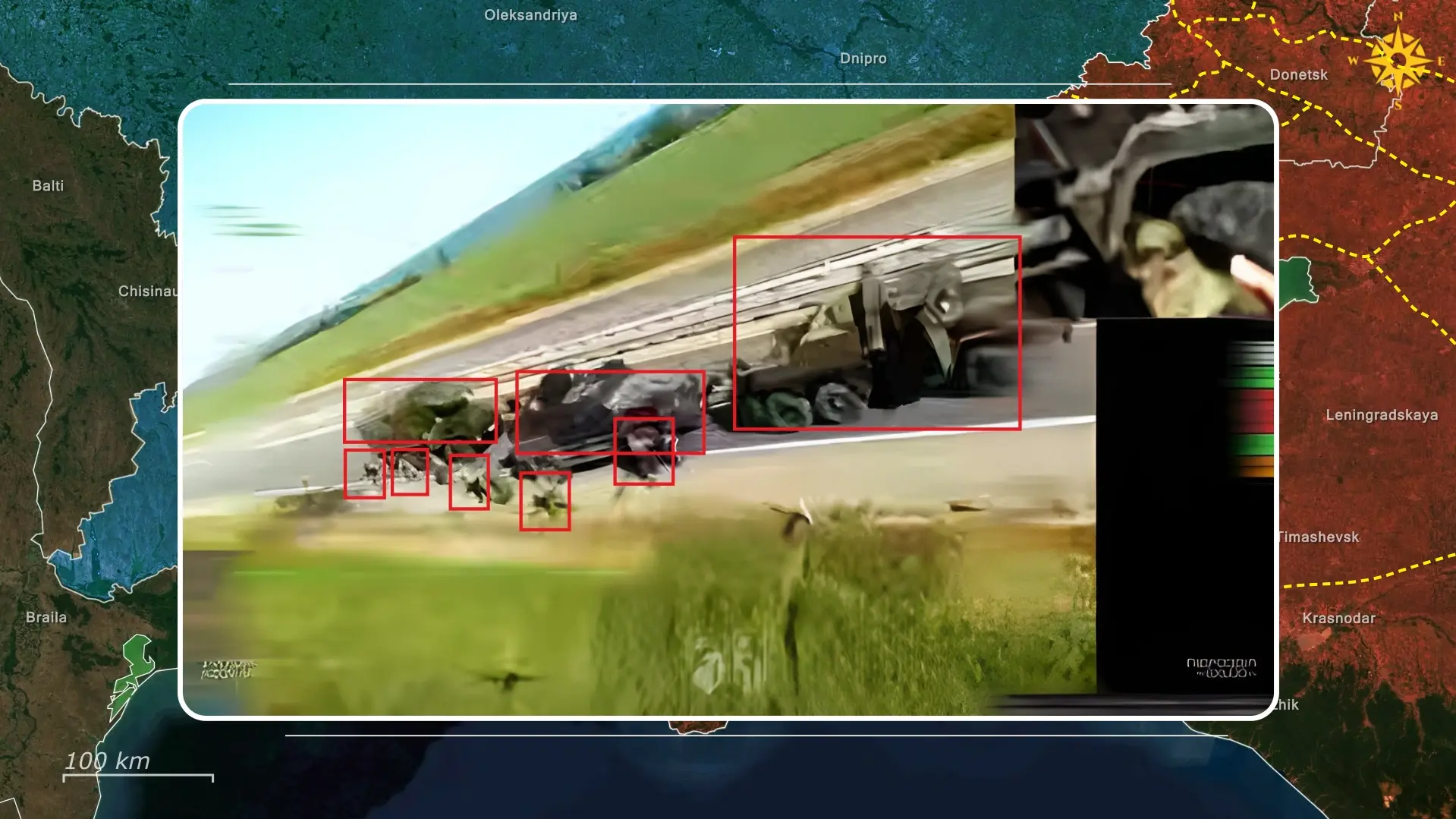
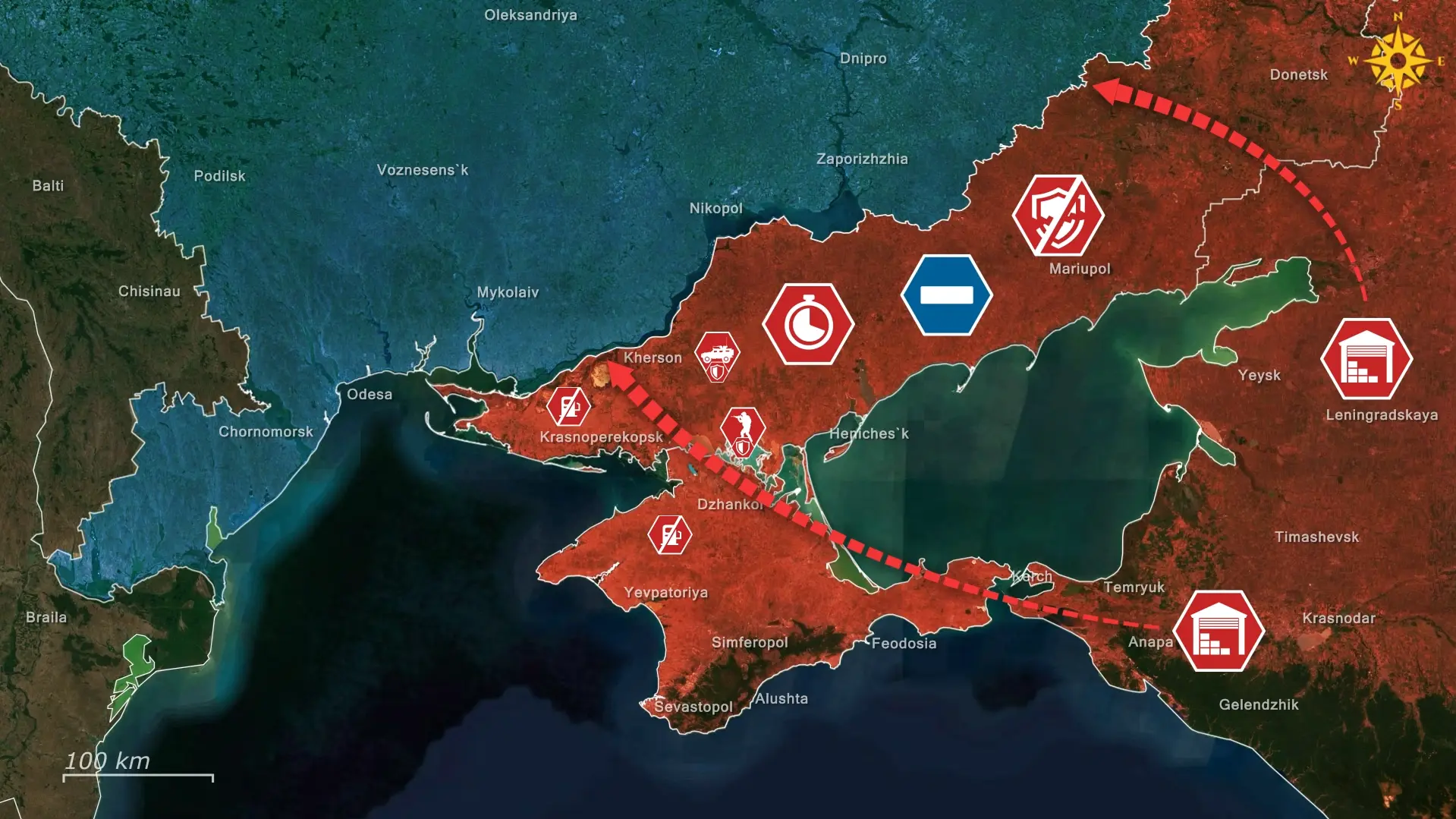
As a result, the same highways Russia cleared for military movement are now the area where Ukrainian strikes cluster most heavily, destroying whole convoys and reducing the reliability of fuel and ammunition deliveries across the southern front. Russian logistics slows as convoys face longer exposure to strikes and increasing risk of disruption before supplies reach frontline units. At the same time, constant pressure forces rerouting and detours, requires additional escorts, and makes movement harder to coordinate while reducing predictability across the network.
Overall, if Ukraine sustains this tempo through the summer, Russia will face a difficult tradeoff created by its own mistake of exposing its logistics, either slowing movement to protect convoys or accepting higher losses to keep supplies moving. Every added escort requires additional vehicles and troops to protect convoys, while rerouting increases fuel consumption and delays deliveries, forcing Russia to spend more resources moving the same amount of supplies. That pressure will be felt most sharply in Crimea and along the southern front, where Russian forces depend heavily on long overland routes now under repeated Ukrainian strikes. Once every road movement becomes visible, slow, and dangerous, the land corridor effectively stops functioning, allowing Ukraine to achieve its objective without physically severing it.

.jpg)



Comments