

.svg)
After carefully observing the war in Ukraine and innovations on the battlefield, the United States is making important steps to upgrade its army to the reality of drone warfare. In particular, observers noted how the introduction of FPV and other strike drones changes the battlefield dynamic entirely. With the outbreak of the war in Iran, these changes were experienced by the US itself, realizing that it was not prepared enough to face the threat of the Shahed strike drones.
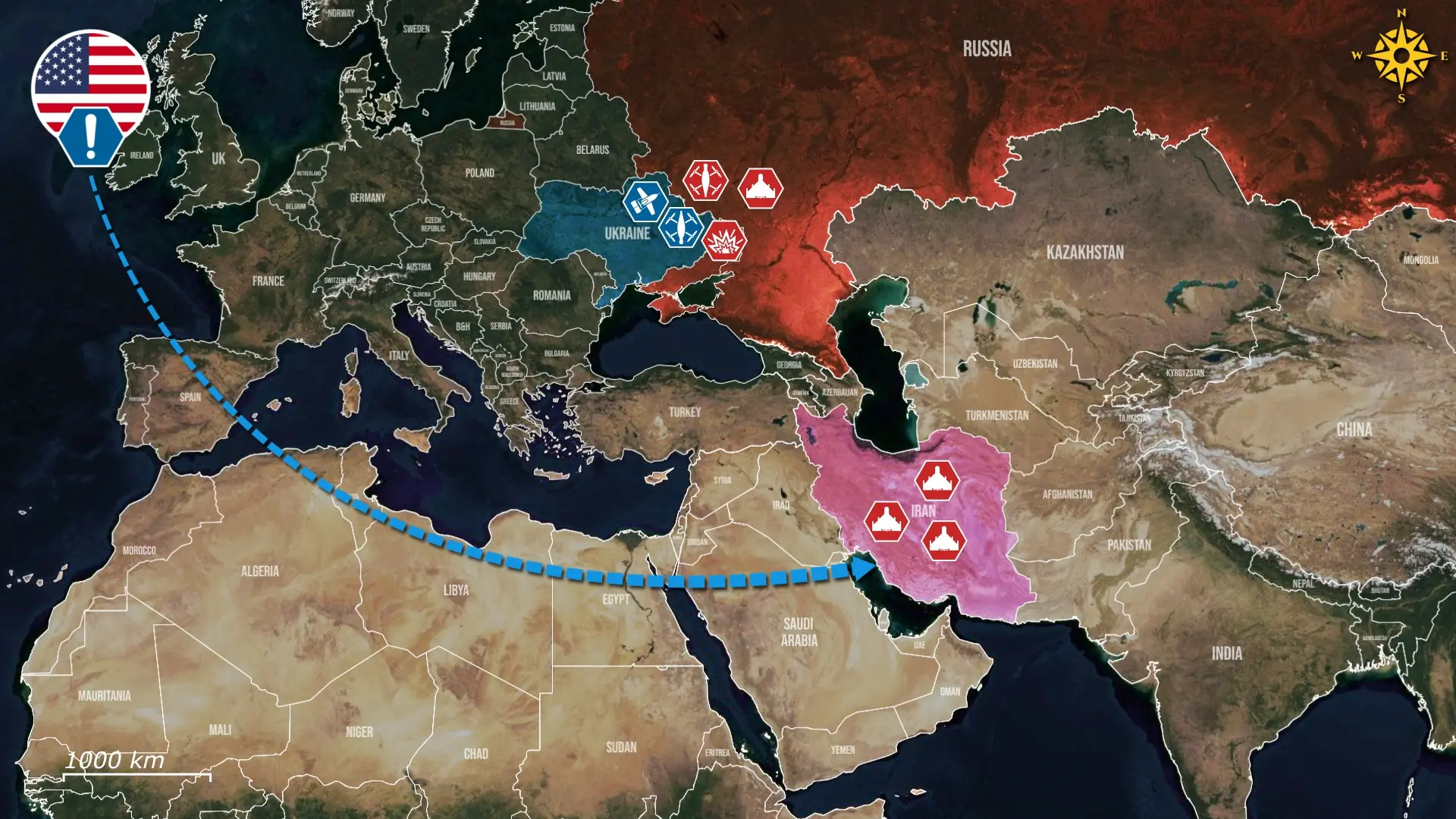
To this end, the US marine corps is moving forward to create UAV battalions into their army structure. The battalion is not only equipped with air recon and strike drones but consists of companies also armed with land and sea drones. Markedly, the company specialized with unmanned ground vehicles is equipped with ground drones mounted with machine guns or designed for transporting cargo, casualty evacuation, and ground reconnaissance. US military specialists are also being sent to Ukraine to learn drone combat operations directly from Ukrainian instructors, meaning that Ukraine is having an active role in training the new US formations.
But Ukraine is not only helping with training, as it is also assisting with interceptor drone production and, even directly allowing the US to purchase drones from Ukrainian manufacturers. The US is, in fact, deploying Merops interceptor drones to its bases near Iran, drones which have already been tested, improved, and successfully used in Ukraine. Furthermore, Ukraine has allowed for the first time the export to the US of F-ten attack drones, which will be tested and evaluated for integration in the US army.

However, the US is also developing its own drones and testing promising concepts. Notably, the Pentagon has unveiled a new interceptor drone designed to neutralize entire FPV swarms, which, instead of relying only on jamming, uses microwave bursts to fry the onboard electronics of the enemy drones. This means that this type of interceptor drone electronic warfare combination is capable of neutralizing even fiber optic drones that cannot otherwise be jammed with electronic warfare; which are intensively used not only by Russia, but also increasingly by Iran and its proxies.

The US is also moving quickly at sea, as during exercises in the Pacific, American forces tested naval drones similar to those of the Ukrainian Magura family, which Ukraine had used successfully against the Russian navy and the Russian Shadow fleet. The successful results in the exercises convinced the US to start joint production with Ukraine of the Magura Sea drones in the United States. These drones have recently already been used in action against Iranian port infrastructure, and their integration shows that the US sees unmanned surface vessels as an effective tool for its sea operations.

But the lessons from Ukrainian modern warfare go beyond drones, as the US is moving to battlefield management software that mirrors Ukraine’s long standing integrated approach, where every weapon system and available data feeds into a single display. Remarkably, Ukraine achieved a high level of integration despite the large variety of weapon systems delivered from allies, each with its own ecosystem, which the Ukrainians have connected and manage through a unified software. Similarly, Palantir created the Maven system, where all available data is integrated, and all available actions are presented by the integrated AI. This means that the system receives data from satellites, radars, and other sensors, after which algorithms can automatically and rapidly identify potential targets and compile strike packages. Notably, AI-integrated battlefield management systems integrate extremely well with the direction that the US military was already going, as the US’ fifth-generation stealth fighter, the F-thirty-five, is designed to be integrated into the battlefield and in constant communication with weapon systems around it; with AI-battlefield management being the next logical step in this trend of military evolution.

Overall, the evolving US doctrine is emerging from a mix of urgency, battlefield learning and ambition to remain at the top. The lessons from Ukraine have been of tremendous value in learning how innovation and drone warfare can continually fend off a large, structured military like the Russian. Consequently, the US is gradually increasing closer cooperation with Ukraine not as a minor ally, but an important partner for the future of its army. Although this process started late, the reforms and level of investments indicate that the US is serious about catching up.


.jpg)




Comments