

.svg)
Today, the biggest news comes from Ukraine.
Here, Russia prepares for new offensives, without signs of stopping its ambitions to push forward. However, Ukraine has built a new massive defense line, which is already shattering Russia’s ambitions and forcing it to sacrifice hundreds of thousands of its soldiers more.
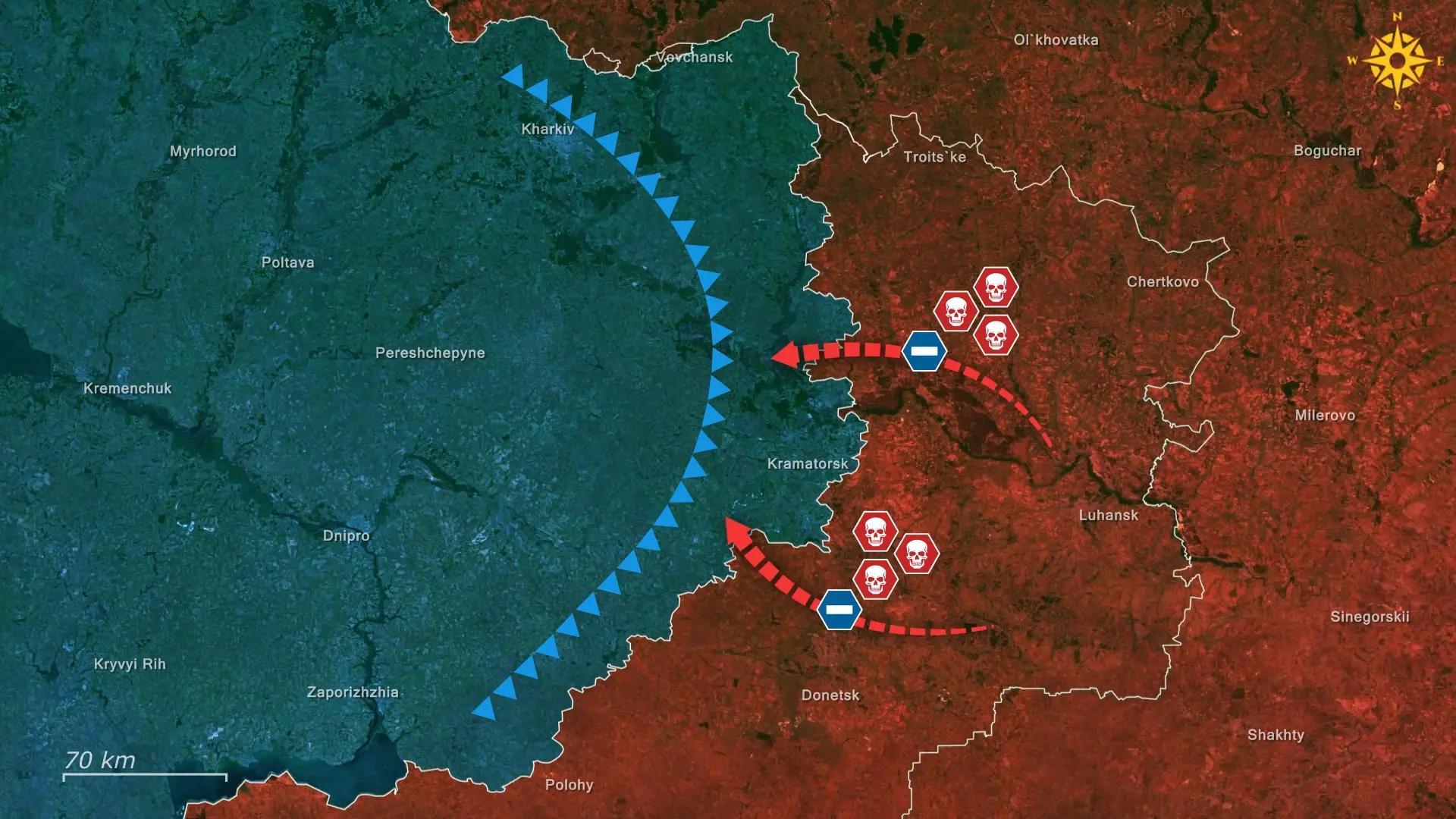
Recently, the Ukrainian military released extended footage of the creation of a new and extensive, approximately 2,000 kilometer-long defensive fortification, positioned well behind the current front line. The project, which has cost around 2 billion US dollars, represents a large-scale investment in modern, layered infrastructure to serve as insurance, no matter how things on the battlefield or the negotiating table develop.
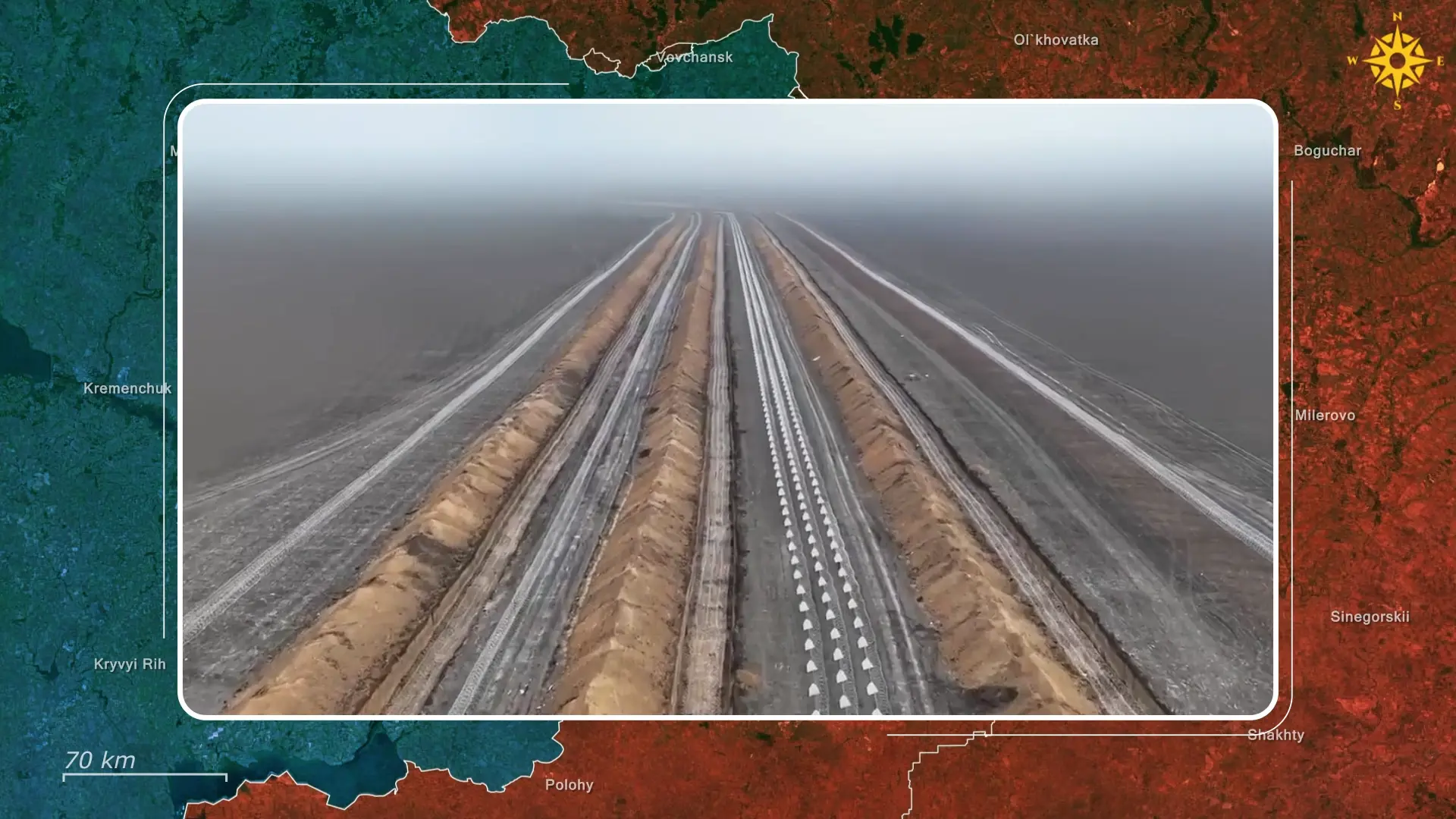
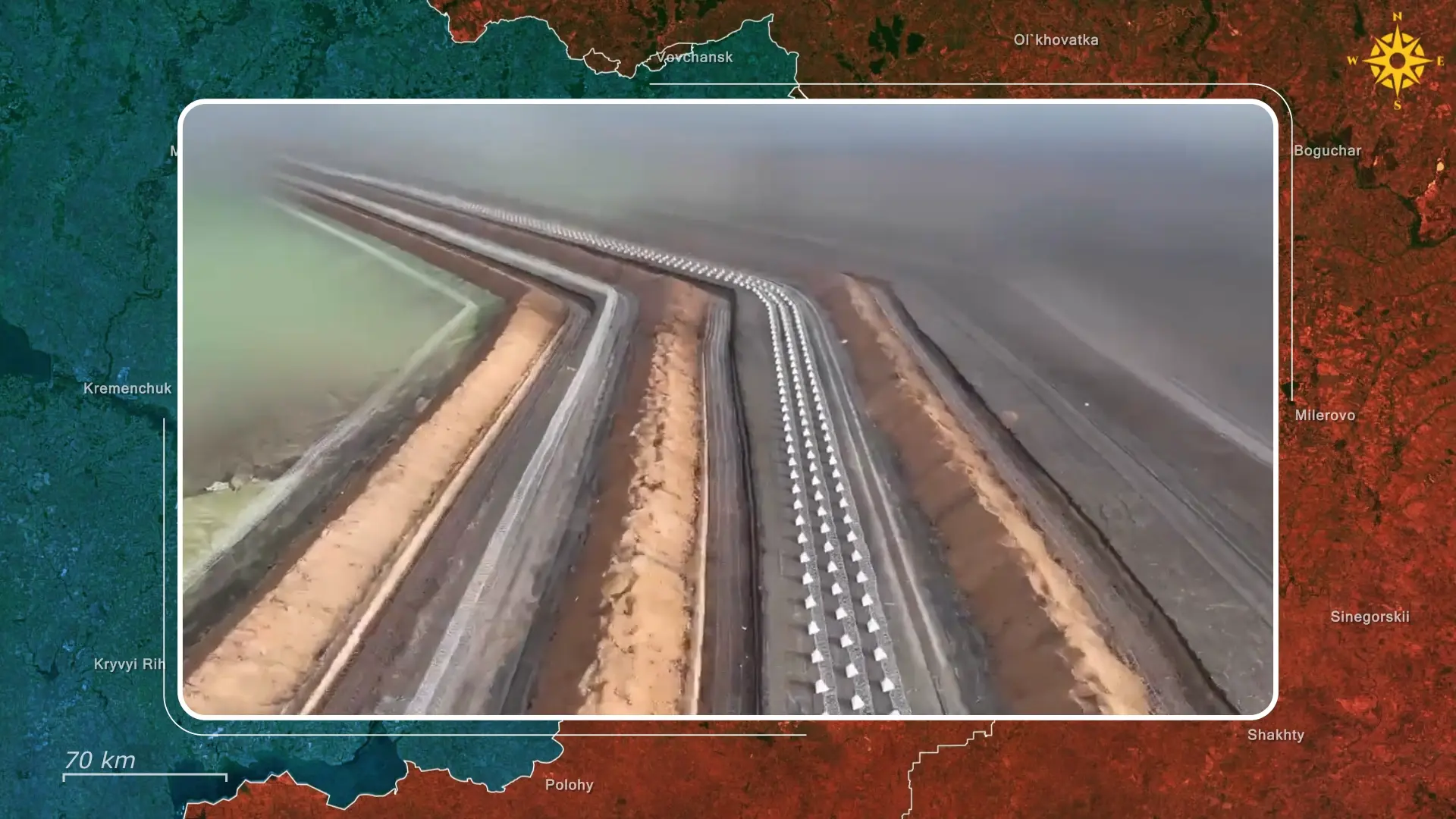
The defensive system was deliberately designed in response to earlier operational shortcomings and hard-learned battlefield experience, particularly lessons drawn from engagements around Pokrovsk and Dobropillia. Constrained by limited manpower, Ukraine has shifted away from attempting to hold terrain through dense troop deployments and instead constructed a large-scale obstacle network intended to create effectively uncrossable kill zones. The emphasis is not on maneuver warfare or rapid counteroffensives, but on denying advance through systematic attrition, slowing, canalizing, and exposing attacking forces to sustained precision fire.
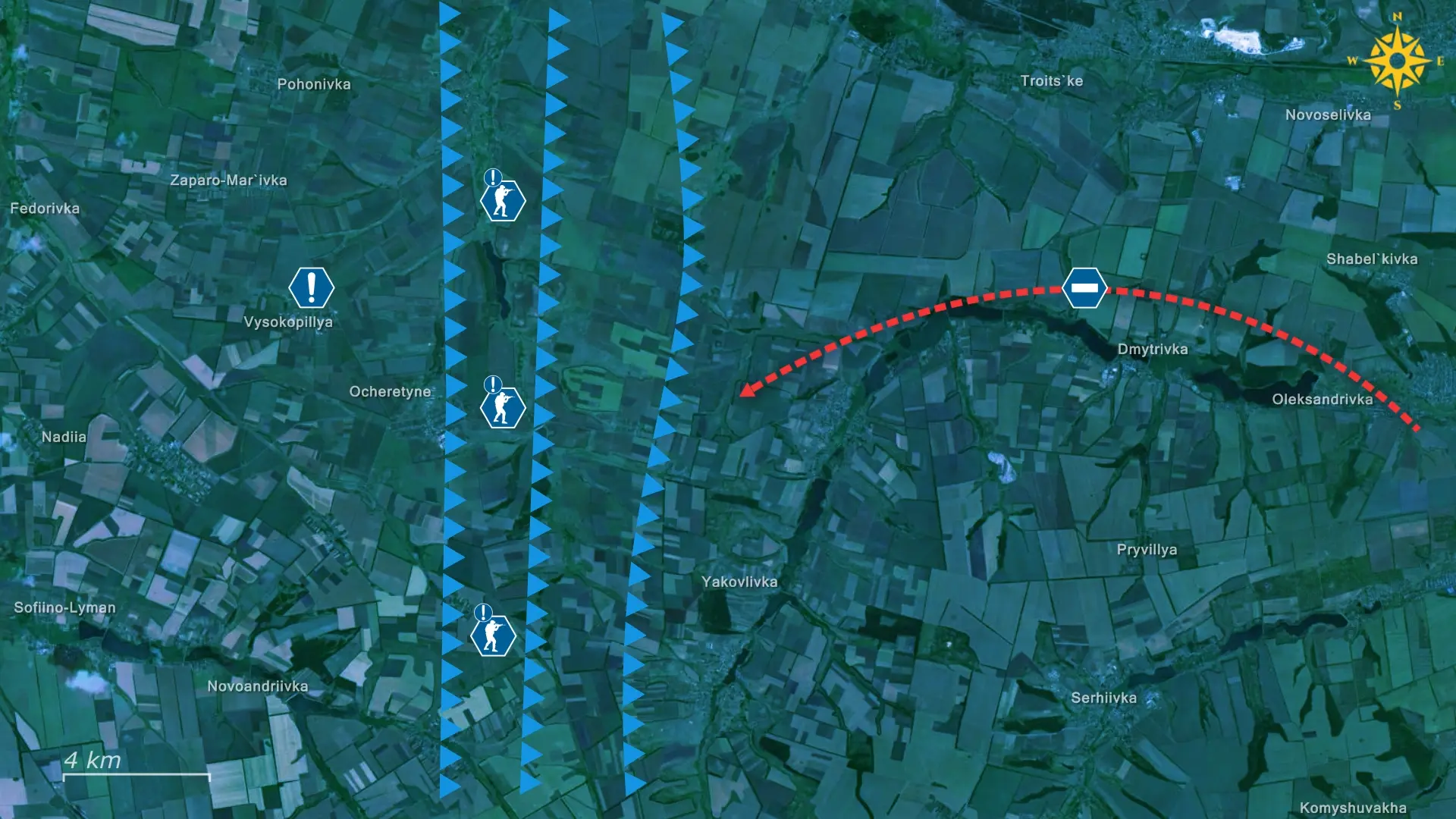
By replacing manpower with depth, obstacles, and integrated fires, the fortifications degrade enemy tempo, impose high losses on any attempted breakthrough, and allow Ukrainian forces to flexibly concentrate equipment and firepower where it is most effective while securing vast areas with minimal personnel.
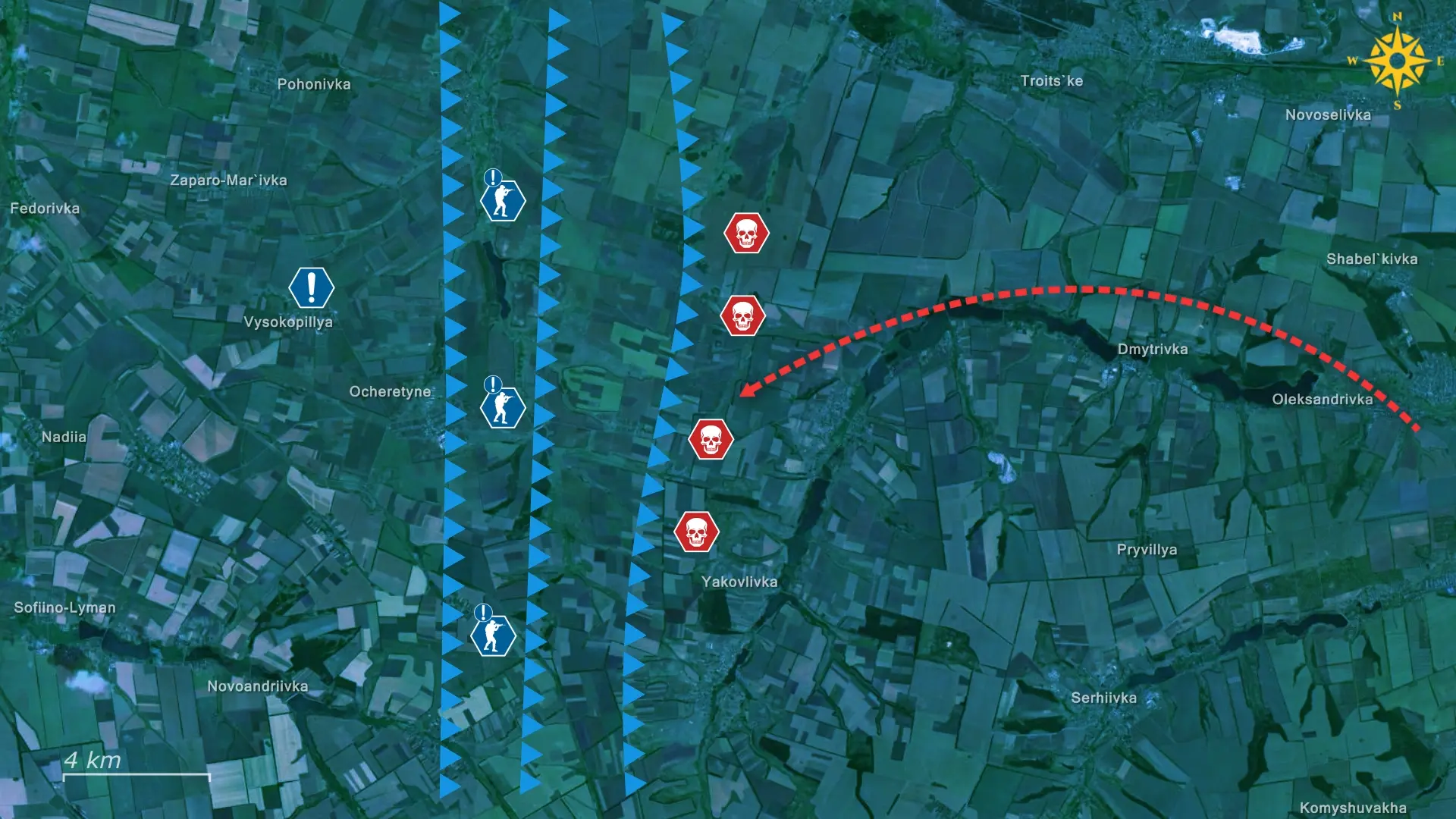
The defensive line has been engineered as a trap, designed to counter both infantry and armored formations through multiple, mutually reinforcing layers. It integrates anti-tank and anti-personnel mines, 21 rows of barbed wire, three parallel anti-tank ditches, and three successive belts of dragon’s teeth to impede armored movement. Each obstacle serves a specific function: minefields deny access, barbed wire disrupts infantry, reinforced ditches prevent use as cover, and interconnected dragon’s teeth and wire limit rapid dismantling.
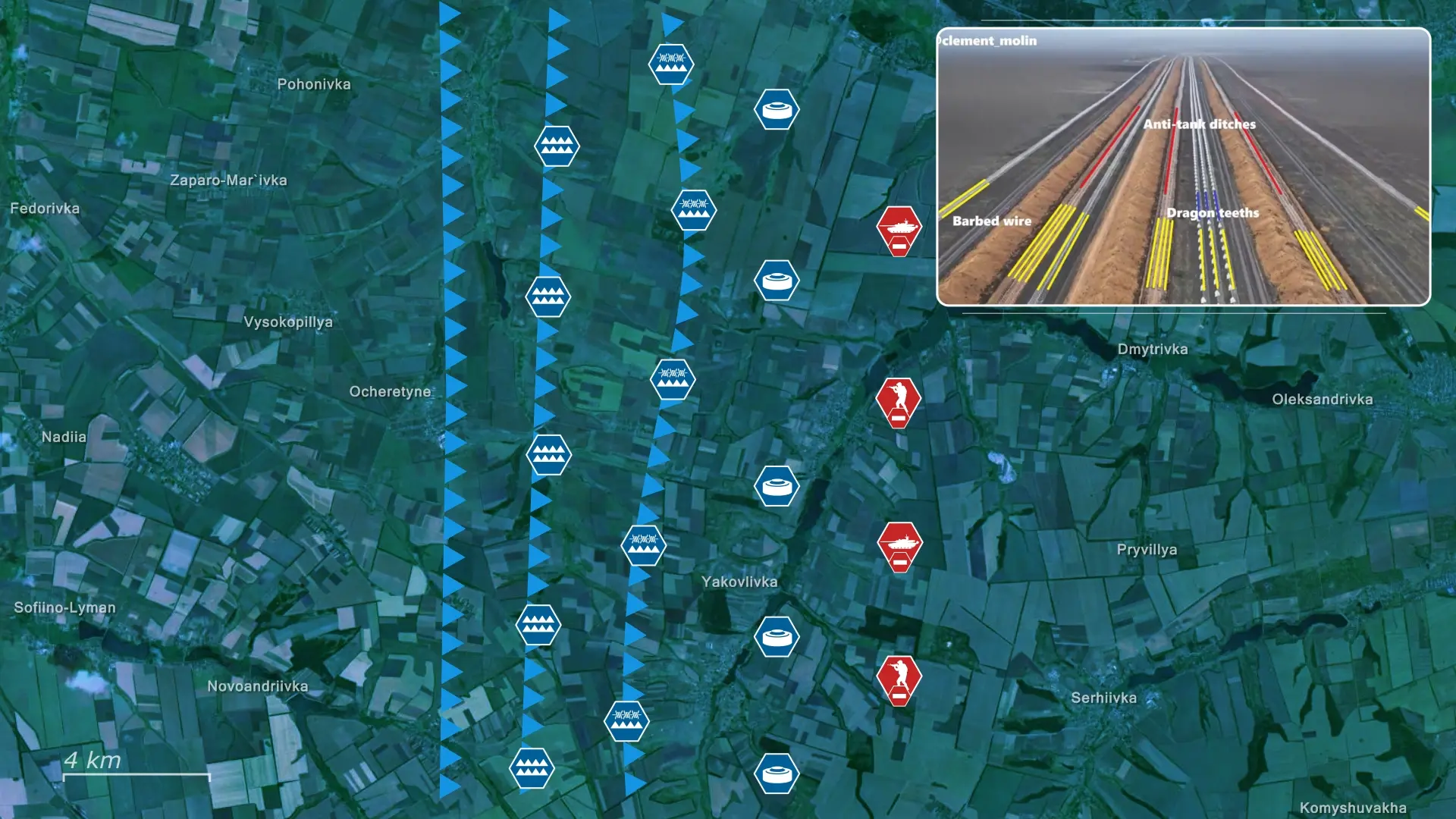
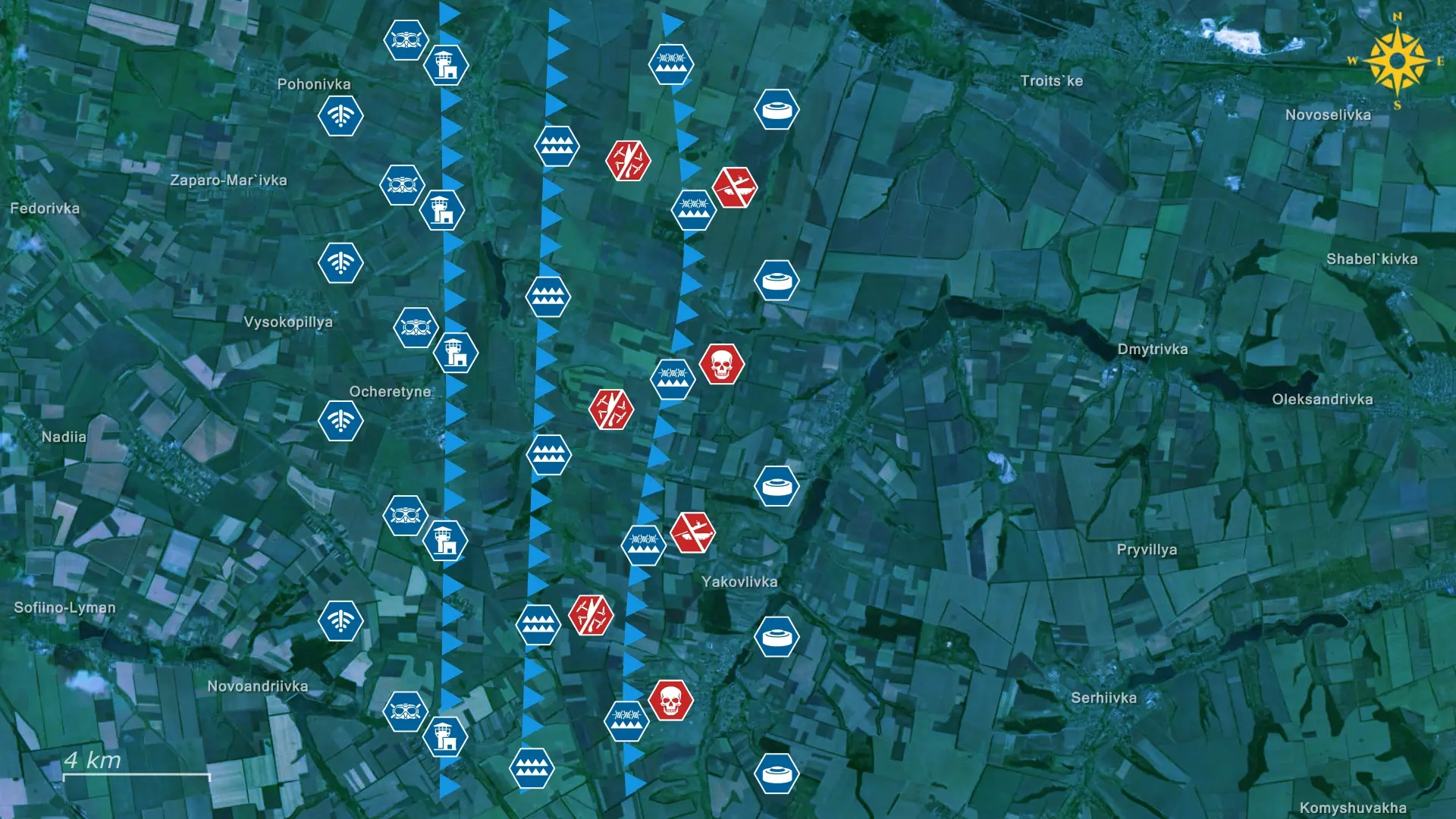
Together, these measures delay and canalize attackers, increasing exposure to defensive fire and reducing the likelihood of coordinated breaches. Beyond the main lines, a dense network of micro-fortifications supports small drone operator teams with surveillance and strike reach approaching 20 kilometers, extending the defenses into a broad kill zone. These positions integrate electronic warfare and include hardened, camouflaged bunkers and trenches protected by overhead cover and nets against drones.
However, the defense line cannot be fully continuous, as crossings are needed for logistics or retreat. They are deliberately limited in number, as few as two passages over a 16-kilometer stretch, thereby tightly controlling access points. By forcing the Russians to funnel towards these tight areas, the defenders aim to reduce their maneuver options significantly. Drone surveillance continuously monitors Russian movements, tracking them even before they reach the defensive line, but once the obstacles begin to slow and channel their advance, the attackers have nowhere to hide.
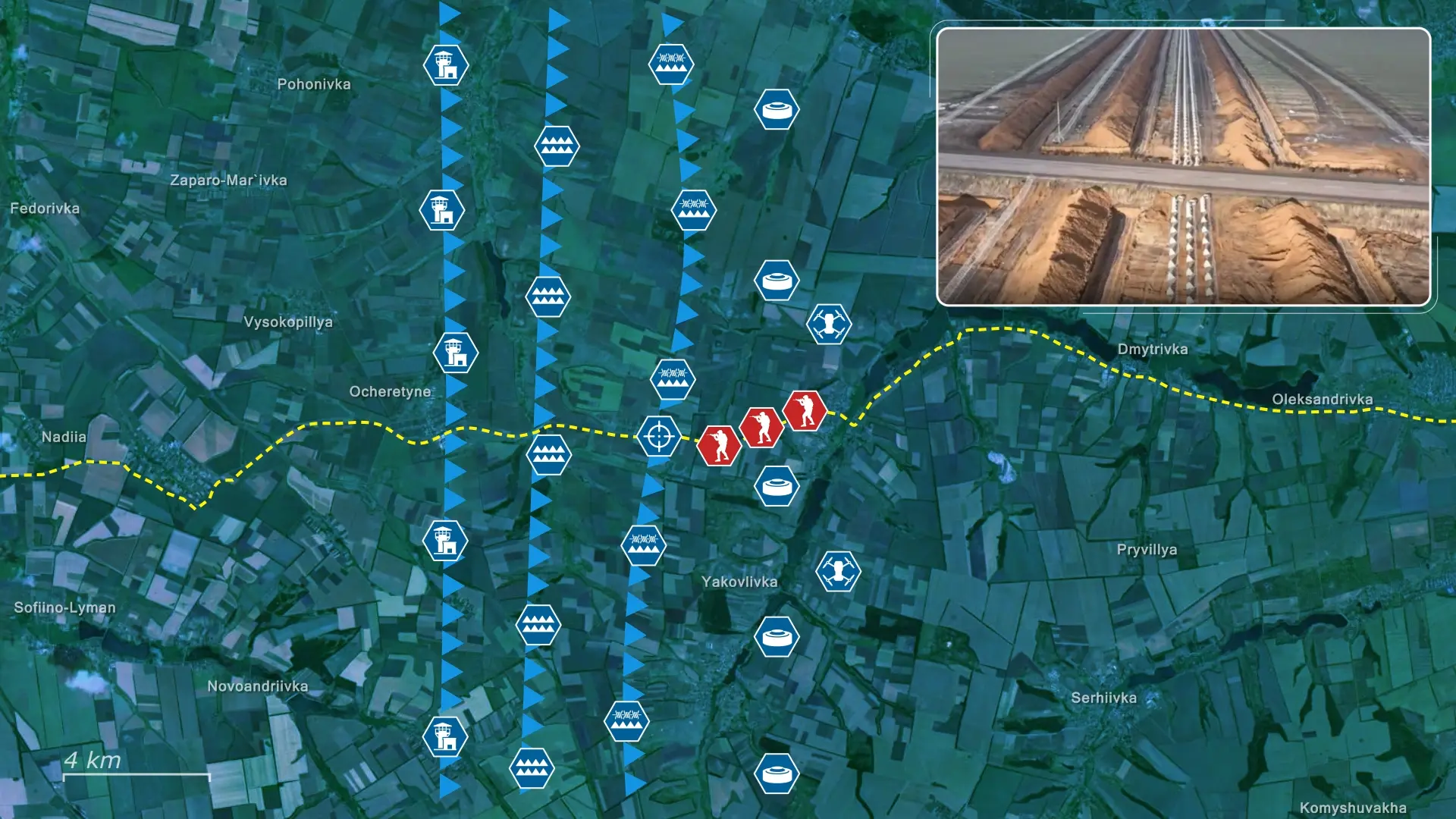
As their momentum is reduced, they become exposed to coordinated Ukrainian precision strikes from drones, mortars, and artillery. Moreover, hidden, fortified positions located behind the obstacle belts provide the Ukrainians with protected firing positions and hideouts for infantry and drone operators.
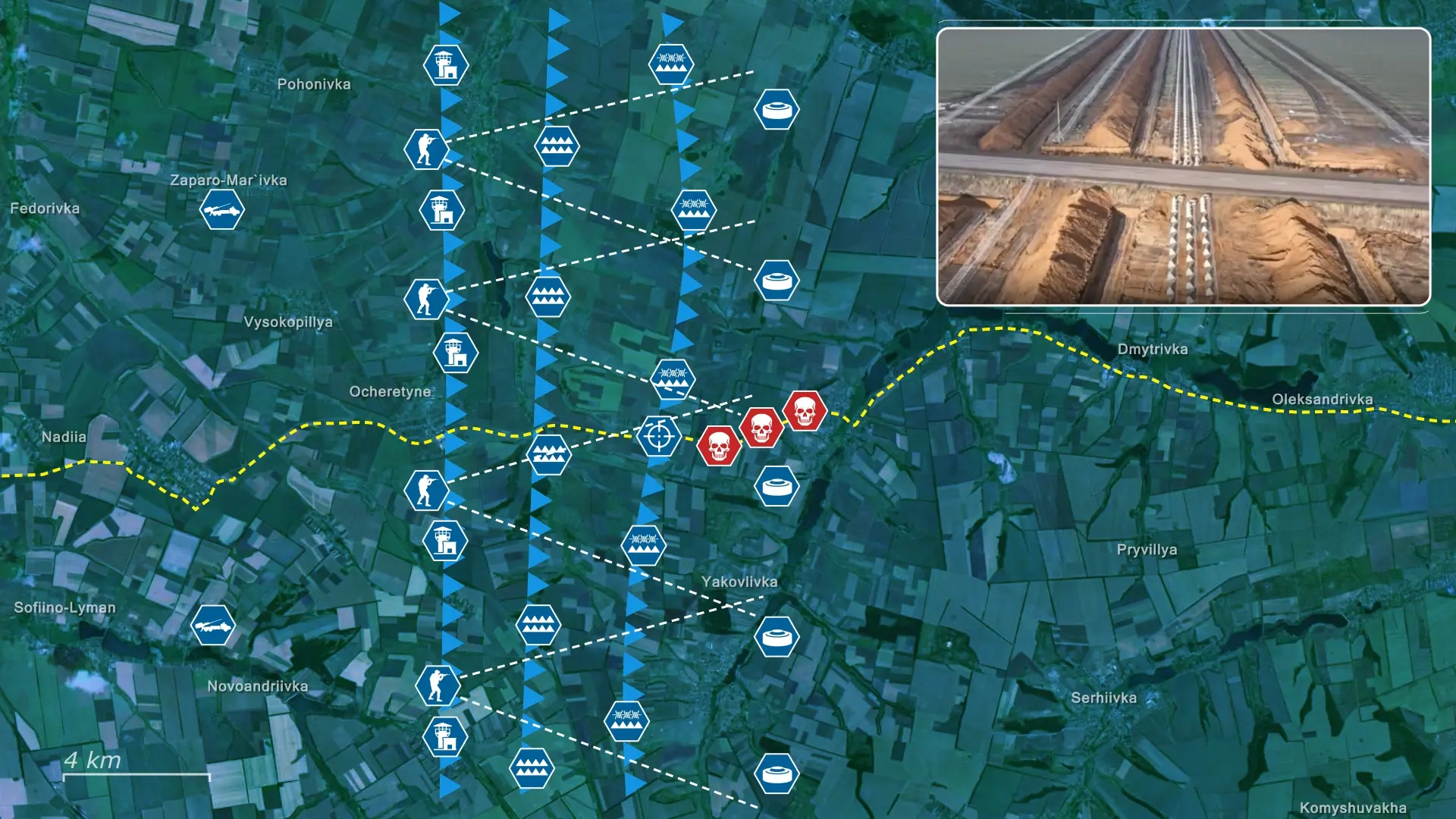
Under this defensive concept, successful Russian breakthroughs become statistically improbable. Even though the line could be breached through sustained and concentrated application of airpower and artillery, the roughly 150-meter depth of the obstacle belt would necessitate enormous resources to create a viable passage.
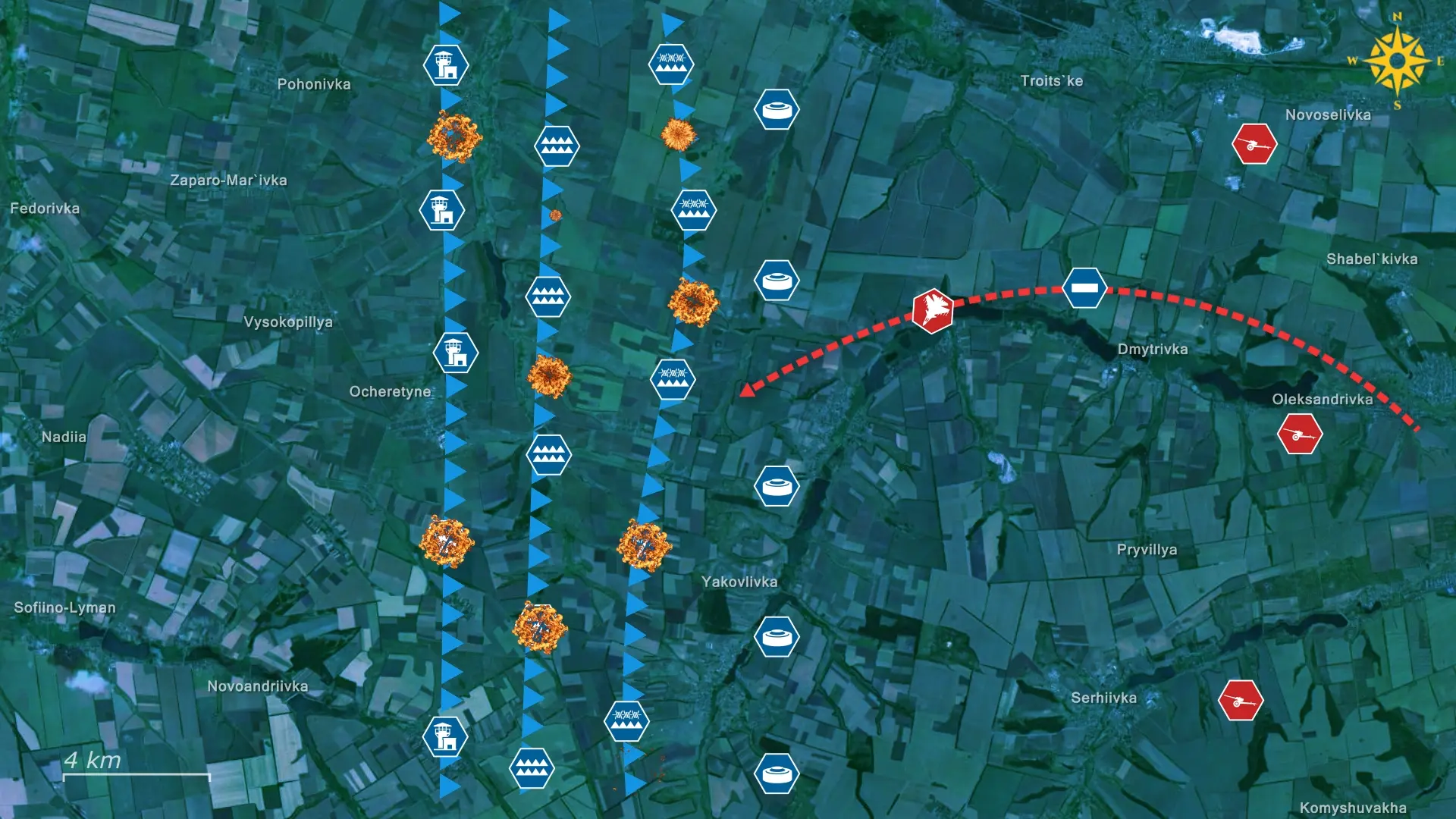
Even if certain sections are damaged, and some Russian forces penetrate, they would still be forced to move through a tight zone under continuous, multidirectional Ukrainian fire. Moreover, extensive bombardment is likely to transform the obstacles into a mixture of collapsed wire, shattered concrete, and even deeper craters, further complicating movement rather than easing it.
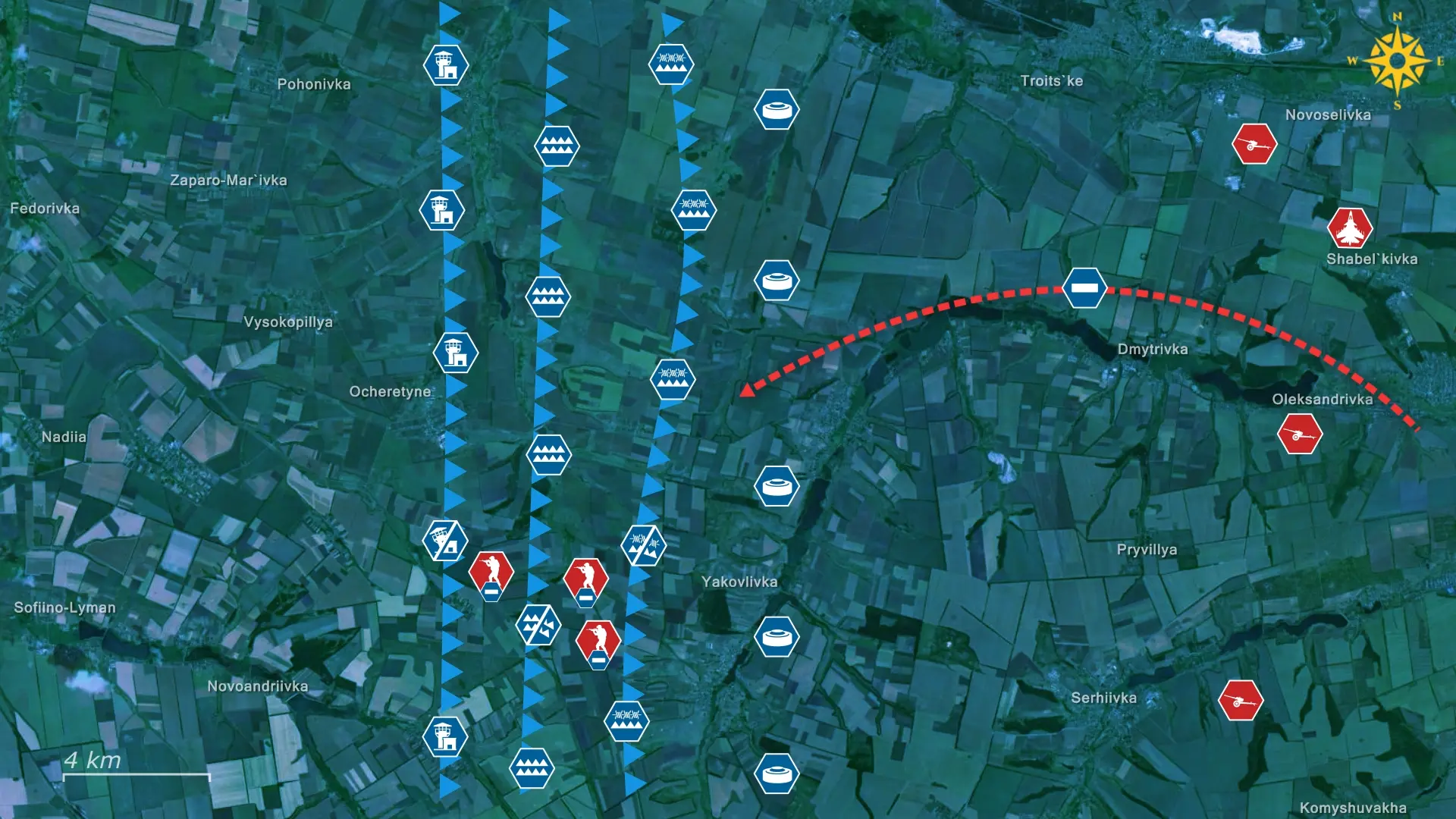
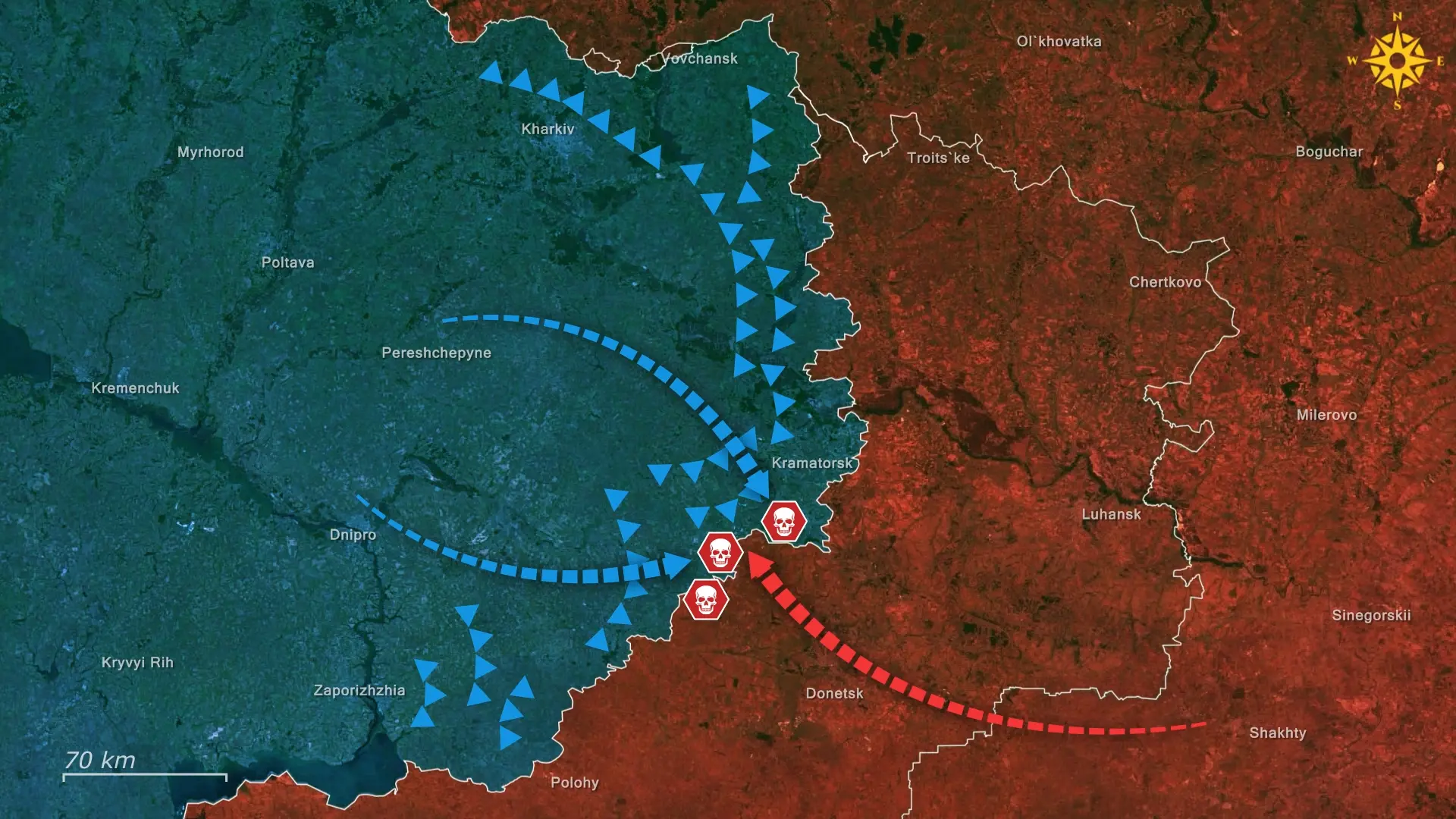
As a result, any Russian push will effectively culminate in a defense system designed to absorb, degrade, and destroy attacking forces at a rate exceeding Russia’s available combat power. Russian forces have historically struggled to achieve penetrations even in sectors with minimal or no defensive fortifications, so a large-scale, continuous defensive line of this magnitude is likely to exert a significant psychological effect. Its depth and the extensive resources and manpower required to overcome it further amplify its deterrent impact, reinforcing both operational and morale-related constraints on any offensive.
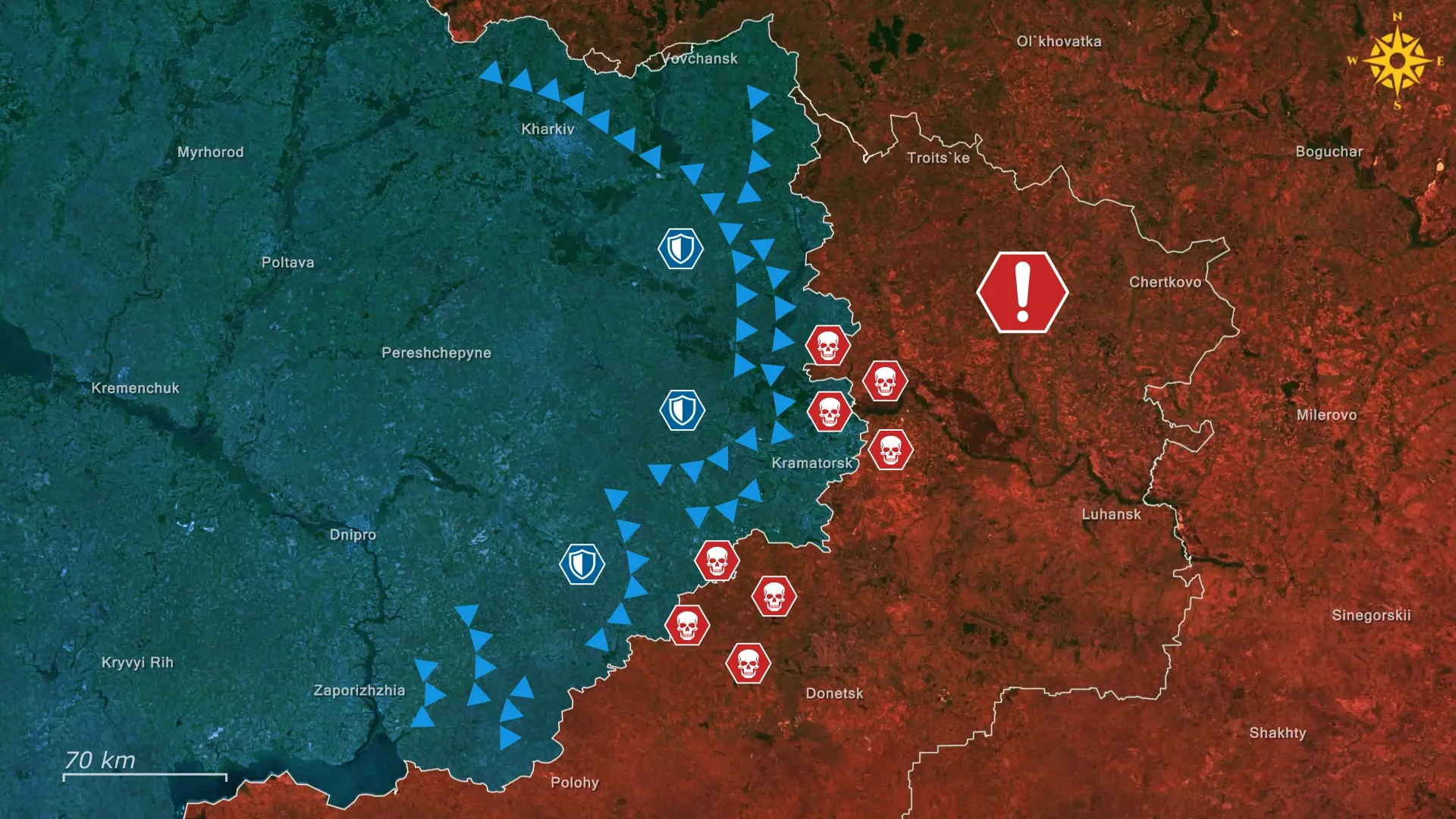
Overall, the newly constructed Ukrainian defense line is a preventive step toward any potential development and a preparation for even harsher attritional warfare, aimed at degrading the Russian offensive capacity if reached.
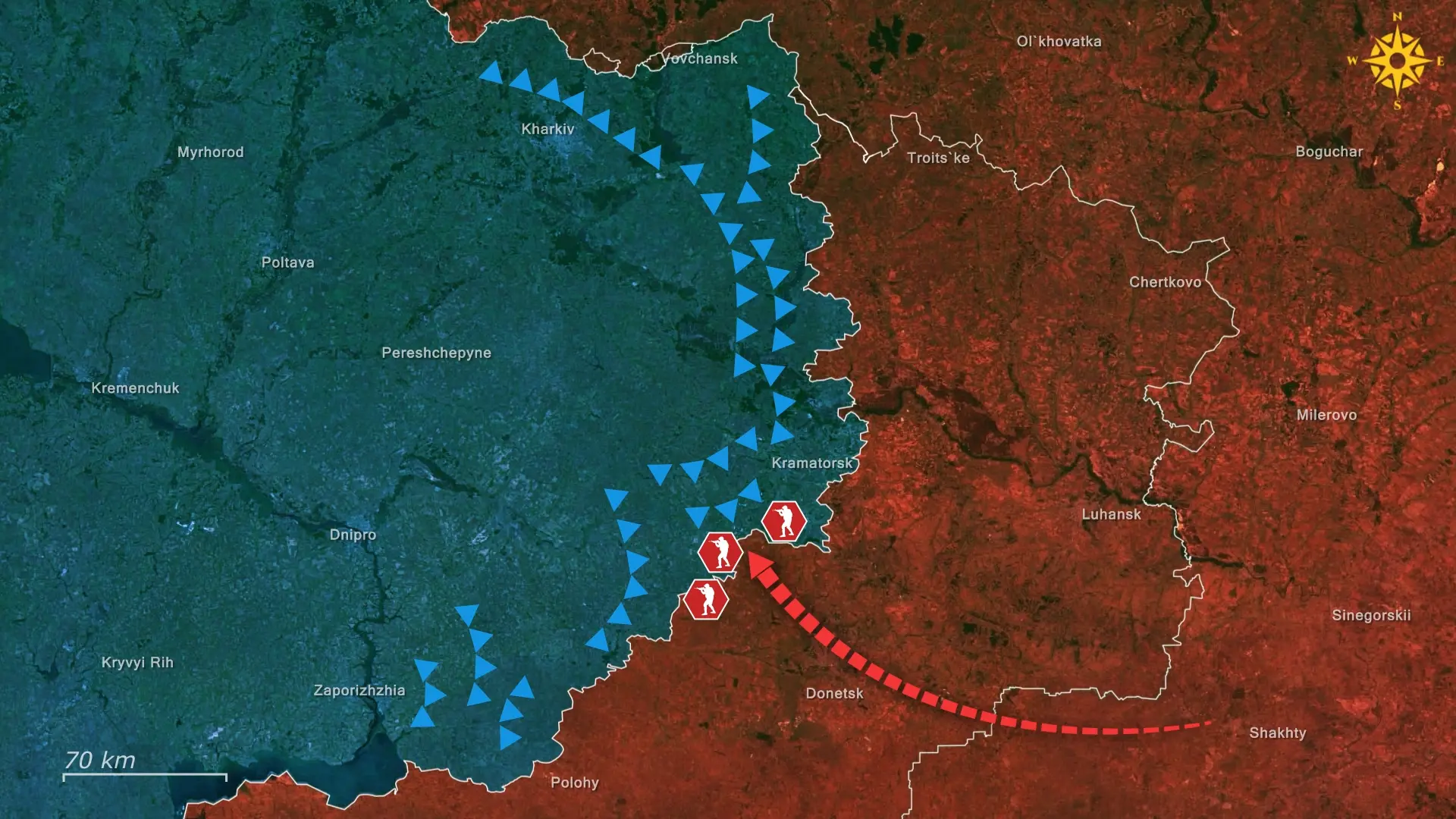
However, even if the enemy manages to do so, overcoming the depth, density, and integrated fire positions would likely be prohibitively costly and operationally unsustainable for the Russians to even try.

.jpg)



Comments