

.svg)
Today, the biggest news comes from Ukraine’s defense industry.
For most of the war, Ukraine’s armored strength depended on what the allies promised to send next. Now the equation has flipped, while Russia burns through aging Soviet stockpiles to hold the line, Ukraine is producing new armored vehicles every month, and that shift may decide who runs out of time first.
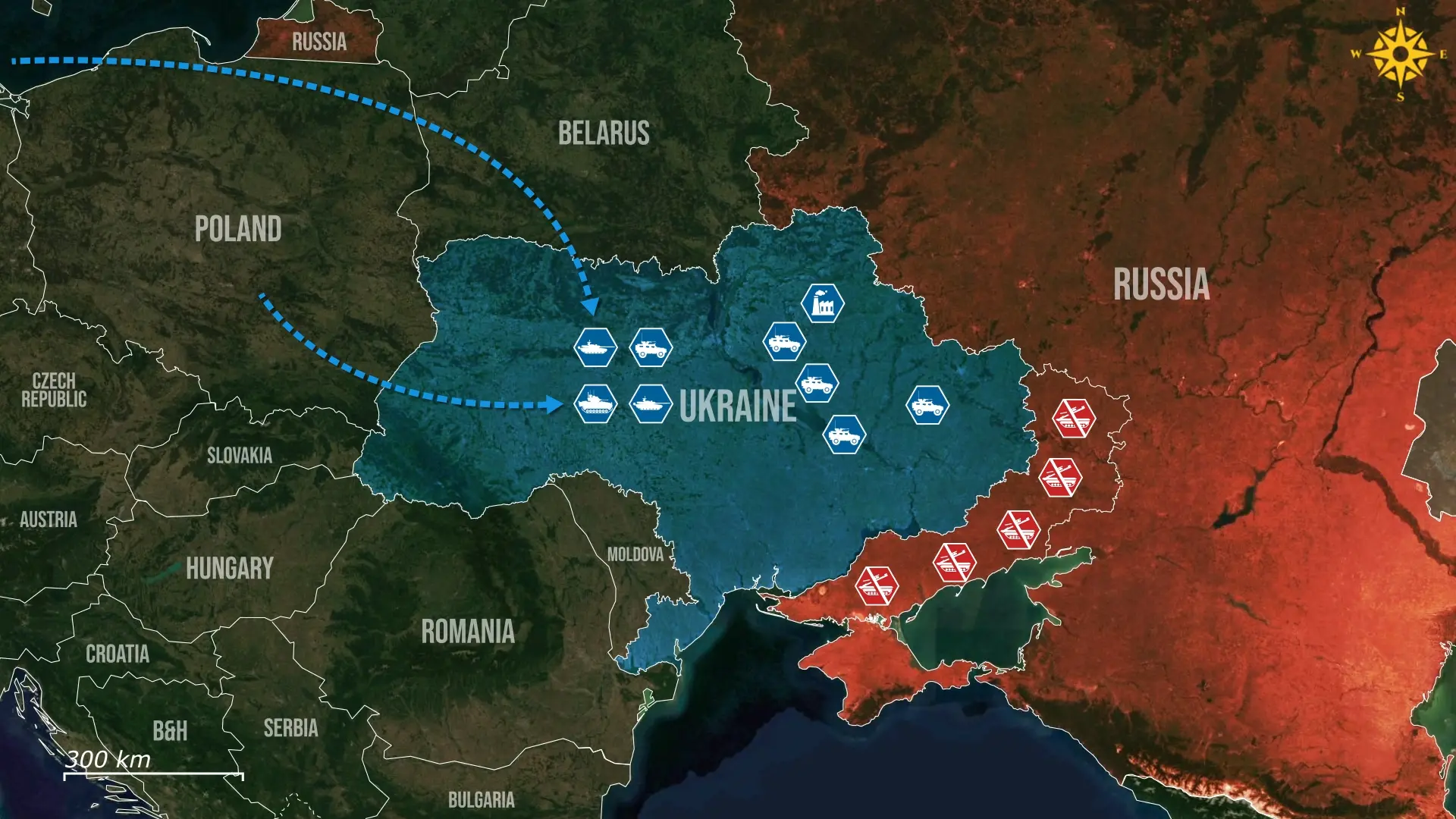
In December 2025, Ukrainian defense manufacturer Ukraine armo-tech delivered 402 armored vehicles to the Ukrainian Defense Forces in a single month. The batch included 333 Gyurza-01 armored personnel carriers, 30 Gyurza-02 vehicles, 24 UAT-Fox armored vehicles, and 16 UAT-Tisa light armored pickups.

These vehicles are not designed to fight heavy armor, but to transport soldiers and supplies in high survivable vehicles through areas saturated by enemy threats. This delivery reflects a shift away from Ukraine’s earlier dependence on foreign-supplied armored vehicles.

For much of the war, Ukraine’s ability to equip units depended on partner availability, political timelines, and long supply chains that could not easily respond to sudden battlefield shifts. When armored vehicles are produced domestically, spare parts, repair expertise, and design feedback remain inside the country, which accelerates adaptation to frontline needs.

At the military level, armored personnel carriers are critical because they directly support three recurring battlefield functions; rotation, logistics, and evacuation. Rotation is a mobility problem because units must be moved in and out of positions without becoming exposed to enemy drones.

Logistics is also a movement problem, because ammunition, food, water, batteries, and drone components must travel repeatedly and safely along routes that are increasingly targeted the more they are used.

Evacuation depends on protected mobility because wounded soldiers are most vulnerable during extraction, and armored vehicles improve survival by shielding crews from small-arms fire and explosions. Armored transport does not prevent detection, but it increases the chance that crews survive and complete the mission, saving lives and achieving objectives at the same time.

Importantly, this is also a question of scale. The delivery of 402 vehicles by one company in only one month, supports sustained operations rather than isolated tactical fixes. A small number of armored vehicles can reinforce one battalion for one task, but hundreds of vehicles can be distributed across multiple brigades and support units, changing how often movement can safely occur all across the front. For example, a brigade that can move companies, supplies, and evacuation teams under armor each night can maintain pressure for weeks, while a brigade relying on soft-skinned vehicles will eventually be forced to pause and scale back operations to avoid predictable losses, in turn allowing the enemy to take advantage and advance.

The contrast with Russia is that Russian forces continue to lose armored vehicles at a rate that forces reliance on reserves and refurbishment alongside new production. Russia’s output remains uneven, BTR-82 production is estimated at 300 to 400 vehicles per year, often including refurbished hulls, while the 463 BMP-3’s reported in 2023 include only around 200 true new builds.
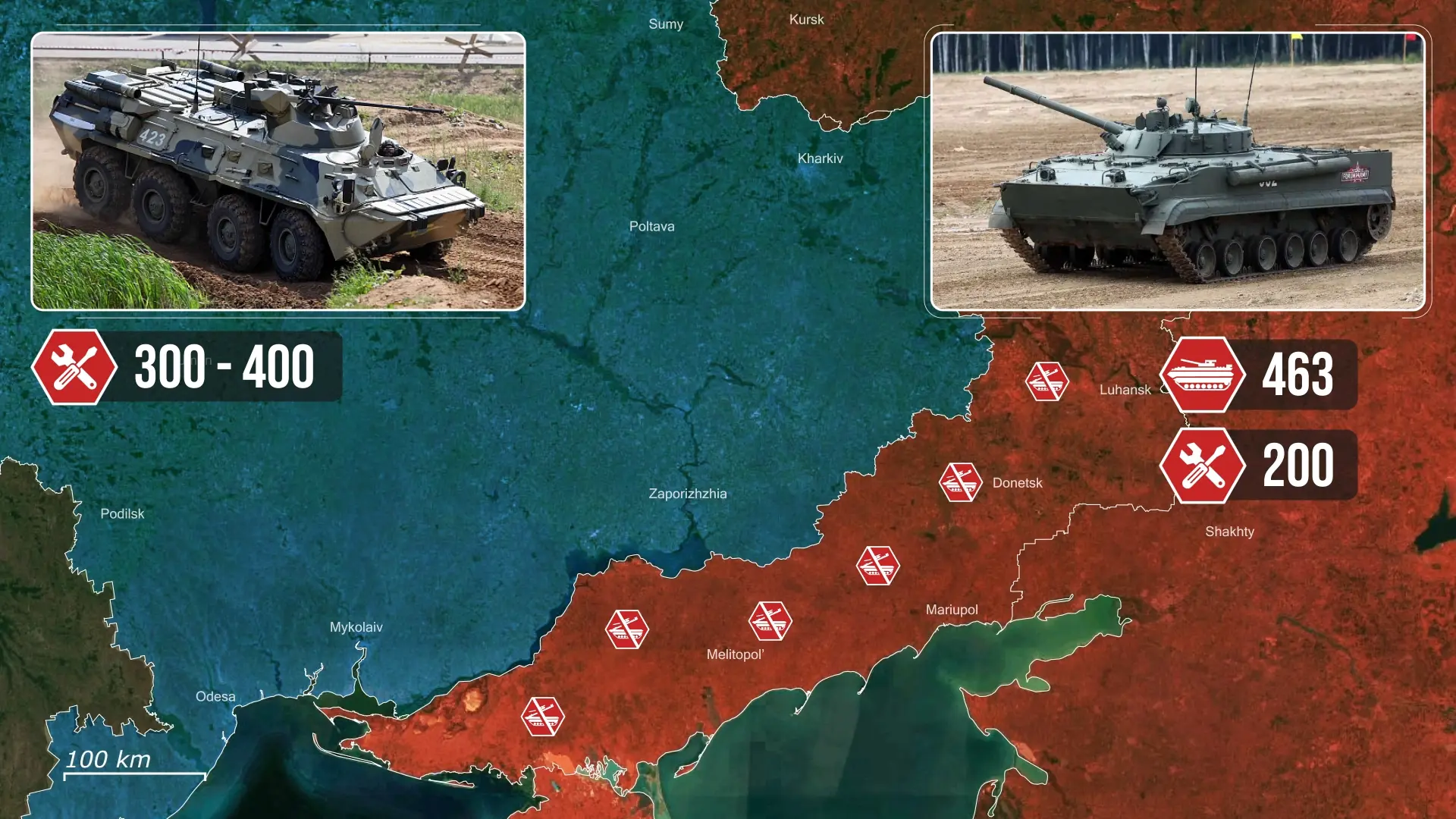
This forces Russia to balance battlefield tempo against shrinking Soviet era reserves. At first glance, comparing Ukrainian armored vehicles to heavier Russian BTRs and BMPs seems mismatched. But those Russian platforms were designed for Cold War combat, fighting machine guns and autocannons. On today’s battlefield, survivability depends on all-round protection against drones and mines.

Ukrainian vehicles may still be hit, but crews usually survive; Russian vehicles are not harder to hit, but when they are penetrated, crew survival rates are significantly lower. Even when compared to closer Russian counterparts like the Tigr, produced at roughly 60 vehicles per month, Ukraine’s domestic output is now competitive. Taken together, Ukraine has reached the point where it can match and in some ways exceed Russia’s effective armored vehicle replacement, while Russia remains dependent on its aging reserves. That means Ukraine can sustain losses and keep forces protected during logistics, rotation, and evacuation while Russia continues to trade future capability for short-term survival.

Overall, Ukraine’s delivery of new armored vehicles demonstrates how domestic industrial output is being directly converted into battlefield resilience. Protected mobility sustains rotations, logistics, and evacuation under conditions where exposure during movement is a primary cause of casualties. As industrial output stabilizes, replacement rates increase, allowing commanders to gain confidence in operating continuously rather than trying to preserve equipment. This creates a reinforcing cycle in which battlefield demand drives industrial expansion for Ukraine, while Russia edges closer to sustaining operations on whatever else that can still roll.


.jpg)



Comments