

.svg)
Today, the biggest news comes from Belarus.
Here, Ukraine appears to have ripped out one of the most important hidden links in Russia’s Shahed strike system. What looked like a quiet rear area in Belarus was, in fact, helping guide attacks on Kyiv and central Ukraine, and the true role of those towers exposes a critical weakness in how Russia has been running this campaign.
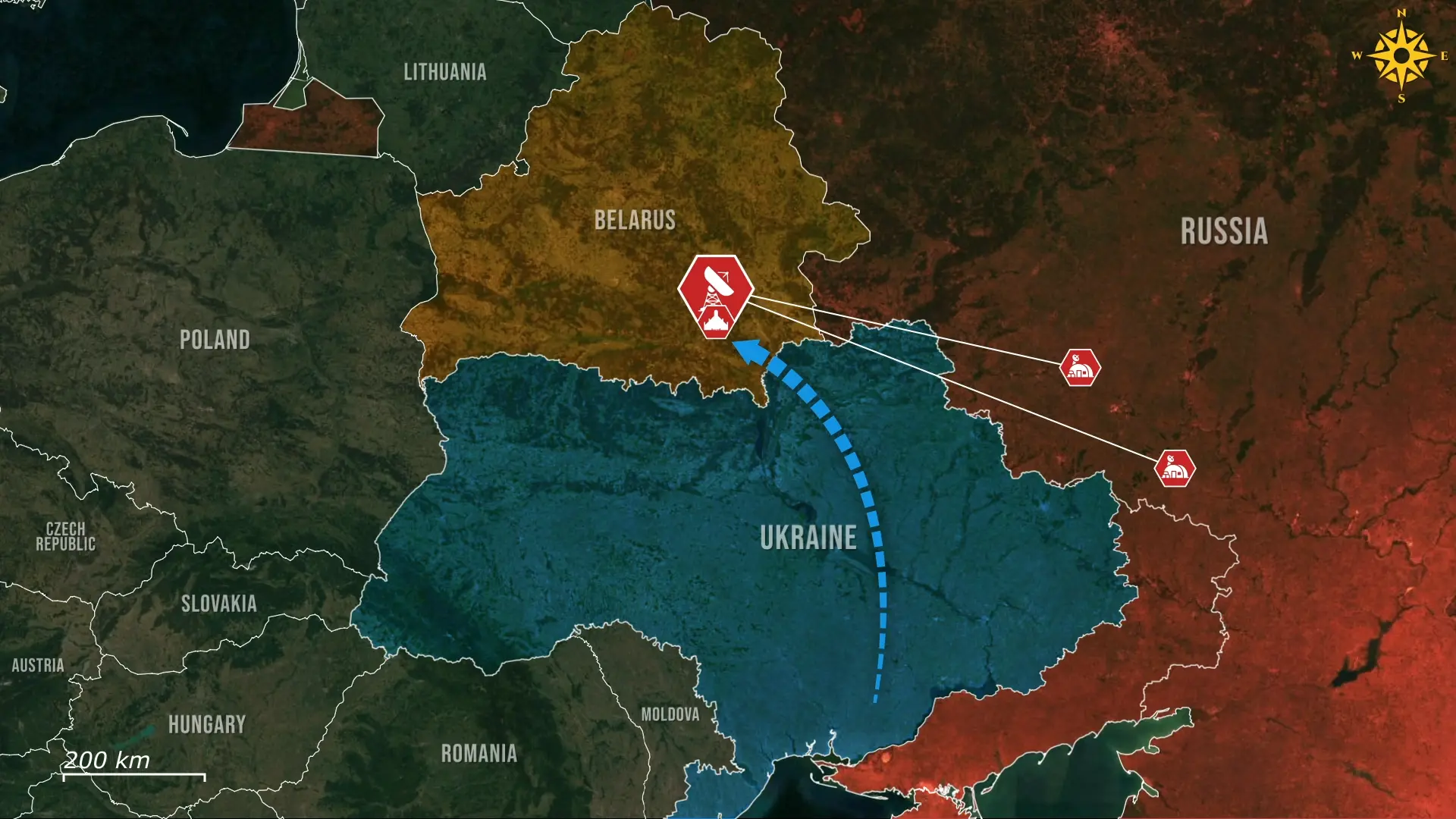
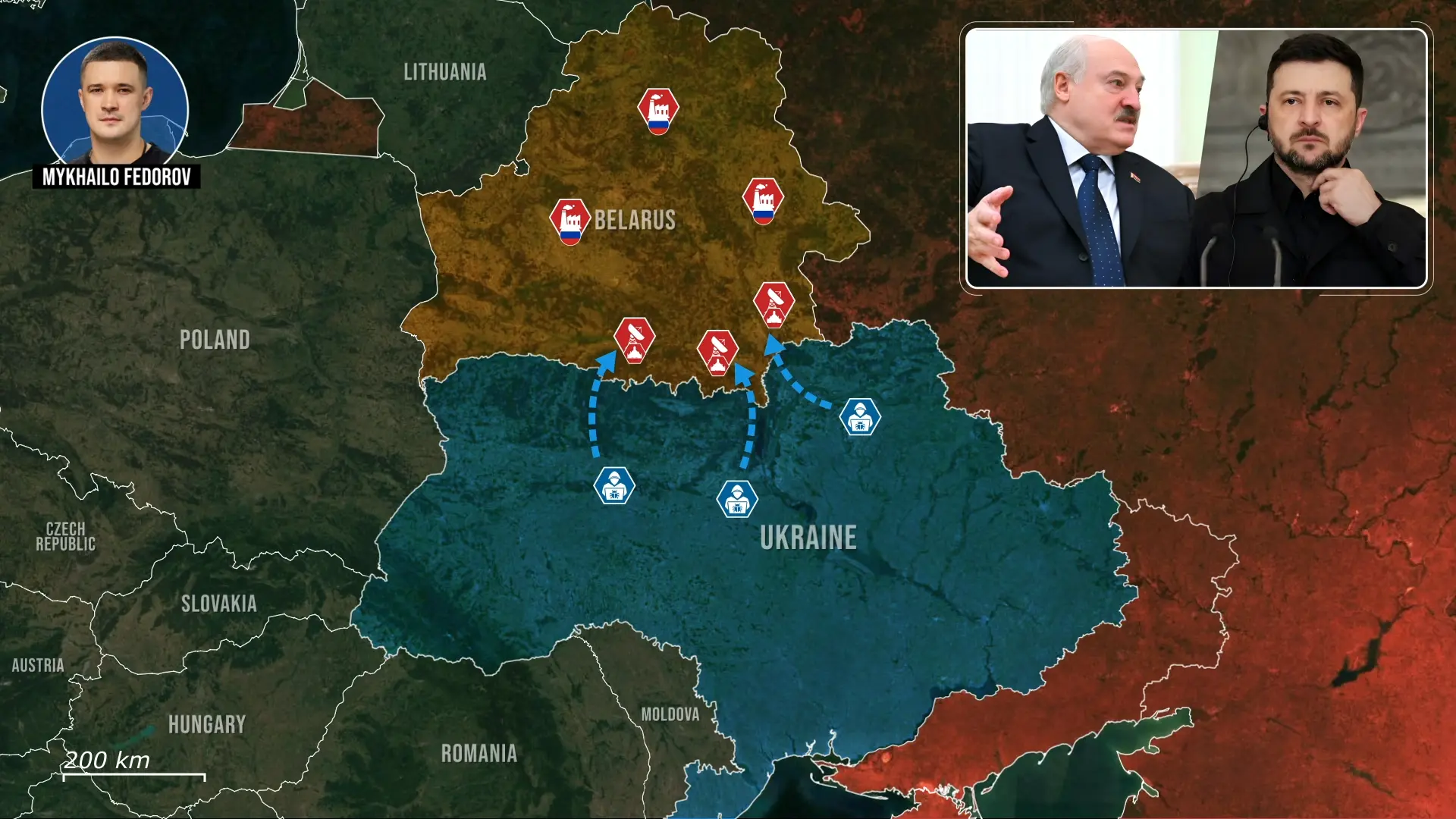
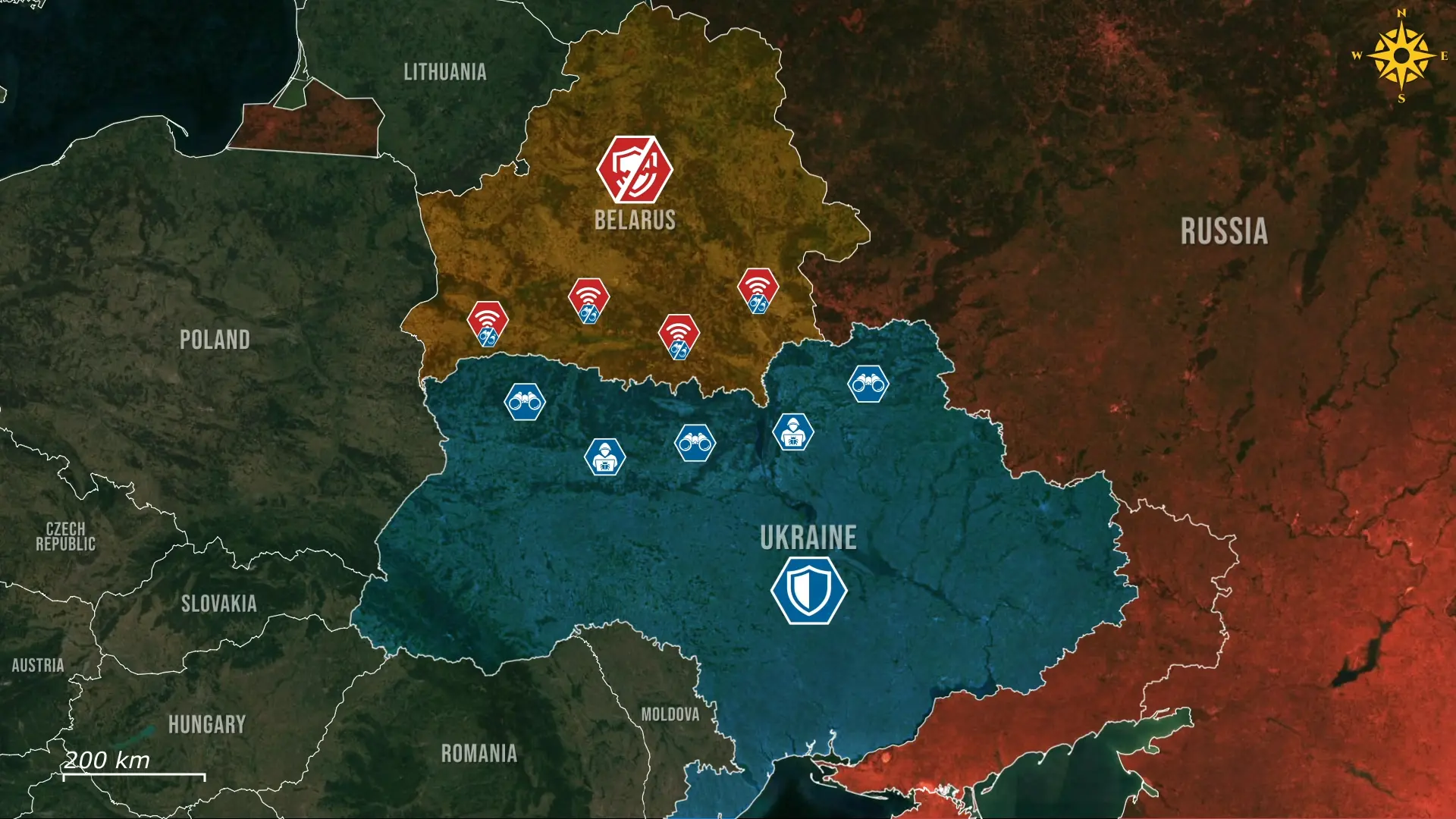
Defense Minister Mykhailo Fedorov said Ukraine decisively disabled infrastructure in Belarus used to guide Russian Shahed drones, eliminating the northern mesh network and strengthening the defense of Kyiv and central Ukraine. He did not disclose technical details of the operation, but the wording suggests it was likely disrupted through a cyber or electronic warfare operation rather than a kinetic strike. The claim fits a wider Ukrainian case made days earlier, when President Volodymyr Zelenskyy imposed sanctions on President Alexander Lukashenko and argued that Russia had deployed relay stations in Belarus to expand drone strikes on northern Ukrainian regions. He also accused thousands of Belarusian enterprises of supplying machinery and equipment to support Russia’s war effort.
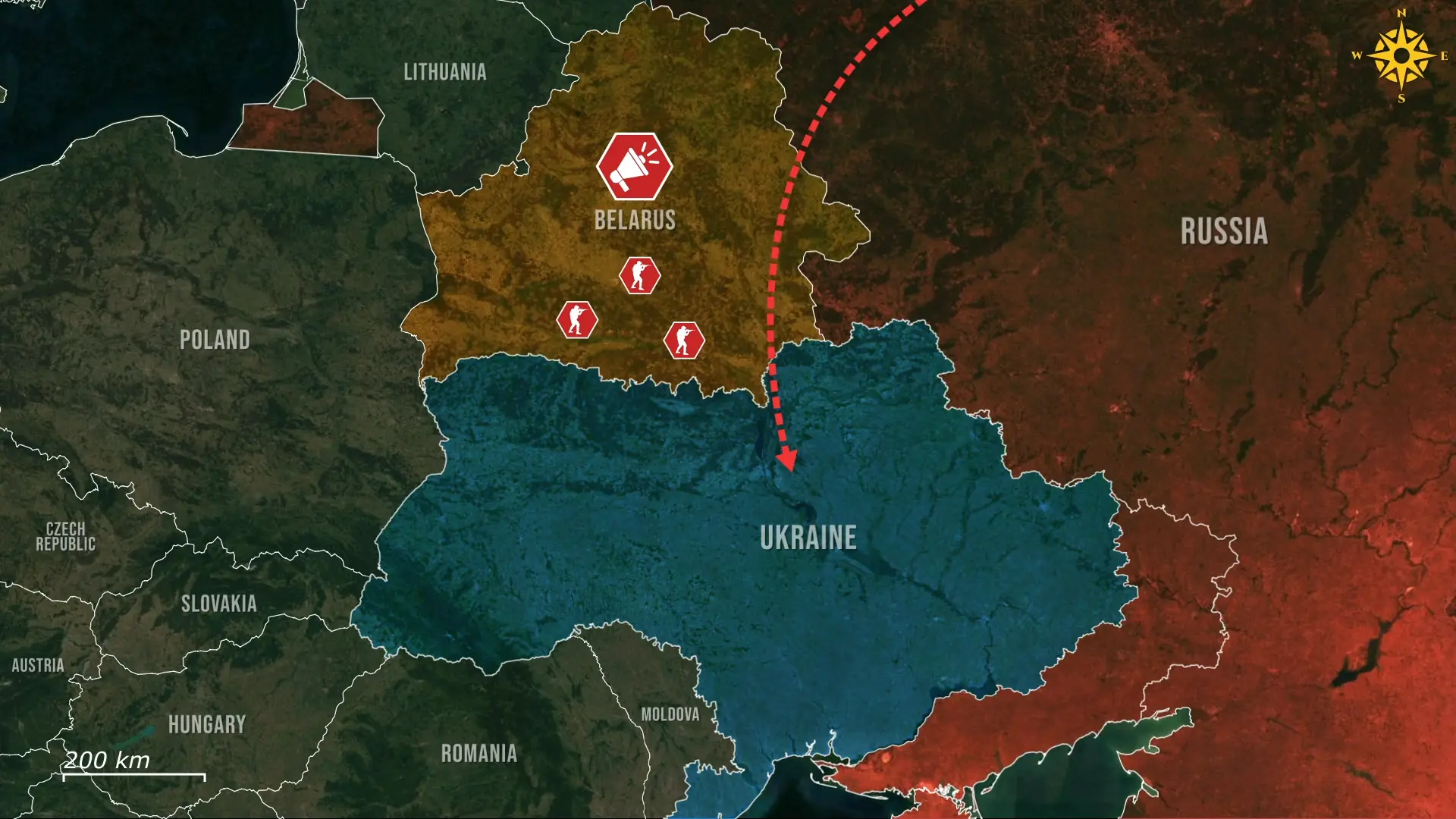
This matters because it changes how Belarus should be understood in this phase of the war. In 2022, Belarus served as the staging ground for Russia’s failed drive on Kyiv, but after that offensive collapsed, its role appeared to narrow. Yet Belarus was still largely viewed as a permissive rear area rather than as a direct part of the strike system itself.
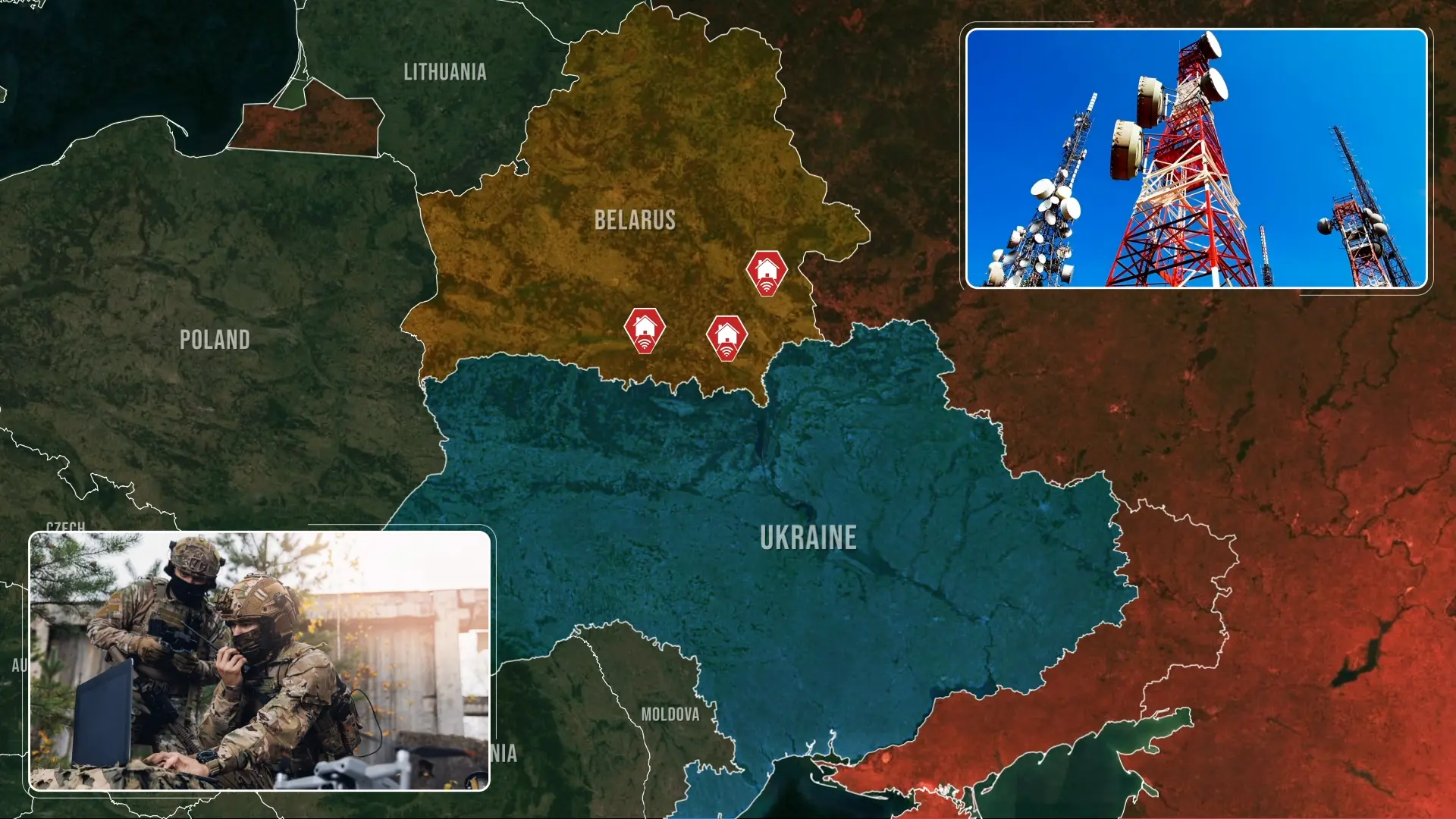
That picture began to change by late 2025, when Ukraine was warning that antennas and related equipment were appearing in Belarusian border areas, including on civilian buildings. Another layer of the story came from the cyber side, where InformNapalm reported that Ukrainian hacktivists from the Fenix center penetrated Russian drone operator accounts and monitored their routes and chats for months. They discovered that Belarusian mobile network towers were being used to support communications and route planning for attacks from the north, to help guide Shahed drones toward targets deeper inside Ukraine.
That, in turn, helped explain how the system actually worked. According to Ukrainian communications expert Serhi Beskrestnov, the drones carry radio modems that both receive signals and forward them, so each drone becomes part of a flying relay chain.
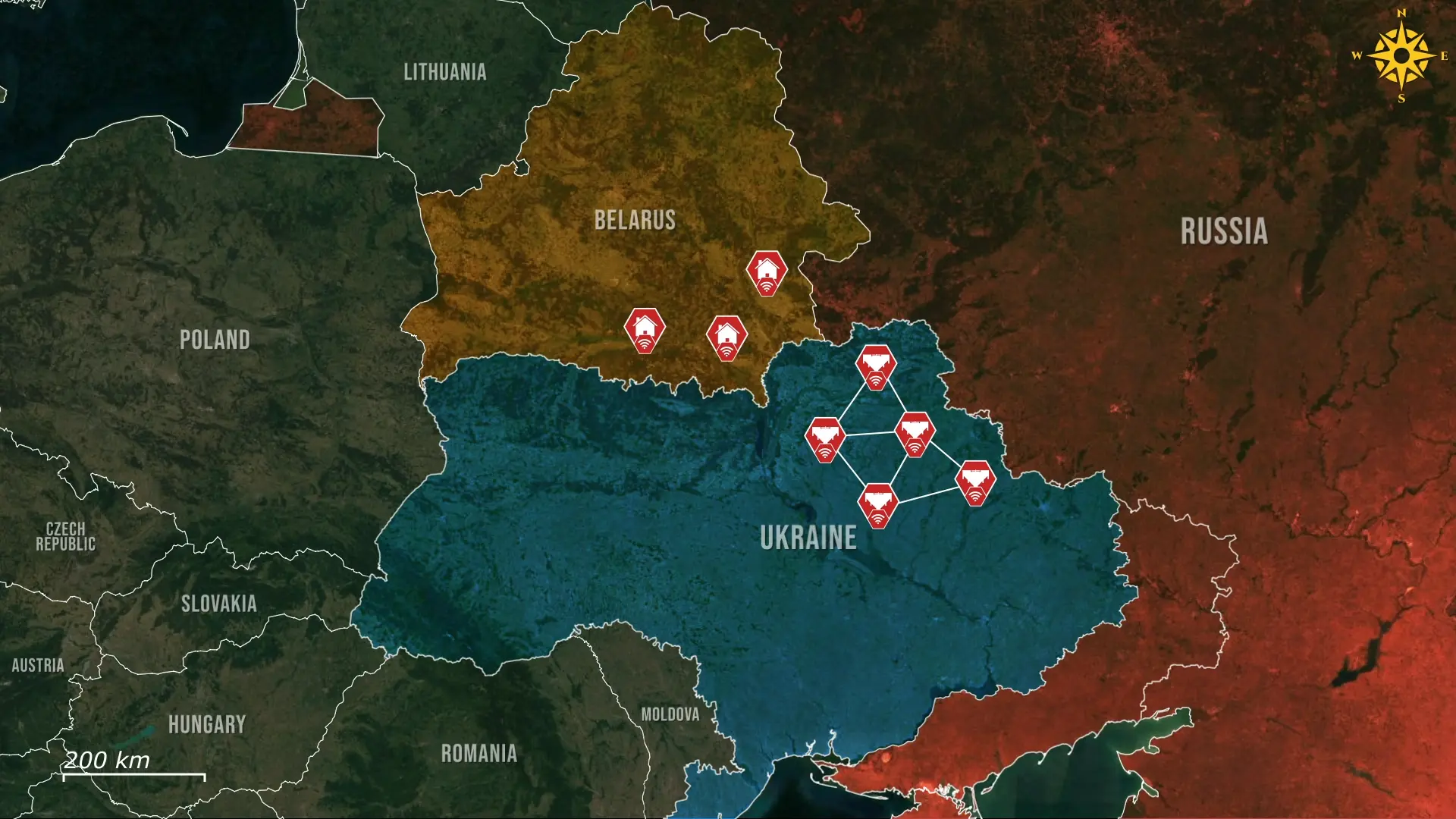
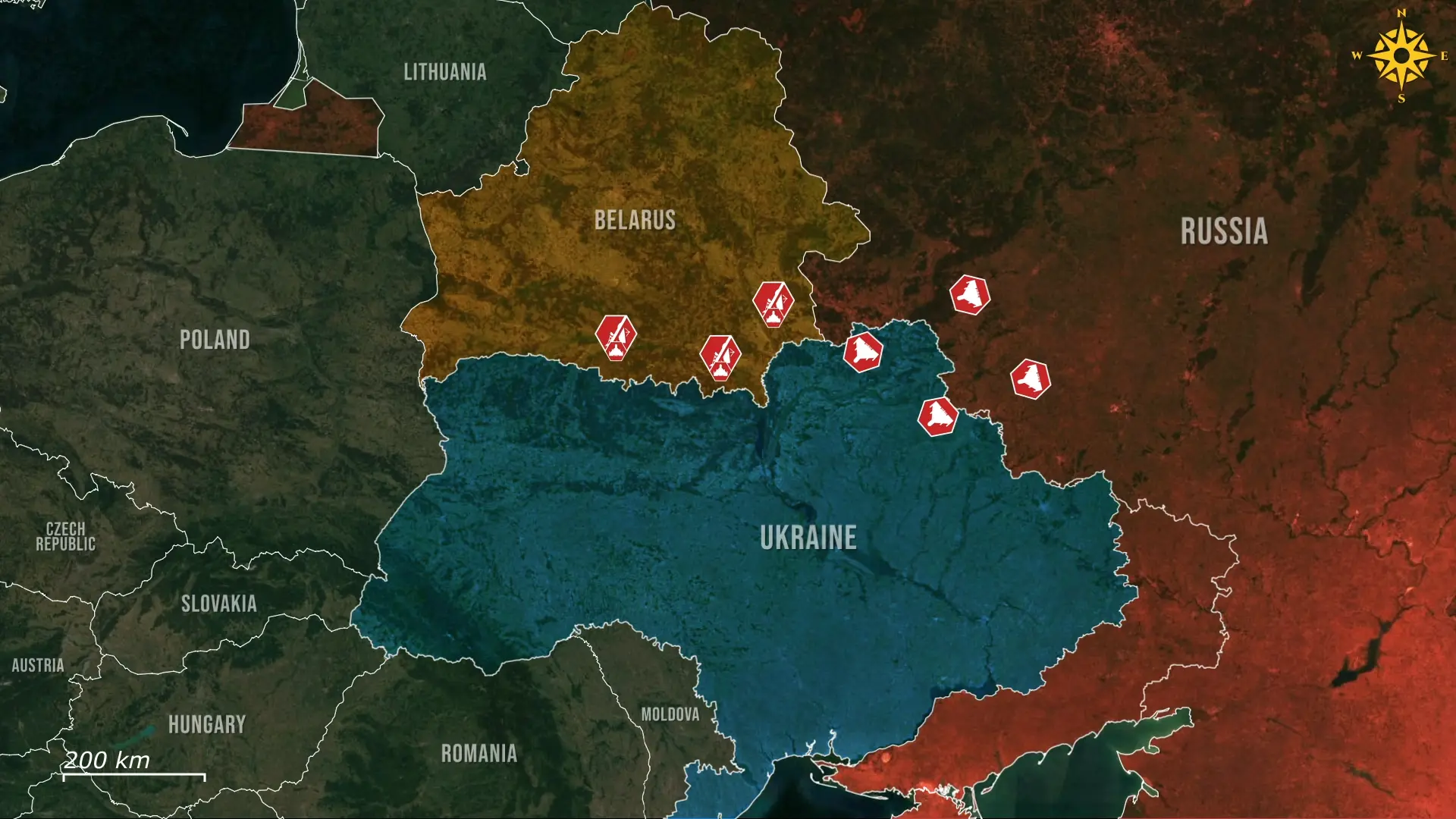
This allows the network to continue functioning even after some drones are shot down, because signals can be rerouted through the remaining ones. However, the airborne chain still requires fixed ground entry points that connect it to operators via the internet and data links. Those access points were mounted on tall towers near the Belarusian border and equipped with directional antennas capable of projecting control signals about 50 to 70 kilometers into northern Ukraine.
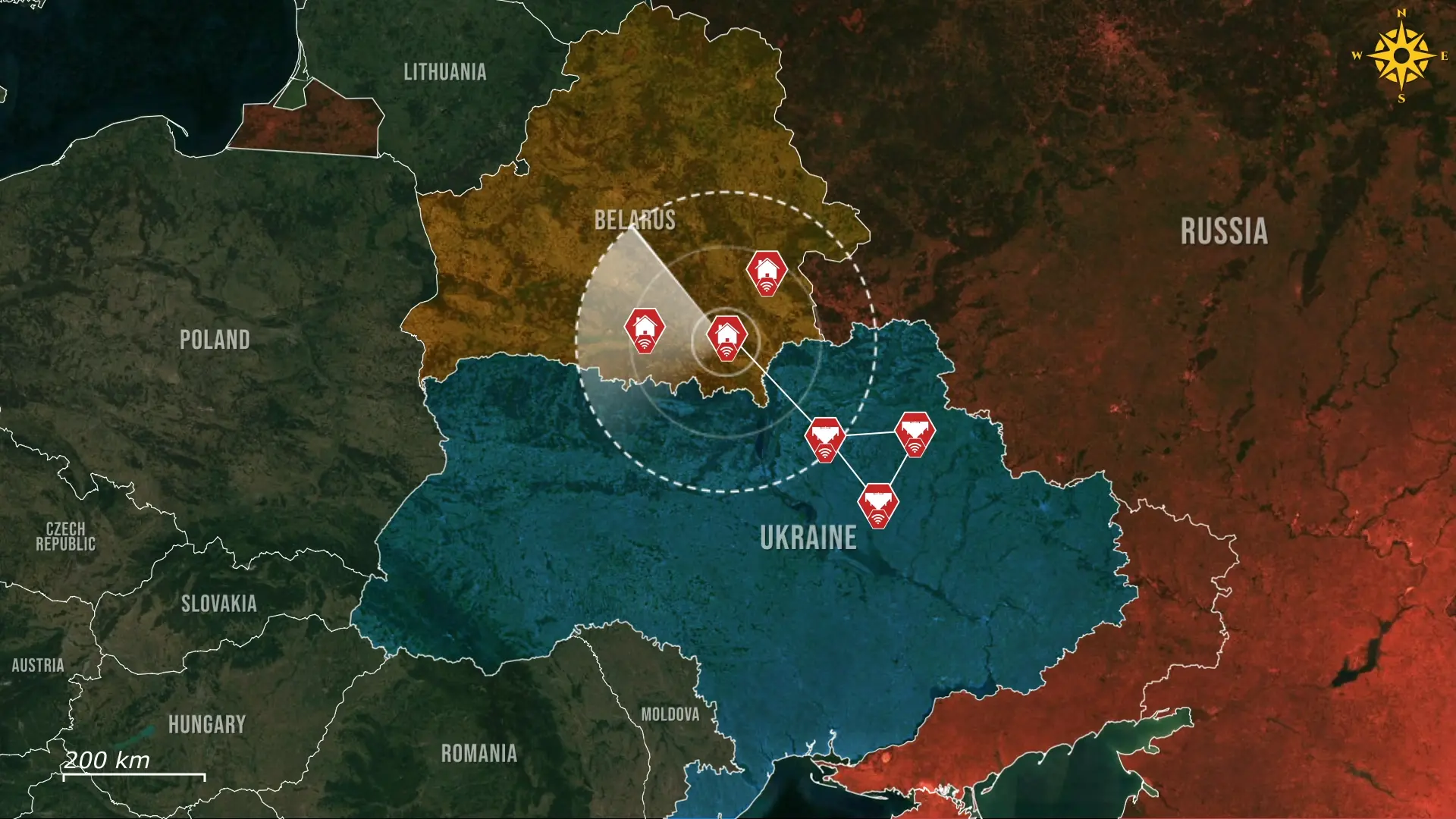
The towers mattered because they solved the distance problem between Russian operators and drones flying through northern Ukraine, enabling continuous control and corrections during attacks. Zelenskyy said on February 23 that these repeaters were helping strikes on civilians and energy infrastructure and that Ukraine had already ensured that four of them no longer existed. Ukrainian communications specialist Serhi Beskrestnov also stated that some of these relay points extended coverage to Kyiv and the Kyiv-Kovel railway line, indicating that the network supported operational strikes rather than isolated attacks.
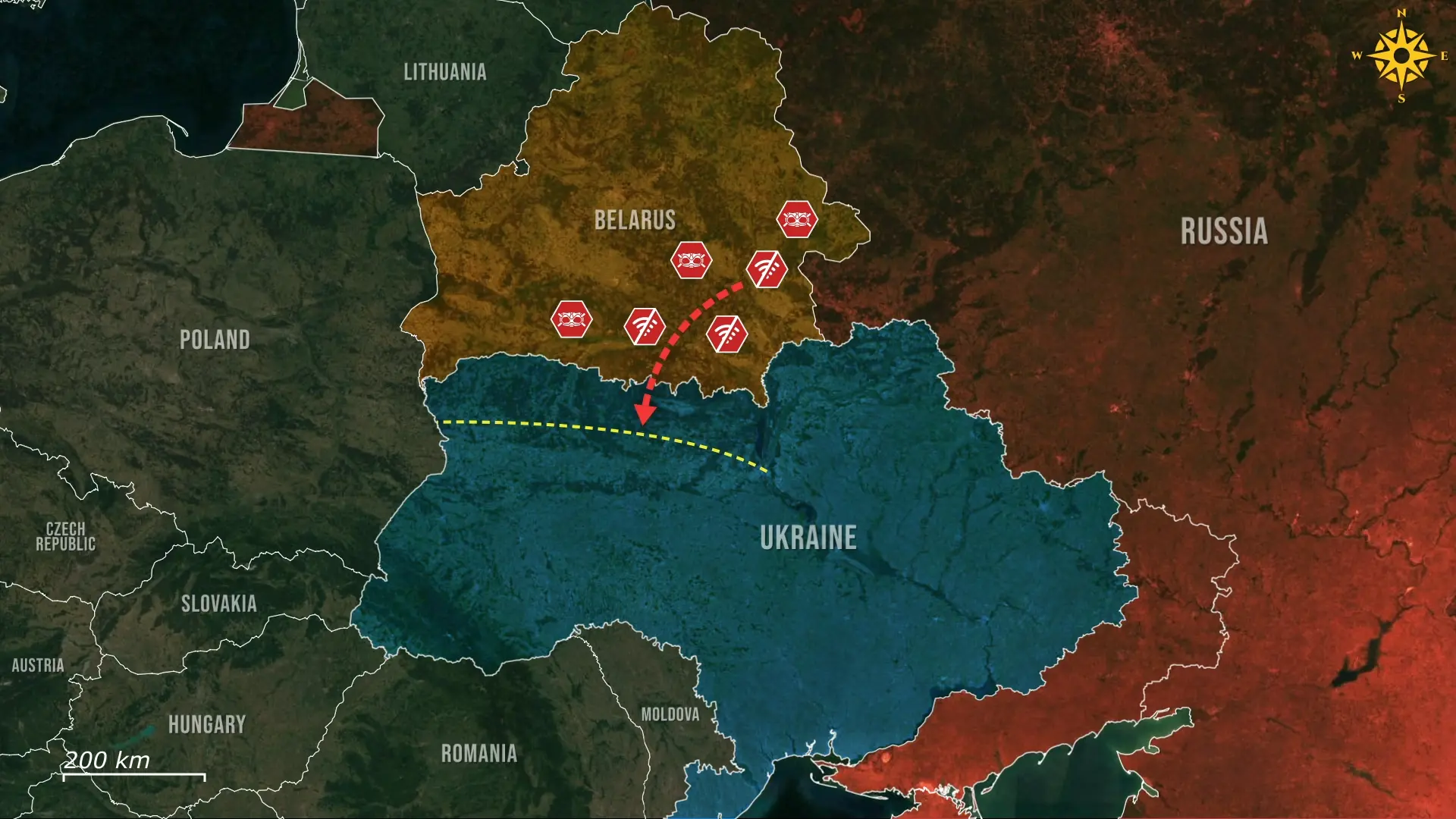
In effect, Belarus was no longer just hosting Russian forces but providing the communications layer that made these attacks more effective. This also suggests that the destruction of the towers was not an isolated battlefield strike but the culmination of a longer intelligence effort that identified the system, mapped its key nodes, and then moved to take them out.
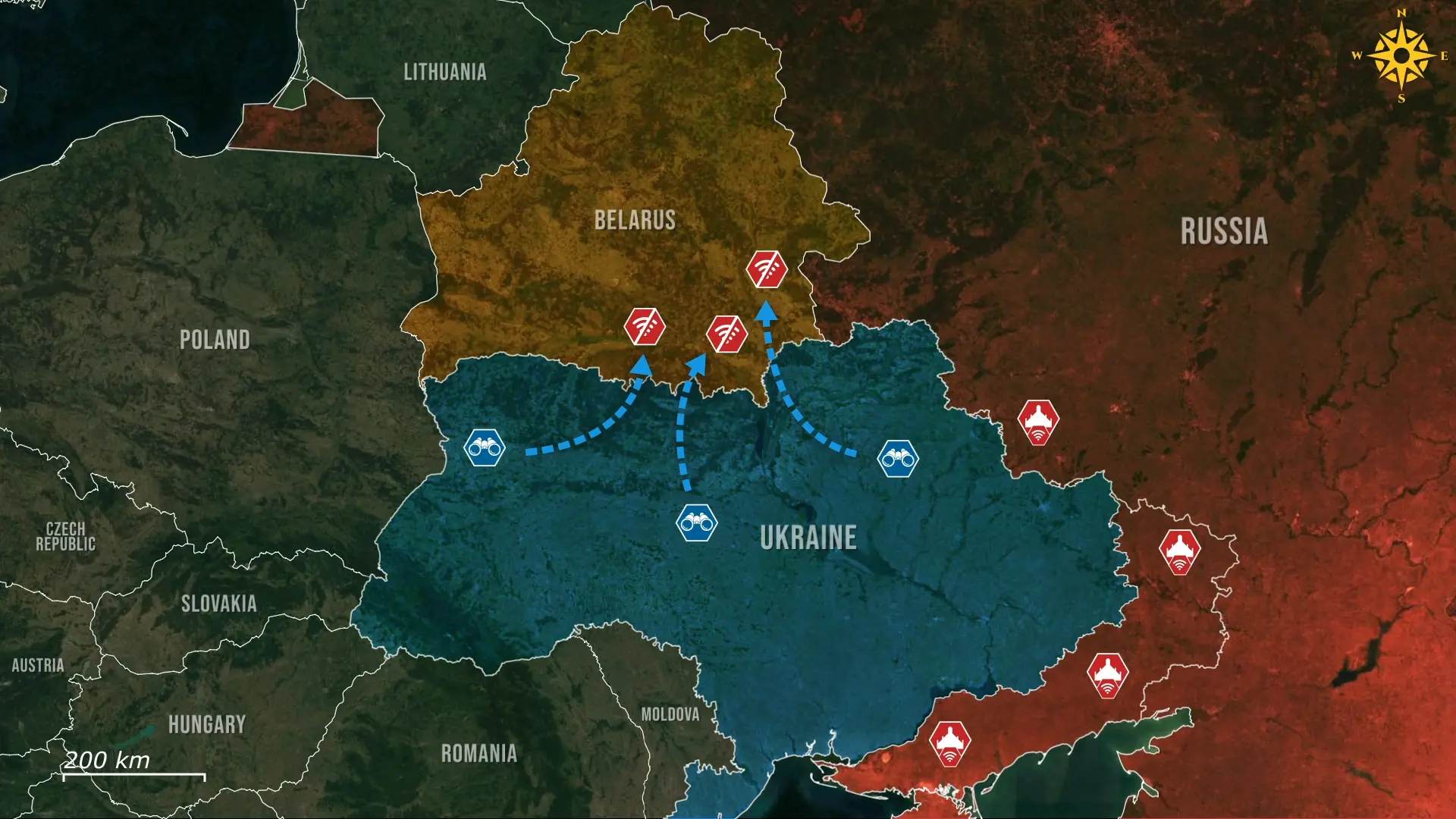
So far, neither Russia nor Belarus has offered a clear public response. The destruction of the towers removed a key northern gateway that connected Shahed drone swarms to Russian operators, making real-time control and reconnaissance more difficult. Russia can still launch drones using pre-programmed navigation or alternative relay networks, but the loss of these nodes complicates coordination of attacks from the north.
Analysts expect Moscow could rebuild the system within several weeks or relocate relay equipment deeper inside Belarus or Russia.
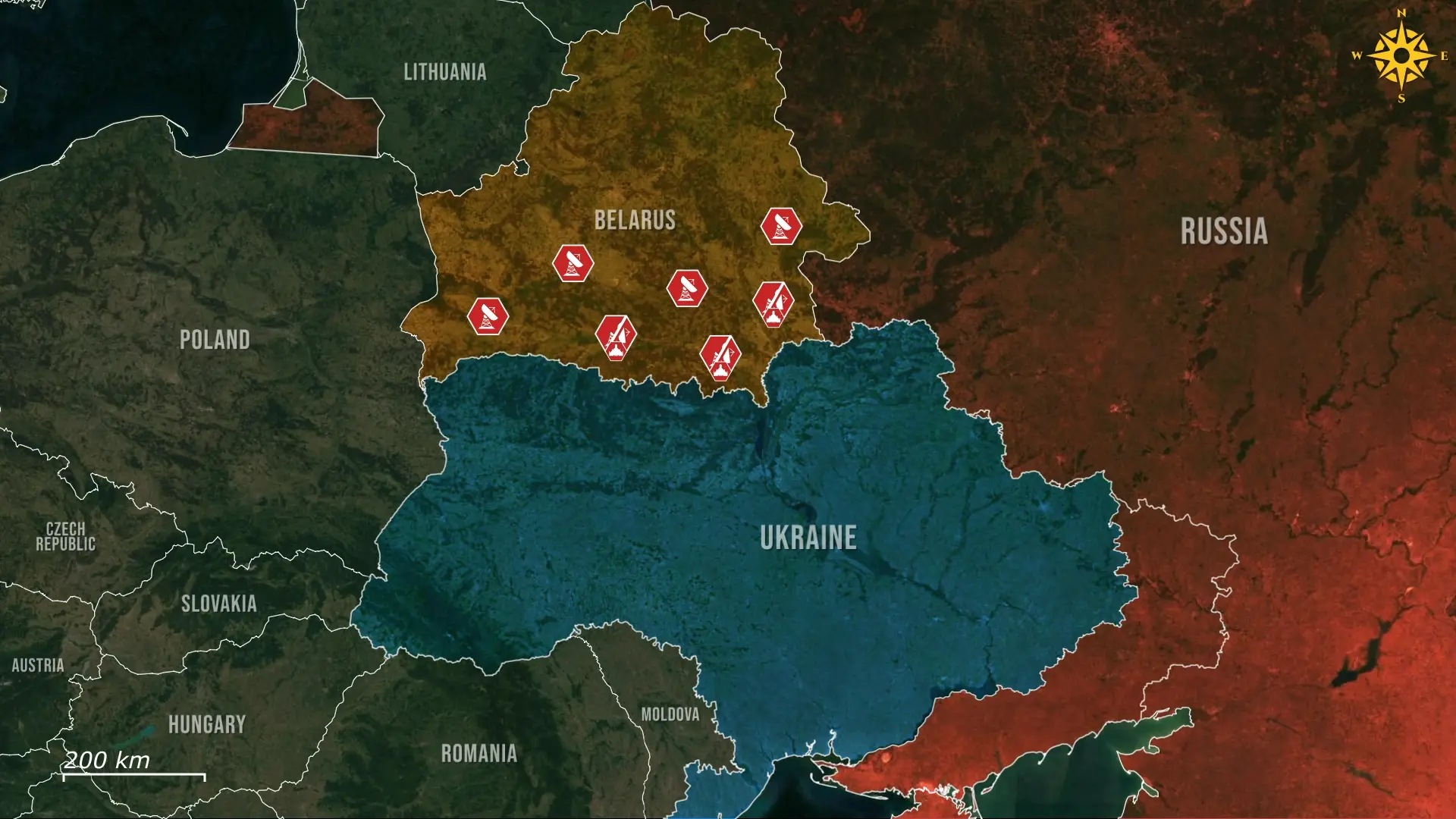
Overall, Russia will likely seek to rebuild this architecture in a more dispersed and concealed form by using smaller antennas and replacement towers located deeper within Belarus. Ukraine will therefore continue combining cyber penetration, signals intelligence, and precision strikes to expose any restored relay chain before it stabilizes. If that pressure continues, Belarus may become less useful as a protected guidance corridor and more of a liability, forcing Russia to allocate additional resources to concealment and protection. This would reduce the efficiency of Shahed attacks on Kyiv and central Ukraine while signaling that any territory integrated into the strike chain can itself become part of the target set.

.jpg)



Comments