

.svg)
Today, there is interesting news from the Sumy direction.
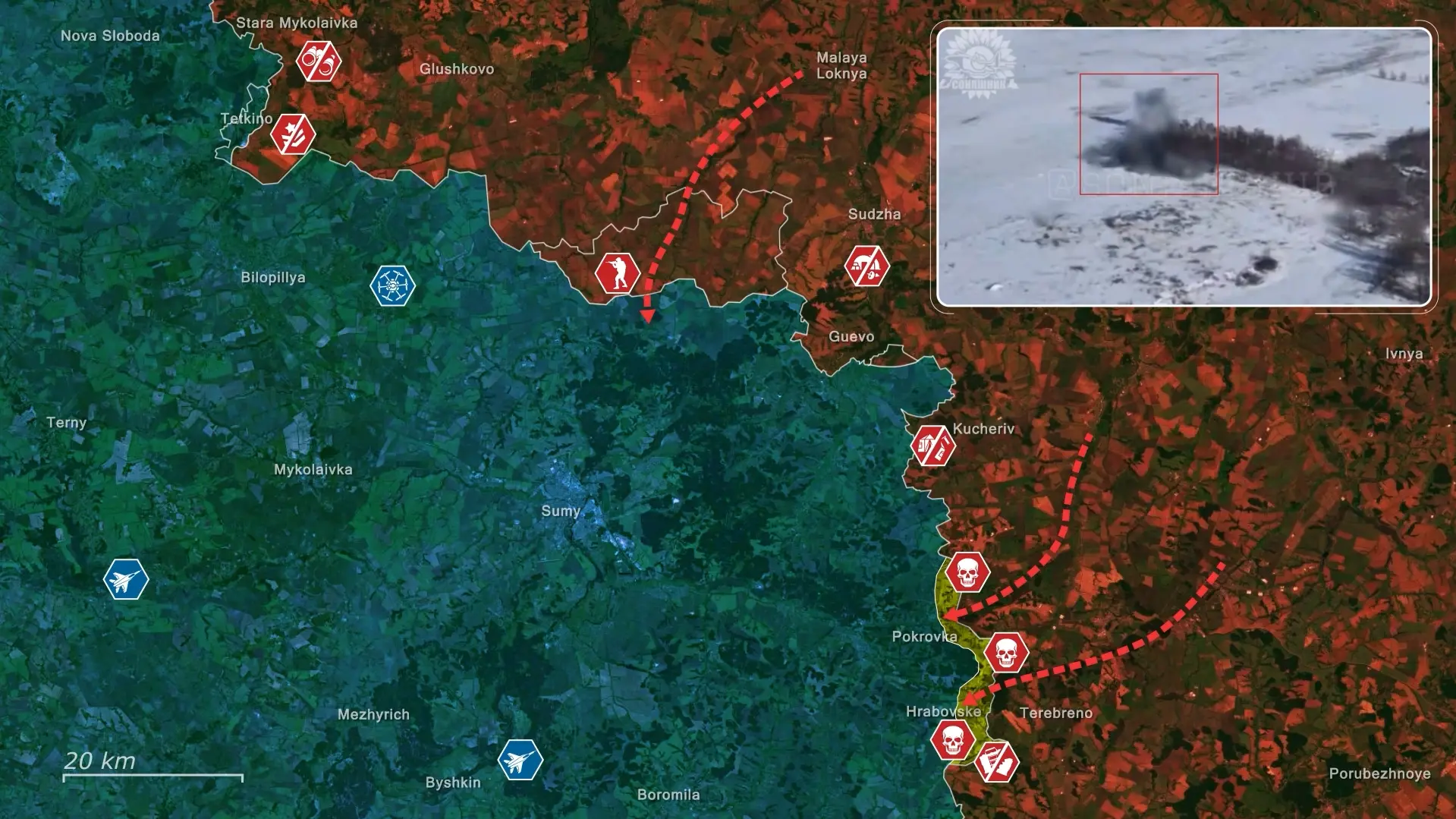
Here, Russians are launching a large-scale cross-border operation, threatening the rear of Ukrainian forces in Sumy. Quick to respond, Ukrainian airstrikes began raining down fire on the Russian forces, destroying reserves and taking the head off the Russian snake, with the Russian air force nowhere to be seen.
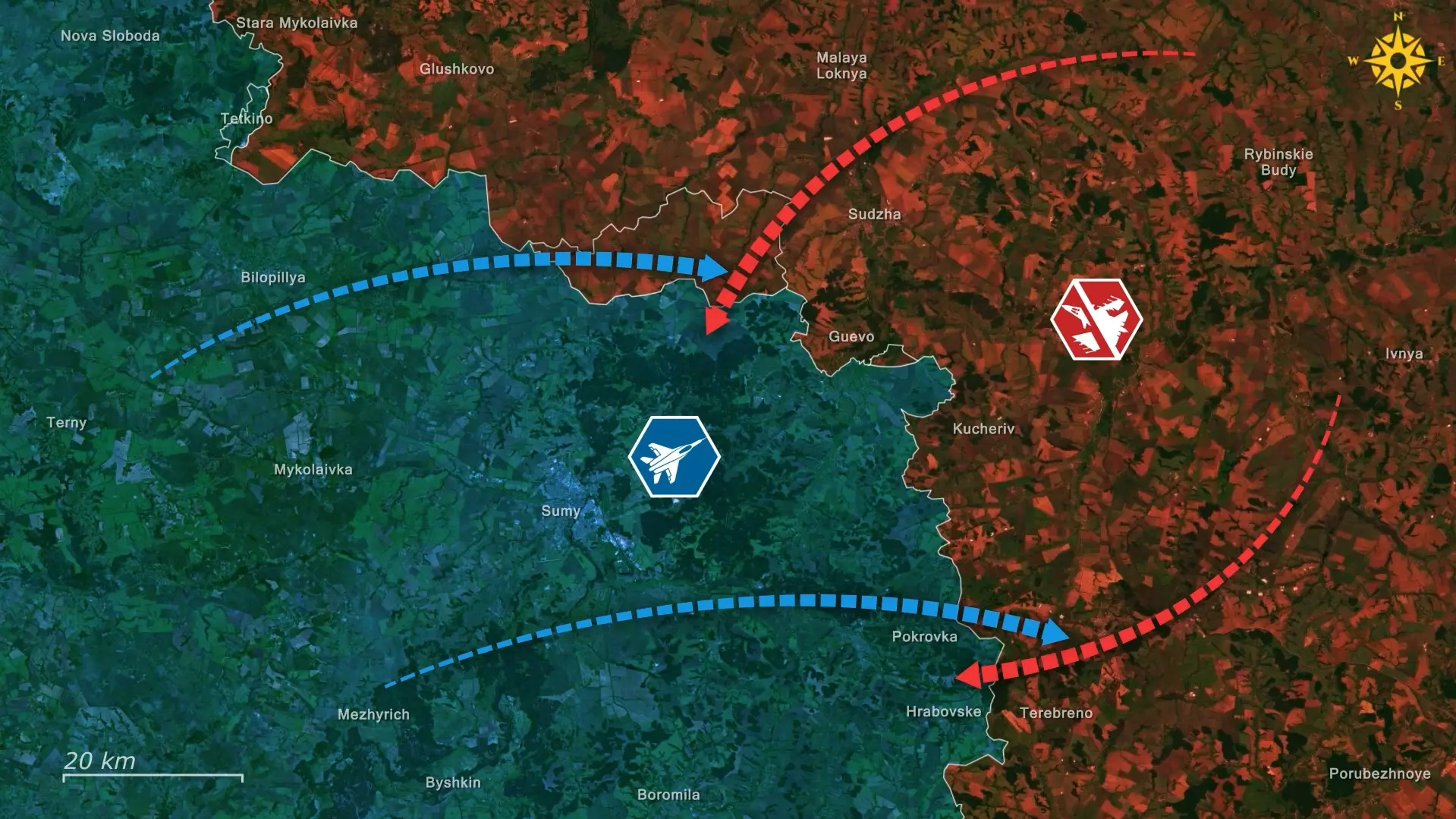
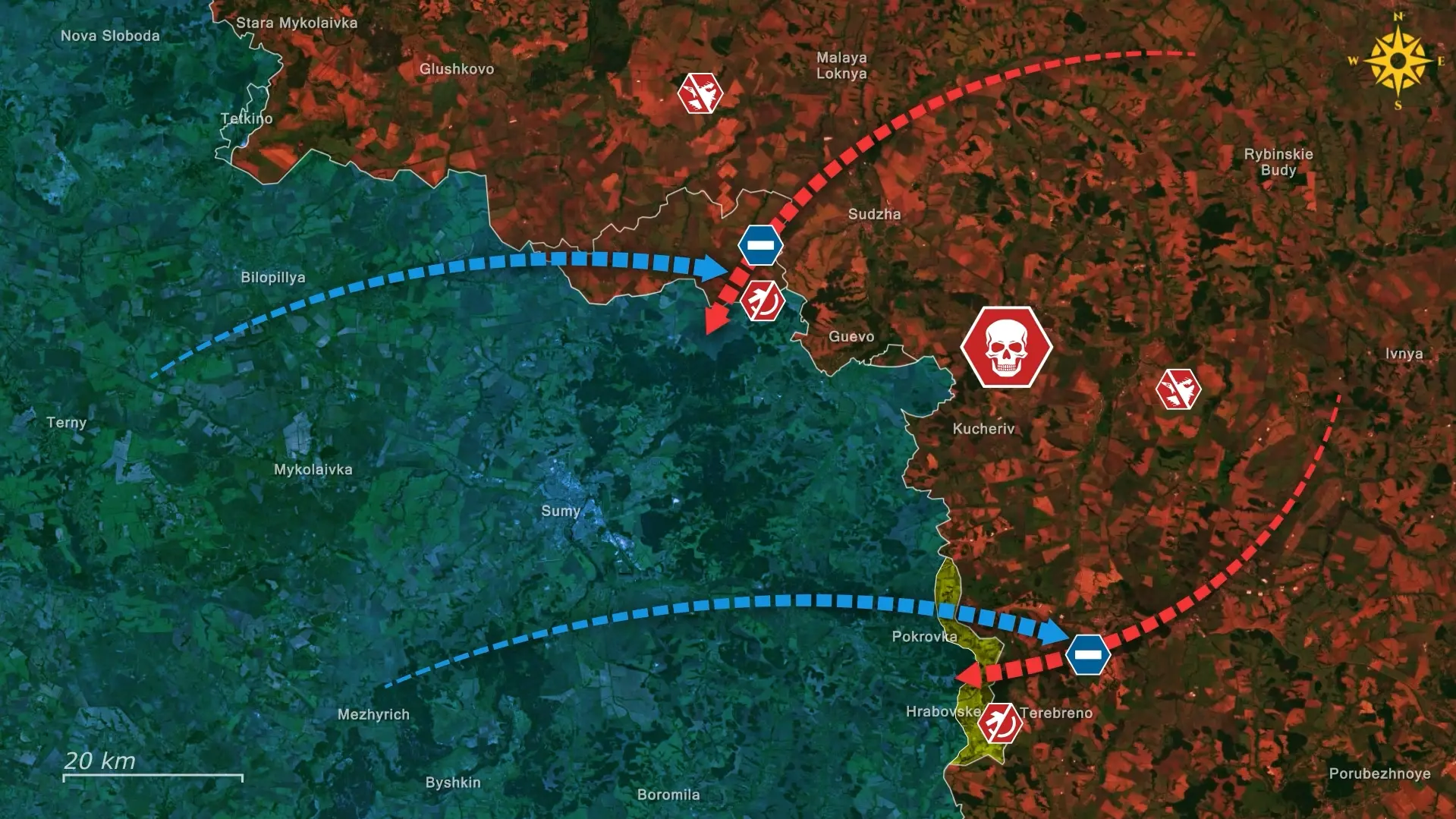
Russia has launched a new offensive vector along Ukraine’s northeastern border, attempting to complement its pressure from the north toward the city of Sumy with a pincer push from the east. Russian units have gradually moved into several settlements along the border area, exploiting gaps and gray zones to expand their foothold and support those trying to infiltrate from the north through the forests. The main Russian focus has been the area around the villages of Hrabovske and Pokrovka, from where Russian troops want to advance into nearby forests held primarily by Ukrainian Territorial Defense forces. Other incursions have followed, with Russian troops entering additional settlements, abducting civilians, and using them as cover during the raids.
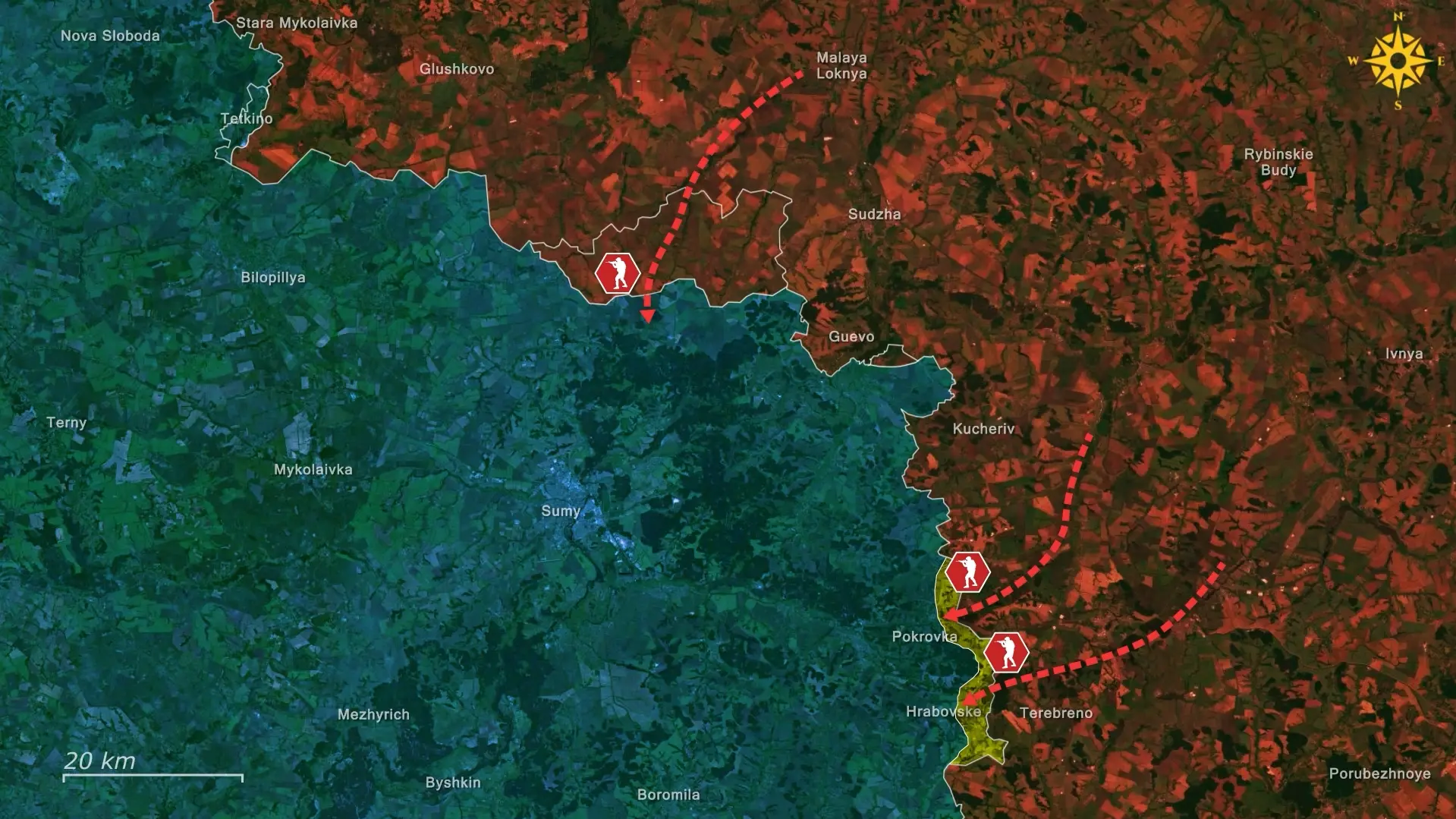
However, Ukraine has responded aggressively, relying heavily on air power to blunt the emerging offensive before it can consolidate by targeting enemy assault formations. The air campaign quickly expanded to target Russian assault formations themselves.
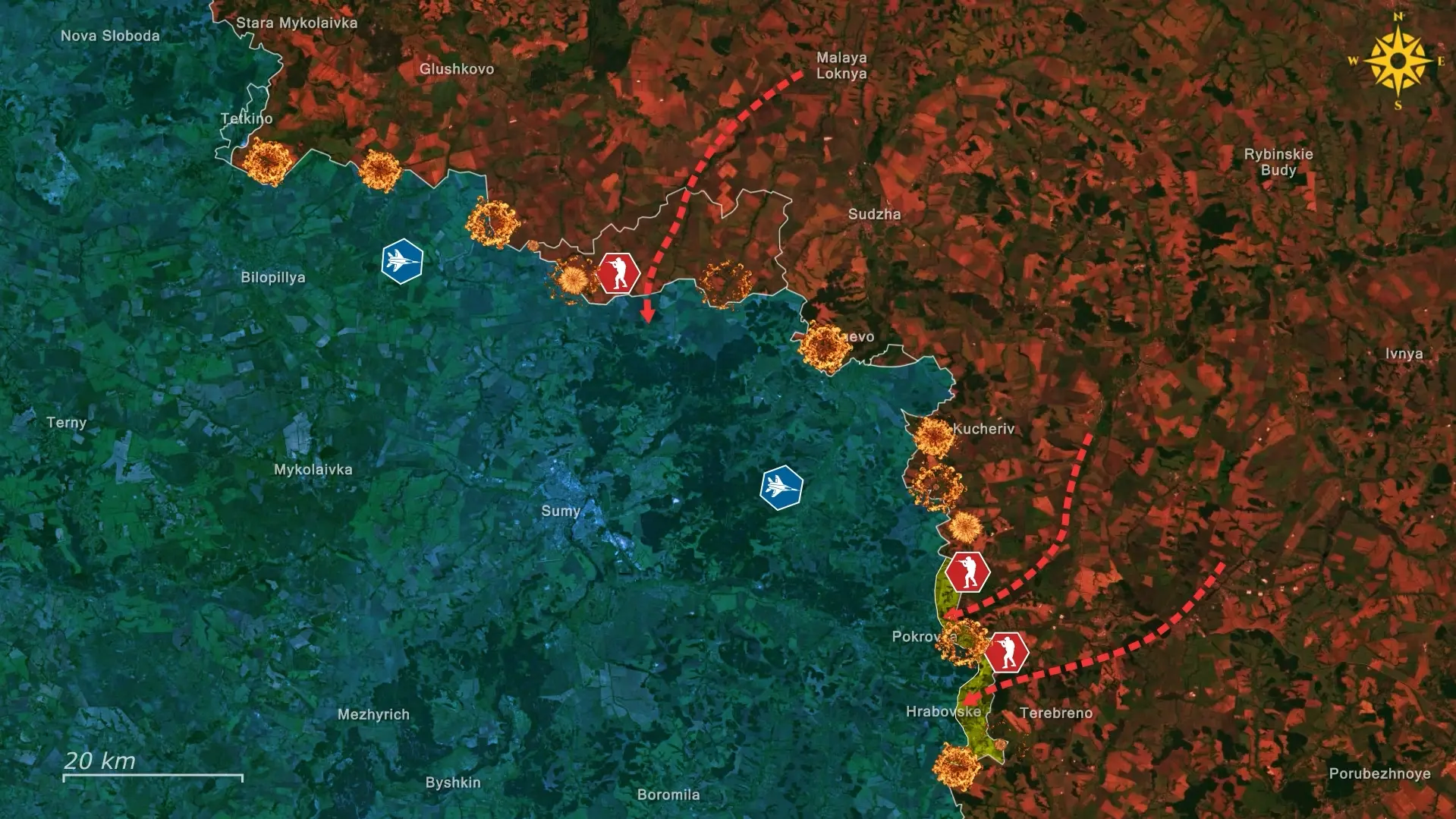
Ukrainian Mig-29 jets destroyed a deployment site of the Chechen Akhmat unit near Kucheriv village. Additional Hammer strikes hit concentrations of Russian troops south of Terebreno. Finally, Ukrainian aircraft struck the main Russian gathering point in the sector around Hrabovske, destroying assault groups and ammunition supplies intended to support the eastern pincer of the offensive.
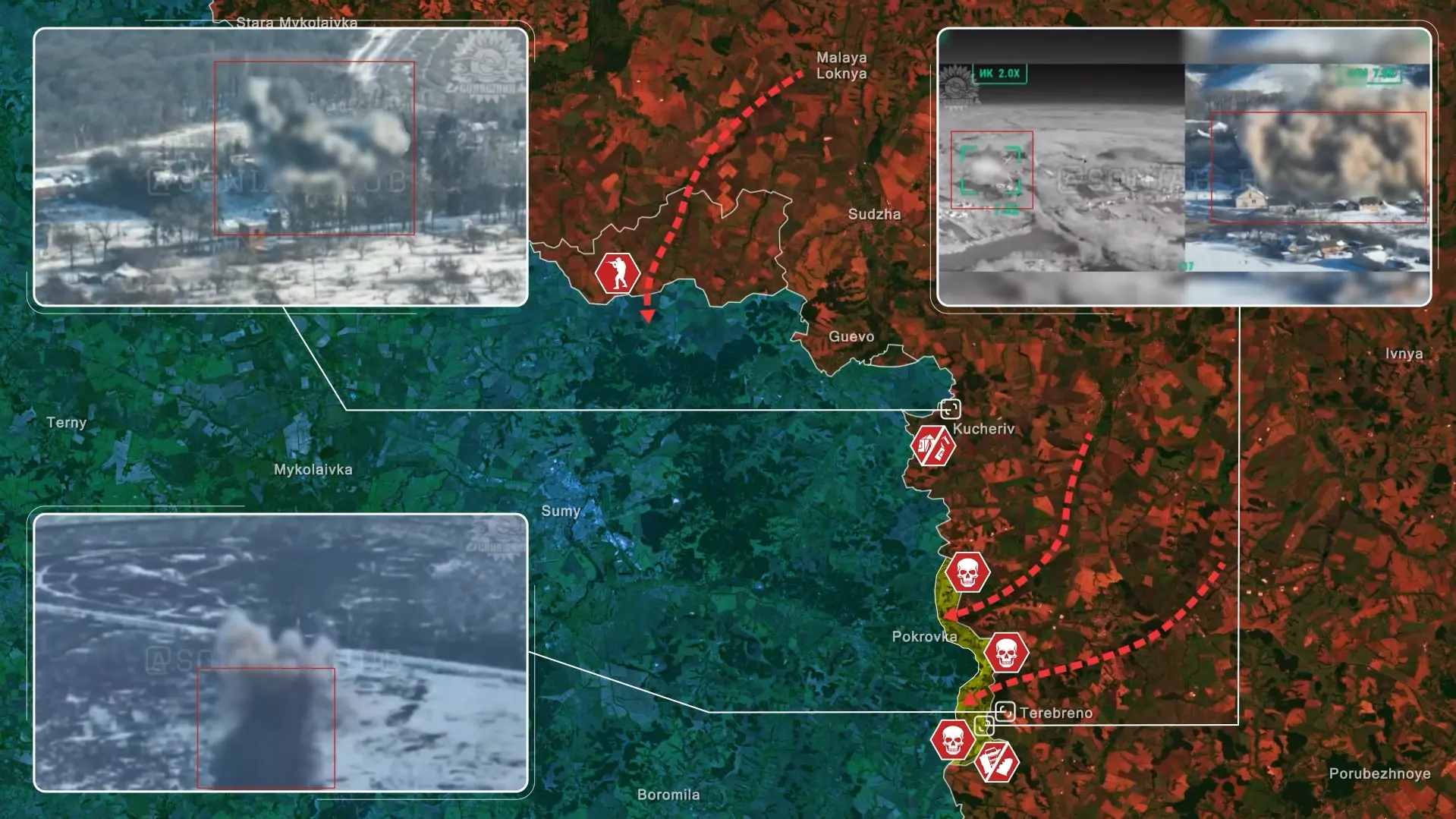
Simultaneously, Ukrainian strikes also focused on dismantling Russian command structures coordinating the push. Ukrainian forces hit a Russian airborne command post near Sudzha in Russia’s Kursk region, while a Ukrainian heavy octocopter drone dropped mortar rounds on a group of Russian officers in an attack near Tyotkino that significantly disrupted local command cohesion. A Mig-29 launched a high-precision French Hammer bomb strike against a Russian observation and command post near Stara Mykolaivka in the Kursk region.
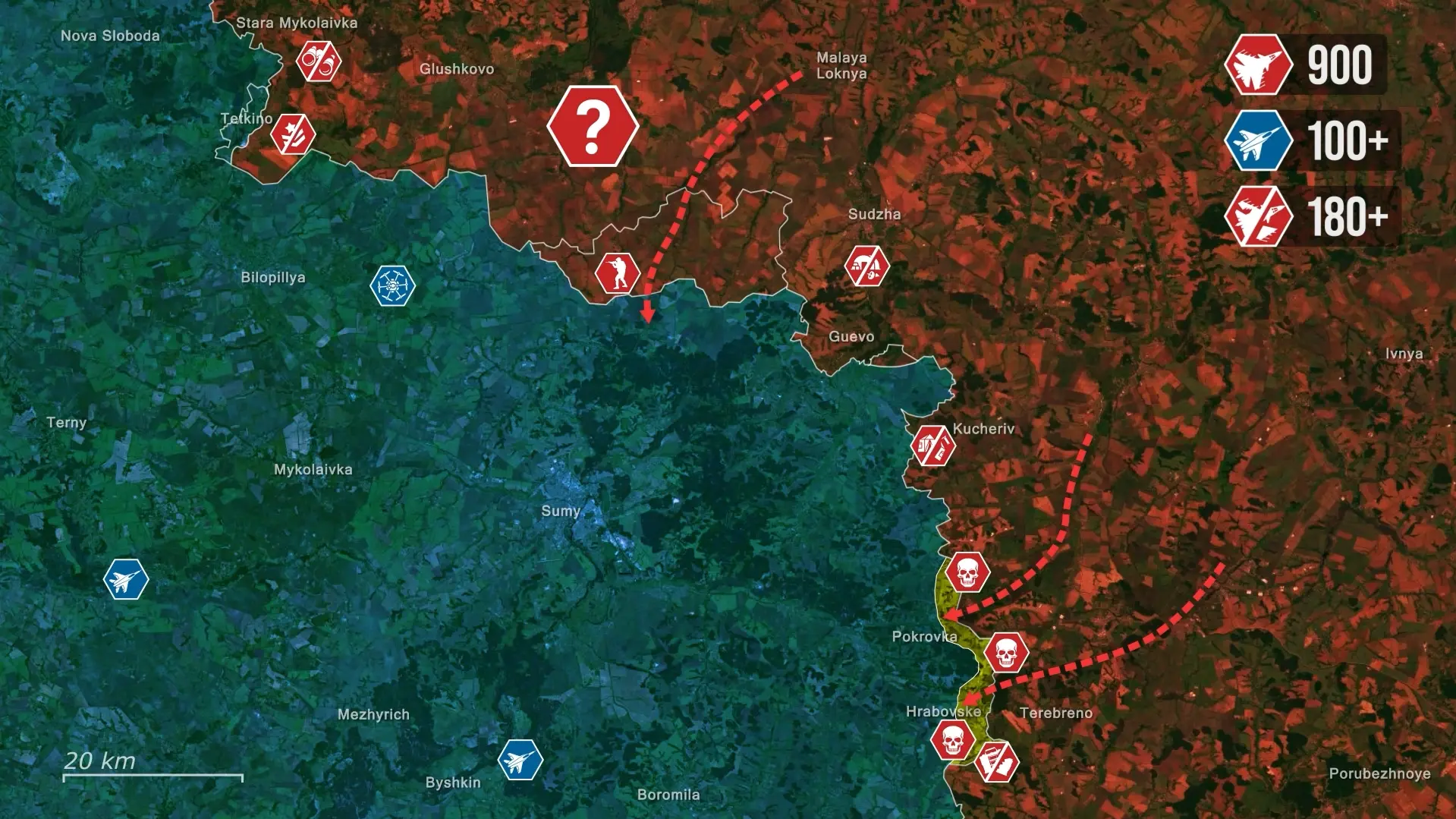
What makes these strikes particularly significant is not only the fact that they slammed the coordinated Russian two-pronged offensive but also the lack of an effective Russian aerial response. On paper, Russia entered the war with one of the largest tactical air forces in the world, with roughly 900 combat aircraft. Ukraine, by contrast, had barely over a hundred operational jets, but four years later, the balance looks very different. Open-source analysts have visually confirmed the loss of more than 180 Russian fixed-wing combat aircraft, as attrition has steadily eroded Russia’s real combat capability.
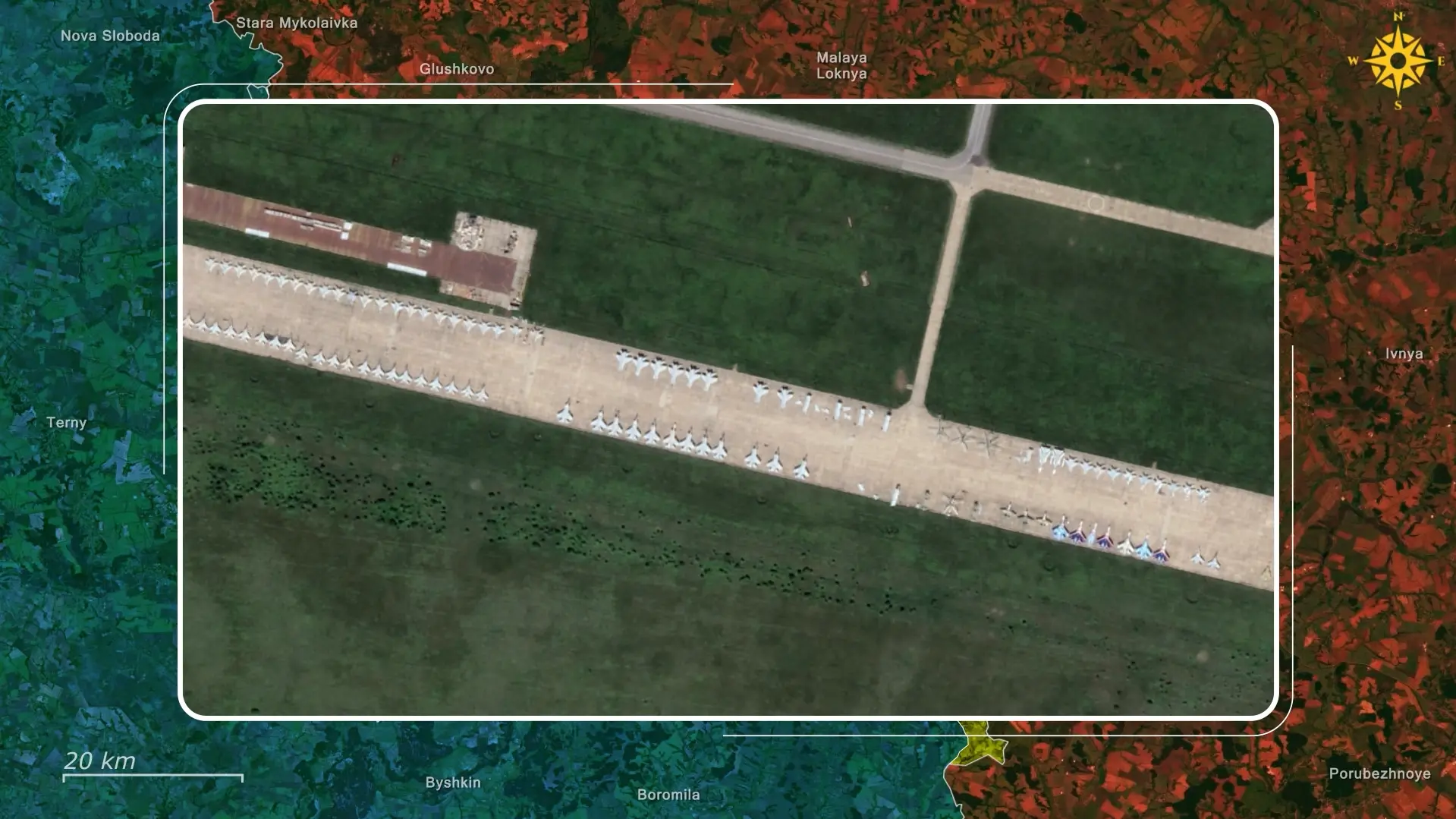
Even more revealing is the condition of the remaining fleet, with satellite imagery from early 2026 showing nearly one hundred Russian combat aircraft parked in storage at Lipetsk air base alone. These include Su-34 fighter-bombers, Su-35S fighters, and Mig-31 interceptors, decommissioned and grounded due to spare-parts shortages, worn-out flight hours, or cannibalization of components, raising serious questions about how many aircraft Russia has available for combat operations.
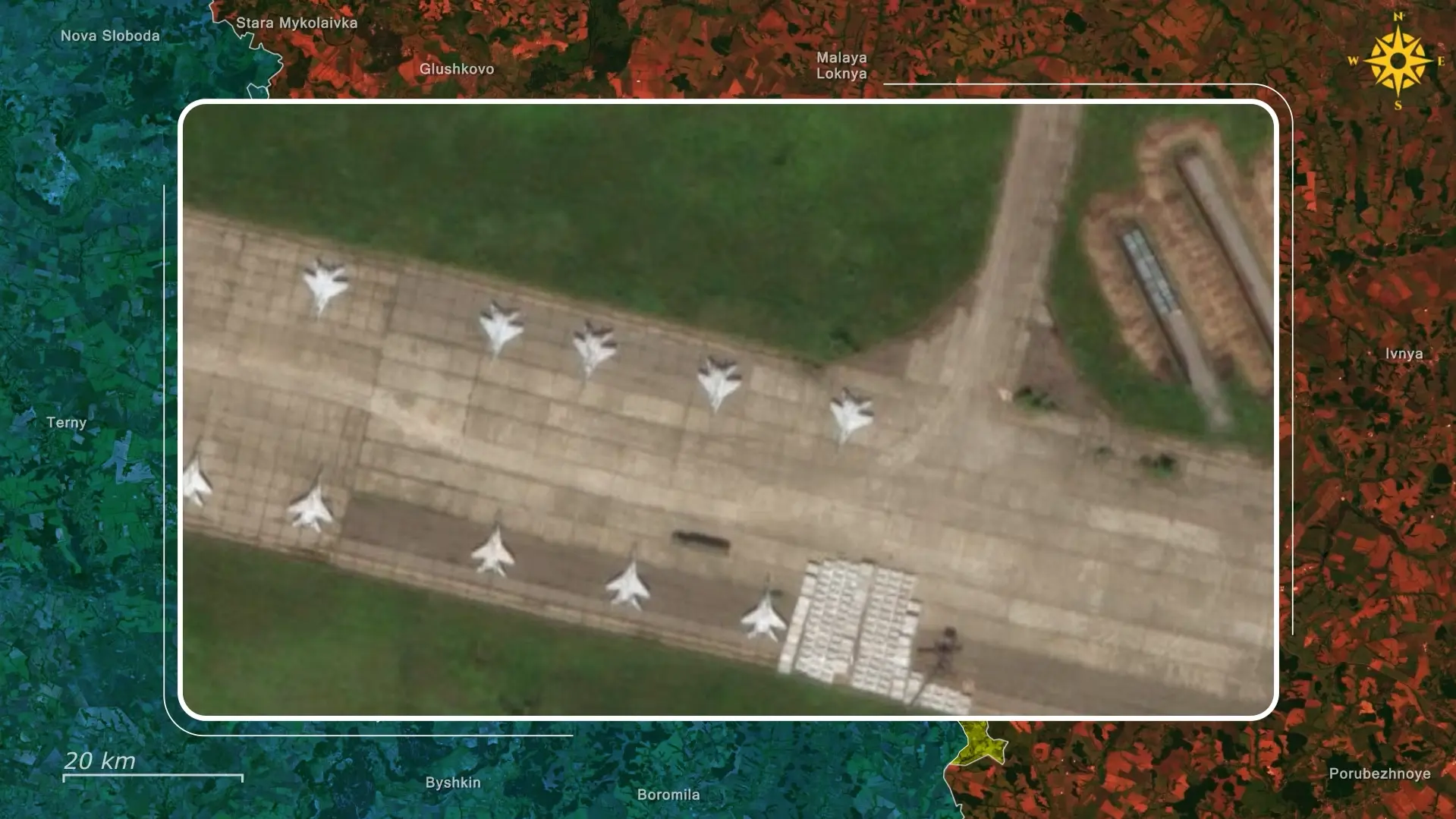
The situation is particularly difficult for Russia’s Su-34 fleet, the backbone of its strike aviation. More than forty-two Su-34 fighter-bombers have been visually confirmed destroyed by Ukraine or friendly fire since 2022, over thirty percent of the pre-war fleet of roughly 130 aircraft.
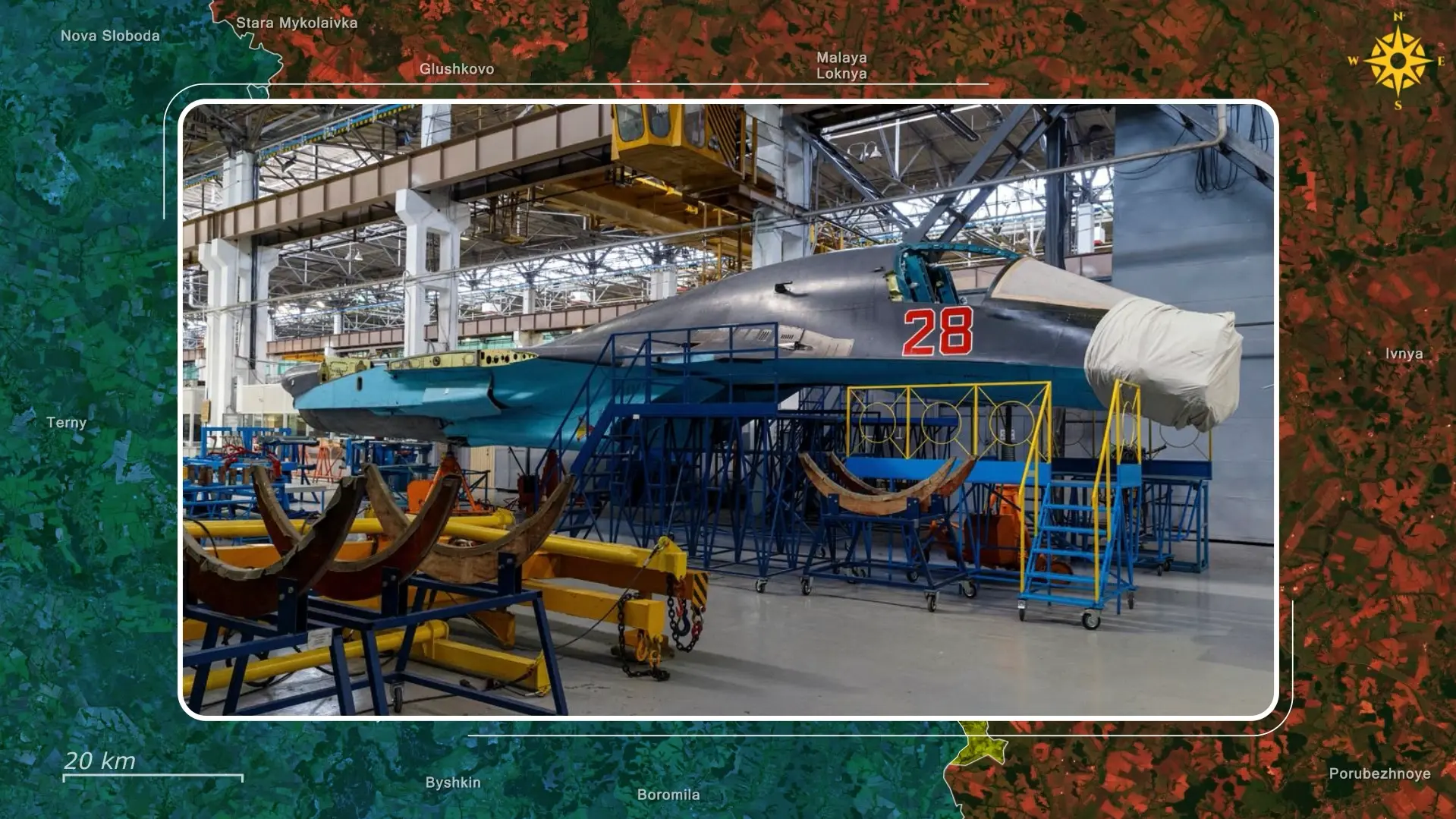
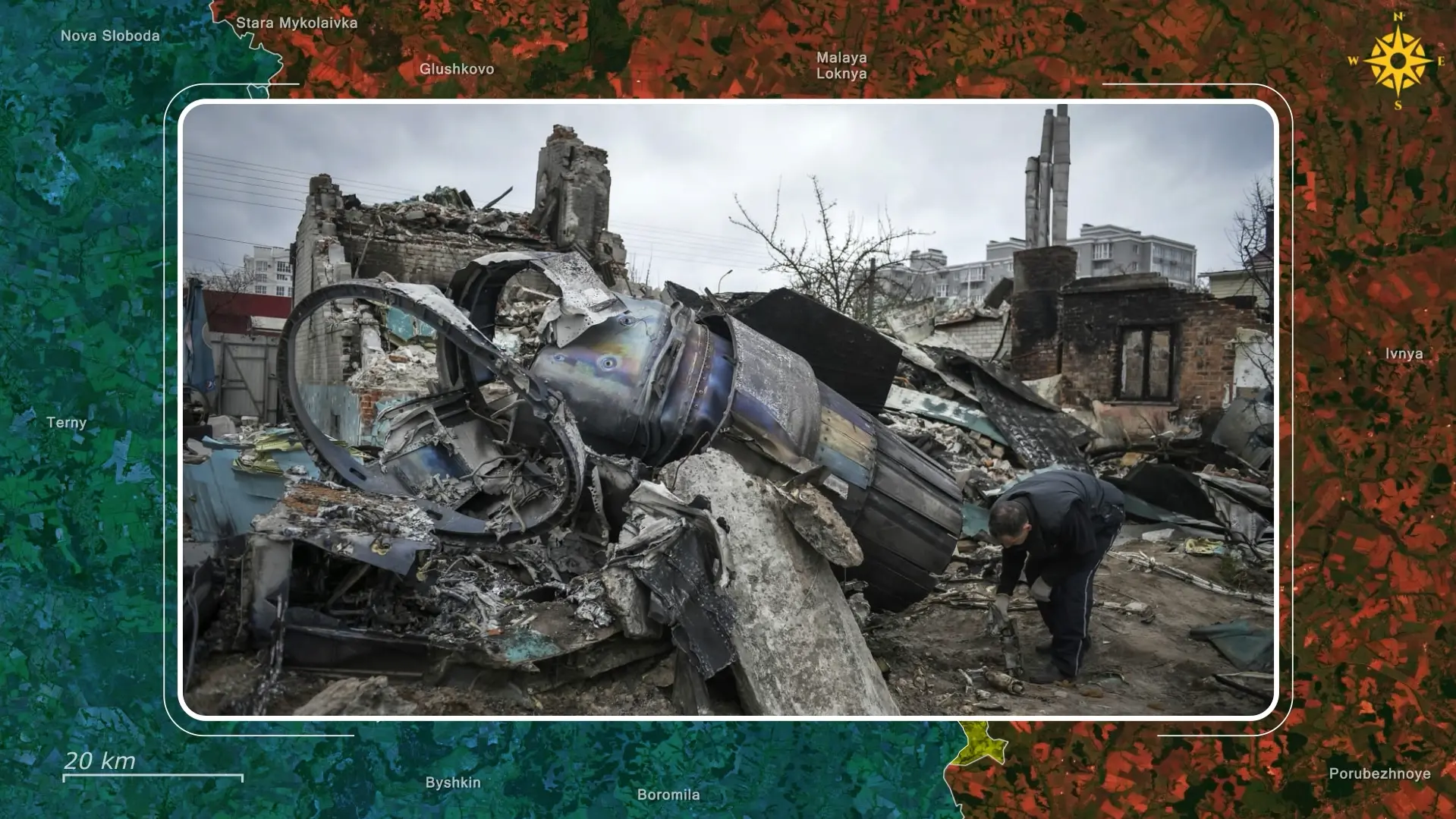
Now the sparse remaining fleet suffered another blow, as another two Su-34 jets were lost near the Sumy-Kursk border, potentially to Patriot air defense systems, as per Russian sources. These losses reinforce the growing reluctance among Russian pilots to operate close to the frontline, leading to Russian aircraft increasingly launching bombs from safer distances, limiting their ability to provide direct support for ground offensives, while still under risk.
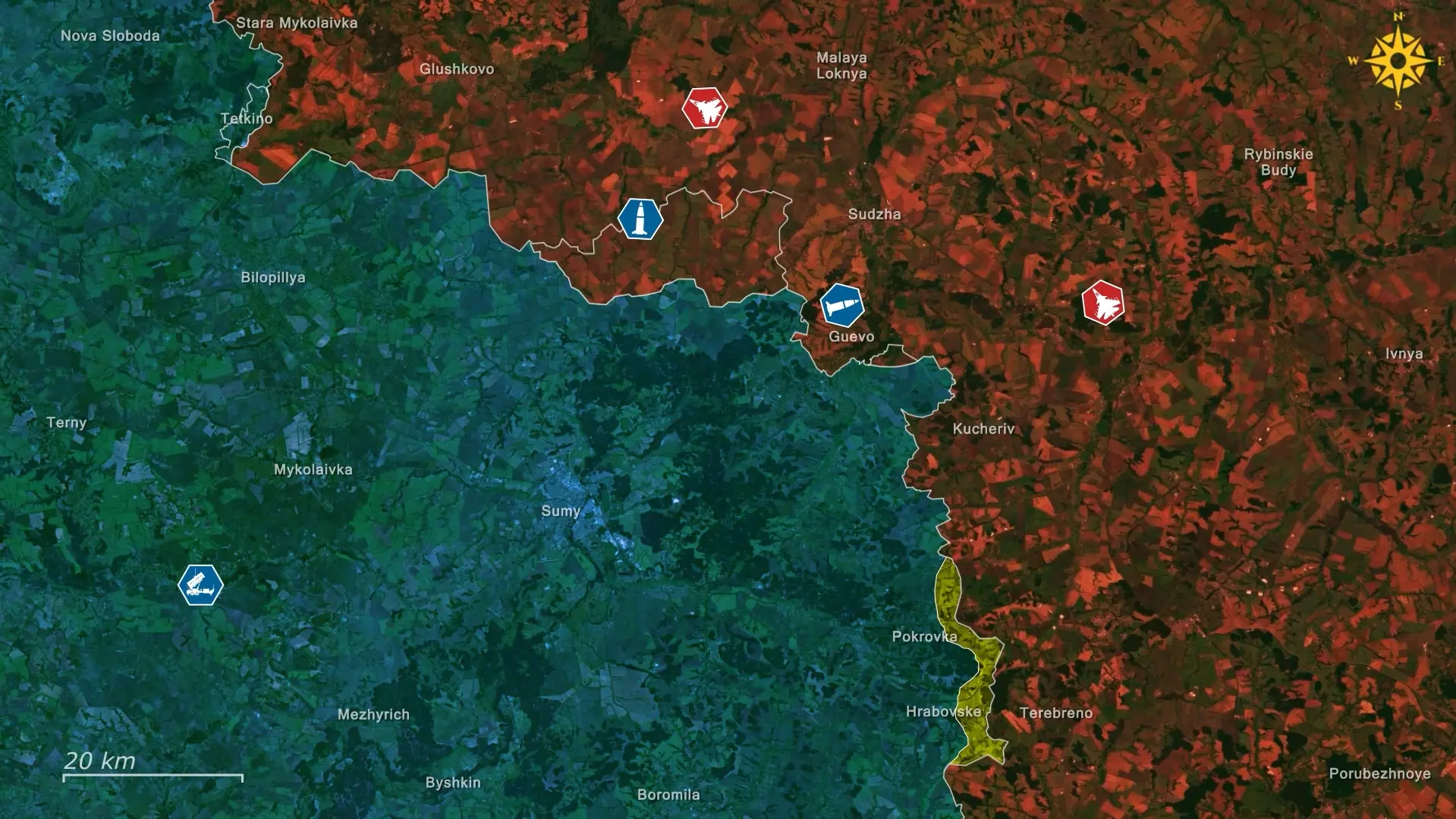
The result is a shift in local air dominance, most visible near Sumy, where, with fewer Russian fighters available to intercept Ukrainian aircraft, Ukrainian strikes near the border face significantly less resistance, while Western-supplied air defense systems and modernized Ukrainian fighters further complicate any attempt by Russia to regain control of the skies.
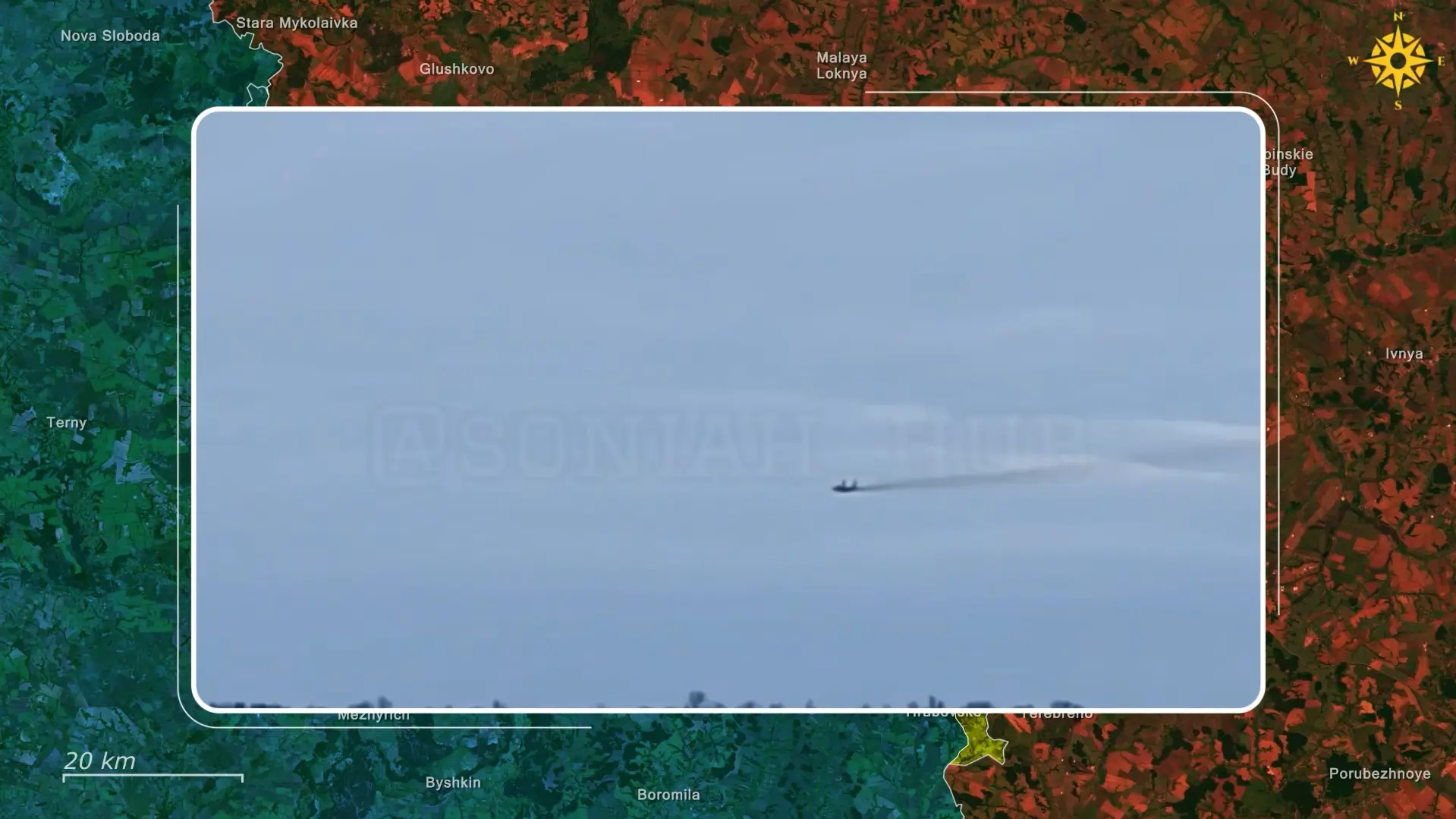
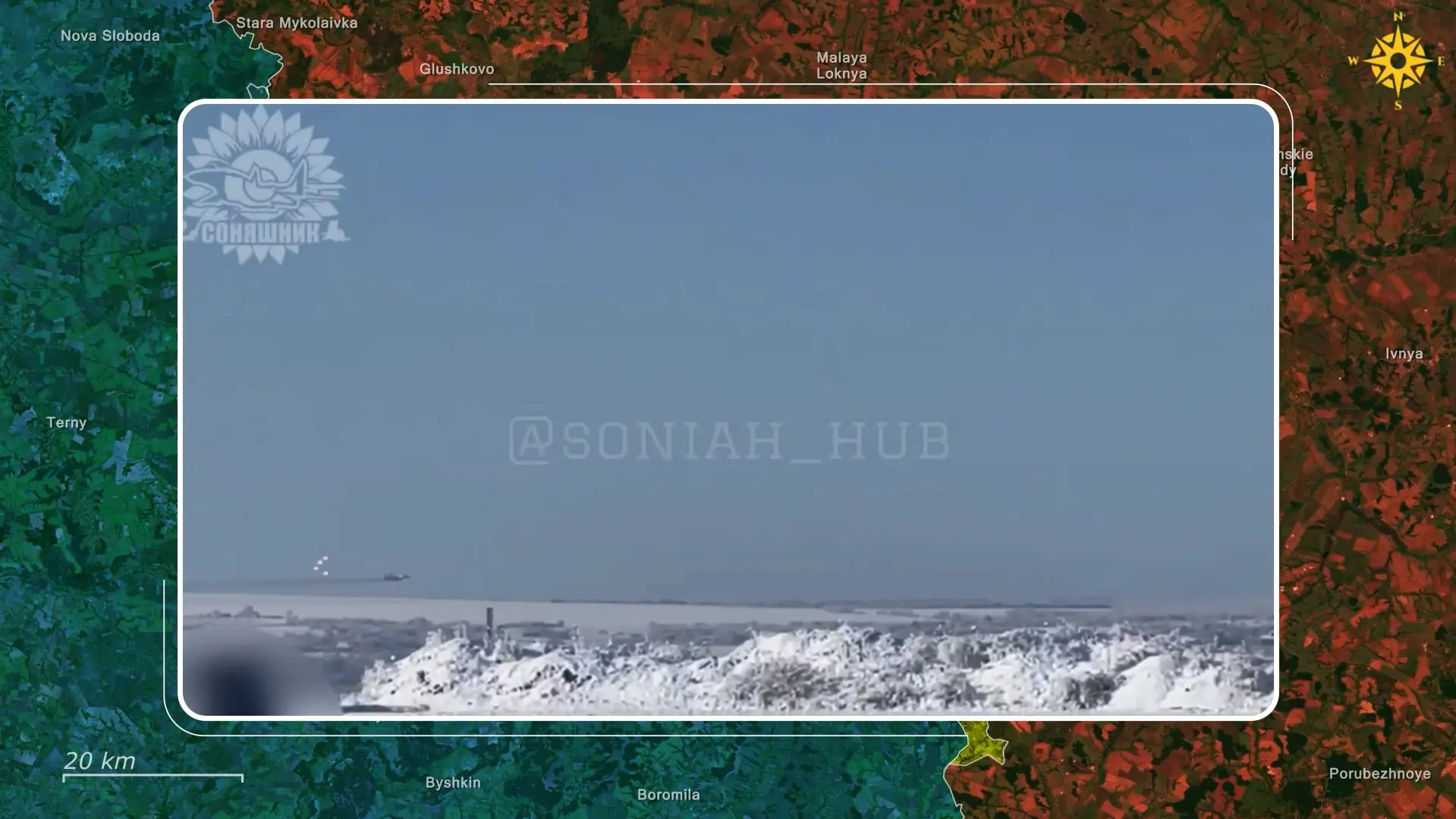
Overall, the imbalance in the sky has stalled Russia’s attempt to open a new operational axis toward Sumy. Without reliable air support or the ability to suppress Ukrainian strikes, Russian ground forces struggle to consolidate their forward positions. At the same time, Ukrainian airpower has turned what might have become a dangerous pincer movement into another costly and uncertain Russian probing operation.

.jpg)

Comments