

.svg)
The latest Houthi advance in southern Taizz has focused directly on the roads sustaining government-held positions. On October fourth, Houthi forces entered At Turbah after advancing through areas including al-Safiyah and al-Mansora. At Turbah is strategically important because it sits at the junction of the main routes connecting Taizz with Aden. The capture of al-Safiyah also allowed the Houthis to cut the principal road linking the two cities. This puts the government’s forces in Taizz under immediate logistical pressure, as food, ammunition, fuel, and reinforcements moving north from Aden must now pass through routes that are either disrupted or exposed to Houthi attack. The Houthis therefore do not need to capture Taizz immediately to weaken its defenders. By taking positions along the roads feeding the city, they can restrict the movement that allows government forces to keep fighting.
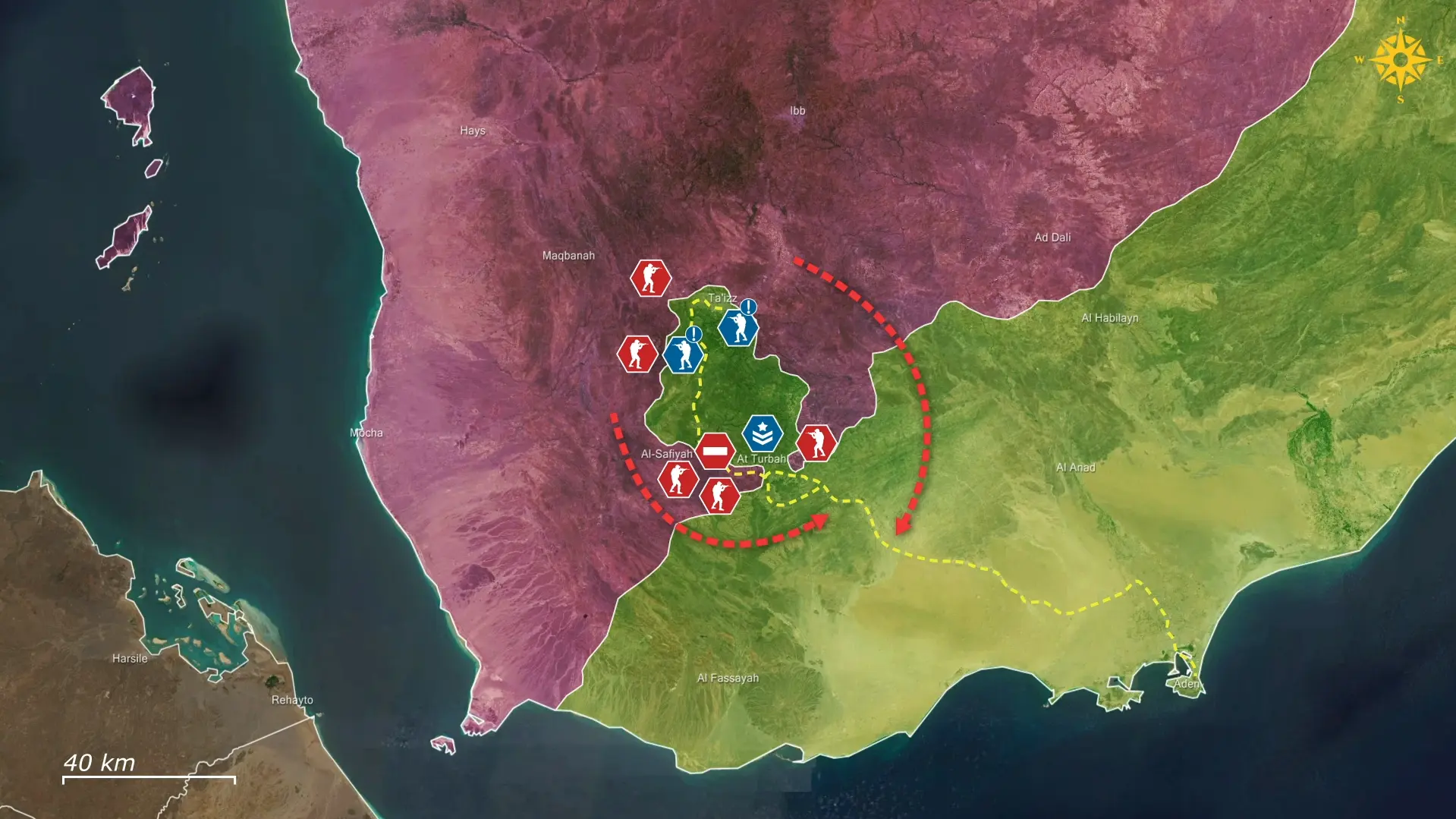
This matters because Taizz is the geographic hinge between the Houthi controlled north, government held territory to the south, and the Red Sea coast. The city also sits close to the routes connecting Yemen’s western and southern regions, giving whoever controls it greater freedom to move forces between these fronts. If the Houthis can isolate Taizz and eventually capture it, they would eliminate one of the largest remaining centers of resistance to Houthi rule in western Yemen. This would also help consolidate their recent gains along the western coast and strengthen their position around the approaches to Bab al-Mandab. From there, the Houthis could increase their influence over the routes connecting western Yemen to Aden, strengthening their position as a major power across the country. The loss of Taizz would also shift the political balance in Yemen by weakening the internationally backed government’s territorial position and demonstrating that its Saudi supported coalition cannot reliably protect its remaining strongholds. This would allow the Houthis to demand more favorable terms in future peace negotiations, while making it harder for Saudi Arabia and its Yemeni allies to push them back from the coast near Bab al-Mandab.
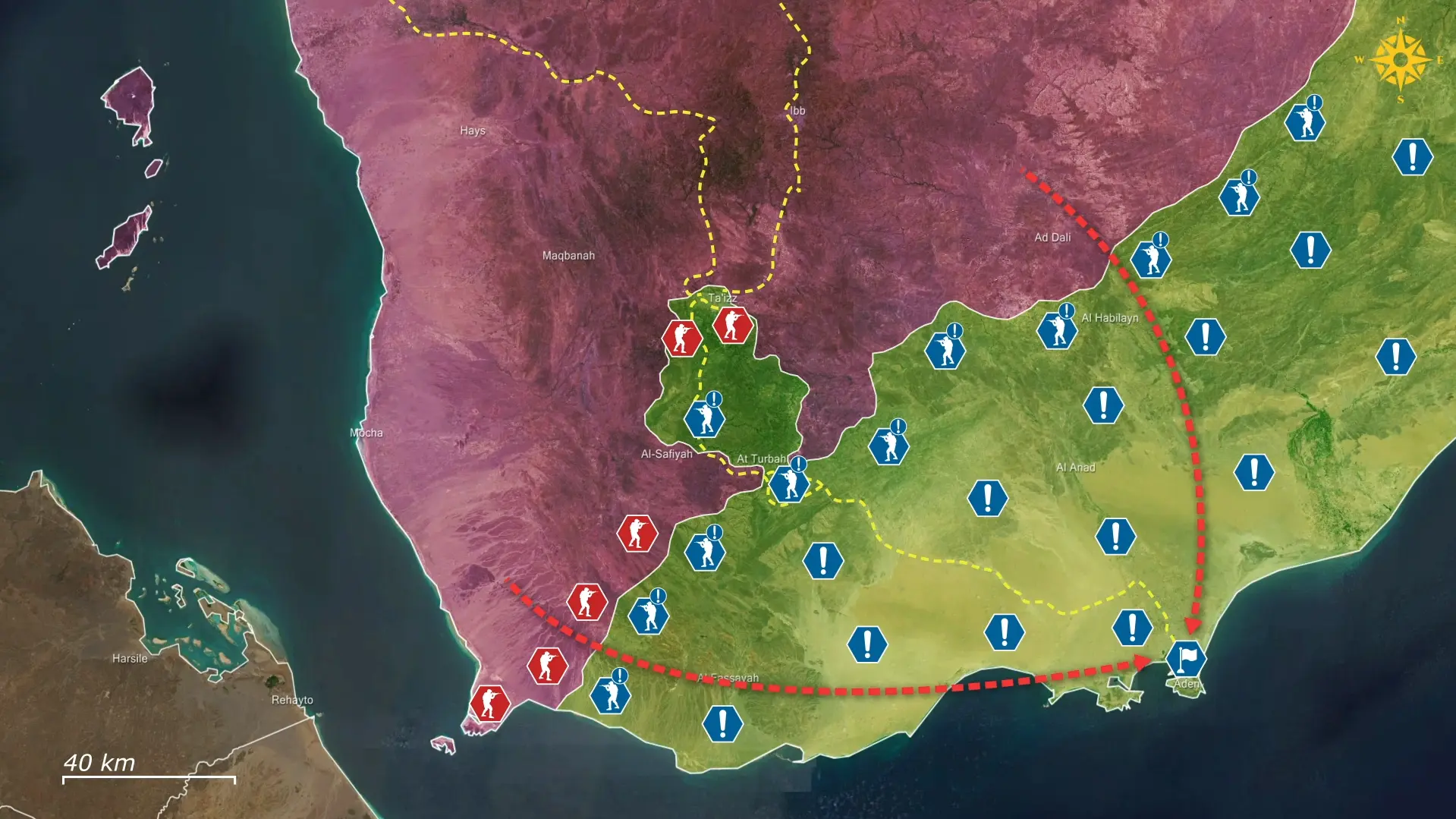
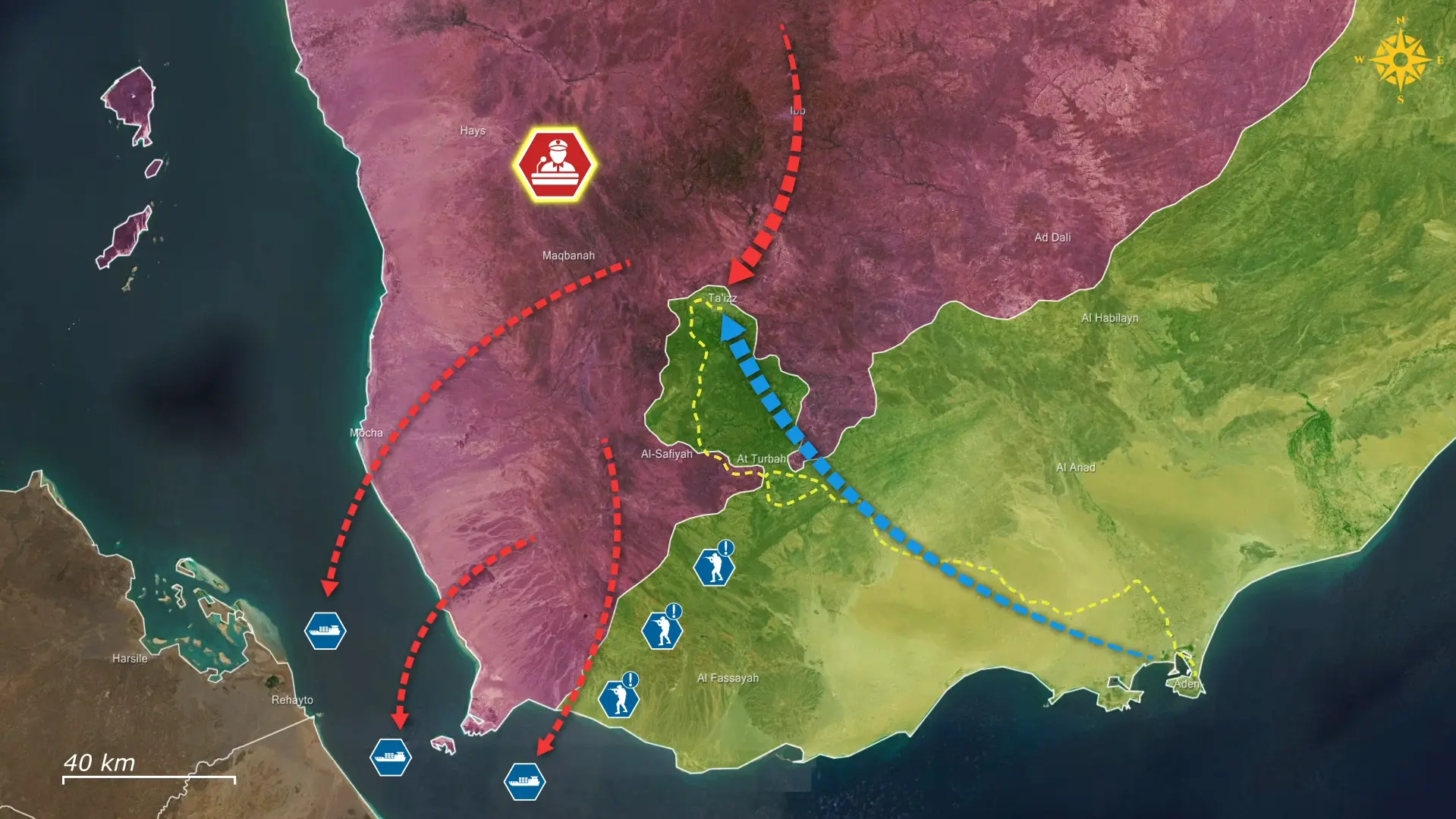
The Yemeni government cannot afford to lose Taizz, making the Houthi advance a direct challenge to the wider government position in western Yemen. In response, the Presidential Leadership Council has announced a full scale offensive against the Houthis across multiple fronts. The immediate priority is to prevent the Houthis from consolidating their positions south of Taizz and severing the remaining routes into the city. Saudi Arabia is supporting this effort with military assistance and airstrikes aimed at disrupting Houthi forces and slowing their advance. The objective is not simply to inflict losses, but to create the conditions for government forces to regain control of the roads.
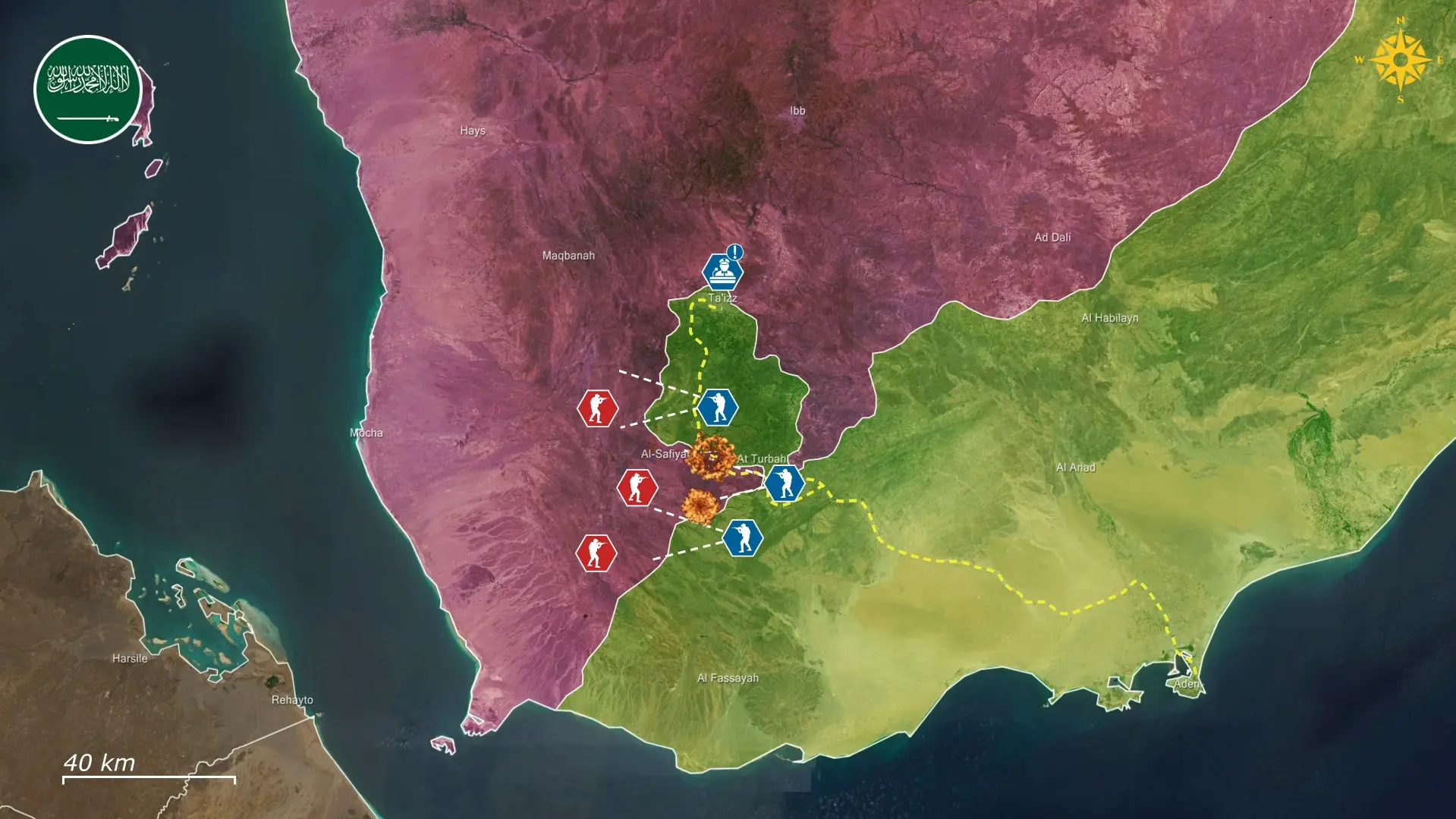
Reopening these routes would restore the flow of supplies and reinforcements into Taizz. Without that connection, the government risks allowing the Houthis to transform recent battlefield gains into a durable position from which they can continue expanding southward. The main difficulty is that airstrikes alone cannot restore the government’s land connection to Taizz. Saudi aircraft can target Houthi positions, disrupt concentrations of fighters, and slow further advances, but they cannot permanently secure the roads. That requires government forces to retake the junctions and surrounding high ground and then hold them against renewed Houthi attacks.
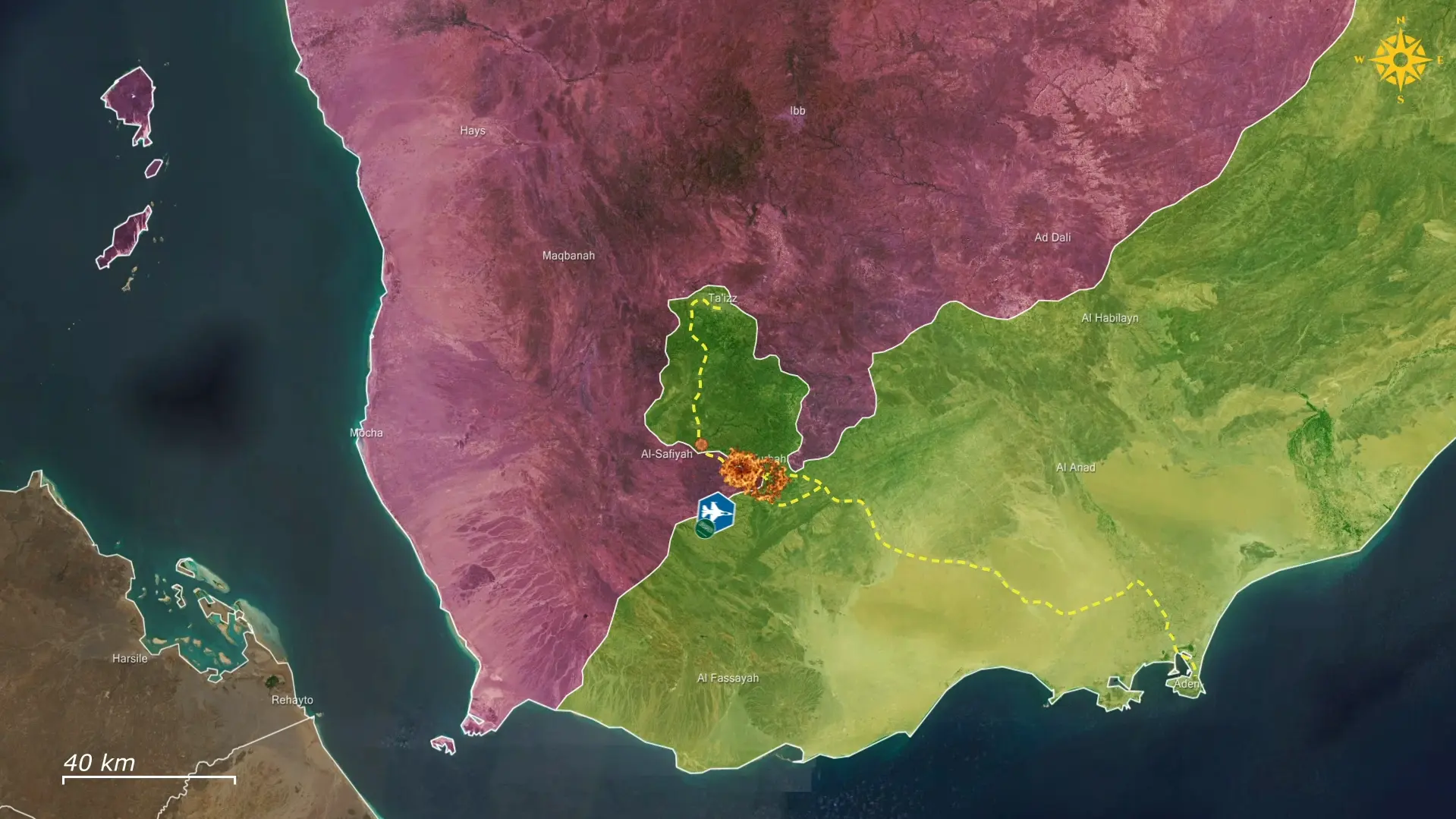
This creates a problem for the wider government campaign. Forces that should be preparing for a broader offensive must instead remain focused on protecting Taizz and reopening its access routes. The Houthis, meanwhile, can use their forward positions to keep pressure on those lines and force the government to commit additional troops to the area. The immediate battle for the roads therefore remains central to the government’s ability to regain the initiative.
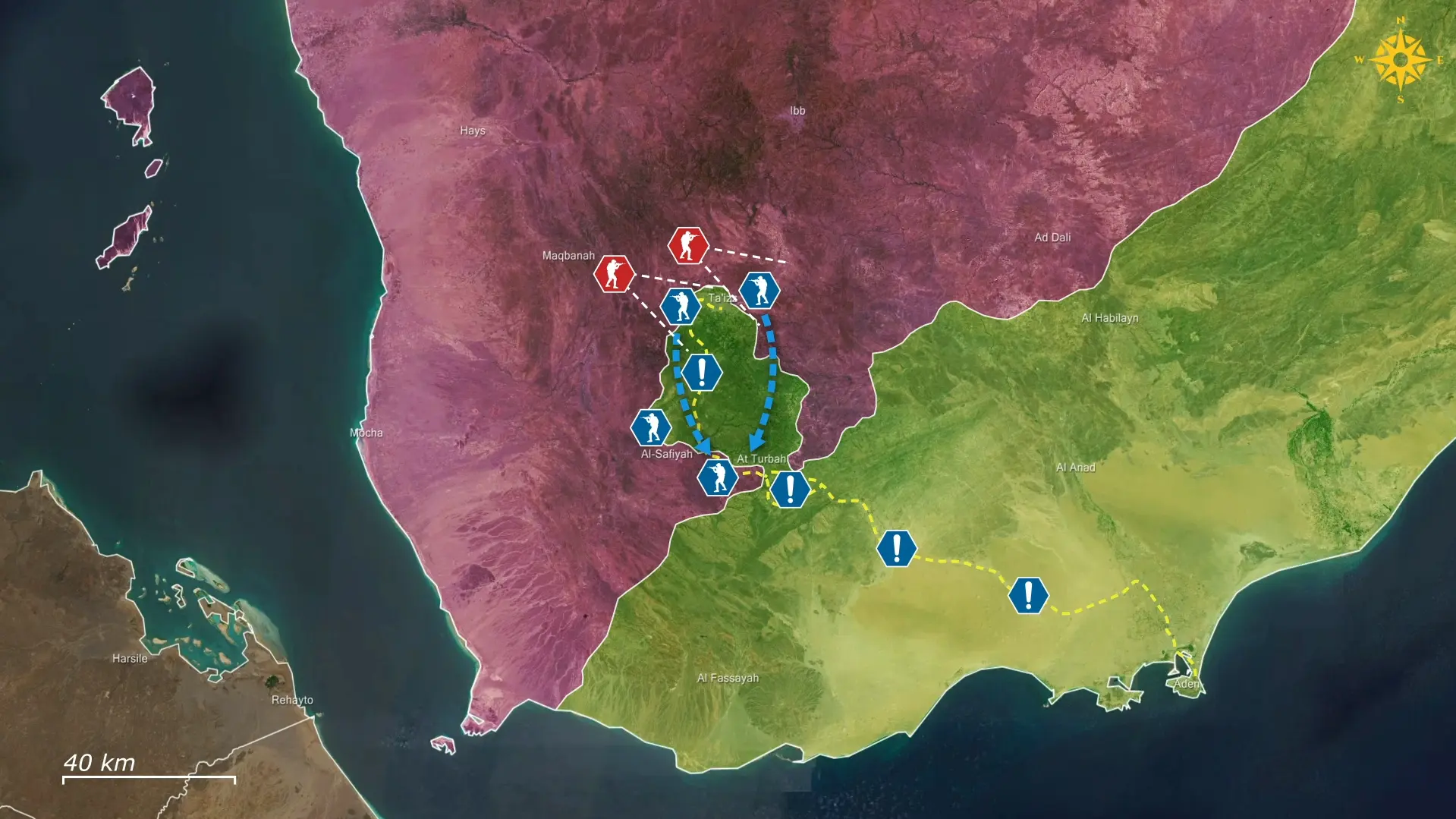
Overall, a Houthi victory at Taizz would make it harder for government forces to recover the territory lost along the Red Sea coast. This would leave Saudi Arabia facing a stronger Houthi movement that could demand more favorable peace terms while retaining positions near Bab al-Mandab, the shipping passage connecting the Red Sea with the Gulf of Aden. Holding those positions would make it harder to remove the Houthis’ ability to threaten commercial vessels, leaving shipping companies exposed to further attacks and disruption. The outcome at Taizz could therefore affect both who holds power in Yemen and how safely international trade moves through the region.

.jpg)


Comments