

.svg)
Today, the biggest news comes from the Kupiansk direction.
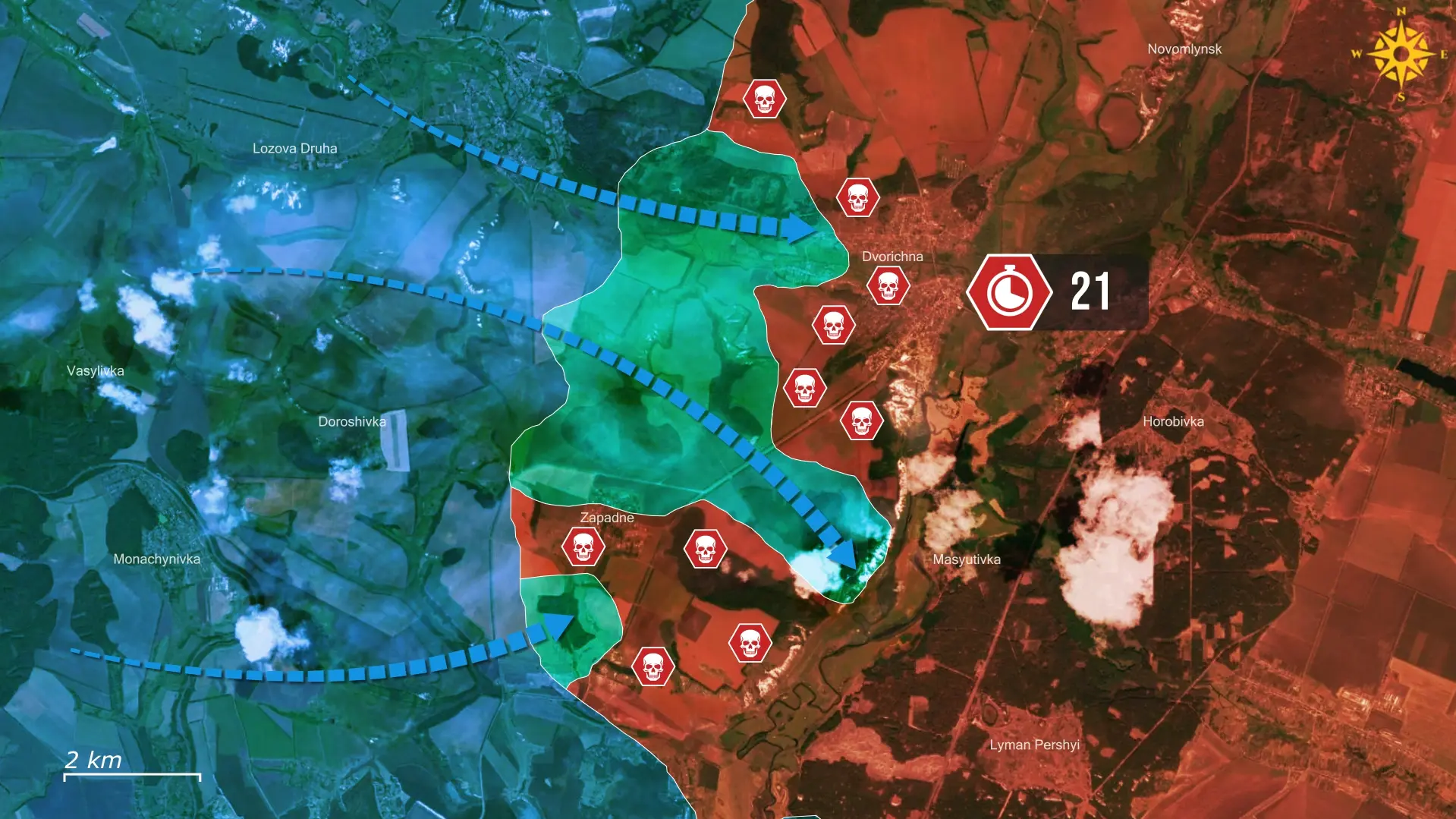
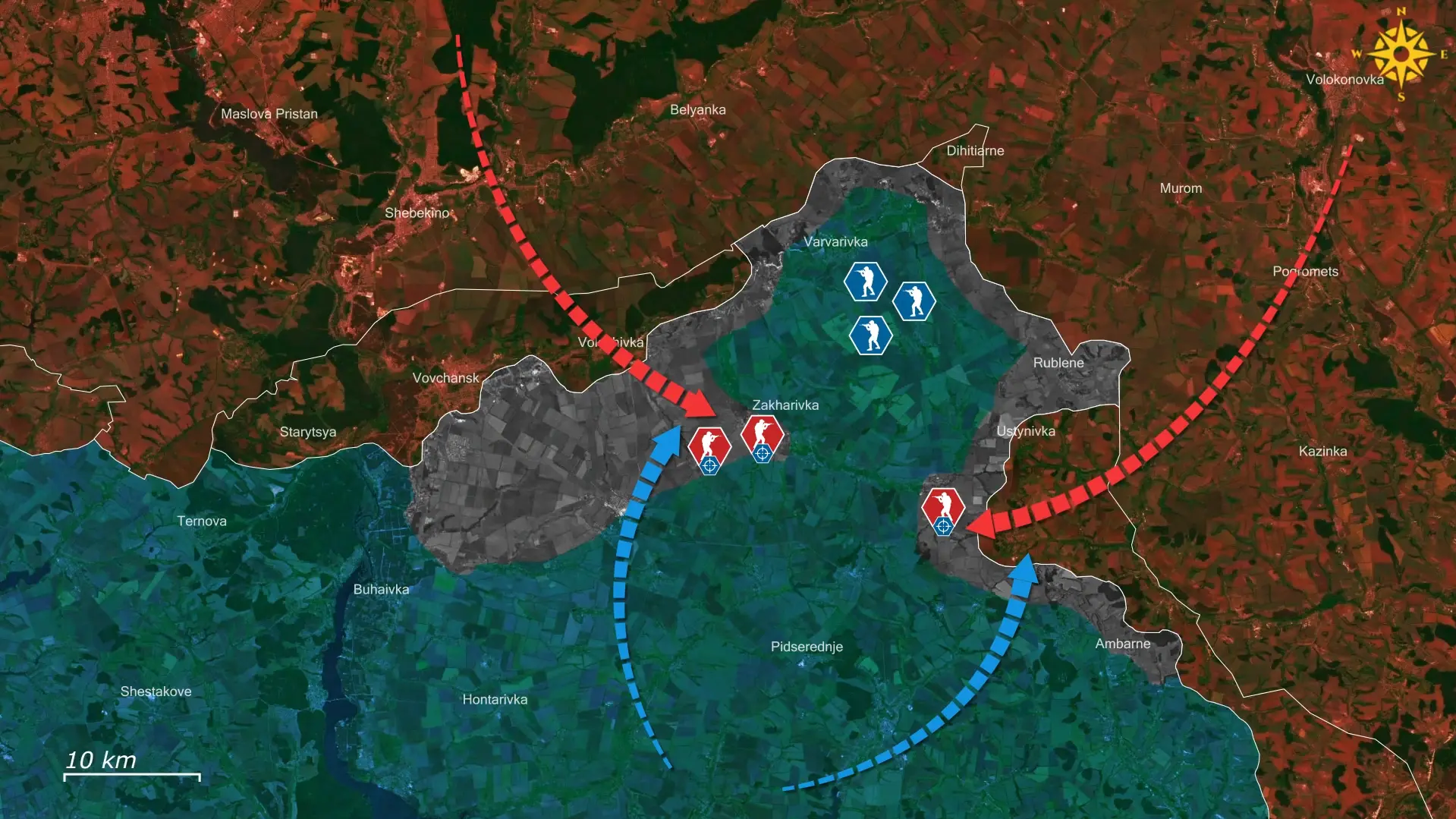
Here, Ukraine’s twenty-third international assault regiment has penetrated deep into the Russian lines and has cut the Russian Dvorichna bridgehead in half. Being spearheaded by elite Colombian fighters, Russians are not only threatening to lose control of over a year of progress, but are close to becoming completely encircled as well.
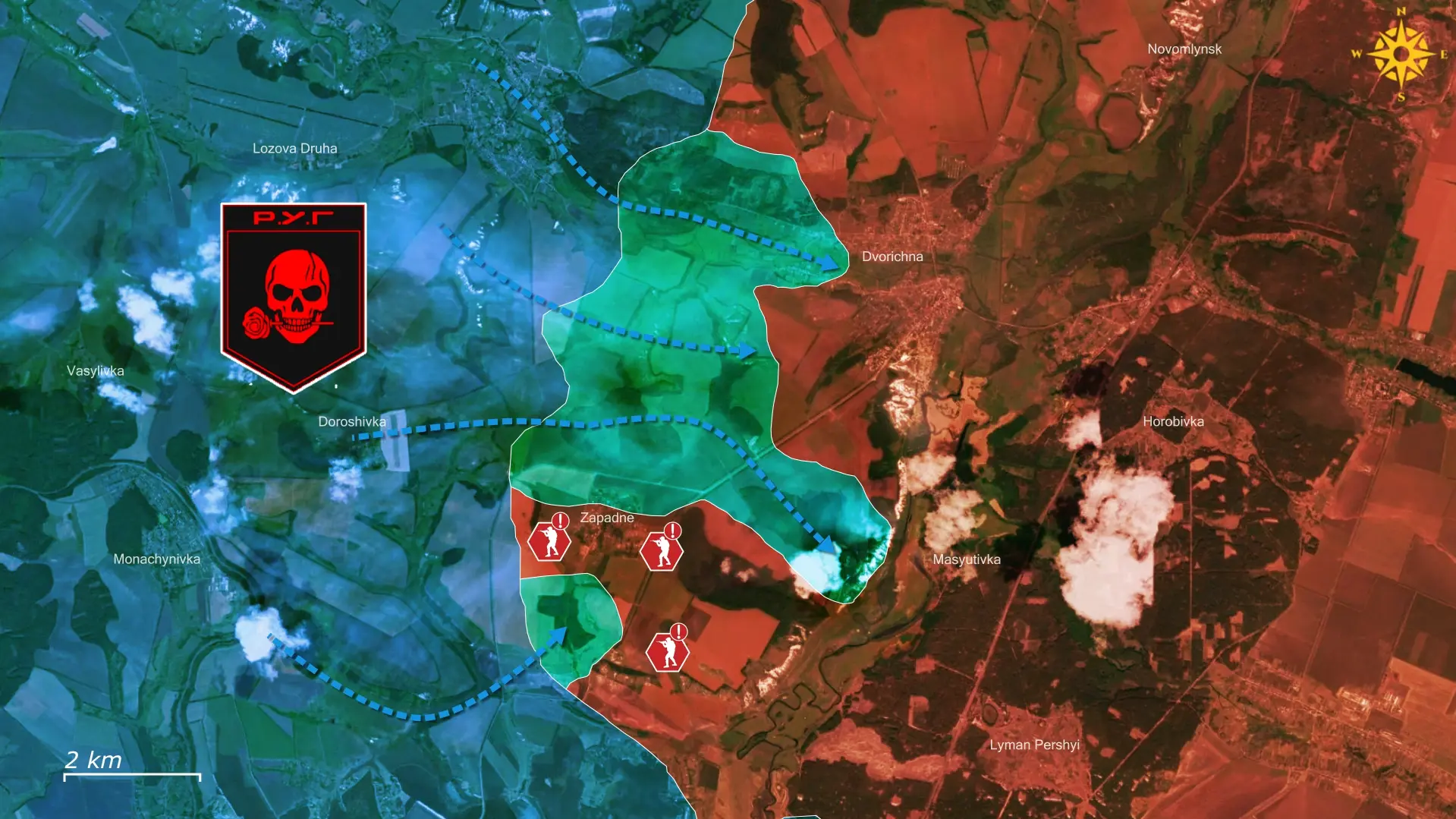
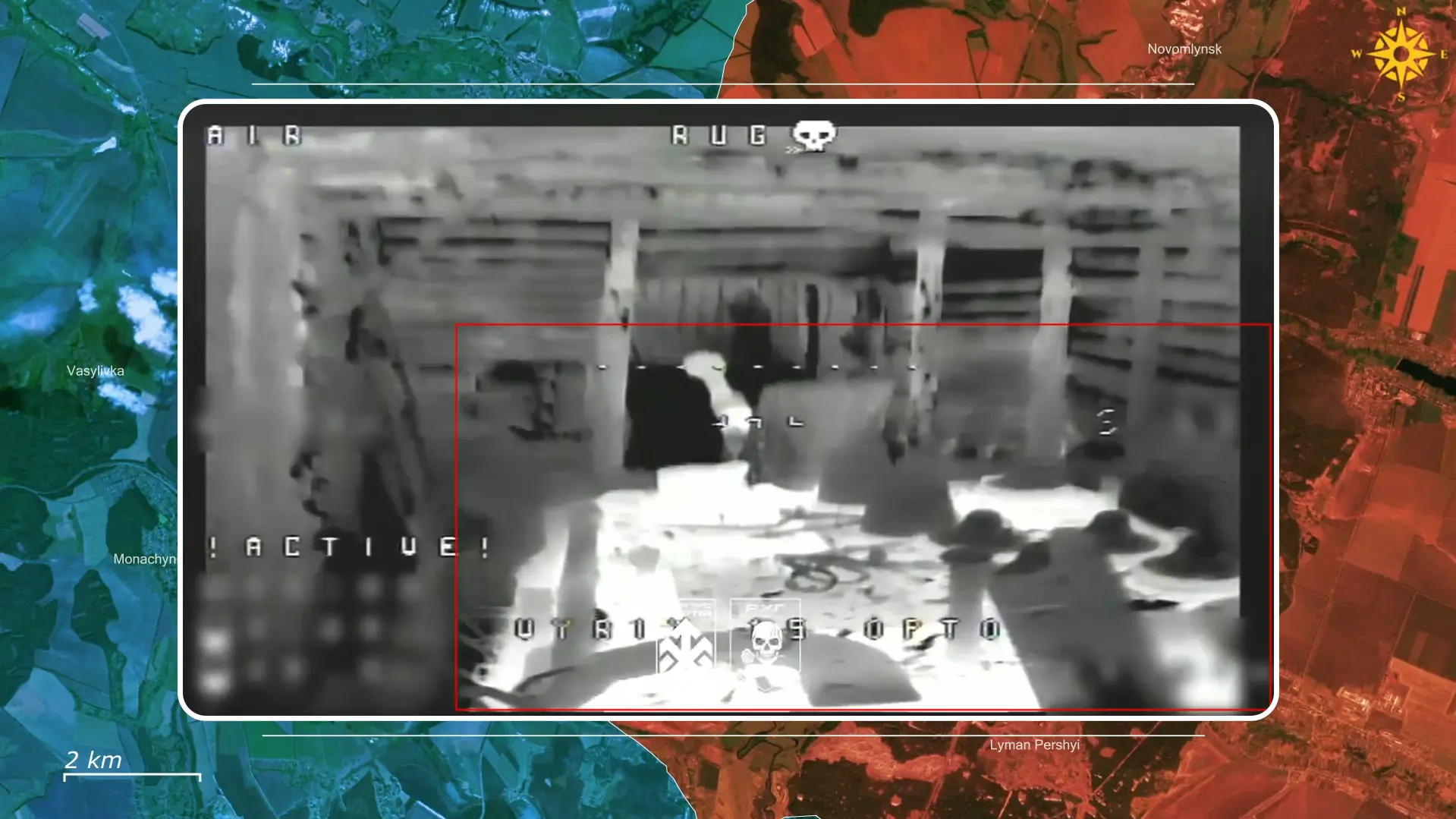
The operation began with an intense fire bombardment of enemy positions. The international fighters of the RUG assault regiment used bomber drones to shell and destroy over one-hundred-and-fifty-nine Russian command, observation, and deployment points in the days leading up to the offensive. Notably, they even used FPV kamikaze drones to break and fly directly into Russian positions, blowing up critical equipment. Hunting down any Russian soldier that moved out of his position, the FPV operators did not give any quarter to the Russian forces.
With Russian defenders adequately undermined, the Colombian volunteers began preparations for the upcoming ground assault. Moving out in the early morning while the Russians still slept, the ground-assault phase commenced in four distinctive phases. First, a diversionary assault took place south of the settlement of Zapadne, with between fifteen to twenty Colombian fighters infiltrating and advancing into the forest there. The soldiers engaged in intense firefights with the Russian defenders, eliminating the enemy soldiers here and taking control of the forest area.
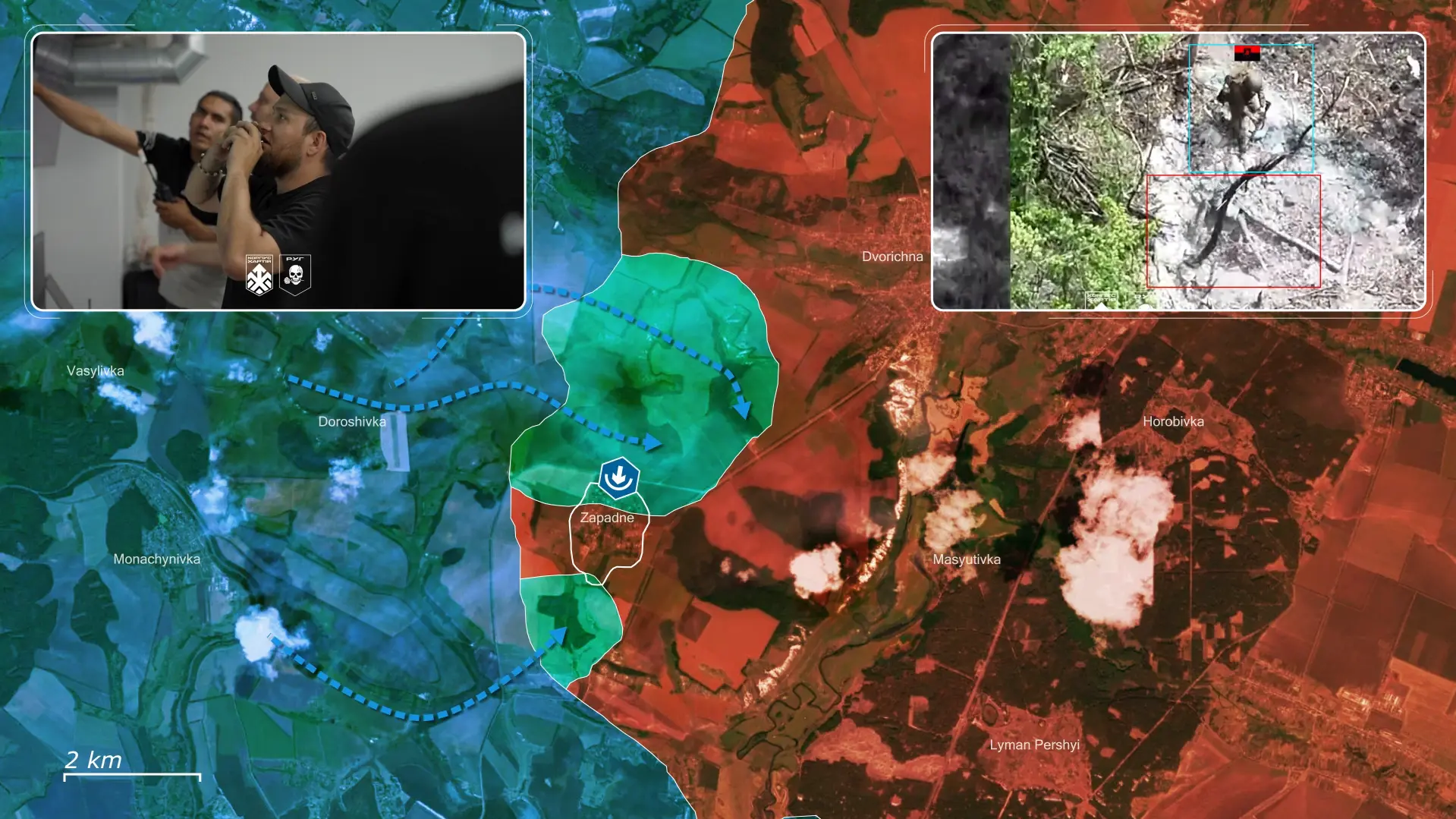
As the Russian garrison in Zapadne became alerted to the Ukrainian attacks and moved to respond, Ukrainians launched the largest of their counterattacks in the center. Moving rapidly and aggressively, the Colombians cleared one Russian dugout after the other with grenades. Under close overwatch and in constant communication with their commanders in the rear, they were able to outmaneuver each Russian position they came across. Subsequently, the much larger forest to the north was cleared in full. The Colombians even began establishing footholds in the north of Zapadne, putting pressure on the Russian garrison and preventing them from adequately responding to each of the attack vectors.
Next, in repetition of their earlier pincer maneuver on Zapadne, the Colombians opted to pin down a larger Russian garrison to prevent a response to their earlier penetration. Small units of fighters quickly and aggressively penetrated over three kilometers deep toward the town of Dvorichna itself, rapidly advancing and threatening the core of the Russian bridgehead, which was centered around the town of Dvorichna. This forced Russian commanders to divert available reserves to containing the direct threat on their command posts, instead of addressing the larger Ukrainian breakthrough to the south.
With the Russian counterattacking forces pinned down in Dvorichna itself, the Colombians were able to push through and secure control of yet another large forest area. Geolocated footage shows the Colombians infiltrating into the forest, clearing enemy positions, and capturing further sensitive documents. Crucially, this final maneuver cut off any Russian ground lines of communication between Dvorichna and the now encircled Russian garrison in Zapadne.
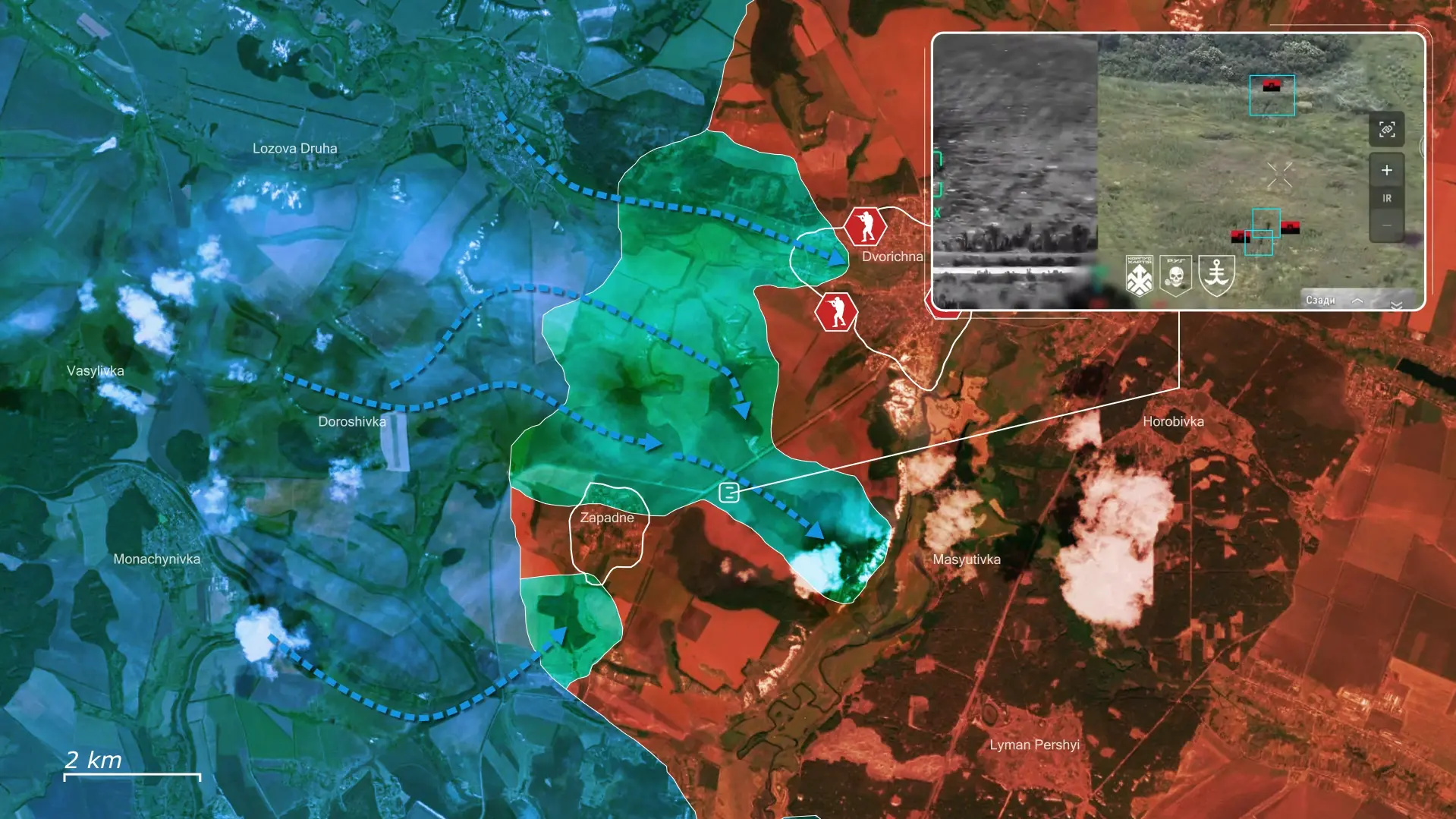
Most notably, the shared footage shows Ukrainian formations operating freely through open fields, a usually suicidal undertaking due to the density of drones in modern warfare detecting almost any movement out in the open. The Institute for the Study of War reports that this freedom of movement is a strong indicator that Ukrainian formations have successfully suppressed Russian drone activity preceding their assaults. This shows that Ukrainian fire preparations and intelligence work had been massively successful in identifying and destroying not only Russian command posts, but also the positions of Russian drone operators; leaving Russians with both a lack of command and control, as well as a lack of drone fire support to counter the Ukrainian advances.
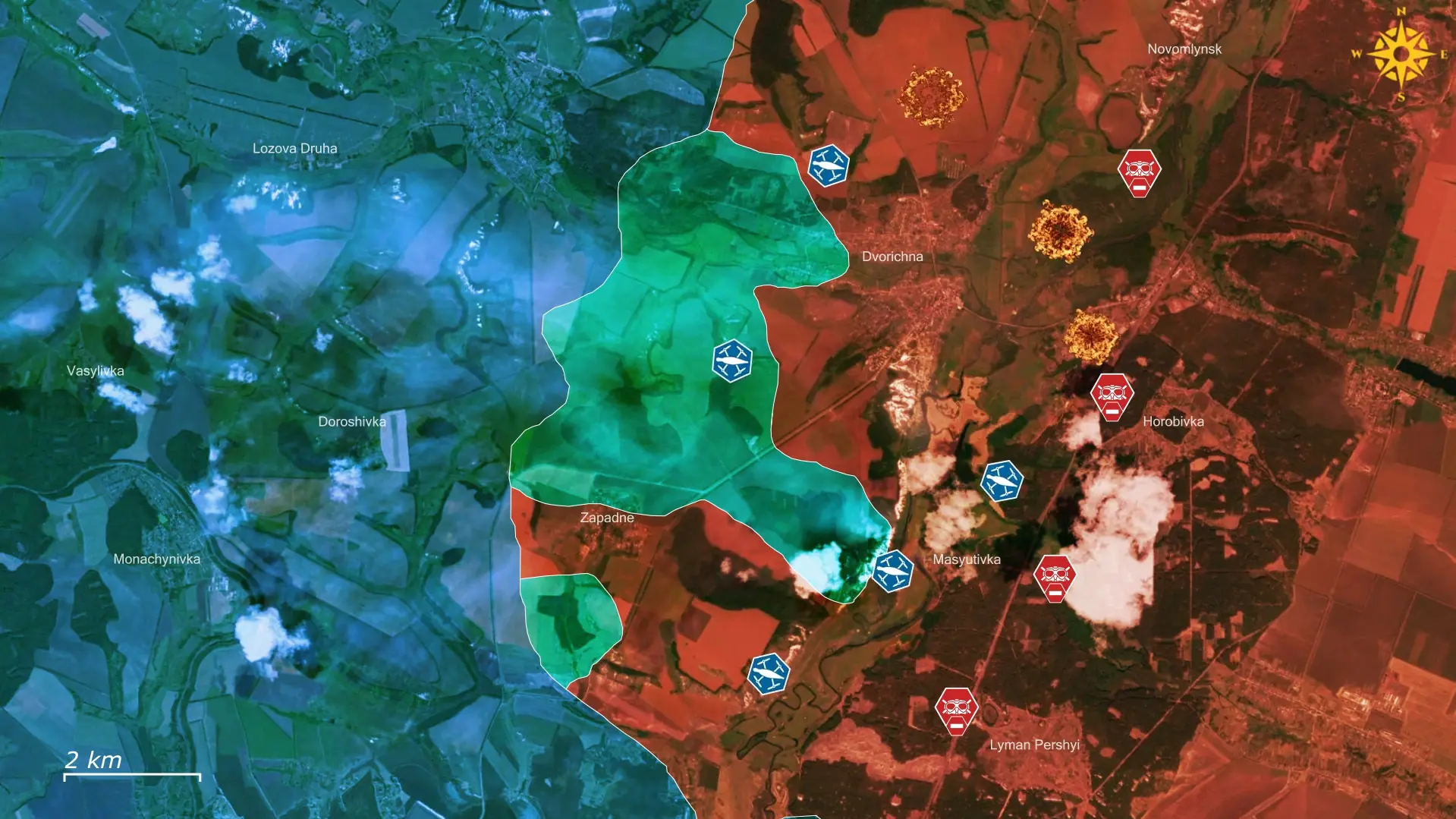
Overall, the Ukrainian-Colombian operation shows that with careful and complete preparation, Ukraine is able to advance even when faced with difficult odds. Notably, Ukrainians are showing time and time again that in doing so, they are able to rapidly take control of important ground, deal heavy losses to Russian forces in extremely favorable ratios, and most importantly do so in record time. It took Russia over twenty-one months to establish the Dvorichna bridgehead as it stood before the Ukrainian counterattacks; and in a span of a few weeks of preparation and one-to-several days of assaults, Ukrainians are coming close to dismantling half of it.
.jpg)

Comments