


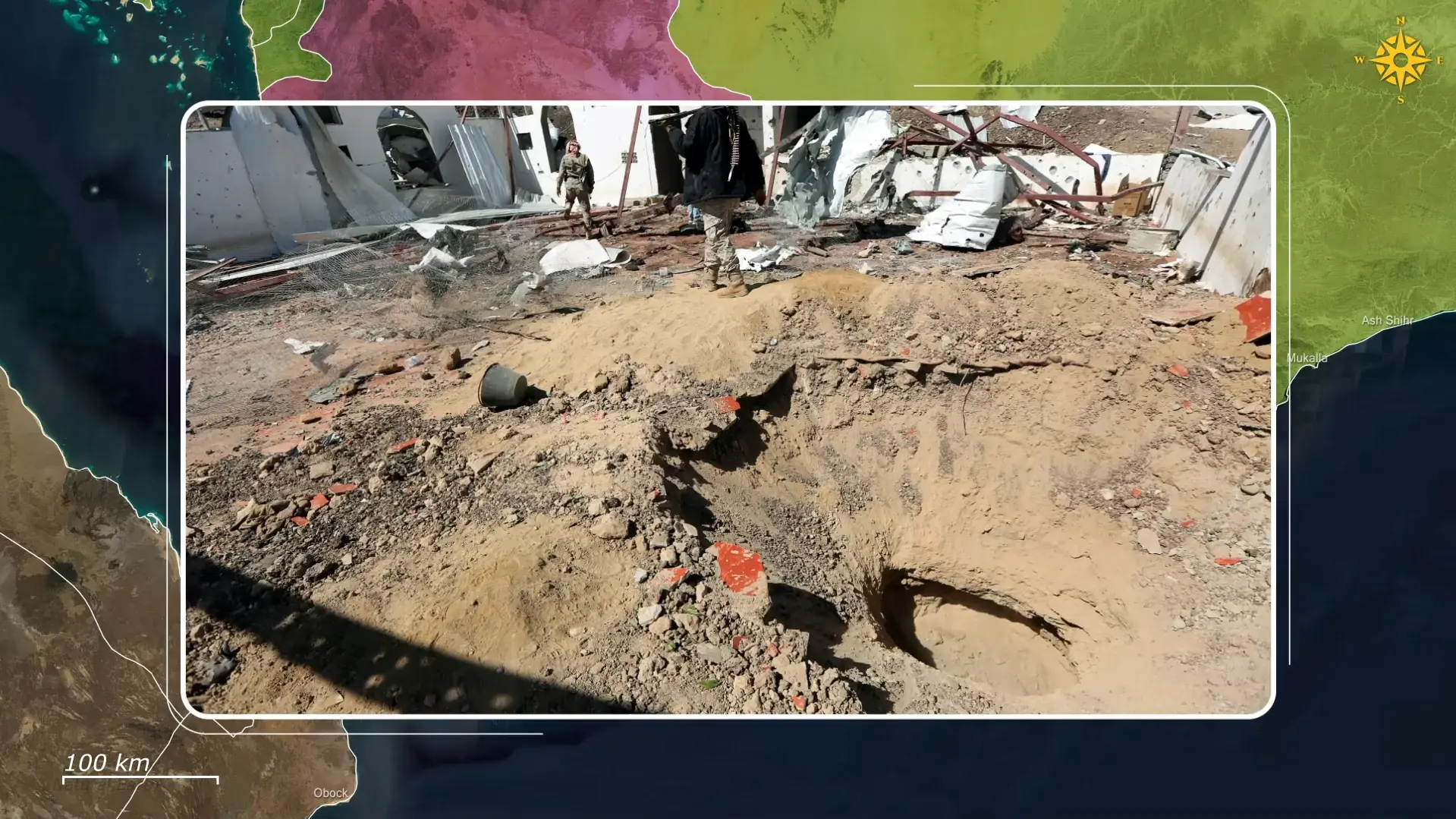
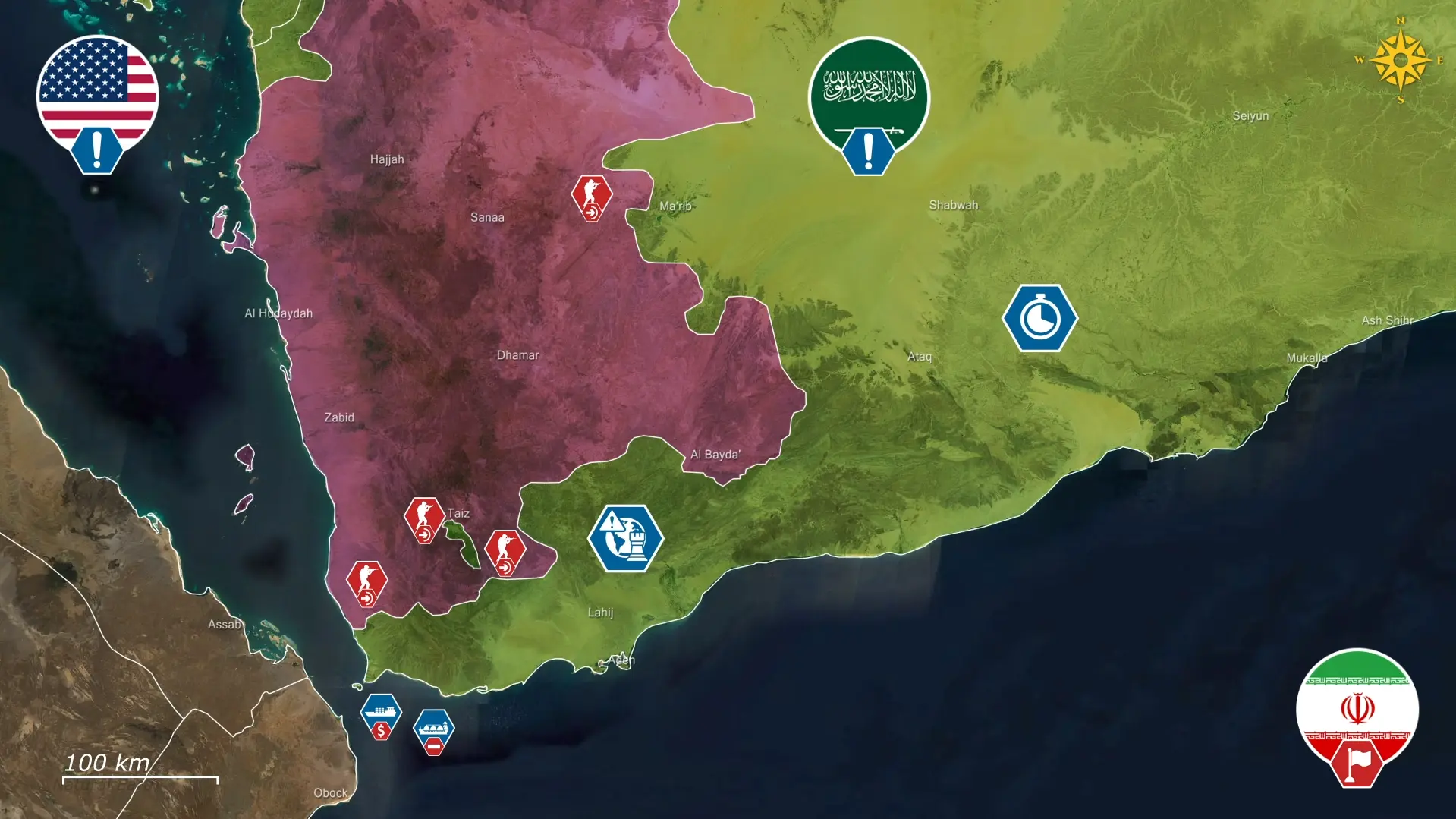
The Houthis launched a precise missile strike on the Al Alam training camp of the Yemeni government forces in Shabwa. The attack marked the deadliest single incident since the reignition of the conflict, killing seventy five young recruits and wounding another two hundred while they were gathering for training. The attack was part of a wider series of Houthi strikes that also targeted Yemeni columns moving through Marib and Shabwa, leaving vehicles burning in the desert and forcing the infantry to move under constant drone guided fire. Reports from the front indicate an escalation of violence that caused the death of more than two hundred on both sides, with the situation quickly deteriorating for the Saudi backed forces fronting the Houthis advances.
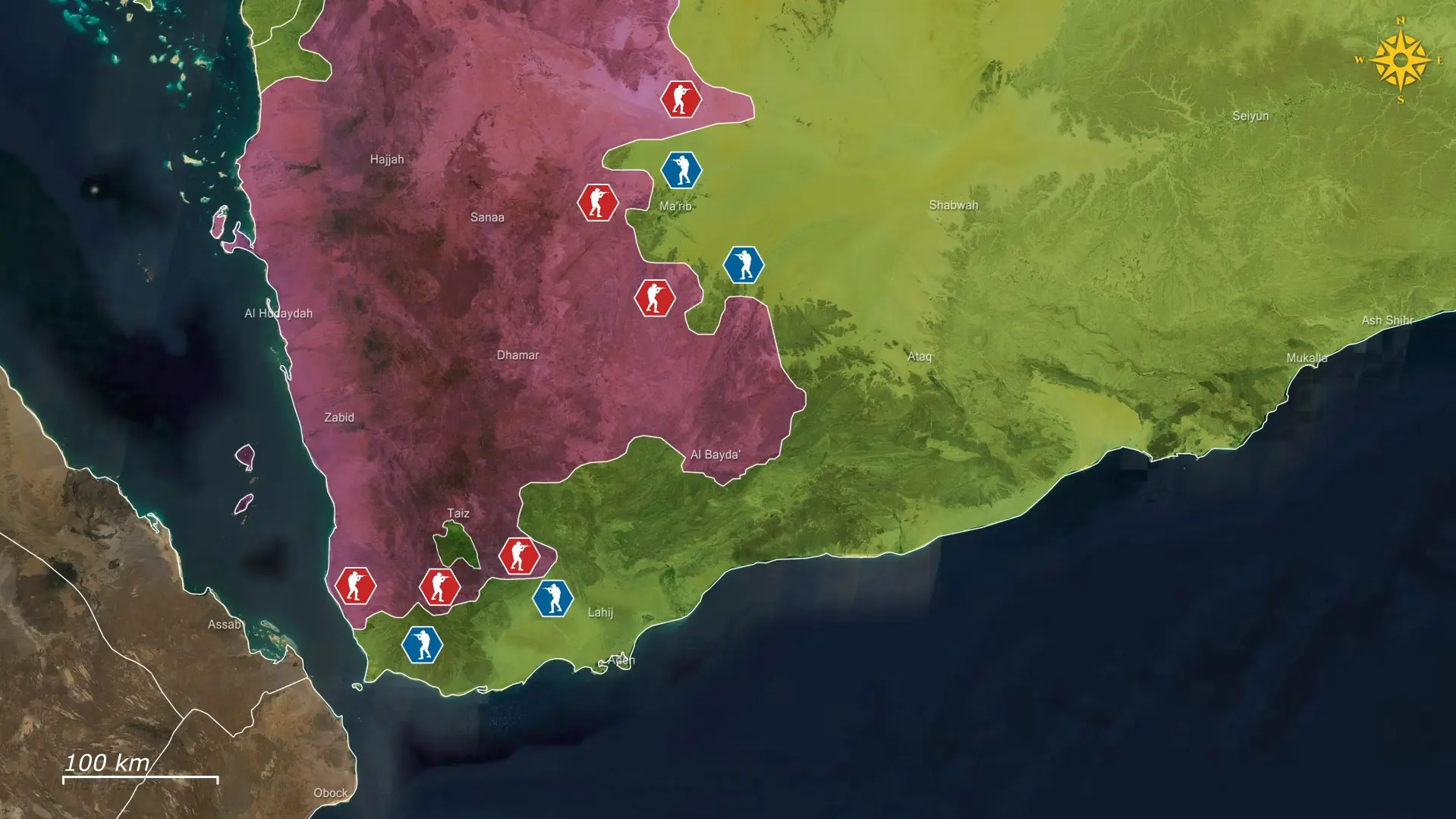
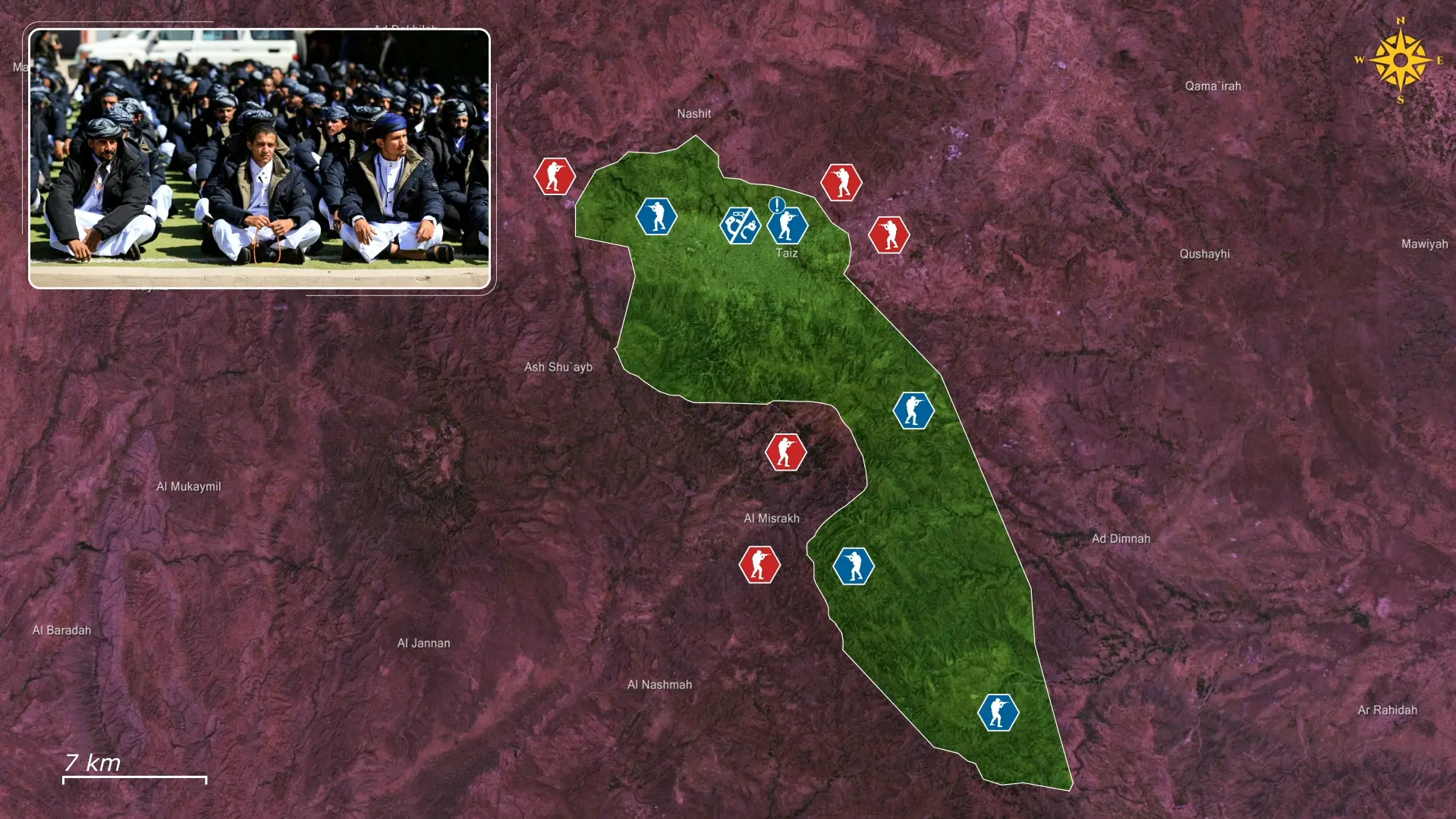
In response, Saudi backed forces tried to regain momentum by pushing the Houthis back in Marib, and along the western coast facing Bab el Mandeb. However, several of these attacks failed to achieve their goals, as the Houthis stopped the advance, broke through positions around Taiz, and continued taking ground in the city's northern and western parts. Although government forces still hold important areas, they could not prevent the Houthis from returning to territory they had lost earlier. In the contested city of Taiz, the situation is deteriorating to the point where local authorities released more than a thousand prisoners to fill gaps in the defense, a risky decision that highlighted how few options remained.
The Houthis are outperforming their rivals because, on top of receiving weapon deliveries from Iran, they are fighting united under a single organized leadership that decides where fighters, missiles, and drones should be sent and prioritized. This enables the Houthis to focus their strength on weak points and coordinate strikes with drone reconnaissance. By contrast, their opponents are divided among different armed groups that do not always agree on Yemen’s political future or on where they should fight.
While the Yemeni government can request Saudi support, including drones or airstrikes, the absence of a unified command makes it difficult to plan operations that require coordination. This fragmentation also affects morale, as units that do not trust their neighbors hesitate to advance and units that feel abandoned hesitate to hold ground.
Meanwhile, the Houthis do not need to capture all of Yemen to achieve a strategic victory. In fact, if they keep taking key positions, destroying government forces, and preventing their enemies from pushing them back, they can slowly consolidate control over the areas that matter most.
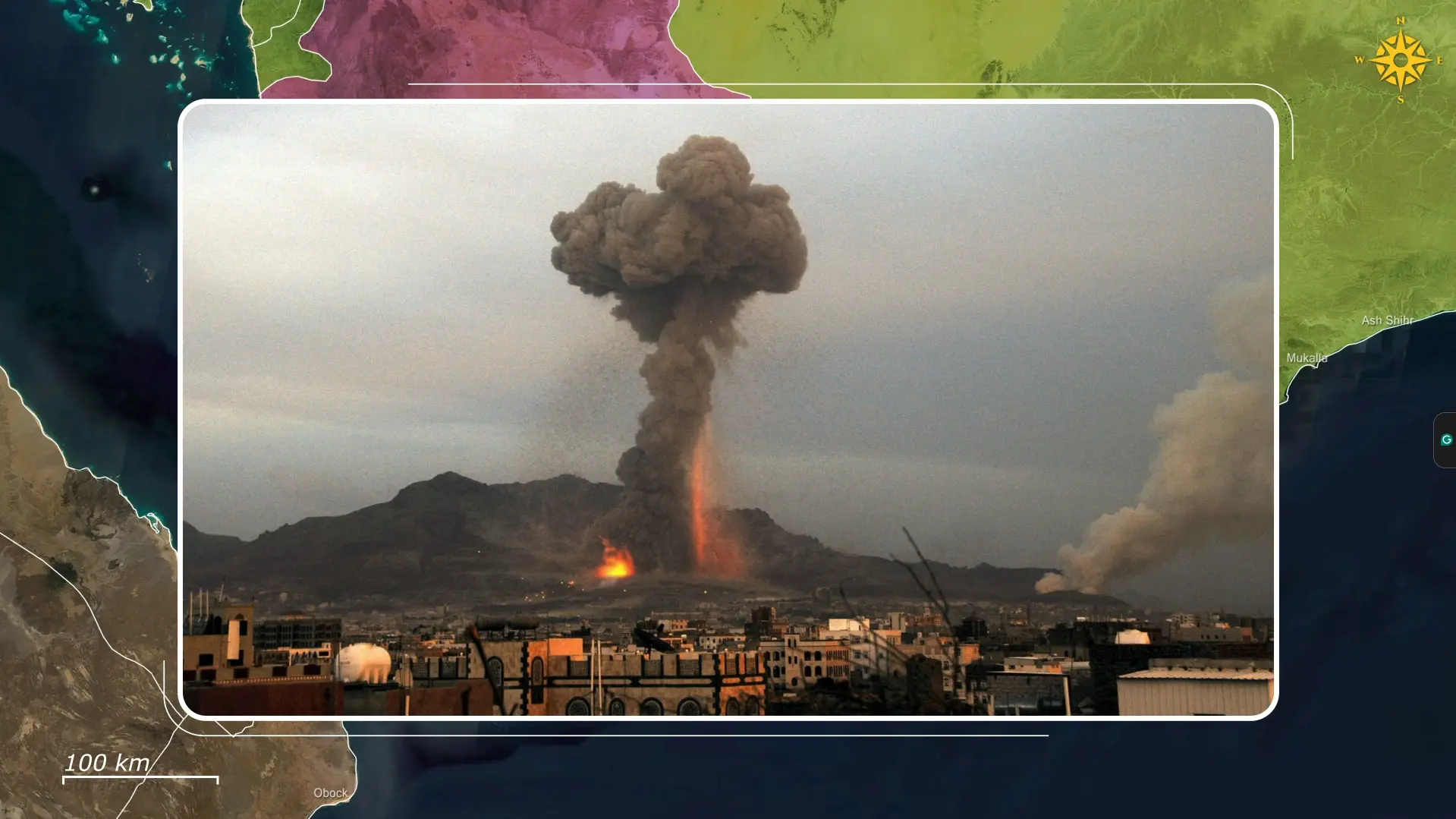
Their progress near Taiz and along Yemen’s western coast brings them closer to the roads and ports around Bab el Mandeb, and control of these areas would give them more leverage over maritime routes and reinforce their ability to pressure Saudi Arabia. The pressure is also further enhanced by the recent strikes against Saudi Arabia on the East West pipeline and the airport in Riyadh, which showed that the Houthis can already reach critical infrastructure far beyond Yemen.
Overall, the recent fighting in Yemen showed how the Houthis are turning tactical successes into long term momentum, while Yemen and Saudi Arabia are struggling to organize a solid defense. If the Houthis continue to advance toward Bab el Mandeb and control the coast, they could even replicate Iran’s strategy by demanding fees from commercial ships that pass through the strait, or blocking them at will. This scenario would allow Iran to pressure global energy markets even more and gain more leverage in the confrontation with the United States. Saudi Arabia and its partners will eventually have to assess if they can counter these territorial advances and strategic reach with a more coherent military approach, or whether they must take time to prepare for a long conflict in which the Houthis hold the initiative.



Comments