

.svg)
In this video, we will analyze how Europe opened the hunt on Russian oil in the Mediterranean.
The European Union has moved to stop and inspect tankers tied to Russia’s shadow fleet, opening the hunt on Russian oil in the Mediterranean. Russian oil tankers are already fleeing the Mediterranean as Europe opens the hunt, and one of Moscow’s key export corridors starts to tear apart.
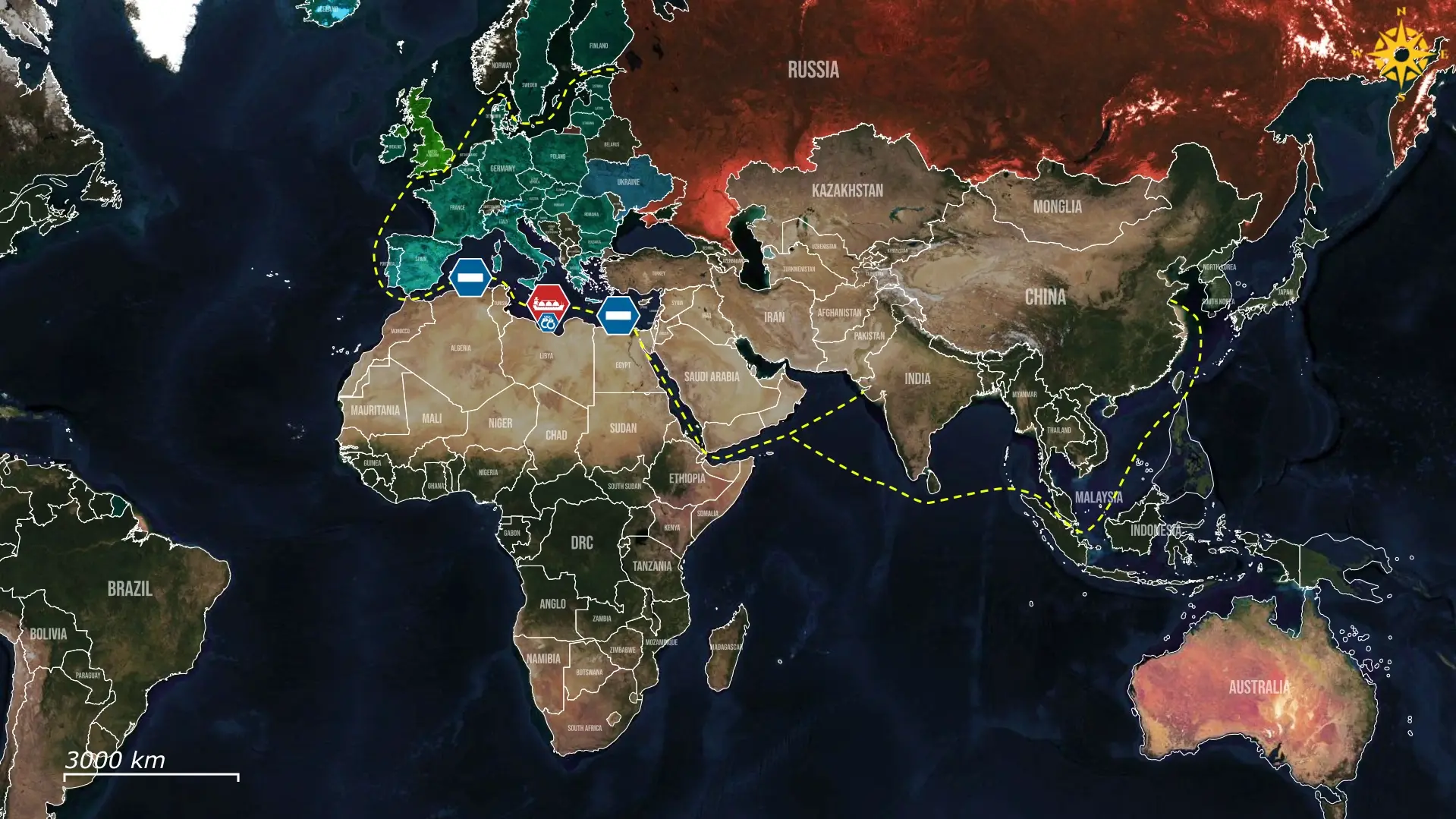
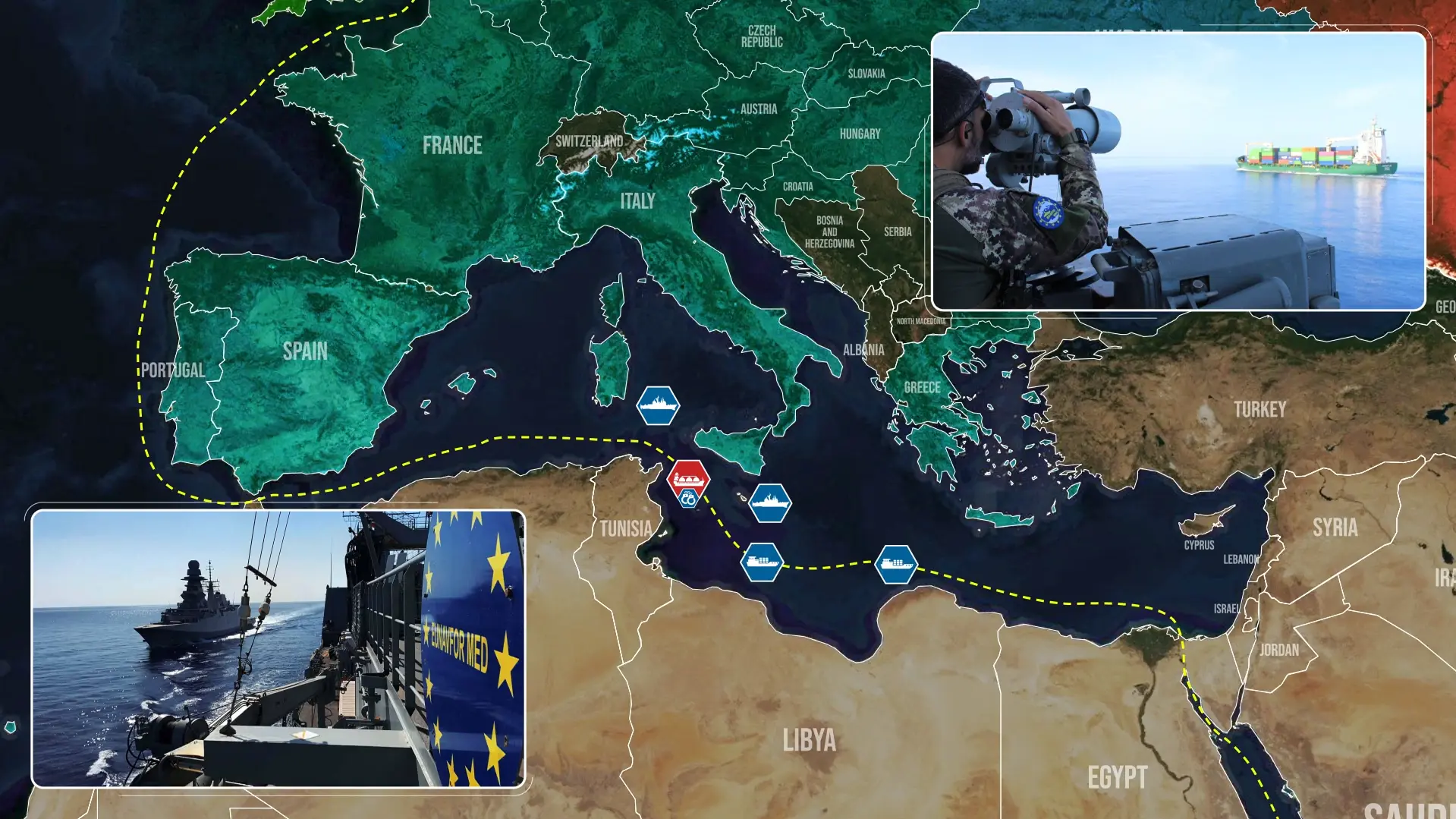
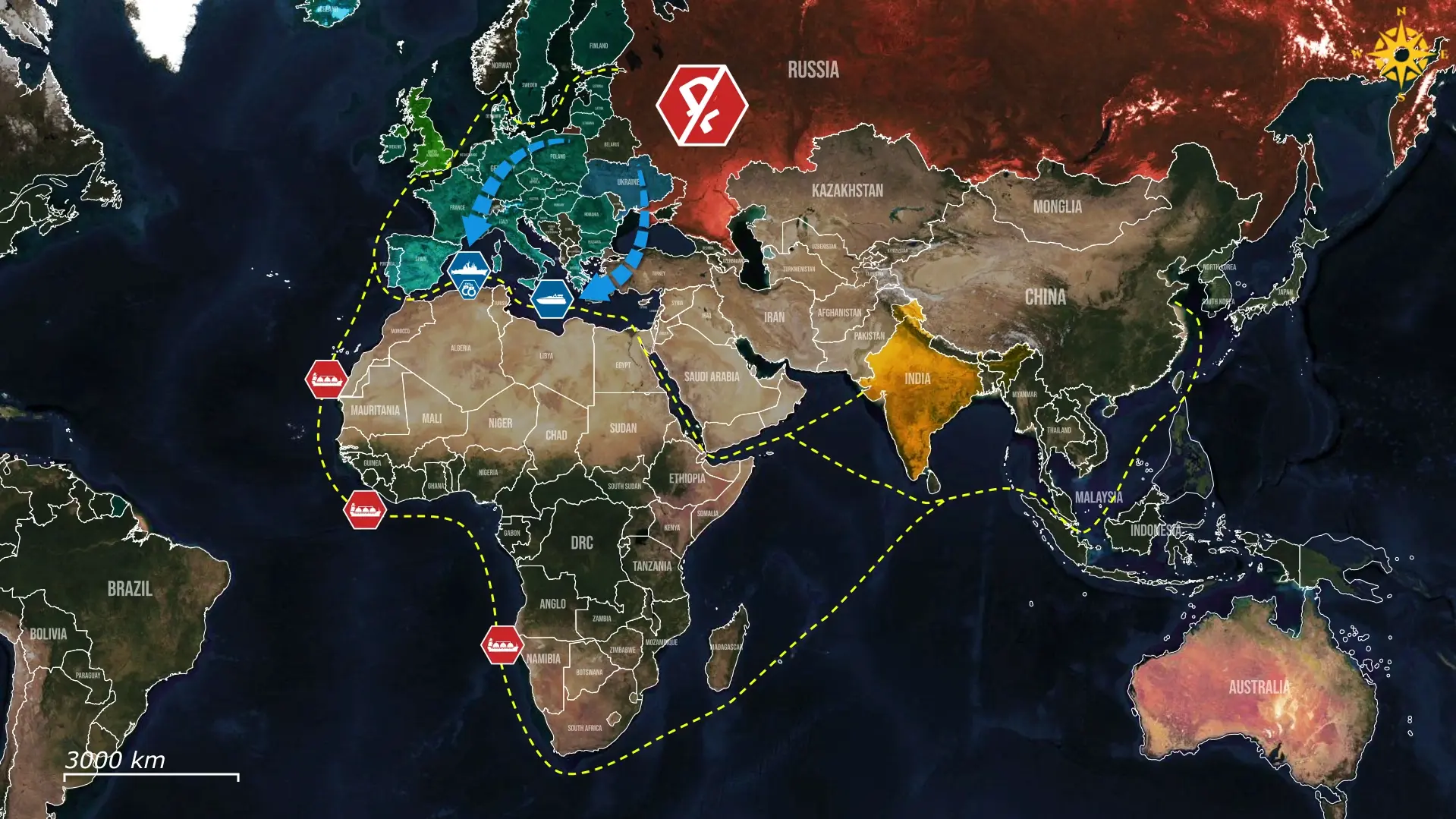
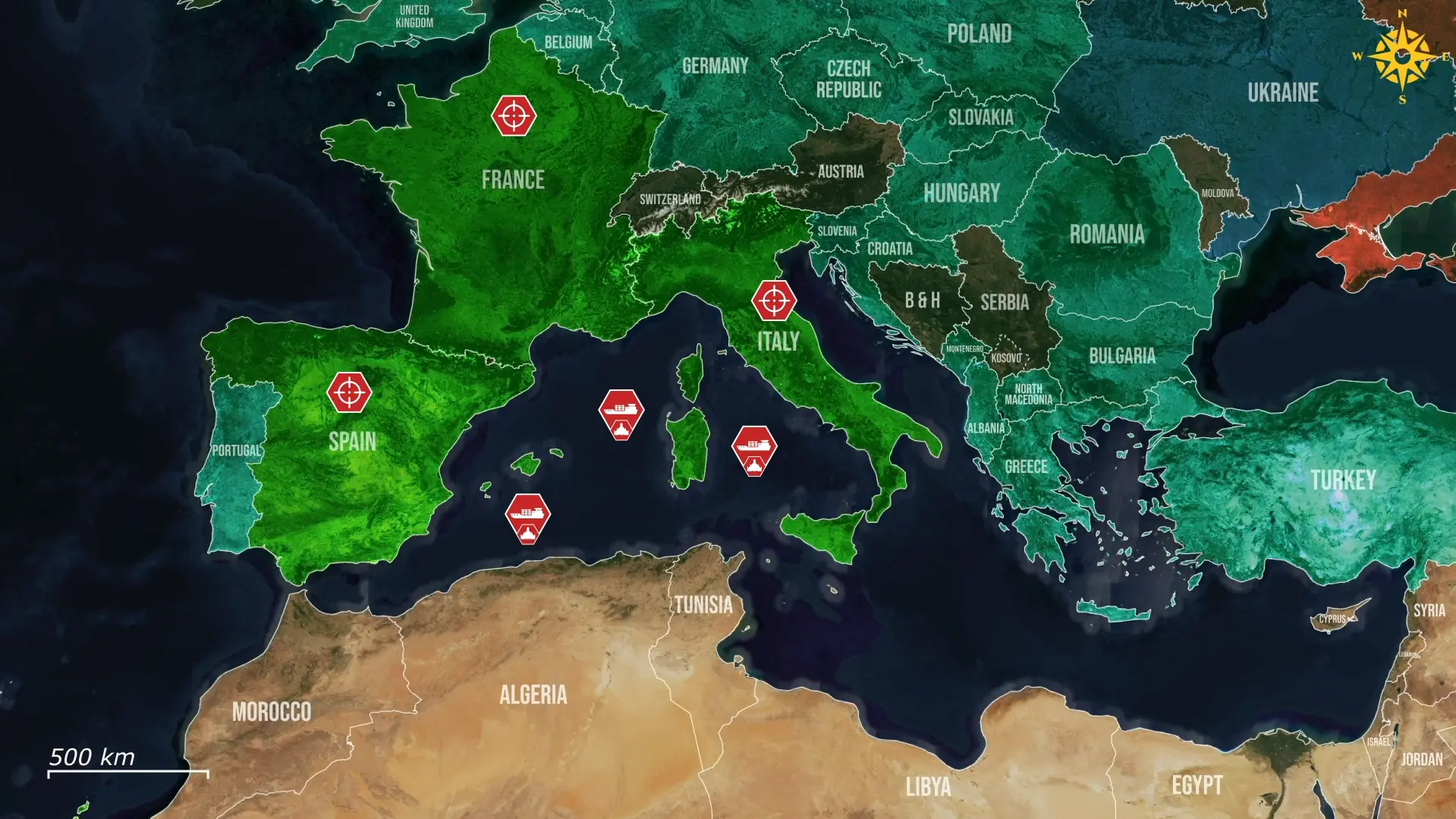
Russian tankers began pulling back when the European Union gave Operation Irini, an EU naval mission in the Mediterranean, the power to stop and inspect tankers tied to Russia’s shadow fleet. Irini is a force that had monitored arms shipments, oil smuggling, and illegal shipping routes around Libya and is now being turned toward the worn out and loosely controlled ships Russia relies on to keep selling oil despite the sanctions. The Mediterranean had given Moscow a shorter and faster corridor that could still blend into normal commercial traffic, allowing Russian cargoes to move with less attention and giving the shadow fleet more room to evade sanctions. Once European warships gained the power to stop vessels on that line, the route stopped working as a quiet channel for Russian exports and started exposing the illicit cargoes Russia was trying to move through it.
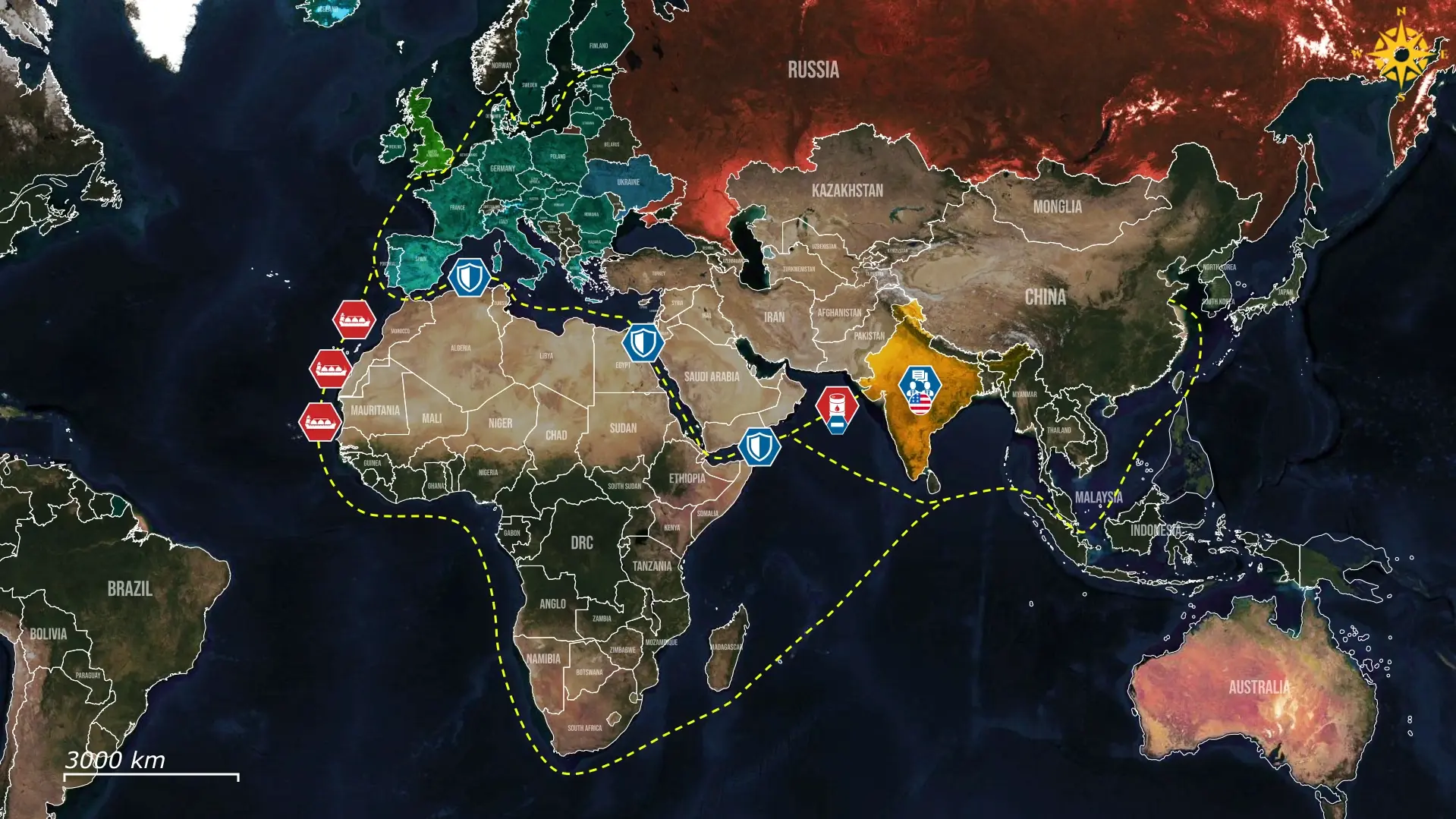
That pressure quickly began to change Russian behavior, with ships tied to this trade starting to avoid the Mediterranean all together and reroute around Africa instead. The route had become even more important for Moscow after one of its main buyer, India, cut purchases under mounting Western sanctions pressure and trade talks with the United States, pushing more Russian cargoes toward China. That made the Mediterranean more than a convenient shortcut, because it was one of the fastest ways to keep those eastbound cargoes moving without tying up too much of the fleet for too long. Once that corridor stopped looking safe enough to rely on, Russian operators started sending ships the long way around instead, showing that confidence in the route was beginning to break.
That detour carried a much bigger cost than a longer route on the map, as instead of going through the Mediterranean and the Suez Canal, Russian tankers now had to sail around Africa, pushing the voyage from about forty five days to roughly fifty five to sixty. Every ship then stayed tied up at sea for much longer, which meant Russia needed more tankers on the same corridor just to keep cargo moving at a similar pace. Longer voyages also burned more fuel on every run, which raised transport costs and forced Russia to spend more money just to move the same cargo. Russia can still keep the exports flowing, but it has to spend more resources to do the same work, which steadily erodes the efficiency that made the shadow fleet useful in the first place.
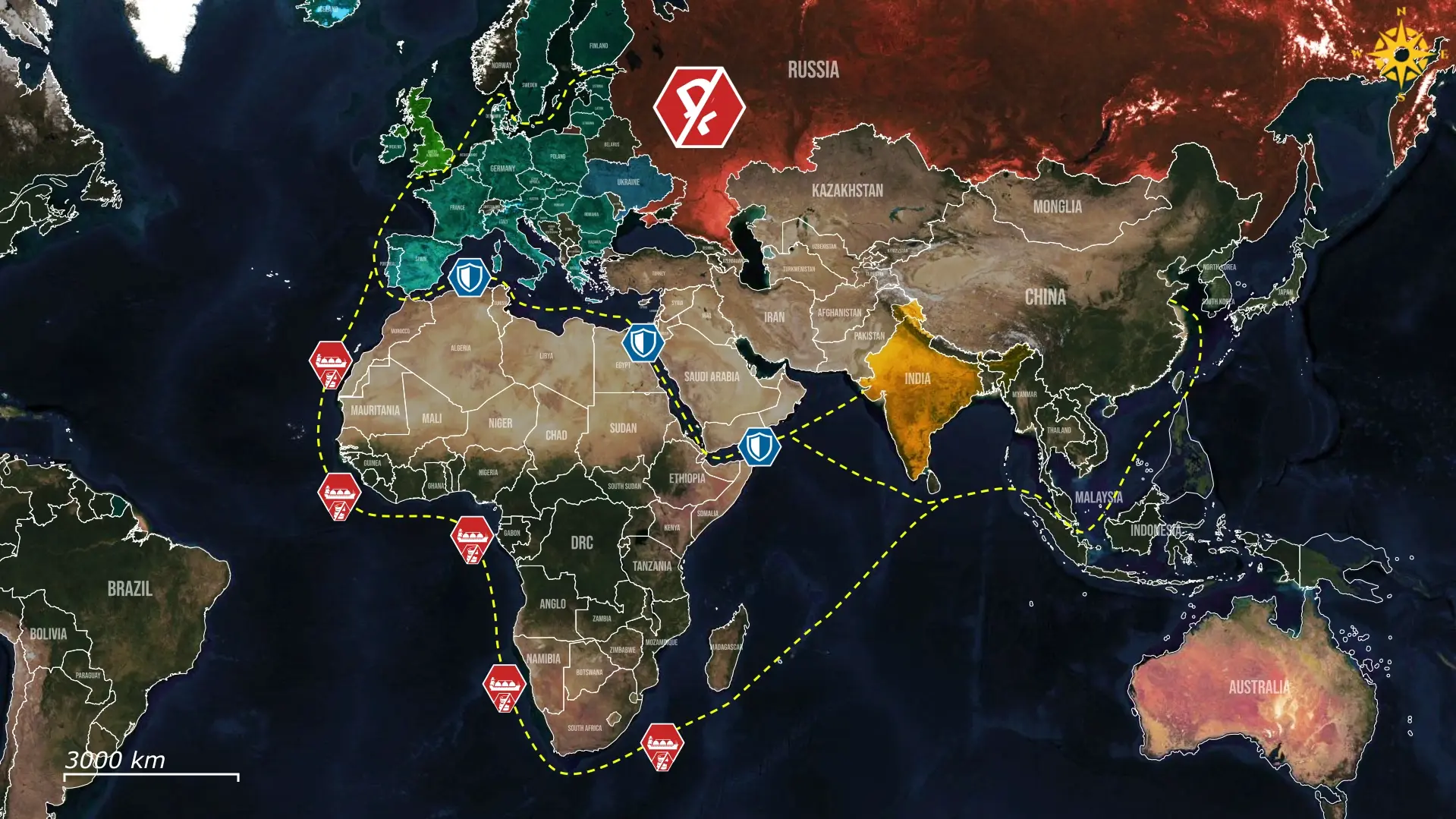
Russian tankers pulling back from the Mediterranean now face two risks at once, because Europe can stop and inspect ships on that route at any time, and the discovery of a Ukrainian Magura naval drone near the Greek island of Lefkada showed that the threat could surface elsewhere in the same waters. The danger on that route had already been exposed when the sanctioned gas carrier Arctic Metagaz was hit in a Ukrainian naval drone attack launched from the Libyan coast, catching fire and forcing its crew to abandon ship. That showed Russian operators that the danger was spreading across the Mediterranean, stripping away the confidence that had allowed this corridor to keep functioning.
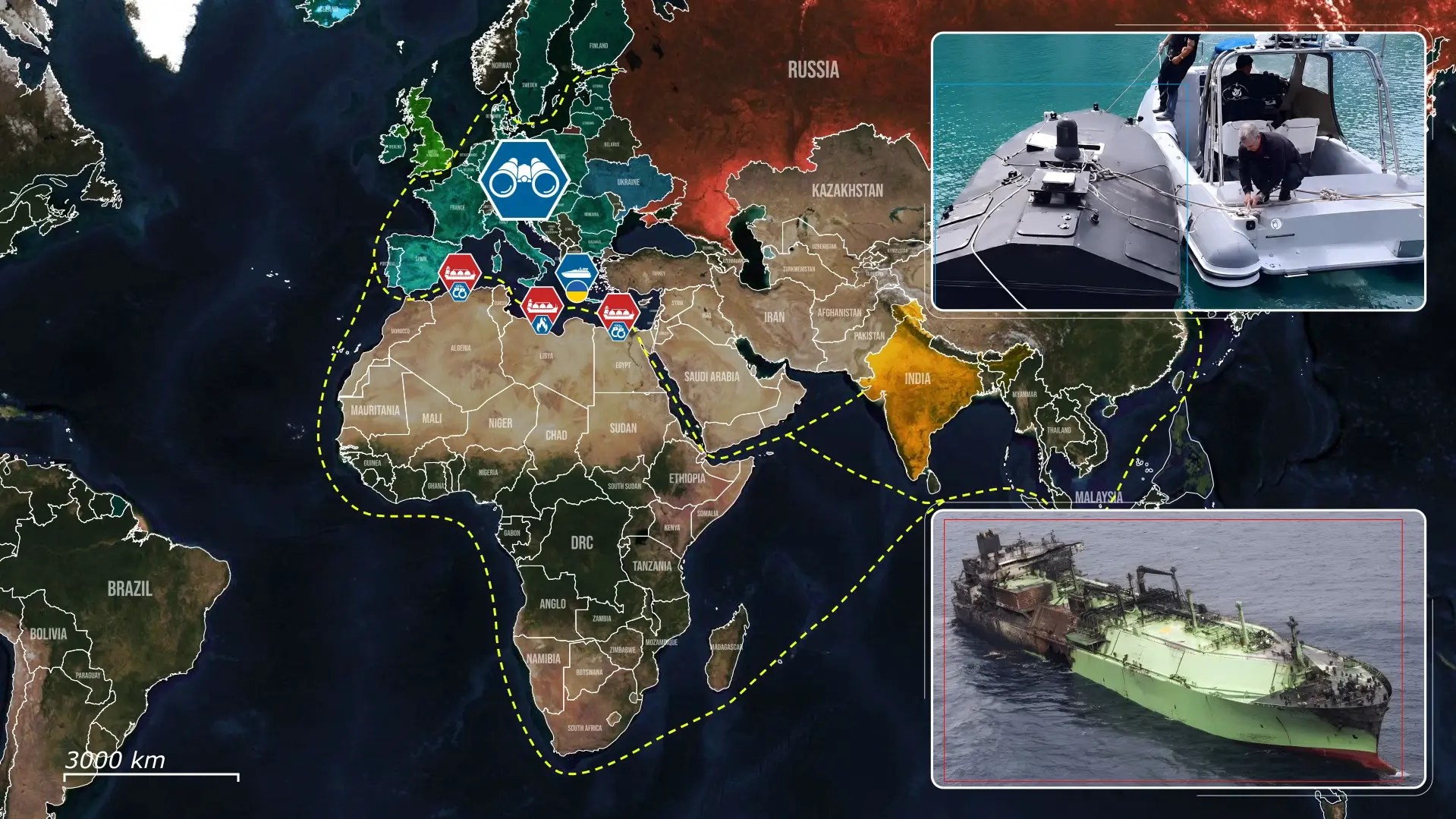
Overall, along with Ukraine, Europe has turned the Mediterranean into a pressure point for Russian oil, and Moscow is already paying for it. Every tanker that abandons this corridor is pushed onto a longer route that ties up more of the fleet, slows the flow of exports, and cuts deeper into the revenues the Kremlin still depends on to keep its economy going. The longer this lasts, the more Russia will be forced to spend scarce shipping capacity just to preserve its oil trade, until a new disruption hits this route as well and the system has even less room left to absorb it.

.jpg)

Comments