

.svg)
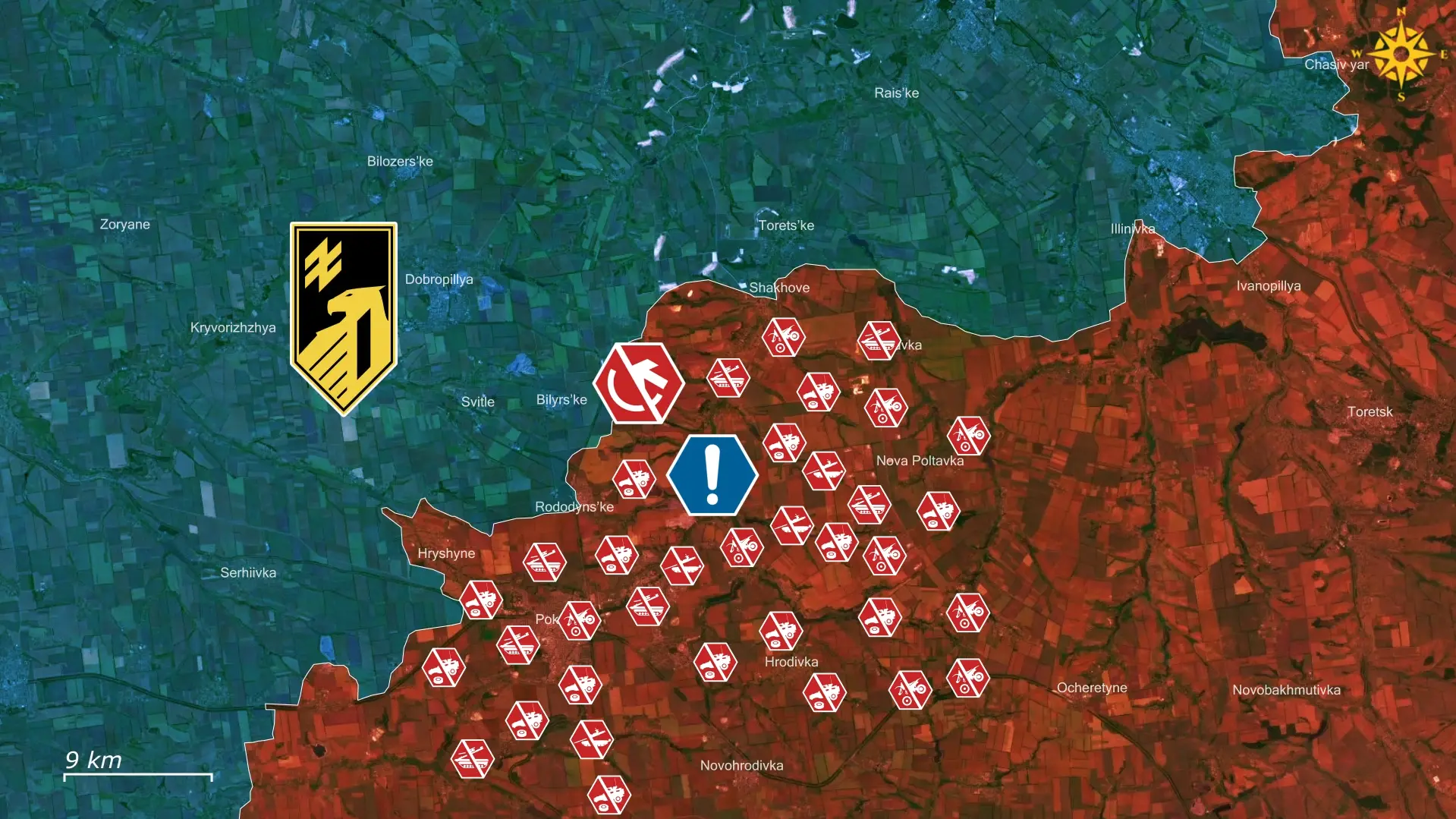
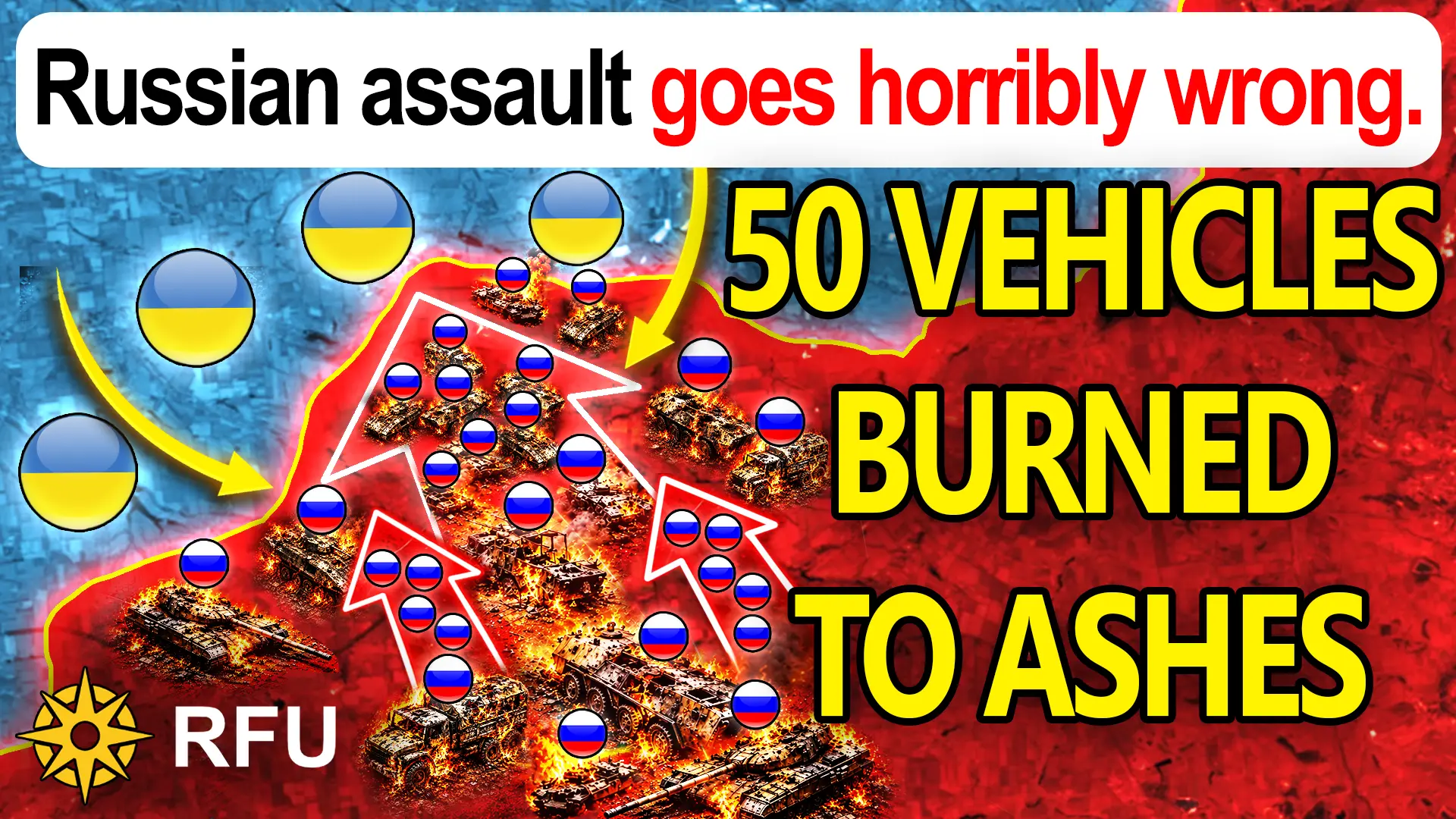
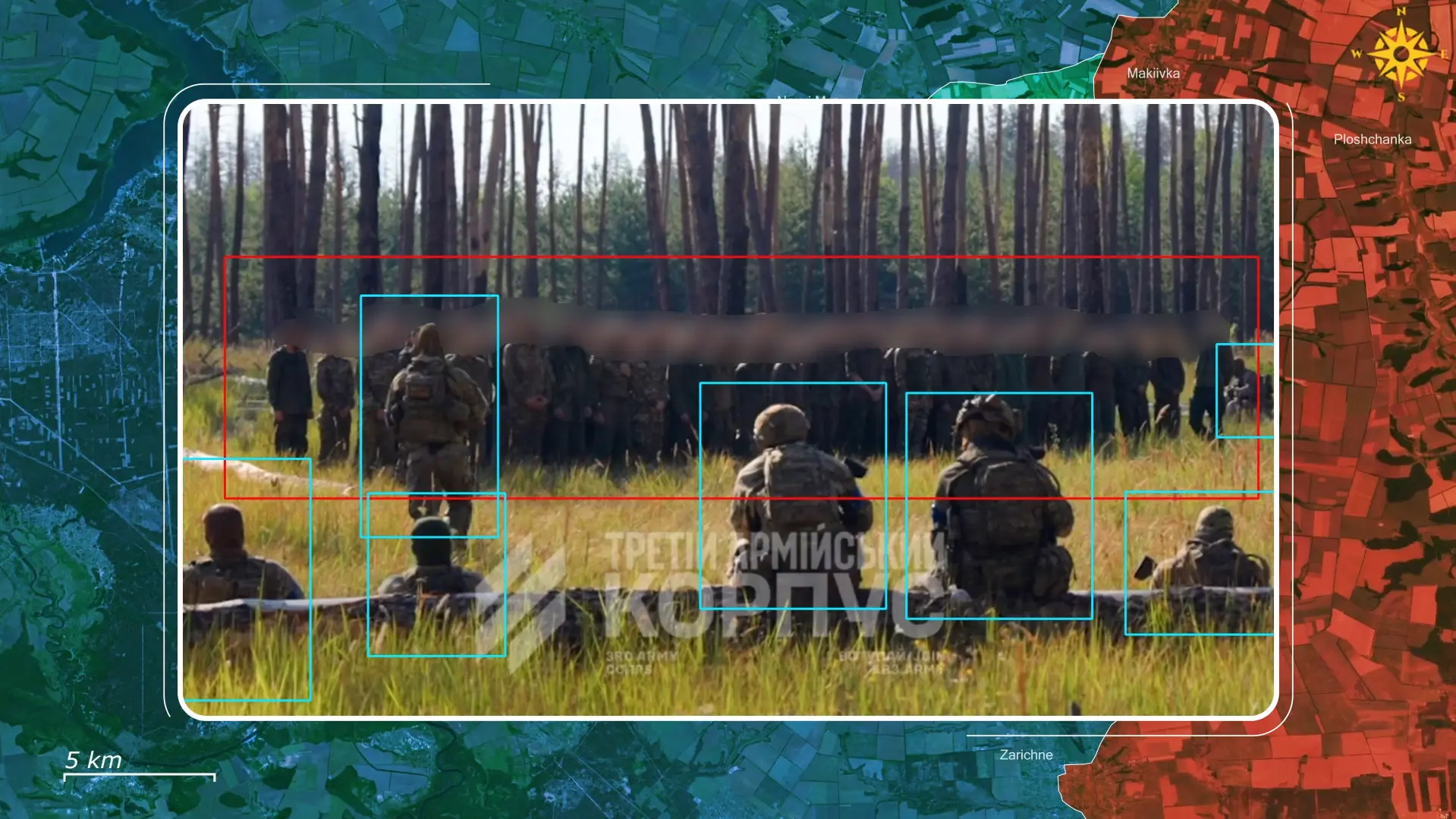
Today, Russian forces have suffered another devastating mechanized failure on the Pokrovsk front after assembling a massive fifty vehicles column roughly twenty kilometers behind the frontline, believing that this distance would protect it from Ukrainian drones. Operators from the Ukrainian National Guard’s Azov Corps detected the concentration before the assault began and systematically dismantled it. Released footage showed vehicles burning one after another after being targeted by drones, with smoke columns visible from kilometers away. Russian soldiers abandoned trucks and armored vehicles and fled across surrounding fields, while Ukrainian operators continued hunting both the equipment and personnel attempting to escape. In a follow-up video released by the Russians, a driver of a lonely Russian ATV is shown moving quickly along the route of the devastated column, looking for survivors and assessing the devastating damage.
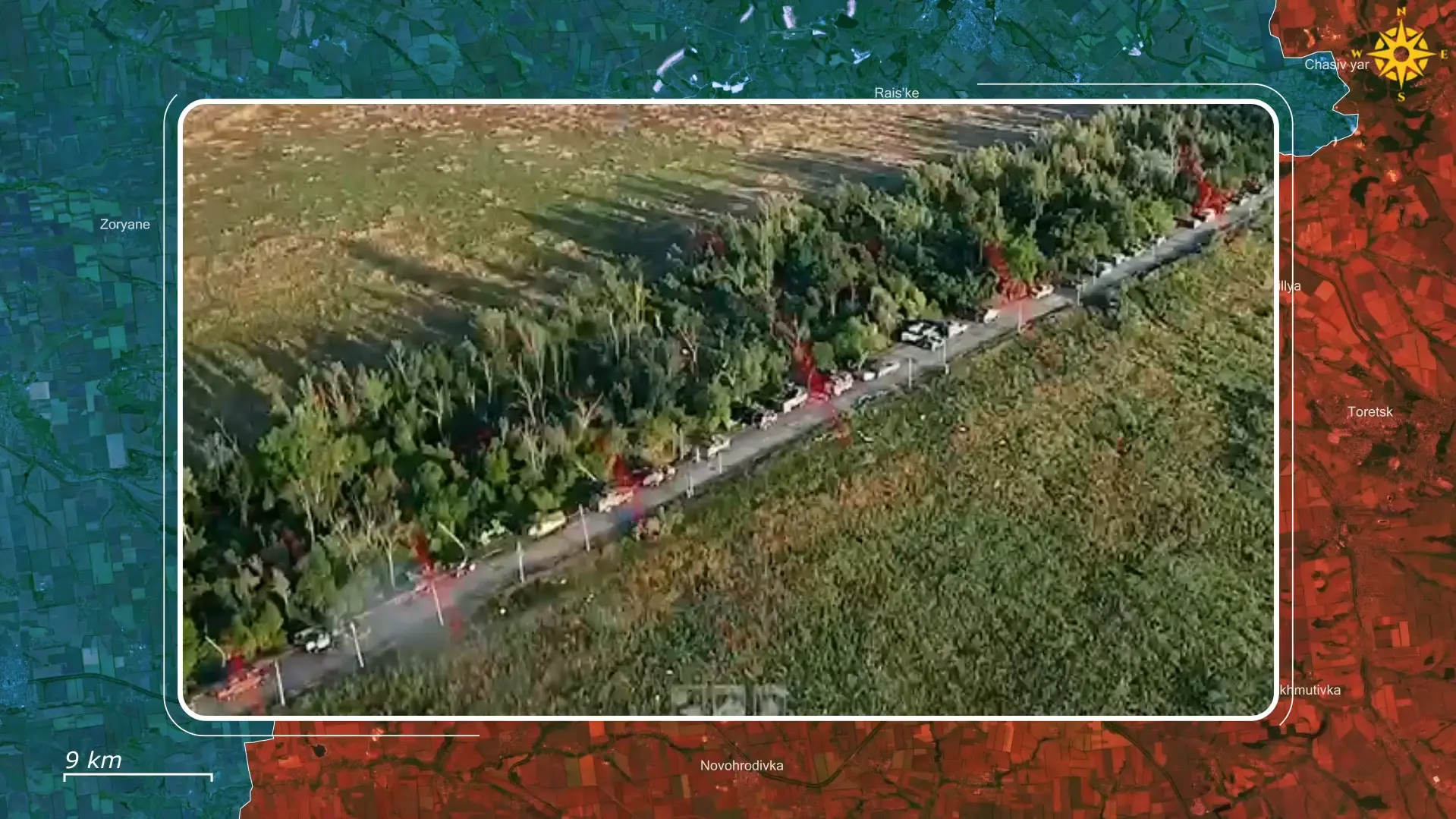
The planned assault was intended to support Russia’s continuing push toward Dobropillia, as Russian forces are attempting to advance through the Pokrovsk area toward Bilytske and eventually threaten Ukraine’s Donetsk fortress belt from the southwest. Progress has remained slow, relying largely on infantry infiltrations and occasional mechanized pushes around Bilytske, Rodynske, and the approaches to Dobropillia. Azov’s strike was therefore particularly important because it destroyed the huge assault concentration before it could affect the frontline. The result of the precise Ukrainian operation also demonstrates how meaningless the traditional idea of a safe rear area has become. Twenty kilometers behind the front now lies firmly inside Ukraine’s drone kill zone, where reconnaissance drones can locate enemy concentrations and FPV, bomber, and mid-range strike drones can immediately attack them.
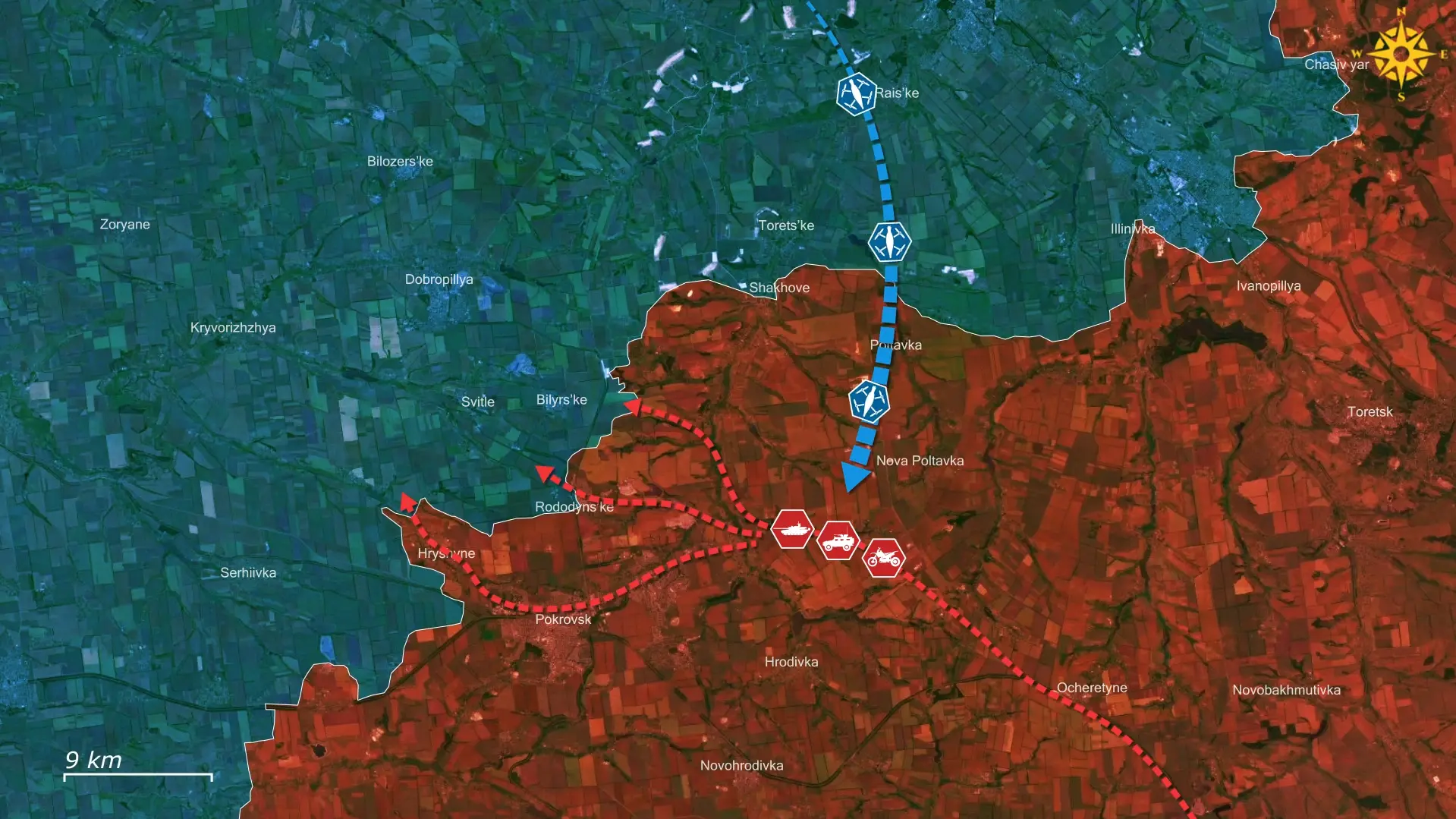
Interestingly, the destruction was not accurately communicated through the Russian command structure. Russian analysts acknowledged the column’s loss, but officers reportedly claimed that Ukrainian attention had been diverted toward the convoy while small Russian infiltration groups supposedly advanced elsewhere, which hasn't been visually confirmed. This optimistic interpretation moved upward through the Russian command chain, encouraging potential additional forces to be thrown forward despite the destruction of the main assault group. However, any potential follow-up wave will be considerably weaker because the equipment intended to provide its mass and firepower has already burned.
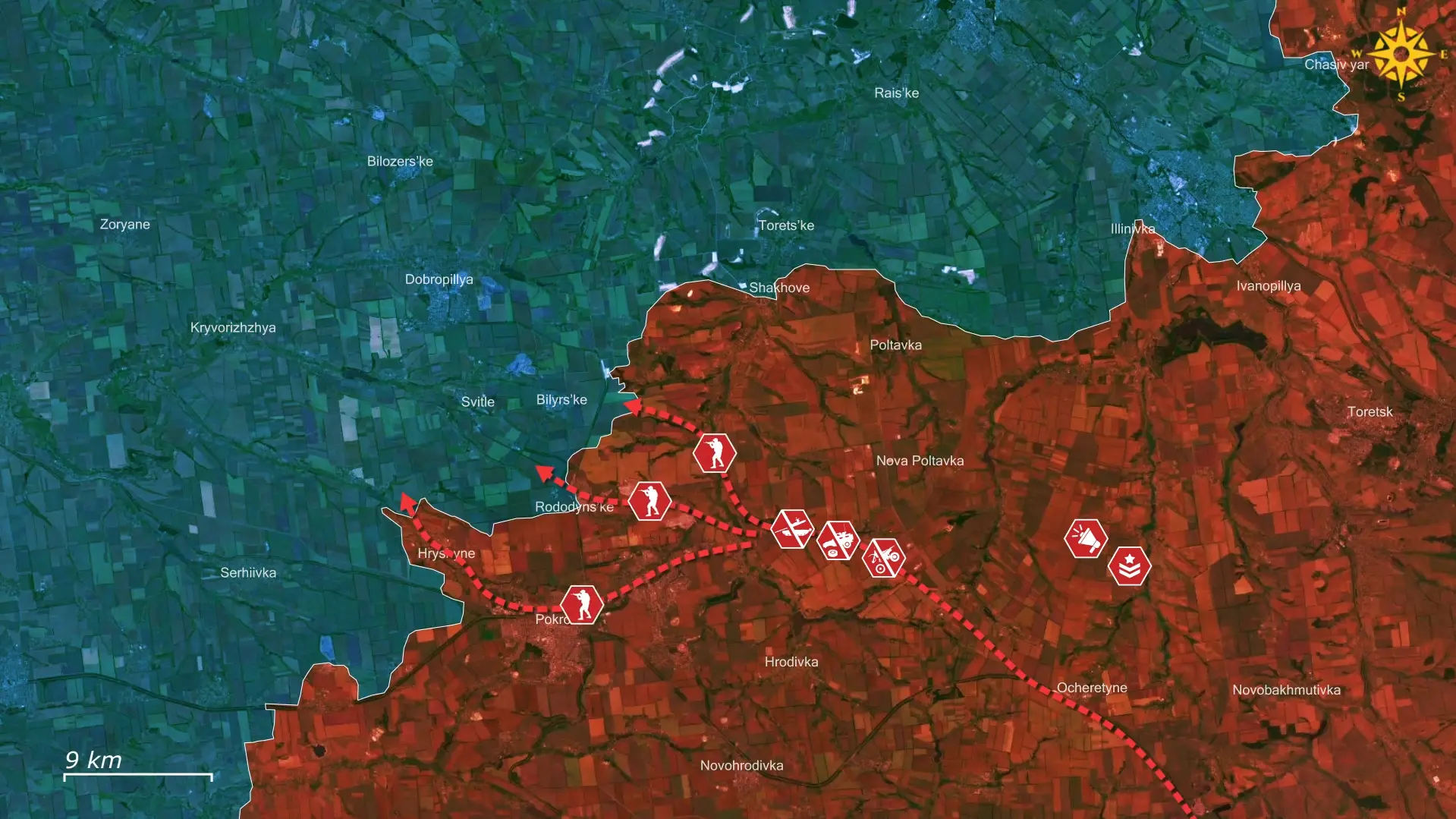
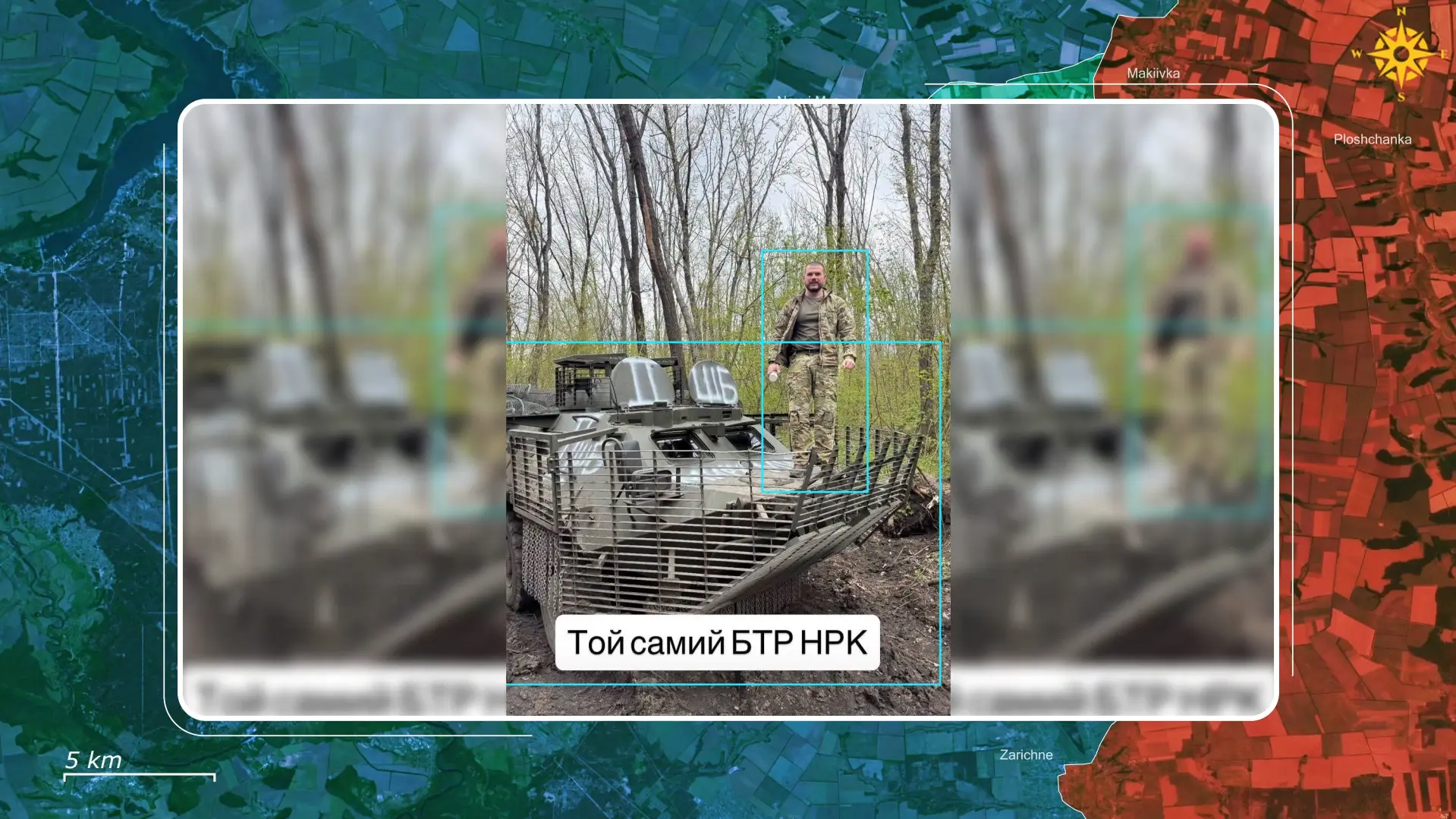
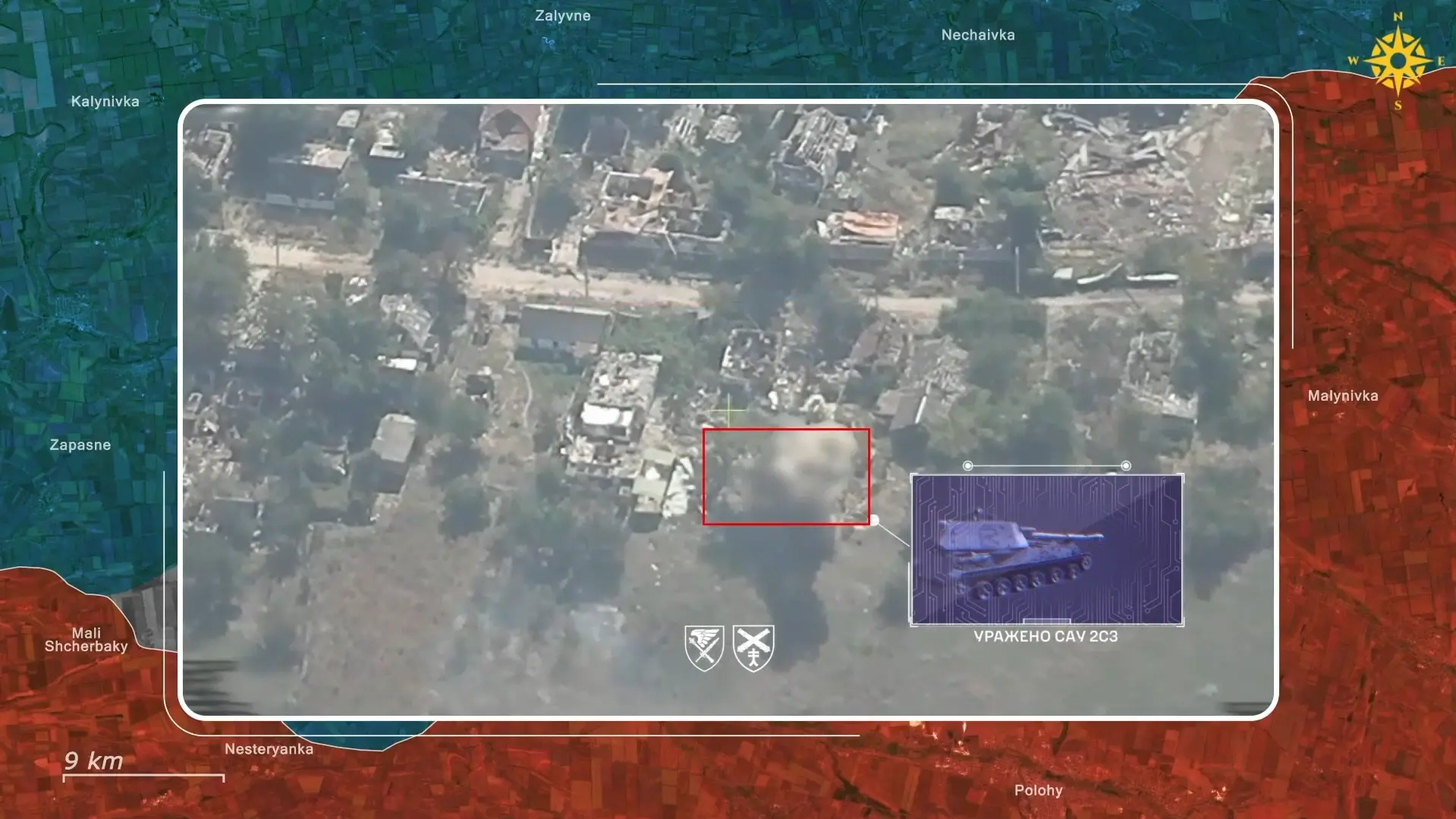
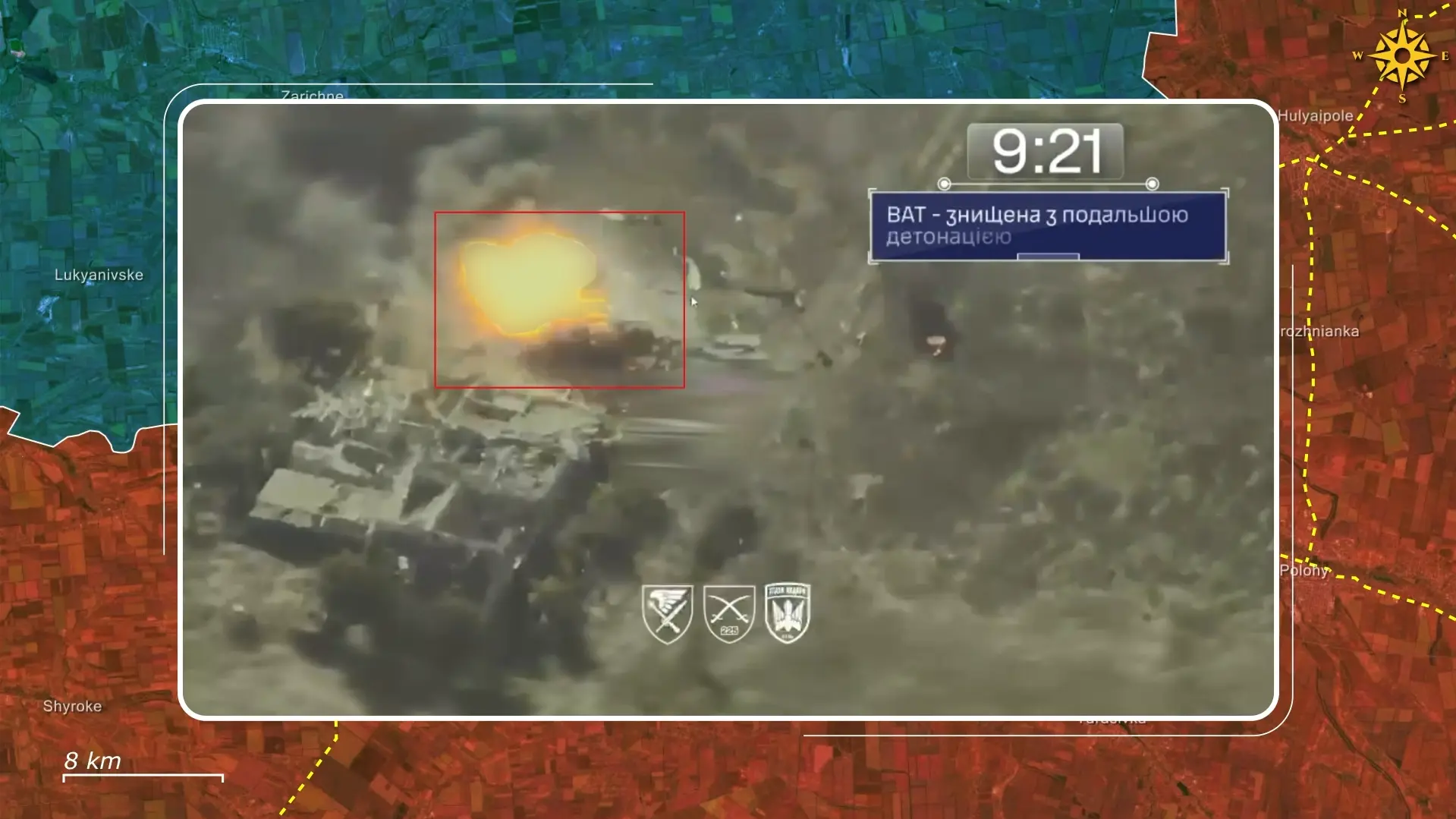
This disconnect between reports and battlefield reality has repeatedly encouraged Russia to revive mechanized tactics that Ukrainian drones rendered extraordinarily costly long ago. During another major assault against Azov positions, Russian forces committed elements from two armies and a tank division. The Azov Corps showed on video the result of the Russian attack, reporting to have destroyed seven tanks, six armored fighting vehicles, two Grad launchers, three engineering vehicles, and forty-seven light vehicles while eliminating one-hundred-twenty-three enemy soldiers. Additional footage showed Ukrainian operators targeting the Russian reinforcements moving toward the battlefield and attacking the logistics routes supporting the offensive. As a result, the mechanized breakthrough was stopped before Russian forces could achieve anything to exploit.
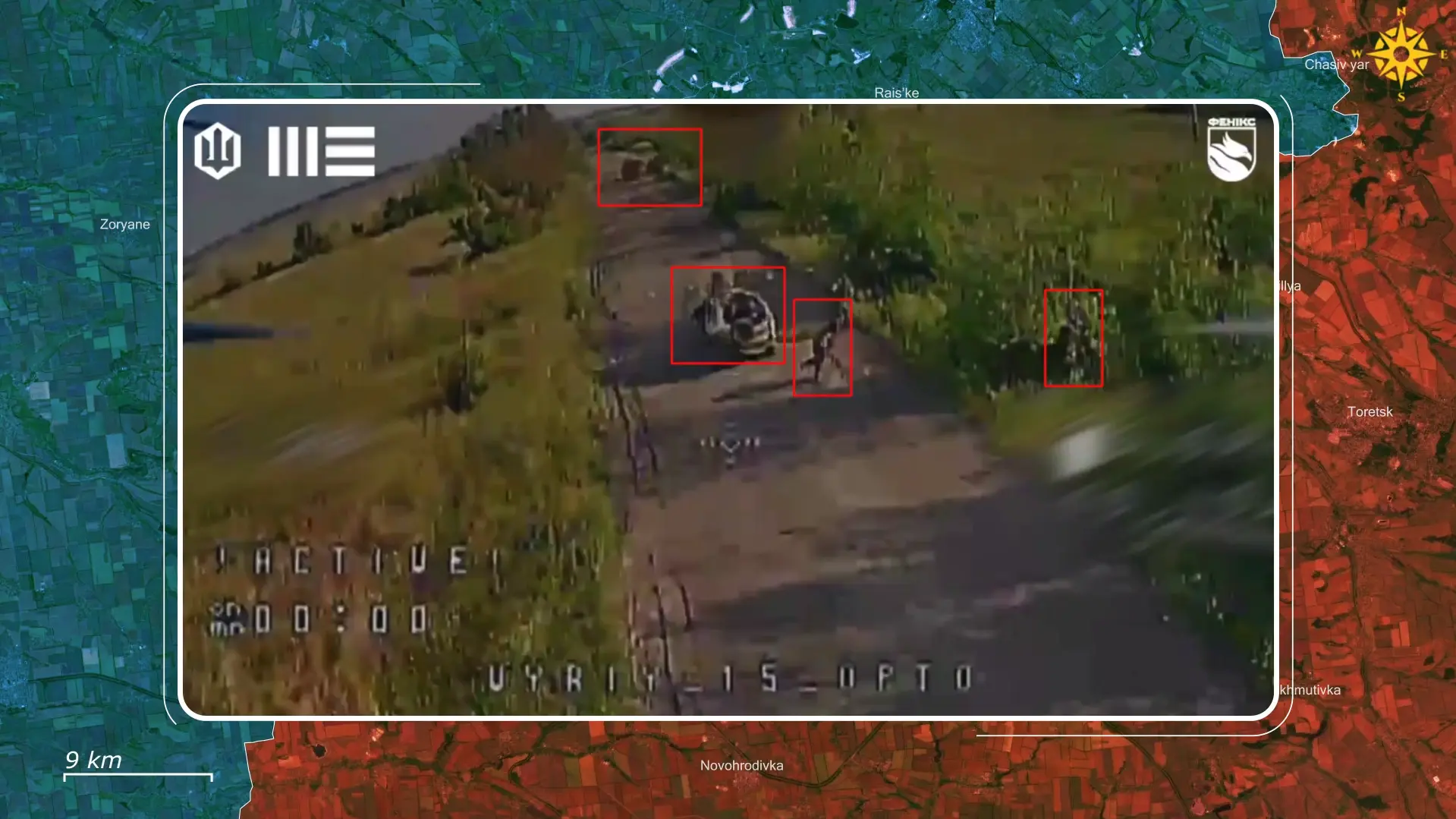
These results are even more significant because of the numerical imbalance, as National Guard Commander Oleksandr Pivnenko stated that Ukrainian formations on parts of the Pokrovsk axis are operating against Russian forces with ratios reaching six to one. Despite this, the First Azov Corps continues holding its assigned positions due to its coordinated and constant reconnaissance, the rapid detection, and the pre-emptive strikes on Russian formations before they can deploy properly.

Overall, after a long period in which major mechanized assaults became increasingly rare, distorted Russian reporting up the command ladder appears to be pushing large columns back onto roads where Ukrainian operators can detect and destroy them even earlier than before. Russian officers may portray fifty burning vehicles as a clever diversion that enabled several infiltrators to move forward, but the battlefield arithmetic remains in Ukraine's favor. Ukraine’s persistent surveillance and rapid drone response allow Russia only tiny gains, while every attempt to create momentum costs the Russian command another column of destroyed vehicles that are harder than ever to replace. At the same time, Ukrainians are punching above their weight, as every single Ukrainian soldier is counting for six Russian ones, because of their better coordination, recon, and faster ability to strike.
.jpg)


Comments