

.svg)
In this video, we will analyze how Ukraine plunged Crimea into darkness.
Here, millions were put in the dark with blackouts spreading, as the peninsula is experiencing its most severe crisis of the entire war. With the Ukrainians launching wave after wave of drones, Crimea is turning into a leverage point that is now used end the war as we know it.
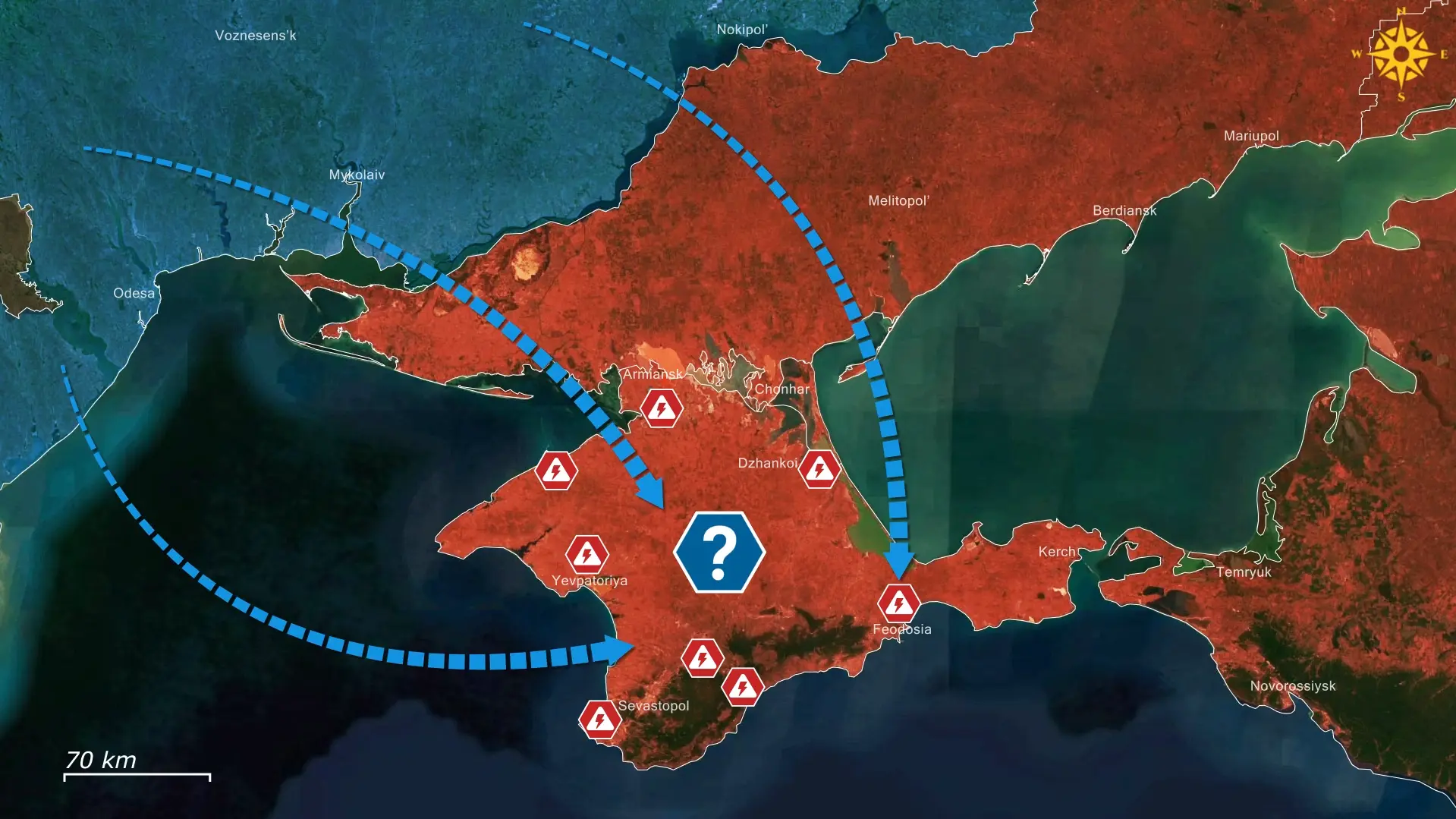
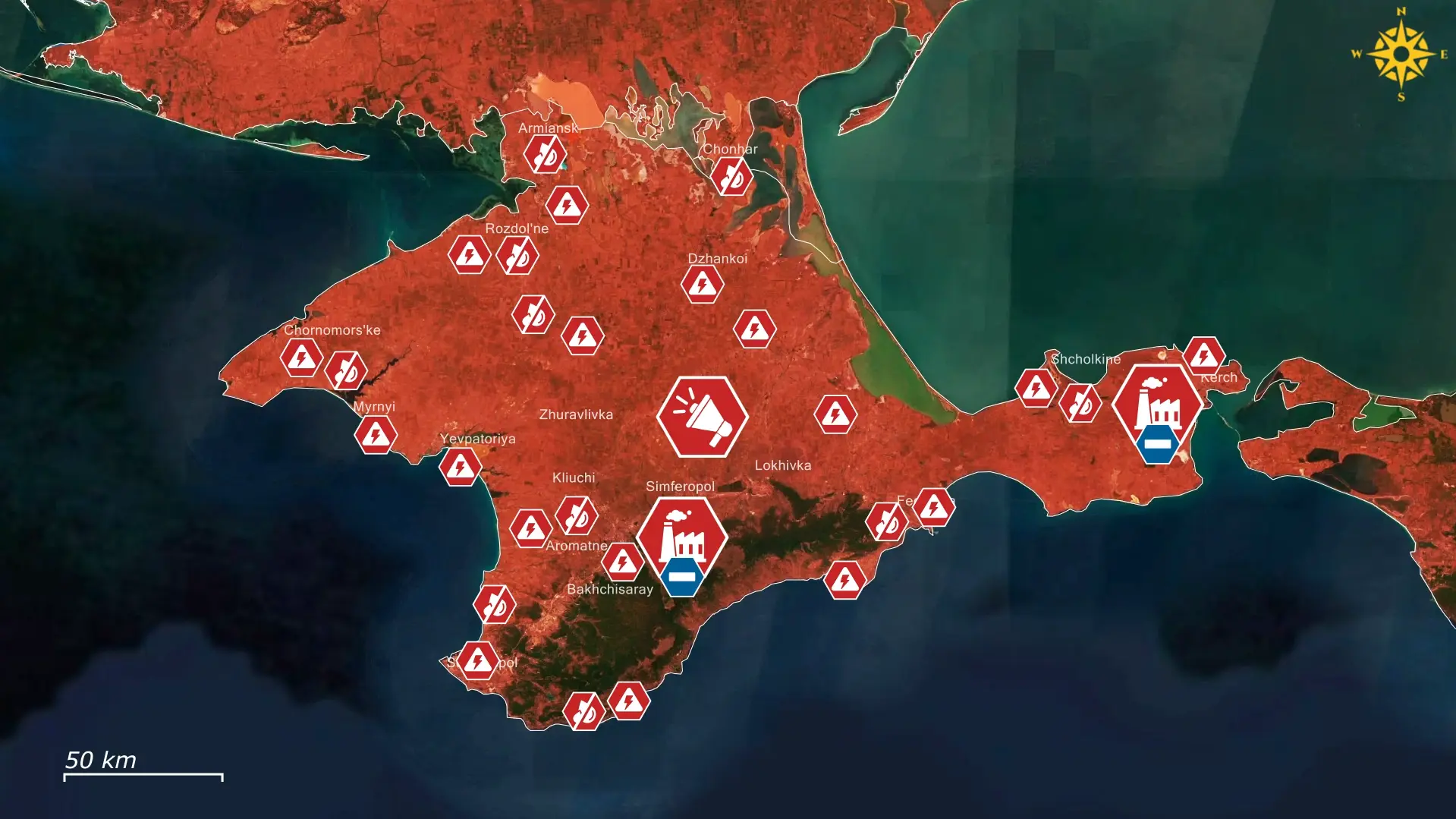
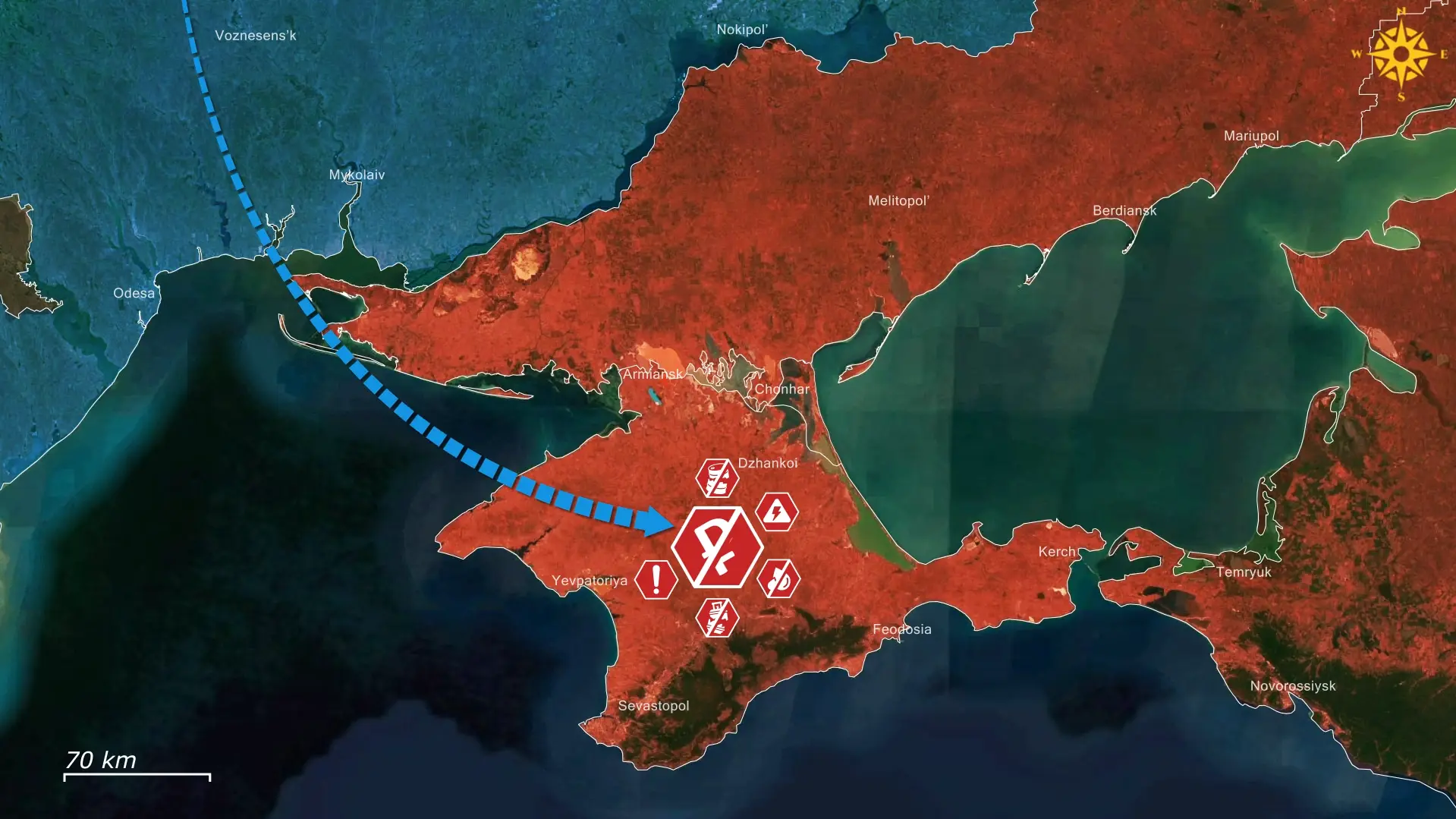
Huge sections of Russian-controlled Crimea were affected by large-scale power failures. Russian-installed authorities responded by introducing rolling blackouts to spread and limit the damage, with many communities experiencing repeated three-hour outage cycles. However, the loss of electricity quickly triggered a far more serious problem. Most pumping stations responsible for distributing water throughout the peninsula lost power as well. Without electricity, water systems stopped functioning, creating disruptions across residential areas, military facilities, and critical infrastructure.
The resulting cascade has left Russian authorities struggling to contain the crisis, despite repeatedly promising repairs and stabilization measures, and assuring residents that power will soon be restored. Yet the outages continue to spread faster than repairs can be completed. Because much of Crimea's infrastructure remains centralized, failures at several key nodes have affected large areas simultaneously, forcing the prioritization of sectors that receive electricity while others remain without reliable power or water.
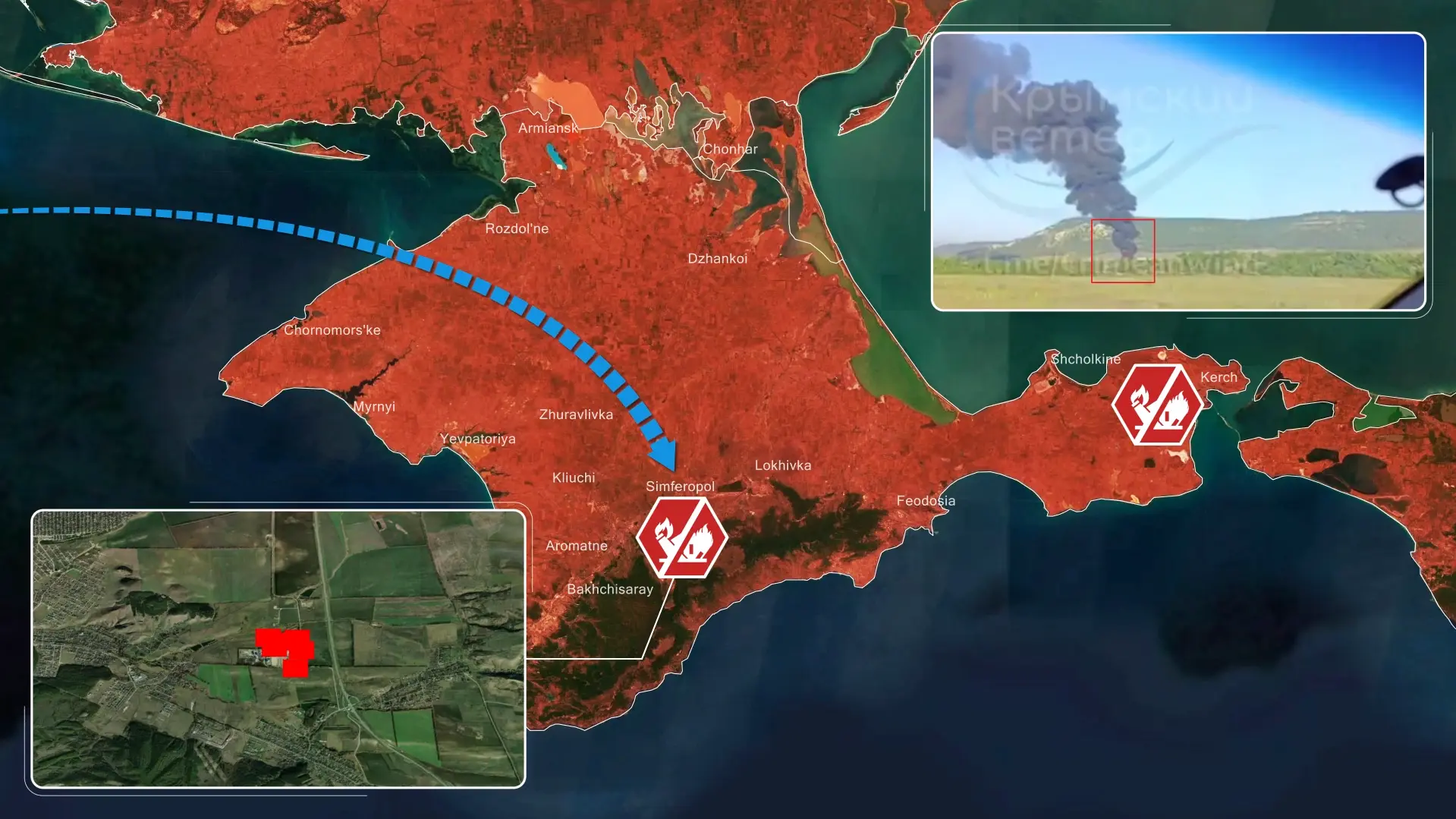
These disruptions followed a series of Ukrainian strikes targeting key elements of Crimea's energy network. One of the most significant recent attacks struck the Kamish-Burunskaya combined heat and power plant near Kerch. Satellite imagery confirmed fires at the facility, with reports indicating that a fuel storage tank was hit. Residents published numerous videos showing a massive smoke plume stretching roughly fifty kilometers across eastern Crimea. Despite the visible destruction, Russian authorities initially attempted to describe the outages as merely an accident within the electrical grid.
Earlier, Ukrainian forces targeted the thermal power plant near Simferopol, with explosions reported as fires burned for hours after the strike. Satellite data confirmed multiple fire locations within the facility, while released images showed significant damage. The power station plays an important role in supplying electricity to central Crimea, making its disruption particularly damaging to the peninsula's overall grid stability.
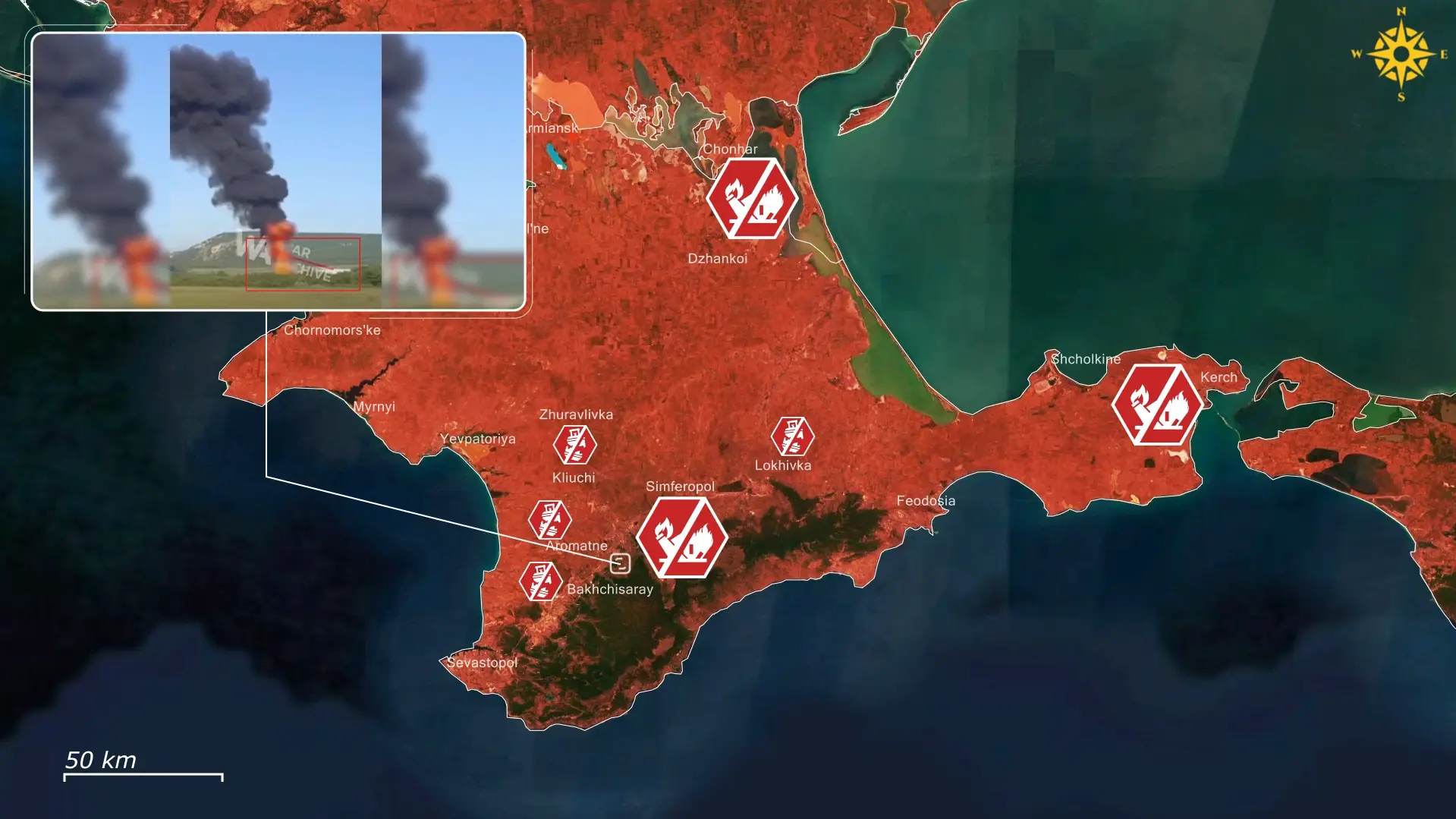
Additional strikes have targeted supporting infrastructure throughout the region. Ukrainian drones disabled an electrical substation near Chonhar, cutting another important energy node. At the same time, Ukrainian forces struck four gas compressor stations located in Zhuravlivka, Aromatne, Kliuchi, and Lokhivka, without which natural gas cannot be distributed across the peninsula. Another major strike hit a fuel and gas storage facility belonging to the TES company near Bakhchisaray, creating a large fire at one of Crimea's most important fuel distribution sites. The crisis is compounded by the non-stop Ukrainian strikes cutting off fuel deliveries, which makes even liquid-fuel-based generators unusable for compensating during the blackouts.
The significance of these attacks becomes clearer when viewed as part of a larger campaign, as Ukraine is systematically attacking the interconnected network that keeps Crimea functioning as both a civilian region and a military hub. Critical infrastructure objects are targeted simultaneously, transforming Crimea from a secure rear base into a costly liability that continuously consumes Russian resources.
As a result, fuel shortages have forced authorities to halt gasoline sales to civilians, reserving supplies primarily for emergency services and security forces, with even public transportation disrupted. Tourism, one of Crimea's most important economic sectors, has collapsed as up to eighty percent of visitors canceled reservations, and businesses struggle to operate. Russian authorities have introduced additional emergency measures, including restrictions on the use of certain vehicles, cancellation of large public events, shortened business hours, and tighter security regulations, however, all without visible results.
These developments carry significant political implications, as Crimea remains one of the Kremlin's most symbolically important captured territories. Yet, its population is now on the brink of civil unrest, as its living conditions deteriorate quickly. As a result, what was once bringing political value for the Russian government is now becoming a burden, while Ukraine's leverage becomes stronger for any future negotiations. With Russian restrictions getting bigger every day, the dissatisfaction of the people living in Crimea gets louder, creating at least better conditions for Ukraine on the field of diplomacy.

Overall, the unfolding crisis demonstrates that Ukraine's campaign extends far beyond battlefield objectives. Fuel shortages, electricity failures, and water disruptions are now spreading across Crimea, undermining Russia's image of stability and control, exposing vulnerabilities that become harder to hide with every new blackout. As locals face growing uncertainty, worsening services, and increasing restrictions, the peninsula is becoming a visible example of the mounting costs associated with sustaining control under constant pressure.

.jpg)

Comments