

.svg)
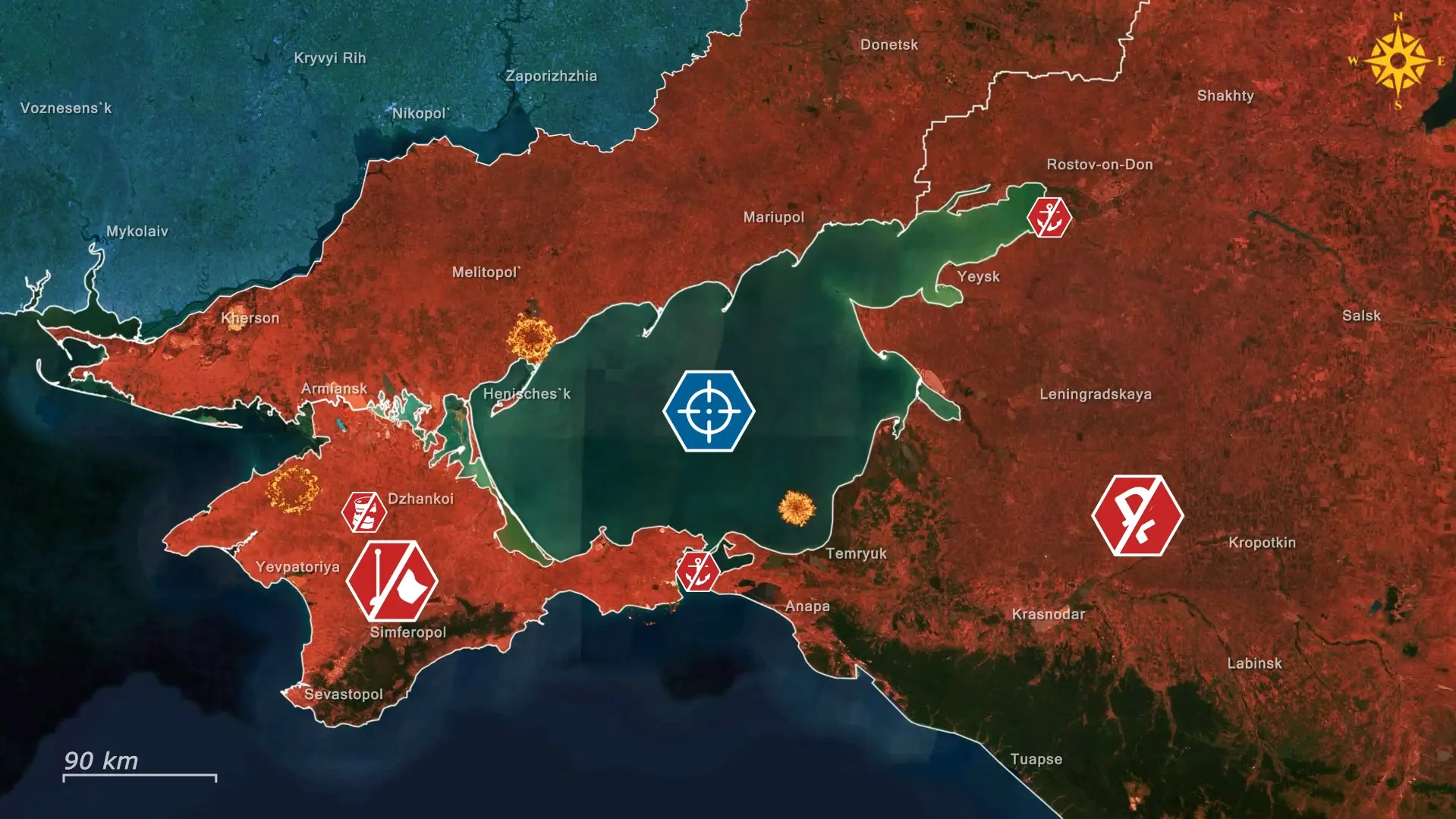
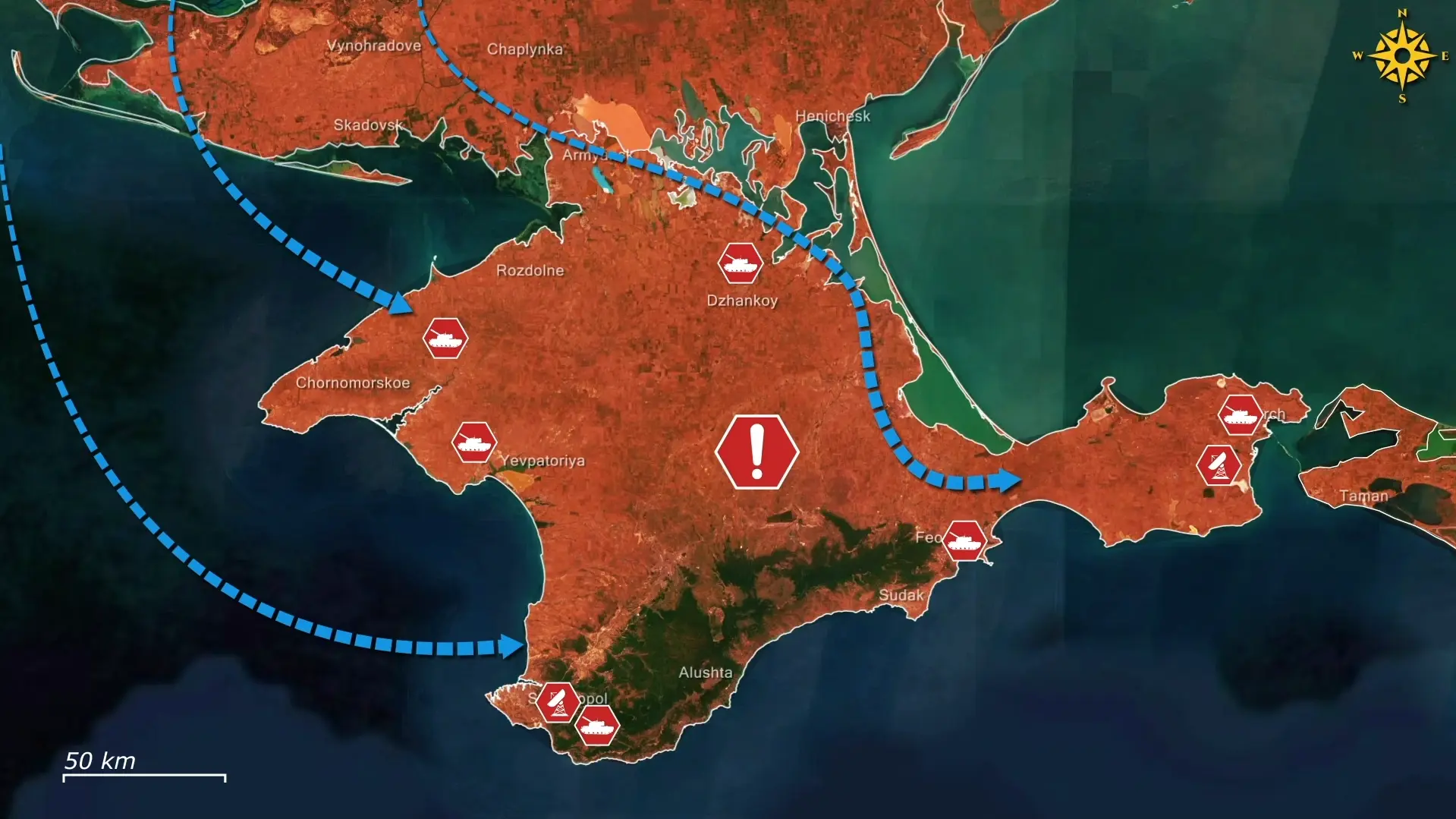
Russia has finally been forced to suspend transit through the Azov Sea, effectively shutting down one of its most important commercial and military shipping corridors. Following devastating Ukrainian attacks on over a hundred Russian vessels off the coast, Russian ports have now officially surrendered to the Ukrainian Crimea-campaign, and stopped accepting new applications for passage through the Kerch Strait. However not just this, as navigation through the canal linking the Don River with the Sea of Azov was also suspended, effectively shutting down all maritime transport into Crimea.

The immediate trigger for this measure was Ukraine’s extraordinary maritime campaign, with Russian authorities suspending transit after Ukraine destroyed and disabled one hundred and six Russian vessels, most of them tankers, within only eight days. The consequences extend far beyond the waterways themselves, as ports throughout the region have been forced to halt new loading operations because ships can no longer enter or leave. As a result, trucks carrying export goods have begun backing up for miles outside terminals, unable to unload their cargo.

With Ukrainian drones beginning to target the ports and their storage infrastructure, Ukrainians are forcing Russians’ own security measures to quickly contribute to the major paralysis affecting one of Russia’s most important export regions. Up to thirty percent of Russian oil shipments and ninety percent of grain exports move through the Black Sea system, so the Ukrainian strikes are depriving Moscow of valuable revenue of fifty to sixty billion US dollars.
However, sinking ships represented only the second phase of a much broader Ukrainian operation. Once Russian vessels operating throughout the Sea of Azov suffered heavy losses, Ukrainian planners shifted their attention toward the ports expected to shelter the surviving fleet. This strategic logic proved highly effective, as Ukrainian long-range drones began striking the supporting infrastructure inside the ports themselves.

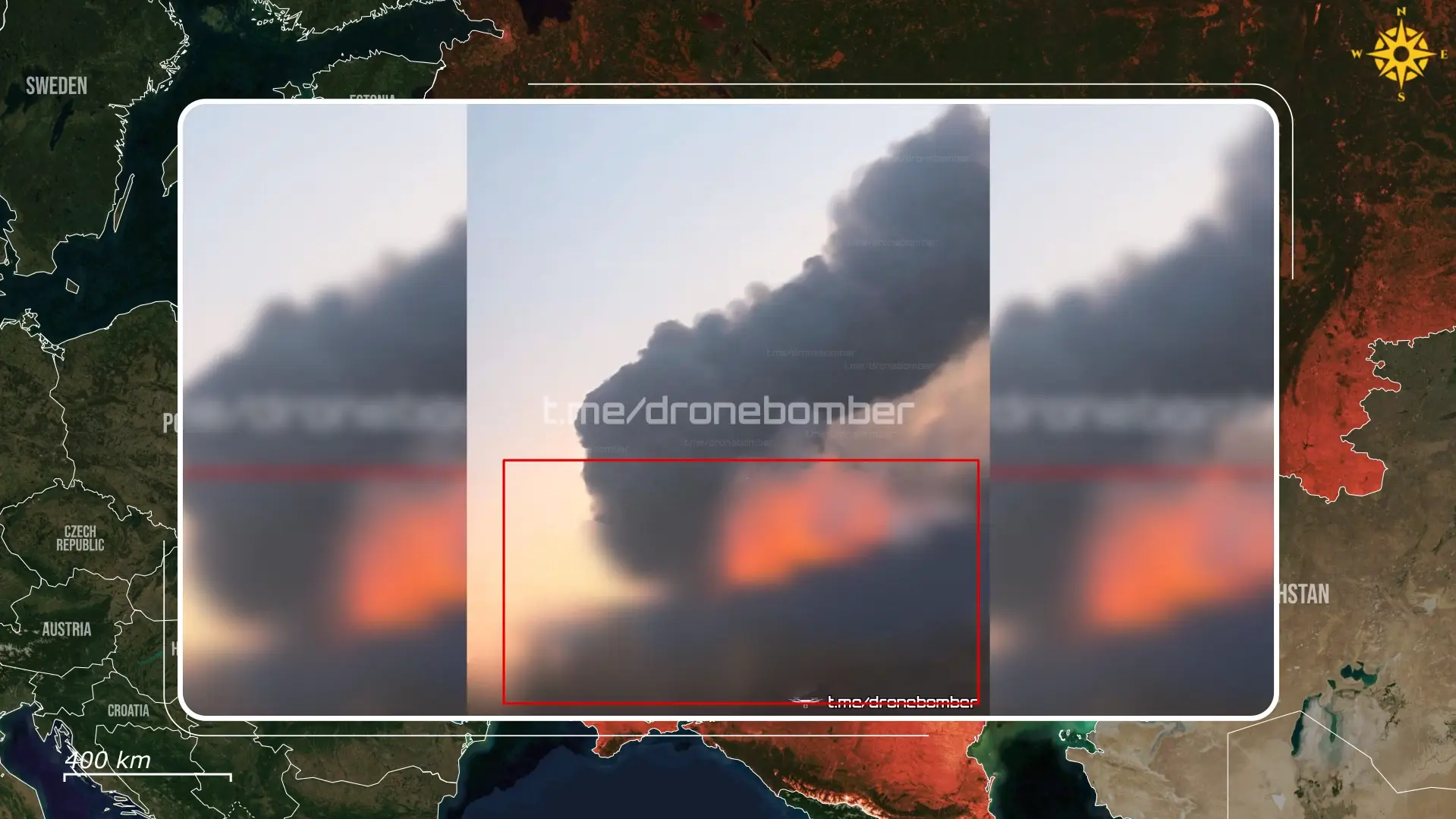
Footage confirmed attacks against facilities in Azov and Taganrog, demonstrating that terminals, fuel infrastructure, and logistics areas had become the next priority after the surface vessels had withdrawn. Russian authorities suddenly were left without options, as allowing ships to gather inside ports would simply transform them into stationary targets alongside fuel depots, warehouses, and loading equipment. Closing the ports became the only practical option, but it didn't help to minimize the danger, as this solution merely prevented ships from concentrating together. It could not protect cranes, terminals, storage tanks, repair facilities, and supporting logistics infrastructure, all of which remain vulnerable to continued Ukrainian strikes. Due to this, even if the ban on maritime traffic is eventually lifted, damaged port infrastructure will continue limiting Russian exports and naval operations for an extended period.

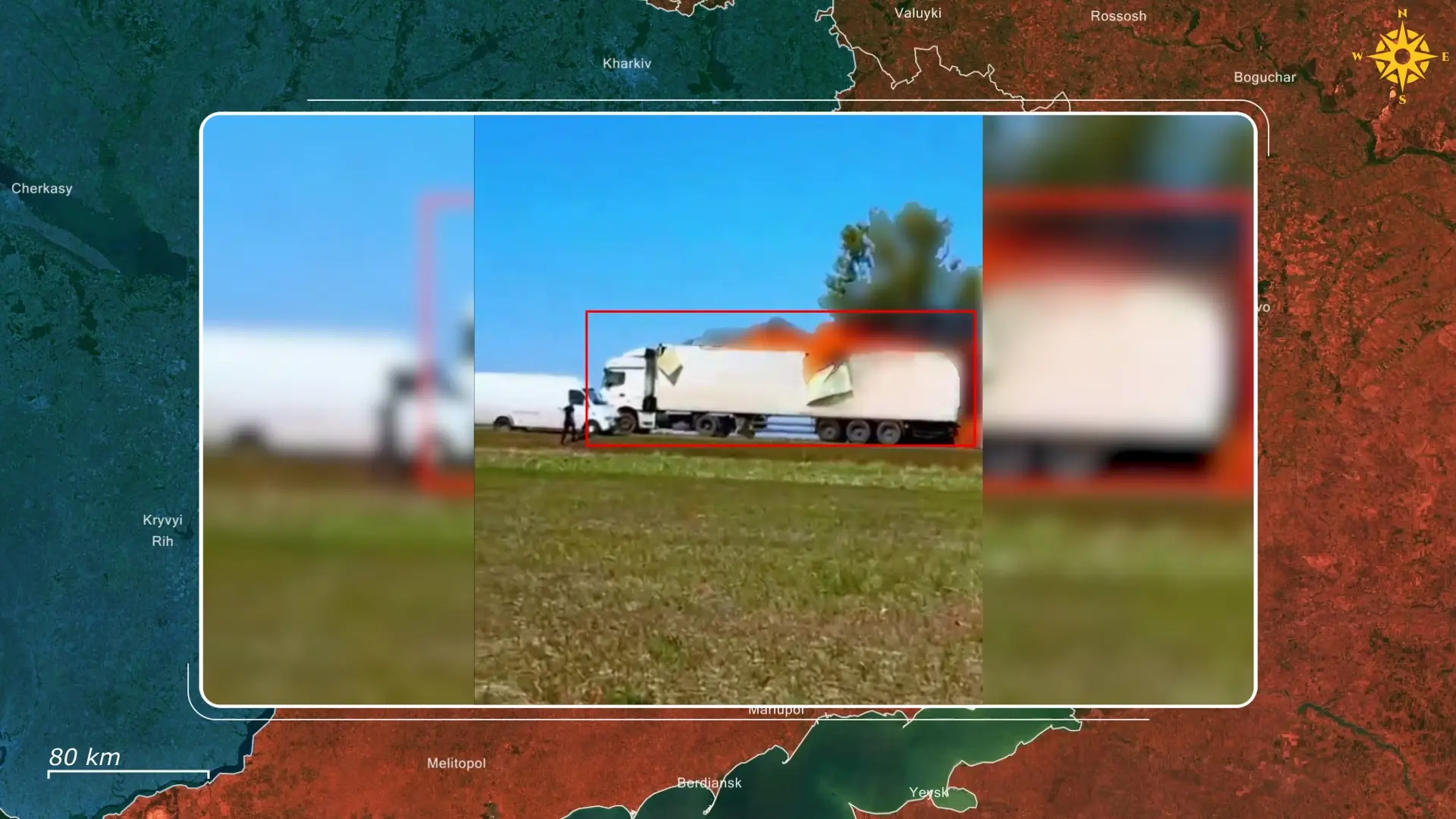
It is important to understand that the Ukrainian maritime campaign follows an equally devastating first phase directed against Crimea’s ground logistics. In this first phase, Ukrainian forces systematically targeted bridges connecting Crimea with Russian-controlled territories in southern Ukraine, repeating the strikes once the Russians started repairing them or establishing improvised crossings, leaving the Kerch Bridge as Russia’s primary remaining connection. At the same time, Ukrainian drones devastated traffic along the Mariupol-Crimea highway, turning it into a junkyard for military trucks, fuel convoys, and repair equipment, blocking all Russian road-based transport. Recent reports show that cargo traffic collapsed by seventy-one percent, falling from almost four thousand vehicles daily to around one thousand one hundred.
Combined with strikes on energy and fuel infrastructure in Crimea, Russian fuel shortages only worsened, electricity blackouts sometimes lasting over twenty-four hours became commonplace, and collapsing tourism throughout the peninsula crippled the local economy that so depends on it. Now, Ukraine is applying precisely the same sudden, concentrated pressure at sea, extending the isolation from land to maritime logistics, showcasing how Russia's control over Crimea turns symbolic with each passing day.

Overall, the coordinated phases of the Ukrainian operation have led to a comprehensive logistical lockdown, which has not only left Crimea isolated from mainland supply routes but also halted Russia’s maritime export network through the Sea of Azov. With more than one hundred vessels destroyed, ports closing their operations, and shipping through Kerch effectively halted, Russia now faces simultaneous pressure on both its ability to sustain Crimea and to keep its export economy generating income. Ukraine’s continuous strikes are showcasing that Ukraine’s plan is not only to disrupt Russia’s logistical capabilities for the short run, but to damage them for a long period, effectively tightening the strategic isolation of Crimea.

.jpg)

Comments