

.svg)
In this video, we will analyze the Russian weaponization of its Shadow Fleet.
Russian Shadow Fleet tankers have been instrumental in partially maintaining the Russian oil economy after sanctions. However, alarming reports indicate that Russia is weaponizing the Shadow Fleet tankers in an unprecedented and unexpected manner against Europe.
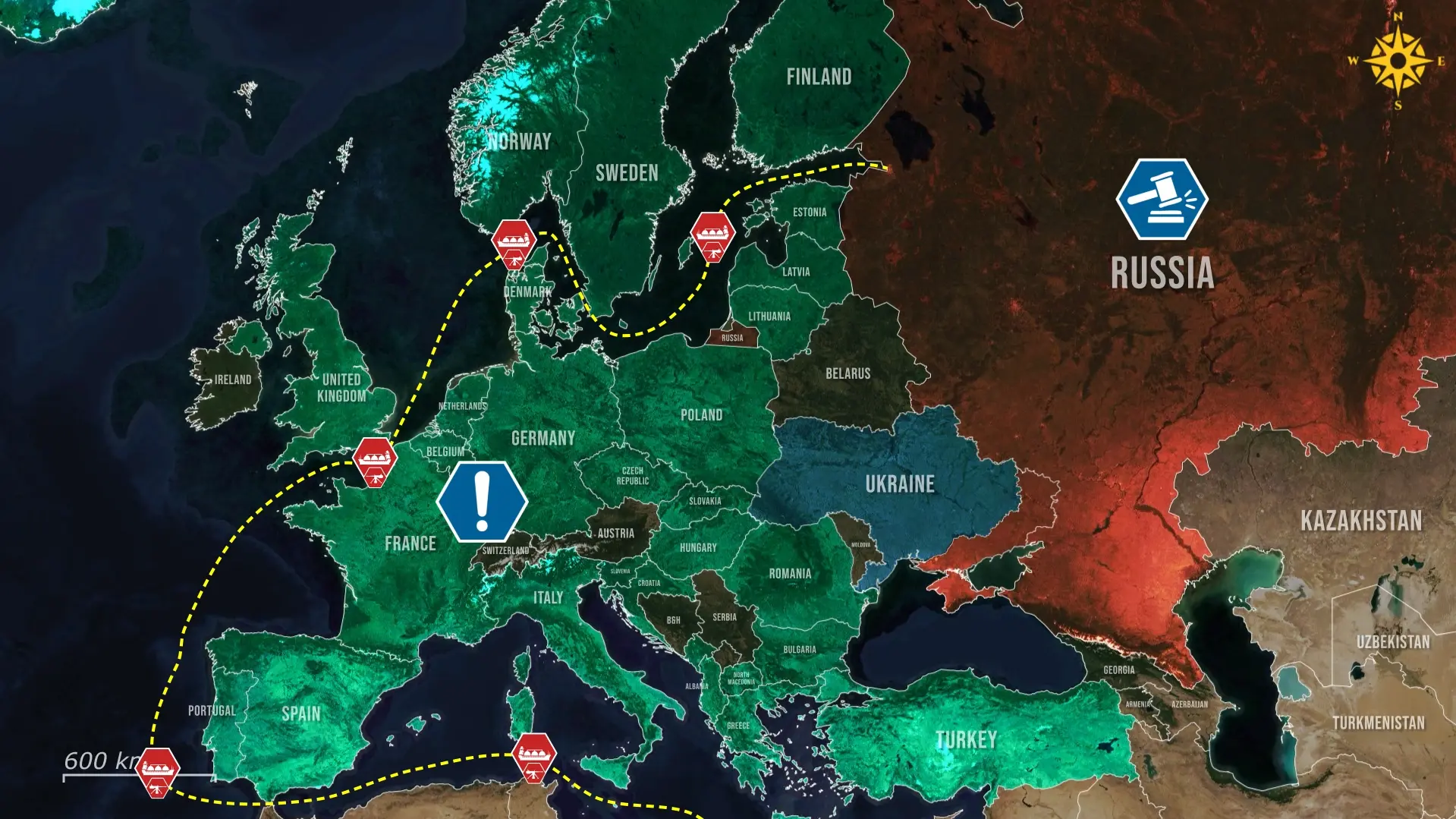
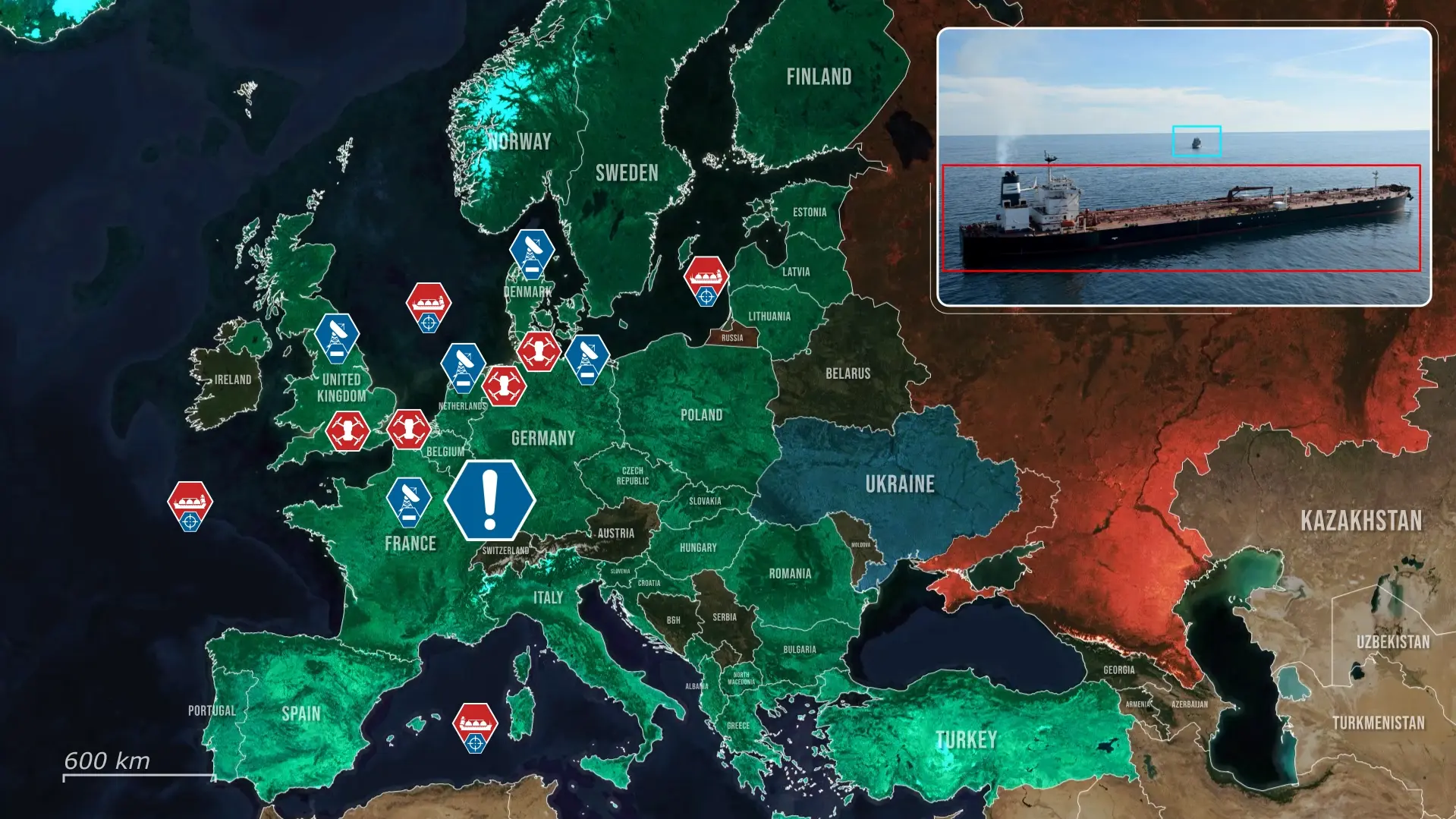
Reports state that Russia has begun using Shadow Fleet tankers as mobile launch points for drones over European territory. These tankers operate in legal grey zones to move sanctioned oil, and this existing commercial cover makes them ideal launch platforms, expanding their role far beyond economic survival. The transformation of a simple oil tanker into a drone platform allows Russia to conduct intelligence gathering while moving through international waters near European coastlines without triggering early warning systems. This marks a de facto weaponization of Russian commercial shipping, which further alters the Russian threat equation in European waters.
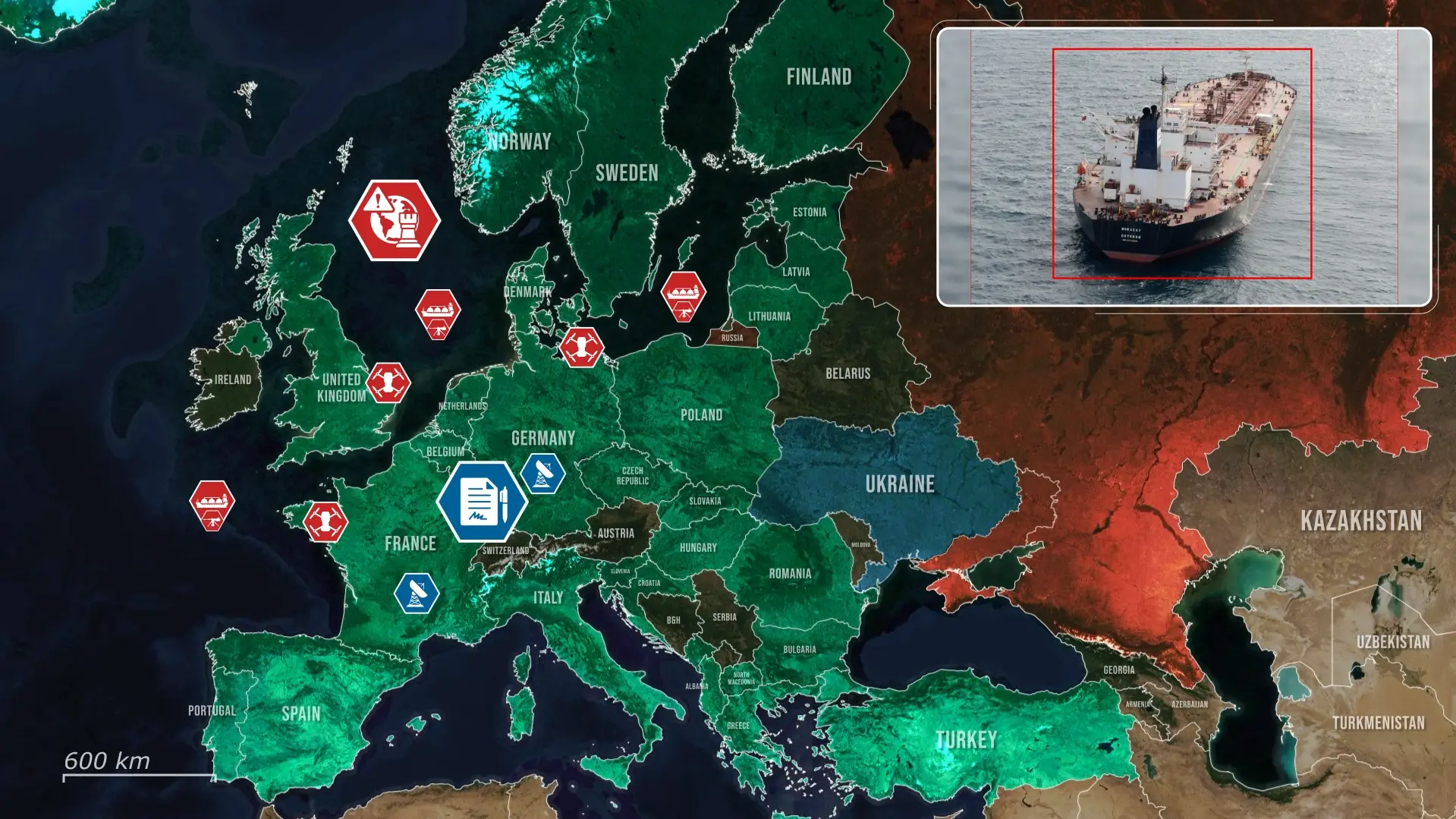
In fact, the drones launched from these tankers have not been used just for symbolic harassment. They have flown over Nato military bases and sensitive installations across the United Kingdom, France, Denmark, Germany, Belgium, and the Netherlands. Their purpose appears to be to gather visual and electronic intelligence on air bases, defense companies, and strategic sites such as those hosting nuclear weapons. Russia is trying to rebuild situational awareness with this workaround after the expulsion of large numbers of its intelligence officers from Europe in two thousand twenty two. By launching drones from the many moving tankers, Russia increases the unpredictability of these reconnaissance incursions and complicates attribution, allowing it to operate without triggering an immediate political response. Then, once the drones are spotted, they force European countries to react, giving Russia also an opportunity to test how quickly militaries mobilize and evaluate their response. Additionally, these incursions contribute to Russia’s wider psychological pressure, which aims at causing panic among the public in retaliation for supporting Ukraine.
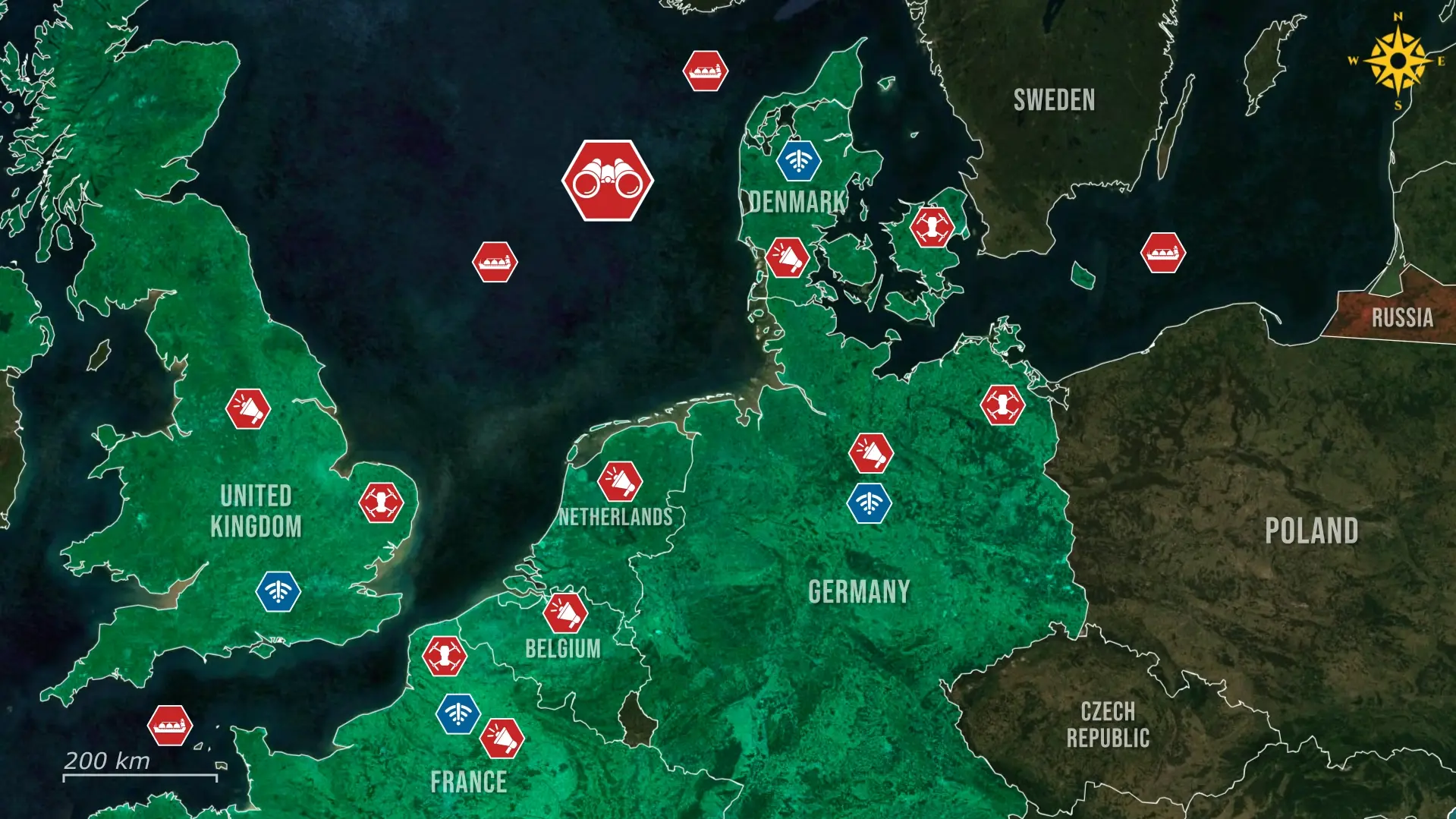
The pattern of incidents shows that this is not an isolated experiment but a systematic campaign that peaked in two thousand twenty five and continues in two thousand twenty six, totaling one hundred forty four suspected drone sightings so far. The latest incident was reported in February two thousand twenty six, when Swedish forces spotted and jammed a drone that took off from a Russian signals intelligence vessel inside Swedish waters while a French carrier group was nearby. This is also the first confirmed case of a drone launched directly from a Russian ship, proving the capability that European officials had only suspected until then. In September two thousand twenty five, drones forced the temporary closure of Copenhagen Airport and triggered alerts across Denmark while several Shadow Fleet tankers were in the area. Only a few days later, French commandos boarded one of these tankers off the French coast and found Russian private security contractors, reinforcing the suspicion that the drones in Denmark were launched by the passing Russian linked ship.

The evidence was increasingly pointing at a systematic Russian operation, as in the same year, drones flew over Volkel Air Base in the Netherlands and over Brogel military base in Belgium, both linked to Nato’s nuclear weapons hosting arrangements. The first incidents emerged already in two thousand twenty four, with drones repeatedly entering the airspace over major United States air bases in the United Kingdom and Germany. All these incursions lined up with the movements of Russian linked commercial vessels, showing that the reconnaissance campaign had been building for years.
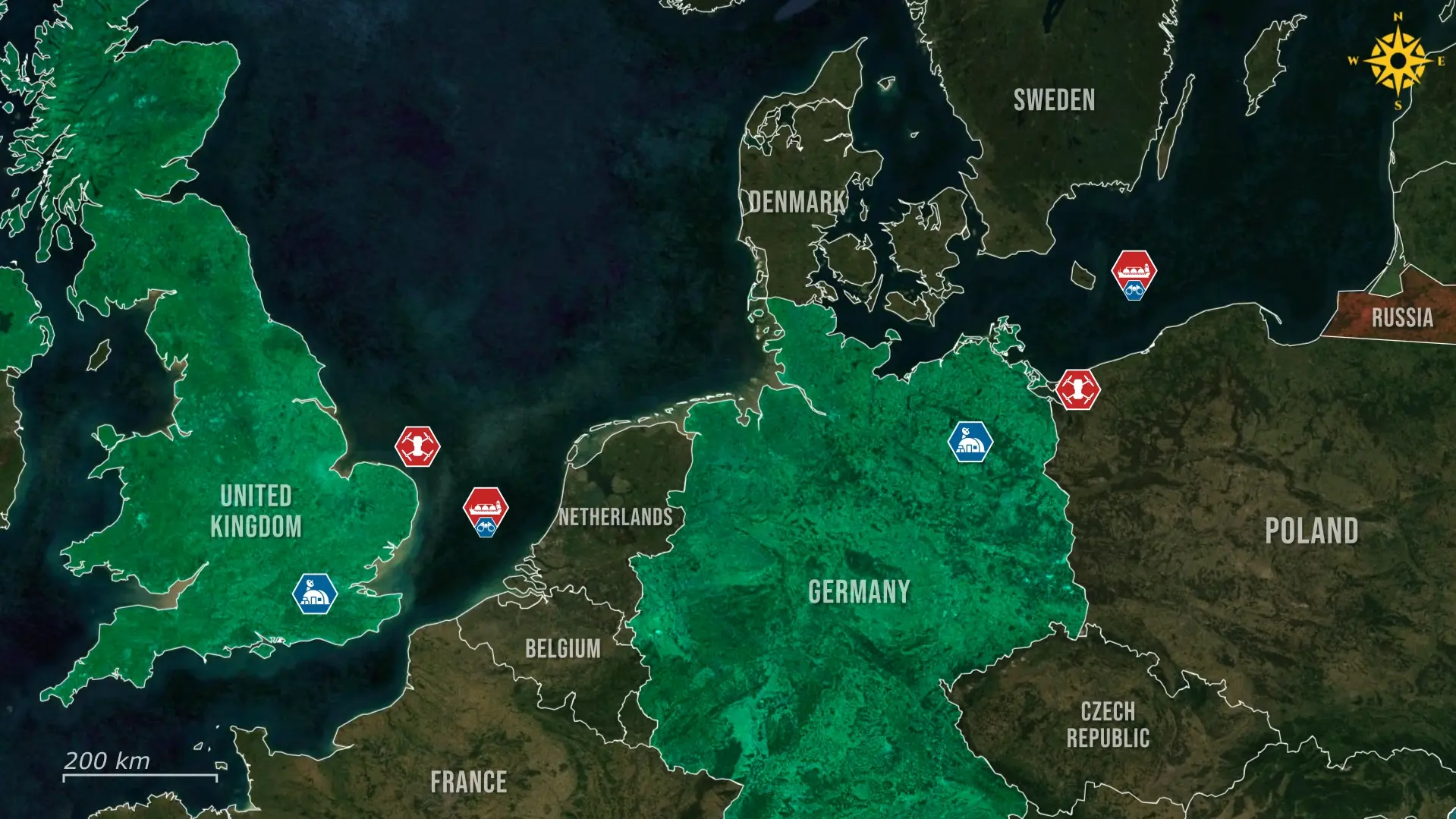
Overall, the weaponization of the Shadow Fleet shows how Russia adapted civilian assets to circumvent European defenses and gather intelligence at scale without crossing formal red lines. The incidents also reveal that maritime drone operations may become a recurring feature of Russian behavior, which is already forcing European governments to rethink how they monitor and protect their coastlines. As a result, commercial tankers can no longer be viewed purely as economic assets because Russia has transformed them into part of its broader hybrid warfare strategy. This new reality is becoming more evident, as European governments are now increasingly treating Shadow Fleet tankers as potential military assets rather than simply sanction evasion vessels.

.jpg)

Comments