

.svg)
In this video, we will analyze how Ukrainian F-sixteens ambushed a Russian jet on the eastern front.
Here, Ukrainian F-sixteens created the perfect jet-killer trap in a unique operation. What followed was a well-planned ambush, where Ukrainians lured a Russian jet into the kill zone.
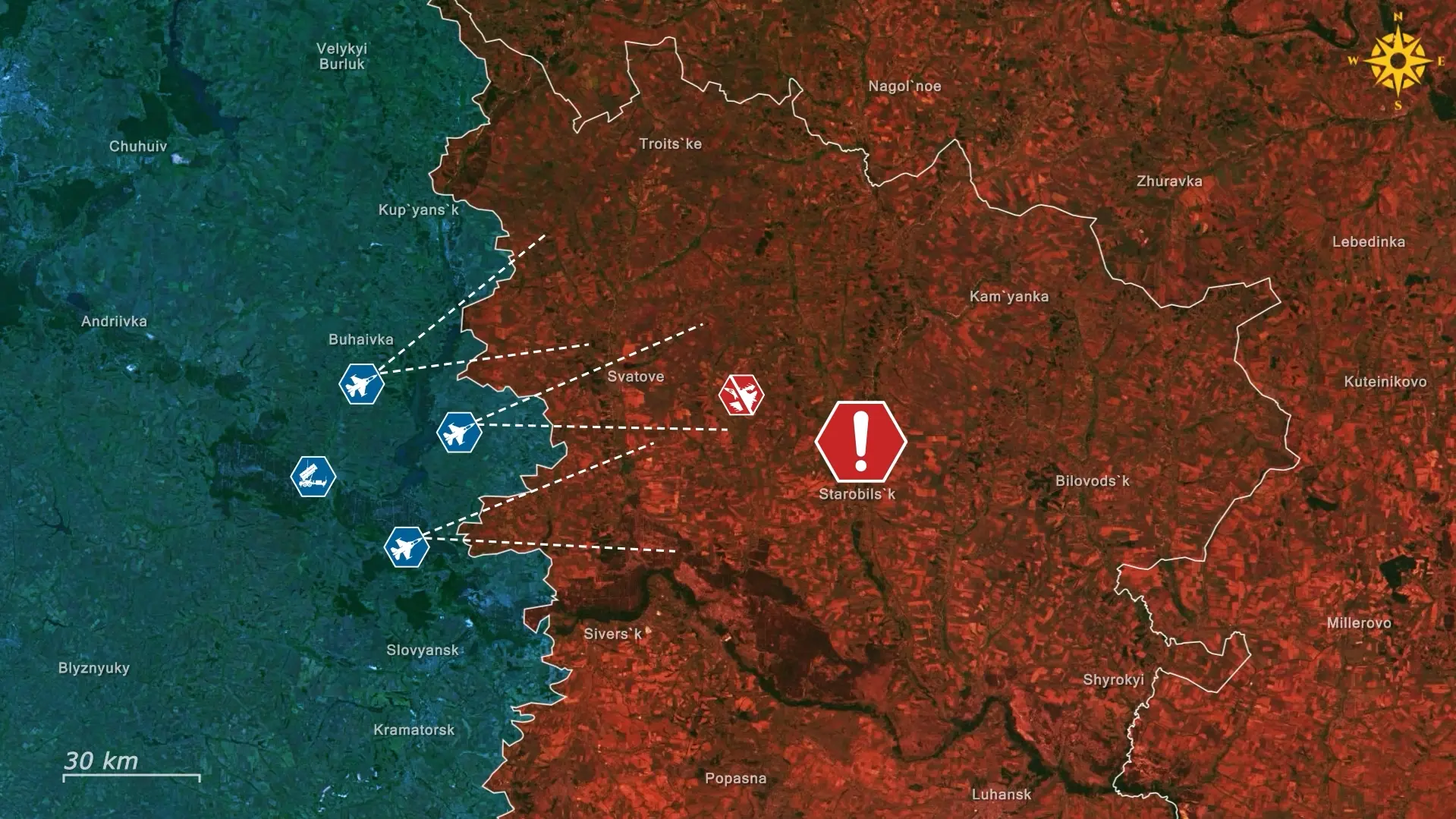
The Russian Su-thirty-five multirole fighter was shot down in the Donbas, and for that operation Ukrainians engaged three Ukrainian F-sixteens and one Patriot air defense battery. Russian military channels had to admit that the Ukrainian aircraft had acted deliberately, exploiting the carefully mapped Russian reaction patterns.
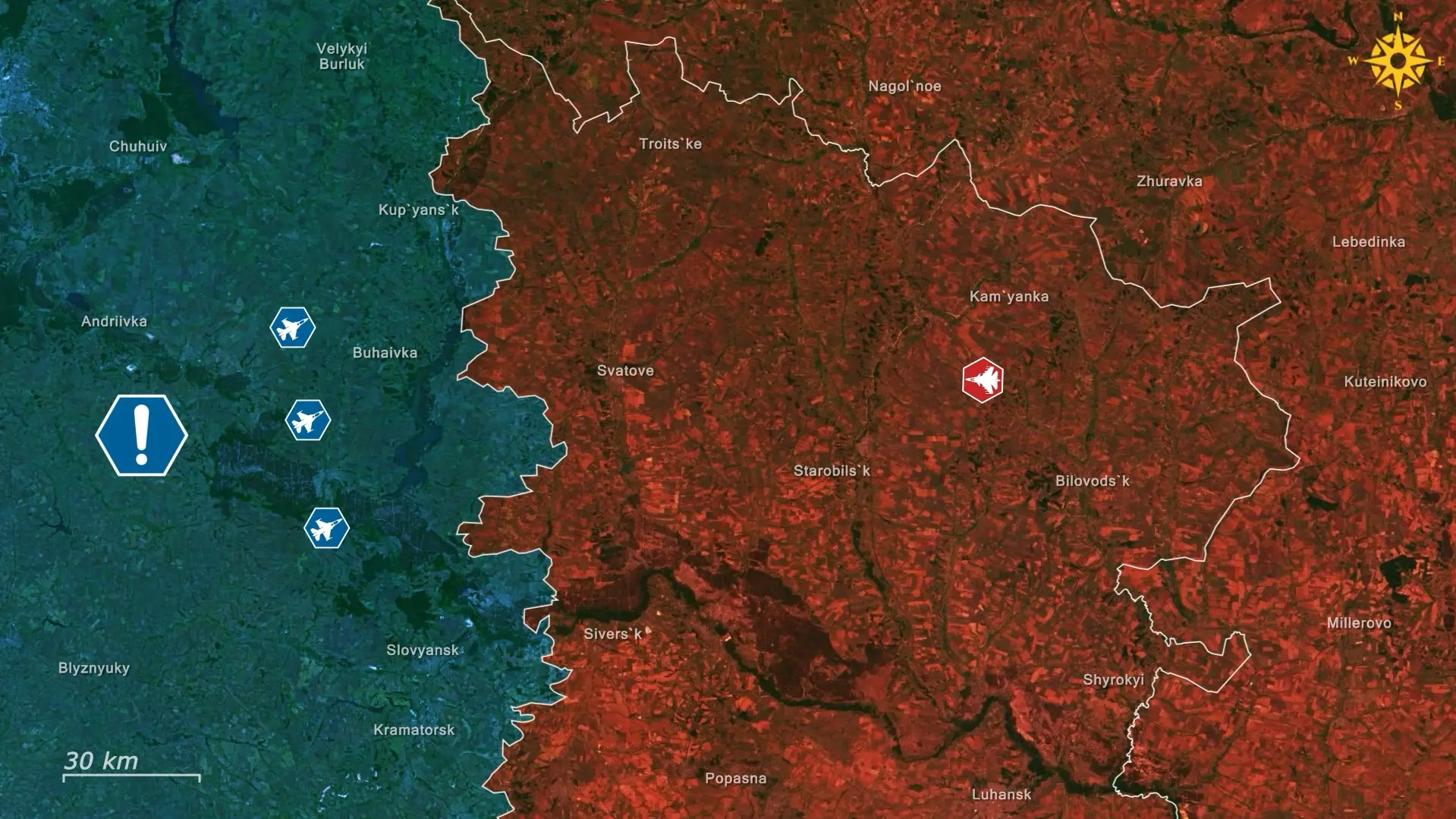
The operation began with one Ukrainian F-sixteen serving as bait, approaching the front as if it were preparing to conduct a glide bomb strike, forcing Russian air defense or fighter aviation to respond. In practice, intercepting an enemy fighter usually favors aircraft that are already airborne because scrambling a fighter and then guiding it toward the target consumes valuable time while the enemy aircraft are already operating or preparing to strike. If the Su-thirty-five had already been airborne, Ukrainian planners may not have improvised the ambush after spotting it. Instead, they likely waited until the Russian fighter was already on patrol and in a position where it could be lured into pursuing the bait aircraft.
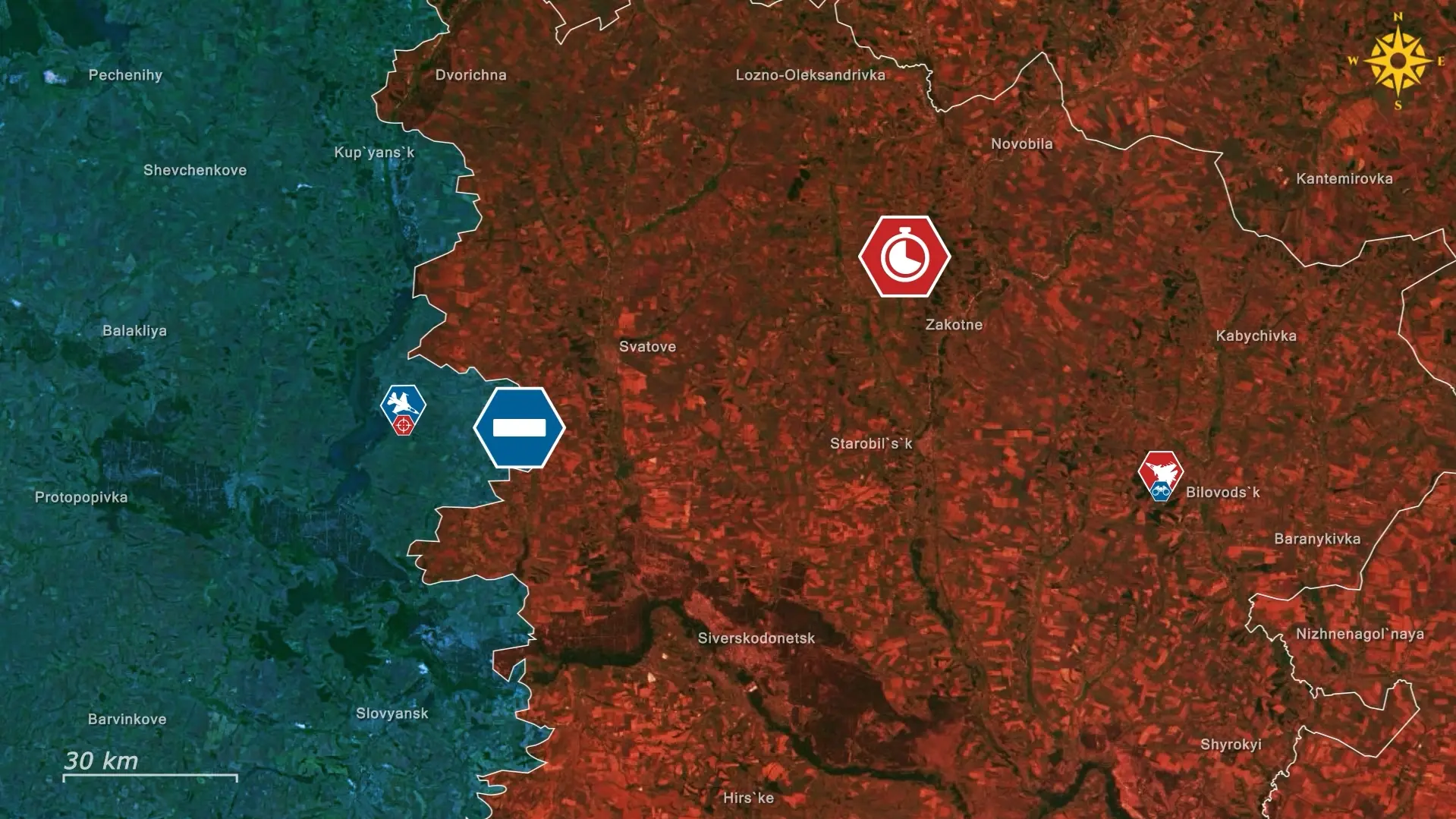
Additionally, two Ukrainian F-sixteens accompanied the mission as hidden escorts and remained undetected, unlike the lead F-sixteen, which intentionally exposed itself to attract the Russian fighter. The escorting aircraft remained at a very low altitude because flying close to the ground allowed them to exploit terrain masking and the limits of radar lines of sight, as hills, forests, and the curvature of the Earth can block radar from detecting aircraft below the horizon.
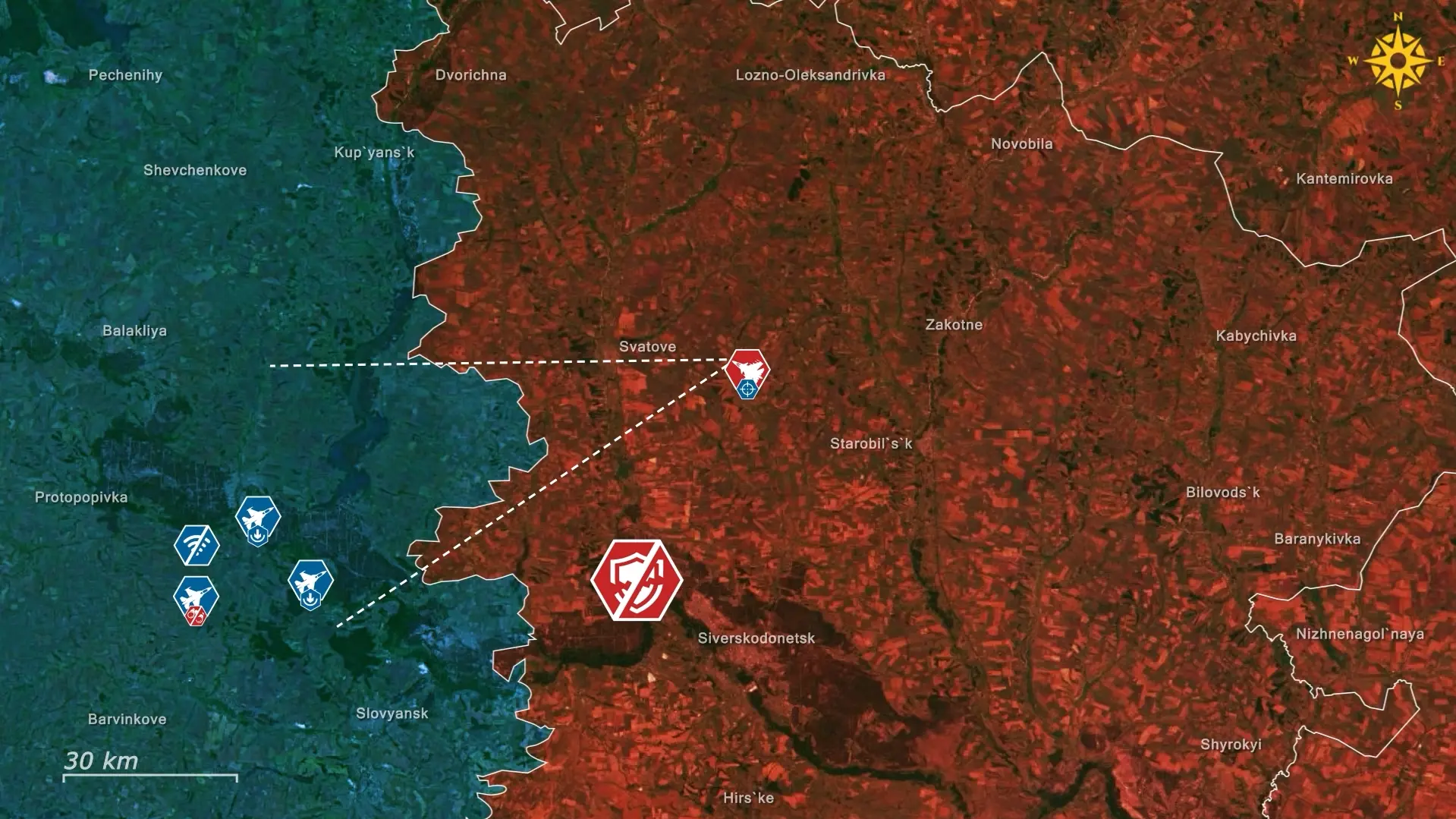
As the Russian fighter closed the distance, the lead Ukrainian F-sixteen feigned a withdrawal, creating the impression that it was abandoning the mission because the Su-thirty-five forced it to. Such a maneuver encouraged the pursuing pilot to pull away from his safest posture and toward a preselected engagement zone. After drawing the Su-thirty-five toward the front, the bait F-sixteen likely deactivated its radar to prevent emitting any radar transmission, effectively disappearing from the Russian fighter's radar, while it was trying to find the F-sixteen.
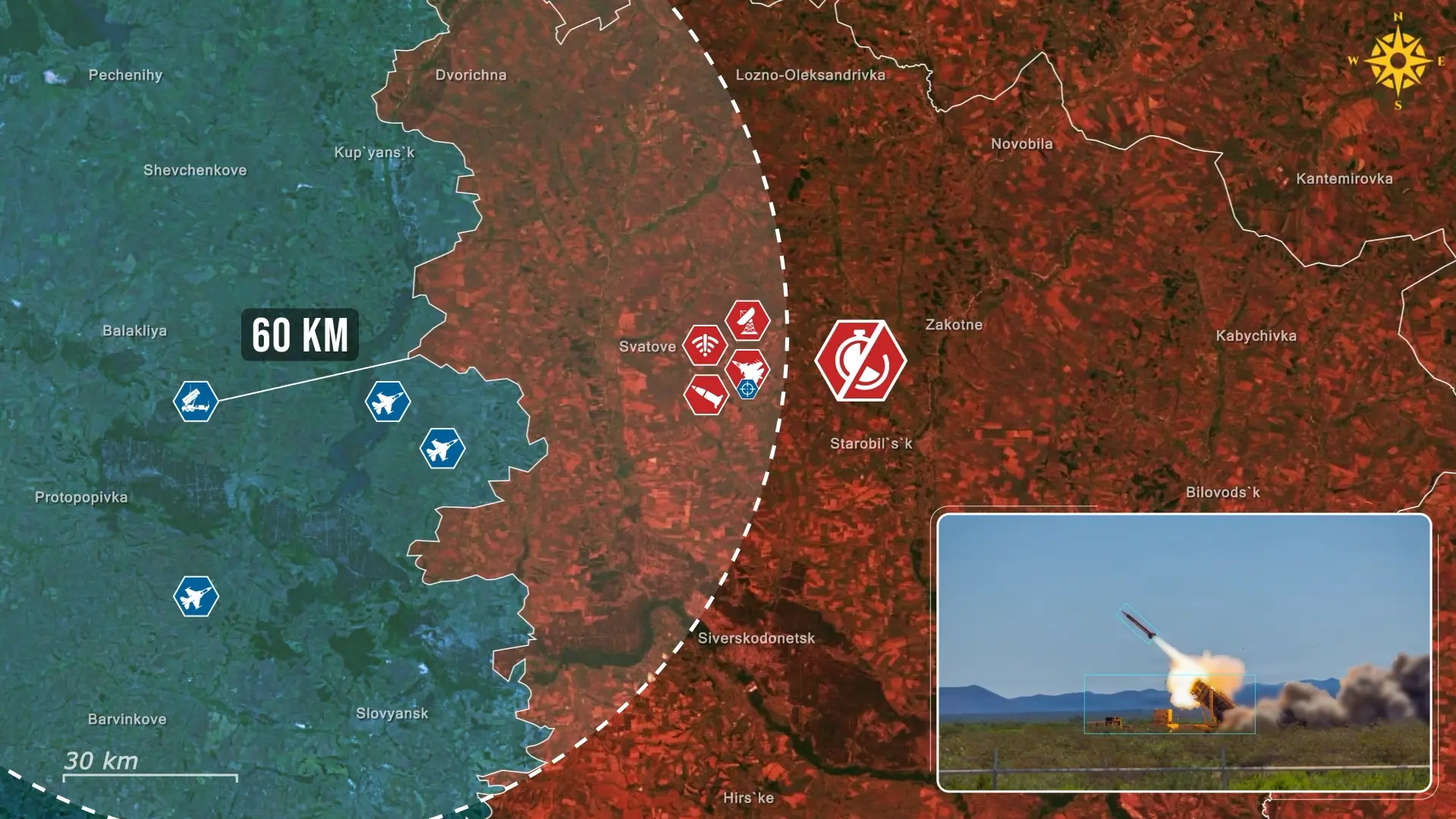
The trap closed when the Russian jet appeared on the Patriot’s radar because the Su-thirty-five’s radar was activated, which is highly visible to other radars. At that moment, the two escorting F-sixteens emerged from a low altitude into the engagement, revealing their positions. Their objective was to pressure the Russian pilot into evasive maneuvers and burn fuel before the final blow came. The Patriot battery was positioned approximately sixty kilometers behind the front line, allowing its PAC-two missiles to reach their target. Even though the Su-thirty-five is equipped with sophisticated radar, electronic warfare systems, and long-range missiles, a modern surface-to-air missile system presents a very different threat from another fighter. Unlike an airborne opponent, a Patriot battery can launch interceptors from a direction the pilot is not focused on, leaving him minimal time to react and overloading him with threats. This was exactly the aim of the plan, using F-sixteens to force the Russian jet to go into defense and burn fuel while trying to evade, just to be shot down by a Patriot, which it was unable to counter by that time.
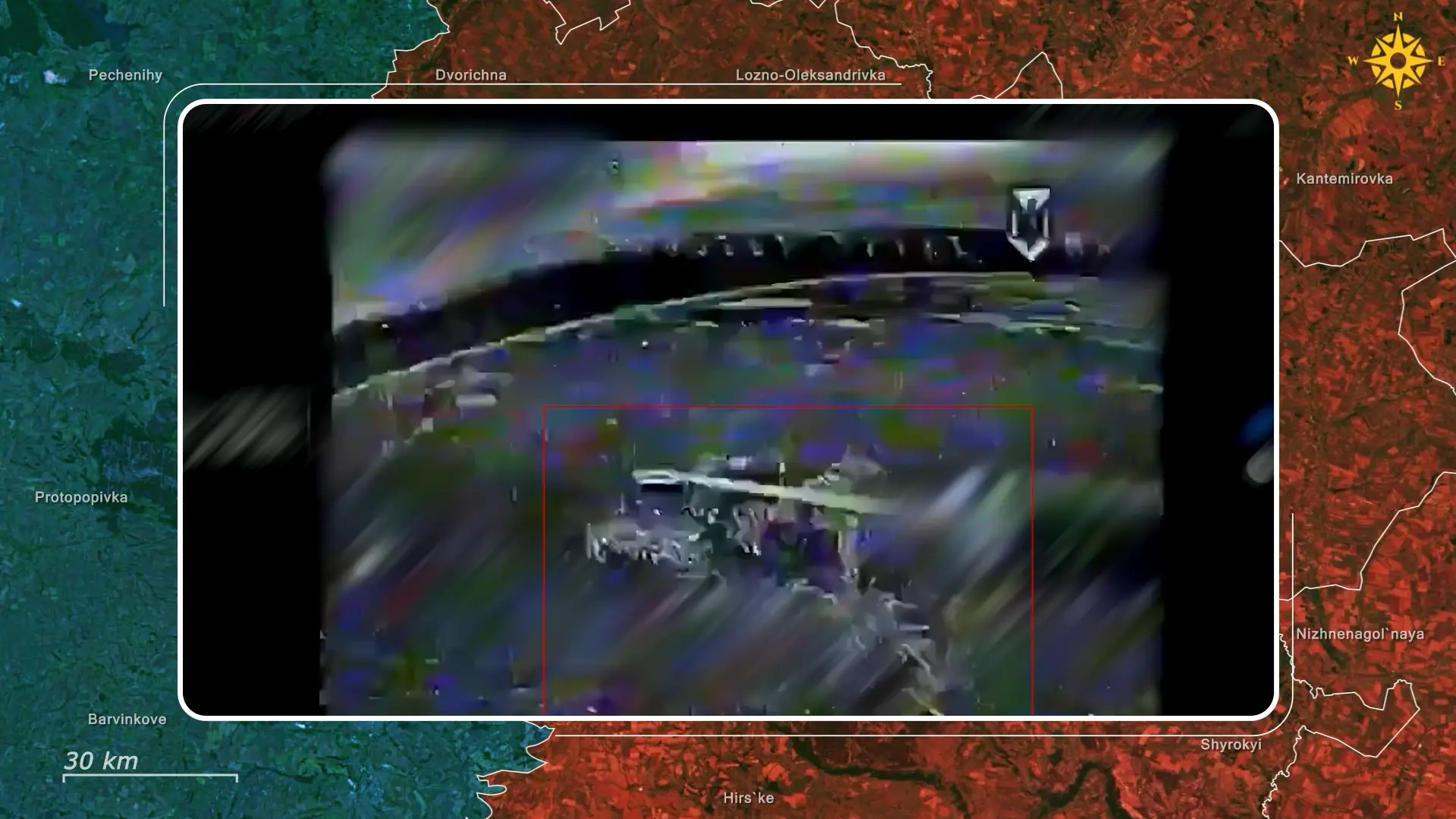
Regardless of which weapon delivered the final hit, the F-sixteens or the Patriot, the Russian Su-thirty-five was maneuvered right into a layered trap. The Ukrainians first recorded the destruction with a Mavic drone and then used an FPV drone to observe the wreckage and confirm the destruction. This operation proves that Russian aircraft can now be baited into traps even when they believe they are pursuing Ukrainian jets.
Overall, the incident demonstrates how combining deception, fighter jets, and ground-based air defense, exploiting Russia’s own interception response against it, can lure the Russian aircraft into the Patriot system’s kill zone. This trap also shows how well-planned ambushes, combined with trained personnel who can execute these missions, can defeat even one of the most advanced Russian fighter jets, which are not safe if they chase Ukrainian aircraft into layered air-defense traps. Russian pilots now have to assume that every apparent Ukrainian retreat could be a lure and a Patriot could be waiting for them.

.jpg)

Comments