

.svg)
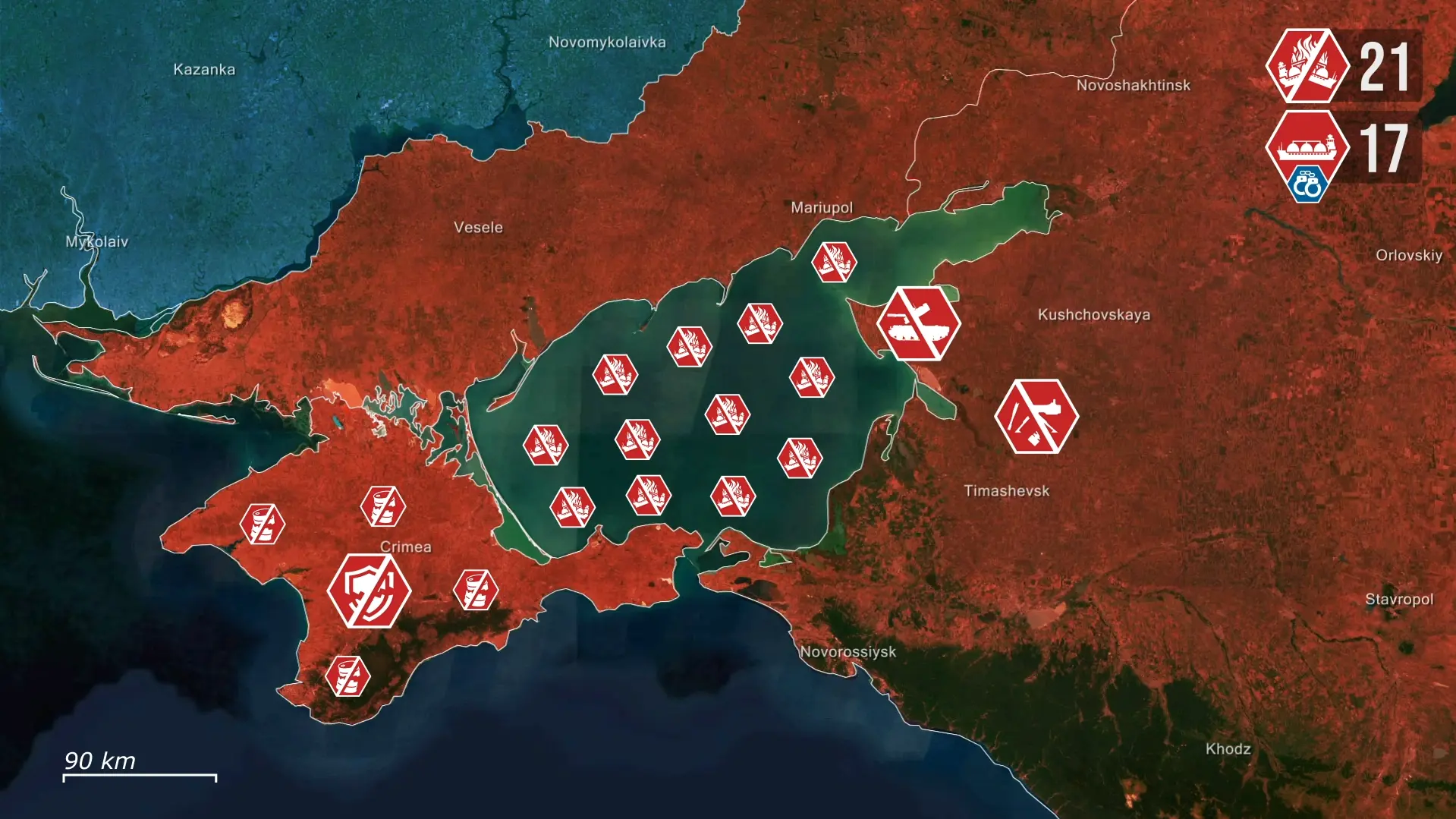
In this video, we will analyze how Ukraine destroyed twenty-one Russian ships in three days.
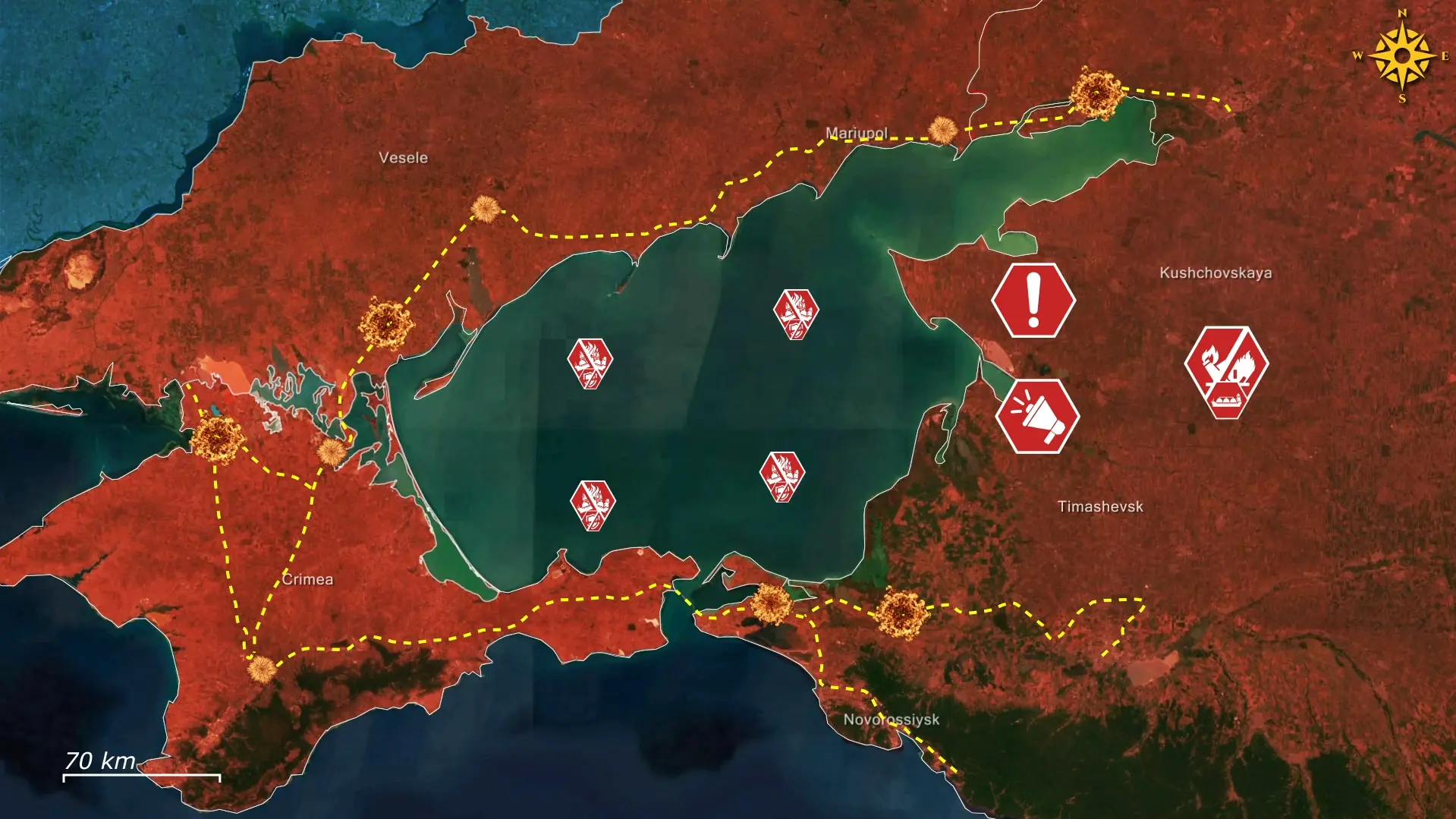
Here, Russia thought it could quietly deploy its Shadow fleet to supply Crimea, placing the ships well within Ukrainian striking range while only adding a few machine-gun emplacements to keep them safe. However, this didn’t stop Ukraine from unleashing its most devastating strike on the Russian ships, and in just under seventy-two hours, the Sea of Azov was filled with dozens burning wrecks.
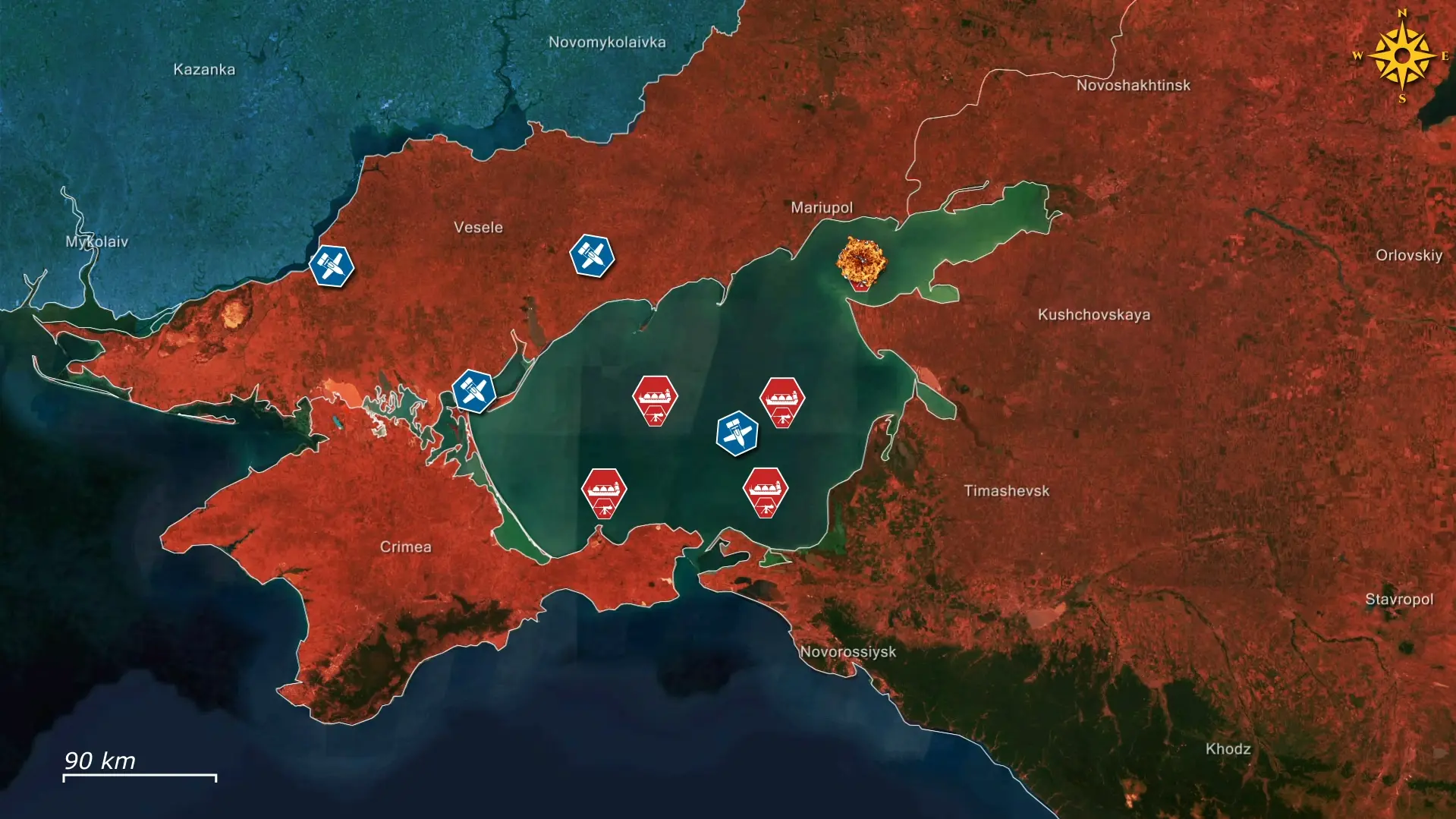
In total, Ukraine disabled twenty-one ships in the Sea of Azov in just three days, including nineteen shadow fleet tankers, which were assigned to carry fuel for Crimea. Ukrainian drones first made a fly-by to confirm the targets, then turned around to engage them after they were identified. Ukrainian drone operators aimed for the bridge of the ship because this way the ship loses its navigation systems, making follow-up strikes easier, and forcing the crew to evacuate. As a result of the strikes, the fuel tankers were seriously damaged and were observed to be burning at sea uncontrollably. Ukraine also targeted a ferry and a dry cargo ship, which were carrying supplies to Crimea, and demonstrated that the Sea of Azov is not a safe rear route, which is why it is strange that Russia concentrated so many valuable vessels there.
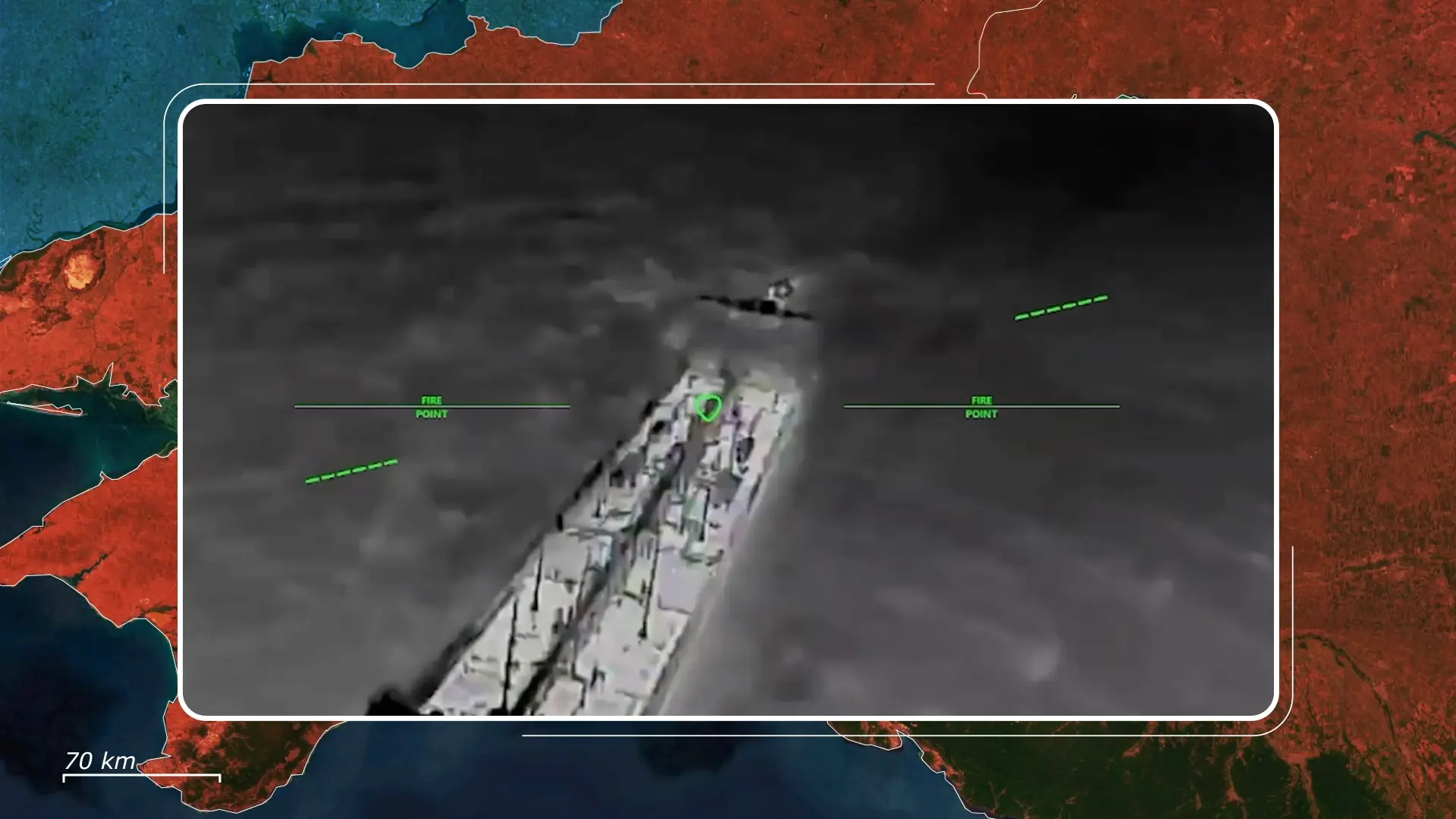
This high concentration of ships in the Sea of Azov is explained by the fact that Ukraine has already significantly reduced Russia’s ability to supply Crimea by land with strikes on bridges and rail connections. Because of the need for fuel, Russia reassigned its shadow fleet tankers to supply Crimea. These tankers are no longer used for exports as they once were, depriving Russia of export revenue and further reducing Russia’s available tanker fleet. However, this shift in priorities only relocated Russia’s logistical vulnerability from land to sea, and predictably exposed it as concentrated tankers operating in the Sea of Azov remained within the range of Ukrainian drones.
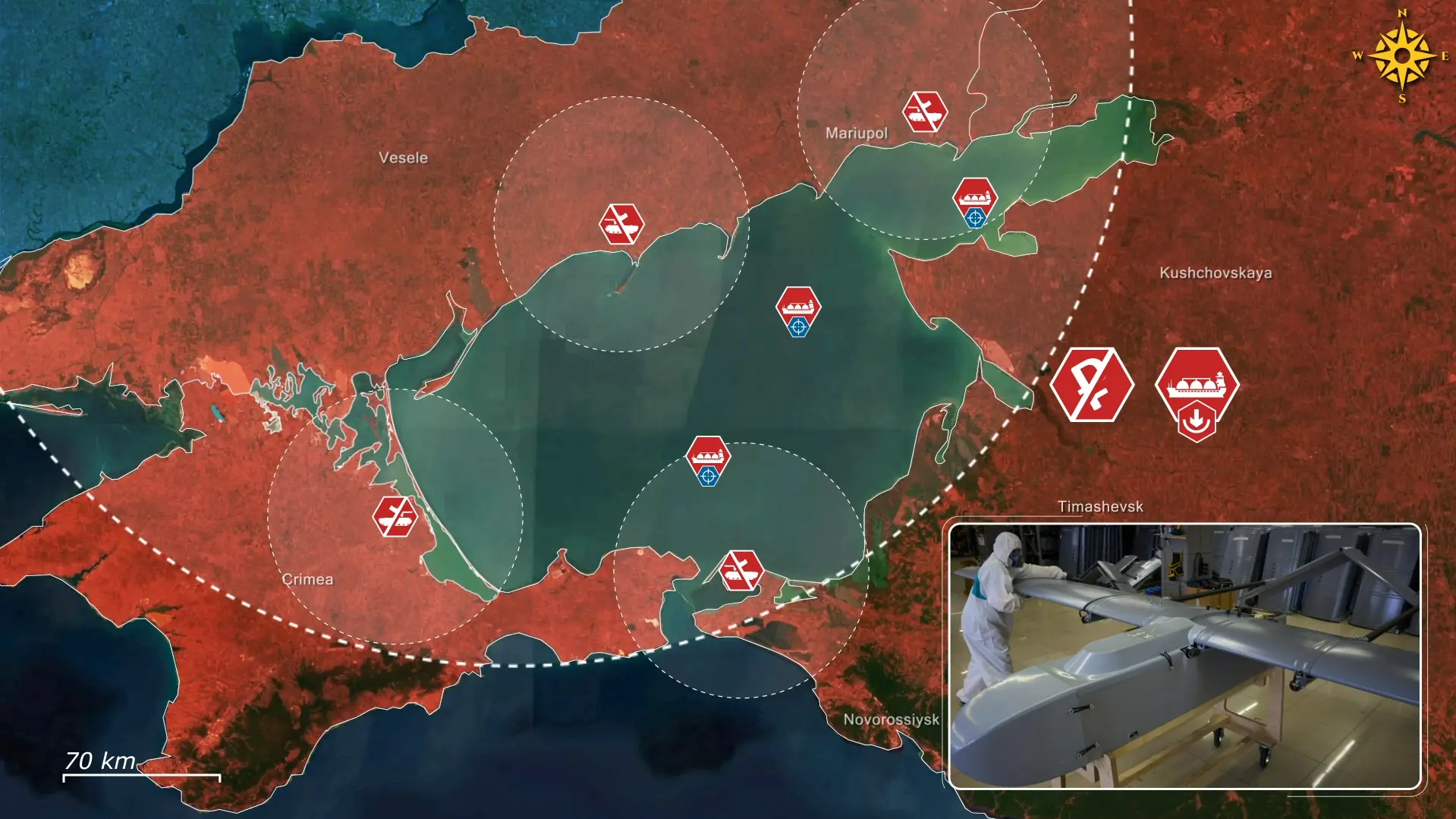
Russia recklessly concentrated valuable tankers in the Sea of Azov without air-defense protection, which is well within the range of FP-Two drones. This allows Ukraine to use its long-range kamikaze drones to strike tankers and ships while they are waiting in a port or on the move because they are slow and large. As Russia’s shore-based air defense systems proved to be ineffective at covering the Sea of Azov, Russia had to come up with an on-board solution. Notably, some of the tankers were carrying a platoon of machine gunners while they were en route to Crimea. Their task was to protect the vessels with small arms against Ukrainian drones, whose speed can reach two hundred kilometers per hour, making them extremely difficult to shoot down.
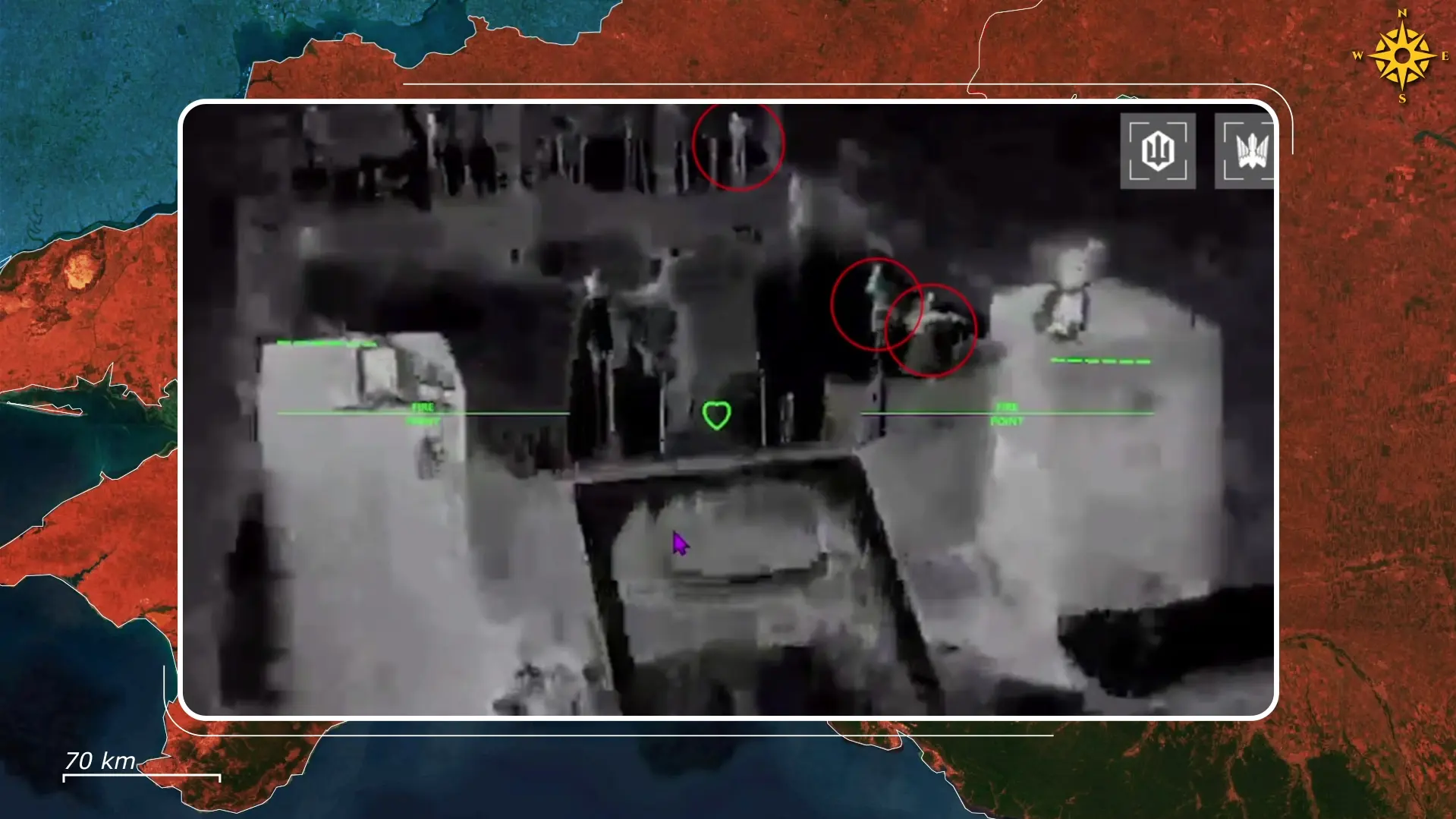
However, the improvised defense failed in the exact scenario it was supposed to handle, as both tankers were struck by FP-Two drones. The attack happened during the night, which significantly reduced the soldiers’ time to react and their ability to see the incoming threat, making the entire concept of manually shooting drones from a tanker look desperate. This was proven by the drone footage released by the Ukrainians, in which the soldiers can be seen looking in the wrong direction when the drone hit the ship right behind them. These machine-gun platoons were not a serious defense plan, but a sign that Russia had no better protection left, which is why even Russian analysts called the deployment wasteful.
As a result of Russia sending defenseless and slow assets into Ukrainian drone range, the Russian military analysts were outraged because of the lack of protection. They said that the use of these tankers is catastrophic because they are defenseless, even with designated machine gunners, who cannot solve the problem of fast-moving nighttime drone attacks. They stressed that even the Black Sea Fleet had to be withdrawn, and if they could not survive, then civilian tankers with machine guns and without a fleet to cover them had no realistic chance. Russia also cannot replace these tankers because they have no shipbuilding industry capable of building tankers. Because of this, Russia is losing the same ships it now needs for Crimea because its land routes are under pressure.
Overall, the destruction of twenty-one ships in just three days demonstrates that Ukraine destroyed more Russian tankers than Western partners seized in six months. Russia’s reliance on machine-gun crews aboard civilian vessels highlights that Russia is compensating with desperate measures because it lacks layered maritime protection in the Sea of Azov. Unless Russia develops an effective way to protect the Sea of Azov, Crimea will receive less fuel, and Russia will recklessly burn through vessels with no hope of easily replacing them.

.jpg)

Comments