

.svg)
In this video, we will analyze how Ukraine has cut off the Crimean land bridge.
Here, Ukrainian forces struck one of the most important bridges connecting the Crimean Peninsula to Russian forces in southern Ukraine. By doing so, Ukraine is steadily taking control of the entire Crimean land bridge by placing every major Russian supply route under threat.
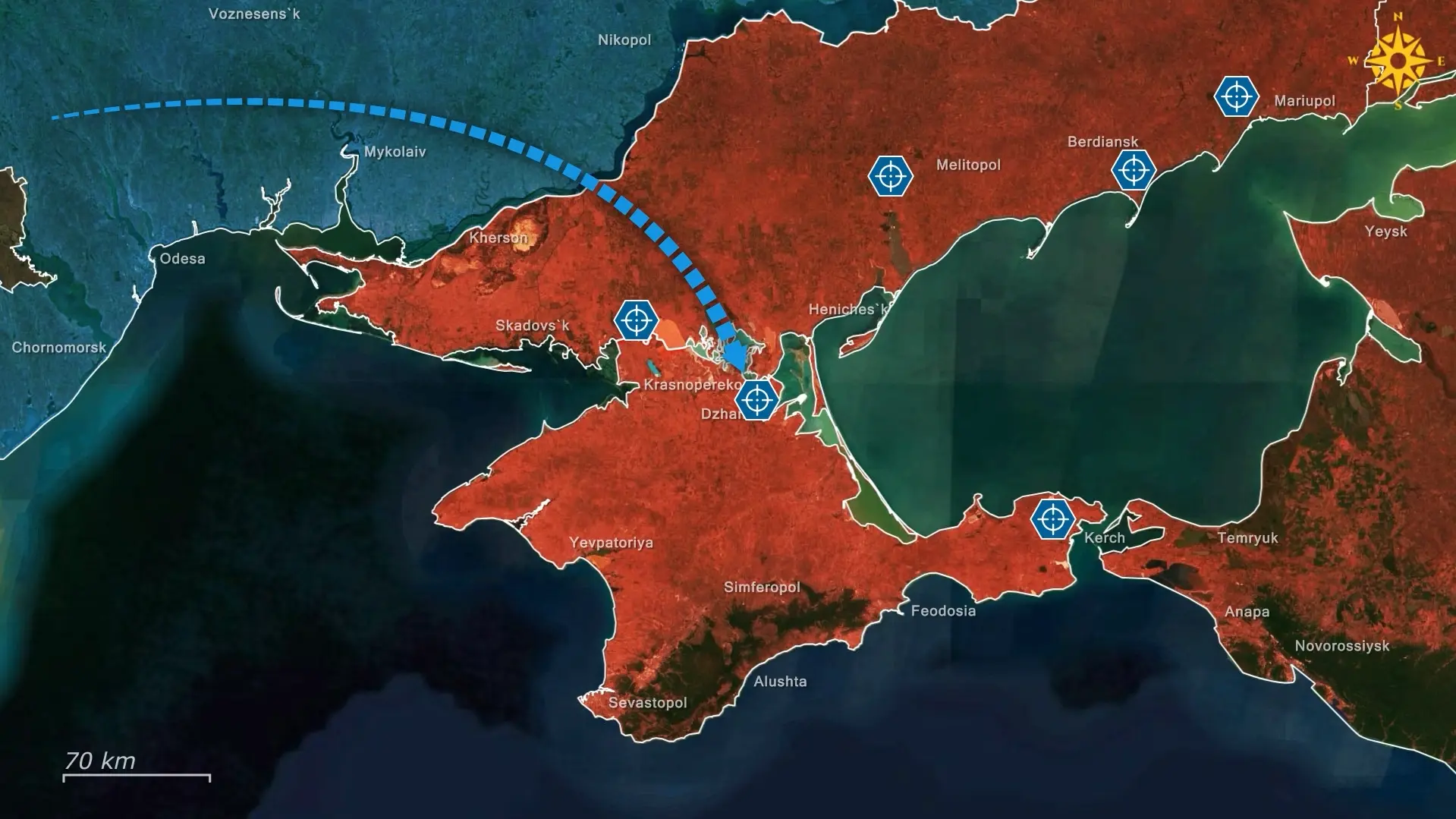
The Chonhar Bridge is one of the most critical logistics links between Crimea and the rest of the Russian-controlled territories in southern Ukraine. Spanning over the Syvash lagoon, it forms part of the shortest overland route connecting the peninsula to Russian forces operating in the Zaporizhzhia and Kherson regions. Unlike the longer routes running through the Kerch Bridge or northern crossings, Chonhar allows ammunition, fuel, reinforcements, and heavy equipment to move rapidly. This makes it one of the key arteries holding together Russia’s southern logistics network.
Ukrainian forces targeted this artery directly with FP-2 drones and the newly introduced long-range Behemoth drone, which struck the bridge deck in a coordinated operation conducted by several Ukrainian special-purpose drone strike units.
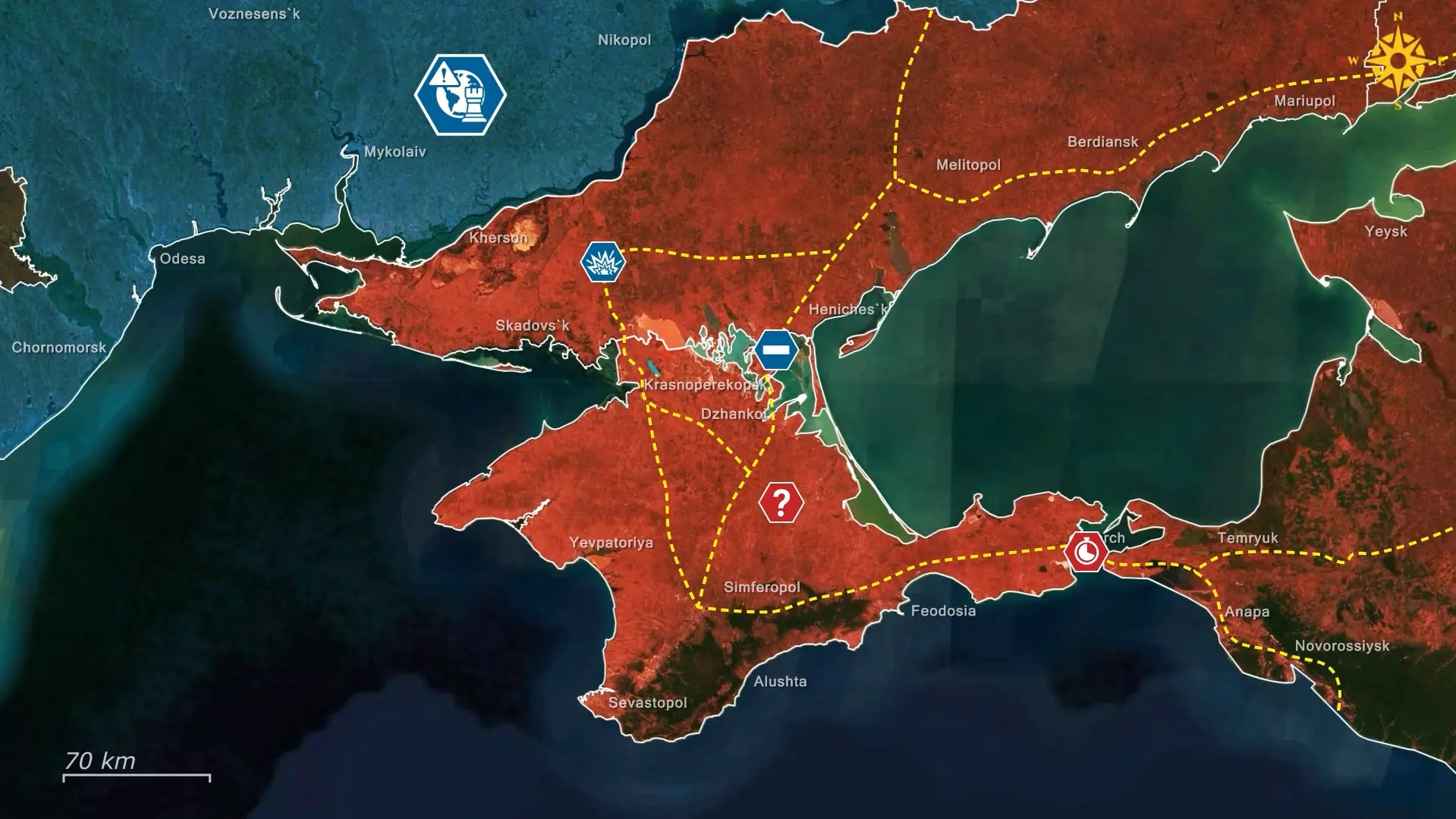
Reports and imagery indicate that several holes roughly one meter wide were blasted through the bridge surface while the main supporting structure remained intact. However, bridges do not need to collapse completely to become operationally ineffective, and the damaged roadway immediately rendered the crossing unsafe, forcing Russia to halt traffic and inspect the structure before any future repairs.
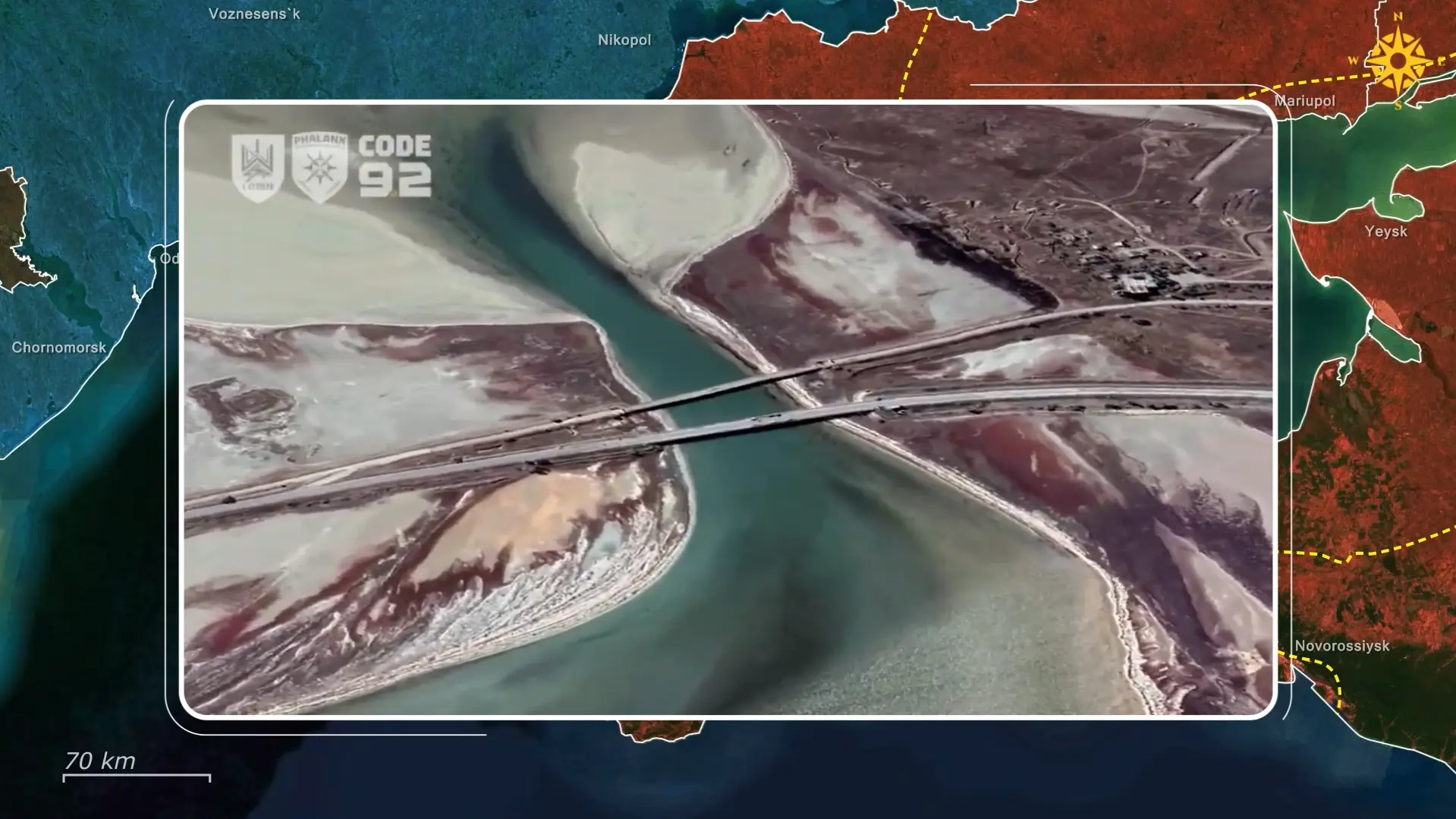
Following the strike, traffic on the Chonhar Bridge is severely restricted, with heavy military and supply vehicles most affected, while lighter vehicles may pass only under strict controls and reduced capacity.
With the Chonhar route disrupted, Russian traffic must now move through the longer Armiansk crossings and the corresponding northern route. This creates congestion, delays, and predictable traffic patterns that the Ukrainians can exploit, as every fuel truck, ammunition convoy, and reinforcement column must now spend more time on the road and face greater risk of destruction. Additionally, this alternative route runs closer to the frontline, exposing Russian convoys to a wider array of Ukrainian drones and artillery, instead of purely long-range strike systems. By striking Chonhar, Ukraine is placing increasing pressure on the entire Crimean land bridge, taking it under full fire control.
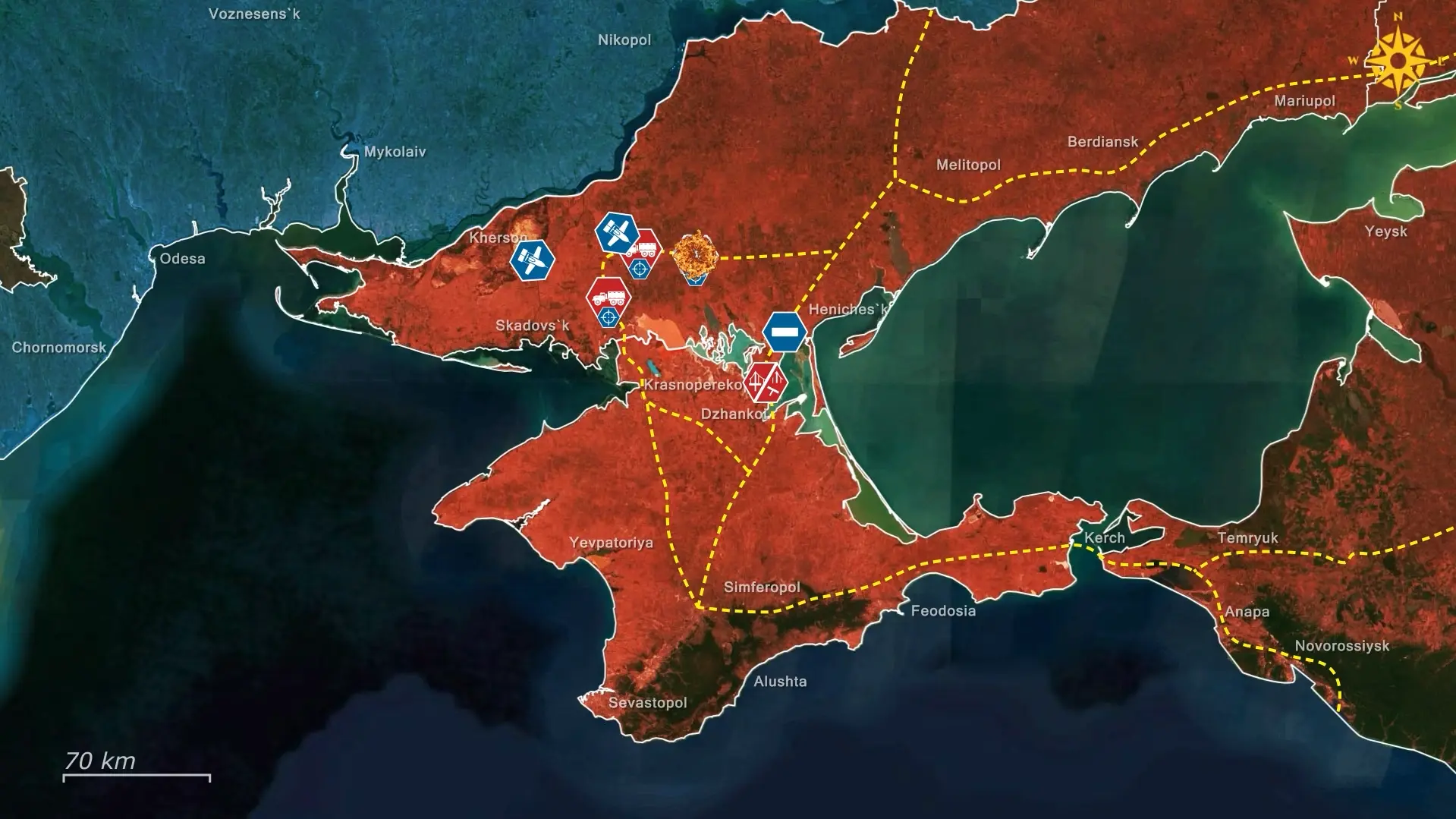
Beyond the dangerous Armiansk and the closed Chonhar route, the remaining options are limited, as the Kerch Bridge remains Russia’s main strategic connection to mainland Russia, carrying both road and rail traffic. However, it is also one of the most heavily defended pieces of infrastructure in the world, protected by S-four-hundred systems, Pantsir batteries, naval patrols, barriers, electronic warfare assets, and constant surveillance. While Kerch remains functional, repeated Ukrainian attacks have already demonstrated that even this heavily fortified route is not invulnerable.
This leaves Russia facing two possible futures, with the more likely scenario being a growing logistics bottleneck. By repeatedly damaging crossings like Chonhar, Ukraine can funnel Russian traffic onto fewer roads, making convoys easier to track and destroy. This greatly diminishes Russia’s maneuverability to evade Ukrainians strikes, in turn greatly amplifying the effects of Ukraine’s logistics striking campaign without having to expend many more resources. Additionally, while supplies may still reach the front, they will do so much more slowly, and at a higher cost.
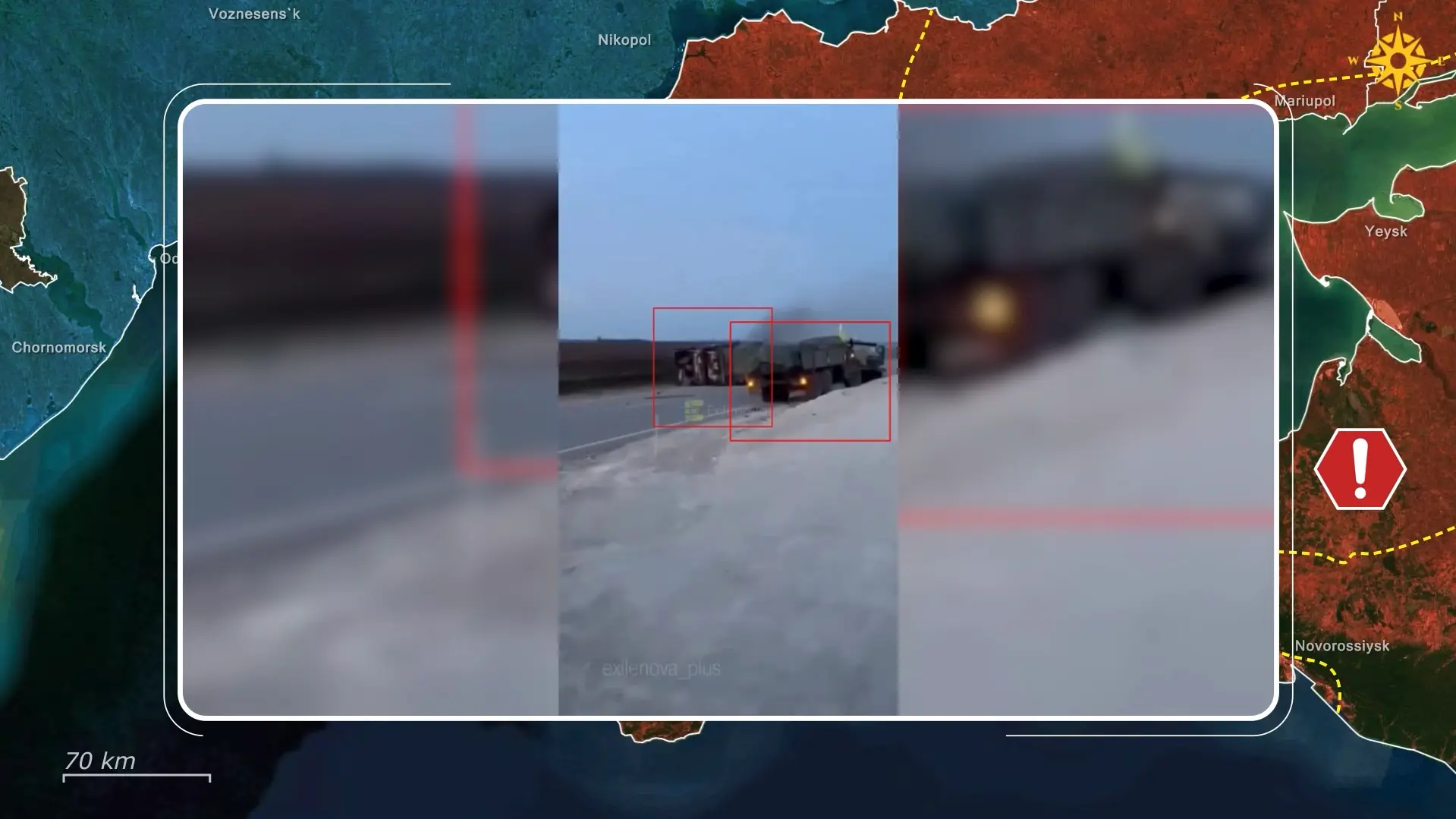
Every delay affects fuel deliveries, ammunition stocks, vehicle maintenance, and troop rotations, limiting Russia's ability not only to go on the offensive but also to defend its current positions.
The second, more ambitious possibility is that Ukraine is conducting a long-term campaign aimed at cutting off Crimea altogether. This would require sustained strikes against the key land crossings through Chonhar and Armiansk, repeated attacks on rail infrastructure connecting the peninsula to Russian logistics networks, disruption of ferry facilities, and eventually renewed attempts to damage the Kerch Bridge. Unlike in previous years, Ukraine now possesses a rapidly expanding arsenal of domestically produced long-range drones, while simultaneously testing and introducing new missile systems, providing Ukrainian planners with a growing set of tools for executing such a strategy. Threatening to completely cut the Ukrainian peninsula off from Russian access and direct control.
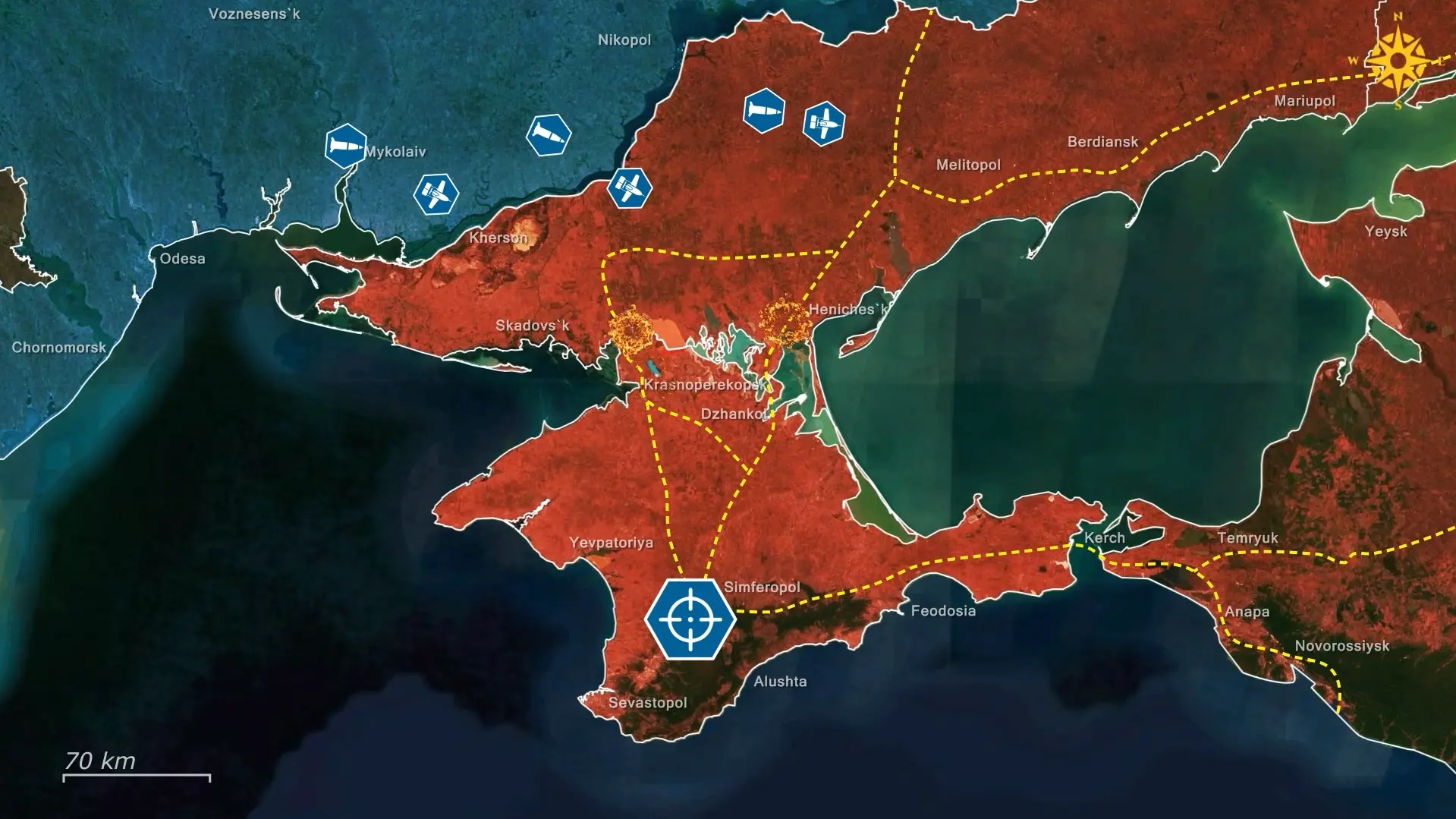
Overall, by placing one of Crimea’s most important logistics arteries out of action, Ukraine has effectively tightened its control over the Crimean land bridge and forced Russia into an increasingly costly dilemma. Russian forces must now either rely more heavily on the longer Kerch route or shift traffic onto vulnerable roads closer to the frontline, where Ukrainian drones and precision strikes can inflict even greater losses. Either option strengthens Ukraine’s grip on the logistics battle and steadily increases the pressure on Russia’s entire southern war effort.

.jpg)

Comments