

.svg)
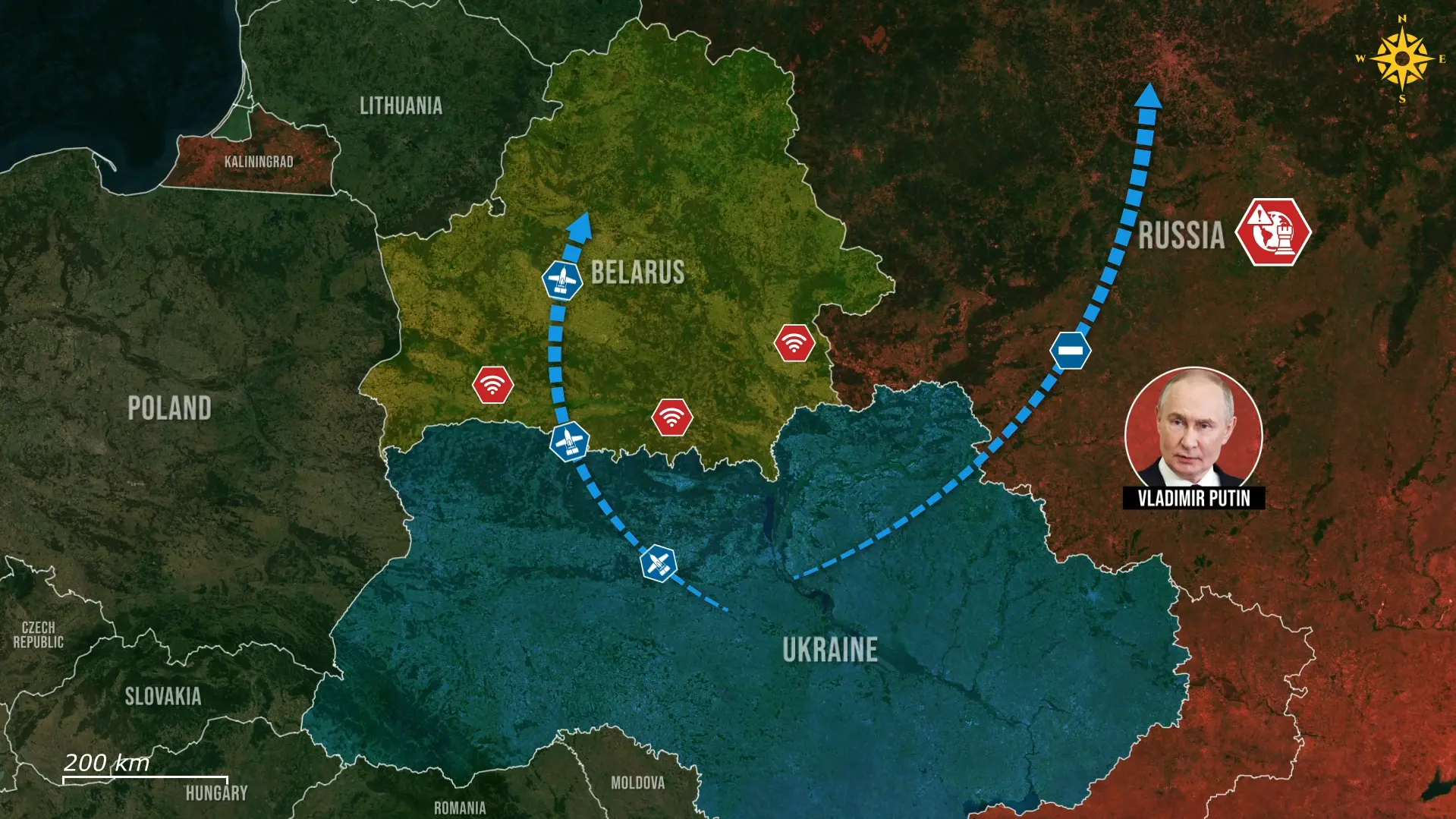
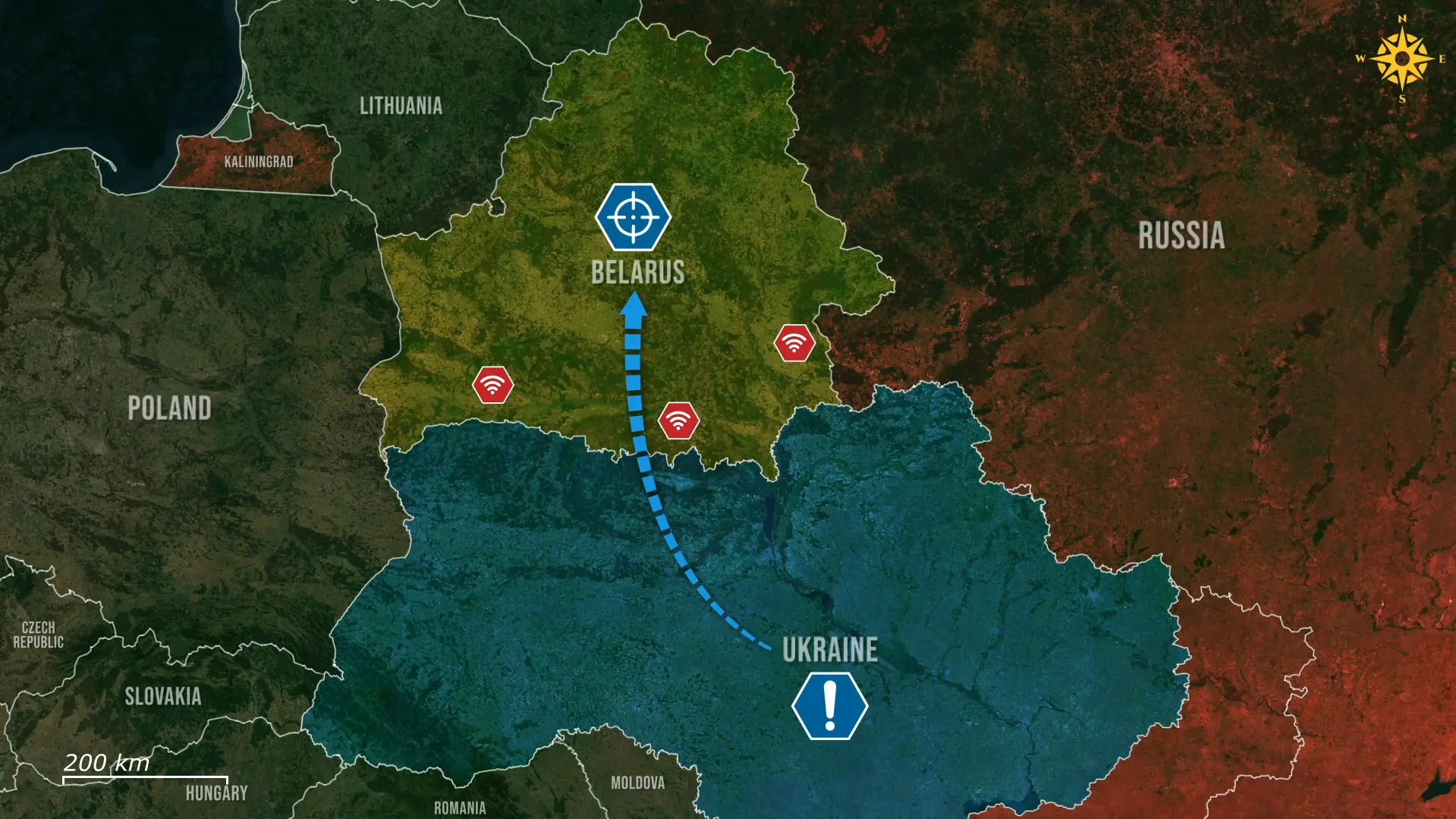
Belarus has now officially crossed the red line, violated the recent agreement with Ukraine, and engaged itself in Russia’s long-range drone campaign, providing relay infrastructure on Belarusian territory to guide Shahed drones in real time.

The latest indication came from a jet-powered, camera-guided Shahed strike against the Ukrainian city of Malyn. Analysis of the drone’s flight path shows it was following and maneuvering closely to the Belarusian-Ukrainian border before turning along a highway toward Korosten and then following a railway line directly to its target. Such precise navigation strongly suggests continuous operator control rather than a simple pre-programmed GPS route. Because the target lay roughly two hundred and sixty kilometers from the Russian border, maintaining direct radio contact from Russia alone would have been technically impossible, as no airborne Russian relay drones were operating in the vicinity.
That leaves ground-based relay stations inside Belarus as the only explanation, as they extend communications range, allowing operators to alter routes in real time to avoid Ukrainian air defenses, evade interceptor drones in modern-style drone dogfights, and adjust onto the target if needed. Without these relay networks, Shahed drones would be limited largely to predetermined waypoints, making them substantially less flexible and easier to intercept.

This development comes after Belarusian President Lukashenko had already received an explicit warning from Kyiv, as President Volodymyr Zelensky demanded that Belarus dismantle any infrastructure supporting Russian drone guidance, warning that Ukraine would destroy the network itself if Belarus failed to act. Ukrainian officials subsequently stated that approximately five hundred military-related targets inside Belarus had already been identified should further assistance to Russian operations continue. As a result, Lukashenko caved to the threat and turned the relays off, only to be forced by Russia to go back on his decision now.
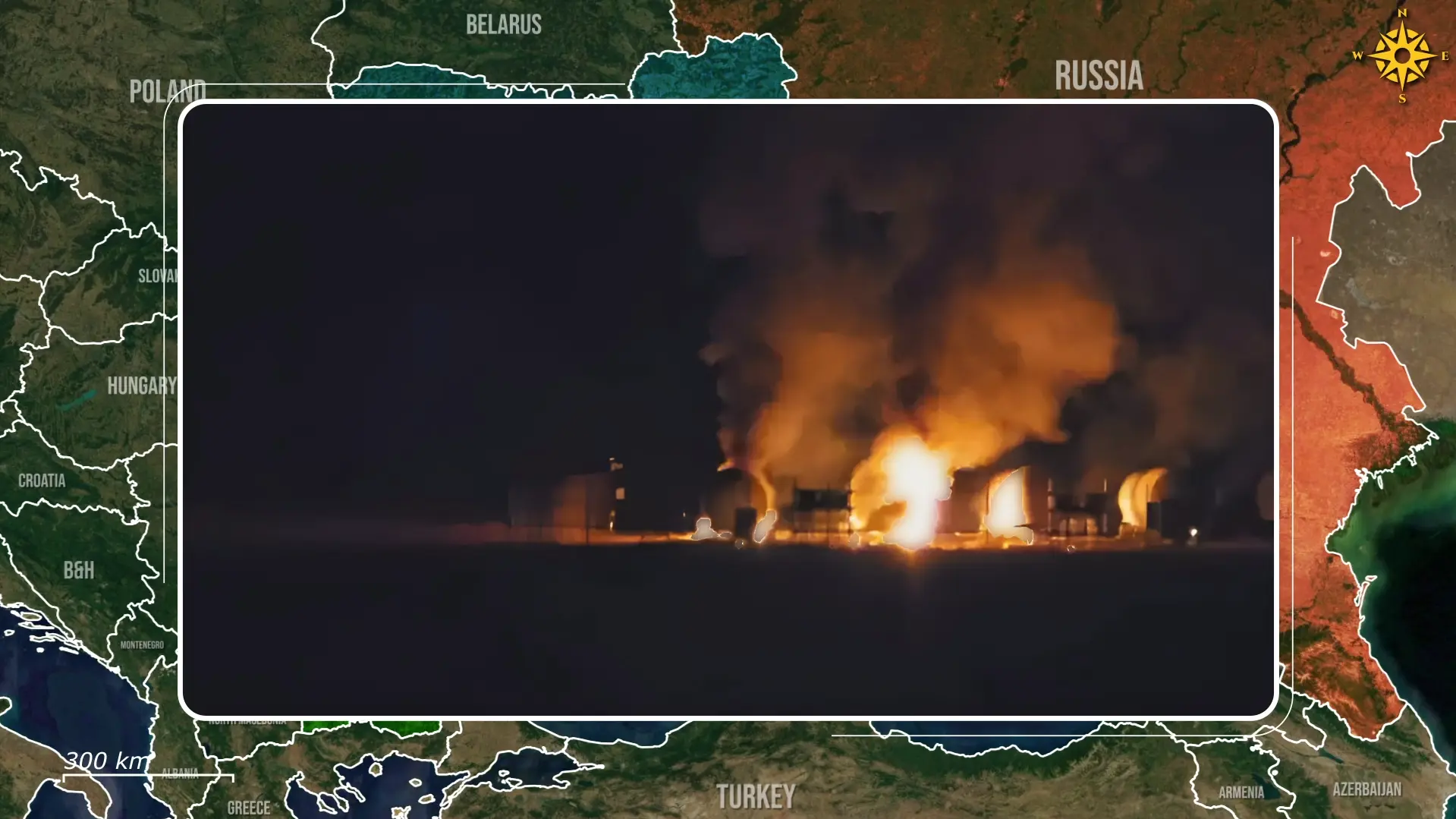
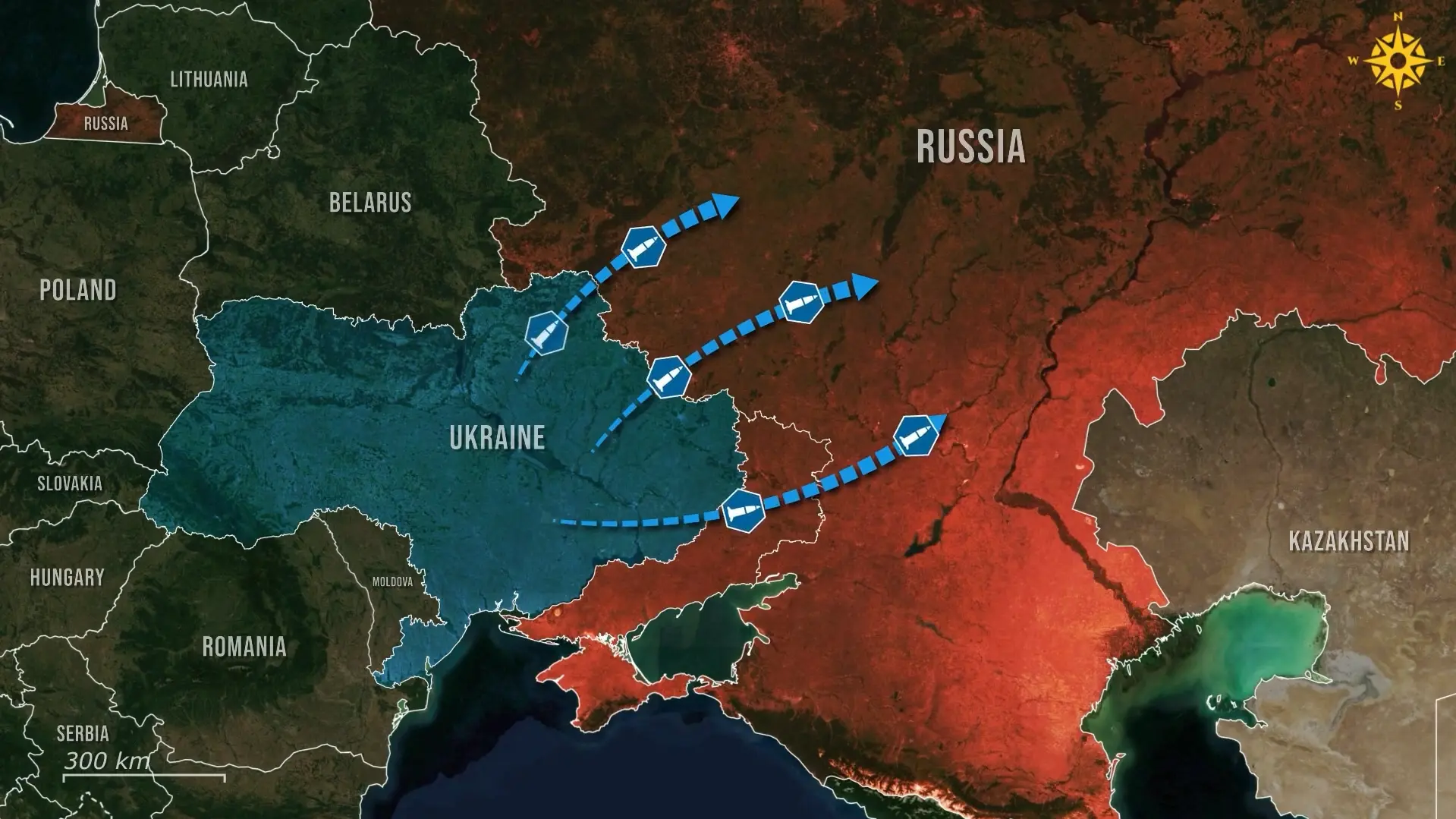
Recent Ukrainian deep-strike campaigns against Russia demonstrate that such threats cannot be dismissed lightly, as Ukraine has repeatedly launched massive drone raids involving up to one thousand long-range drones during a single night, at times simultaneously striking Moscow, Crimea, and other distant regions while overwhelming dense Russian air defenses in all of them.

Belarus possesses nothing comparable to Russia’s multilayered defensive network; with its smaller inventory of S-Three-Hundred systems, limited S-Four-Hundred batteries, Buks, Tors, Pantsirs, and aging fighter aircraft, it would face enormous difficulties responding to Ukraine’s large-scale saturation attacks. The country's proximity to northern Ukraine further compresses reaction times, leaving only minutes to detect, classify, and intercept incoming low- and fast-flying drones before they reach critical infrastructure.
At the same time, provoking Ukrainian retaliation against Belarus may actually serve Russia’s broader interests and be part of a larger Russian strategy. Near-assuredly, Belarus's putting the relays back up has come under pressure from Moscow, despite knowing Ukraine’s threats and the risks to Belarus. Russia hopes that if Ukraine is forced to redirect a portion of its long-range strike campaign toward Belarusian military and relay infrastructure, the pressure on Russian territory could decline. Belarus would effectively become a sacrificial lamb, absorbing Ukrainian retaliation while Russia gained valuable time to replenish interceptor stocks and reorganize its air defenses.
However, this strategy may ultimately fail because Ukraine possesses far more options than drone strikes alone. Communications relays, command nodes, and supporting infrastructure inside Belarus do not necessarily need to be destroyed through large-scale aerial attacks. Cyber operations, electronic warfare, sabotage, or special forces insertions behind enemy lines could neutralize these networks without consuming Ukraine’s long-range strike assets, especially as Ukraine is creating a dedicated Cyber Forces branch within the Armed Forces, with specialized research infrastructure for its units.
Such an approach would allow Ukraine to maintain the overwhelming majority of its drone campaign against Russian oil facilities, logistics hubs, and military infrastructure while simultaneously degrading Belarusian support through covert means. Rather than choosing between Russia and Belarus, Ukraine possesses a wide series of complementary instruments capable of operating in parallel, denying Moscow the breathing space it hopes to create by drawing Belarus further into the conflict.

Overall, Ukraine is prepared for every scenario, and the public announcement that roughly five hundred priority targets have already been selected inside Belarus demonstrates extensive contingency planning long before any retaliation becomes necessary. As Belarus is once again facilitating Russian drone attacks through relay stations, Lukashenko has crossed the very red line Kyiv warned him about weeks earlier. Whether Ukraine ultimately responds through long-range drone strikes, cyber operations, sabotage, or special forces, the fundamental reality remains unchanged: Belarus has knowingly increased its involvement in Russia’s attacks, and there is now little indication that Kyiv intends to leave that decision unpunished.

.jpg)



Comments