

.svg)
Today, there are important updates from the Russian Federation.
Here, all alarms are going off across Russia’s energy and military systems, as Ukrainian forces push forward with the systematic dismantling of Russian oil export. The most devastating Ukrainian strategic strike campaign of the war now endangers more than sixty percent of all Russian oil revenue.
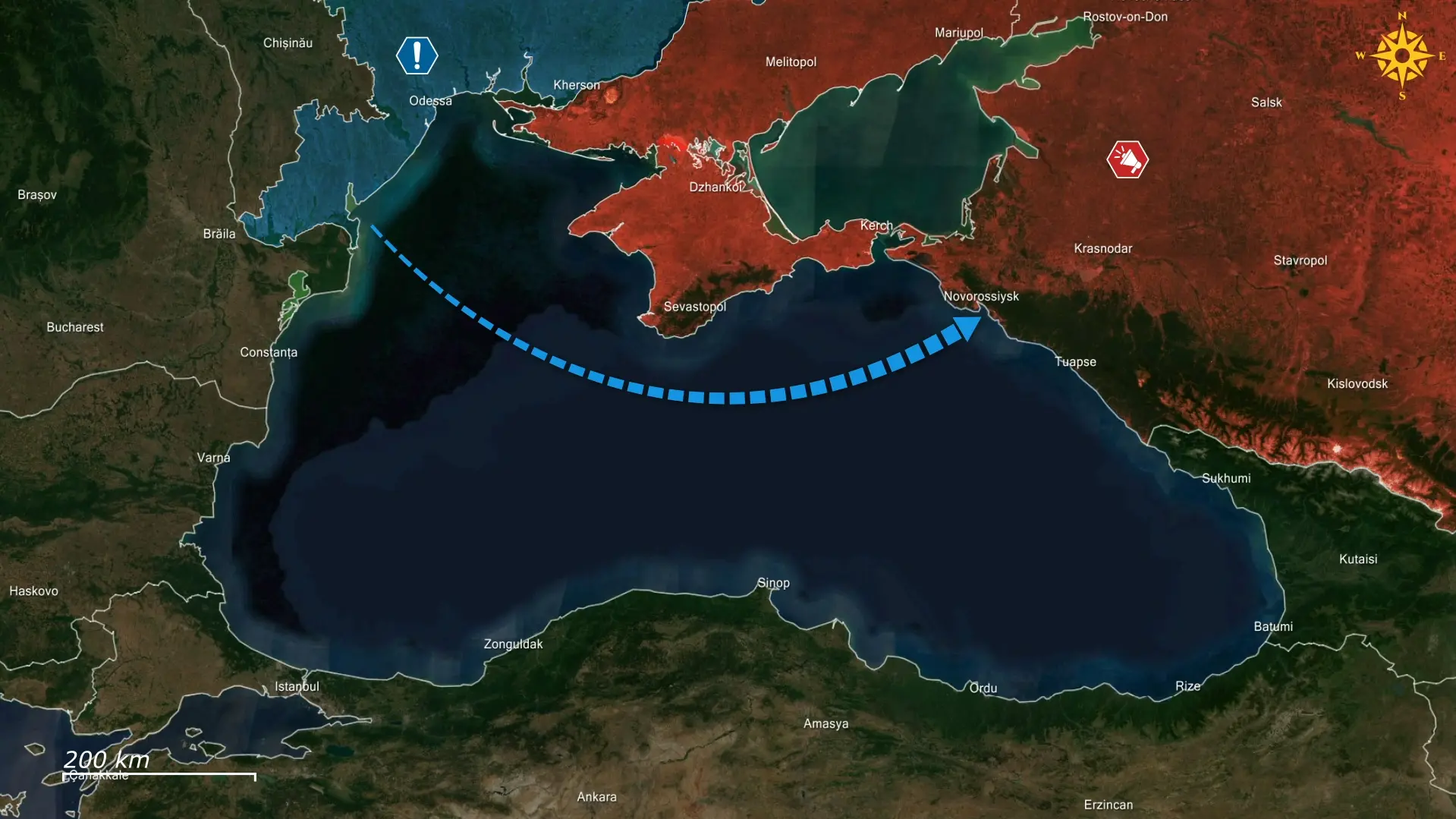
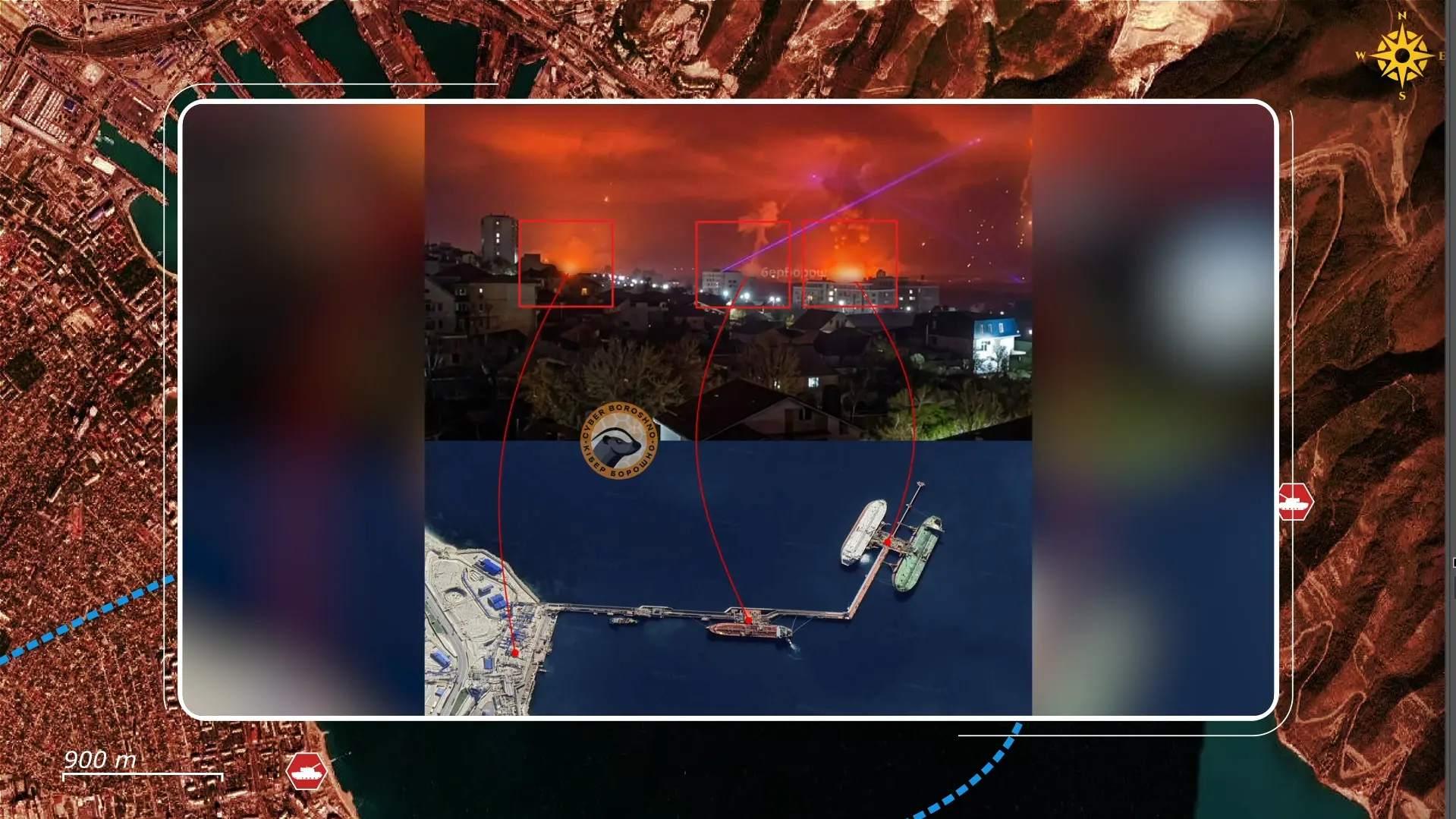
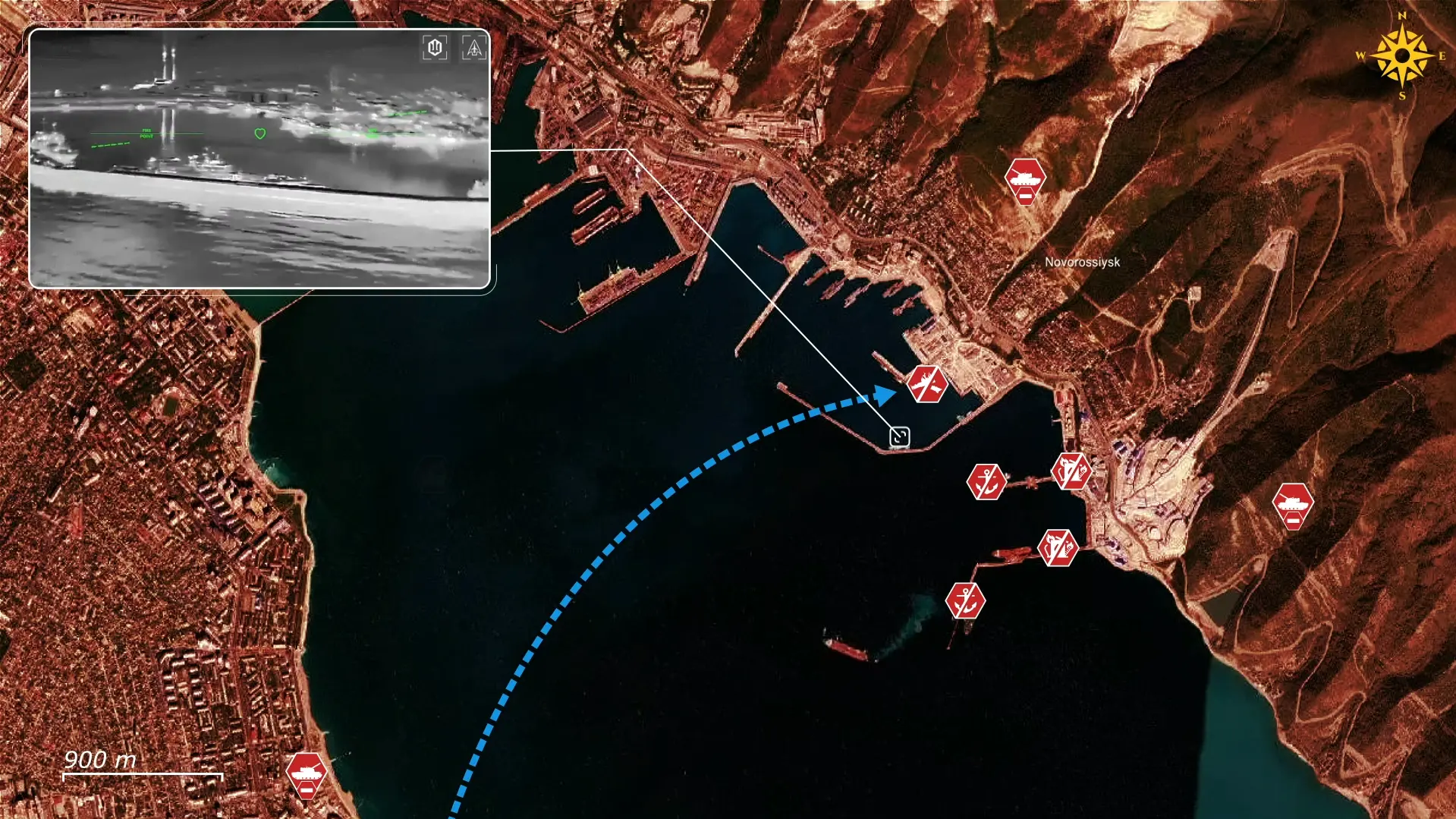
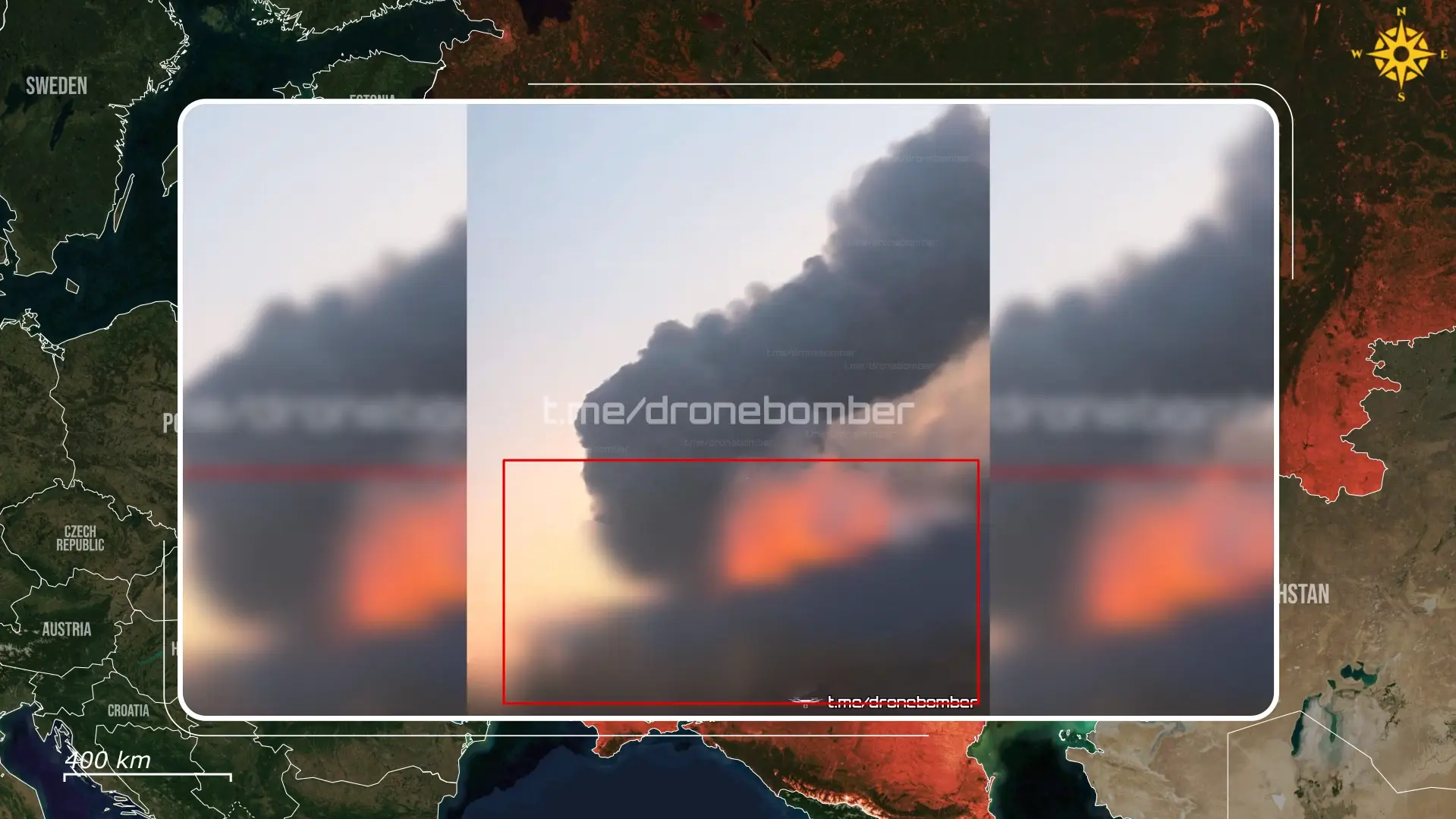
The latest blow came with a massive overnight drone assault on Novorossiysk, Russia’s largest crude-loading hub on the Black Sea. More than 50 long-range drones swarmed the port in a coordinated attack that turned the night sky into a battlefield. For over an hour, Russian air defenses fired relentlessly, with interceptor missiles, anti-aircraft artillery, and searchlights sweeping the skies—yet multiple drones broke through, causing devastation.
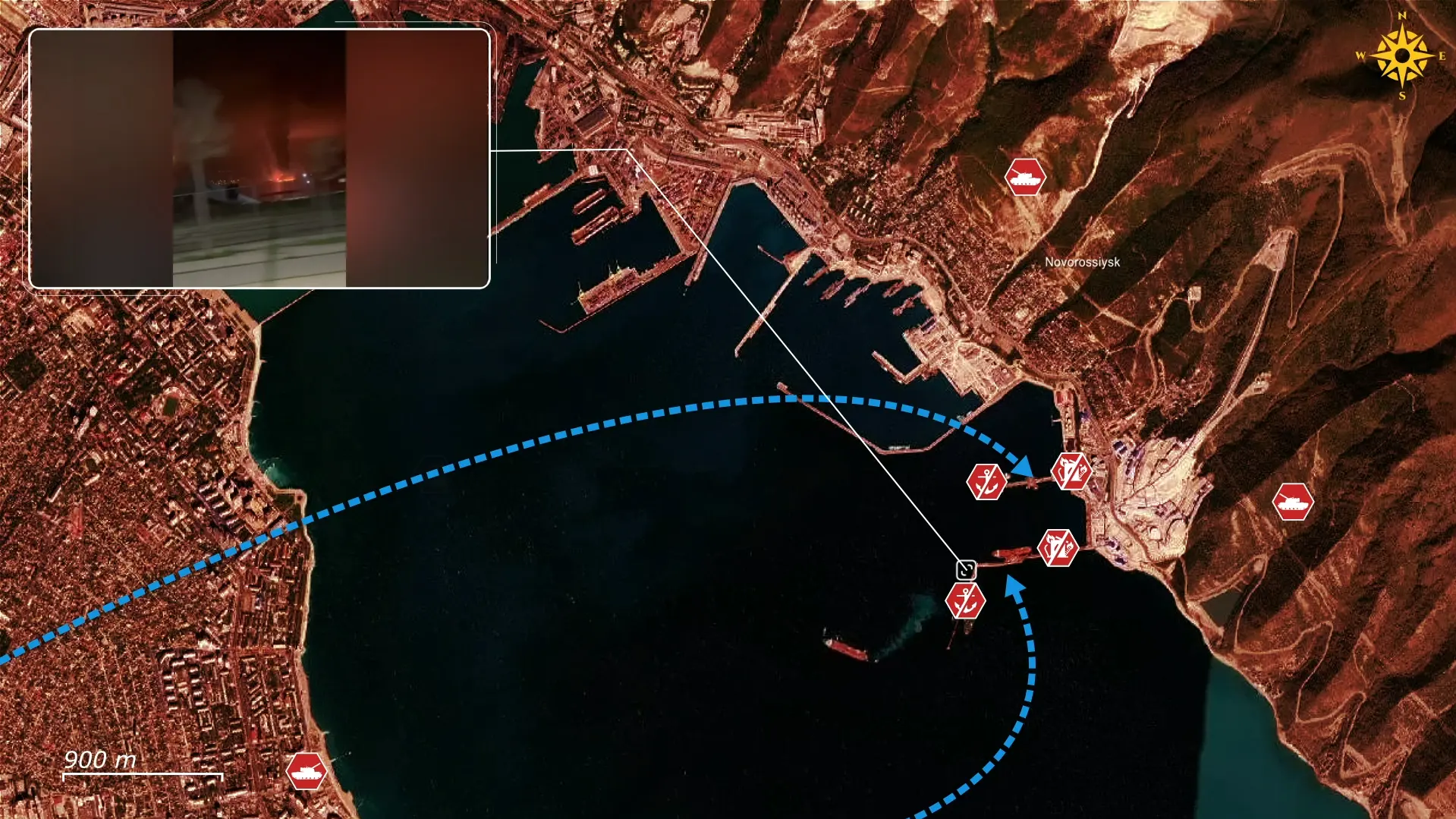
Heavy explosions echoed across the coastline, and by sunrise, four major fires were raging across the Sheskharis oil terminal, with thick black smoke visible from space. The scale of destruction was unprecedented, as six of the terminal’s seven oil-loading stands were damaged, along with critical infrastructure, including pipeline control systems and metering stations.
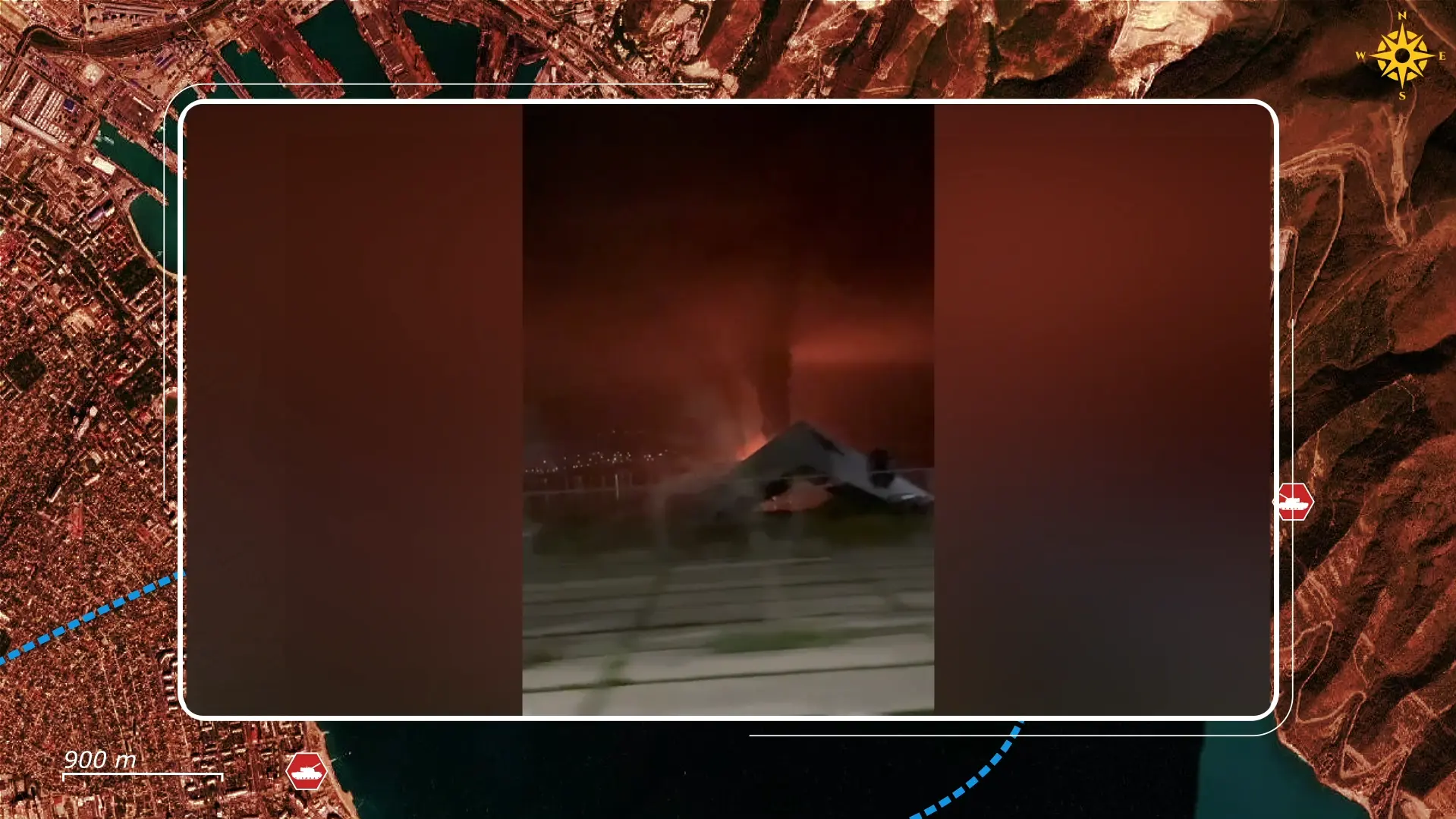
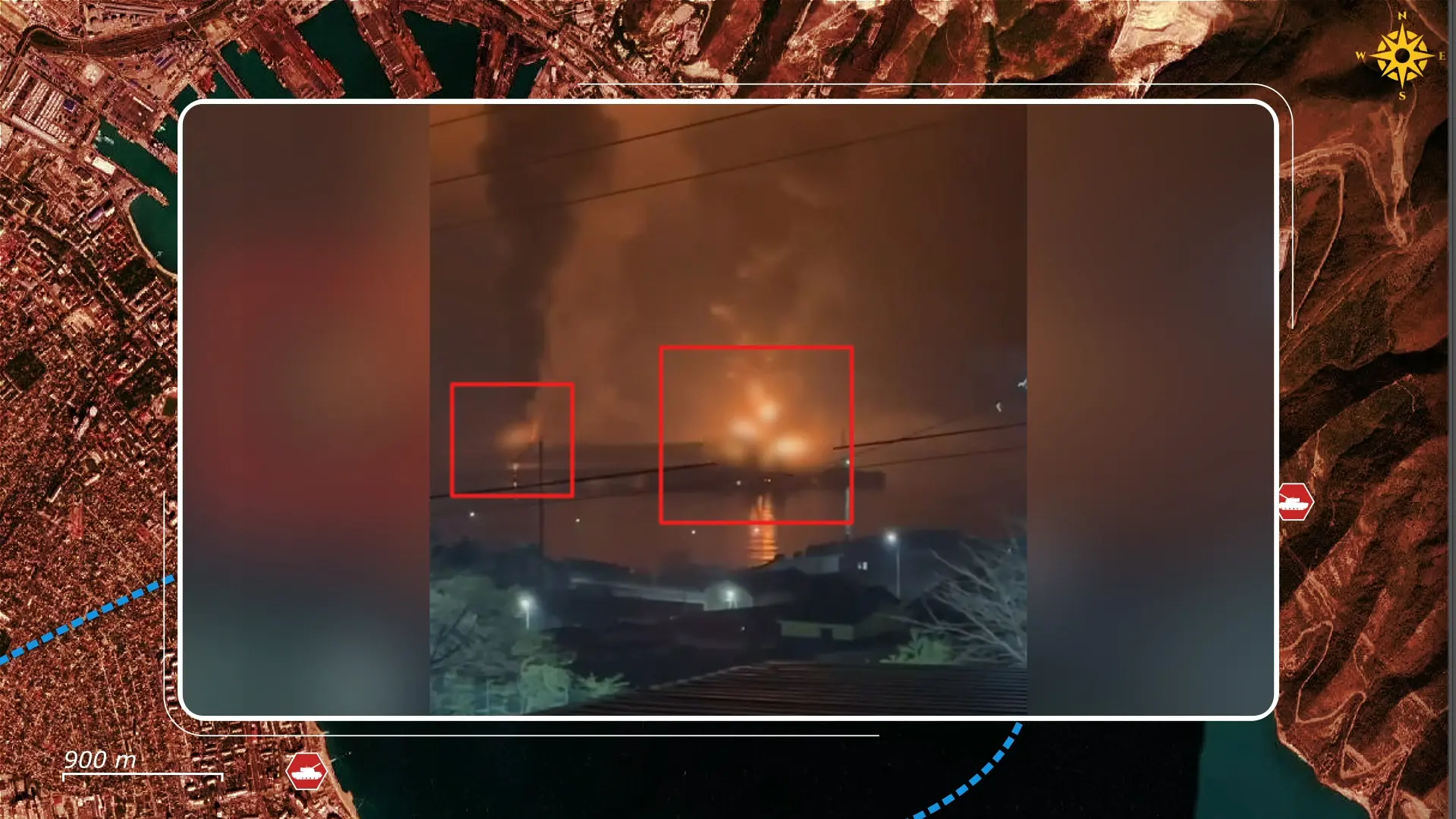
Two major tanker berths for oil loading were hit directly, and fires spread across key loading pipelines. Satellite data confirmed that much of the facility was engulfed in flames, forcing a complete shutdown of operations. The port was effectively taken offline, cutting one of the most important export arteries in a precision attack on the core of Russia’s oil logistics system.
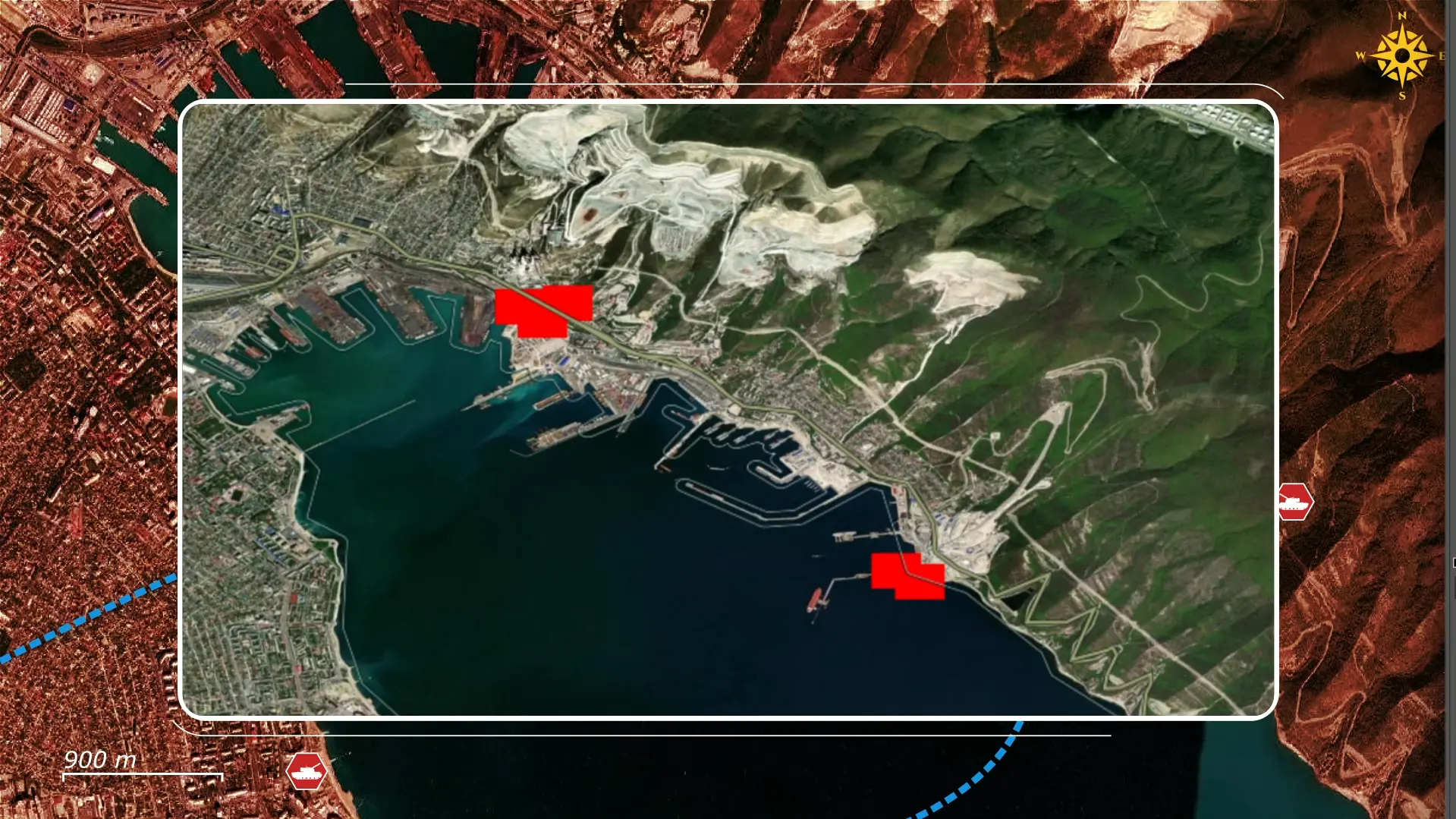
However, this strike is the continuation of a systematic Ukrainian campaign that began days earlier in the Baltic Sea, where repeated attacks on Primorsk and Ust-Luga had already crippled roughly forty to forty-five percent of Russia’s total oil export capacity of around one million barrels per day. Novorossiysk in the Black Sea, meanwhile, accounted for nearly twenty percent of exports, while in peacetime it used to handle up to a third of total Russian crude oil shipments, already heavily degraded by Ukrainian strikes. However combined, these western Russia export hubs still represented nearly two-thirds of Russia’s oil export system.
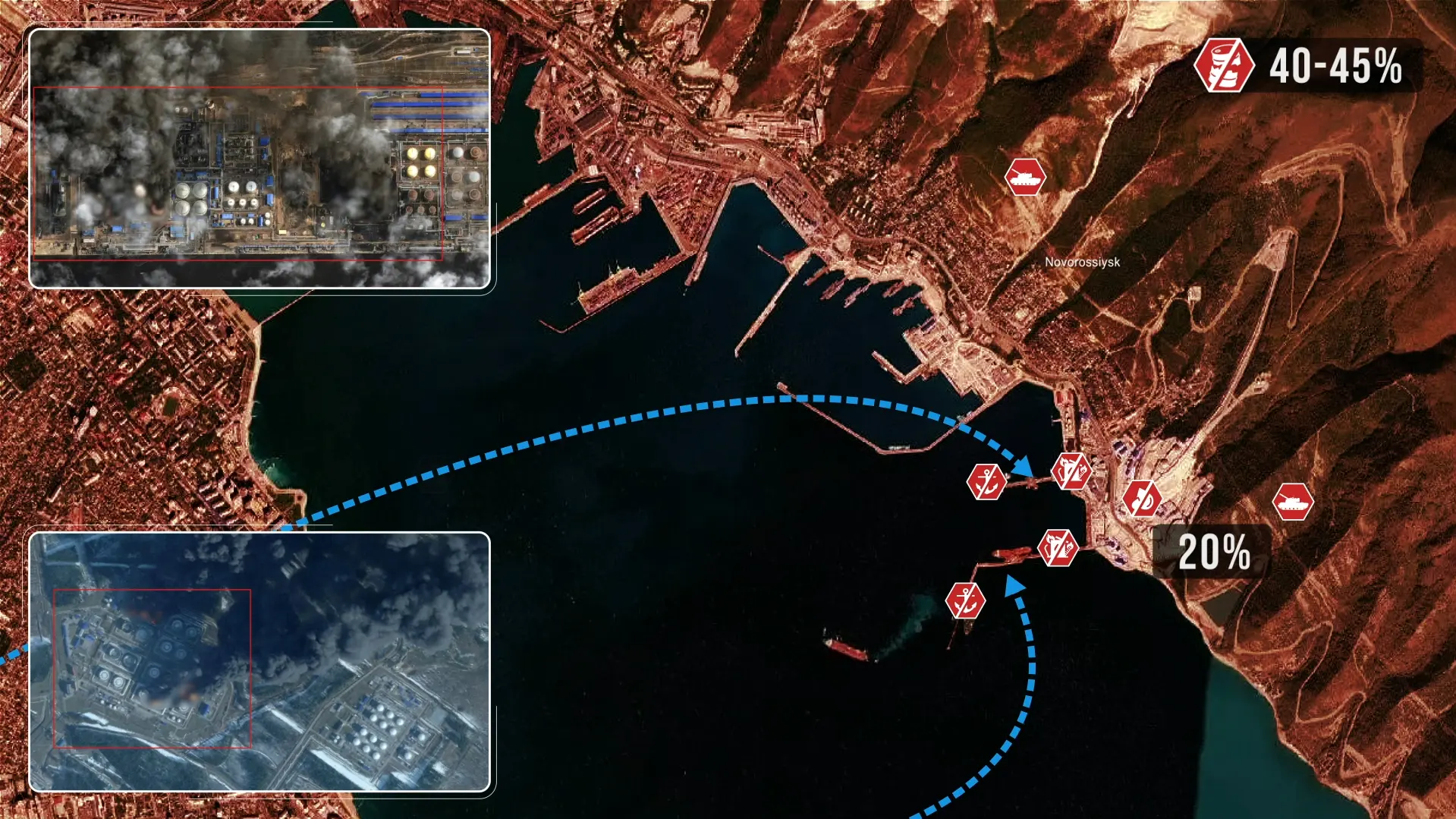
Now, with Novorossiysk burning and Baltic ports already paralyzed, Ukraine has effectively struck at the heart of Russia’s energy lifeline, with rapidly compounding consequences. Tankers are left idle, routes are disrupted, and exports are forced into less efficient alternatives. The financial impact is immediate and severe, with over one billion US dollars in lost revenue within days, at a time when high global oil prices should have been boosting Russia’s war chest. Instead, Ukraine has turned that opportunity into a strategic chokehold.
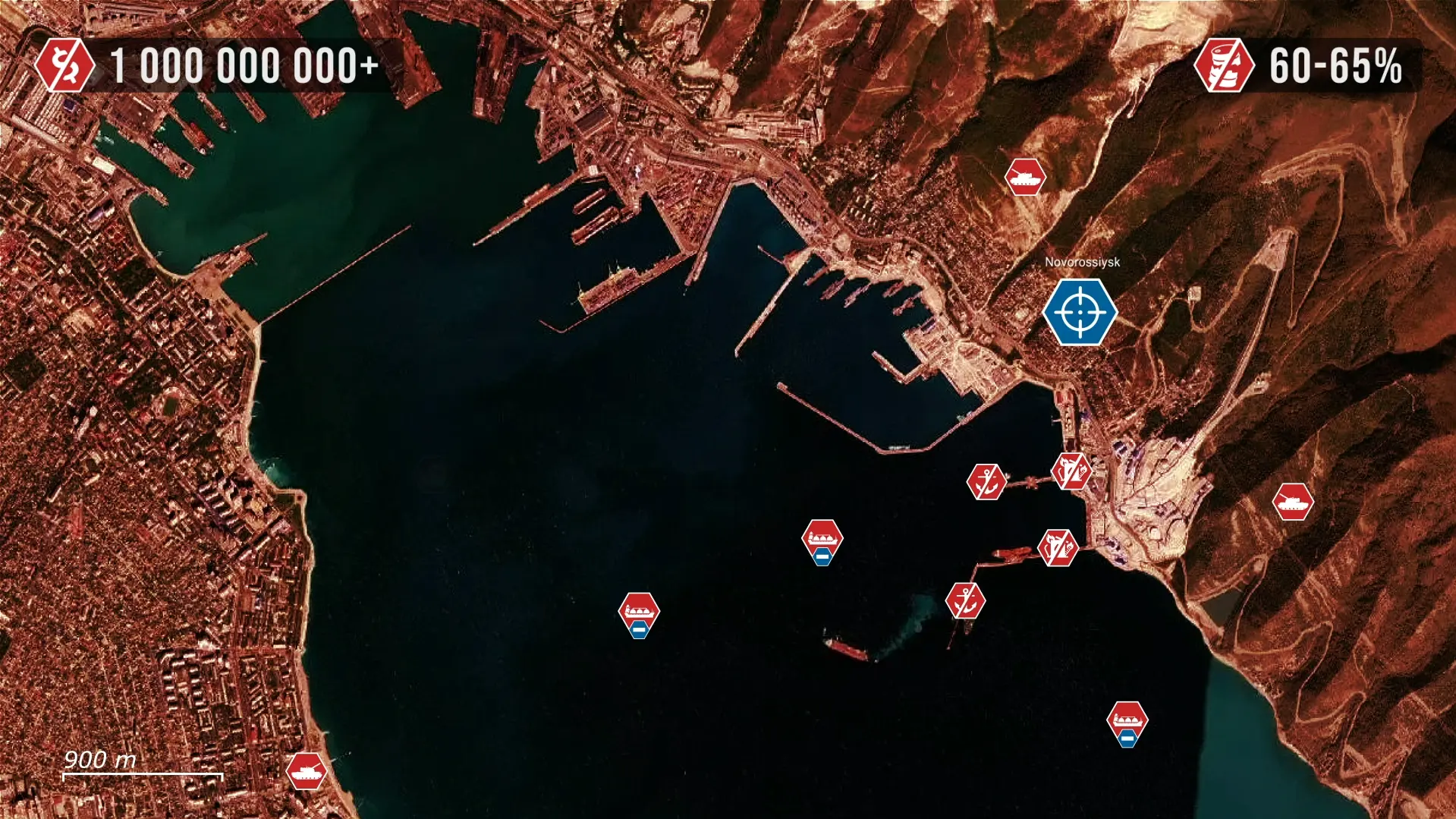
At the same time, Ukrainian forces expanded the operation beyond economic targets, exploiting the strain on Russian air defenses. As drones penetrated deep into Novorossiysk, parallel strikes unfolded, and high-value military targets were struck in rapid succession. Ukrainian drones hit Kaliber cruise missile launchers on frigates in the Novorossiysk harbor, damaging the Admiral Makarov and Admiral Grigorovich, forcing them to activate onboard air defenses, although without any success.
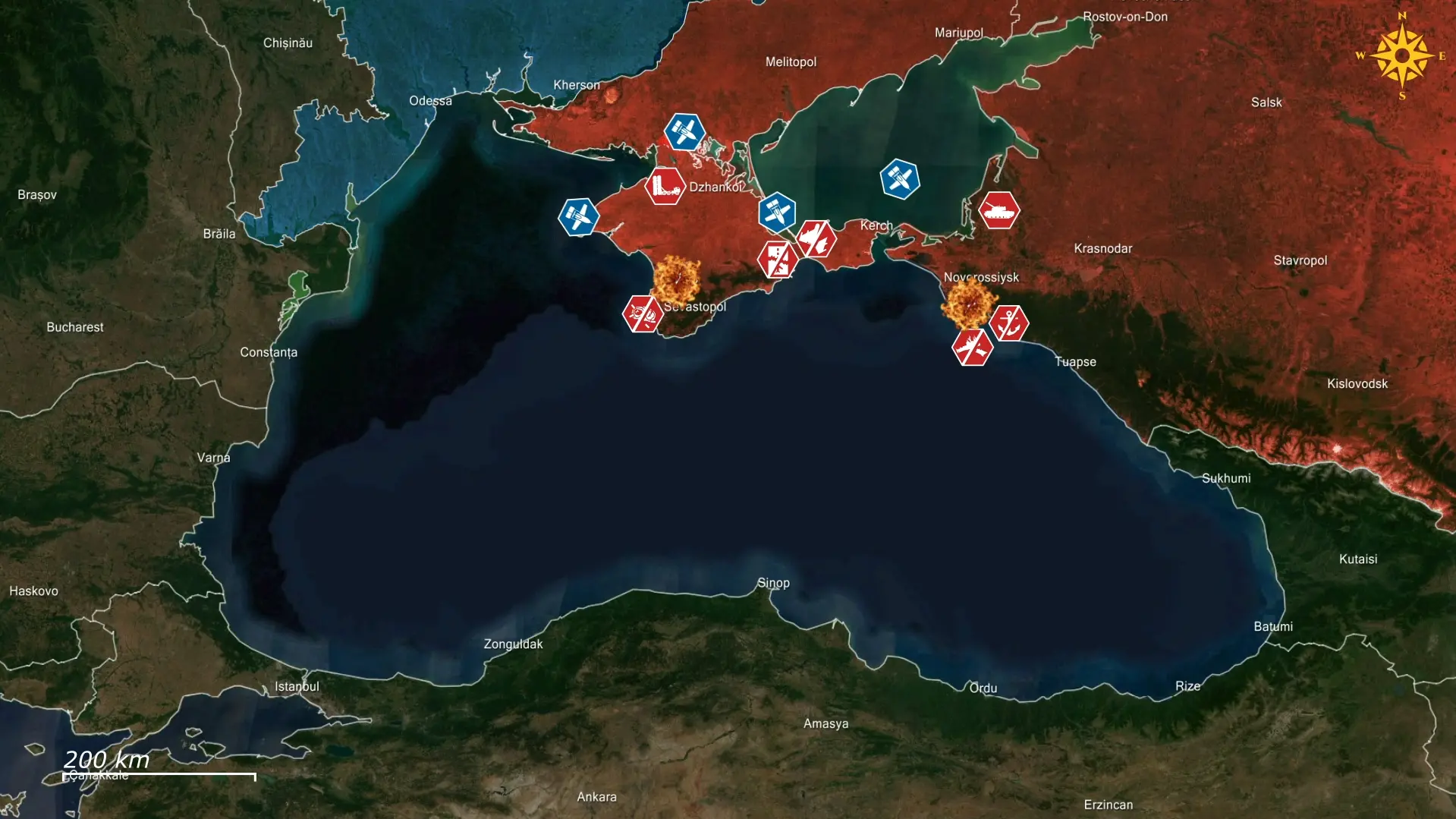
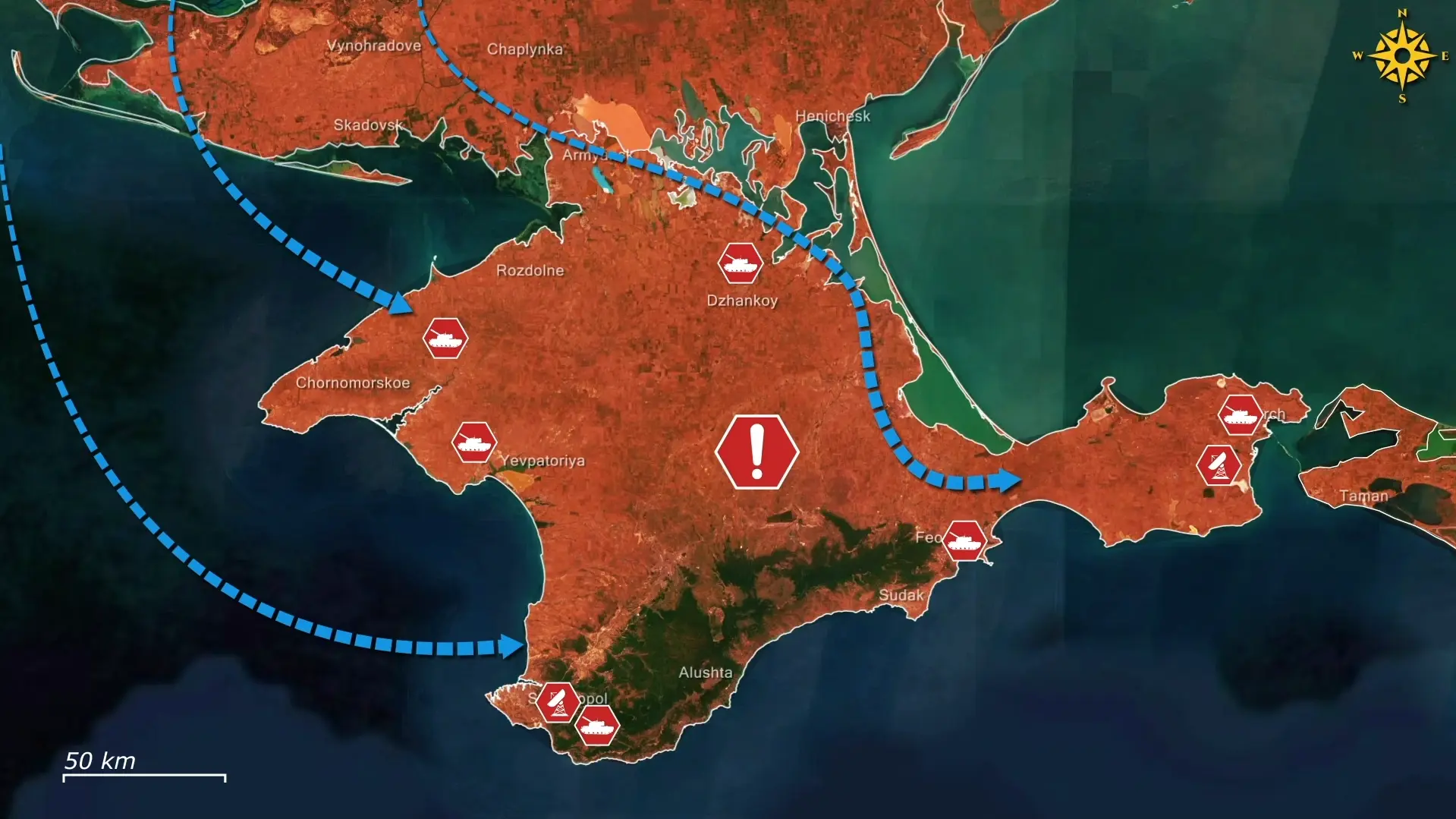
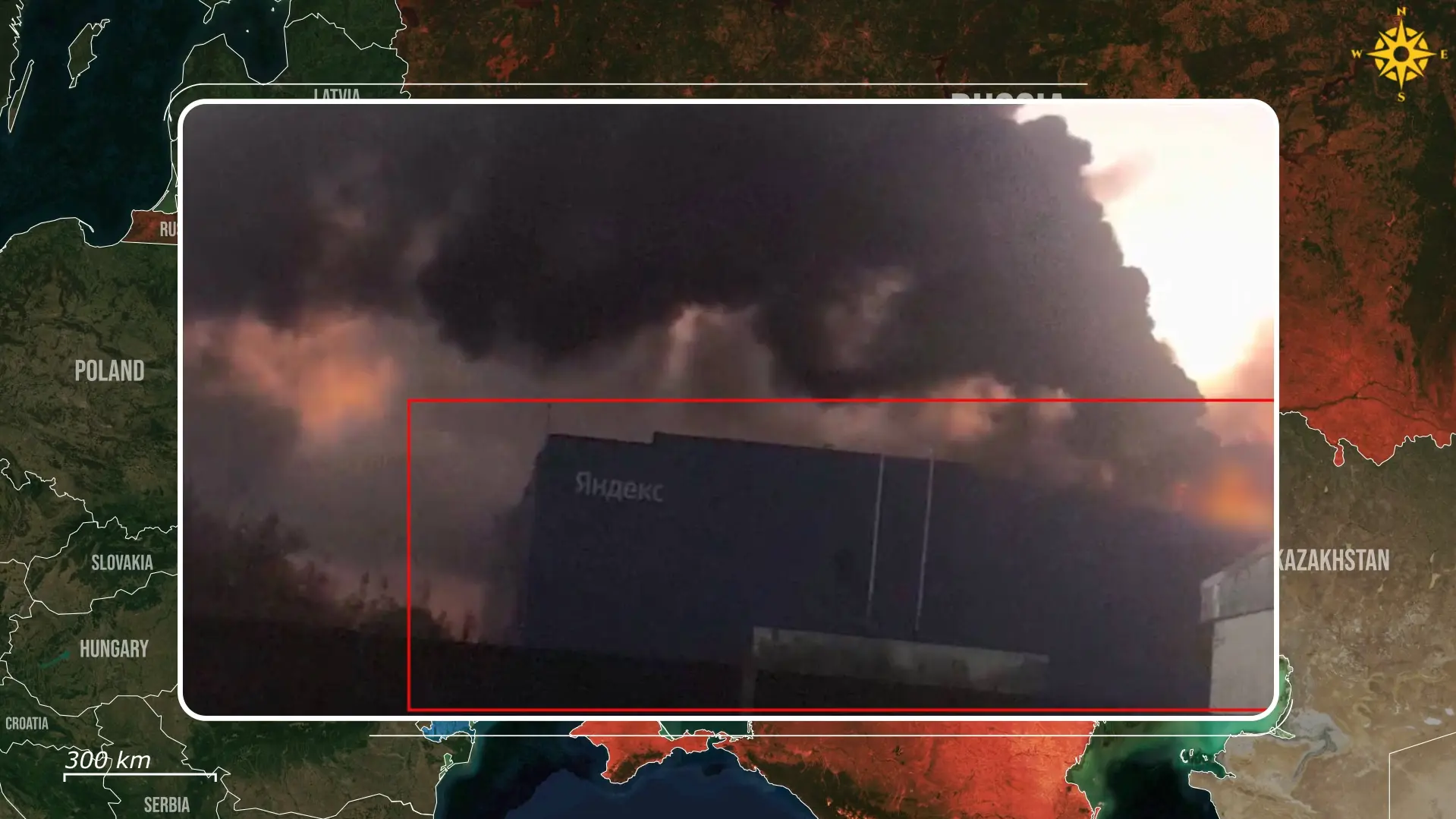
Another major airfield at Kirovske was devastated, destroying advanced Orion reconnaissance drones, a military transport aircraft, and critical radar systems. Coastal missile systems were also targeted, with Bastion launchers and even Zircon hypersonic cruise missiles destroyed before they could be deployed against Ukrainian cities. Ukrainian special forces simultaneously struck naval drone operator bases in Sevastopol, further degrading Russia’s maritime capabilities.
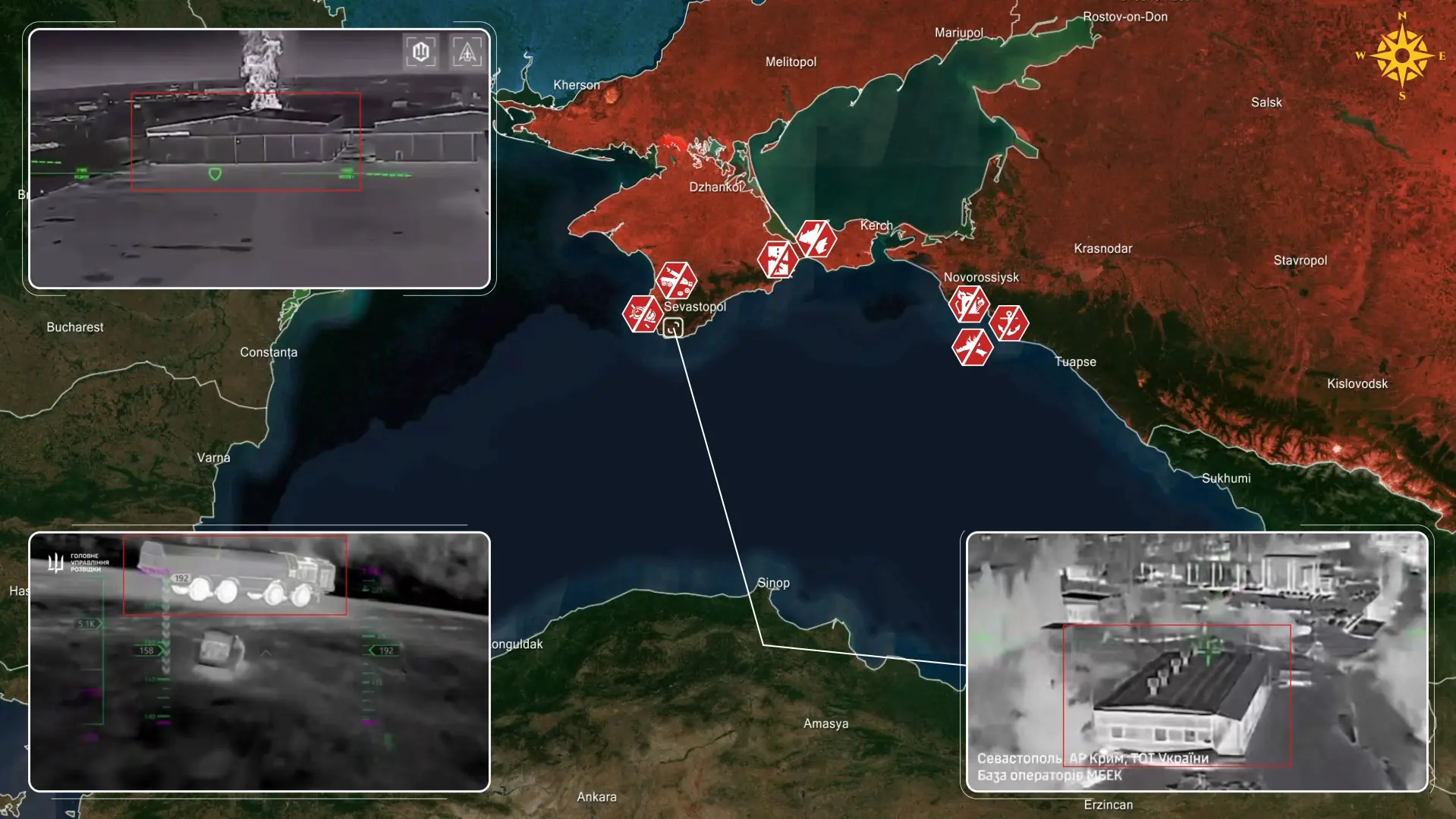
As Russian air defenses are stretched across multiple fronts—protecting ports, cities, and military assets—they are no longer able to effectively shield key infrastructure. This created openings that Ukrainian forces immediately exploited, forming corridors for repeated strikes and amplifying the overall impact by hitting several key targets in one location, like in Novorossiysk.
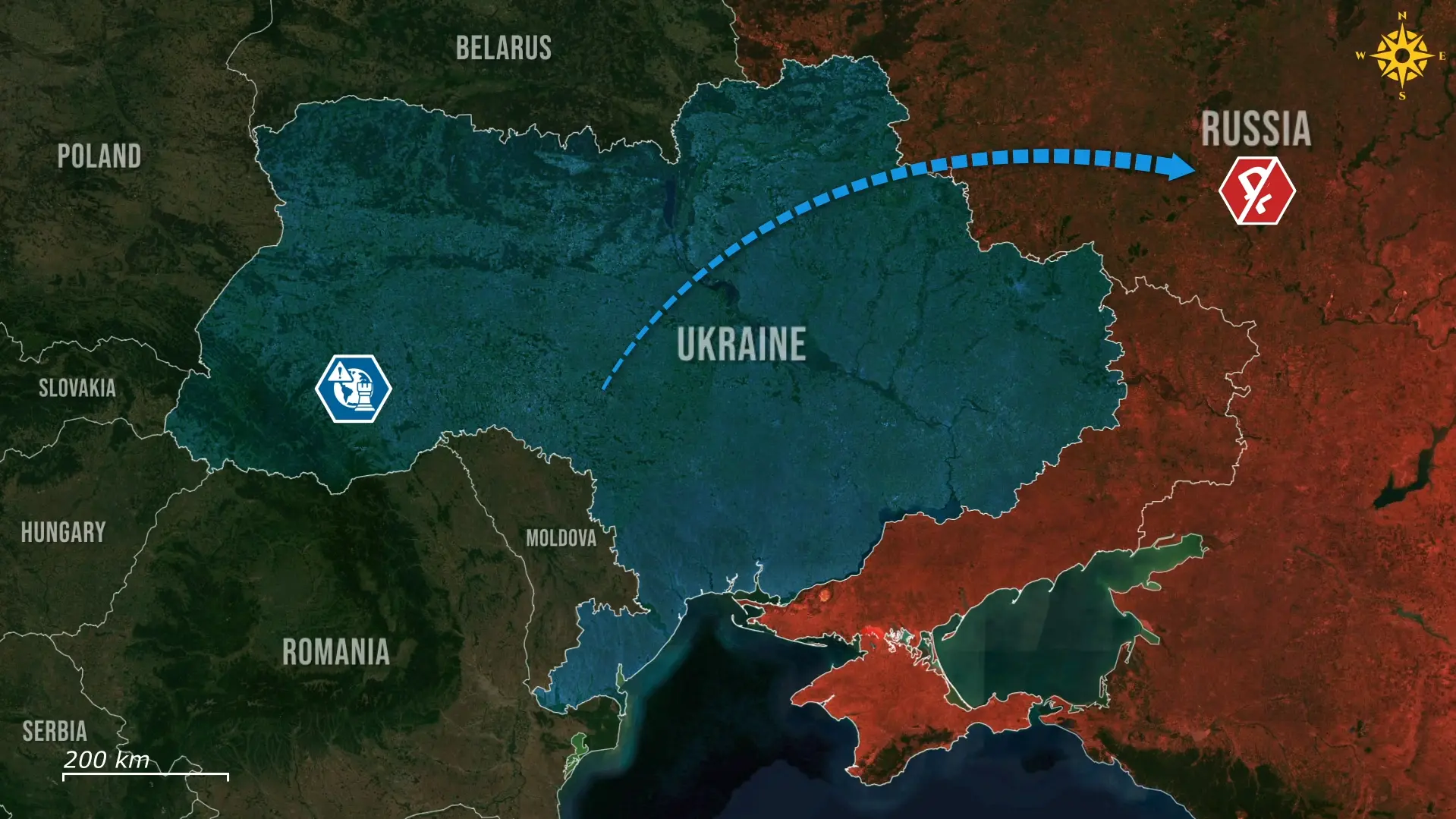
Overall, this Ukrainian campaign represents a decisive strategic shift at the right moment when global oil prices surged due to the Iran war, and Russia stood to gain massive additional revenue. However, by systematically targeting export infrastructure in both the Baltic and Black Seas, Ukraine has undermined this advantage, and if the damage remains unresolved, Russian oil revenues could be cut by as much as seventy percent, turning a potential financial windfall into a crisis. The scale, coordination, and timing of these strikes speak of a deliberate effort to dismantle Russia’s economic backbone that is working.

.jpg)

Comments