

.svg)
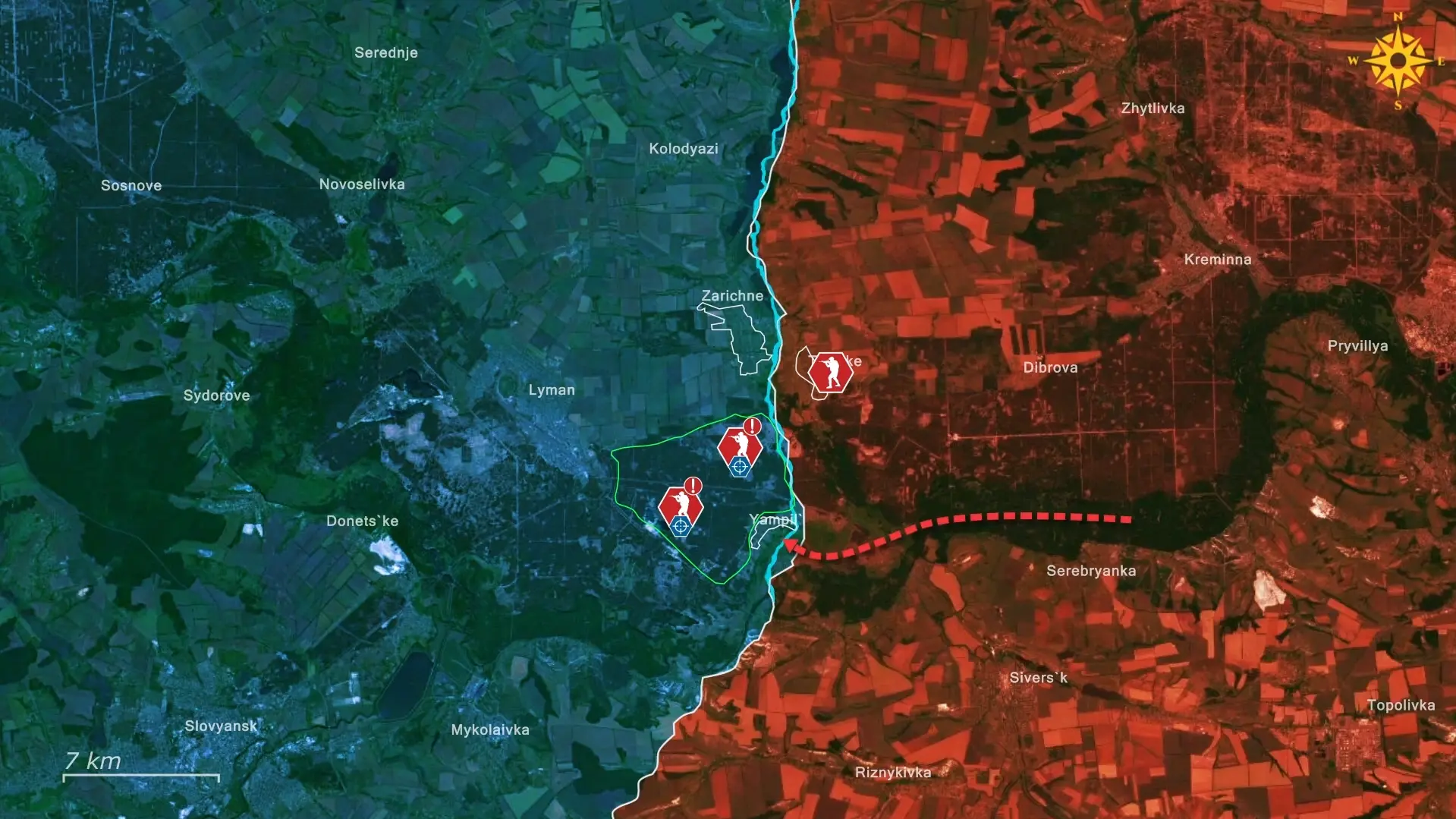
Today, there are interesting updates from the Li-man direction.
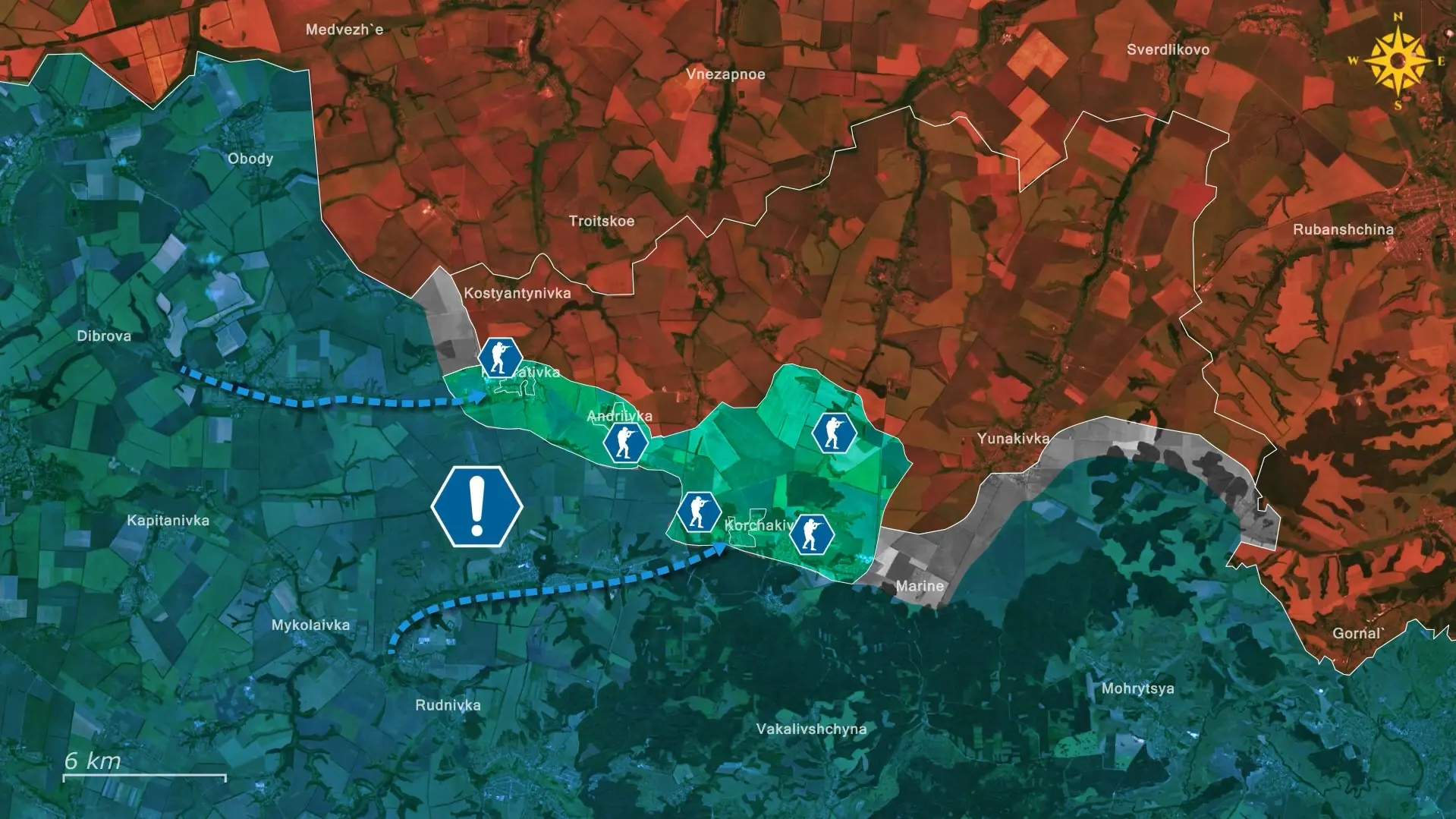
Here, Ukrainian forces launched a major mechanized assault against the Russian bridgehead north of Li-man. After the Russians had spent over a year trying to outflank the Ukrainian town, the Ukrainians are threatening to starve out and collapse the entire salient in less than a month.

Russia’s lack of advance in this sector is due to it being defended by the Ukrainian Third Army Corps, so the Ukrainian command has recognized that the Russian bridgehead had become strategically vulnerable, and the Ukrainian plan switched from mere containment to cutting it off entirely.
The Russian bridgehead is supplied mainly through its northern section, where the Zherebets River is narrower, but Russian logistics are still under constant pressure from Ukrainian artillery and drone strikes. Additionally, Russian armored vehicles cannot reliably cross the river, while Russian artillery support has been degraded by persistent Ukrainian reconnaissance and counterbattery operations. Ukrainian planners identified these weaknesses and designed an operation specifically aimed at exploiting them.

The Ukrainian attack itself was meant to be launched from the north through the area around Ridkodub, where superior road infrastructure would offer Ukrainian mechanized forces an opportunity to move rapidly before Russian defenders could react. The plan called for armored vehicles to penetrate through the outskirts of the village and then advance along two tree lines that provided partial cover from Russian observation to deploy forces in the larger forested areas between Nove and Katerynivka, which can be used concealed infiltration routes into both settlements with the support of FPV, artillery fire and reconnaissance drones.
If we take a look at the topographic map, we will see that capturing this zone would place Ukrainian forces on the central high ground of the bridgehead. From that position, they could threaten Russian forces in multiple directions while simultaneously controlling the primary supply corridor feeding the entire bridgehead. If successful, the operation would place all Russian troops west of the river in a highly vulnerable position, forcing them to rely increasingly on supplies through aerial drone deliveries for sustainment. However, even that would be problematic given the fact that the Third Army Corps possesses some of Ukraine’s most capable anti-drone and electronic warfare units integrated directly into the corps structure.

Geolocated footage released by Russian units defending the sector showed how the Ukrainian assault unfolded, with Ukrainian armored columns advancing with Cobra-Two mine-resistant vehicles and Ukrainian-produced BTR-Four-E armored personnel carriers. Russian forces initially struggled to respond, with their standard FPV drones proving largely ineffective against the intense Ukrainian electronic warfare coverage shielding the attacking force. This forced Russian operators to switch to less-widely available fiber-optic drones, which are immune to radio jamming but require additional preparation and deployment time.
That delay in effective response proved critical, as the geolocated Russian footage confirms that Ukrainian forces managed to advance between three and five kilometers before the first Russian drones reached the assault groups. One video shows a Ukrainian armored personnel carrier being struck by a drone only after it had already completed its mission and was returning toward Ukrainian positions, notably after having successfully deployed its infantry dismounts.

Additional footage shows Ukrainian soldiers moving through the tree lines and establishing positions inside the contested area while Russian drones attempt to engage them. With Ukrainian releases delayed for operational security reasons, we have to rely on Russian reporting that fighting in the area remains ongoing, adding that Ukrainian troops succeeded in reaching and capturing territory that directly threatens Russian supply routes. As a result, the bridgehead is already experiencing growing logistical difficulties, and isolated Russian units may soon face a difficult choice between retreating closer to the river crossings or remaining in increasingly unsustainable positions.
Yet, official Russian sources attempted to portray the battle very differently, claiming that eighty Ukrainian soldiers had been killed within thirty minutes and that numerous Western-supplied vehicles had been destroyed. However, more reliable Russian military analysts were notably a lot less optimistic, and it was quickly revealed that some of the footage used to illustrate the supposed Russian defensive success originated from battles fought last summer over a year ago, creating a sharp contrast between the official Russian narrative and battlefield realities that even Russian sources have to concede to.

Overall, Ukraine’s combination of favorable terrain, strong electronic warfare capabilities, and rapid mechanized maneuver allowed it to achieve tactical surprise and penetrate deep into the northern flank of the Russian bridgehead. While Ukrainian forces undoubtedly suffered casualties during the assault, Russia’s delayed response allowed them to establish positions that now threaten the entire logistics network supporting the bridgehead. With Ukrainian troops continuing counterattacks and Russian supply routes increasingly endangered, the future of Russia’s long-contested foothold west of the Zherebets River has suddenly become far less certain.


.jpg)

Comments