

.svg)
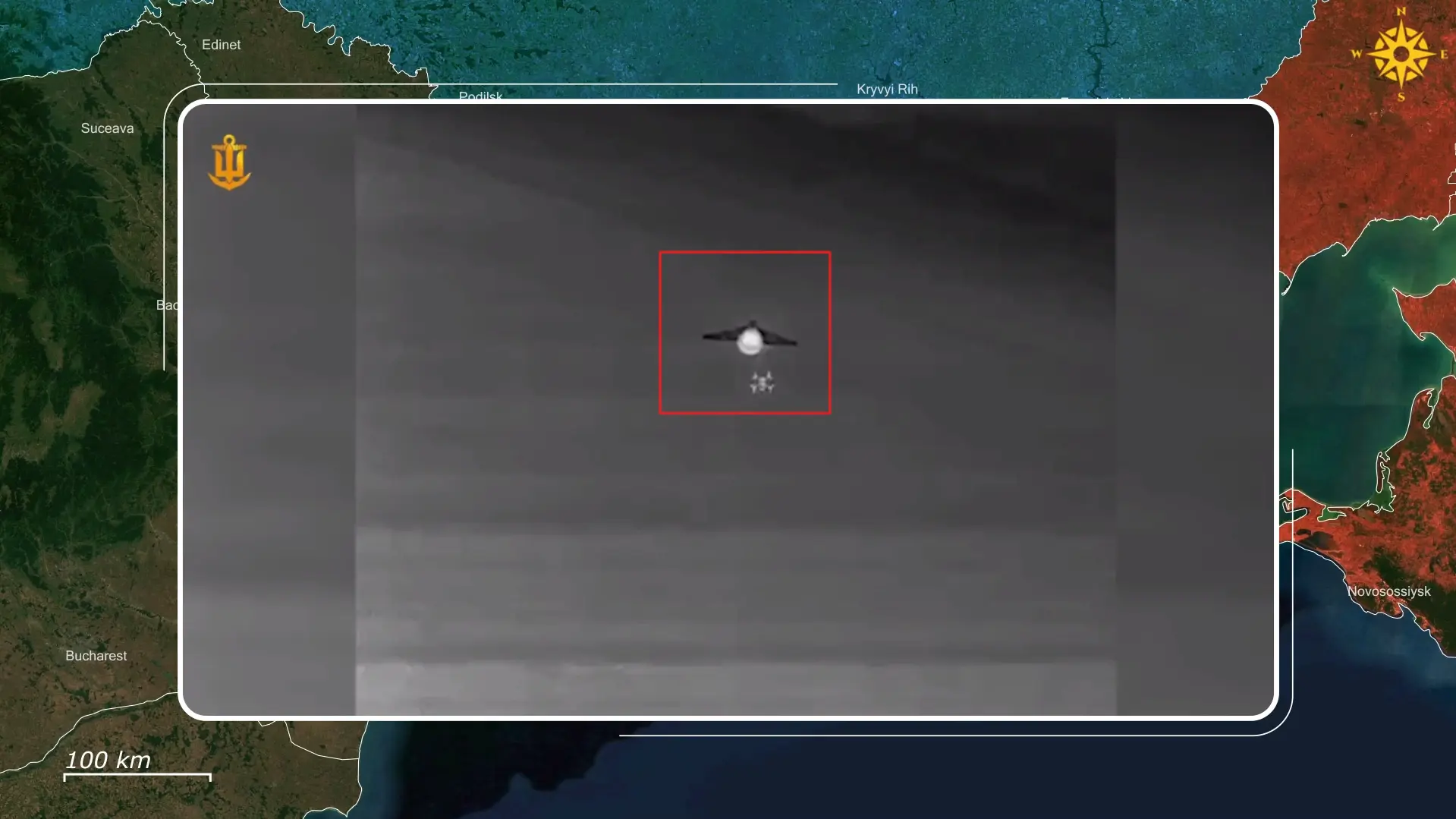
On September sixth, the Russian flagged cargo ship Lady Maria was struck repeatedly by drones while sailing in the Mediterranean near Crete. Video footage showed several drones dropping munitions onto the vessel, with a small fire breaking out on deck. The ship had departed Oran, Algeria, and was reportedly heading towards Syria.
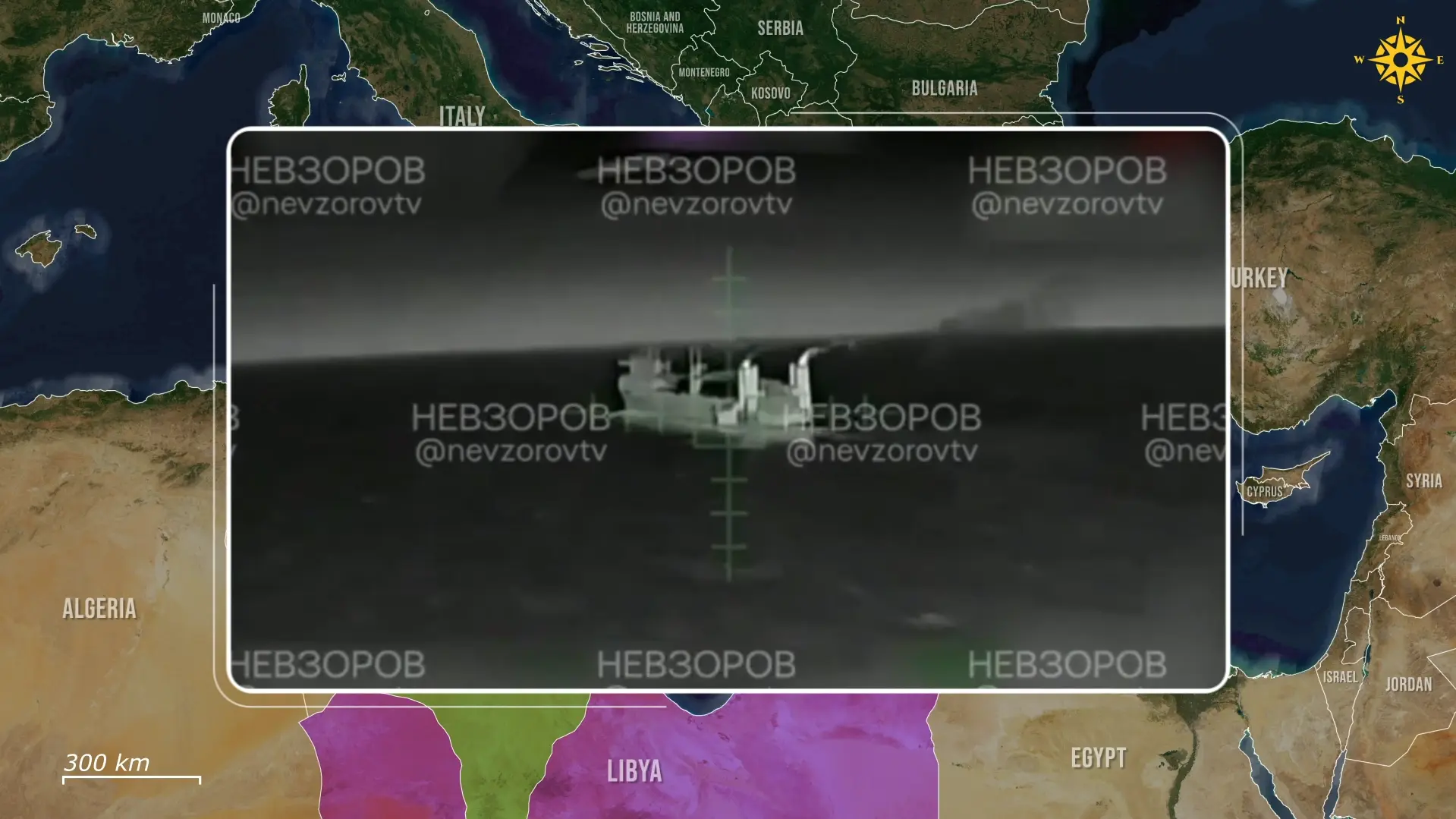
The Lady Maria is linked to Russia’s MG Flot and has been sanctioned by both the United States and Ukraine. Ukrainian military intelligence identifies the vessel as being involved in transporting military cargo and weapons for Russia, including on the Novorossiysk Tartus route. The identity of the attackers has not been officially confirmed, however, reports note that the strike was most likely done by Ukrainian drones and claimed they may have been launched from Libya. If confirmed, the attack would suggest that Ukraine has found a way to launch drones from Libya, placing Russian linked shipping within operational range deep inside the Mediterranean.
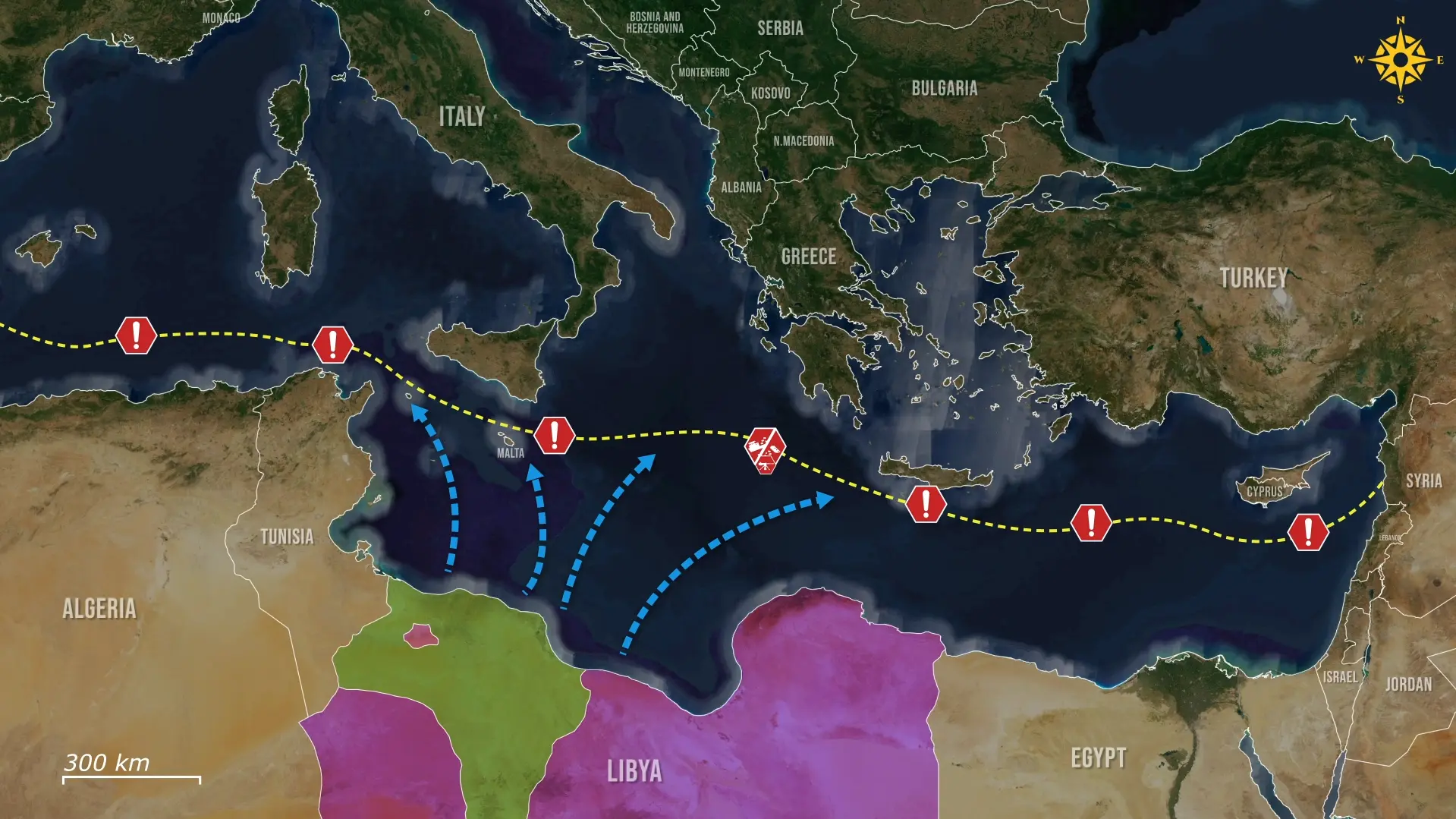
The reports about the Lady Maria strike become more significant when viewed alongside earlier reporting about a Ukrainian military presence in western Libya. In April, French broadcaster RFI reported that more than two hundred Ukrainian officers and specialists were operating at three locations under an arrangement with the Tripoli based government. The reported sites were in Misrata, Tripoli, and Zawiya. Most of the personnel were reportedly based at facilities in Misrata, while the site near Zawiya was described as being equipped to launch air and sea drones. The location is important because Zawiya sits directly on Libya’s Mediterranean coast, roughly fifty kilometers west of Tripoli. A facility there would provide Ukrainian operators with direct access to the Mediterranean without requiring drones to travel from Ukraine. This was not the first strike, as Libyan officials reportedly linked the March attack on the Russian linked Arctic Metagaz to Ukrainian operatives based in Tripoli.

In December two thousand twenty five, Ukraine struck the Qendil, a Russian linked shadow fleet tanker, in the Mediterranean more than two thousand kilometers away from Ukrainian territory. The SBU said the vessel suffered critical damage and could no longer operate, making the attack the first known Ukrainian strike against a shadow fleet ship in the Mediterranean. Only a few months later, another Russian linked vessel was hit near Libya. In March 2026, the LNG tanker Arctic Metagaz suffered major damage in an attack that Russia attributed to Ukrainian sea drones. Ukrainian involvement was not officially confirmed, but Libyan officials later told AP that Ukrainian operatives had launched the attack from a facility in Tripoli. Taken together, the Qendil, Arctic Metagaz and Lady Maria strikes point to a developing campaign in which Ukrainian attacks against Russian linked shipping have appeared repeatedly across the Mediterranean.

Libya matters because it could give Ukraine a new launch and support point much closer to Russian linked shipping routes. From western Libya, drones would not need to cross thousands of kilometers from Ukraine before reaching the Mediterranean. This could allow Ukrainian operators to sustain a presence close to the sea lanes used by Russian linked tankers and cargo ships, giving them more opportunities to monitor and target vessels moving through the region. Oil tankers and ships suspected of carrying military supplies could therefore face a persistent threat rather than an isolated attack. Russia would have to consider the possibility of attacks along routes that were previously seen as relatively secure. It could respond by increasing protection around vulnerable ships, deploying additional surveillance, or rerouting vessels farther from the Libyan coast. Each option would increase the cost, complexity, or duration of Russia’s maritime logistics. Libya could therefore make Russian ships in the Mediterranean vulnerable in waters where Moscow may have previously expected them to operate with less risk.
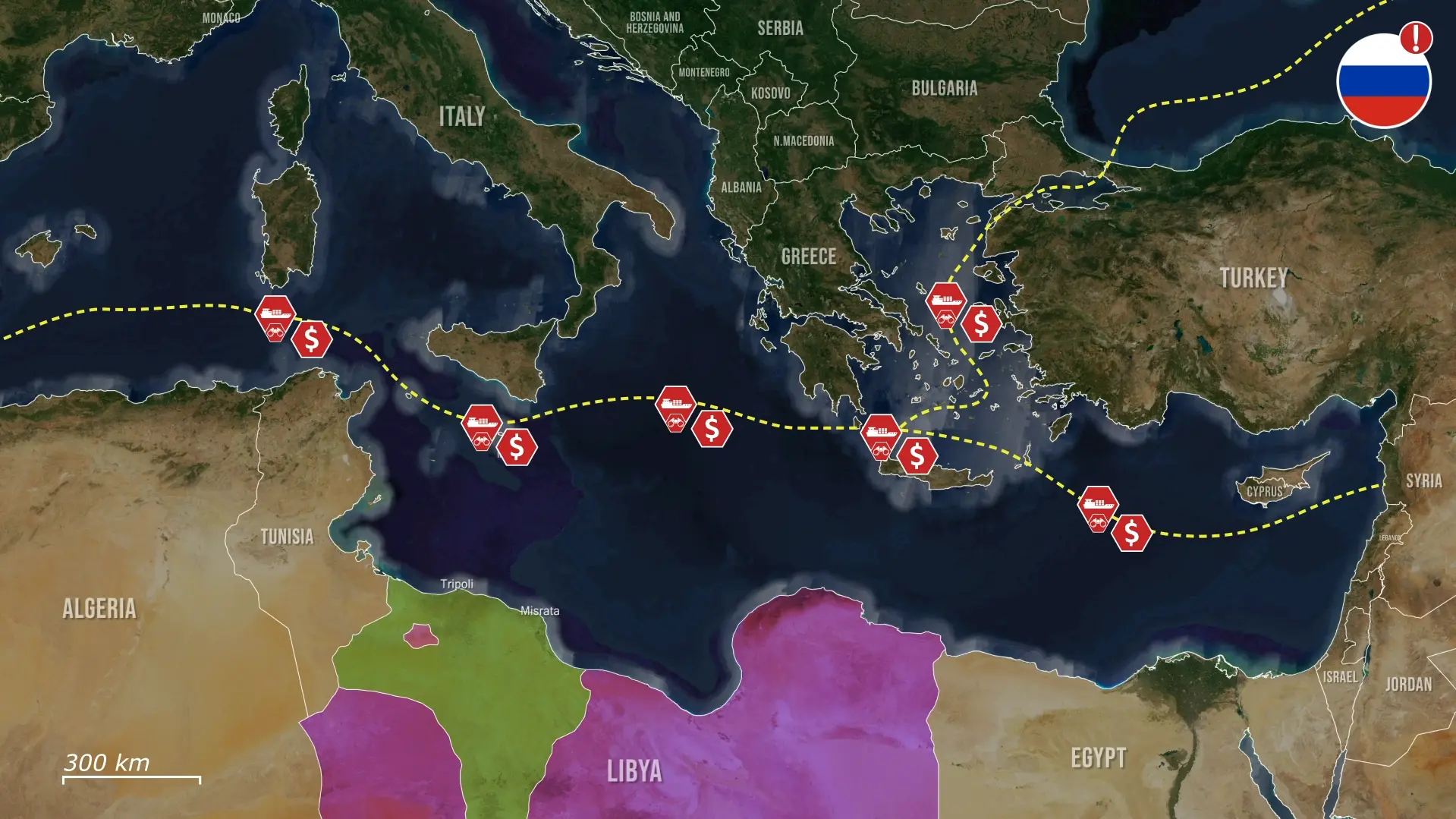
Overall, a Ukrainian launch network in Libya could turn isolated strikes on Russian linked vessels into a sustained campaign against Mediterranean shipping. Russia would then have to protect or reroute its ships across a much larger area, even when no individual attack succeeds in destroying a vessel. The constant threat could disrupt weapons deliveries and energy exports by raising insurance, security, and logistical costs while forcing Russian naval assets to protect commercial shipping. The result would be a broader form of pressure in which Ukraine could weaken Russian maritime logistics not by sinking every ship, but by making the routes themselves increasingly costly and difficult to use.

.jpg)



Comments