

.svg)
Today, there is dangerous news from the Black Sea.
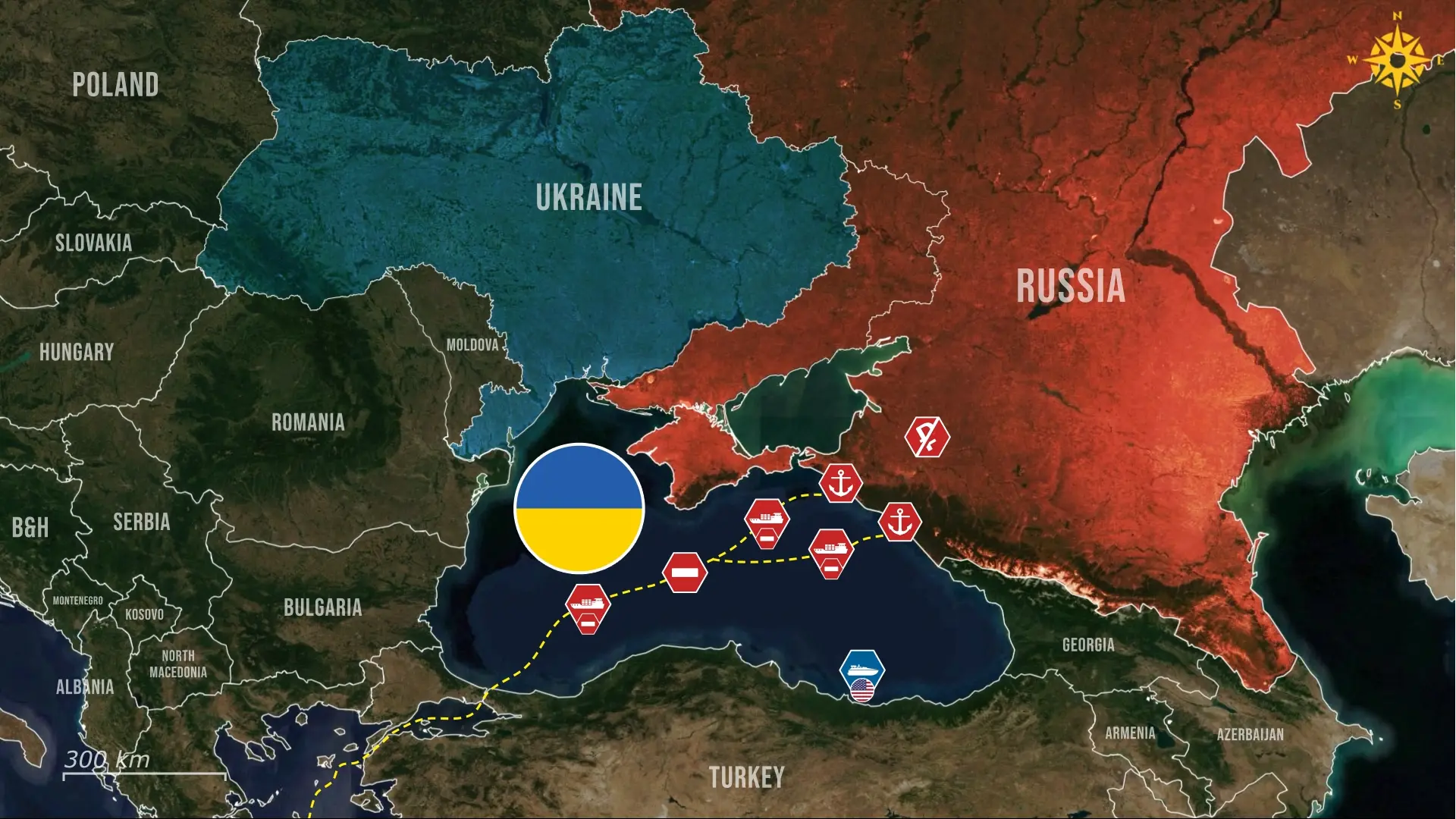
Here, the American Navy paid a surprise visit to the Russian Black Sea shore, prompting the Russians to speculate on the origins of the drone. However, what followed was repeated strikes on Russian ships, which started to mysteriously sink one by one.
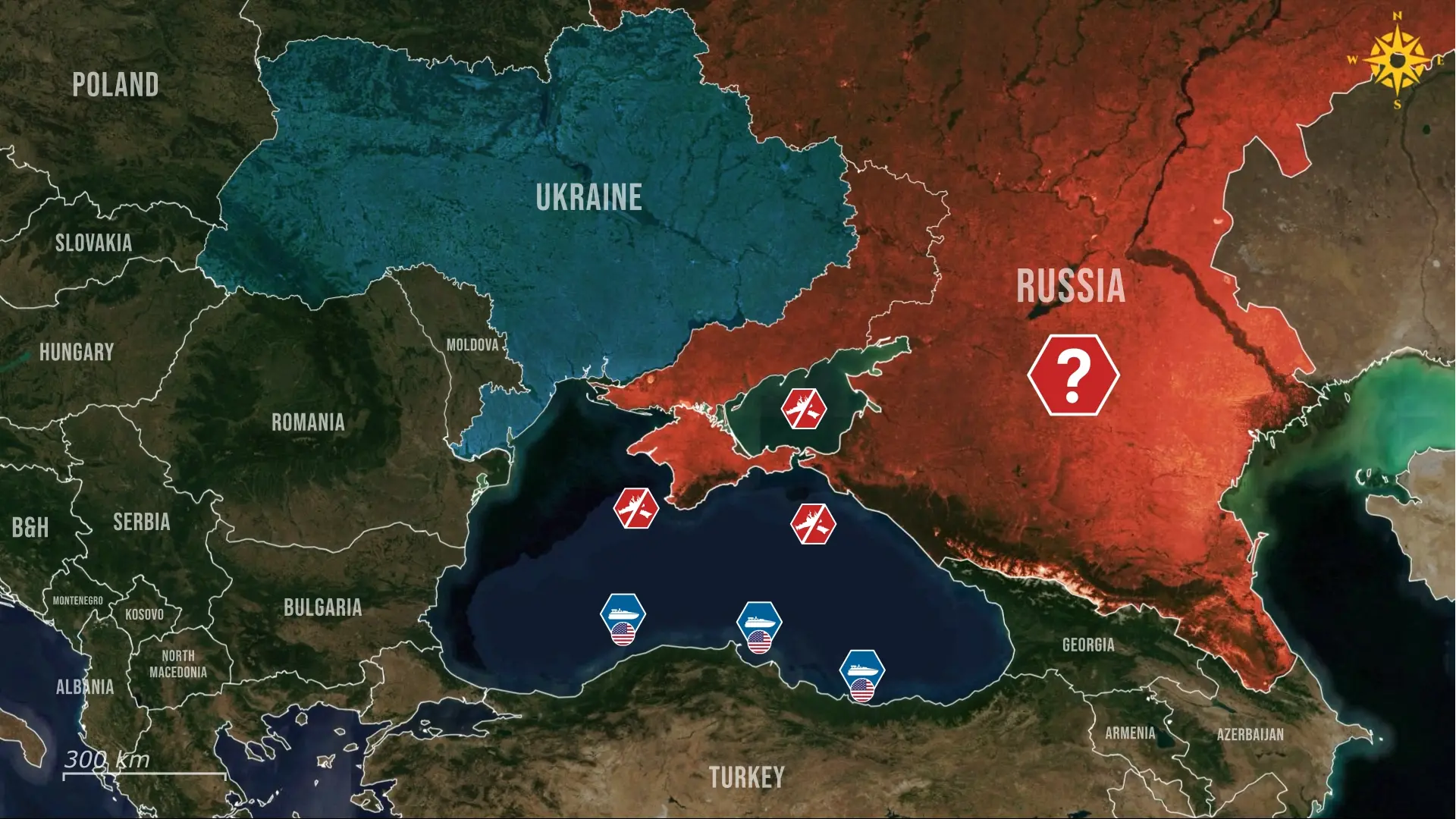
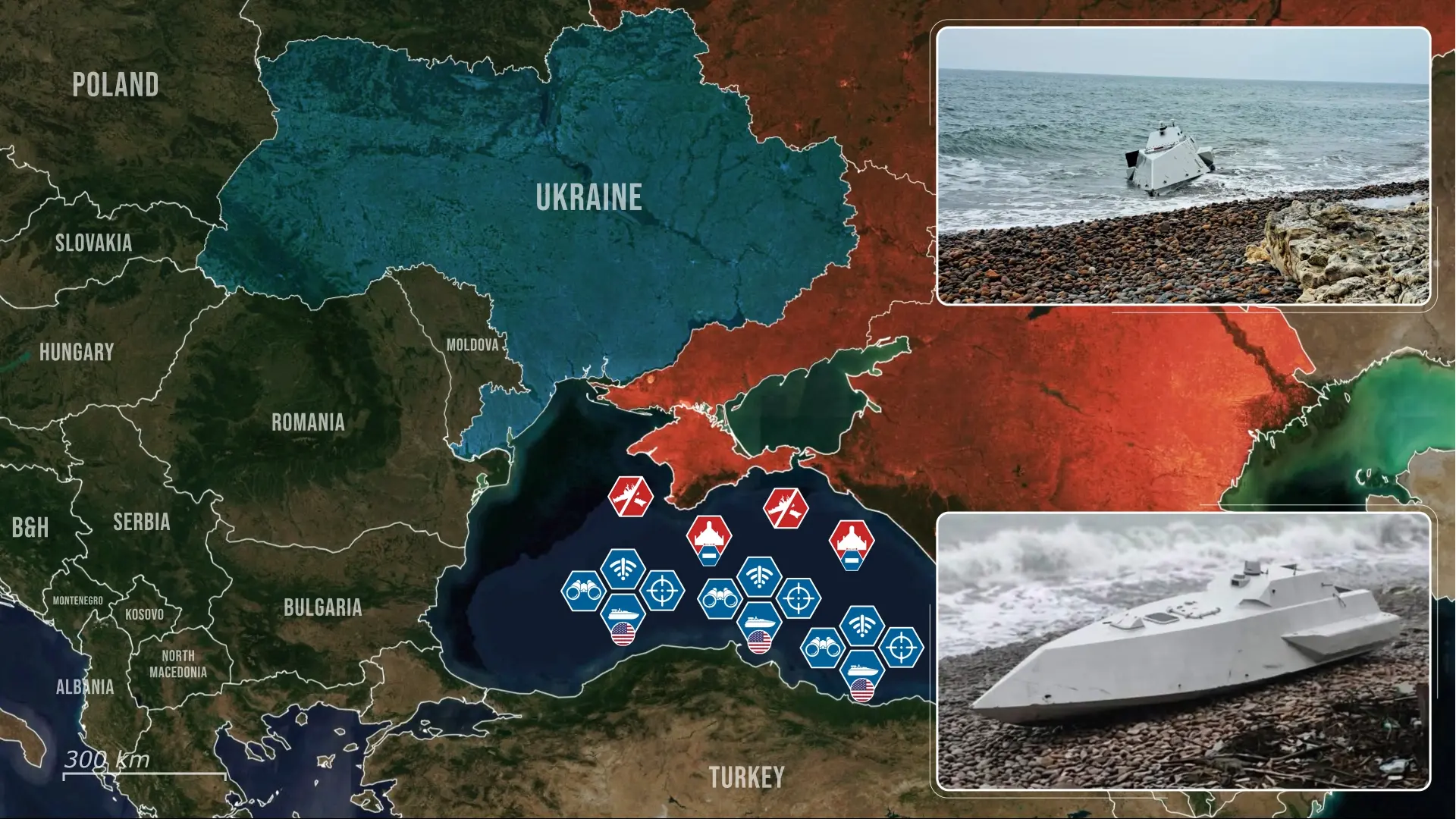
Recently, a ten-meter-long US made unmanned sea drone carrying explosives was found drifting off the Turkish coast after apparently losing control. The vessel was an unmanned surface vehicle produced by Sierra Nevada Corporation. Local media reports suggest it may have been involved in Ukrainian testing operations targeting Russian vessels. It was designed for long-range autonomous missions and is capable of conducting reconnaissance, surveillance, electronic warfare, and strike missions with its payload of up to three hundred kilograms. This drone can help Ukraine find targets in the open sea, jam Russian drones, and strike naval vessels. Its appearance comes amid an increase in attacks on Russian naval assets, causing speculation that the US is testing its maritime drones with the help of Ukraine to receive real battlefield experience.
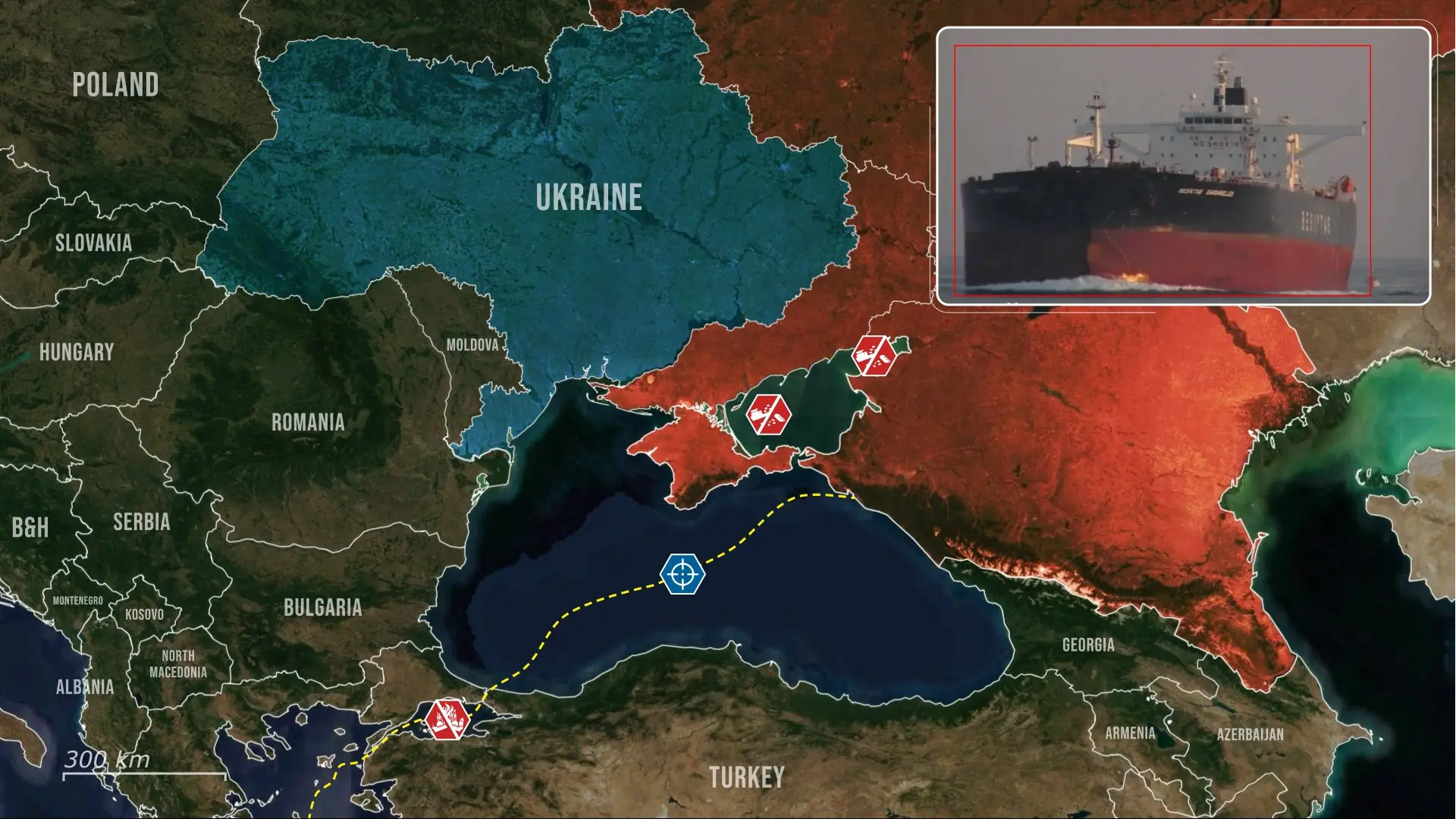
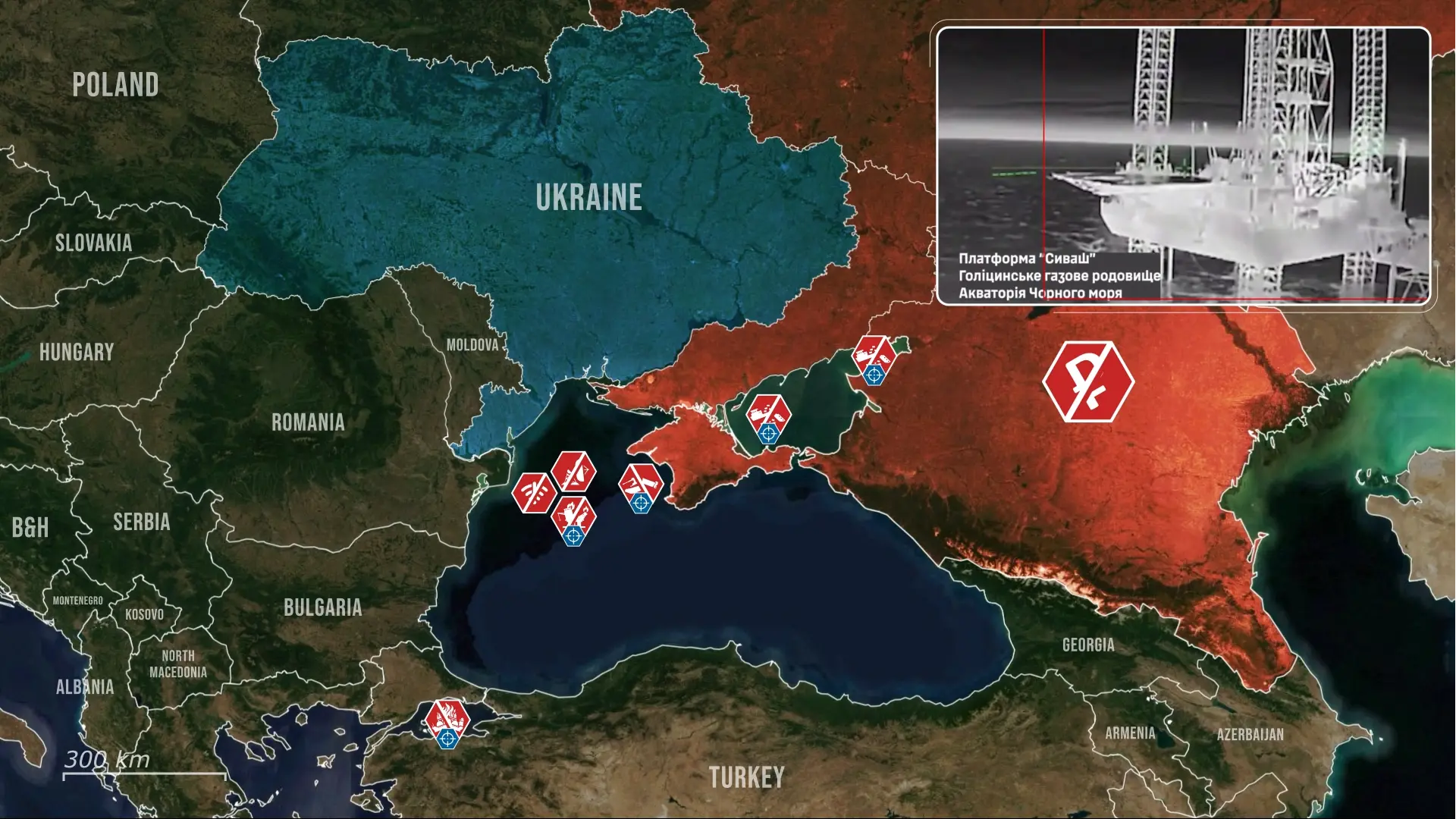
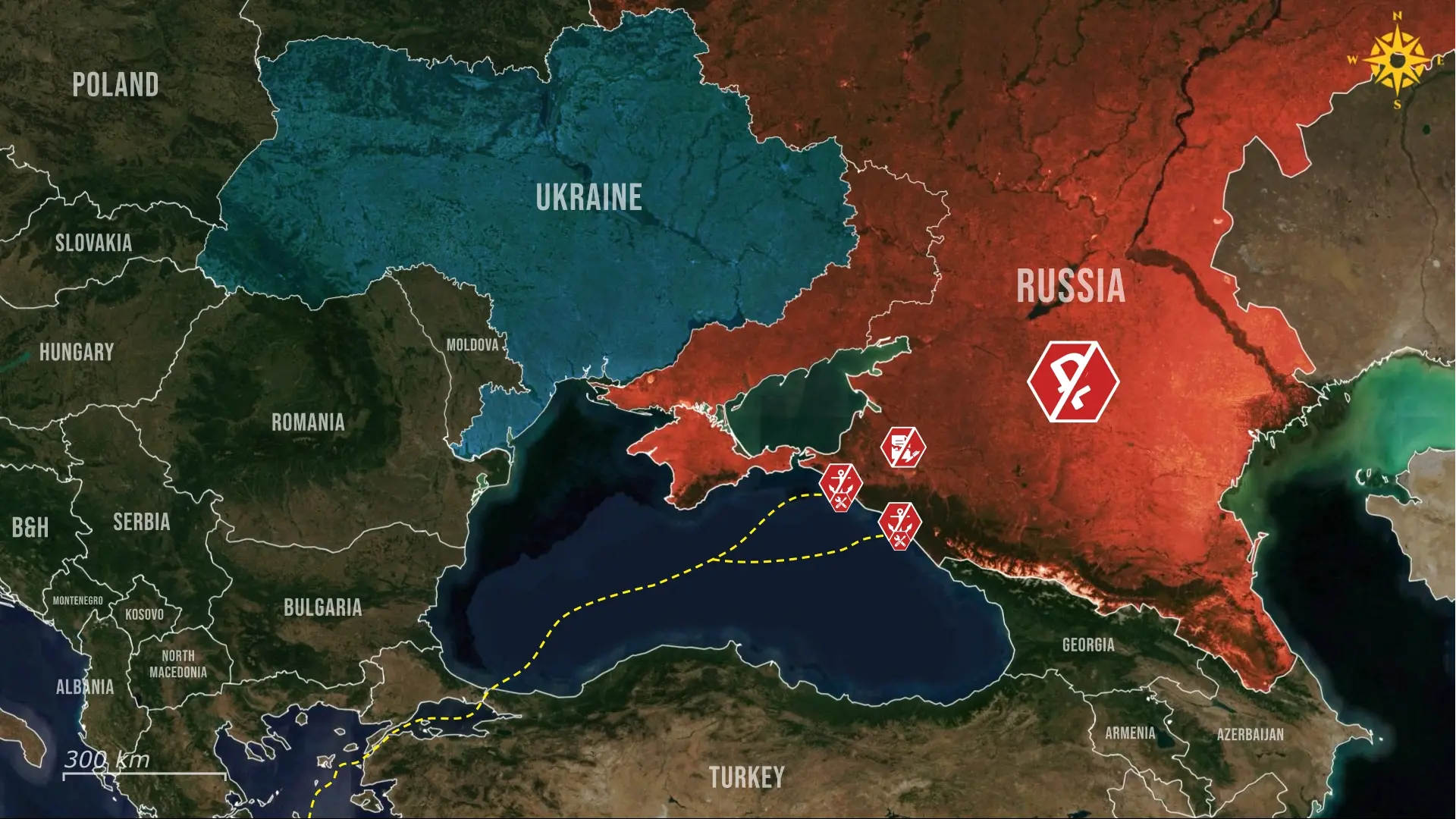
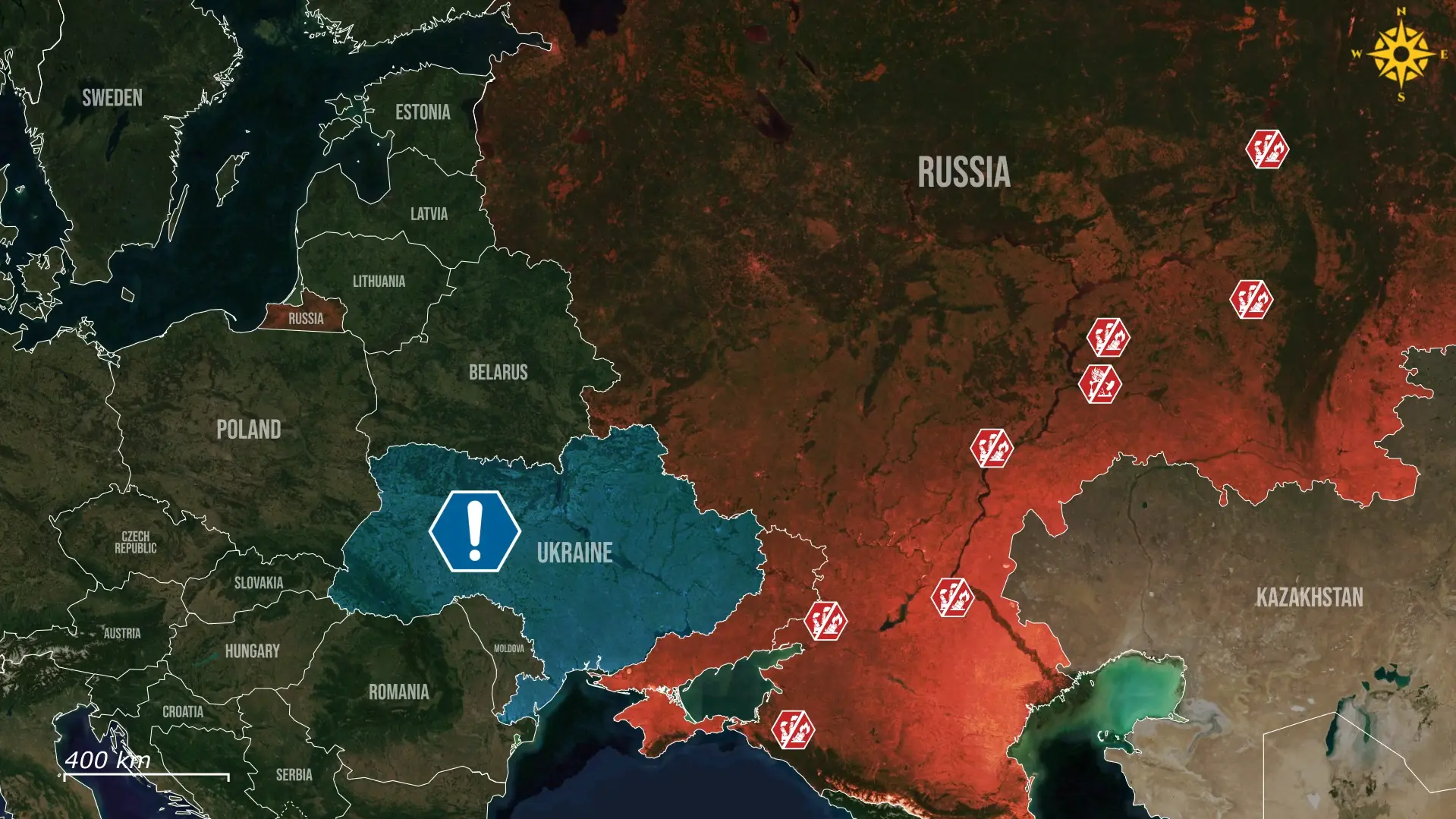
Over the past month, Ukrainian strikes in the Black Sea region have followed a clear pattern, systematically targeting Russia’s maritime logistics, energy exports, and military support infrastructure. Notably, a cargo ship transporting Ukrainian wheat sank in the Sea of Azov after it was hit, while in Taganrog, a foreign-flagged dry cargo vessel was damaged. Additionally, a sanctioned Russian shadow fleet tanker was struck by a drone near the Bosphorus while carrying approximately one hundred and forty thousand tons of oil.
These strikes reduce Russia’s export revenue, directly putting pressure on its finances. Near Crimea, Ukrainian naval drone operators destroyed a Russian boat, transporting reinforcements and supplies to reduce Russia’s manpower.
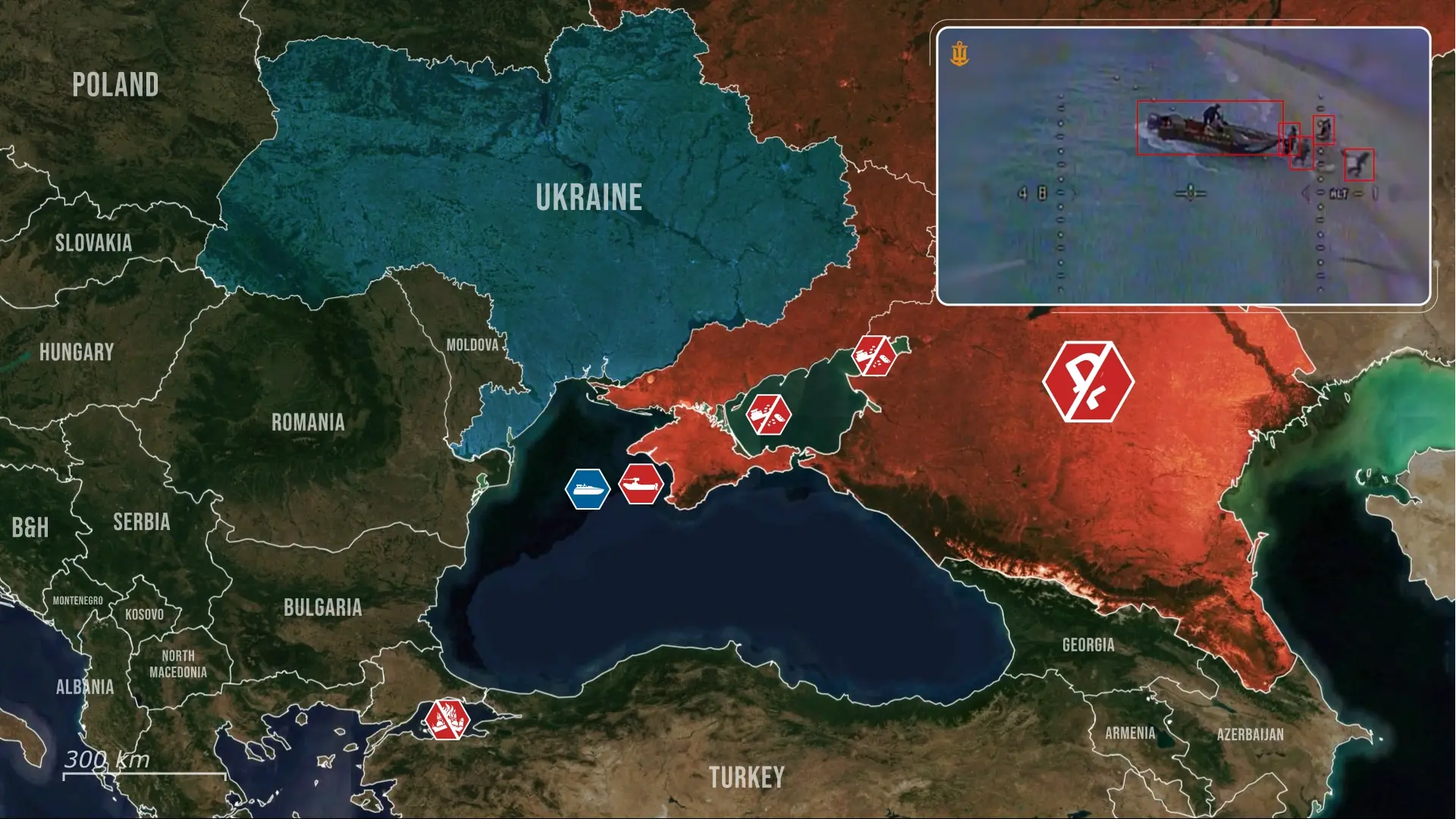
Additionally, Russian forces stationed on a drilling platform were targeted by kamikaze drones. The platform was used as an observation and electronic warfare site equipped with UAV repeaters, radar, and air defense systems. This strike aimed to make holes in Russia’s air defence and reduce the range of its drones in the area. Taken together, the pattern indicates a coordinated campaign aimed at constraining Russia’s economic lifelines and eroding its military effectiveness across the Black Sea, rather than a series of isolated incidents.
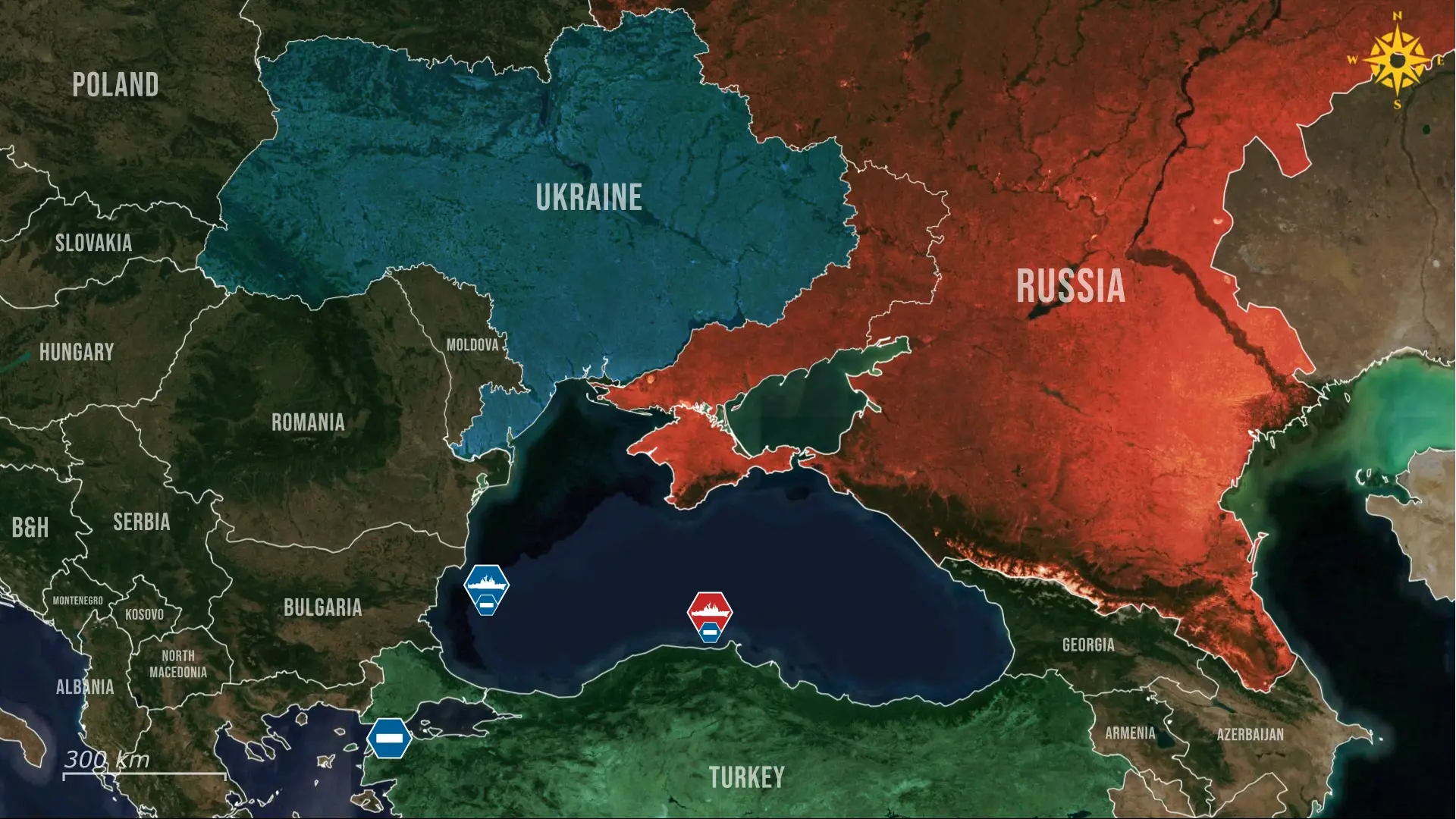
Under the Montreux Convention Regarding the Regime of the Straits, Turkey has the authority to restrict or block the passage of warships through the Bosphorus and Dardanelles during times of conflict, effectively limiting Russian naval movements into and out of the Black Sea.
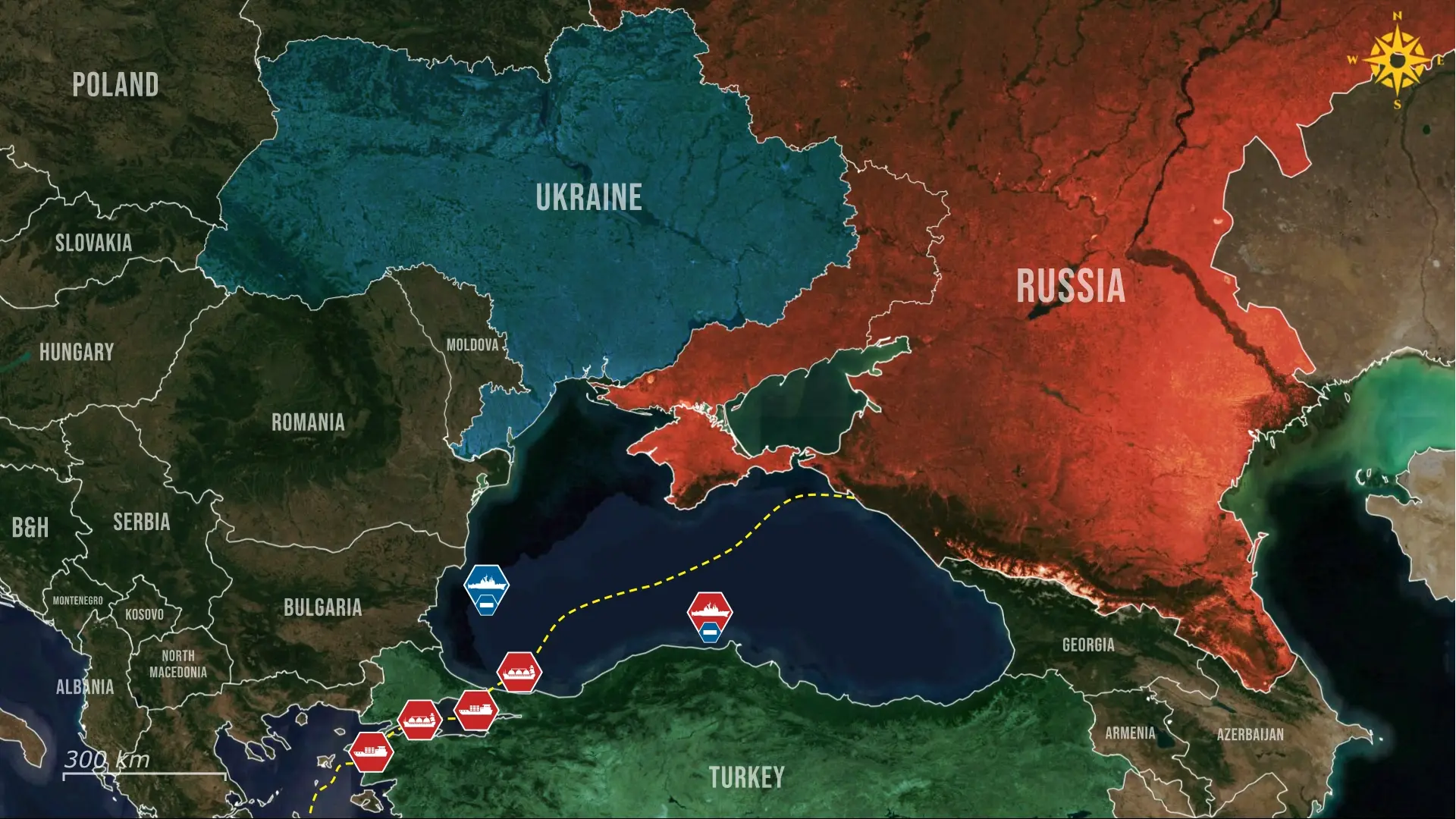
However, the agreement doesn’t prohibit civilian maritime traffic, so commercial vessels, including those carrying oil and grain, can continue transiting the straits. This allows Russia to maintain exports despite wartime naval restrictions.
This is significant because Russia’s exports depend heavily on its Black Sea ports, making them vital economic lifelines. The region handles approximately twenty percent of the country’s seaborne crude oil exports, which is worth approximately twenty billion dollars. Further, eighty percent of Russia’s maritime grain shipments go through its Black Sea ports. In addition to the energy products and agricultural goods, Russia exports dry bulk items like coal, fertilizers, metals and.
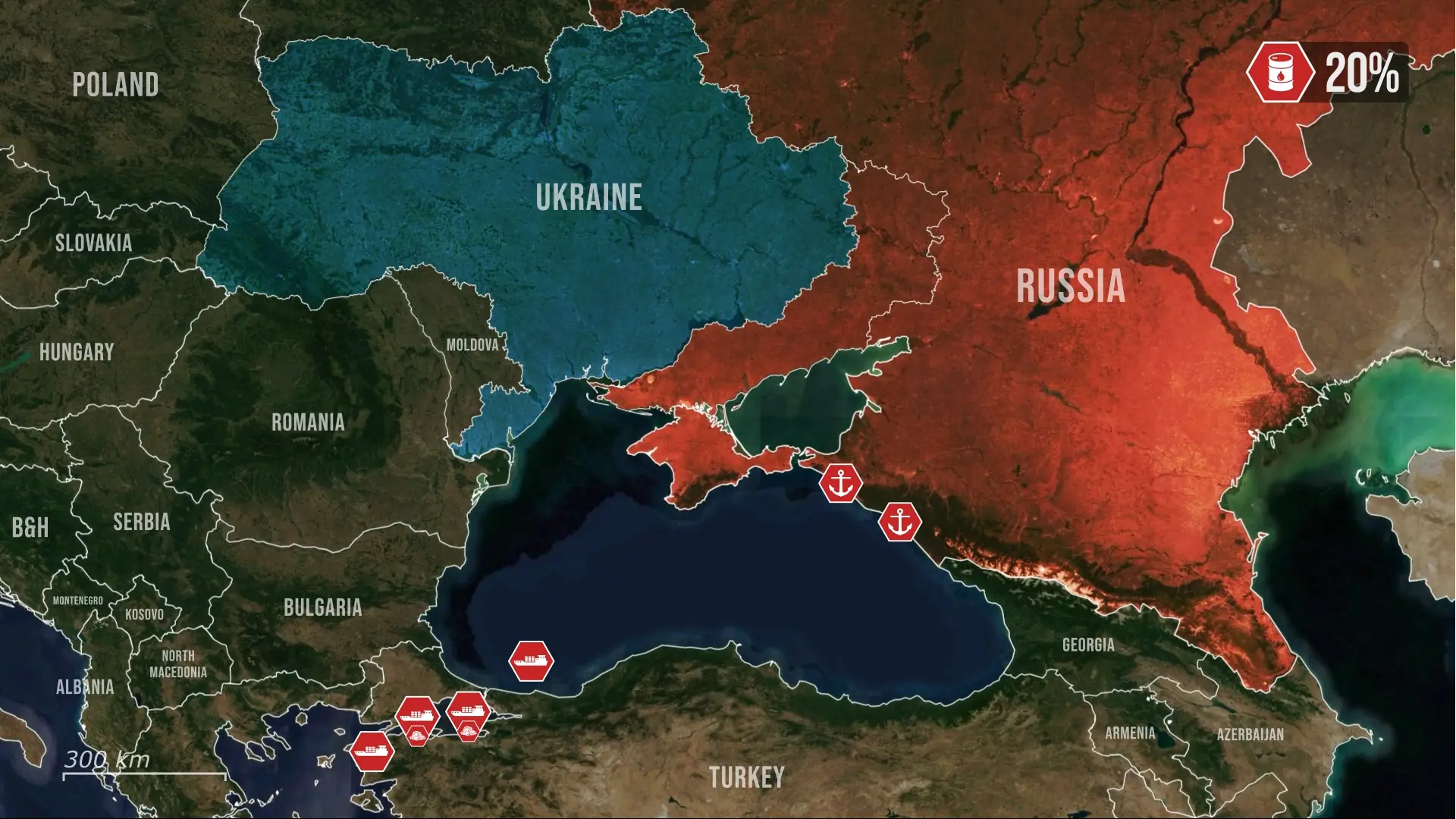
Because of the Ukrainian strikes, Russia is now forced to reduce the export of its crude and other products, losing millions of dollars every day.
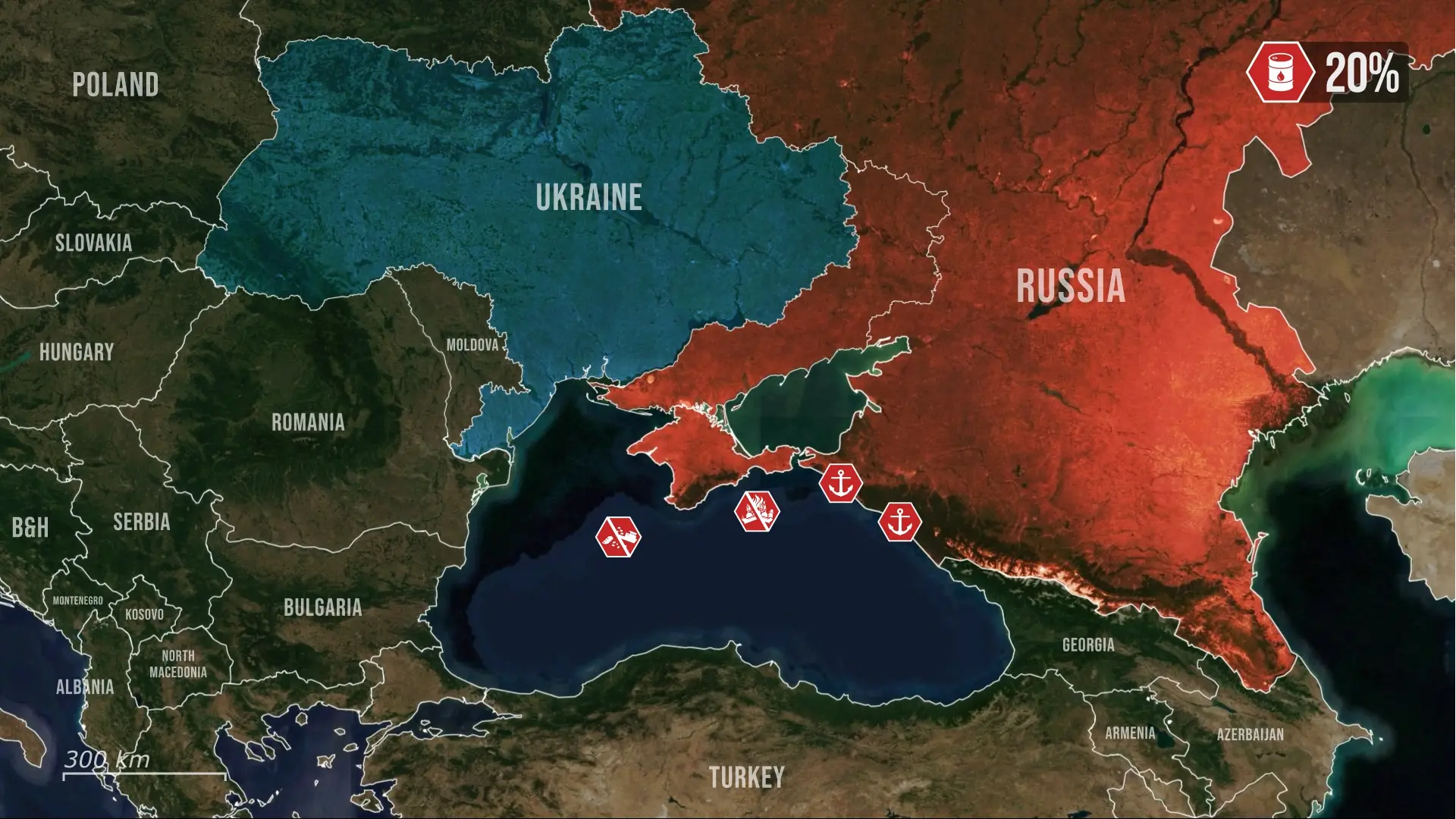
Naval drone strikes are disrupting port access, insurance coverage, routing, and overall throughput, effectively constraining export flows and straining contracts with shipping companies. The damage to port and maritime infrastructure requires time and resources to repair, forcing temporary suspensions of operations until the situation is stabilized.
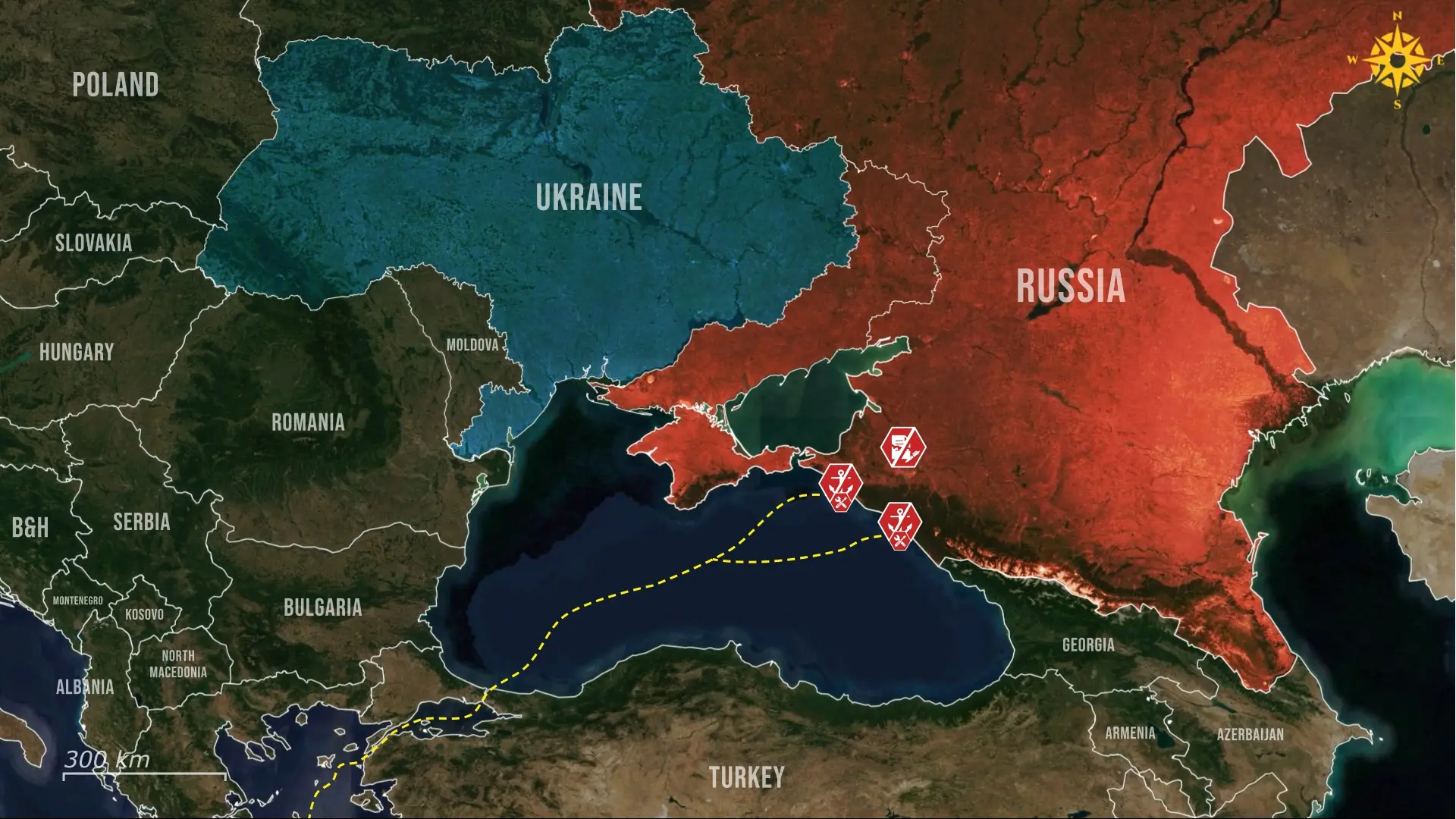
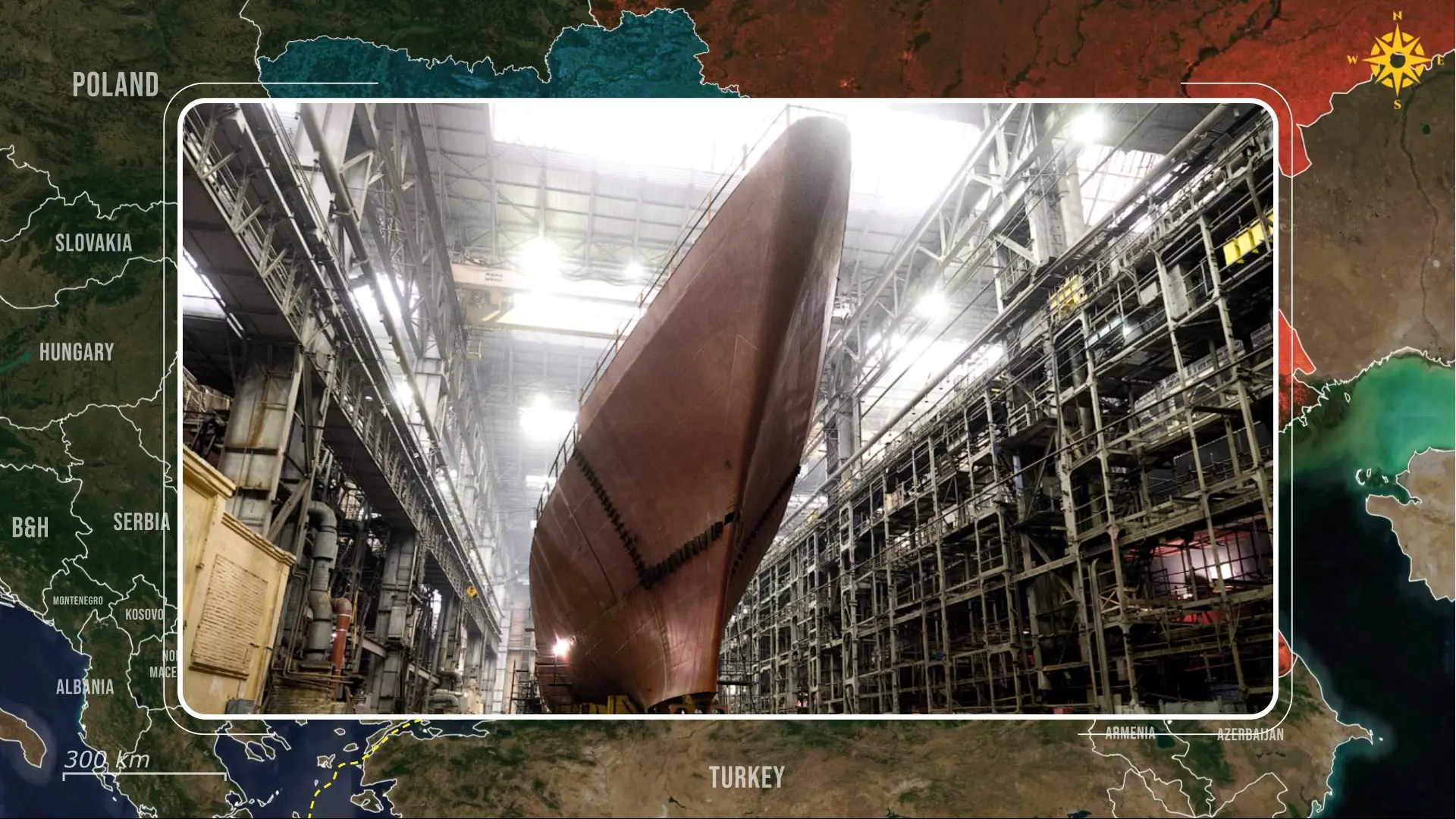
At the same time, Russia’s shipbuilding sector is already under pressure, with frequent delays and limited shipyard capacity. As a result, each successful strike on a tanker or dry cargo vessel reduces an already constrained pool of merchant ships. Many vessels operating under foreign flags are chartered for specific cargoes, but as attacks become more systematic, fewer operators will be willing to engage.
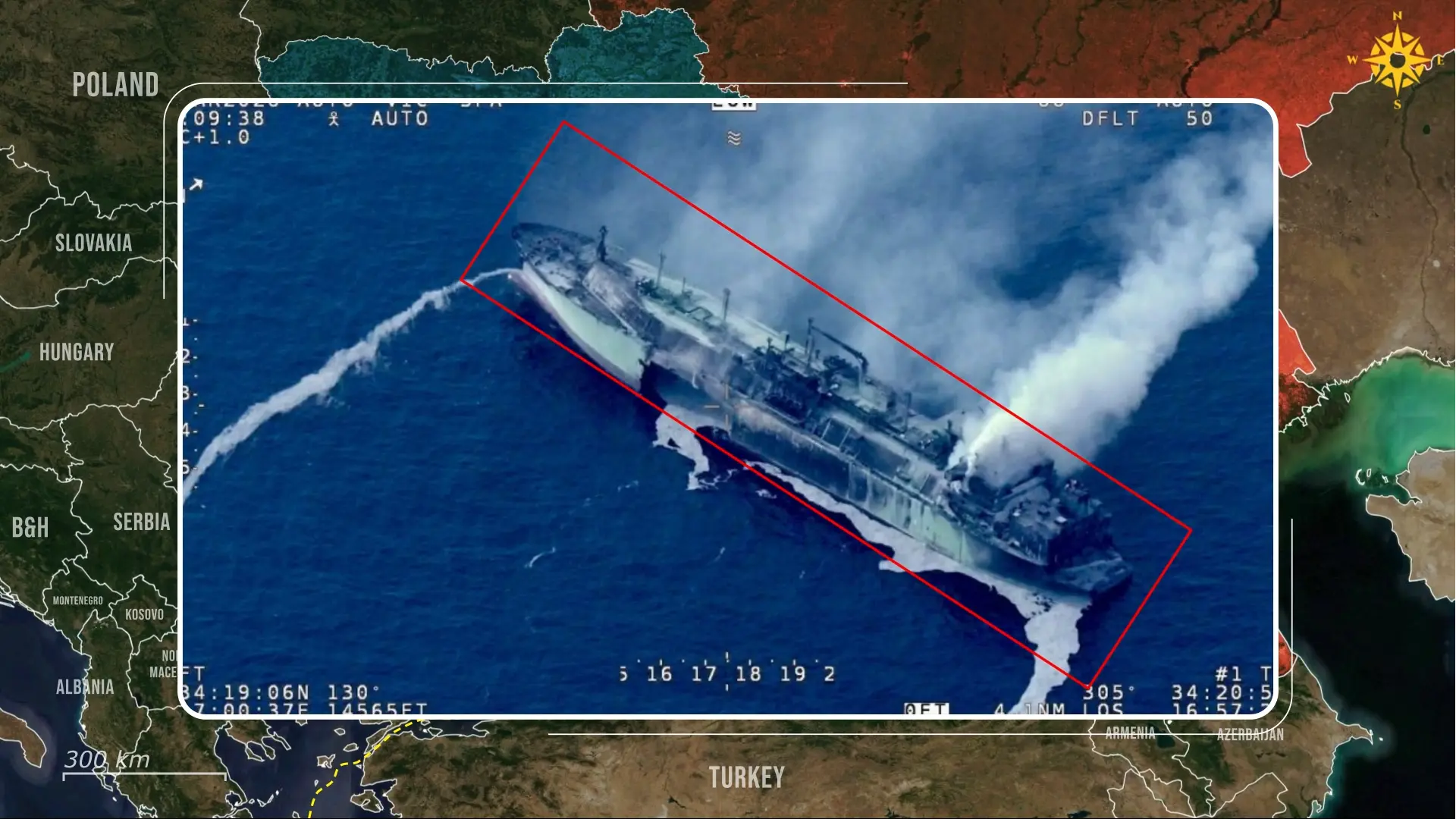
This will likely drive up freight rates, adding further pressure on export revenues and the state budget.
Overall, Ukraine leverages all available tools, including externally sourced naval drones, to systematically dismantle Russia’s maritime economy. These strikes degrade logistics, deter shipping, inflate costs, and erode export capacity, compounding structural weaknesses in shipbuilding and infrastructure. Sustained pressure on Black Sea routes and the actual shift in control threaten long-term revenue stability and strategic resilience for Russia. Future disruptions will further constrain trade flows and investor confidence globally because now Ukraine controls the sea, not Russia.

.jpg)


Comments