

.svg)
In this video, we will analyze why Russia is forced to pull out its contingent from Ukraine.
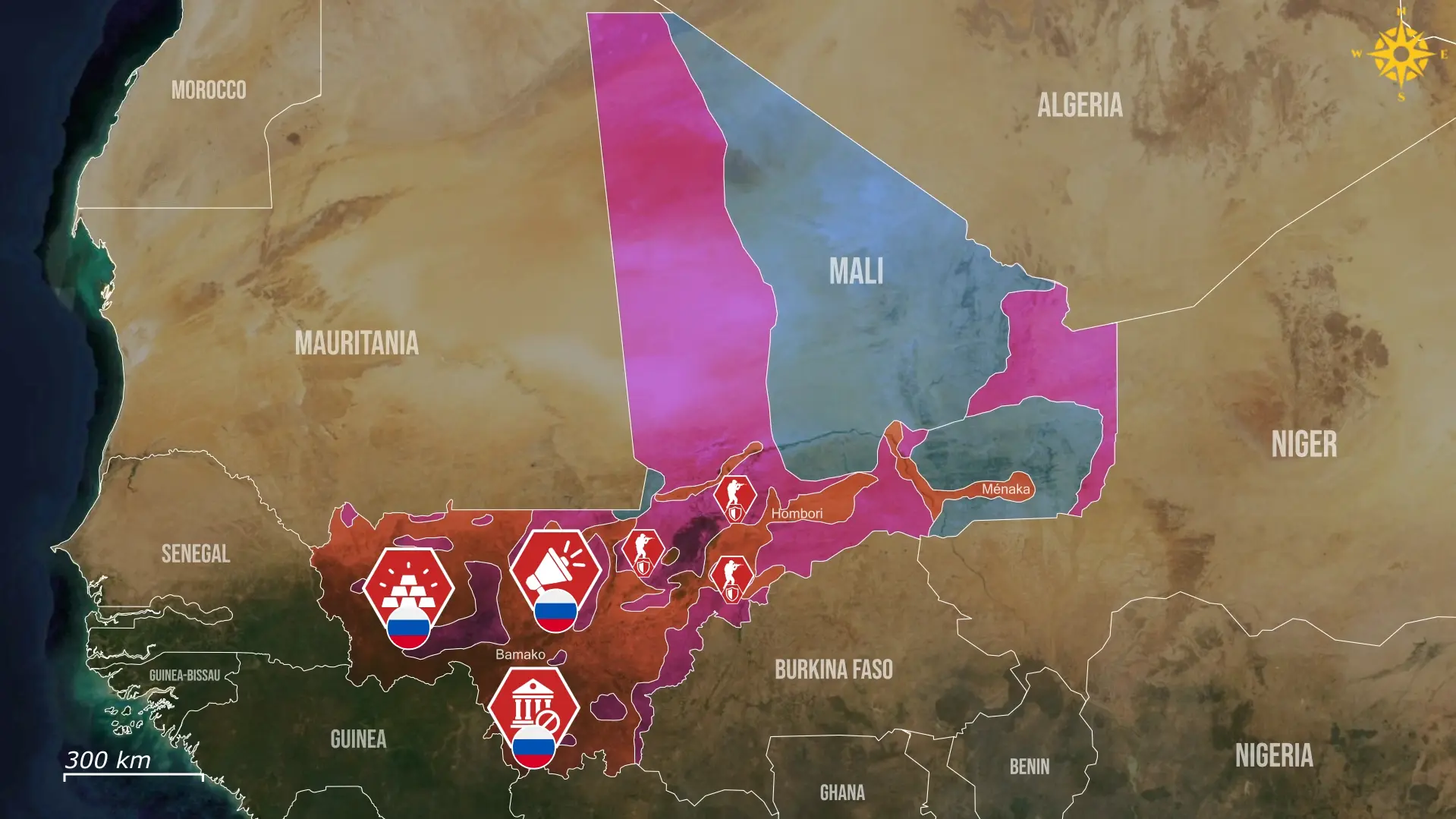
Here, Russia was not trying to expand its position in Mali, but to prevent the collapse of a Russian backed project tied to gold, regime survival, and Moscow’s reputation. What makes this even more significant is that holding that position would require trained manpower that Russia also needed for the war in Ukraine.
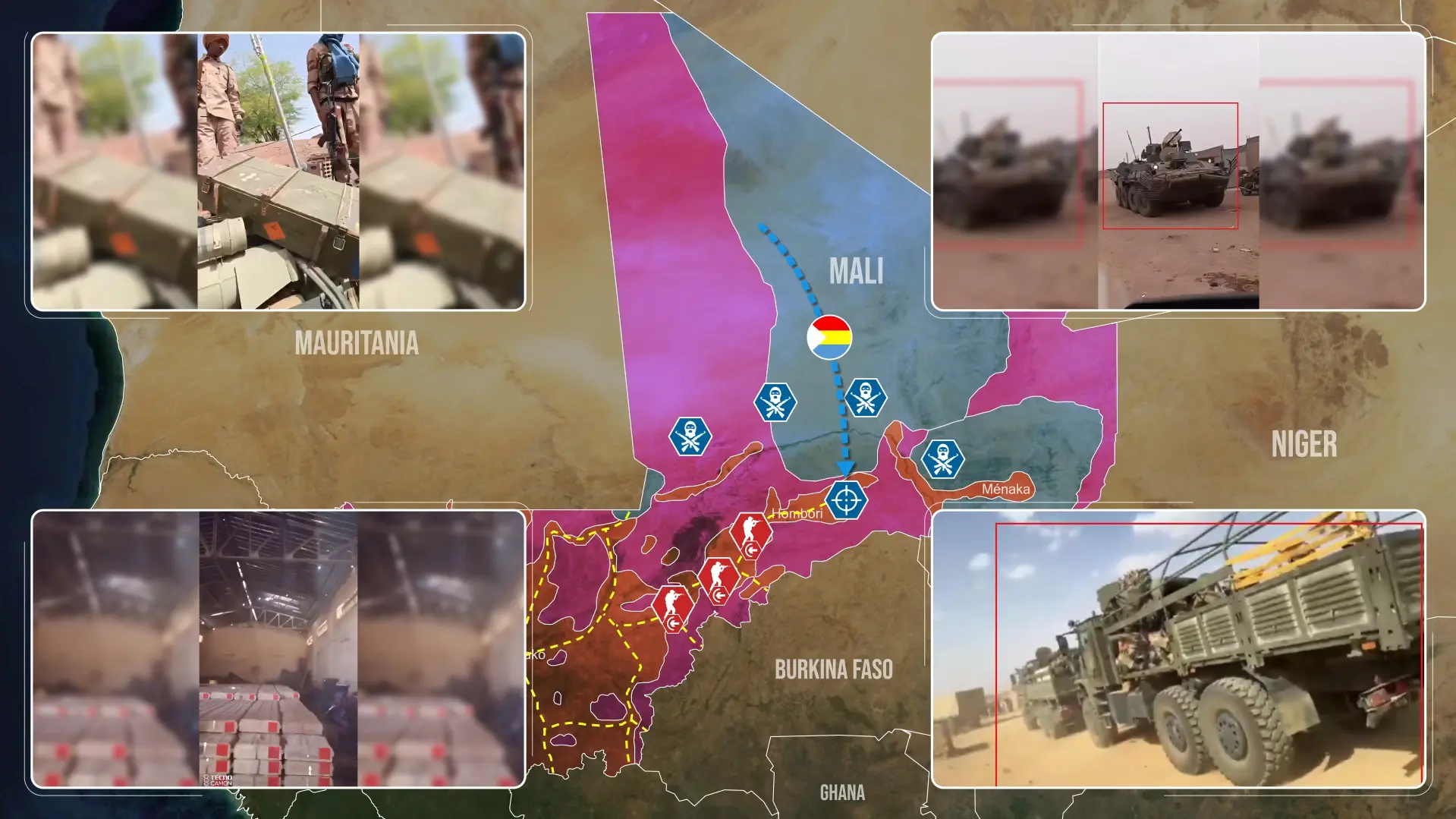
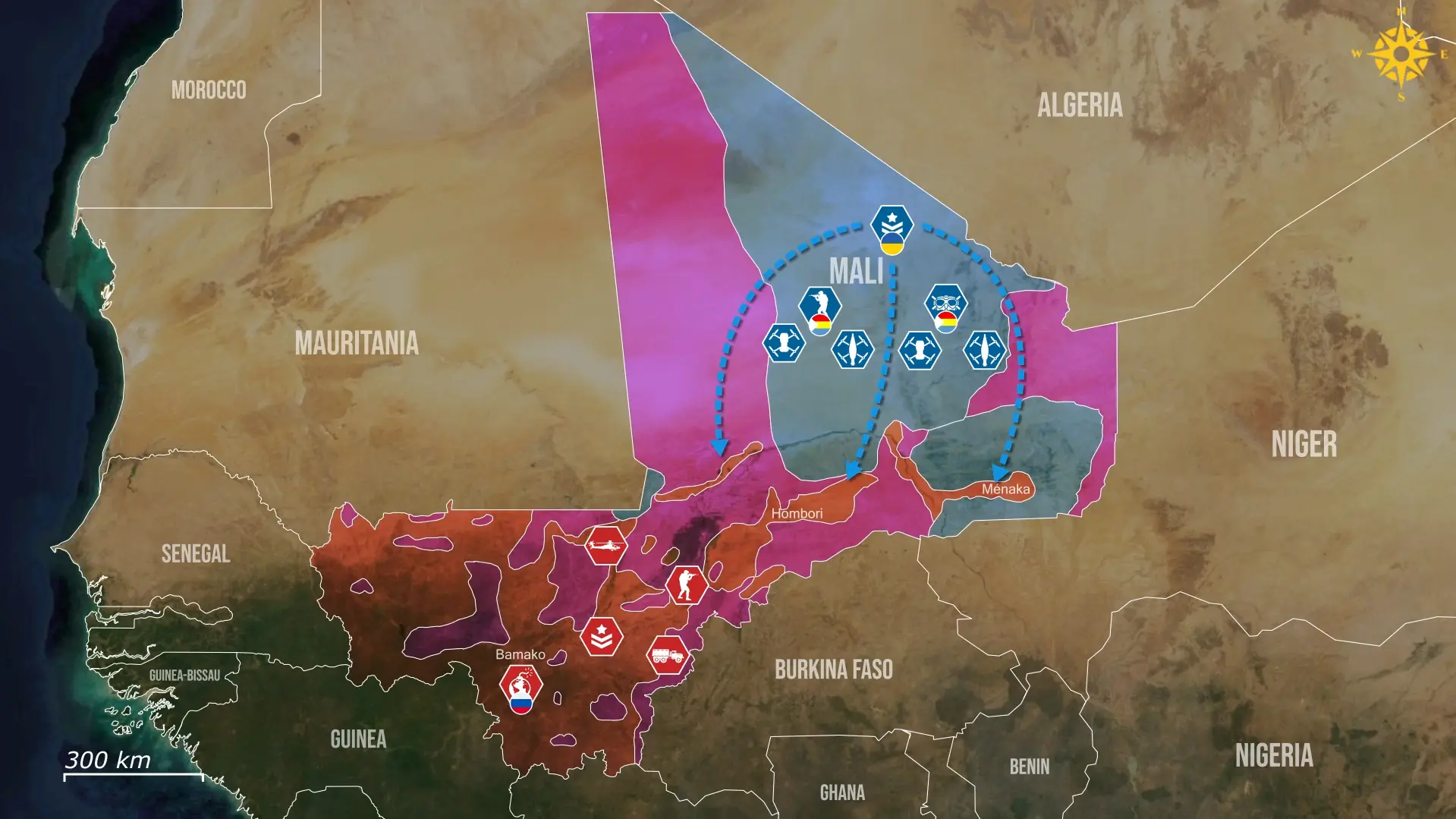
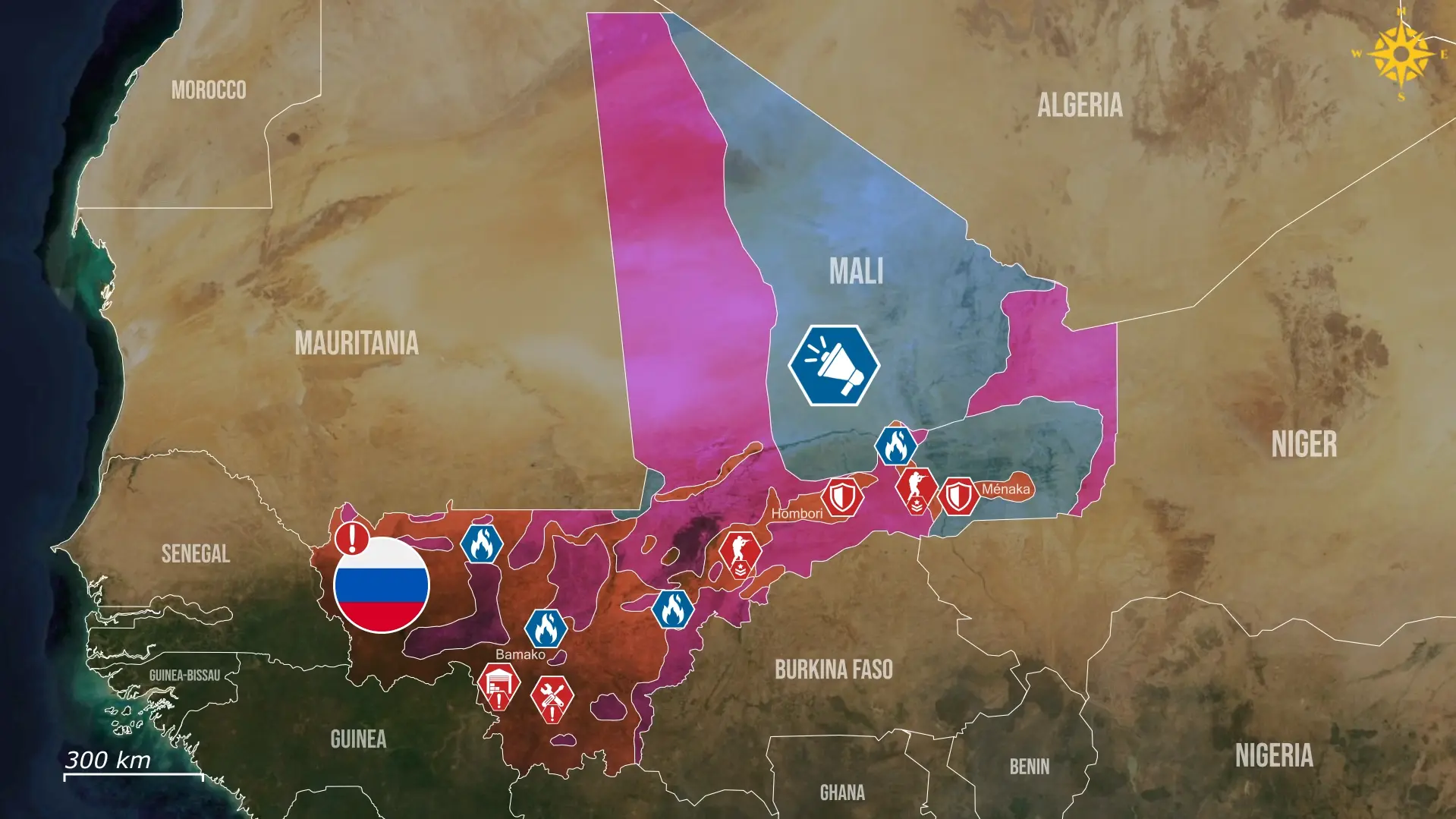
As the FLA led Tuareg offensive spread beyond isolated northern clashes and began hitting the routes and positions holding Mali together, Russian and Malian junta forces came under pressure across too many critical areas at once. What began in the Tuareg heartland soon spread into Hombori and Gossi, bringing the conflict onto government positions that helped secure the approaches from northern Mali into the country's central regions, while J-nim pressure around Bamako threatened the capital’s access routes and exposed the regime’s vulnerability far beyond the desert front. Under that strain, Russian and junta forces abandoned bases in haste. Militants found deserted camps, intact depots, and armored vehicles left behind, including a BTR eighty-two at Tessalit fitted with cage armor and electronic warfare equipment. The retreat was so rushed that the FLA ended up showing captured Malian soldiers, policemen, and local police chiefs, while Russian troops appeared to withdraw once positions became too difficult to hold.
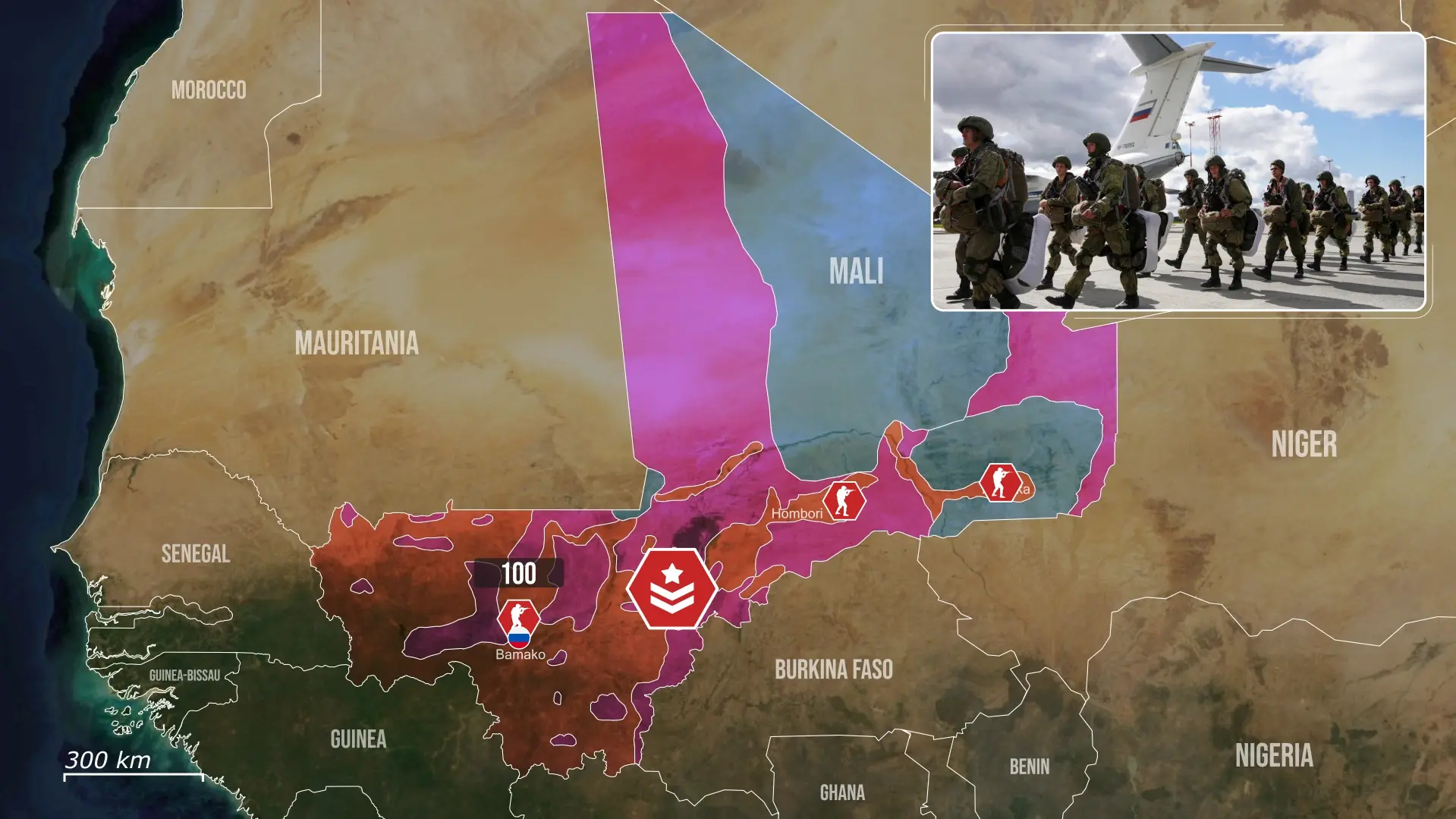
With northern positions collapsing and pressure spreading beyond the Tuareg heartland, Russia was forced to bring additional personnel into Mali to stabilize the situation. Reports described around one hundred Russian soldiers with equipment arriving in the capital, while later updates pointed to more reinforcements in threatened areas such as Ménaka and Hombori, supported by helicopter escorted convoys. These were not random mercenaries rushed into an overseas mission, but veterans of the war in Ukraine, showing that Moscow was diverting experienced soldiers from its main battlefield to contain the Tuareg advance in Mali.
Despite this emergency reinforcement, Russian and Malian forces did not push the Tuareg offensive back but only halted its momentum and stabilized parts of the front. That limited result came at a cost, as obituaries began appearing for Russian veterans of the war in Ukraine killed in Mali, confirming that Moscow was losing experienced personnel even while trying to stop further collapse.
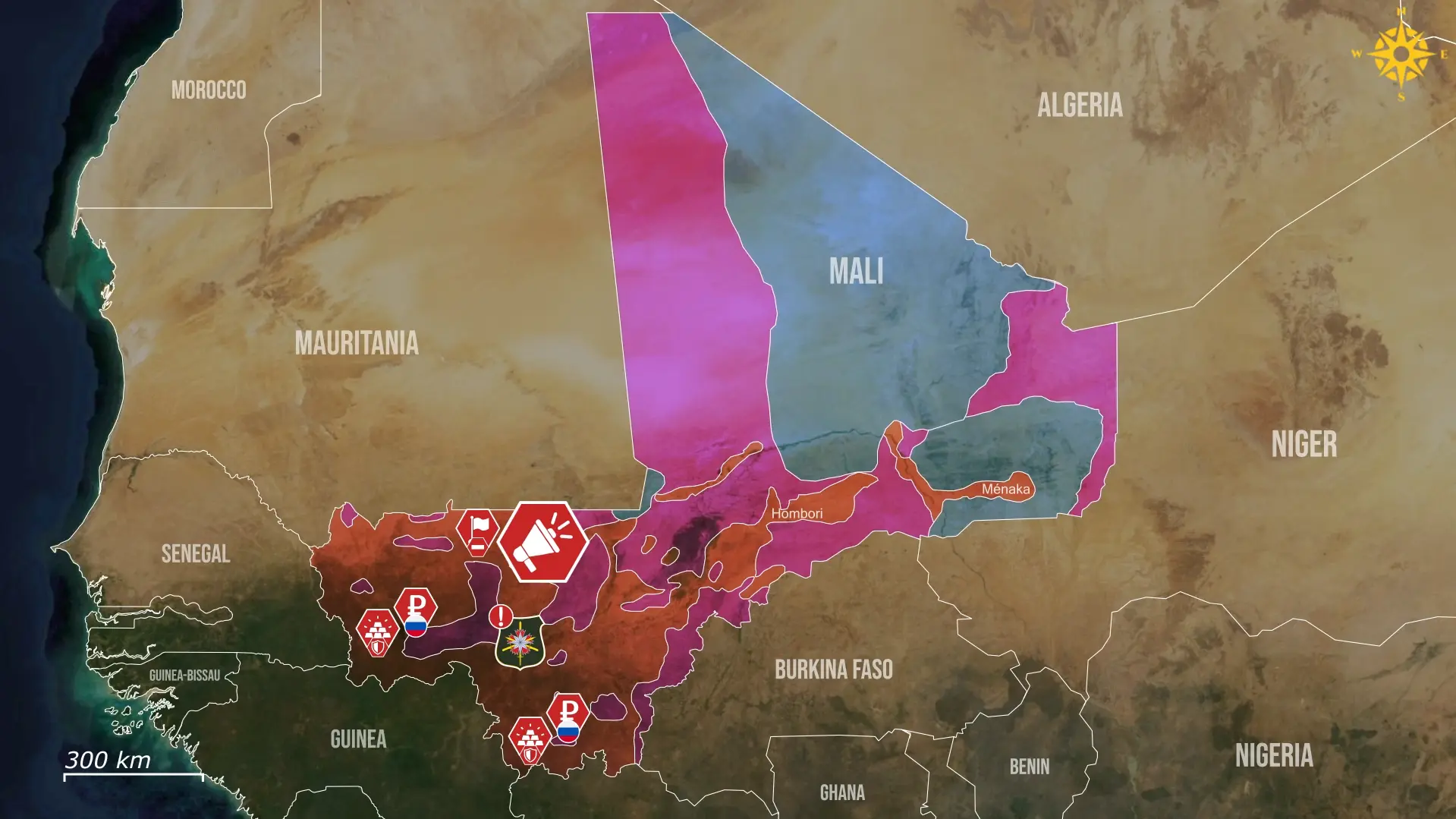
Russia cannot easily abandon Mali because too much depends on keeping the junta in place. Gold is central to the regime’s survival, which means it also helps sustain the state that pays for and hosts Russian support. Russian linked forces also have an interest in controlling security around informal gold mining areas, because that creates leverage over access and revenue. Moscow also cannot leave without harming its wider position in Africa, because other regimes would see that Russian support becomes less reliable once a conflict turns costly and prolonged. That would not only weaken confidence in Russia’s staying power but also call into question whether the African Corps model can secure lasting influence at all.
This is where the pressure in Mali begins to produce a broader effect for Moscow. Ukrainian support sharpened Tuareg capabilities, especially in drone use, and strengthened the FLA, the main force behind the offensive that pushed Moscow to commit additional forces. That meant Ukraine only needed to improve the effectiveness of local resistance, while Russia had to answer with transport, escorts, emergency deployments, and senior attention just to keep the situation from worsening. In that way, a limited Ukrainian effort was able to trigger a much larger Russian response inside a theater Moscow was already struggling to stabilize.
Overall, Mali is becoming a strategic trap where Russia is spending elite manpower not to expand its position, but to keep a failing security project from collapsing. If Moscow keeps answering setbacks there with emergency action, it may preserve its position for a time, but at the cost of becoming less flexible. Over time, that could make Russian commitments abroad harder to manage, because each new crisis would force Moscow to choose between reinforcing its foreign clients and preserving strength for the war in Ukraine. In that sense, Mali may shape Russian decision making far beyond West Africa by making future interventions look riskier from the start.

.jpg)



Comments